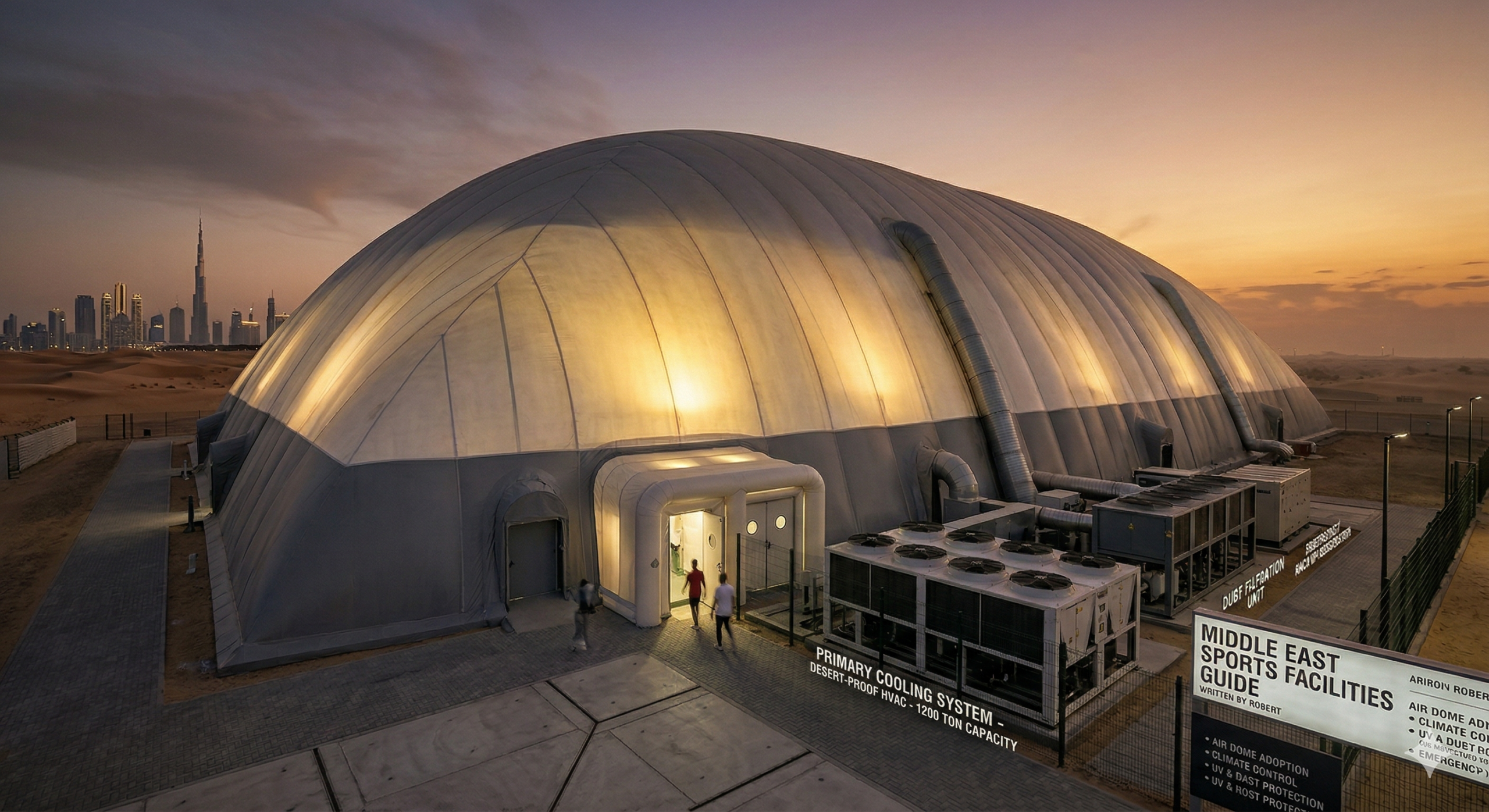
You’re considering a soccer air dome for your facility, but the complexity of installation might surprise you. From securing proper zoning permits to calculating precise ground dimensions, there’s more to this project than inflating a massive structure over your field. The $1.5-4 million investment demands careful planning, and one overlooked detail during site preparation could derail your entire timeline. Before you commit to this game-changing addition, you’ll need to understand what separates successful installations from costly disasters.
Soccer Air Dome Site Planning: Dimensions, Permits, and Prep Work
Before you can install a soccer air dome, you’ll need to secure a site that measures at least 240′ x 360′ (73m x 110m) to accommodate a full regulation field. This translates to roughly 86,400 square feet of ground space for your soccer air dome installation.
Start by obtaining proper zoning permits and building approvals from local authorities. Most municipalities require detailed engineering plans showing the dome’s foundation requirements and safety systems.
You’ll also need environmental assessments if the site has drainage concerns.
Prepare the ground by leveling and compacting the surface to create a stable foundation. Install proper drainage systems to prevent water accumulation.
Consider utility access for electricity, heating systems, and backup power. Plan for adequate parking and access roads for maintenance vehicles during construction and ongoing operations.
Soccer Air Dome Installation Costs and Project Timelines
Once you’ve completed site preparation, you’ll face installation costs ranging from $1.5 million to $4 million for a full-size soccer air dome.
Your soccer bubble facility’s price depends on several factors, including fabric quality, foundation requirements, and mechanical systems complexity.
Installation typically takes 4-8 weeks once materials arrive on-site. You’ll need specialized crews for foundation work, fabric installation, and mechanical systems integration.
Weather conditions can greatly impact your timeline, so plan accordingly.
Key cost factors include:
- Foundation and anchoring systems – Concrete footings and tie-down infrastructure
- Fabric membrane quality – Single vs. double-wall insulated options
- Climate control systems – Heating, ventilation, and pressurization equipment
- Lighting and electrical – LED sports lighting and power distribution
Expect additional costs for permits, engineering, and ongoing maintenance contracts.
Why Soccer Air Domes Work: Performance Benefits Year-Round
While outdoor soccer fields sit unused during harsh weather conditions, your air dome facility maintains perfect playing conditions throughout the entire year.
You’ll eliminate weather-related cancellations that disrupt training schedules and game plans. The controlled environment protects players from extreme temperatures, wind, and precipitation that can compromise performance and increase injury risks.
Your soccer field cover creates consistent surface conditions, allowing players to develop technical skills without adapting to varying field states.
The stable 50-65°F temperature range prevents muscle stiffness and maintains ideal ball behavior. LED lighting guarantees visibility remains constant regardless of outside conditions or daylight hours.
You’ll maximize facility utilization, generating revenue year-round instead of seasonal operation.
Teams can maintain intensive training schedules, improving player development and competitive performance through uninterrupted practice sessions.
Operating Your Soccer Air Dome: Maintenance and Energy Costs
Three primary cost categories will define your air dome’s operational budget: energy consumption, routine maintenance, and seasonal preparations. Your indoor soccer dome requires constant air pressure and climate control, consuming approximately $8,000-$15,000 annually in electricity costs depending on regional rates and facility size.
Regular maintenance prevents costly emergency repairs while ensuring player safety.
Key Operating Considerations:
- Blower system maintenance – Monthly filter changes and quarterly professional inspections prevent system failures
- Membrane care – Annual cleaning and patching extends dome lifespan to 15-20 years
- Heating optimization – Programmable thermostats reduce winter energy costs by 20-30%
- Emergency protocols – Backup generators and repair kits minimize downtime during equipment failures
Budget $12,000-$25,000 annually for thorough operations, including utilities, maintenance contracts, and consumables.