Category: Buying Guides

  • Multi-Sport Air Dome Planning Guide

    Multi-Sport Air Dome Planning Guide

    You’re facing a critical decision that’ll determine whether your air dome investment pays off or becomes a costly mistake. The key isn’t just selecting the right sports—it’s understanding how to configure your space so each activity flows seamlessly into the next. Most facility owners overlook three essential elements that separate profitable multi-sport domes from those struggling to break even, and the difference comes down to strategic planning decisions you’ll make in the next few weeks.

    How Much Space Do You Need for Multi-Sport Air Dome Facilities?

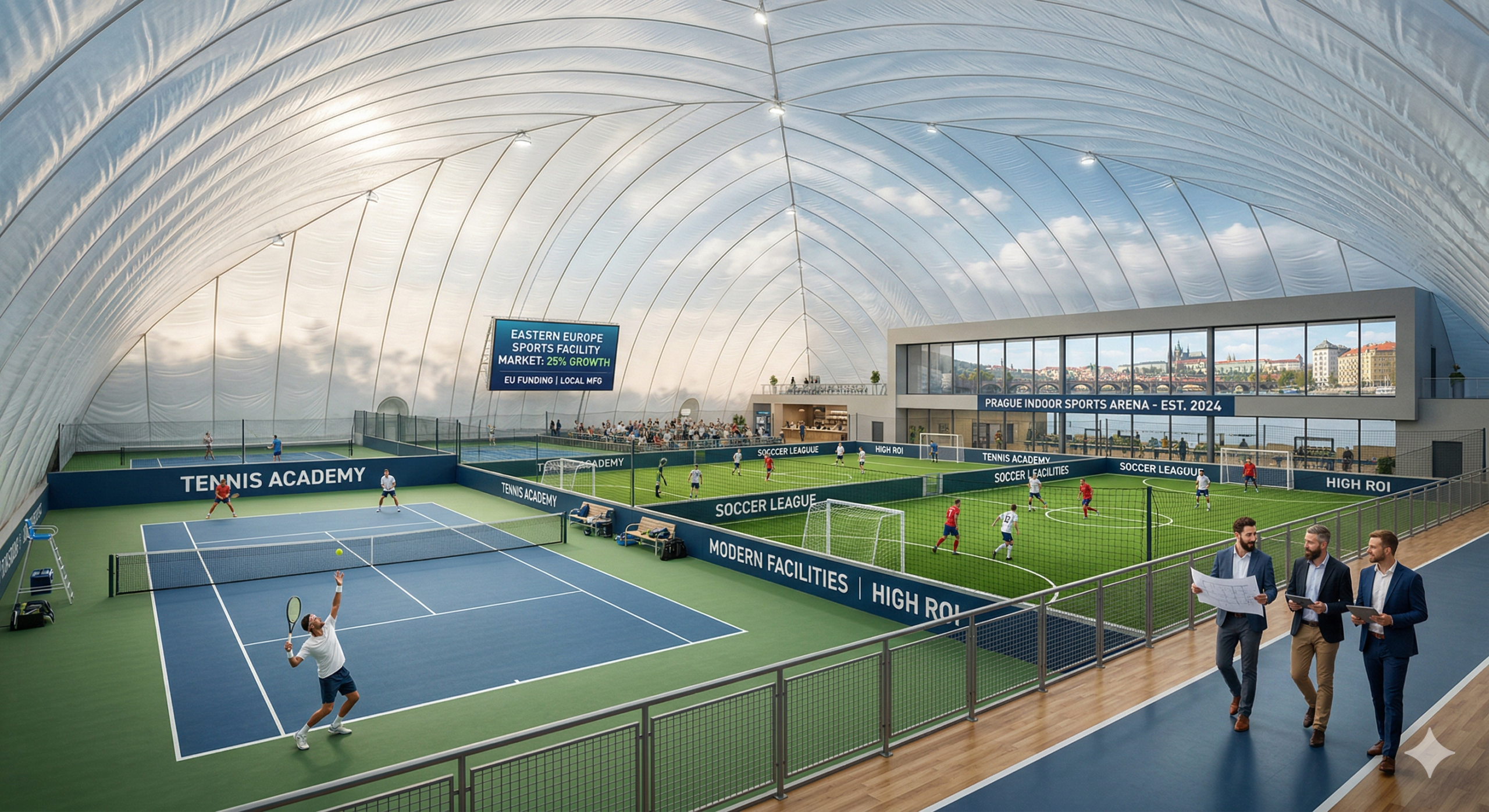
    When planning your multi-sport air dome, you’ll need to calculate space requirements based on the sports you want to accommodate. A standard tennis court measures 78′ x 36′ and can house four pickleball courts at 20′ x 44′ each with proper line markings.

    Your versatile sports dome should consider basketball courts requiring 50′ x 84′, while volleyball needs 30′ x 60′ of playing space.

    The key to maximizing your multi purpose indoor facility lies in strategic layout planning. You can overlay multiple sport lines on the same surface, using different colors to distinguish each game.

    Include removable nets and portable dividers to quickly transform spaces. This flexible approach lets you host tennis in the morning, switch to pickleball for afternoon leagues, then accommodate basketball or volleyball during evening sessions.

    Multi-Sport Court Layout Planning: Maximizing Your Available Space

    Since your air dome’s footprint determines your facility’s earning potential, smart court layout planning becomes essential for maximizing both space utilization and revenue streams.

    Effective multi court air dome planning requires strategic positioning of different sports within your available space. A standard tennis court (78′ x 36′) can accommodate four pickleball courts (20′ x 44′), instantly quadrupling your capacity for that sport.

    Key layout considerations include:

    • Removable net systems for quick sport changes
    • Multi-purpose court lines painted for multiple sports
    • Retractable dividers to create separate playing areas
    • Adequate clearance zones between courts for safety
    • Strategic placement of high-activity sports away from entrances

    You’ll maximize revenue by designing flexible spaces that can adapt to demand fluctuations throughout different seasons and peak hours.

    Tennis Courts That Convert to 4 Pickleball Courts

    You’ll find that converting a standard 78′ x 36′ tennis court into four 20′ x 44′ pickleball courts requires careful layout planning to maximize your space efficiency.

    Your net system installation becomes essential since you’ll need removable pickleball nets that can be quickly set up or stored when switching between sports.

    The key lies in designing multi-purpose court lines that clearly define each pickleball court’s boundaries while maintaining the original tennis court markings.

    Court Conversion Layout Design

    Although tennis courts measure 78′ x 36′ (23.8m x 11m), their spacious dimensions make them perfect for accommodating four standard pickleball courts at 20′ x 44′ (6.1m x 13.4m) each.

    You’ll need to strategically position these courts within the tennis boundaries while maintaining proper spacing.

    Your conversion layout should include:

    • Perpendicular orientation – Position pickleball courts across the tennis court’s width for ideal fit
    • Center dividing net – Install removable barrier separating the two pairs of courts
    • Color-coded line systems – Use different colors to distinguish tennis from pickleball boundaries
    • Removable net posts – Deploy portable systems that don’t damage existing surfaces
    • Safety clearance zones – Maintain 3-4 feet between adjacent courts for player movement

    This configuration maximizes your facility’s revenue potential while serving multiple sports communities efficiently.

    Net System Installation

    When converting tennis courts to accommodate four pickleball courts, your net system becomes the backbone of functional gameplay.

    You’ll need portable net posts that anchor securely without damaging the court surface. Install four regulation pickleball nets at 36″ height on ends and 34″ at center, positioned 22 feet apart within each court section.

    Choose wheeled net systems with easy-lock mechanisms for quick setup and removal. Your posts should feature tension adjustments to maintain proper net tautness across the 20-foot width.

    Consider posts with weighted bases or ground sleeves for stability during intense play.

    Mark clear storage zones along court perimeters for net equipment when tennis mode is active. This system allows seamless shifts between sports while maintaining professional playing standards for both activities.

    Basketball and Volleyball Multi-Sport Configurations

    You’ll find basketball and volleyball courts share similar rectangular dimensions, making them ideal partners for multi-sport air dome configurations.

    Your 50′ x 84′ basketball court can accommodate volleyball’s 30′ x 60′ playing area with strategic line placement and net positioning systems.

    Smart equipment switching setups let you transform between sports quickly using retractable basketball hoops and adjustable volleyball net systems.

    Court Layout Options

    Since basketball and volleyball courts share similar rectangular dimensions, they create an ideal pairing for multi-sport air dome configurations.

    You’ll find that basketball courts at 50′ x 84′ can easily accommodate volleyball’s 30′ x 60′ requirements with strategic line placement and removable nets.

    Your layout options include:

    • Side-by-side configuration – Two courts running parallel with shared buffer zones
    • Overlapping design – Volleyball court positioned within basketball boundaries using colored lines
    • Convertible single court – Quick transformation between sports using removable equipment
    • Multi-zone layout – Dedicated areas for each sport with flexible dividers
    • Shared centerline approach – Courts positioned back-to-back with common boundary

    You’ll maximize space efficiency by incorporating multi-purpose line markings and installing ceiling-mounted net systems that retract when not needed.

    Equipment Switching Systems

    You’ll need quick-release net posts that lock securely into floor sockets. Store folding equipment carts along dome walls to transport gear efficiently between activities.

    System Type Switch Time
    Hydraulic Basketball Hoops 30 seconds
    Ceiling Volleyball Nets 2 minutes
    Floor Socket Net Posts 45 seconds
    Equipment Cart Storage 1 minute

    Consider installing wall-mounted control panels near each court zone. These centralized switching stations let facility managers coordinate equipment changes without crossing active play areas, maintaining safety while maximizing operational efficiency.

    Removable Net Systems for Quick Sport Transitions

    Three key components make removable net systems essential for maximizing your air dome’s versatility: portable posts, adjustable height mechanisms, and secure anchoring systems.

    You’ll need posts that accommodate different sports’ specific requirements. Tennis nets stand at 3 feet center height, while pickleball nets measure 34 inches at center and 36 inches at posts.

    Volleyball nets require significant height adjustments between men’s (7’11⅝”) and women’s (7’4⅛”) play.

    Essential features for efficient shifts include:

    • Quick-release base systems that don’t damage flooring
    • Telescoping posts with reliable locking mechanisms
    • Wheeled storage carts for easy transport
    • Color-coded height markers for rapid setup
    • Standardized anchor points across court areas

    Invest in professional-grade systems that withstand frequent adjustments while maintaining proper tension and regulation heights for competitive play.

    Smart Line Marking for Multiple Sports on Shared Courts

    When multiple sports share the same court space, strategic line marking becomes the foundation for seamless changes and clear gameplay boundaries. You’ll need different colored lines for each sport to eliminate confusion during play. Use white for tennis, blue for pickleball, yellow for basketball, and red for volleyball to create visual distinction.

    Consider permanent court markings with durable paint that withstand heavy foot traffic and equipment movement. For temporary lines, removable tape works well but requires regular maintenance.

    Position lines strategically so they don’t interfere with other sports’ play areas.

    Design your layout with a master plan showing all sports’ boundaries simultaneously. This prevents overlapping conflicts and guarantees each sport has adequate buffer zones for safe, competitive play.

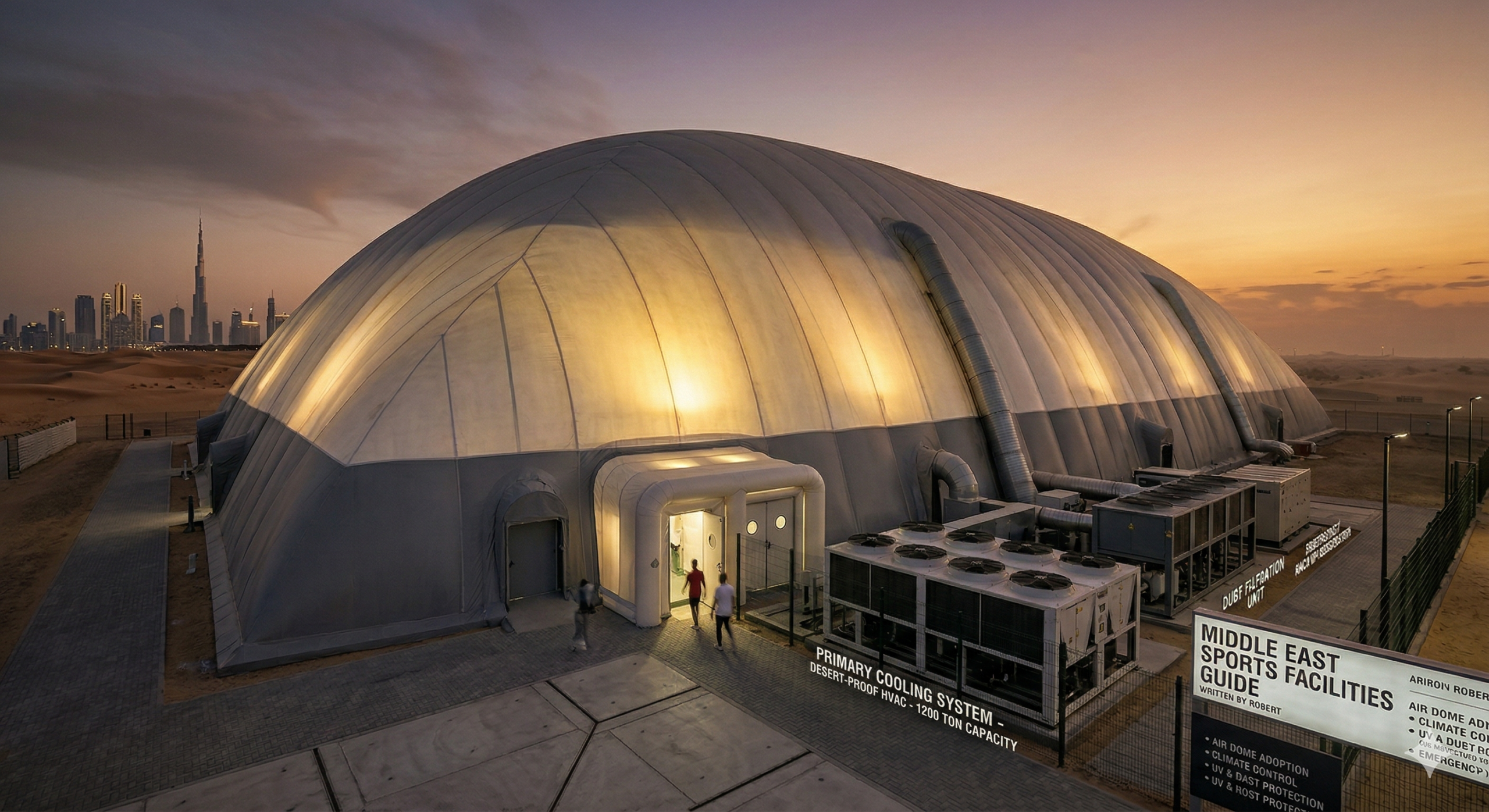
    Air Dome Climate Control for Year-Round Multi-Sport Use

    Since air domes create sealed environments, maintaining ideal climate conditions becomes critical for athlete performance and equipment longevity across different sports.

    You’ll need sophisticated HVAC systems that accommodate varying activity levels and occupancy loads throughout your facility.

    Temperature control requires balancing comfort for multiple sports simultaneously. Tennis players prefer 65-70°F, while basketball demands slightly cooler conditions at 60-68°F.

    Humidity management prevents condensation on dome surfaces and maintains court traction.

    Essential climate control features include:

    • Zoned temperature control for independent court area management
    • Variable speed fans for consistent air circulation without drafts
    • Dehumidification systems maintaining 40-60% relative humidity
    • Air filtration removing dust, pollen, and outdoor pollutants
    • Backup heating/cooling ensuring uninterrupted operations during equipment maintenance

    Proper ventilation prevents stagnant air pockets while maintaining structural pressure requirements for dome integrity.
  • Sports Dome Contractors USA Directory

    Sports Dome Contractors USA Directory

    You’ll find choosing the right air dome contractor can make or break your sports facility project. With dozens of contractors across the USA claiming expertise in dome construction, you’re facing a complex decision that’ll impact your budget, timeline, and facility’s long-term performance. The contractor categories aren’t clearly defined, and what works for a small training facility won’t necessarily suit a large sports complex. Before you commit to any contractor, there’s critical information you need to understand about your options.

    What To Look For In Professional Air Dome Contractors

    When evaluating air dome contractors, you’ll encounter three main categories that directly impact your project’s success and budget.

    Manufacturer direct contractors offer the highest quality but premium pricing.

    Manufacturer-certified sports dome contractors provide balanced solutions, ideal for projects spanning 10,000-50,000 square feet.

    Independent air dome installers deliver cost-effective options with potentially lower overhead.

    Regardless of category, you must verify essential credentials.

    Demand proof of liability insurance exceeding $2 million, active worker’s compensation coverage, and thorough bonding.

    Request detailed references from recent projects similar in scope to yours.

    Don’t skip this verification step – it protects your investment and guarantees professional standards.

    Smart selection among dome construction contractors usa requires balancing quality expectations, budget constraints, and project timeline requirements for best results.

    Manufacturer-Direct Air Dome Contractors: Premium Quality Options

    Since manufacturer-direct air dome contractors represent the manufacturer’s flagship operations, you’ll receive unmatched quality control and cutting-edge technology with every installation.

    These premium contractors maintain direct relationships with equipment manufacturers, ensuring access to the latest innovations and materials before they reach the broader market.

    You’ll benefit from extensive warranties, specialized training programs, and immediate technical support when issues arise.

    Manufacturer-direct teams typically handle large-scale projects exceeding 50,000 square feet, including professional sports facilities and municipal complexes.

    While costs run higher than independent contractors, you’re investing in proven expertise and long-term reliability.

    Many tennis bubble installation companies operate under manufacturer-direct models, providing specialized knowledge for court-specific requirements like proper ventilation, lighting integration, and surface compatibility for ideal playing conditions.

    Certified Regional Air Dome Contractors For Mid-Size Projects

    Most certified regional air dome contractors offer the ideal balance between premium quality and cost-effectiveness for projects ranging from 10,000 to 50,000 square feet. You’ll find these contractors maintain manufacturer certifications while providing competitive pricing for mid-size sports facilities.

    When evaluating certified regional contractors, you should verify they carry minimum $2 million liability insurance and current worker’s compensation coverage. Request detailed references from similar-sized projects they’ve completed within the past three years.

    Don’t skip checking their bonding capacity, as it protects your investment.

    These contractors typically specialize in sports complexes, training facilities, and recreational centers. They’ll provide extensive services including site preparation, installation, and maintenance support.

    You can expect faster project timelines compared to manufacturer-direct options while maintaining professional installation standards that meet local building codes and safety requirements.

    Budget-Friendly Independent Air Dome Contractors: Pros And Cons

    Although independent air dome contractors typically offer the lowest upfront costs, you’ll need to carefully weigh the trade-offs between savings and potential risks.

    Independent contractors often lack manufacturer training and certification, which can lead to installation errors or subpar workmanship. They might use generic materials instead of manufacturer-specified components, potentially compromising your dome’s longevity and performance. Additionally, warranty coverage may be limited or non-existent.

    However, these contractors can provide significant cost savings, especially for smaller projects or basic installations. They’re often more flexible with scheduling and willing to negotiate pricing.

    Before hiring any independent contractor, you must verify they carry minimum $2M liability insurance, worker’s compensation coverage, and bonding.

    Request multiple references from recent projects and inspect their previous work personally. Don’t let low prices override proper due diligence.

    Matching Your Air Dome Project Size To Contractor Type

    Beyond evaluating contractor credentials, your project’s square footage directly determines which contractor type will deliver the best value and results.

    You’ll maximize efficiency by aligning your dome size with the right contractor expertise.

    Here’s how to match your project:

    • Small projects (under 10,000 sq ft): Independent contractors offer competitive pricing and personalized service.
    • Medium projects (10,000-50,000 sq ft): Manufacturer-certified contractors provide balanced quality and cost-effectiveness.
    • Large projects (over 50,000 sq ft): Manufacturer direct guarantees premium quality and thorough support.
    • Complex installations: Choose certified or direct contractors regardless of size.
    • Budget-constrained projects: Independent contractors work best for straightforward installations.

    You’ll avoid cost overruns and delays when your contractor’s capabilities align with your project’s scope and complexity requirements.

  • Refurbished Air Domes Are They Worth It

    Refurbished Air Domes Are They Worth It

    You’re facing budget constraints but need substantial indoor space coverage, and refurbished air domes might seem like the perfect solution. While these structures can slash your initial investment by 25-35% compared to new installations, the real question isn’t about the upfront savings. It’s whether you’ll encounter unexpected costs, structural issues, or warranty complications down the road. Before you commit to what appears to be a smart financial decision, there are several critical factors that could make or break your investment.

    Why Choose Refurbished Air Domes: 25-35% Cost Savings Breakdown

    When you’re evaluating facility expansion options, refurbished air domes offer substantial financial advantages that can free up 25-35% of your budget for other priorities.

    This significant cost reduction stems from the professional refurbishment process, where existing structures receive new blowers, fabric repairs, and re-tensioning rather than complete replacement.

    You’ll find that a refurbished air dome covering 7,200-24,000 square feet costs thousands less than new construction while delivering comparable performance.

    Whether you’re considering a reconditioned sports dome for athletics or a certified pre-owned tennis bubble for year-round play, the savings remain consistent across applications.

    The refurbishment process includes professional cleaning, tear repairs, and equipment upgrades, ensuring you receive a facility that meets current safety standards without the premium price tag of brand-new installations.

    Fabric, Blowers, and Frames: What Gets Refurbished vs. Replaced

    When you’re evaluating a refurbished air dome, you’ll need to understand which components get repaired versus completely replaced.

    The fabric typically undergoes professional cleaning and tear repairs, while blower systems often receive full upgrades to newer, more efficient models.

    Frame structures get thorough assessments to determine whether reinforcement will suffice or if sections require replacement.

    Fabric Repair vs Replacement

    Understanding which components get repaired versus replaced determines the quality and longevity of your refurbished air dome. When evaluating a factory refurbished dome, you’ll find that fabric typically undergoes extensive repair rather than complete replacement. Professional refurbishers patch tears, re-tension sagging areas, and reinforce stress points to extend the fabric’s lifespan.

    Component Repair Process Replacement Criteria
    Fabric tears Heat welding, patches Damage >30% surface area
    Blower systems Motor rebuilds, cleaning Age >15 years
    Anchor points Re-tensioning, reinforcement Structural failure
    Zippers/doors Track realignment Complete mechanism failure
    Inflation controls Calibration, sensor cleaning Electronic system failure

    This approach maintains structural integrity while keeping costs 25-35% below new dome prices, making refurbished options financially attractive.

    Blower System Upgrades

    Although fabric repairs dominate most refurbishment projects, blower systems present different upgrade opportunities that can significantly improve your dome’s performance and energy efficiency.

    You’ll typically find that refurbishment specialists replace older blowers with modern, energy-efficient models rather than attempting repairs on worn units.

    New blower installations during refurbishment often include variable-speed controls, allowing you to adjust air pressure based on weather conditions and usage patterns.

    This upgrade can reduce your energy costs by 20-30% compared to single-speed systems.

    You should expect upgraded control panels with digital monitoring capabilities, giving you real-time data on pressure levels and system performance.

    Some refurbishers also install backup blower systems during upgrades, ensuring your dome stays inflated even if the primary unit fails unexpectedly.

    Frame Structure Assessment

    Before upgrading blowers or repairing fabric, you’ll need a detailed structural assessment to determine which frame components can be refurbished versus those requiring complete replacement.

    Professional evaluators examine anchor points, cable systems, and structural integrity to identify wear patterns and stress damage.

    Frame components typically last longer than fabric, making them prime candidates for refurbishment.

    Steel cables, tensioning hardware, and foundation anchors often retain structural integrity even when fabric needs replacement.

    However, corroded cables or damaged anchor points require immediate replacement for safety reasons.

    You’ll find that most reputable refurbishment companies replace high-wear components like door seals, ventilation systems, and emergency deflation equipment regardless of condition.

    This all-encompassing approach guarantees your refurbished dome meets current safety standards while maximizing the value of salvageable structural elements.

    Warranty Protection: 10-15 Year Coverage for Refurbished Air Domes

    When you invest in a refurbished air dome, you’re protected by extensive warranty coverage that spans 10-15 years for fabric components and three years for equipment.

    This thorough protection gives you confidence that your facility investment is secure, matching nearly the same coverage you’d receive with a new installation.

    The warranty demonstrates the refurbisher’s commitment to quality workmanship and materials.

    You’ll have peace of mind knowing that professionally repaired tears, re-tensioned fabric, and new blowers are backed by substantial guarantees.

    Key warranty benefits include:

    1. Fabric longevity assurance – Your dome’s structural integrity is protected for over a decade
    2. Equipment reliability guarantee – New blowers and mechanical systems are covered during critical early years
    3. Professional repair backing – All refurbishment work is warranted against defects

    Size and Capacity Options: 7,200-24,000 Sq Ft Facilities Available

    Beyond warranty protection, refurbished air domes offer remarkable flexibility in size options to match your specific facility needs.

    You’ll find refurbished units ranging from 7,200 to 24,000 square feet, covering 669 to 2,230 square meters respectively. This range accommodates various applications, from small training facilities to large multi-sport complexes.

    You can choose smaller 7,200-10,000 sq ft domes for single courts, batting cages, or specialized training areas.

    Mid-range options of 12,000-16,000 sq ft work perfectly for full basketball courts or soccer fields.

    Larger facilities up to 24,000 sq ft can house multiple courts, full-size indoor fields, or combined recreational spaces.

    This size flexibility means you won’t compromise on your vision while staying within budget.

    You’ll get professional-grade space that’s been properly refurbished to meet your capacity requirements.

    Hidden Costs and Potential Issues With Refurbished Domes

    While refurbished air domes offer significant savings, you’ll need to watch for unexpected installation expenses that weren’t included in the initial quote.

    The limited warranty coverage on refurbished units may leave you vulnerable if major issues arise after the 3-year equipment guarantee expires.

    You should also carefully assess potential structural integrity risks, as the dome’s previous use and wear patterns mightn’t be immediately apparent during your initial inspection.

    Unexpected Installation Expenses

    Although refurbished air domes offer significant upfront savings, you’ll likely encounter installation expenses that weren’t part of your initial budget calculations.

    These unexpected costs can quickly erode the 25-35% savings you’re expecting from choosing refurbished over new.

    Common installation surprises include:

    1. Site preparation modifications – Your existing foundation mightn’t align with the refurbished dome’s specifications, requiring costly concrete work or leveling adjustments that can reach $15,000-30,000.
    2. Updated electrical systems – Newer blower equipment often demands upgraded electrical panels, conduits, and safety switches that older facilities lack, adding $8,000-20,000 to your project.
    3. Permit and inspection fees – Local authorities may treat refurbished installations as new construction, triggering engineering reviews, structural assessments, and extended approval processes costing $5,000-12,000.

    Limited Warranty Coverage

    Despite manufacturers advertising 10-15 year fabric warranties and 3-year equipment coverage, refurbished air dome warranties contain significant gaps that’ll leave you financially exposed when problems arise.

    You’ll discover most warranties exclude pre-existing damage that wasn’t identified during initial inspection. Installation defects, foundation issues, and weather-related problems often aren’t covered.

    The refurbisher’s warranty typically covers only their specific work—not the original dome components they didn’t touch.

    Equipment warranties usually apply solely to replaced blowers, not refurbished mechanical systems. You’re responsible for parts that fail due to age-related wear, even if they weren’t addressed during refurbishment.

    Many warranties require you to use specific maintenance companies or void coverage.

    Labor costs for warranty repairs frequently aren’t included, leaving you paying technician fees for covered parts.

    Structural Integrity Risks

    Beyond warranty limitations, refurbished air domes carry structural risks that can trigger expensive emergency repairs or complete facility shutdowns.

    When you’re evaluating a refurbished dome, you’re fundamentally betting on the integrity of aged infrastructure that’s already weathered years of stress cycles, temperature fluctuations, and environmental exposure.

    Consider these critical structural vulnerabilities:

    1. Fabric stress points – Previous anchor failures or micro-tears can propagate under pressure, causing catastrophic deflation during peak usage periods.
    2. Foundation settlement issues – Existing concrete anchors may have shifted over time, creating uneven tension that compromises the entire structure’s stability.
    3. Blower system integration problems – Mismatched replacement equipment can create pressure inconsistencies, leading to fabric fatigue and premature failure.

    You’re inheriting unknown maintenance histories that could surface as costly surprises.

    Quality Verification: How to Assess Refurbishment Standards

    How can you determine whether a refurbished air dome meets professional standards before making your investment? Start by requesting detailed documentation of the refurbishment process, including professional cleaning records, blower replacement specifications, and fabric repair history.

    You’ll want to verify that tears have been properly patched using manufacturer-approved materials and techniques.

    Inspect the re-tensioning work personally or hire an independent engineer to assess fabric tautness and anchor point integrity.

    Don’t accept vague promises—demand specific warranty terms covering both fabric (10-15 years) and equipment (3 years).

    Request references from previous refurbishment customers and visit their facilities if possible.

    Finally, confirm the refurbisher is certified by the original manufacturer or holds relevant industry credentials. This verification protects your investment and confirms you’re getting genuine professional-grade restoration work.

    Best Candidates for Refurbished Air Dome Investment

    Several specific buyer profiles consistently achieve the best returns when investing in refurbished air domes. You’ll maximize your investment if you fall into one of these categories.

    1. Budget-conscious facility operators who need immediate coverage for sports programs, events, or storage but can’t justify new dome costs.

    You’re getting 65-75% of original value while saving thousands upfront.

    2. Seasonal business owners running tennis clubs, golf facilities, or event venues who require temporary or semi-permanent structures.

    Your shorter payback period makes refurbished units ideal.

    3. Municipal recreation departments with limited capital budgets but community pressure for year-round facilities.

    You can serve more residents while maintaining fiscal responsibility.

    These buyers typically see ROI within 3-5 years versus 7-10 years for new installations.

  • Seasonal vs Year-Round Air Dome Decision

    Seasonal vs Year-Round Air Dome Decision

    You’re facing a critical decision that’ll impact your facility’s budget for years to come. Choosing between a seasonal air dome ($700K-$1M) and a year-round installation ($800K-$1.2M) isn’t just about upfront costs—it’s about hidden expenses that can quietly drain your resources. While that $100K-$300K price difference might seem straightforward, the real financial picture becomes clear only when you factor in setup, removal, storage, and weather-related risks that most operators completely overlook.

    Air Dome Costs: Seasonal ($700K-$1M) vs Year-Round ($800K-$1.2M)

    Two distinct pricing tiers separate seasonal and year-round air domes, with seasonal options starting at $700,000 to $1 million while year-round installations range from $800,000 to $1.2 million.

    When you’re evaluating seasonal vs year-round air dome options, you’ll notice the upfront difference isn’t dramatic—typically $100,000 to $200,000 more for permanent structures.

    However, your temporary vs permanent dome decision involves hidden costs. Seasonal domes require annual setup and removal expenses ranging from $16,000 to $30,000, plus you’ll need dedicated storage space measuring 10′ x 20′.

    Over five years, these recurring costs can offset initial savings.

    Your seasonal dome vs fixed installation choice ultimately depends on usage patterns. If you’ll operate nine to twelve months annually, permanent installations deliver better value despite higher upfront investment.

    Hidden Expenses: Setup, Removal, and Storage Requirements for Seasonal Domes

    Beyond the sticker price, seasonal air domes carry recurring expenses that can greatly impact your total cost of ownership.

    You’ll face annual setup and removal costs ranging from $16,000 to $30,000, which includes professional installation, equipment rental, and labor. These expenses occur every single year your dome operates.

    Storage presents another ongoing challenge.

    You’ll need a dedicated 10′ x 20′ space to house your deflated dome during off-seasons. This storage area must remain dry, secure, and climate-controlled to prevent damage from moisture, pests, or temperature fluctuations.

    Factor in storage facility rental costs or the opportunity cost of using your own space.

    Don’t overlook transportation expenses either.

    Moving your dome between storage and installation sites requires specialized vehicles and handling equipment, adding hundreds to thousands annually.

    Break-Even Point: When Permanent Air Domes Beat Seasonal Options

    You’ll reach the break-even point between seasonal and permanent air domes faster than you might expect when you factor in annual setup costs.

    Your 20,000 sq ft seasonal dome’s $16K-$30K yearly expenses mean you’ll spend an additional $80K-$150K over five years compared to a permanent structure.

    Calculate your total cost of ownership over 7-10 years, and you’ll likely find the permanent dome’s higher upfront investment pays off through eliminated recurring costs.

    Annual Cost Calculations

    Understanding the break-even point between seasonal and year-round air domes requires examining both upfront investments and ongoing operational costs.

    For a 20,000 sq ft dome, you’ll face $700K-$1M upfront for seasonal options versus $800K-$1.2M for permanent structures.

    Your annual operational costs tell the real story. Seasonal domes require $16K-$30K yearly for setup and removal, plus storage expenses for a 10′ x 20′ space. Year-round domes eliminate these recurring costs entirely.

    Calculate your break-even timeline by dividing the upfront cost difference by annual operational savings.

    With $100K-$200K higher initial investment but $16K-$30K annual savings, you’ll typically break even within 3.3-12.5 years. If you’re planning 9-12 months of annual use, permanent domes become financially advantageous.

    Multi-Year ROI Analysis

    When your facility operates more than seven months annually, the financial mathematics shift dramatically in favor of permanent air domes. You’ll reach break-even between years three and four, depending on your annual setup costs and usage intensity.

    Here’s your ROI timeline: Year one shows seasonal domes ahead by $100K-$200K due to lower upfront investment. By year two, you’re still saving $84K-$170K with seasonal options.

    However, year three marks the turning point where cumulative costs converge. From year four onward, you’ll save $16K-$30K annually with permanent structures.

    Over ten years, permanent domes deliver $112K-$210K in total savings. Factor in reduced labor disruption, eliminated weather delays during setup, and consistent facility availability—permanent air domes become the clear financial winner for extended seasonal operations.

    Storage Solutions: Planning for 20,000 Sq Ft Seasonal Air Dome Systems

    One critical aspect of owning a 20,000 sq ft seasonal air dome that’s often overlooked during the planning phase is the storage requirement during off-season months.

    You’ll need approximately 200 square feet of storage space (10′ x 20′) to properly house your dome membrane, blower systems, and accessories.

    Consider climate-controlled storage to protect your investment from moisture, temperature fluctuations, and UV exposure.

    Many facilities opt for dedicated storage buildings or rent warehouse space specifically for dome components.

    You’ll also need adequate ventilation to prevent mold and mildew formation on fabric materials.

    Factor storage costs into your annual operating budget—typically $1,200-$3,600 yearly for commercial storage.

    Some operators negotiate shared storage arrangements with other seasonal dome owners to reduce individual costs while maintaining proper storage conditions.

    9+ Month Usage: Why Year-Round Air Domes Make Financial Sense

    While seasonal air domes initially appear more cost-effective with their lower upfront investment of $700K-$1M compared to year-round systems at $800K-$1.2M, the financial mathematics shift dramatically when you’re operating nine months or more annually.

    The recurring costs quickly erode seasonal systems’ initial savings:

    Cost Factor Seasonal Year-Round
    Year 1 Total $716K-$1.03M $800K-$1.2M
    Year 5 Total $764K-$1.15M $800K-$1.2M
    Year 10 Total $844K-$1.3M $800K-$1.2M
    Storage Space Required None
    Setup Risk Annual Eliminated

    You’ll reach break-even around year three to five. Beyond this point, year-round domes deliver superior ROI while eliminating storage headaches and weather-dependent installation windows that can delay your season openings.

    Real-World Air Dome ROI: Cost Analysis Over 5-10 Years

    Three critical factors determine your air dome’s actual return on investment: operational intensity, local climate conditions, and facility utilization rates.

    Over five years, a seasonal dome‘s total cost reaches $780K-$1.15M ($700K initial + $80K-$150K setup/removal).

    Year-round domes cost $800K-$1.2M with no recurring expenses.

    If you’re operating 9+ months annually, year-round domes break even by year two.

    The math shifts dramatically with usage patterns—seasonal domes favor 6-month operations, while year-round models excel with consistent use.

    Storage costs add $2K-$5K annually for seasonal units.

    Labor disruptions during changes can impact revenue by 10-15%.

    Climate Considerations: Weather Impact on Seasonal vs Permanent Domes

    Your dome’s climate resilience directly impacts whether seasonal or permanent installation makes financial sense.

    Seasonal domes face repeated stress from setup and teardown cycles, while permanent structures must withstand year-round weather extremes including snow loads, high winds, and temperature fluctuations.

    You’ll need robust temperature control systems and storm-resistant designs, but the risk-reward equation changes dramatically based on your local weather patterns.

    Winter Weather Resistance

    When winter storms arrive with heavy snow loads and freezing temperatures, the structural differences between seasonal and year-round air domes become critical factors in your facility’s survival.

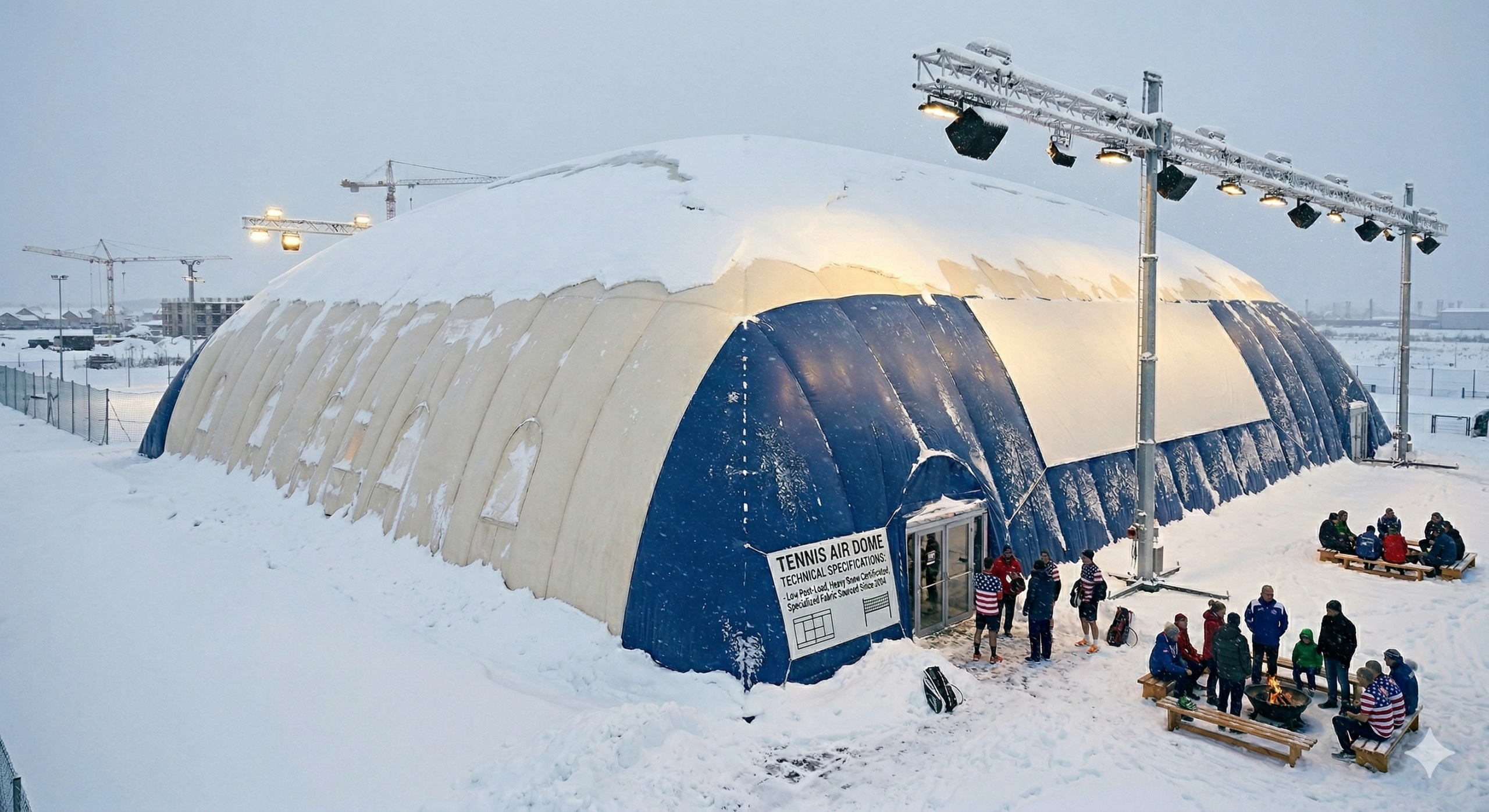
    Year-round domes feature reinforced fabric systems and enhanced anchoring specifically engineered for harsh winter conditions. They’ll withstand snow accumulation up to 40 pounds per square foot and temperatures as low as -40°F without compromising structural integrity.

    Seasonal domes weren’t designed for these extreme conditions. Their lighter materials and standard anchoring systems can fail under heavy snow loads, potentially causing:

    • Complete structural collapse from excessive weight
    • Fabric tears from ice formation and expansion
    • Air leakage through temperature-stressed seams
    • Foundation damage from freeze-thaw cycles

    You’ll face considerably higher winter maintenance costs and safety risks with seasonal options during severe weather events.

    Temperature Control Systems

    Because temperature control systems directly impact both operational costs and athletic performance, the choice between seasonal and year-round air domes creates vastly different heating and cooling requirements throughout the year.

    Seasonal domes let you optimize climate control for specific months when you’ll use the facility most. You can install heating systems during winter installations or cooling equipment for summer sports seasons, reducing energy costs by avoiding year-round climate management.

    Year-round domes require extensive HVAC systems handling extreme temperature variations across all seasons. You’ll need robust heating for winter months and adequate cooling for summer heat.

    While initial HVAC investments run higher, you’ll achieve better energy efficiency through consistent system operation rather than intermittent seasonal heating spikes that seasonal domes experience during setup periods.

    Storm Damage Risks

    Storm damage risks vary dramatically between seasonal and year-round air domes, with each design philosophy creating distinct vulnerabilities during severe weather events.

    Your seasonal dome faces unique challenges since you’ll typically remove it before winter’s harshest conditions. However, unexpected storms during operating seasons can catch you off-guard with limited structural reinforcement options.

    You’re also vulnerable during setup and takedown periods when the structure isn’t fully secured.

    Year-round domes withstand more severe weather but face prolonged exposure to multiple storm seasons. Consider these key risk factors:

    • Wind resistance: Permanent structures handle sustained winds better than temporary installations.
    • Snow loading: Year-round domes require engineered snow load calculations.
    • Hail damage: Both types need puncture-resistant materials in hail-prone regions.
    • Emergency deflation: Seasonal domes offer quicker protective deflation options.
  • Air Dome Features and Customization Options

    Air Dome Features and Customization Options

    You’re investing in an air dome, but the standard options won’t cut it for your specific needs. Whether you’re powering a sports facility or industrial workspace, the choices you make regarding insulation layers, entry systems, lighting, and ventilation will directly impact your operational costs and user experience. The difference between selecting double-layer construction versus single-layer alone could save you thousands annually, and that’s just the beginning of what you’ll need to contemplate.

    Double-Layer vs Single-Layer Air Dome Energy Efficiency

    When you’re deciding between single and double-layer air dome construction, the energy efficiency difference becomes immediately apparent in your utility bills.

    Double-layer vs single-layer air dome energy efficiency creates a significant performance gap that directly impacts your operating costs.

    Double-layer systems provide 30-40% energy savings compared to single-layer alternatives, particularly noticeable in 20,000 square foot facilities.

    You’ll benefit from superior insulation properties that reduce heating and cooling demands throughout the year. The air gap between layers acts as a thermal barrier, maintaining consistent internal temperatures with less HVAC workload.

    Single-layer domes offer lower upfront costs but higher ongoing energy expenses.

    You’re trading initial savings for increased monthly utility bills. For year-round facilities, double-layer construction typically pays for itself through reduced energy consumption within three years.

    Air Dome Door Systems: Zipper vs Airlock Entry

    Your door system choice fundamentally determines how users access your air dome while maintaining internal pressure and climate control.

    Air dome door systems come in two primary configurations: zipper and airlock entries, each serving different operational needs.

    Zipper doors offer cost-effective access with simple operation. You’ll find them suitable for facilities requiring occasional entry and exit. However, they compromise pressure integrity during use, temporarily affecting climate control.

    Airlock systems provide superior pressure maintenance through double-door chambers. You enter the first door, allow it to seal, then proceed through the second door. This prevents pressure loss and maintains consistent internal conditions.

    Standard dimensions typically measure 6′ x 8′ (1.8m x 2.4m) for both systems.

    Choose zipper doors for budget-conscious projects with limited traffic. Select airlocks for facilities demanding continuous climate control and frequent access.

    Air Dome Lighting: LED vs Metal Halide Systems

    Two primary lighting technologies compete for air dome installations: LED systems and traditional metal halide fixtures.

    When selecting air dome features, you’ll find LED systems offer superior energy efficiency, consuming 50-70% less power than metal halide alternatives. LED fixtures provide instant-on capability, eliminating the warm-up time metal halides require. You’ll achieve better light distribution with LEDs, reducing dark spots and shadows across your dome’s interior.

    Metal halide systems cost less upfront but carry higher operational expenses through increased energy consumption and frequent bulb replacements.

    Among essential air dome upgrades, switching to LED technology delivers long-term savings and improved performance. Your choice between air dome lighting: LED vs metal halide systems depends on budget priorities and operational requirements, though LED technology increasingly dominates new installations.

    Ventilation and Custom Logo Options for Air Domes

    Although lighting systems grab attention during air dome planning, ventilation and branding elements greatly impact both functionality and visual appeal. When exploring ventilation and custom logo options for air domes, you’ll find sidewall vents provide essential airflow control while maintaining structural integrity. These dome accessories work alongside your HVAC system to regulate temperature and humidity effectively.

    Feature Standard Option Premium Option
    Sidewall Vents Manual operation Automated controls
    Logo Placement Single location Multiple positions
    Printing Method Vinyl application Heat-sealed graphics
    Ventilation Size 24″ x 24″ Custom dimensions
    Color Options Limited palette Full-color matching

    Custom logo printing transforms your dome into a branded facility, while proper ventilation guarantees peak air quality. You can specify logo placement, colors, and sizing to match your organization’s identity perfectly.

  • Fabric Structure Manufacturer Comparison

    Fabric Structure Manufacturer Comparison

    You’re facing a critical decision that’ll impact your project for decades. Choosing the wrong fabric structure manufacturer means you’ll likely encounter costly repairs, structural limitations, or design compromises down the road. With Legacy Building Solutions and ClearSpan dominating the market, each offers distinct advantages in steel framing and fabric options. However, the differences between PVC and PTFE materials, along with span capabilities, create a complex puzzle that demands careful analysis before you commit your budget.

    Essential Selection Criteria: Span Requirements, Climate, and Timeline Factors

    When selecting a fabric structure manufacturer, you’ll need to evaluate three critical factors that directly impact your project’s success and long-term performance.

    Span Requirements determine which fabric structure manufacturers can handle your project. If you need spans exceeding 200 feet, Legacy Building Solutions’ steel I-beam frames support up to 300 feet, while other manufacturers may require multiple supports or can’t accommodate such distances.

    Climate considerations affect fabric selection and structural design. PTFE fabrics offer superior UV resistance and longevity in harsh climates, while PVC provides cost-effective solutions for moderate conditions.

    You’ll also need wind and snow load calculations.

    Timeline factors influence manufacturer choice, as custom architectural solutions from companies like Signature Structures require longer lead times than standardized systems from economical providers like Calhoun Super Structure.

    Steel Frame Showdown: Legacy Building Solutions vs ClearSpan Capabilities

    Both Legacy Building Solutions and ClearSpan dominate the steel-framed fabric structure market, yet they’ve developed distinctly different approaches to structural engineering.

    Legacy specializes in steel I-beam frames that’ll span up to 300 feet without interior supports, making them ideal when you need maximum clear space. Their engineering focuses on heavy-duty applications where structural integrity can’t be compromised.

    ClearSpan offers more versatility in their frame designs, providing various structural options to match your specific requirements and budget. While they may not achieve Legacy’s extreme span capabilities, they’re among the top rigid frame suppliers for projects requiring flexible engineering solutions.

    You’ll find Legacy excels in industrial applications, while ClearSpan’s adaptable approach suits diverse commercial and agricultural needs better.

    Fabric Material Breakdown: PVC vs PTFE Performance and Longevity

    While frame design determines your structure’s strength, the fabric material you choose directly impacts its lifespan and performance under harsh conditions. When evaluating tension fabric companies, you’ll encounter two primary options: PVC and PTFE membranes.

    Feature PVC Fabric PTFE Fabric
    Lifespan 15-20 years 25-30+ years
    UV Resistance Moderate degradation Exceptional stability
    Temperature Range -40°F to 180°F -100°F to 500°F
    Cost Budget-friendly Premium investment
    Maintenance Regular cleaning required Self-cleaning surface

    PVC offers cost-effective protection for shorter-term applications, while PTFE delivers superior longevity and weather resistance. Your climate, budget, and performance expectations should guide this critical decision.

    Budget Reality Check: Custom Design vs Economical Fabric Building Options

    Budget constraints often force a critical decision between architectural elegance and practical functionality when selecting your fabric structure manufacturer.

    Signature Structures delivers premium custom architectural solutions with engineered aesthetics, but you’ll pay considerably more for their design expertise and specialized fabrication.

    Conversely, Calhoun Super Structure focuses on economical options that prioritize cost-effectiveness over visual appeal.

    Legacy Building Solutions and ClearSpan occupy the middle ground, offering solid engineering with moderate customization flexibility.

    Clear span building manufacturers like these provide excellent value by balancing structural integrity with reasonable pricing.

    Your choice ultimately depends on whether you need a showpiece structure or simply require reliable shelter.

    Consider your long-term needs—sometimes paying more upfront saves money through reduced maintenance and extended lifespan.

  • Sports Dome Financing and Loans Guide

    Sports Dome Financing and Loans Guide

    You’re considering building a sports dome, but the financing options can feel overwhelming. Whether you’re a school district, private facility owner, or community organization, understanding your funding choices will make or break your project. From equipment loans requiring 20% down to creative leasing arrangements and government funding opportunities, each path offers distinct advantages and challenges. The key is matching the right financing structure to your specific situation and long-term goals.

    How Much Does Air Dome Financing Really Cost?

    When you’re budgeting for an air dome facility, the financing costs extend far beyond the sticker price of the structure itself. Air dome loans typically require 10-20% down payments on facilities ranging from $200K to $500K, meaning you’ll need $20K to $100K upfront.

    Equipment loans offer 5-7 year terms at 5-8% interest rates, while leasing options run $3K-$8K monthly for 20,000 square foot facilities. Your total financing costs include interest payments, insurance, permits, site preparation, and ongoing maintenance expenses.

    SBA 7(a) loans provide attractive terms with just 10% down for projects up to $5M, making them ideal for larger facilities.

    Municipal bonds offer another avenue for public projects, potentially reducing borrowing costs considerably compared to traditional commercial financing options.

    Equipment Loans: The Most Common Air Dome Financing Path

    Most air dome buyers choose equipment loans as their primary financing method because these specialized loans treat the dome structure as movable equipment rather than permanent real estate.

    You’ll typically encounter loan terms spanning 5-7 years with interest rates ranging from 5-8%. Most lenders require a 20% down payment for facilities costing $200,000-$500,000.

    Equipment loans offer several advantages for your air dome project. You won’t need complex real estate appraisals or lengthy property evaluations. The approval process moves faster since you’re financing equipment rather than property.

    Your dome serves as collateral, which helps secure competitive rates. These loans work particularly well if you’re purchasing a complete air dome system from established manufacturers.

    You’ll find that equipment financing companies understand the sports facility market and can structure payments around your seasonal revenue patterns.

    Should You Lease Or Buy Your Air Dome Facility?

    How do you decide between leasing and purchasing your air dome facility? Your choice depends on several critical factors that’ll impact your long-term financial strategy and operational flexibility.

    Consider these key factors when evaluating sports dome financing options:

    1. Cash flow requirements – Leasing offers lower upfront costs ($3K-$8K monthly) versus 20% down payments on purchases.
    2. Tax implications – Lease payments are fully deductible operating expenses, while purchases offer depreciation benefits.
    3. Long-term commitment – Buying makes sense if you’ll operate for 10+ years; leasing provides flexibility for shorter commitments.
    4. Maintenance responsibilities – Lessors typically handle major repairs and upgrades, reducing your operational burden.

    Purchasing builds equity but requires significant capital. Leasing preserves cash flow but costs more over time without ownership benefits.

    SBA Loans For Large Air Dome Projects

    For ambitious air dome projects exceeding $500,000, SBA 7(a) loans offer a powerful financing alternative that bridges the gap between conventional equipment loans and large-scale commercial lending.

    These government-backed loans provide up to $5 million in funding with just 10% down payment requirements, making them ideal for extensive sports facilities.

    SBA loans for large air dome projects typically feature competitive interest rates and extended repayment terms up to 25 years.

    You’ll benefit from lower down payments compared to traditional commercial loans, preserving working capital for operations and marketing.

    The SBA guarantee reduces lender risk, improving your approval odds even with limited collateral.

    However, expect a longer approval process requiring detailed business plans, financial projections, and documentation.

    You’ll also pay guarantee fees, but the favorable terms often offset these costs for substantial air dome investments.

    Government Funding Options For Public Air Domes

    1. General obligation bonds – backed by the municipality’s full faith and credit, offering lowest interest rates.
    2. Revenue bonds – secured by facility income streams like user fees and memberships.
    3. Special assessment bonds – funded through property taxes within designated districts.
    4. Certificate of participation – lease-purchase agreements that don’t require voter approval.

    You’ll typically secure 20-30 year terms with rates 2-3% below commercial alternatives, making municipal financing ideal for community air dome projects.

  • Air Dome Inspection Checklist Before Purchase

    Air Dome Inspection Checklist Before Purchase

    You’re about to make a significant investment in an air dome, but without proper inspection, you could inherit someone else’s costly problems. Most buyers focus on price and size while overlooking critical details that separate a great deal from a financial nightmare. The difference between a smart purchase and an expensive mistake often comes down to knowing exactly what to examine—and more importantly, what warning signs you can’t afford to ignore.

    What to Look for in Used Air Dome Listings

    Where should you begin when evaluating a used air dome for purchase? Start with your air dome inspection checklist by examining listing photos carefully.

    Look for visible membrane damage, discoloration, or patching that indicates UV deterioration across the 9,360+ square foot surface. Check if blower systems and operational hours are documented—this information reveals maintenance quality.

    Your used dome inspection guide should prioritize door and airlock condition in photos. Damaged zippers mean costly repairs ahead.

    Verify the complete accessory package is included: anchoring systems, repair kits, and backup equipment.

    Request maintenance records upfront. Missing documentation suggests poor care.

    For sports dome condition assessment, focus on high-wear areas around entrances and playing surfaces. Well-maintained domes include detailed service logs and proactive component replacements.

    How to Verify Air Dome Size and Specifications

    Three key measurements determine if a used air dome meets your needs: length, width, and peak height specifications. Request the original manufacturer’s documentation showing exact dimensions, as field measurements can vary due to fabric stretch or settling.

    Verify the square footage matches advertised claims—many facilities exceed 9,360 square feet, so precise calculations matter for your space requirements.

    During your tennis bubble inspection before buying, bring a measuring tape to confirm critical clearances. Check that door heights accommodate equipment transport and that interior width provides adequate playing zones.

    Compare the seller’s specifications against manufacturer standards for that model year. Document any discrepancies between advertised and actual dimensions, as these affect ventilation requirements, heating costs, and structural integrity.

    Accurate measurements prevent costly surprises after purchase.

    Inspecting Fabric Membrane for Deal-Breaking Damage

    Your fabric membrane inspection determines whether you’re buying a functional air dome or an expensive repair project.

    Start by examining the entire surface for UV damage, which appears as fading, brittleness, or chalky residue on the fabric. Check every seam for separation or loose stitching, paying special attention to stress points where panels connect.

    Look for tears, punctures, or patches throughout the membrane’s 9,360+ square feet. Small repairs aren’t necessarily deal-breakers, but extensive damage indicates costly replacement ahead.

    Run your hands along seams to feel for weakness or deterioration you can’t see. Document all damage with photos and measurements.

    Minor wear is normal, but widespread UV degradation, multiple seam failures, or large tears signal you should negotiate heavily or walk away entirely.

    Testing Blower Systems and Motor Condition

    You’ll need to thoroughly evaluate the blower system’s motor performance since it’s the heart of your air dome’s pressurization system.

    Check the motor’s amp draw, operating temperature, and noise levels to identify potential issues before they become costly failures.

    Don’t overlook bearing wear evaluation – listen for unusual sounds, feel for excessive vibration, and inspect for any signs of lubrication breakdown or overheating.

    Motor Performance Assessment

    Two essential components keep your air dome inflated and operational: the blower system and its motor. During your inspection, you’ll need to assess motor performance thoroughly to avoid costly surprises after purchase.

    Check the motor’s operating hours using the hour meter if available. High-hour motors may require imminent replacement or major maintenance.

    Listen for unusual noises, vibrations, or grinding sounds that indicate bearing wear or internal damage. Test the motor’s startup sequence—it should engage smoothly without hesitation or multiple attempts.

    Examine electrical connections for corrosion, loose wires, or burn marks. Verify proper voltage readings match manufacturer specifications.

    Ask for maintenance records showing regular service intervals, oil changes, and component replacements. Request a demonstration of the motor running under full load to observe its performance during actual operating conditions.

    Bearing Wear Evaluation

    Bearing wear represents the most common failure point in air dome blower systems, often developing gradually before causing complete motor shutdown. You’ll need to check for telltale signs that indicate imminent bearing replacement.

    Listen carefully for unusual noises during operation. Grinding, squealing, or rhythmic clicking sounds signal advanced bearing deterioration. Feel for excessive vibration in the motor housing, which indicates misalignment or worn components.

    Bearing Condition Sound Indicators Action Required
    Good Smooth, quiet operation Continue monitoring
    Fair Slight humming increase Schedule replacement
    Poor Grinding/squealing Replace immediately
    Failed Seized/rattling Motor rebuild needed

    Document operating hours since the last bearing service. Most industrial blower bearings require replacement every 8,000-15,000 hours depending on environmental conditions and maintenance quality.

    Checking Door and Airlock Functionality

    When maintaining your air dome’s structural integrity, door and airlock systems require careful attention since they’re the primary entry points that maintain internal air pressure.

    You’ll need to examine zipper integrity thoroughly, checking for broken teeth, worn fabric around zipper tracks, and smooth operation throughout the full opening and closing cycle.

    Test each airlock’s sealing capability by inspecting rubber gaskets and weatherstripping for cracks or deterioration.

    Verify that door frames remain properly aligned and haven’t shifted due to ground settlement or repeated use.

    Check all hardware including hinges, handles, and locking mechanisms for corrosion or excessive wear.

    Don’t overlook automatic door operators if present – test their responsiveness and inspect electrical connections.

    Document any issues since door failures can compromise the entire dome’s pressurization system.

    Essential Air Dome Accessories Worth the Investment

    While your air dome’s basic structure provides essential shelter, strategic accessory investments can dramatically enhance its functionality, safety, and longevity.

    You’ll want backup blower systems to prevent deflation during power outages or equipment failures. Emergency lighting systems guarantee safe evacuation during nighttime emergencies.

    Consider investing in heavy-duty ground anchoring systems, especially for high-wind environments. Climate control accessories like heating units and ventilation fans maintain comfortable conditions year-round.

    Don’t overlook safety equipment: fire extinguishers, first aid stations, and emergency communication devices are vital.

    Interior partition systems maximize space utilization for multiple activities. Quality floor coverings protect the membrane from wear and provide better traction.

    Finally, weatherproofing treatments extend your dome’s lifespan against UV damage and harsh weather conditions.

    Reading Maintenance Records Like a Pro

    Five key indicators in maintenance records reveal an air dome’s true condition and help you avoid costly surprises. You’ll want to examine documentation patterns that show consistent care versus neglect.

    Record Type Good Signs Red Flags
    Blower Maintenance Regular filter changes, bearing lubrication Gaps in service, overdue repairs
    Fabric Inspections UV treatment logs, seam reinforcements Missing inspections, ignored damage
    Emergency Repairs Quick response times, proper materials Repeated issues, temporary fixes

    Look for detailed entries with dates, technician names, and parts replaced. Quality records include photos of repairs and preventive measures taken. Missing documentation often indicates poor ownership habits.

    Pay special attention to blower runtime hours and fabric patch locations. Excessive repairs in the same areas suggest underlying structural problems you’ll inherit.

    Red Flags That Should Kill the Deal

    Although maintenance records can reveal concerning patterns, certain defects should immediately end your consideration of any air dome purchase.

    Extensive UV damage across the fabric membrane signals costly replacement within months. Multiple seam separations indicate structural compromise that’s expensive to repair properly. Blower system bearing failure creates safety risks and immediate replacement costs. Zipper failures on doors and airlocks compromise the dome’s pressure integrity entirely.

    Missing critical accessories like backup blowers or emergency power systems represent hidden expenses you’ll face immediately. Poor maintenance documentation suggests neglect that likely extends beyond visible problems.

    Foundation anchor point damage threatens the entire structure’s stability. Water damage or mold contamination requires professional remediation that often exceeds the dome’s purchase price.

    These red flags indicate purchases that’ll drain your budget quickly.

  • Where to Find Used Air Domes for Sale

    Where to Find Used Air Domes for Sale

    You’ve probably discovered that new air domes can cost hundreds of thousands of dollars, making used options an attractive alternative for budget-conscious facilities. However, finding quality pre-owned air domes isn’t as straightforward as browsing typical equipment marketplaces. The specialized nature of these structures means you’ll need to tap into industry-specific channels and networks that most buyers don’t know exist. Let’s explore the seven proven strategies that’ll help you uncover the best deals.

    What Size Used Air Dome Should You Target?

    Why does size matter so much when you’re shopping for a used air dome? You’ll find most listings in the used sports dome marketplace range from 7,200 to 24,000 square feet, but choosing the right size determines your facility’s viability and resale value.

    Target domes between 12,000-18,000 square feet for maximum flexibility. This size accommodates multiple sports configurations while keeping operational costs manageable.

    Smaller domes under 10,000 square feet limit your programming options, while oversized facilities above 20,000 square feet drain your budget through higher energy costs.

    When browsing second hand tennis bubble listings, consider your specific sport requirements. Tennis needs different dimensions than soccer or baseball.

    Always verify actual playing dimensions versus total footprint when evaluating any used dome for sale. Size directly impacts your business model’s success.

    Industry Classifieds And Athletic Business Used Air Dome Listings

    You’ll find Athletic Business Marketplace serves as the industry’s premier classified hub for used air dome listings, connecting buyers with sellers across North America.

    The publication’s trade advertisements feature professional-grade facilities from reputable sources, including decommissioned municipal complexes and upgraded private training centers.

    These industry classifieds typically showcase detailed specifications, installation history, and competitive pricing that’s often negotiable through direct seller contact.

    Athletic Business Marketplace Overview

    Athletic Business Magazine’s online marketplace stands as the premier destination for used air dome listings in North America.

    You’ll find extensive facility listings ranging from 7,200 to 24,000 square feet, making it your go-to resource when researching where to buy used air dome structures.

    The platform connects buyers directly with sellers, including schools, recreation centers, and sports facilities looking to upgrade or relocate their air-supported buildings.

    You can filter searches by size, location, and price range to narrow down options efficiently.

    Most listings include detailed specifications, installation history, and current condition assessments.

    The marketplace typically sees increased activity during off-season months when facilities plan major changes.

    You’ll also discover financing options and recommended installation contractors through their network of industry partners.

    Industry Publication Listings

    Beyond Athletic Business Magazine’s marketplace, specialized trade publications offer additional channels for locating used air dome inventory.

    These industry-focused publications maintain dedicated classified sections where facility owners, manufacturers, and dealers list available structures. You’ll find extensive listings that include detailed specifications, photographs, and pricing information for domes ranging from small training facilities to large multi-sport complexes.

    Key industry publications to monitor include:

    • Facility & Operations Magazine – Monthly classifieds featuring institutional sellers
    • Athletic Management Magazine – Quarterly equipment marketplace with verified listings
    • Sports Business Journal – Weekly digital classifieds targeting commercial buyers
    • Recreation Management Magazine – Specialized section for inflatable structure sales

    These publications typically feature domes between 7,200-24,000 square feet, with most sellers providing installation history and maintenance records to qualified buyers.

    Professional Trade Advertisements

    When searching for used air domes through professional channels, industry classifieds in Athletic Business Magazine represent the most thorough marketplace for buyers seeking quality pre-owned structures.

    You’ll find listings from athletic directors, facility managers, and institutional sellers who’ve maintained detailed maintenance records and can provide comprehensive facility histories.

    These professional advertisements typically feature larger installations ranging from 7,200 to 24,000 square feet, complete with specifications for HVAC systems, anchoring methods, and included accessories.

    You can negotiate directly with sellers who understand the technical requirements and operational challenges of air dome facilities.

    Monitor both print editions and online classifieds monthly, as inventory changes rapidly.

    Professional sellers often provide installation support, warranty transfers, and detailed inspection reports that aren’t available through informal channels.

    Manufacturer Refurbishment Programs For Used Air Domes

    You’ll find that manufacturer refurbishment programs offer structured pathways to acquire professionally restored air domes with clear eligibility requirements you must meet.

    These programs typically involve thorough restoration processes that address structural integrity, fabric replacement, and mechanical system updates to bring used domes back to near-new condition.

    Most manufacturers back their refurbished units with warranty coverage options that provide protection similar to new purchases, though terms may vary based on the dome’s age and condition.

    Program Eligibility Requirements

    While manufacturer refurbishment programs offer substantial savings on used air domes, they typically maintain strict eligibility criteria that can limit your participation.

    Most programs require you to meet specific operational and financial standards before qualifying for their refurbished inventory.

    You’ll need to navigate several key requirements:

    • Facility certification – Prove you operate a legitimate sports facility, educational institution, or municipal recreation center with proper permits and insurance coverage.
    • Financial qualifications – Demonstrate creditworthiness through bank statements, financial records, or established business credit ratings meeting their minimum thresholds.
    • Installation capabilities – Show you have qualified contractors or technical staff capable of proper dome installation and ongoing maintenance requirements.
    • Geographic restrictions – Meet location-based eligibility, as some manufacturers limit programs to specific regions or markets they actively service.

    Refurbishment Process Details

    Most manufacturer refurbishment programs follow a standardized four-phase process that transforms returned air domes into like-new condition.

    During inspection, technicians assess fabric integrity, seam strength, and hardware functionality using specialized testing equipment. They’ll document any stress points, UV damage, or membrane deterioration.

    The cleaning phase involves industrial washing systems that remove accumulated dirt, mildew, and environmental contaminants from both interior and exterior surfaces.

    Repairs follow, where damaged panels get patched or replaced, zippers are serviced, and anchor systems are reconditioned.

    Finally, quality assurance testing guarantees the dome meets original specifications for air pressure, structural integrity, and weather resistance.

    You’ll receive certification documents, updated installation manuals, and typically a limited warranty covering fabric and hardware components for 12-24 months after purchase.

    Warranty Coverage Options

    Refurbished air dome warranties typically span two distinct categories: extensive coverage for structural components and limited protection for fabric materials.

    You’ll find manufacturers offer varying warranty terms depending on the refurbishment level completed. Structural elements like blower systems, control panels, and anchoring systems often receive 2-3 year coverage, while fabric warranties usually range from 6-18 months.

    When evaluating warranty options, you should examine:

    • Prorated vs. full replacement coverage – determines your out-of-pocket costs for repairs
    • Labor inclusion terms – some warranties cover parts only, excluding installation costs
    • Weather damage exclusions – high winds or hail damage may void certain protections
    • Transferability clauses – important if you plan to sell the facility later

    Always request warranty documentation before finalizing your purchase to understand coverage limitations.

    Facility Liquidation And Closure Sales

    When sports facilities, recreational centers, or athletic complexes shut down permanently, they’ll often liquidate their air dome structures at considerably reduced prices.

    You’ll find these opportunities through commercial real estate brokers, liquidation companies, and bankruptcy auction websites.

    These sales typically offer complete packages including the fabric structure, blower systems, and lighting equipment.

    You’ll need to arrange removal and transportation yourself, which requires specialized contractors familiar with air dome dismantling.

    Monitor local business journals and bankruptcy filings in your region to identify potential closures early.

    Athletic facilities often announce closures months in advance, giving you time to negotiate directly with ownership before liquidation companies get involved.

    University athletic departments and municipal recreation centers frequently sell domes when upgrading facilities or changing sports programs.

    Why European Used Air Dome Imports Offer Better Value

    Although European sports facilities typically maintain higher construction standards than their American counterparts, currency fluctuations and stricter environmental regulations often force owners to sell quality air domes at prices well below U.S. market rates.

    You’ll find European air domes feature superior materials, advanced ventilation systems, and robust structural engineering that exceeds American standards. However, shipping costs and import logistics create opportunities for savvy buyers willing to handle international transactions.

    European imports typically offer these advantages:

    • Premium fabric materials with longer lifespans and better UV resistance
    • Advanced HVAC systems designed for energy efficiency compliance
    • Stricter safety certifications and structural testing documentation
    • Lower competition from American buyers due to import complexity

    Focus your search on Germany, Netherlands, and Scandinavian countries where environmental regulations drive facility upgrades, creating a steady supply of quality used domes.

    Facebook And LinkedIn Groups For Used Air Dome Deals

    Social media networks have opened up a goldmine of used air dome opportunities that traditional classifieds can’t match.

    You’ll find dedicated Facebook groups like “Sports Facility Equipment Exchange” and “Indoor Sports Dome Network” where facility owners post direct sales without broker markups.

    LinkedIn’s professional groups offer higher-quality leads through “Sports Facility Management” and “Athletic Infrastructure Professionals.” Members share decommissioning schedules, renovation plans, and exclusive pre-market opportunities you won’t see elsewhere.

    Join groups in your target regions and enable notifications for new posts. Engage with community discussions to build relationships—many deals happen through private messages before public listings.

    Set up saved searches using keywords like “air dome,” “inflatable building,” and “sports bubble.” Monitor European groups too, as they often list facilities available for international shipping.

    Off-Season Timing For Maximum Used Air Dome Savings

    Your timing can slash air dome purchase prices by 30-50% when you buy during specific off-season windows. Sellers face storage costs and want to move inventory when demand drops.

    You’ll find the deepest discounts from late spring through early fall when facilities aren’t thinking about winter sports coverage.

    Key off-season opportunities include:

    • March-May: Schools liquidate after winter sports seasons end
    • June-August: Facility upgrades happen during summer breaks, creating surplus inventory
    • September: Last chance for sellers to clear stock before peak buying season
    • Post-holiday January: Budget constraints force quick sales at reduced prices

    Start your search 6-8 months before installation. This timeline gives you negotiating power and guarantees proper planning for foundation work and permits before your target season.

  • Sports Dome Installation Timeline Planning

    Sports Dome Installation Timeline Planning

    You’re probably thinking a sports dome installation is straightforward—order it, set it up, and you’re ready to play. But here’s what most facility managers don’t realize: that simple timeline can quickly become a logistical nightmare without proper planning. Between permit delays, weather disruptions, and coordination challenges, your 6-8 week project could stretch into months. The difference between a smooth installation and a costly disaster comes down to understanding what really happens during each phase.

    Complete Sports Dome Installation Timeline: 6-8 Weeks

    When planning your sports dome project, you’ll need to allocate 6-8 weeks for complete installation of a 20,000 square foot air-supported structure.

    Your air dome installation timeline begins with weeks 1-2 dedicated to site preparation and foundation work.

    Week 3 involves dome delivery and thorough inspection of all components.

    The sports dome construction schedule continues with weeks 4-5 focusing on frame assembly and inflation procedures.

    Week 6 completes your dome setup timeline with systems commissioning and final testing.

    However, you must factor in additional time for permits, which can extend your project by 2-4 weeks depending on local requirements.

    It’s essential to avoid scheduling installation during deep winter months when weather conditions can greatly delay construction progress and compromise safety standards.

    Site Preparation and Foundation Installation (Weeks 1-2)

    Your sports dome project begins with thorough site preparation during the first two weeks of installation.

    You’ll need to clear and level the designated area, guaranteeing proper drainage and soil compaction. The contractor will excavate for foundation trenches, typically 18-24 inches deep, following your dome’s specific requirements.

    Foundation installation involves pouring concrete footings and anchor points that’ll secure your dome structure.

    During tennis bubble installation time, utilities like electrical conduits and plumbing rough-ins are positioned before concrete curing. You’ll also complete any required underground infrastructure during this phase.

    Weather conditions greatly impact this timeline—wet or frozen ground can delay excavation.

    Your contractor should coordinate material deliveries and guarantee all foundation work meets local building codes before proceeding to the next installation phase.

    Delivery, Assembly, and Dome Inflation Process (Weeks 3-5)

    Once your foundation has properly cured, the dome delivery and assembly phase begins during week three with the arrival of your air-supported structure components.

    You’ll receive the fabric membrane, inflation equipment, and anchoring hardware for inspection before installation begins.

    Week four marks the start of frame assembly, where technicians position the membrane over your foundation and secure anchor points.

    This process requires careful coordination to prevent fabric damage and guarantee proper alignment with your foundation bolts.

    During week five, you’ll witness the inflation process as powerful fans gradually raise the dome structure.

    The membrane takes shape slowly, requiring continuous monitoring of air pressure and fabric tension.

    Weather conditions greatly impact this phase, so installation teams often schedule inflation during ideal wind and temperature conditions for safety and efficiency.

    Building Permits Add 2-4 Weeks to Installation Start

    Before any installation work can begin, building permits represent the most time-consuming aspect of your sports dome project timeline. You’ll need to factor in 2-4 additional weeks before your Week 1 site preparation can commence.

    Permit Type Timeline Requirements
    Building Permit 2-3 weeks Structural plans, engineering stamps
    Electrical Permit 1-2 weeks Electrical schematics, load calculations
    Foundation Permit 1-2 weeks Soil reports, foundation drawings
    Fire Safety 1-3 weeks Exit plans, sprinkler layouts
    Zoning Approval 2-4 weeks Site surveys, variance requests

    Submit all permit applications simultaneously to minimize delays. Complex projects requiring variances or special approvals can extend this timeline considerably. Plan your permit submission strategy early, as these approvals directly impact your installation start date and overall project completion.

    Winter Installation Challenges That Delay Your Project

    While summer and fall offer ideal installation conditions, winter weather creates considerable obstacles that can double your sports dome project timeline. Freezing temperatures make foundation work extremely difficult, as concrete won’t cure properly below 40°F without expensive heating systems and additives.

    Snow and ice create hazardous working conditions that halt construction for safety reasons. Your crew can’t safely assemble frame components on slippery surfaces or during storms. Wind speeds that wouldn’t typically stop summer installation become dangerous when combined with snow and reduced visibility.

    Ground frost prevents proper excavation and compaction for foundations. You’ll need specialized equipment and techniques that increase costs considerably. Equipment failures also spike in cold weather, causing unexpected delays.

    Plan your installation for spring through early fall to avoid these costly winter complications that extend timelines.