Blog

  • Future of Sports Domes Technology Trends

    Future of Sports Domes Technology Trends

    You’re witnessing a revolution in sports dome technology that’ll reshape how facilities operate. Solar-powered fabrics now generate substantial energy while smart pressure systems automatically maintain ideal conditions. Advanced insulation materials are slashing heating costs, and AI climate control adapts to usage patterns like never before. These aren’t distant concepts—they’re emerging realities that could cut your operating expenses by 30%. The question isn’t whether these innovations will arrive, but how quickly you’ll adopt them.

    Solar-Powered Air Dome Fabrics Generate 15-30 kW Energy

    Revolutionary solar fabric technology transforms traditional air dome surfaces into powerful energy generators, producing between 15-30 kilowatts of electricity for a standard 20,000 square foot sports facility.

    You’ll discover these solar-powered air dome fabrics integrate photovoltaic cells directly into the membrane material, creating dual-purpose structures that maintain structural integrity while harvesting sunlight.

    These innovative dome features eliminate your dependence on external power sources for lighting and climate control systems.

    You’re looking at significant operational cost reductions as the integrated solar technology powers essential dome functions throughout daylight hours. The flexible photovoltaic materials bend and flex with the dome’s natural movement patterns.

    Sustainable sports domes equipped with this technology represent the future of eco-friendly athletic facilities, offering you energy independence while reducing your facility’s carbon footprint substantially.

    Smart Air Dome Pressure Systems Monitor 2-5 PSF Automatically

    Advanced IoT sensors continuously monitor your air dome’s pressure levels between 2-5 PSF (0.1-0.24 kPa), automatically detecting fluctuations before they compromise structural integrity.

    These smart air dome systems send instant alerts to your smartphone when pressure drops below safe thresholds, preventing costly emergencies and downtime.

    The future of air domes relies on predictive maintenance rather than reactive repairs. Your monitoring system learns weather patterns and adjusts pressure proactively during storms or temperature changes.

    Real-time data analytics help you enhance energy consumption while maintaining peak structural support.

    Sports dome technology now includes redundant pressure sensors that cross-reference readings for maximum accuracy.

    You’ll receive maintenance schedules based on actual usage patterns rather than arbitrary timelines, extending your dome’s lifespan while reducing operational costs through intelligent automation.

    R-30+ Insulation Materials Slash Air Dome Heating Costs

    You’ll discover revolutionary insulation materials with R-30+ values that dramatically cut your air dome’s heating costs through advanced aerogel composites and multi-layer thermal barriers.

    These high-performance materials can slash your energy bills by up to 40% compared to traditional insulation, though you’ll face higher upfront installation costs.

    You’re looking at a significant long-term investment that pays dividends through reduced operational expenses and enhanced climate control efficiency.

    Revolutionary Insulation Material Types

    When heating costs consume up to 60% of your air dome’s operational budget, the new generation of R-30+ insulation materials offers a game-changing solution.

    These revolutionary materials dramatically outperform traditional options, delivering unprecedented thermal efficiency for your 20,000 sq ft facility.

    Three breakthrough insulation technologies are transforming air dome performance:

    • Aerogel-infused membranes – Ultra-lightweight materials with superior thermal resistance
    • Phase-change material (PCM) integration – Automatically regulates temperature by storing and releasing thermal energy
    • Multi-layer reflective barriers – Advanced metallic coatings that redirect heat back into your dome

    You’ll see immediate results with these innovations.

    Energy consumption drops by 30-40% compared to conventional insulation, while maintaining ideal playing conditions year-round.

    The investment pays for itself through reduced heating bills within two seasons.

    Energy Savings Analysis

    The numbers tell a compelling story about R-30+ insulation’s financial impact on your air dome operations.

    You’ll see heating costs drop by 40-60% compared to traditional R-10 materials, translating to $8,000-$15,000 annual savings for a 20,000 sq ft facility.

    When you combine advanced insulation with solar fabric integration generating 15-30 kW, you’re looking at near energy-neutral operations during peak sunlight hours.

    Your ROI timeline shrinks dramatically—typically 3-4 years versus 7-8 years with standard insulation.

    AI climate optimization learns your usage patterns, automatically adjusting temperature zones and reducing unnecessary heating cycles.

    You’ll extend your dome’s operational season while maintaining consistent internal temperatures.

    These efficiency gains compound over time, with projected 30% total energy reduction becoming achievable within five years of implementation.

    Installation Cost Considerations

    Initial R-30+ insulation installation carries a premium of $12-18 per square foot compared to standard materials, but smart procurement strategies can reduce these upfront costs considerably.

    You’ll recover this investment through dramatically lower heating bills, typically within 3-4 years for cold climate installations. The advanced insulation reduces energy consumption by 40-60% compared to traditional dome materials.

    Consider these cost-reduction approaches:

    • Bulk purchasing – Order materials for multiple projects or coordinate with other facilities
    • Off-season installation – Schedule during contractors’ slower periods for better rates
    • Manufacturer partnerships – Negotiate direct deals with insulation producers for volume discounts

    Your total project cost includes membrane fabrication, foundation preparation, and blower system upgrades.

    While initial expenses run higher, the long-term savings and improved comfort justify the investment.

    AI Climate Control Learns Air Dome Usage Patterns

    As artificial intelligence transforms facility management, air dome operators gain unprecedented control over their environment through systems that adapt to real usage patterns. You’ll benefit from AI that learns when your facility experiences peak activity, automatically adjusting temperature and humidity before events begin. The system recognizes seasonal trends, weather impacts, and occupancy levels to optimize energy consumption.

    Usage Pattern AI Response Energy Savings
    Morning practice Pre-heating 30 min early 15-20%
    Evening games Gradual cooling during events 25-30%
    Weekend tournaments Extended comfort periods 20-25%
    Off-season periods Minimal climate maintenance 40-50%
    Weather changes Proactive adjustments 10-15%

    You’ll see 30% energy reduction as AI eliminates guesswork, creating comfortable conditions while minimizing waste through predictive climate management.

    Recyclable Air Dome Membranes Last 50% Longer

    Beyond optimizing energy through smart climate systems, modern air dome operators now benefit from revolutionary membrane materials that extend facility lifecycles while supporting environmental sustainability.

    You’ll discover these advanced recyclable membranes deliver 50% longer operational lifespans compared to traditional materials, greatly reducing replacement costs and environmental waste.

    These innovative materials transform how you’ll manage your facility:

    • Enhanced durability – Advanced polymer compounds resist UV degradation, extreme temperatures, and mechanical stress
    • Full recyclability – End-of-life membranes become raw materials for new installations instead of landfill waste
    • Cost efficiency – Extended lifespans reduce total ownership costs while maintaining structural integrity

    You’ll find these membranes maintain superior performance throughout their extended service life, offering consistent air retention and weather resistance that traditional materials can’t match.

    Future Air Dome Technologies Cut Operating Costs 30%

    You’ll see dramatic cost reductions with three breakthrough technologies transforming air dome operations.

    Solar fabric integration generates 15-30 kW of power directly from your dome’s surface, while IoT pressure monitoring systems automatically alert you when pressure drops below ideal 2-5 PSF levels.

    AI climate control learns your facility’s usage patterns and optimizes energy consumption, delivering the promised 30% operating cost reduction within five years.

    Solar Fabric Energy Generation

    Revolutionary solar fabric technology transforms traditional air dome membranes into power-generating surfaces that’ll slash your energy bills by thousands of dollars annually.

    This breakthrough integration converts your entire 20,000 square foot dome into a massive solar collector, generating 15-30 kW of clean electricity while maintaining structural integrity.

    You’ll benefit from multiple advantages with solar fabric technology:

    • Dual functionality – Your membrane provides weather protection and generates power simultaneously
    • Grid independence – Reduce reliance on utility companies during peak demand hours
    • Revenue potential – Sell excess energy back to the grid through net metering programs

    The photovoltaic cells are seamlessly woven into the fabric without compromising air retention or durability.

    You’ll see immediate returns on investment while future-proofing your facility against rising energy costs.

    Smart Pressure Monitoring Systems

    Advanced IoT pressure monitoring systems continuously track your dome’s structural integrity at precise 2-5 PSF intervals, automatically detecting dangerous pressure drops before costly failures occur.

    You’ll receive instant mobile alerts when pressure fluctuations exceed safe parameters, preventing expensive emergency repairs and potential safety hazards.

    These intelligent sensors operate 24/7, learning your facility’s unique pressure patterns while compensating for weather changes, occupancy loads, and seasonal variations.

    You can monitor multiple zones simultaneously through cloud-based dashboards, accessing real-time data from anywhere.

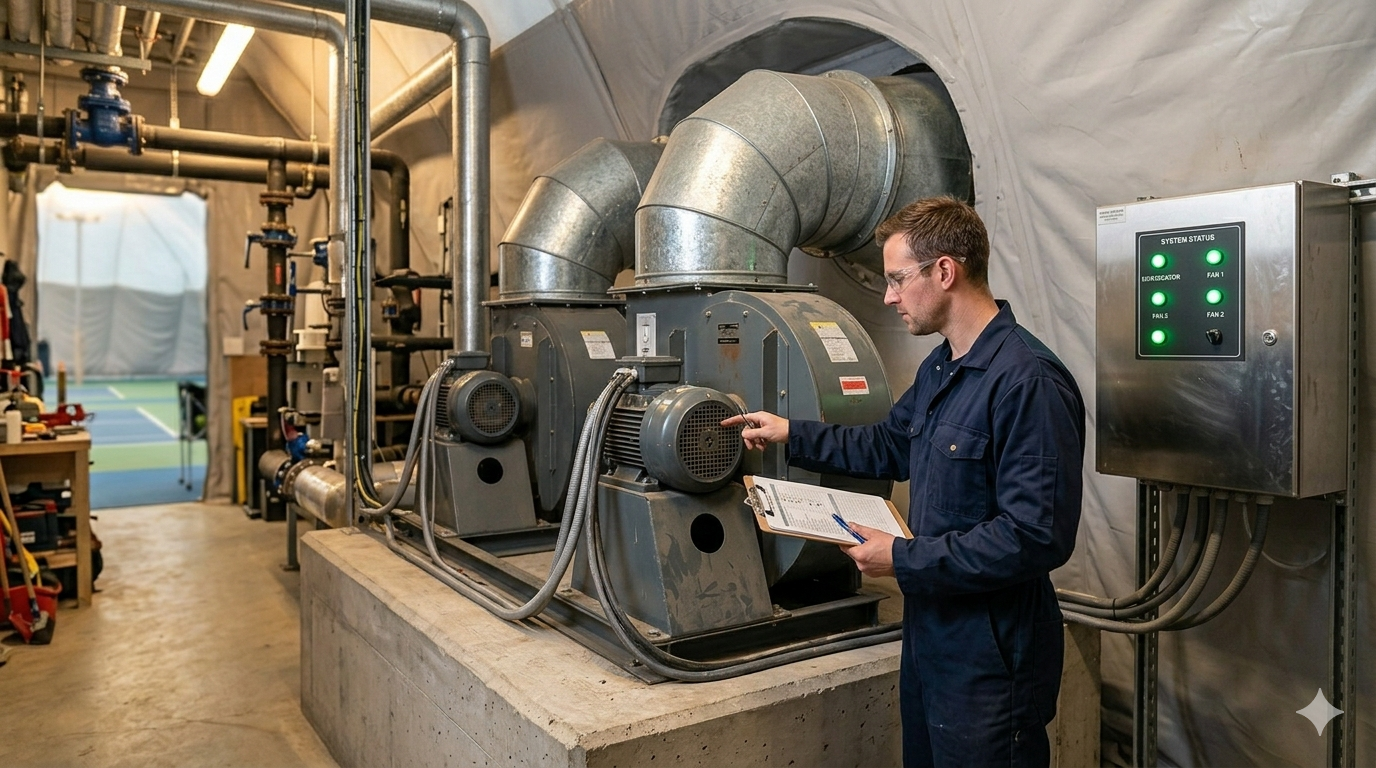
    Smart systems integrate with existing HVAC controls, automatically adjusting blower speeds to maintain ideal pressure levels.

    This proactive approach reduces energy consumption by 15-20% while extending membrane lifespan considerably.

    You’ll eliminate manual pressure checks and minimize unexpected downtime through predictive maintenance scheduling.

    AI Climate Control Optimization

    As AI climate control systems learn your dome’s unique usage patterns, they automatically enhance heating, cooling, and ventilation cycles to slash operating costs by up to 30% within the first year.

    These intelligent systems continuously analyze occupancy data, weather forecasts, and energy pricing to make real-time adjustments that maximize efficiency.

    Your AI-powered dome will deliver:

    • Predictive scheduling – Pre-conditions spaces before peak usage while avoiding energy waste during idle periods
    • Dynamic load balancing – Automatically shifts heating and cooling zones based on actual occupancy patterns rather than fixed schedules
    • Weather integration – Adjusts internal climate controls by anticipating external temperature changes and storm systems

    This machine learning approach eliminates the guesswork from climate management, ensuring peak comfort while dramatically reducing your facility’s energy consumption and operational expenses.

  • Sports Dome Lead Generation Strategies

    Sports Dome Lead Generation Strategies

    You’re probably watching potential customers drive past your sports dome daily without knowing what you offer inside. Most facility owners make the mistake of assuming their location alone will generate steady bookings, but today’s athletes and teams research options online before making decisions. The difference between struggling with 30% capacity and maintaining a waiting list comes down to implementing the right lead generation system that connects with your local sports community.

    Launch Your Sports Dome’s Digital Marketing Foundation

    Before you can attract your first members to your 20,000 square foot sports dome, you’ll need to establish a strong digital presence that makes your facility discoverable online.

    Start with Google My Business optimization – this free tool becomes your digital storefront for local searches. Upload high-quality photos of your courts, equipment, and facility amenities. Confirm your business hours, contact information, and services are accurate and complete.

    Your sports dome marketing foundation requires a professional website showcasing your facility’s unique features. Include detailed information about court availability, rental rates, and membership options.

    Integrate online booking capabilities to streamline reservations. Develop social media profiles on Facebook, Instagram, and TikTok to showcase action shots, highlight events, and engage with your community before your grand opening.

    Partner With Schools and Leagues for Guaranteed Bookings

    Once your digital foundation is set, you’ll want to secure consistent revenue streams through strategic partnerships. Schools and local sports leagues represent your most reliable booking sources, offering predictable income that drives sports dome business growth.

    Start by contacting athletic directors at nearby high schools and middle schools. They’re constantly seeking quality practice facilities, especially during harsh weather months. Offer competitive rates for regular weekly bookings rather than one-time rentals.

    Local sports leagues with 50-100 members each provide excellent opportunities. Youth soccer, football, and baseball leagues need consistent training spaces. Present package deals that include multiple booking dates at discounted rates.

    Tournament hosting becomes your premium revenue generator, commanding $500-$2,000 daily facility fees. These events also showcase your facility to hundreds of potential new customers simultaneously.

    Optimize Tournament Hosting for $2,000 Daily Revenue

    Tournament hosting transforms your sports dome into a premium revenue generator, potentially earning you $2,000 per day while showcasing your facility to hundreds of prospective customers.

    Start by reaching out to regional sports organizations and league coordinators who regularly need venues. Create tournament packages that include field rental, equipment, and basic concessions. Price competitively within the $500-$2,000 range based on tournament size and duration.

    Market your facility’s unique advantages: climate-controlled environment, professional lighting, and ample parking.

    Tournament hosting creates natural lead generation as parents and players experience your facility firsthand. Capture contact information during registration and follow up with special membership offers.

    Many attendees will convert to regular customers after seeing your dome’s quality. Document events through photos and videos for future marketing materials that demonstrate your hosting capabilities.

    Convert Local Sports Communities Into Monthly Members

    Building relationships with tournament participants sets the foundation for your most valuable revenue stream: converting these one-time visitors into loyal monthly members.

    Your air dome lead generation strategy should capture contact information during tournaments through registration forms and follow-up surveys. Offer exclusive membership trials to participants immediately after events when they’re most engaged with your facility.

    Create targeted membership packages for different sports communities. Youth leagues need family plans while adult recreational teams prefer flexible scheduling options.

    Partner with local league organizers to offer group discounts that incentivize entire teams to join. Use social proof by showcasing current members’ success stories and hosting member-only events that create exclusivity.

    Track conversion rates from each tournament to refine your approach and maximize long-term revenue potential.

    Track Member Growth From 200 to 400 in Year One

    Since your air dome facility’s success hinges on reaching that crucial 400-member milestone, you’ll need systematic tracking methods to monitor progress throughout your first year.

    Start by implementing monthly membership audits, categorizing new sign-ups by source—whether from tennis dome advertising, local league partnerships, or tournament participation.

    Create a simple dashboard tracking retention rates, seasonal fluctuations, and member engagement levels.

    Monitor key performance indicators like cost per acquisition from different marketing channels. Your Google My Business metrics, social media conversion rates, and tournament attendance numbers reveal which strategies drive actual memberships versus mere interest.

    Set quarterly targets of 100 new members, adjusting your marketing spend based on what’s working.

    Track member feedback through surveys to identify improvement areas that boost retention and word-of-mouth referrals.

  • Air Dome Ventilation Systems Guide

    Air Dome Ventilation Systems Guide

    When you’re managing an air dome facility, you’ll quickly discover that proper ventilation isn’t just about comfort—it’s about preventing structural damage, controlling humidity, and maintaining safe air quality. You’ve got three main ventilation approaches to contemplate, each with distinct advantages and price points. The system you choose will determine whether you’re constantly battling condensation issues or enjoying effortless climate management. But here’s what most facility managers don’t realize about making this critical decision.

    How to Choose the Right Air Dome Ventilation System?

    When selecting an air dome ventilation system for your 20,000 square foot facility, you’ll need to evaluate three key factors: your budget constraints, climate control requirements, and operational complexity preferences.

    If you’re working with limited funds, sidewall vent panels offer passive air dome ventilation starting at $2,000-$5,000. They’re simple but provide basic airflow without temperature control.

    For moderate budgets requiring active airflow, powered exhaust fans deliver 5,000-10,000 CFM capacity at $3,000-$8,000. They’ll maintain air circulation while keeping costs reasonable.

    When precise climate control matters most, invest in full HVAC integration costing $15,000-$40,000. This premium air dome ventilation option maintains your facility’s temperature between 55-85°F year-round, ensuring ideal comfort and air quality for all activities.

    Sidewall Vent Panels: Budget-Friendly Passive Airflow

    Feature Standard Panels Insulated Panels Weather-Resistant
    Cost Range $2,000-$3,500 $3,000-$4,500 $4,000-$5,000
    Airflow Rate 2,000-4,000 CFM 1,800-3,500 CFM 2,500-4,500 CFM
    Weather Protection Basic Enhanced Superior
    Installation Time 4-6 hours 6-8 hours 8-10 hours
    Maintenance Minimal Low Very Low

    Powered Exhaust Fans: Active Air Dome Climate Control

    While sidewall vent panels offer passive airflow, powered exhaust fans deliver active climate control that transforms your air dome’s environmental management.

    These mechanical systems actively pull stale air out while drawing fresh air in, maintaining ideal temperature ranges between 55-85°F regardless of external conditions.

    You’ll find powered exhaust fans particularly effective for larger 20,000 sq ft facilities where passive ventilation can’t adequately circulate air.

    With capacities ranging from 5,000-10,000 CFM, these systems guarantee consistent air quality throughout your dome.

    • Consistent Performance: Unlike passive systems, powered exhaust fans work independently of wind conditions
    • Temperature Control: Active air circulation prevents hot spots and maintains even climate distribution
    • Scalable Options: Choose from various fan sizes and configurations to match your dome’s specific requirements

    Investment ranges from $3K-$8K depending on system complexity.

    HVAC Systems: Complete Air Dome Environmental Management

    Though powered exhaust fans provide excellent active ventilation, HVAC systems represent the pinnacle of air dome climate control, delivering thorough environmental management that goes far beyond basic air circulation.

    HVAC integration transforms your air dome into a precisely controlled environment. You’ll maintain consistent temperatures year-round while managing humidity levels and air quality. These systems offer heating, cooling, filtration, and circulation through a unified network.

    Feature Capability Investment Range
    Temperature Control Precise heating/cooling $15K-$25K
    Air Quality Management Advanced filtration $8K-$15K
    Humidity Regulation Dehumidification systems $12K-$20K

    Professional HVAC integration requires substantial investment ($15K-$40K total) but delivers unmatched performance. You’ll achieve ideal conditions for any activity while reducing energy costs through efficient operation. This all-encompassing approach guarantees your 20,000 sq ft space maintains perfect environmental conditions regardless of external weather.

  • Dome Fabric Types PVC vs PTFE vs ETFE

    Dome Fabric Types PVC vs PTFE vs ETFE

    When you’re selecting fabric for your air dome project, you’ll face a critical decision that impacts both your budget and long-term satisfaction. While PVC dominates most installations due to its affordability, PTFE and ETFE offer compelling advantages that might justify their higher costs. The key isn’t simply choosing the cheapest option—it’s understanding which material aligns with your specific performance requirements, climate conditions, and project timeline. Your choice today determines whether you’ll thank yourself in twenty years.

    Air Dome Fabric Showdown: Cost vs Performance Analysis

    When you’re evaluating air dome fabrics, you’ll face a classic trade-off between upfront costs and long-term performance.

    PVC coated polyester represents the budget-friendly option at $25-$40 per square foot, offering 15-25 years of reliable service. It’s why 90% of installations choose this material for their dome membrane materials selection.

    PTFE Teflon-coated fabric doubles your initial investment at $50-$80 per square foot, but you’ll get 30-40 years of superior durability and weather resistance. This premium option often proves more economical over time when you factor in replacement costs.

    ETFE film sits at the expensive end, offering unique transparency but requiring specialized engineering.

    Your choice ultimately depends on budget constraints, expected lifespan, and specific performance requirements for your application.

    What Really Matters When Choosing Air Dome Fabric?

    Four critical factors determine whether your air dome fabric choice will succeed or fail in real-world conditions.

    Budget constraints typically drive initial decisions. You’ll pay $25-$40/sq ft for PVC versus $50-$80/sq ft for PTFE, making budget a primary filter for most projects.

    Climate exposure matters enormously. PTFE handles extreme temperatures, UV radiation, and chemical exposure better than PVC, explaining why airports and industrial facilities choose premium materials despite higher costs.

    Project lifespan affects total ownership costs. PVC’s 15-25 year life versus PTFE’s 30-40 years changes the math considerably for permanent installations.

    Performance requirements include fire resistance, light transmission, and structural loads. Among air dome fabric types, PVC dominates 90% of applications because it balances performance with affordability for most recreational and temporary uses.

    PVC Dominates 90% Of Projects: Here’s Why

    Nine out of ten air dome projects choose PVC coated polyester fabric, and the reasons go beyond simple cost considerations.

    You’ll find PVC offers the perfect balance of affordability, durability, and proven performance that makes it the industry standard.

    When comparing PVC vs PTFE dome options, PVC delivers 15-25 years of reliable service at $25-$40 per square foot—significantly less than PTFE’s $50-$80 range.

    You’re getting established manufacturing processes, widespread availability, and decades of field-tested results. Most contractors understand PVC installation, reducing labor complexities and potential errors.

    PVC’s dominance stems from its practical advantages: easier repairs, lower replacement costs, and sufficient longevity for most applications.

    Unless you need PTFE’s premium 30-40 year lifespan, PVC provides everything you require.

    PTFE And ETFE Alternatives: When To Pay More

    While PVC handles most air dome needs, certain projects justify the premium cost of PTFE or ETFE alternatives. You’ll want PTFE Teflon-coated fabric when longevity matters most—its 30-40 year lifespan doubles PVC’s durability. Despite costing $50-$80 per square foot, PTFE’s superior weather resistance and minimal maintenance make it cost-effective long-term for permanent installations.

    ETFE film offers unique transparency benefits but remains rare due to extreme costs. Consider these sports dome fabric options when:

    Fabric Type Best Use Cases
    PTFE Permanent facilities, harsh climates
    PTFE High-traffic commercial venues
    ETFE Natural lighting requirements
    ETFE Architectural showcase projects
    Both 20+ year operational plans

    You’re investing in reduced replacement frequency and enhanced performance characteristics that justify the higher upfront investment.

  • Portable vs Fixed Air Dome Systems

    Portable vs Fixed Air Dome Systems

    You’re facing a critical decision that’ll impact your project’s success for years to come. While portable air domes promise quick deployment and lower upfront costs, fixed installations offer unmatched stability and weather resistance. The choice isn’t just about money—it’s about understanding how wind ratings, foundation requirements, and long-term durability will affect your specific application. Before you commit to either system, there’s essential cost and performance data you can’t afford to overlook.

    How Much Do Portable vs Fixed Air Domes Really Cost?

    When you’re evaluating air dome systems for your 20,000 square foot facility, the upfront cost difference between portable and fixed installations can greatly impact your budget.

    A portable air dome typically requires an additional $5,000 to $15,000 for ballast weights like water or sand bags, making it ideal for rental applications where you’ll relocate the structure within days. Your relocatable sports dome won’t need expensive concrete footings, reducing initial construction costs markedly.

    However, when comparing temporary vs fixed dome options, permanent installations offer better long-term value.

    Fixed systems require concrete foundations and higher upfront investment, but they’re built to withstand winds exceeding 100 mph compared to portable systems rated under 80 mph.

    Consider your timeline and budget carefully.

    Portable Air Dome Setup: Ballast Systems and Installation Speed

    The ballast system you choose directly affects how quickly your portable air dome goes operational. Water bags offer the fastest setup, filling in hours and allowing your movable air dome to be ready within days.

    Sand bags take longer to fill but provide superior stability in windy conditions.

    You’ll need ballast weights strategically placed around your dome’s perimeter to secure it without permanent foundations. This eliminates concrete work and permits relocating your structure when needs change.

    Most portable systems achieve operational status in 2-3 days compared to weeks for fixed installations.

    However, your wind rating stays below 80 mph with ballast systems. You’re trading permanent stability for speed and flexibility, making portable domes ideal for temporary projects, seasonal use, or rental applications where quick deployment matters most.

    Fixed Air Dome Foundations: Concrete Requirements and Permanence

    While portable domes prioritize speed, fixed air dome foundations demand concrete footings that create permanent installations designed for decades of use.

    You’ll need engineered concrete foundations that anchor your dome securely to the ground, eliminating the flexibility of relocation but dramatically improving structural integrity.

    Fixed foundations require substantial upfront planning and construction time, often taking weeks to complete properly.

    However, you’re investing in superior wind resistance ratings exceeding 100+ mph, compared to portable systems’ limitations under 80 mph.

    This permanence makes fixed domes ideal for long-term facilities where you won’t need relocation.

    You’ll save the $5K-$15K in additional ballast costs associated with portable systems, but you’re committing to a permanent structure.

    For facilities planning decades of operation, fixed foundations offer unmatched stability and weather resistance.

    Weather Performance: Wind Ratings and Long-Term Durability Compared

    Wind resistance capabilities reveal the most significant performance gap between portable and fixed air dome systems for your 20,000 sq ft facility.

    Your portable system’s ballast weights and flexible anchoring limit wind ratings to under 80 mph, making them vulnerable during severe weather events. You’ll face potential deflation risks and structural damage in high-wind zones.

    Fixed systems deliver superior weather performance with concrete footings that achieve 100+ mph wind ratings. You’re investing in a structure that withstands hurricanes, tornadoes, and extreme weather conditions that would compromise portable alternatives.

    The permanent foundation distributes loads effectively, ensuring your facility remains operational year-round.

    Long-term durability favors fixed installations through reduced maintenance costs and extended operational life, while portable systems require frequent inspections and anchor point reinforcement.

    Rental vs Purchase: Which Air Dome Investment Makes Sense?

    How do you determine whether renting or purchasing an air dome system delivers better value for your 20,000 sq ft project? Your timeline and long-term plans are the deciding factors.

    Portable systems excel in rental applications where you need temporary coverage for events, seasonal sports, or short-term projects.

    You’ll pay $5K-$15K additional for portable features like ballast weights and quick setup capabilities, but you can relocate the structure within days when your needs change.

    Fixed installations make sense when you’re planning permanent use.

    The concrete footings and permanent foundation require higher upfront investment, but you’ll get superior wind ratings exceeding 100 mph and better long-term value.

    Consider purchasing if you’ll use the dome for multiple years at the same location.

  • Seasonal vs Year-Round Dome Use

    Seasonal vs Year-Round Dome Use

    You’re facing a critical decision that’ll impact your facility’s profitability for years to come. While seasonal domes might seem like the budget-friendly choice with their lower upfront costs, you could be missing out on significant revenue opportunities during off-peak months. The math behind seasonal versus year-round installations isn’t as straightforward as it appears, and the wrong choice could cost you hundreds of thousands in lost income. Here’s what the numbers actually reveal.

    Seasonal Vs Year-Round Domes: Complete Cost Breakdown for 20,000 Sq Ft Facilities

    When choosing between seasonal and year-round dome installations for a 20,000 square foot facility, you’ll face a significant cost difference that impacts your long-term financial planning.

    A seasonal vs year-round dome comparison reveals temporary installations cost $700K-$1M upfront, while permanent structures require $800K-$1.2M initially.

    However, temporary vs permanent dome analysis shows ongoing expenses favor year-round facilities. You’ll spend $16K-$30K annually on seasonal setup and removal, plus require 10′ x 20′ storage space during off-season months.

    Your seasonal inflation vs fixed installation costs break even after 3-4 years.

    Seasonal domes provide 6-8 months of use annually, while year-round installations offer continuous 12-month programming capabilities.

    Consider your facility’s usage patterns and budget constraints when making this decision.

    When Year-Round Domes Pay Off: Break-Even Analysis and ROI Timeline

    Year-round dome installations become financially advantageous once you hit the 3-4 year mark, transforming what initially appears as a $100K-$200K premium into substantial long-term savings.

    Your break-even calculation is straightforward: divide the upfront cost difference by annual operational savings. With seasonal domes requiring $16K-$30K yearly for setup, removal, and storage, you’ll recover your additional investment quickly.

    Investment Period Your Total Savings
    Year 3-4 Break-even point reached
    Year 5-10 $80K-$150K saved
    Year 10+ $160K-$300K+ saved

    Beyond financial benefits, you’ll gain programming flexibility, consistent revenue streams, and enhanced facility utilization. Year-round domes eliminate weather-related setup delays and provide reliable indoor space for events, training, and rentals throughout winter months when seasonal structures sit dormant.

    Seasonal Dome Operations: Installation, Storage, and Annual Maintenance Requirements

    Although seasonal domes require more hands-on management, they offer significant upfront savings that make them attractive for facilities with limited winter programming needs. You’ll save $100K-$200K on initial installation compared to permanent structures, but you’ll need to budget $16K-$30K annually for professional setup and takedown services.

    Storage becomes a critical consideration – you’ll need approximately 200 square feet (10′ x 20′) of dedicated space to house the dome fabric, frame components, and inflation equipment during off-season months. This storage area must remain dry and temperature-controlled to prevent material degradation.

    Your maintenance schedule revolves around bi-annual shifts.

    Spring installation requires foundation inspection, fabric examination for tears or wear, and system testing.

    Fall removal involves thorough cleaning, proper folding techniques, and organized storage to guarantee next season’s successful deployment.

    Year-Round Programming Revenue: Maximizing Your 12-Month Facility Potential

    Maximize your investment potential by operating a permanent dome that generates revenue across all twelve months of the year.

    Your year-round facility transforms from a simple sports venue into a versatile revenue generator that adapts to seasonal demands and community needs.

    During peak winter months, you’ll capture traditional indoor sports like soccer, baseball training, and field hockey.

    Spring and fall shoulder seasons offer opportunities for tournaments, camps, and leagues that seasonal facilities can’t accommodate.

    Summer programming diversifies your income through fitness classes, corporate events, birthday parties, and specialized training programs.

    You’ll eliminate the $16K-$30K annual setup costs while maximizing your higher upfront investment.

    The consistent revenue stream from 12-month operations typically recovers the additional $100K-$200K initial cost within 3-4 years, creating long-term profitability advantages over seasonal alternatives.

    Making the Decision: Seasonal vs Permanent Dome Selection Criteria

    When deciding between seasonal and permanent dome structures, you’ll need to evaluate several key factors that directly impact your facility’s long-term success and profitability.

    Consider your climate first—if you’re in regions with harsh winters or limited outdoor sports seasons, seasonal installation makes sense.

    Analyze your programming needs: year-round facilities support 12-month revenue streams but require higher upfront investment ($800K-$1.2M vs $700K-$1M).

    Factor in operational costs—seasonal domes need annual setup/removal ($16K-$30K) plus storage space requirements.

    Evaluate your break-even timeline: permanent structures typically pay for themselves within 3-4 years through consistent programming.

    Consider local demand patterns, competition, and your organization’s long-term growth plans when making this critical infrastructure decision.

  • Single vs Double Layer Air Dome

    Single vs Double Layer Air Dome

    You’re facing a significant decision that’ll impact your facility’s operating costs for decades. While that single-layer air dome might save you $700,000 upfront, it could cost you far more in heating bills if you’re in a cold climate. The math isn’t as straightforward as it appears—energy consumption patterns, local utility rates, and seasonal temperature variations all factor into which option actually delivers better value for your specific situation.

    Climate Guide: Does Your Location Need Double Layer Air Domes?

    Where you’re located determines whether you’ll need the extra insulation of a double-layer air dome or if a single-layer structure will suffice. If your facility operates in temperatures regularly dropping below freezing, double-layer construction becomes essential for maintaining comfortable indoor conditions while controlling heating costs.

    Single layer vs double layer decisions hinge on your winter climate severity. Northern climates with sustained sub-zero temperatures demand double-layer systems to prevent excessive heat loss and condensation issues. The superior insulation keeps operating costs manageable when heating from -10°F to 70°F.

    Conversely, you’ll find single-layer domes adequate in moderate climates where winter temperatures rarely dip below 20°F. These locations won’t justify the additional 40% upfront investment since heating demands remain reasonable throughout the season.

    Air Dome Performance: Energy Costs In Different Weather Conditions

    When temperatures plummet below freezing, you’ll see dramatic differences in energy consumption between single and double-layer air domes. Single-layer structures require considerably more heating power to maintain comfortable interior temperatures, especially when outside conditions drop to -10°F or below. Your heating costs can skyrocket during extended cold periods, making single-layer domes expensive to operate in northern climates.

    Double-layer insulated domes reduce energy consumption by 30-40% compared to single-layer alternatives. The insulation gap between layers creates a thermal barrier that retains heat more effectively, lowering your operational expenses throughout winter months.

    • Single vs double layer dome energy efficiency becomes most apparent during extreme weather events
    • Operating costs compound over time, affecting your facility’s long-term profitability
    • Climate zone determines whether energy savings justify higher upfront investment

    Air Dome Pricing: Single Layer ($700K) Vs Double Layer ($1.4M)

    The initial investment for a 20,000 square foot air dome varies considerably between single and double-layer options, with single-layer structures typically costing $700,000 to $1 million compared to $1 million to $1.4 million for double-layer insulated versions.

    This represents approximately a 40% price increase when you choose the insulated air dome configuration.

    While the upfront cost difference seems substantial, you’ll need to evaluate long-term operating expenses.

    Double-layer systems deliver 30-40% lower heating costs, which becomes essential in northern climates where temperatures drop markedly.

    The return on investment typically occurs within 3-4 years in cold weather regions.

    Your climate determines whether the premium pricing makes financial sense.

    In warmer areas, single-layer domes offer adequate performance at lower initial cost.

    Air Dome ROI: How Long Before Double Layer Pays For Itself?

    Understanding your payback timeline helps justify the higher upfront investment in double-layer air dome technology. Your air dome insulation comparison reveals that double-layer systems typically pay for themselves within 3-4 years in northern climates through significant energy savings.

    You’ll spend an additional $300K-$400K upfront for double-layer construction, but you’ll save 30-40% on operating costs annually. These savings primarily come from reduced heating expenses during winter months when single-layer domes struggle with efficiency.

    • Climate dependency: Colder regions see faster ROI due to extreme temperature differentials requiring intensive heating.
    • Usage patterns: Year-round facilities accelerate payback compared to seasonal operations through consistent energy savings.
    • Energy costs: Rising utility rates improve double-layer ROI calculations over time.

    Your investment decision should factor in local climate conditions and intended facility usage patterns.

  • Tension Fabric vs Air Dome Detailed

    Tension Fabric vs Air Dome Detailed

    You’re facing a critical decision that’ll impact your facility’s budget for years to come. While air domes might seem like the obvious choice with their lower upfront costs, you’d be surprised how quickly those monthly operational expenses add up. The real story isn’t just about initial investment—it’s about understanding which structure type aligns with your long-term goals and operational reality. Here’s what the numbers actually reveal about your total cost of ownership.

    When Fabric Structures Beat Air Domes (And Vice Versa)

    When you’re weighing a 10+ year commitment, tension fabric structures offer clear advantages with their permanent frames, elimination of constant air pressure systems, and potential for operable walls that air domes simply can’t match.

    The tension fabric vs air dome decision hinges on your timeline and priorities.

    Choose fabric structures when you need year-round operation, want design flexibility, or require minimal ongoing maintenance. Their rigid frame vs inflatable design means no blower dependency and lower long-term operating costs.

    Air domes excel for seasonal use, temporary applications, or when upfront capital is limited. They’re faster to install and cost $500,000 less initially.

    However, this permanent vs seasonal comparison shifts dramatically after decade one, when fabric structures’ economic advantages become undeniable through reduced energy and maintenance expenses.

    Upfront Investment: Fabric vs Air Dome Costs

    Your upfront investment varies considerably between these two options, with air domes typically requiring $700K-$1.2M compared to fabric structures at $1.2M-$1.8M for a 20,000 square foot facility.

    You’ll also face different installation timelines – air domes can be deployed much faster than permanent fabric structures that require substantial foundation work and frame construction.

    These initial capital requirements and timeline differences directly impact your project’s cash flow and operational readiness.

    Initial Capital Requirements

    Two dramatically different price points separate tension fabric structures from air domes when you’re planning your initial investment.

    You’ll face $1.2M to $1.8M for a 20,000 square foot tension fabric building, while air domes cost considerably less at $700K to $1.2M for the same coverage.

    This fabric structure vs air supported cost difference stems from construction complexity.

    Tension fabric buildings require permanent steel frameworks, concrete foundations, and extensive engineering. You’re fundamentally building a permanent structure that’ll last decades without major renovations.

    Air domes offer immediate savings because they don’t need permanent foundations or complex structural systems.

    You’ll get faster installation and lower upfront capital requirements, making them attractive for organizations with limited budgets or seasonal needs.

    Installation Timeline Differences

    Since air domes don’t require permanent foundations or complex steel frameworks, they’ll have your facility operational in 2-4 weeks compared to 6-12 months for tension fabric structures.

    You’ll watch air dome installation unfold rapidly—site preparation, anchor system setup, and inflation happen consecutively with minimal delays.

    Tension fabric installations involve extensive planning phases, permit approvals, and coordinated construction sequences.

    You’re looking at foundation curing times, steel erection schedules, and fabric tensioning procedures that can’t be rushed.

    Consider these timeline realities:

    1. Air dome crews arrive with pre-manufactured components ready for immediate assembly.
    2. Weather delays impact tension fabric construction more greatly due to exposed structural work.
    3. Site disruption remains minimal with air domes versus months of heavy construction activity.

    If you need your facility operational quickly, air domes deliver faster occupancy.

    Monthly Operating Costs: $800-$3,500 Breakdown

    Monthly operating expenses between tension fabric structures and air domes vary dramatically, with fabric buildings running $800-$2,000 per month while air domes cost $1,500-$3,500 monthly.

    Your tension fabric structure’s lower costs stem from its permanent frame design. You won’t need continuous blower operation, eliminating the massive energy consumption that drives air dome expenses. Basic maintenance, lighting, and occasional heating represent your primary monthly outlays.

    Air domes require 24/7 blower systems to maintain structural integrity. You’ll face substantial electricity bills, often doubling or tripling fabric structure costs.

    Fan motor maintenance, backup system upkeep, and higher insurance premiums add further expenses.

    Over ten years, you’ll save $84,000-$252,000 in operating costs with tension fabric versus air domes, making the higher upfront investment financially advantageous long-term.

    Installation Timeline: Permanent vs Seasonal Setup

    When you’re planning your facility timeline, you’ll find dramatic differences between these two options.

    Tension fabric structures require several months for construction due to permanent foundation work and frame assembly, while air domes can be fully operational within days of delivery.

    Weather conditions will greatly impact fabric construction schedules, but they’ll barely affect your air dome’s quick inflation process.

    Fabric Frame Construction Time

    Although both structures serve the same functional purpose, their installation timelines differ dramatically due to fundamental design differences.

    When you choose a tension fabric structure, you’re committing to a thorough construction process that creates a permanent installation.

    Your fabric structure project typically requires 4-6 months from groundbreaking to completion. This extended timeline stems from the multi-phase construction approach:

    1. Foundation and structural work – Concrete footings, steel framework assembly, and anchor point installation
    2. Mechanical systems integration – HVAC, electrical, and lighting infrastructure permanently installed within the frame
    3. Fabric installation and tensioning – Precise membrane attachment and adjustment for ideal performance

    While this longer timeline requires patience, you’ll gain a permanent facility that doesn’t need seasonal reinstallation.

    The upfront time investment delivers decades of reliable service without recurring setup costs.

    Air Dome Setup Speed

    Air domes offer a dramatically different approach with their rapid deployment capability. You’ll find installation timelines greatly compressed compared to traditional construction methods. Most air dome systems can be fully operational within 2-4 weeks from groundbreaking to occupancy.

    The process begins with minimal site preparation – you’re fundamentally creating a level foundation pad rather than extensive excavation work. Once the concrete pad cures, technicians can inflate and secure the dome structure in just days. This speed comes from the pre-manufactured nature of air domes, where components arrive ready for assembly.

    However, you’ll need to take into account the seasonal limitations. Many air dome installations are temporary, requiring annual setup and takedown cycles. This impacts your long-term planning but provides flexibility for seasonal facilities or temporary expansions.

    Weather Impact Considerations

    Weather conditions greatly influence your installation timeline choices between permanent tension fabric structures and seasonal air domes.

    Your tension fabric structure withstands harsh conditions year-round, requiring careful weather planning during initial construction but offering long-term stability afterward.

    Air domes demand strategic seasonal timing since you’ll need ideal weather windows for installation and removal.

    Consider these weather-related factors:

    1. Spring storms can delay air dome setup by weeks, pushing your opening schedule into peak season.
    2. Winter snow loads require immediate air dome deflation, leaving you without coverage during unexpected weather events.
    3. High wind conditions make air dome installation dangerous and nearly impossible, while fabric structures handle sustained winds once erected.

    You’ll find tension fabric structures provide weather independence after installation, while air domes keep you constantly monitoring forecasts and adjusting operational schedules.

    10-Year Cost Analysis: Why Fabric Wins Long-Term

    When you’re evaluating these two options for a 20,000 sq ft facility, the numbers reveal a clear winner over time.

    Tension fabric structures require $1.2M-$1.8M upfront but cost only $800-$2K monthly to operate.

    Air domes start cheaper at $700K-$1.2M, yet they’ll drain $1.5K-$3.5K monthly from your budget.

    Here’s where it gets interesting: after 10-12 years, fabric structures become the more economical choice.

    You’re paying considerably less in ongoing operational expenses, primarily because there’s no need for continuous air blowers or the associated energy costs.

    The break-even point occurs when fabric’s lower operating costs offset its higher initial investment.

    Beyond that threshold, you’ll save thousands annually while enjoying a permanent, versatile structure that doesn’t require seasonal setup or takedown.

    Design Flexibility: Operable Walls vs Quick Setup

    Beyond the financial calculations lies another critical decision factor: how each structure adapts to your operational needs.

    Tension fabric structures offer unmatched design flexibility. You’ll get permanent frames that accommodate operable walls, allowing you to section off areas or open entire spaces as needed. This adaptability means you can host multiple events simultaneously or adjust layouts for different seasons without structural limitations.

    Air domes prioritize speed over customization. You’ll achieve rapid deployment—often within days rather than months. However, you’re locked into a fixed dome shape with limited modification options once inflated.

    Consider these operational scenarios:

    1. Winter training camps requiring sectioned practice areas
    2. Multi-sport facilities needing convertible spaces
    3. Event venues demanding quick seasonal setup

    Your choice depends on whether you prioritize long-term flexibility or immediate deployment speed.

    Fabric Structure vs Air Dome Decision Framework

    How do you determine which structure aligns with your specific project requirements? Start by evaluating your timeline and budget constraints.

    If you need immediate coverage and have limited upfront capital, air domes offer faster installation at $700K-$1.2M versus fabric structures at $1.2M-$1.8M. However, consider long-term operational costs – air domes require continuous power for blowers, costing $1.5K-$3.5K monthly compared to fabric’s $800-$2K.

    Assess your facility’s permanence needs. Fabric structures provide year-round stability with operable walls, while air domes work best for seasonal applications.

    Factor in your 10-year projection: fabric structures become more cost-effective after 10-12 years due to lower operating expenses.

    Choose air domes for temporary solutions or immediate needs, fabric structures for permanent installations requiring design flexibility.

  • Air Dome vs Permanent Building Comparison

    Air Dome vs Permanent Building Comparison

    You’re facing a critical decision that’ll impact your facility for years to come. Air domes promise quick installation and lower upfront costs, while permanent buildings offer long-term value and stability. The $700,000 versus $2 million price difference seems straightforward, but there’s more beneath the surface. Hidden operational costs, maintenance expenses, and property value implications can completely flip your initial calculations. Before you commit to either option, you need to understand what these numbers really mean for your specific situation.

    Air Dome Vs Permanent Building: Complete Cost Comparison

    When you’re evaluating a 20,000 square foot facility, the cost difference between air domes and permanent buildings becomes strikingly apparent.

    You’ll spend approximately $700,000 for an air dome versus $2 million for a permanent structure—that’s 50-75% savings upfront. This air dome vs permanent structure comparison reveals significant financial advantages for budget-conscious projects.

    Your installation timeline differs dramatically too. Air domes require just 2-6 weeks compared to 12-18 months for traditional construction.

    This temporary vs permanent facility comparison shows air domes offer immediate functionality without lengthy delays.

    However, permanent buildings provide long-term value through increased property worth and lower operating costs.

    The inflatable vs traditional building decision ultimately depends on your budget constraints. If you’re working with less than $1 million, air domes present the most viable solution.

    Installation Speed: 2-Week Air Domes Vs 18-Month Construction

    While permanent buildings trap you in lengthy construction cycles, air domes deliver operational facilities in a fraction of the time.

    When comparing air dome vs building installation speed, you’ll find dramatic differences that impact your project timeline and cash flow.

    Air domes require just 2-6 weeks for complete installation. You’ll have your facility operational within a month, generating revenue immediately.

    The streamlined process involves site preparation, foundation work, and dome inflation – no complex structural work needed.

    Permanent buildings demand 12-18 months of construction time. You’ll face permit delays, weather interruptions, and material shortages that extend timelines.

    Complex structural work, electrical systems, and finishing touches create bottlenecks.

    This speed advantage means you’ll start operations 15 months earlier with air domes, maximizing your return on investment.

    When Air Dome Flexibility Beats Permanent Structures

    Beyond speed advantages, air domes provide operational flexibility that permanent structures simply can’t match. You can relocate your dome when needs change, whether moving to a better location or following seasonal demand patterns.

    Flexibility Factor Air Dome Permanent Building
    Relocation Move anywhere with proper permits Fixed location permanently
    Seasonal Use Deflate during off-seasons Year-round maintenance costs
    Expansion Easy size modifications Requires major construction
    Purpose Changes Quick reconfiguration Costly renovations needed

    If you’re running sports camps, seasonal training programs, or temporary events, this adaptability becomes invaluable. You’re not locked into a single use case or location for decades. This flexibility particularly benefits organizations with changing needs or those testing market demand before committing to permanent infrastructure investments.

    Long-Term Costs: Air Dome Operations Vs Permanent Maintenance

    You’ll face different cost structures when operating air domes versus maintaining permanent buildings over time.

    Air domes require continuous energy for inflation and climate control, while permanent structures need periodic repairs, HVAC maintenance, and eventual roof replacements.

    Your long-term financial picture depends on balancing these ongoing operational expenses against traditional building maintenance cycles.

    Annual Operating Expenses

    Although air domes cost considerably less upfront, you’ll face higher annual operating expenses compared to permanent buildings. Your air dome requires continuous electricity to maintain structural integrity through constant air pressure, typically consuming 20-30% more energy than heating a comparable permanent facility.

    Your main ongoing costs include:

    1. Blower system maintenance – Regular filter changes, motor servicing, and backup system checks
    2. Higher insurance premiums – Specialized coverage for air-supported structures costs 15-25% more annually
    3. Membrane replacement – Every 12-15 years, you’ll need fabric replacement costing $150K-$200K
    4. Emergency repairs – Weather damage, tears, or equipment failures require immediate professional response

    Despite these higher operating costs, most facilities still save money overall due to the dramatically lower initial investment.

    Maintenance Cost Breakdown

    Breaking down maintenance costs over a 20-year period reveals significant differences between air domes and permanent buildings.

    You’ll spend approximately $15,000-25,000 annually maintaining an air dome, primarily on fabric repairs, blower system upkeep, and energy costs for continuous pressurization.

    Your permanent building maintenance averages $8,000-15,000 yearly, focusing on HVAC systems, roofing, and structural elements.

    However, you’ll face major fabric replacement every 15-20 years with air domes, costing $200,000-300,000.

    Permanent structures require periodic roof replacement ($150,000-200,000) every 25-30 years but offer superior durability.

    Your total 20-year maintenance investment typically reaches $500,000-800,000 for air domes versus $400,000-600,000 for permanent buildings.

    While permanent structures cost less long-term, air domes provide flexibility that may justify higher maintenance expenses.

    Energy Efficiency Comparison

    When comparing energy efficiency between air domes and permanent buildings, the continuous pressurization system becomes your largest operational expense. Air domes require 24/7 blower operation to maintain structural integrity, consuming considerable electricity year-round.

    However, their superior insulation properties often offset this cost during heating and cooling seasons.

    Energy efficiency factors to evaluate:

    1. Air dome blowers consume 15-25 kW continuously, adding $15,000-30,000 annually to electricity bills
    2. Double-membrane insulation in air domes provides R-values of 8-12, reducing HVAC loads by 30-40%
    3. Permanent buildings eliminate pressurization costs but may require more heating/cooling due to thermal bridging
    4. Climate impact varies greatly – air domes excel in moderate climates but struggle in extreme temperatures

    Your location’s utility rates and climate conditions ultimately determine which option delivers better long-term energy efficiency.

    Property Value Impact Of Air Domes Vs Permanent Buildings

    If you’re evaluating facility options with resale value in mind, permanent buildings deliver markedly higher property appreciation than air domes.

    Lenders and appraisers classify permanent structures as real property improvements, directly boosting your land’s assessed value and marketability. You’ll see this reflected in higher property tax assessments, but also substantial equity gains over time.

    Air domes, conversely, don’t enhance property values since they’re considered temporary installations. Banks won’t factor them into property valuations for refinancing or sales purposes.

    However, this distinction works both ways – you won’t face increased property taxes with an air dome.

    Your choice depends on investment strategy. If you’re planning to sell within 5-10 years, permanent construction offers better ROI through appreciation.

    For shorter-term needs, air domes preserve capital flexibility.

    Space Size Requirements For Air Dome Vs Permanent Options

    Beyond financial considerations, the physical footprint requirements differ considerably between air domes and permanent buildings.

    You’ll find that air domes offer remarkable flexibility in sizing and placement that permanent structures simply can’t match.

    Here’s how space requirements compare:

    1. Minimum viable size – Air domes work efficiently from 5,000 sq ft up, while permanent buildings become cost-effective around 15,000 sq ft.
    2. Site preparation – You’ll need minimal ground work for air domes versus extensive foundation excavation for permanent structures.
    3. Expansion capability – Air domes can’t be expanded, but you can relocate them; permanent buildings allow additions but at significant cost.
    4. Irregular lot accommodation – Air domes adapt better to oddly-shaped properties since they don’t require traditional foundation layouts.

    Your available space directly impacts which option makes financial sense.

    Budget Under $1M? Why Air Domes Win Every Time

    Why do air domes dominate the sub-$1M market so decisively?

    You’re looking at a $700K air dome versus a $2M permanent structure for 20,000 square feet – that’s 65% less upfront investment.

    You’ll get your facility operational in 2-6 weeks instead of waiting 12-18 months for construction completion.

    Your budget constraints make this decision straightforward.

    While permanent buildings offer long-term value and prestige, you can’t justify spending triple the cost when you’re working within financial limits.

    Air domes deliver immediate functionality without the massive capital commitment.

    You’re also getting flexibility that permanent structures can’t match.

    If your needs change or you want to relocate, you’re not stuck with an immovable asset.

    For budget-conscious projects, air domes eliminate the financial risk while providing the space you need.

    Air Dome Vs Permanent Building: Which Fits Your Needs?

    How do you determine whether an air dome or permanent building aligns with your specific project requirements? Your decision hinges on four critical factors that’ll shape your investment’s success.

    1. Timeline urgency – Need facility operational within 2-6 weeks? Air domes deliver fast deployment versus 12-18 months for permanent construction.
    2. Budget constraints – Working with under $1M? Air domes cost $700K compared to $2M for permanent structures, saving you 50-75%.
    3. Usage flexibility – Require seasonal operation or future relocation? Air domes offer adaptability that permanent buildings can’t match.
    4. Long-term vision – Planning for property value appreciation and prestige? Permanent buildings provide lasting investment returns despite higher upfront costs.

    Match these factors against your priorities to make the right choice.

  • Cleaning and Care for Sports Domes

    Cleaning and Care for Sports Domes

    You’ve invested substantially in your sports dome, but without proper maintenance, that investment can deteriorate faster than you’d expect. The cleaning methods you choose today will determine whether your facility thrives for decades or requires costly repairs within just a few years. Most facility managers make important mistakes during routine cleaning that actually accelerate wear and damage. Before you grab that pressure washer or harsh detergent, there’s something vital you need to understand about dome materials.

    Professional Air Dome Cleaning vs DIY: Costs and Considerations

    Most sports dome owners face a critical decision when their facility needs cleaning: hire professionals or tackle the job themselves.

    Professional air dome cleaning services cost $2,000-$5,000 for a 20,000 square foot facility, but they bring specialized equipment and expertise that prevents costly damage. They understand proper pressure settings, pH-neutral soap requirements, and safe cleaning techniques that extend your dome’s life by 5-10 years.

    DIY cleaning appears cheaper initially, but you’ll need specific equipment and knowledge to avoid damaging the coating. High-pressure washers and harsh chemicals can cause irreparable harm.

    You’ll also need scaffolding or lifts for safe access. While you’ll save on labor costs, consider whether you have the time, equipment, and expertise to clean safely and effectively without compromising your dome’s integrity.

    Supplies and Equipment Needed for Air Dome Cleaning

    Whether you choose professional service or handle the cleaning yourself, understanding the right supplies and equipment makes the difference between success and disaster.

    For effective sports dome washing, you’ll need pH-neutral mild soap specifically designed for fabric structures. Never use harsh chemicals or acidic cleaners that’ll damage the dome’s protective coating.

    Essential equipment includes soft-bristled brushes, low-pressure hoses, and extension poles for reaching higher areas. Skip pressure washers entirely—they’re too aggressive and will compromise the material’s integrity.

    You’ll also need clean water for thorough rinsing and possibly scaffolding or lifts for larger domes.

    Stock microfiber cloths for spot cleaning and gentle squeegees for water removal. Having proper supplies guarantees you’ll extend your dome’s lifespan while maintaining its appearance and structural integrity.

    Step-by-Step Air Dome Cleaning Process for Large Facilities

    Seven critical steps guarantee your large air dome cleaning project runs smoothly and safely.

    First, you’ll inspect the entire structure for damage, noting tears or weak spots that need repair before cleaning.

    Second, gather your pH-neutral soap, soft brushes, and low-pressure equipment – never use harsh chemicals or pressure washers that’ll damage the coating.

    Third, start cleaning from the top down, working in manageable sections.

    Fourth, apply mild soap solution with gentle circular motions using soft brushes.

    Fifth, rinse thoroughly with low-pressure water to remove all soap residue.

    Sixth, allow complete air drying before moving to the next section.

    Finally, document the process and schedule your next maintenance.

    Professional tennis bubble cleaning service typically costs $2,000-$5,000 but extends your dome’s lifespan considerably.

    Air Dome Cleaning Schedules That Maximize Lifespan

    Strategic timing transforms routine maintenance into a powerful investment that doubles your air dome’s operational lifespan.

    You’ll maximize your dome’s longevity by establishing a bi-annual cleaning schedule, ideally during spring and fall when weather conditions are ideal.

    For facilities with heavy usage or harsh environmental conditions, quarterly inspections with annual deep cleaning provide superior protection.

    Schedule major cleaning during off-seasons to avoid disrupting operations while ensuring thorough dome fabric care.

    Professional services cost $2,000-$5,000 but extend operational life by 5-10 years, delivering exceptional return on investment.

    Document each cleaning session to track fabric condition and adjust frequency as needed.

    Consistent maintenance prevents minor issues from becoming costly replacements, keeping your facility operational and profitable for decades.