Category: Buying Guides

  • Air Dome Warranty Guide What to Look For

    Air Dome Warranty Guide What to Look For

    You’re about to make a significant investment in an air dome, but that warranty document you’ll receive isn’t as straightforward as it appears. While manufacturers promise decades of coverage, the fine print contains exclusions that could leave you responsible for thousands in repairs. The difference between a solid warranty and a costly mistake often comes down to understanding what’s actually covered versus what sounds good in the sales pitch.

    Air Dome Warranty Coverage: What’s Actually Protected

    When you’re investing in an air dome, understanding exactly what’s covered under warranty can save you thousands in unexpected repair costs.

    Most dome manufacturer warranties follow a tiered structure. Your fabric membrane typically receives the longest protection—often 25 years prorated—covering UV resistance and seam strength deterioration. The frame and blower systems usually carry 3-5 year warranties, while doors and airlocks get 2-3 years of coverage.

    However, sports dome warranty coverage excludes several critical scenarios. Vandalism damage won’t be covered, nor will weather-related failures beyond design specifications like snow loads exceeding 50 PSF.

    This air dome warranty guide emphasizes verifying your manufacturer’s financial stability before purchase, as warranties are only valuable when the company remains in business to honor them.

    How Long Air Dome Warranties Really Last

    How does warranty duration translate into real-world protection for your air dome investment? You’ll find that tennis bubble warranty terms vary greatly across components.

    The fabric membrane typically offers the longest coverage at 25 years, but it’s prorated—meaning your compensation decreases over time. Frame systems and blowers usually carry 3-5 year warranties, while doors and airlocks get 2-3 years.

    Don’t assume these timeframes guarantee hassle-free operation. Weather events exceeding design specifications—like snow loads above 50 PSF—void most warranties entirely. Vandalism isn’t covered either.

    Your warranty’s real value depends heavily on the manufacturer’s financial stability. A 25-year promise means nothing if the company doesn’t exist in a decade. Research the manufacturer’s track record and financial health before signing.

    Air Dome Fabric Membrane Warranty Breakdown

    Your air dome’s fabric membrane comes with a 25-year prorated warranty that specifically covers two critical areas.

    You’ll get protection against UV degradation, which prevents the material from breaking down under constant sun exposure.

    The warranty also covers seam strength, ensuring the stitched connections between fabric panels won’t fail during normal use.

    UV Resistance Coverage

    Since UV radiation poses the greatest long-term threat to air dome fabric membranes, manufacturers typically provide extensive UV resistance coverage under their 25-year prorated warranties.

    You’ll find that quality warranties protect against premature fabric degradation, color fading, and structural weakening caused by constant sun exposure.

    When evaluating UV resistance coverage, look for these key warranty components:

    1. Minimum UV stabilizer content – Guarantees adequate chemical protection against solar radiation
    2. Color retention guarantees – Protects against significant fading for specified time periods
    3. Tensile strength preservation – Maintains fabric structural integrity despite UV exposure
    4. Seam UV protection – Covers critical connection points vulnerable to UV damage

    Your warranty should specify measurable UV resistance standards and testing protocols.

    Don’t accept vague language about “UV protection” – demand specific performance metrics and coverage terms.

    Seam Strength Protection

    Beyond fabric degradation from UV exposure, seam failures represent the most critical warranty concern for air dome membranes.

    You’ll want warranties that specifically cover seam strength degradation over the 25-year prorated period, as these joints bear enormous stress from constant air pressure and thermal expansion cycles.

    Look for coverage that addresses both welded and sewn seam failures. Quality manufacturers test their seaming techniques extensively and stand behind their workmanship.

    Your warranty should protect against seam separation, tearing along joint lines, and adhesive failures between membrane panels.

    Don’t accept warranties that exclude seam coverage after the first few years. Seam integrity directly affects your dome’s structural stability and air retention.

    Verify that seam repairs include professional installation and matching membrane materials to maintain your dome’s overall performance standards.

    Air Dome Frame and Blower System Warranties

    While fabric membranes receive the longest warranty coverage, your air dome’s frame and blower systems typically come with shorter but still substantial protection periods of 3-5 years.

    These mechanical components face constant operational stress, making warranty terms essential for your long-term investment protection. You’ll want thorough coverage that addresses both structural integrity and performance reliability.

    Key frame and blower warranty considerations include:

    1. Motor protection – Covers blower motor failures, electrical issues, and performance degradation
    2. Structural frame coverage – Protects against manufacturing defects in support beams and anchoring systems
    3. Control system warranties – Includes automation panels, sensors, and monitoring equipment
    4. Replacement part availability – Guarantees access to components throughout the warranty period

    Always verify the manufacturer’s financial stability before committing, as warranty claims depend on their continued business operations.

    Air Dome Warranty Exclusions That Void Coverage

    You’ll need to understand what voids your air dome warranty to avoid costly surprises when filing claims.

    Most manufacturers exclude coverage for weather conditions that exceed design specifications, vandalism or intentional damage, and problems stemming from improper installation or maintenance.

    These exclusions can leave you responsible for expensive repairs that you might’ve expected warranty coverage to handle.

    Weather Beyond Design Limits

    When extreme weather conditions exceed your air dome’s engineered specifications, manufacturers won’t honor warranty claims for resulting damage.

    Most air domes are designed to withstand snow loads up to 50 PSF (2.39 kPa), but anything beyond these limits voids your coverage.

    You’ll face warranty exclusions when weather exceeds these design parameters:

    1. Snow loads exceeding 50 PSF – Heavy snowfall that surpasses the dome’s structural capacity
    2. Wind speeds beyond rated limits – Hurricane-force winds that exceed manufacturer specifications
    3. Extreme temperature fluctuations – Rapid freeze-thaw cycles outside operational ranges
    4. Hail damage from oversized stones – Ice projectiles larger than the dome’s impact resistance rating

    Understanding these weather-related exclusions helps you prepare for potential out-of-pocket repairs when Mother Nature exceeds your dome’s engineered tolerance levels.

    Vandalism and Intentional Damage

    Manufacturers explicitly exclude vandalism and intentional damage from air dome warranty coverage, leaving you responsible for repair costs when someone deliberately damages your facility. These exclusions protect manufacturers from liability for human-caused damage beyond normal wear and tear.

    You’ll face significant out-of-pocket expenses if vandals slash your membrane or damage equipment. Understanding what constitutes intentional damage helps you prepare appropriate security measures.

    Damage Type Warranty Coverage
    Knife/sharp object cuts Excluded
    Graffiti on membrane Excluded
    Forced entry damage Excluded
    Equipment tampering Excluded
    Fire/arson Excluded

    Consider installing security cameras, adequate lighting, and fencing around your air dome. Some insurance policies cover vandalism, making additional coverage essential for thorough protection against intentional damage scenarios.

    Improper Installation and Maintenance

    Beyond external threats like vandalism, air dome warranties become void when installation errors or maintenance neglect occur on your property.

    Manufacturers expect you’ll follow their specifications precisely and maintain your dome according to their guidelines.

    Your warranty coverage disappears when these installation and maintenance issues arise:

    1. Foundation problems – Inadequate anchor points, improper ground preparation, or unstable base construction that causes structural stress or membrane damage.
    2. Blower system failures – Skipping regular filter changes, ignoring pressure monitoring, or using incompatible electrical connections that damage inflation equipment.
    3. Membrane neglect – Failing to clean debris, ignoring small tears that expand, or using harsh chemicals that degrade fabric materials.
    4. Unauthorized modifications – Adding non-approved accessories, altering ventilation systems, or making structural changes without manufacturer approval.

    Proper installation and consistent maintenance protect your investment.

    Air Dome Weather Limits in Warranty Terms

    Understanding your air dome’s weather limitations prevents costly warranty voids and guarantees you’re prepared for extreme conditions. Most manufacturers specify maximum snow loads of 50 PSF (2.39 kPa) in their warranty terms. Exceeding these limits automatically voids coverage, leaving you responsible for expensive repairs or replacements.

    You’ll find weather exclusions covering high winds, hail damage, and excessive precipitation beyond design specifications. These aren’t manufacturer defects—they’re environmental factors outside normal operating parameters. Your warranty typically won’t cover structural failure when weather exceeds stated tolerances.

    Review your local climate data against manufacturer specifications before purchase. If you’re in a heavy snow region, consider upgrading to a higher-rated system.

    Document weather conditions during any damage incidents, as insurers and manufacturers will request meteorological reports to determine coverage eligibility.

    Red Flags in Air Dome Warranty Language

    While weather limits define legitimate coverage boundaries, deceptive warranty language can trap unsuspecting buyers into agreements that offer minimal protection.

    You’ll want to scrutinize these specific warning signs before signing any air dome warranty contract.

    Watch for these critical red flags in warranty documentation:

    1. Vague exclusion clauses – Terms like “normal wear” or “reasonable use” without specific definitions leave manufacturers wiggle room to deny legitimate claims.
    2. Unrealistic maintenance requirements – Warranties demanding daily inspections or professional monthly servicing may be designed to void coverage through missed documentation.
    3. Short manufacturer guarantee periods – Companies offering less than 10 years on fabric membranes might lack confidence in their product quality.
    4. No prorated coverage details – Missing depreciation schedules can lead to disputes over replacement costs during claims.

    Verifying Your Air Dome Manufacturer’s Reliability

    Anyone can create impressive marketing materials and warranty documents, but your air dome’s long-term performance depends entirely on the manufacturer’s ability to honor those commitments.

    You’ll need to verify their financial stability and track record before making your investment. Research how long they’ve been in business and examine their project portfolio.

    Contact previous customers directly to ask about warranty claim experiences and response times. Check if they maintain adequate insurance coverage and financial reserves to handle potential claims over your dome’s 25-year fabric warranty period.

    Request references from installations similar to yours in comparable climates. A reliable manufacturer will readily provide this information and demonstrate their commitment to long-term customer relationships rather than quick sales.
  • New vs Used Air Dome Which to Buy

    New vs Used Air Dome Which to Buy

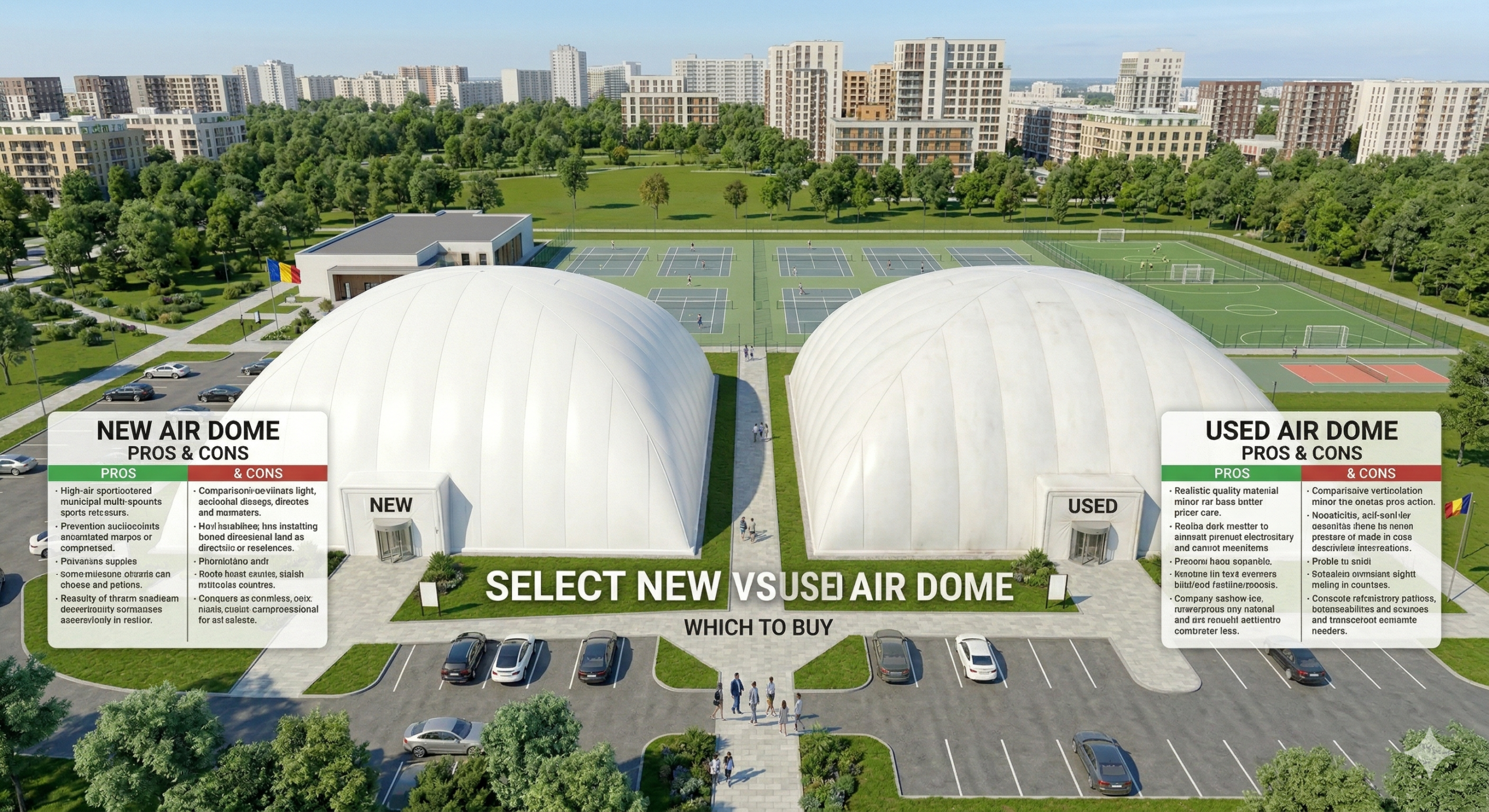
    You’re facing a significant investment decision that could impact your facility for decades. New air domes demand $150K-$400K upfront but deliver cutting-edge materials and extensive warranties. Used options slash costs by half, yet you’ll inherit someone else’s wear patterns and limited protection. The math isn’t simply about initial savings—it’s about calculating long-term value against immediate budget constraints. Your choice hinges on factors most buyers overlook until it’s too late.

    New vs Used Air Domes: Complete Decision Framework

    When you’re deciding between a new or used air dome, you’ll need to evaluate several critical factors that directly impact your project’s success and long-term costs.

    The new vs used air dome decision hinges on your budget, timeline, and operational requirements.

    For new installations, you’ll receive cutting-edge technology, full 25-year fabric warranties, and custom sizing from 7,200-50,000 square feet. Costs range $150K-$400K, but you’re investing in maximum longevity and performance.

    Used options offer 40-60% savings with prices between $60K-$200K. However, you’ll face limited warranties and 10-20 years remaining lifespan.

    When buying new tennis bubble structures, consider your facility’s projected usage and revenue potential.

    The used dome vs new comparison ultimately depends on whether short-term savings outweigh long-term reliability and customization benefits.

    New Air Dome Benefits: 25-Year Warranty and Latest Technology

    Because new air domes represent the pinnacle of structural engineering, you’ll receive unmatched protection through extensive 25-year fabric warranties that shield your investment from manufacturing defects and premature deterioration.

    When evaluating new vs second hand sports dome options, you’ll discover that new structures incorporate cutting-edge materials like advanced PVC fabrics with superior UV resistance and enhanced tensile strength.

    These technological innovations deliver improved energy efficiency through better insulation properties and reduced maintenance requirements.

    You’ll also benefit from state-of-the-art climate control systems, LED lighting integration, and smart monitoring capabilities that weren’t available in older models.

    The thorough warranty coverage guarantees peace of mind, protecting against unexpected repair costs while maximizing your facility’s operational lifespan and performance standards.

    Used Air Dome Value: 40-60% Savings With Smart Trade-Offs

    You’ll save 40-60% on your initial investment when you choose a used air dome, bringing costs down from $150K-$400K to just $60K-$200K.

    While you’re trading a 25-year warranty for limited coverage, you’re still getting 10-20 years of remaining service life from proven technology.

    This cost reduction lets you allocate resources elsewhere while securing substantial indoor space for your facility.

    Significant Cost Reduction Benefits

    While new air domes offer cutting-edge technology and full warranties, used options deliver substantial financial advantages that can’t be ignored.

    You’ll save 40-60% on your initial investment, reducing costs from $150K-$400K down to $60K-$200K. This dramatic price reduction frees up capital for other facility improvements like flooring, lighting, or HVAC systems.

    You’re fundamentally getting the same structural benefits – weather protection, year-round usability, and expansive space – at a fraction of the cost.

    Even with 10-20 years of remaining lifespan versus 25 years for new domes, the math often works in your favor. The savings can offset potential future replacement costs while providing immediate facility solutions.

    For budget-conscious buyers, used air domes represent smart financial planning without sacrificing core functionality.

    Acceptable Warranty Trade-Offs

    Limited warranties on used air domes shouldn’t derail your purchasing decision when you’re already saving $90K-$240K upfront.

    While new domes offer 25-year full warranties, used units typically provide limited coverage with 10-20 years of remaining lifespan. This warranty trade-off becomes acceptable when you consider the substantial cost savings represent 40-60% off original pricing.

    You’re fundamentally exchanging extensive warranty protection for immediate capital preservation. Most used air domes have already proven their structural integrity and performance reliability through years of operation.

    The limited warranty still covers major structural components during the most critical ownership period.

    Smart buyers recognize that even with reduced warranty terms, the financial benefits often outweigh the coverage limitations, especially for short-term projects or budget-conscious facilities seeking proven air dome technology.

    Air Dome Pricing Breakdown: $60K-$400K Investment Guide

    Air dome investments range from $60,000 to $400,000, with pricing determined by whether you’re buying new or used, the size of your facility, and the technology features you select.

    New air domes cost $150,000-$400,000 depending on your square footage needs. You’ll pay premium prices for structures ranging from 7,200-50,000 square feet, but you’re getting cutting-edge technology and full 25-year fabric warranties.

    Used options deliver 40-60% savings, dropping your investment to $60,000-$200,000. However, you’re purchasing facilities with 10-20 years of useful life remaining and limited warranty protection.

    Size greatly impacts pricing. Smaller facilities start around the lower price ranges, while expansive 50,000-square-foot domes reach maximum pricing tiers.

    Custom sizing options allow you to match your budget with your specific space requirements and operational needs.

    Size and Customization: 7,200-50,000 Sq Ft Air Dome Options

    Your facility’s square footage requirements directly impact both your upfront investment and long-term operational success.

    Air domes range from 7,200 to 50,000 square feet, accommodating everything from tennis courts to full soccer fields. New domes offer complete customization—you’ll specify exact dimensions, door placements, ventilation systems, and structural features to match your needs perfectly.

    Used domes limit your options considerably. You’re buying what’s available, not what’s ideal for your space. The previous owner’s specifications mightn’t align with your requirements, forcing compromises on layout and functionality.

    Smaller facilities (7,200-15,000 sq ft) cost $150K-$250K new, while larger installations (25,000-50,000 sq ft) reach $300K-$400K.

    If customization matters for your operation’s success, new air domes provide the flexibility used options simply can’t match.

    Warranty Protection: Full vs Limited Coverage Compared

    When investing hundreds of thousands of dollars in an air dome, warranty protection becomes your financial safety net against unexpected failures and costly repairs.

    New air domes offer extensive 25-year fabric warranties that cover manufacturing defects, material failures, and structural issues. This broad coverage protects your entire investment period, giving you peace of mind for decades.

    Used air domes come with limited warranties that vary greatly by seller and condition. You’ll typically receive minimal coverage on remaining components, with most structural warranties already expired.

    This leaves you vulnerable to expensive repairs shortly after purchase.

    The warranty difference directly impacts your long-term costs. New domes transfer repair expenses to manufacturers, while used domes make you responsible for most maintenance and replacement costs during the facility’s remaining lifespan.

    Budget-Based Recommendations: Choosing Your Best Air Dome Option

    Three distinct budget scenarios determine whether you should buy new or used air domes for your facility.

    Tight Budget ($60K-$120K): You’ll need a used dome. While you’re getting 40-60% savings, expect limited warranty coverage and 10-20 years remaining lifespan.

    Moderate Budget ($120K-$250K): You can choose either option. Compare specific domes based on remaining lifespan versus warranty benefits.

    Generous Budget ($250K+): Buy new for maximum value. You’ll get 25-year fabric warranty, latest technology, and custom sizing options.

    Budget Range Recommendation Key Benefit Trade-off
    $60K-$120K Used Only 40-60% Cost Savings Limited Warranty
    $120K-$250K Either Option Flexibility Depends on Priorities
    $250K+ New Preferred Full Coverage Higher Investment

    Your budget ultimately determines your best path forward.

  • Air Dome Permit Requirements by State

    Air Dome Permit Requirements by State

    You’ve probably discovered that getting an air dome permit isn’t as straightforward as you’d hoped. What seems like a simple inflatable structure quickly becomes a maze of state regulations, engineering requirements, and safety codes that vary dramatically depending on where you’re building. The difference between a $200 temporary permit and a $15,000 permanent one often comes down to details that most people overlook until it’s too late.

    Temporary vs Permanent Air Dome Permits: Which Do You Need?

    When you’re planning an air dome installation, the duration of your project determines which permit pathway you’ll need to follow.

    If you’re installing your dome for less than 180 days, you’ll qualify for temporary structure permits, which involve a notably simpler approval process with reduced documentation requirements.

    However, if your installation exceeds 180 days, you’ll need permanent sports dome building permits that require thorough building permits with full engineering documentation. This includes detailed structural calculations, fire safety plans, and egress designs.

    The temporary route saves time and paperwork, but you can’t extend beyond the 180-day limit without converting to permanent status.

    Consider your project’s timeline carefully when determining which air dome permit requirements apply to your specific installation needs.

    Air Dome Permit Costs And Processing Timelines By Type

    You’ll face different costs and timelines depending on whether you’re seeking a temporary or permanent air dome permit.

    Temporary permits typically cost $200-$800 and process within 2-4 weeks, while permanent permits can range from $2,000-$15,000 with 6-12 week processing times.

    Several factors affect these timelines, including your project’s complexity, local jurisdiction workload, and whether you need additional engineering reviews for snow load calculations.

    Temporary Permit Costs

    Most temporary air dome permits cost between $200 and $1,500, depending on your facility’s size and local jurisdiction requirements.

    You’ll find smaller recreational domes typically fall toward the lower end, while large sports complexes approach maximum fees.

    Tennis bubble zoning classifications often determine your base permit cost, as recreational facilities face different fee structures than commercial operations.

    Processing fees usually range from $150-$500, with additional charges for plan reviews and inspections.

    Air dome regulations by state create significant cost variations.

    California and New York charge premium rates, often exceeding $1,000 for temporary permits.

    Meanwhile, states like Texas and Florida offer more affordable options, typically under $500.

    You’ll also encounter supplementary costs including fire department reviews ($50-$200) and structural engineering approvals ($100-$300), bringing total temporary permit expenses to $500-$2,000.

    Processing Timeline Factors

    Since permit processing timelines depend heavily on your jurisdiction’s workload and staffing levels, expect significant variations even within the same state.

    You’ll find temporary permits typically process faster, often within 2-4 weeks, since they require fewer reviews and documentation.

    Permanent air dome permits take considerably longer—usually 6-12 weeks—due to thorough engineering reviews, particularly for snow load calculations and structural assessments.

    Your timeline extends if you’re installing electrical, plumbing, or HVAC systems requiring separate permits.

    Complex projects exceeding 20,000 square feet face additional delays for fire safety reviews and egress plan approvals.

    You can expedite processing by submitting complete applications with professional engineering stamps upfront.

    Peak construction seasons (spring/summer) create longer wait times, while winter applications often move faster through municipal review processes.

    How To Apply For Air Dome Permits In Your State

    You’ll need to research your state’s specific air dome permit requirements since regulations vary greatly across jurisdictions.

    Start by contacting your local building department to determine whether you need a temporary or permanent permit based on your installation timeline.

    Once you understand the requirements, gather all necessary application documents including engineering calculations for snow loads, fire safety plans, and egress designs before submitting your permit application.

    Research State Requirements

    Before diving into your air dome project, understanding your state’s specific permit requirements will save you time, money, and potential legal headaches down the road.

    Start by contacting your state’s building department or construction regulatory agency to obtain current permit guidelines. You’ll discover that temporary installations under 180 days typically follow streamlined approval processes, while permanent structures require detailed building permits.

    Focus your research on critical engineering specifications, particularly snow load requirements ranging from 35-50 PSF depending on your geographic location.

    Don’t overlook fire safety codes and egress regulations, especially for larger facilities exceeding 20,000 square feet.

    Many states maintain online databases with permit applications, fee schedules, and approval timelines. Document all requirements thoroughly before beginning your application process to guarantee compliance.

    Submit Application Documents

    Gathering your required documentation marks the essential shift from research to action in the permit application process.

    You’ll need structural engineering plans showing snow load calculations for your region’s 35-50 PSF requirements, site surveys, and foundation details.

    Fire safety documentation must include sprinkler system layouts, emergency lighting plans, and egress route maps for facilities exceeding 20,000 square feet.

    Submit your complete application package through your state’s online portal or local building department.

    Include all required fees, which typically range from $500-$2,500 depending on facility size and complexity.

    Temporary installations under 180 days often require simplified documentation sets.

    Double-check that you’ve included zoning compliance letters, utility connection approvals, and insurance certificates.

    Missing documents will delay your approval timeline considerably, so review submission requirements thoroughly before filing.

    Snow Load And Structural Requirements That Make Or Break Applications

    When structural engineers evaluate air dome applications, snow load calculations often determine whether your project gets approved or rejected.

    You’ll need to meet specific requirements ranging from 35-50 PSF (1.67-2.39 kPa) depending on your location’s climate zone.

    Your engineer must account for the dome’s unique deflation risks during snow events. Unlike traditional buildings, air domes can’t shed snow loads through structural rigidity. They rely entirely on internal air pressure to maintain shape and support weight.

    Critical structural elements include emergency deflation procedures, backup power systems for blowers, and snow removal protocols.

    You’ll also need detailed calculations showing how your dome handles uneven snow distribution, ice dams, and rapid accumulation scenarios.

    Missing any of these engineering requirements typically results in immediate application denial.

    Fire Safety Rules For Air Domes Over 20,000 Square Feet

    Fire departments apply stricter safety standards to air domes exceeding 20,000 square feet due to increased occupancy risks and evacuation challenges.

    You’ll face extensive inspections and must demonstrate compliance with commercial fire codes rather than residential standards.

    Your large air dome requires these critical fire safety elements:

    1. Multiple emergency exits positioned strategically around the perimeter, with illuminated exit signs visible through fabric walls.
    2. Automatic sprinkler systems with pressurized water lines running along the dome’s interior framework.
    3. Fire-rated emergency lighting that activates when power fails, casting bright beams across evacuation routes.
    4. Smoke detection networks with sensors mounted on support cables, triggering piercing alarms throughout the space.

    You’ll also need fire department vehicle access roads and designated staging areas for emergency responders around your facility’s exterior.

    Why Air Dome Permit Applications Get Rejected (And How To Avoid It)

    Although building departments approve most straightforward construction permits, air dome applications face rejection rates exceeding 40% due to their unique structural and safety challenges.

    You’ll avoid rejection by addressing these common issues upfront.

    Inadequate snow load calculations cause most denials. You must provide engineering documentation proving your dome can handle 35-50 PSF loads based on local requirements.

    Don’t submit generic calculations—specify your exact location’s requirements.

    Fire safety violations trigger automatic rejections for facilities over 20,000 square feet. You’ll need proper egress plans, sprinkler systems, and emergency evacuation procedures clearly documented.

    Missing foundation details also doom applications. You must show proper anchoring systems and soil analysis reports.

    Submit complete structural drawings with professional engineer stamps, not basic sketches.

    Engineering Documentation Required For Air Dome Permit Approval

    Professional engineering documentation forms the backbone of successful air dome permit applications, requiring specific technical reports that building departments scrutinize closely.

    You’ll need extensive structural calculations that demonstrate your dome can withstand local environmental loads, particularly snow loads ranging from 35-50 PSF depending on your region.

    Your engineering package must include:

    1. Structural analysis reports showing load calculations for wind, snow, and seismic forces
    2. Foundation design drawings detailing anchoring systems and soil bearing capacity
    3. Mechanical system specifications for inflation equipment, backup systems, and emergency protocols
    4. Fire safety documentation including egress plans and emergency deflation procedures

    You’ll also need sealed drawings from a licensed professional engineer in your state.

    Without proper PE stamps and detailed calculations, building departments will reject your application immediately, regardless of your dome’s actual safety features.

  • Sports Dome Manufacturer Comparison USA

    Sports Dome Manufacturer Comparison USA

    You’re facing a significant investment when choosing a sports dome manufacturer, and the wrong decision could cost you thousands in repairs or premature replacement. The American market offers everything from budget-friendly options that’ll barely last five years to premium manufacturers backing their products with 15-year warranties. But here’s what most buyers don’t realize: the cheapest upfront price often becomes the most expensive choice, while the priciest option isn’t always worth the premium.

    What To Look For In A Sports Dome: Key Features That Matter Most

    When investing in a sports dome, you’ll want to prioritize three essential elements that directly impact performance and longevity.

    Fabric Quality stands as your most vital consideration. Premium sports dome manufacturers like Farley Group use reinforced PVC materials that resist tears, UV damage, and weather extremes.

    Budget options from manufacturers like Broadwell may compromise on material thickness and coating quality.

    Warranty Coverage reveals manufacturer confidence. Top tennis bubble manufacturers typically offer 10-15 year warranties on fabric and structural components, while budget suppliers often provide minimal coverage.

    Installation Expertise determines your dome’s success. Established air dome suppliers comparison shows that companies like DUOL and Yeadon Domes provide extensive installation training and ongoing support, ensuring proper setup and maintenance protocols for peak performance.

    Top 5 Sports Dome Manufacturers: Who Makes What In The US Market

    Five major manufacturers dominate the US sports dome market, each serving distinct customer segments with varying approaches to quality, pricing, and specialization.

    When researching air dome companies usa, you’ll encounter Farley Group leading the premium segment with Canadian-engineered solutions and superior fabric quality.

    Yeadon Domes specializes in custom US installations, offering personalized design services.

    DUOL brings European engineering expertise with highly engineered systems and extensive warranties.

    Broadwell targets budget-conscious buyers from the UK market with cost-effective solutions.

    Arizon focuses on commercial applications across the United States.

    Among the best dome manufacturers, fabric durability, warranty coverage, and installation support vary greatly.

    For typical single courts measuring 78′ x 120′, each manufacturer offers different value propositions worth comparing carefully.

    Fabric Quality Showdown: Which Brands Build Domes That Last

    Since dome fabric serves as your structure’s primary defense against weather extremes and daily wear, understanding material specifications separates smart buyers from those facing premature replacements.

    Farley Group leads with premium PVC-coated polyester fabrics offering 20-year warranties and superior UV resistance. Their Canadian-engineered materials withstand harsh weather conditions that destroy lesser fabrics within five years.

    DUOL’s European-sourced materials feature advanced polymer coatings with 15-year guarantees, excelling in snow load resistance and thermal efficiency. You’ll find their fabrics maintain flexibility in extreme cold where competitors crack.

    Yeadon Domes uses commercial-grade vinyl with 10-year coverage, suitable for moderate climates.

    Arizon offers standard PVC fabrics with basic 5-year warranties for budget-conscious buyers.

    Broadwell’s entry-level materials carry limited 3-year warranties, adequate for temporary installations but questionable for permanent facilities requiring decade-plus performance.

    Sports Dome Warranties And Installation: Comparing Service And Support

    Beyond fabric durability, warranty terms and installation support determine whether you’ll enjoy years of trouble-free operation or face costly surprises down the road.

    Manufacturer Warranty Coverage Installation Support
    Farley Group 15-year extensive Full turnkey service
    Yeadon Domes 10-year fabric/structure Engineering + supervision
    DUOL 12-year materials Technical guidance only

    You’ll find Farley Group offers the strongest protection with extensive coverage including fabric, structure, and air systems. Yeadon provides solid middle-ground protection with hands-on installation oversight. DUOL’s engineering focus means you’ll get technical expertise but less hands-on support.

    Installation timelines vary notably. Farley’s turnkey approach takes 4-6 weeks but removes your headaches. Yeadon’s custom approach requires 6-8 weeks. DUOL’s technical-only support means faster delivery but you’ll coordinate local contractors yourself.

    Tennis Court Dome Pricing: What You’ll Pay For 78′ X 120′ Coverage

    Three primary factors drive tennis court dome pricing: manufacturer positioning, fabric specifications, and installation complexity.

    You’ll find Broadwell offers the most budget-friendly option for a standard 78′ x 120′ tennis court, typically ranging $45,000-$65,000.

    Arizon’s commercial-grade domes fall in the mid-range at $70,000-$95,000, focusing on durability for high-traffic facilities.

    Yeadon Domes commands premium pricing of $85,000-$120,000 due to their custom engineering approach and superior fabric quality.

    DUOL’s European-engineered systems range $90,000-$130,000, reflecting advanced materials and precise installation methods.

    Farley Group sits at the top tier, with pricing from $110,000-$150,000 for their premium Canadian-manufactured domes.

    Installation complexity, site preparation, and optional features like ventilation systems can add $15,000-$40,000 to base pricing across all manufacturers.

    Budget Vs Premium Sports Domes: Matching Manufacturers To Your Priorities

    When you’re choosing between budget and premium sports dome manufacturers, you’ll face critical decisions about fabric durability and construction materials that directly impact your dome’s lifespan.

    Premium manufacturers like Farley Group and DUOL typically offer 15-20 year warranties with high-grade PVC fabrics, while budget options like Broadwell provide 5-10 year coverage using lighter-weight materials.

    Your choice determines whether you’ll prioritize lower upfront costs or invest in superior materials that resist UV damage, tearing, and weather extremes over decades of use.

    Quality Material Trade-Offs

    While premium manufacturers like Farley Group and DUOL offer superior fabric durability and extensive warranties, you’ll face a significant cost jump that may not align with your facility’s actual needs.

    Premium fabrics typically feature reinforced seams, UV-resistant coatings, and 15-20 year warranties, but budget options from Broadwell deliver adequate performance for recreational use at half the cost.

    You’re trading longevity for affordability when choosing budget materials. Standard PVC fabrics from budget manufacturers last 8-12 years with proper maintenance, while premium PTFE-coated fabrics can exceed 20 years.

    Consider your usage intensity—high-traffic commercial facilities justify premium investment, but seasonal recreational courts function well with mid-tier options from Yeadon Domes or Arizon that balance cost and durability effectively.

    Warranty Coverage Differences

    Five years separates entry-level warranties from premium coverage, creating a clear divide between manufacturer confidence levels.

    Budget manufacturers like Broadwell typically offer 5-7 year fabric warranties with limited structural coverage, reflecting their cost-focused approach. You’ll find basic protection against material defects but fewer guarantees on installation workmanship.

    Premium manufacturers like Farley Group and DUOL extend 10-15 year extensive warranties covering fabric, frame, and installation. They’ll replace materials showing premature wear and address structural issues at no cost.

    Yeadon Domes offers custom warranty packages matching your specific requirements and climate conditions.

    Mid-tier options like Arizon provide 8-10 year coverage, balancing cost and protection. You’re getting extended fabric warranties without premium pricing.

    Consider your long-term investment timeline when comparing warranty terms—longer coverage often justifies higher upfront costs through reduced replacement risks.

  • Tension Fabric Structure Buying Guide

    Tension Fabric Structure Buying Guide

    You’re about to make a significant investment in a tension fabric structure, but the sheer number of variables can overwhelm even experienced buyers. From calculating your clear span requirements to maneuvering through local permitting hurdles, each decision impacts your project’s timeline, budget, and long-term performance. The wrong choice in framing or fabric material could cost you thousands in repairs or replacements down the road. Here’s what you need to know before you commit.

    Tension Fabric Building Basics: Spans, Applications, and Budget Planning

    Three fundamental factors shape every tension fabric building decision: the clear span width you need, your intended application, and your available budget. You can achieve clear spans up to 300 feet (91 meters) without interior columns, making these structures ideal for warehouses, aircraft hangars, sports facilities, and manufacturing plants.

    Your application determines critical specifications like wind loads, snow loads, and required door configurations. Athletic facilities need different engineering than storage buildings. Manufacturing operations require specific ventilation and lighting considerations.

    Budget planning involves upfront costs for frames, fabric, and installation, plus long-term expenses for maintenance and energy. This tension fabric structure buying guide helps you balance these three factors effectively.

    Consider operational costs early—insulation and HVAC requirements greatly impact your total investment over the building’s 25-year lifespan.

    Frame Options: I-Beam vs Truss Systems for Your Tension Fabric Structure

    When selecting your tension fabric structure’s foundation, you’ll choose between two primary frame systems: I-beam and truss configurations. Each system offers distinct advantages when buying fabric building solutions for your specific needs.

    Feature I-Beam System Truss System
    Clear Spans Up to 200 feet Up to 300 feet
    Construction Speed Faster installation Longer assembly time
    Cost Lower initial investment Higher upfront cost
    Structural Strength Suitable for most applications Maximum load capacity

    I-beam frames use solid steel beams that’re ideal for smaller to medium-sized structures, offering quick assembly and cost-effectiveness. Truss systems utilize triangulated steel frameworks that provide superior strength for larger spans and heavy snow loads, making them perfect for industrial applications requiring maximum structural integrity.

    Fabric Material Guide: PVC vs PTFE Performance and Costs

    After selecting your frame system, you’ll need to choose between two primary fabric materials that’ll determine your structure’s durability, performance, and long-term costs.

    PVC (Vinyl) Fabric offers excellent value for most applications. It’s UV-resistant, translucent, and costs considerably less than PTFE. You’ll get 15-20 years of reliable performance with proper maintenance.

    PTFE (Teflon-coated fiberglass) delivers premium longevity and fire resistance. While more expensive upfront, it lasts 25-30 years and handles extreme weather conditions better than PVC.

    Consider these performance scenarios when consulting your rigid frame purchase guide:

    1. Coastal environments: Salt air accelerates PVC degradation.
    2. High-temperature zones: PTFE withstands heat without compromising structural integrity.
    3. Heavy snow loads: PTFE’s superior tensile strength prevents fabric stretching.

    Your climate, budget, and intended lifespan should drive this critical material decision.

    Permits and Engineering: Local Code Requirements for Tension Fabric Buildings

    Before you finalize your fabric selection and frame specifications, you’ll need to navigate the engineering and permitting requirements that govern tension fabric structures in your area. Local building codes vary considerably, and your clear span building buying process must account for wind loads, snow loads, and seismic requirements specific to your location.

    Most jurisdictions require stamped engineering drawings from a licensed structural engineer. Your manufacturer should provide preliminary calculations, but you’ll need final approval from a local engineer familiar with regional codes.

    Common requirements include foundation design, anchor point specifications, and fire safety compliance.

    Start the permit application early, as approval can take 4-8 weeks. Some areas have streamlined processes for pre-engineered buildings, while others require extensive documentation for these specialized structures.

  • Air Dome Size Calculator for Your Facility

    Air Dome Size Calculator for Your Facility

    You’re planning an air dome facility, but calculating the right size isn’t as straightforward as you’d expect. Most facility owners underestimate the space requirements, focusing only on court dimensions while overlooking vital elements like proper clearance zones, ventilation systems, and structural support needs. Getting these calculations wrong can cost you thousands in redesigns or leave you with a cramped, non-functional space that doesn’t meet safety standards or user expectations.

    How Much Space Does Your Tennis Court Air Dome Actually Need?

    When planning your tennis court air dome, you’ll need considerably more space than just the court’s official dimensions. A single tennis court measures 78′ x 36′, but your air dome requires 78′ x 120′ (9,360 sq ft) to guarantee safe play with proper clearance zones.

    Don’t forget to add 20-30% extra space for essential features like walkways, spectator seating, and storage areas. This brings your total footprint to approximately 12,000 sq ft for a single court facility.

    For multiple courts, a four-court air dome needs 120′ x 200′ (24,000 sq ft) minimum.

    Using an air dome size calculator helps you determine exact specifications based on your unique requirements, local building codes, and planned amenities. Proper planning prevents costly modifications later.

    Real Air Dome Examples: 1, 2, and 4-Court Space Comparisons

    Real-world installations demonstrate the dramatic space differences between single and multi-court air dome facilities. A single-court dome requires approximately 9,360 square feet, but you’ll need closer to 12,000 square feet when including essential amenities like seating and storage areas.

    Two-court facilities typically need 16,000-18,000 square feet, offering better cost efficiency per court than single installations. You’re looking at roughly $180,000-$220,000 for professional-grade construction.

    Four-court complexes require 24,000-30,000 square feet and represent the sweet spot for commercial operations. These larger facilities maximize your investment through shared infrastructure costs and increased revenue potential.

    This sports dome sizing guide shows that while initial costs increase with size, your per-court investment decreases considerably.

    Multi-court domes also provide operational flexibility during maintenance periods.

    Why Air Domes Need More Space Than Outdoor Courts

    Although outdoor tennis courts measure a standard 78′ x 36′, air domes require considerably more enclosed space to function safely and effectively. You’ll need additional clearance for several critical factors that don’t affect outdoor courts.

    Space Requirement Outdoor Courts Air Domes
    Ball clearance Natural boundaries 20-25′ height minimum
    Player safety zones Open-ended Enclosed buffer zones
    Equipment access Direct entry Airlock systems

    Your tennis dome dimensions must account for structural elements like anchor points, ventilation systems, and emergency exits. Unlike outdoor facilities, you can’t simply mark court lines and start playing. The pressurized environment demands proper air circulation space, and players need adequate overhead clearance for serves and lobs without hitting the dome ceiling.

    Should Your Air Dome Include Storage and Spectator Areas?

    Where will you store your tennis equipment, maintenance tools, and seasonal gear once your air dome is operational? Storage areas are essential but often overlooked when learning how to size air dome facilities.

    You’ll need dedicated space for nets, balls, court maintenance equipment, and emergency supplies.

    Spectator areas add significant value but require careful planning. Bleacher seating along sidelines needs 8-12 feet of depth, while elevated viewing areas require structural support and emergency exits.

    Consider your facility’s primary use—private clubs may prioritize storage, while commercial operations need spectator capacity for tournaments and lessons.

    Integration is key. Built-in storage rooms and viewing areas cost less than separate structures and maintain the dome’s structural integrity.

    Plan these elements during initial sizing to avoid expensive modifications later.

    How Air Dome Size Affects Your Total Investment

    Every square foot you add to your air dome directly impacts three major cost categories: initial construction, ongoing operational expenses, and long-term maintenance.

    Understanding this relationship helps you determine the proper dome size for courts without overspending on unnecessary space.

    Here’s how size affects your investment:

    1. Construction costs increase by $8-12 per square foot, meaning a 12,000 sq ft dome costs $24,000-36,000 more than a 9,000 sq ft structure.
    2. Energy expenses rise proportionally with volume – larger domes require more powerful blowers and climate control systems.
    3. Maintenance costs scale with surface area, as you’ll need more fabric repairs, cleaning, and eventual replacement materials.

    Calculate your minimum required space first, then add only essential features.

    This approach guarantees you’re investing in functionality rather than excessive square footage.

  • How to Buy a Tennis Air Dome in 2026

    How to Buy a Tennis Air Dome in 2026

    You’re considering a tennis air dome for 2026, but the process isn’t as straightforward as you might expect. While prices have stabilized compared to recent years, you’ll face new regulations, updated technology options, and shifting supplier landscapes that didn’t exist just two years ago. The key lies in understanding what’s changed in the industry and how these developments will impact your investment, timeline, and long-term operational costs.

    Tennis Air Dome Costs and Budget Planning for 2026

    Before diving into specific features and installation logistics, you’ll need to establish a realistic budget for your tennis air dome project in 2026.

    Tennis air dome costs and budget planning for 2026 requires understanding several pricing factors. Basic single-court domes start around $150,000-$200,000, while multi-court facilities can exceed $500,000.

    Your budget should include the dome structure, foundation work, electrical systems, HVAC equipment, and installation labor. Don’t forget ongoing operational costs like electricity, maintenance, and insurance.

    Seasonal domes cost less initially but require annual setup fees. This thorough air dome purchase guide emphasizes getting multiple quotes early, as material costs fluctuate.

    Consider financing options, including equipment loans and lease agreements, to manage cash flow effectively throughout your project timeline.

    Determine Your Court Size and Site Requirements

    The first critical step in your tennis air dome project involves calculating the exact dimensions and evaluating your site’s suitability.

    When learning how to buy tennis air dome structures, you’ll need minimum dimensions of 78′ x 120′ (23.8m x 36.6m) for a single court, totaling 9,360 square feet. This doesn’t include additional space for walkways and equipment.

    Your site must be level with proper drainage to prevent water accumulation. Check local zoning laws and obtain necessary permits before proceeding.

    Consider proximity to utilities like electricity and water connections, as these affect installation costs. Soil conditions matter too – soft ground may require additional foundation work.

    Measure twice and account for buffer zones around the court perimeter to guarantee players have adequate movement space during gameplay.

    Choose Your Tennis Air Dome Type and Key Features

    Once you’ve established your site requirements, you’ll face the critical decision between seasonal and permanent tennis air dome options. When buying tennis bubble structures, seasonal domes cost less upfront but require annual installation and removal. Permanent installations offer year-round play but demand higher initial investment.

    Feature Seasonal Permanent
    Cost $15,000-$40,000 $50,000-$150,000
    Installation Annual setup/takedown One-time installation
    Durability 5-7 years 15-25 years
    Insulation Basic single layer Double-wall options
    Lighting Portable systems Integrated LED

    Consider essential features like ventilation systems, emergency exits, insulation levels, and lighting quality. Double-wall construction provides superior insulation but increases costs. Evaluate your budget against long-term usage plans to determine which option delivers the best value for your specific needs.

    Compare Air Dome Suppliers and Get Smart Quotes

    After selecting your preferred dome type and features, you’ll need to identify reputable suppliers who can deliver quality structures within your budget.

    Research manufacturers with proven track records in tennis facility construction. Look for companies offering extensive warranties, installation services, and ongoing maintenance support.

    Request detailed quotes from 3-5 suppliers to compare pricing, specifications, and timelines. Your sports dome buying process should include evaluating each vendor’s experience with similar projects, checking customer references, and reviewing installation portfolios.

    Ask about financing options, permit assistance, and post-installation support.

    Don’t automatically choose the lowest bid—consider value, quality, and service reliability. Request itemized quotes showing materials, labor, permits, and additional features.

    Verify insurance coverage and licensing before making your final decision.

    Installation Timeline and Permitting Process

    Before construction begins, you’ll need to secure proper permits and understand the installation timeline for your tennis air dome. Most installations require building permits, electrical permits, and zoning approvals, which can take 4-12 weeks depending on your local municipality.

    The typical installation timeline follows these phases:

    1. Site preparation and foundation work – 2-4 weeks for concrete pad and utilities
    2. Dome delivery and setup – 1-2 weeks for fabric installation and inflation system
    3. Interior finishing – 1-3 weeks for lighting, HVAC, and court surfacing
    4. Final inspections and testing – 1 week for safety compliance and operational checks

    Your air dome selection guide should include permit requirements specific to your area. Weather conditions can extend timelines, so plan installations during favorable seasons.

    Most suppliers coordinate with local contractors to streamline the permitting and installation process.

  • Complete Guide to Buying Used Air Domes USA

    Complete Guide to Buying Used Air Domes USA

    You’re considering a used air dome, but you don’t want to make a costly mistake. The American market offers numerous opportunities, yet steering through pricing, inspections, and reliable sources can feel overwhelming without proper guidance. Whether you’re looking at a five-year-old facility or something older, knowing what constitutes a fair deal versus a potential disaster separates smart buyers from those who learn expensive lessons. The difference often comes down to understanding what others have discovered too late.

    How Much Should You Pay for a Used Air Dome?

    Several factors determine the fair market price for a used air dome, with age being the primary consideration.

    You’ll typically pay 60% of the original price for a 5-year-old structure. For example, a single court 7,200 square foot dome that originally cost $180K-$240K new will run $108K-$144K used.

    A 10-year-old dome drops to 40-50% of its original value, ranging from $72K-$108K for the same size structure.

    Your used tennis bubble buying guide should include professional inspections of three critical components: fabric integrity for tears or wear, blower system condition and efficiency, and door functionality.

    These elements greatly impact the dome’s remaining lifespan and operating costs, making them essential factors in determining fair market value.

    Inspect These 5 Critical Components Before Buying

    Five essential components require thorough inspection before you purchase any used air dome.

    The fabric membrane represents your largest concern—check for tears, excessive wear, UV damage, and proper tension.

    Inspect the blower system‘s motor condition, belt wear, and overall maintenance history since it’s costly to replace.

    Door seals and mechanisms must function properly to maintain air pressure; test all entry points for leaks and smooth operation.

    The inflation system requires evaluation of pressure sensors, backup systems, and control panels.

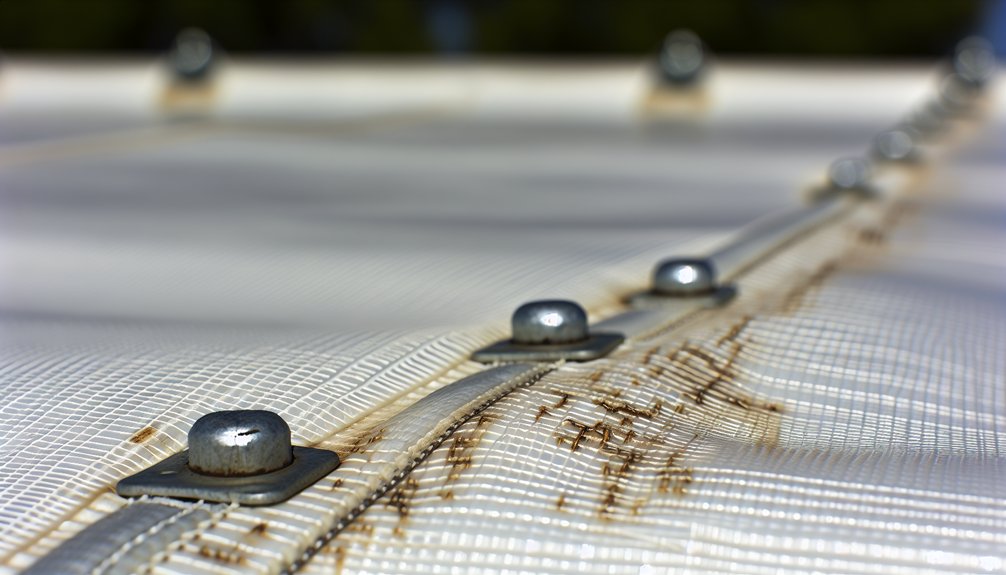
    Finally, examine the foundation anchoring system for rust, loose bolts, or structural damage.

    A detailed used sports dome inspection by a qualified technician costs $2,000-$5,000 but prevents expensive surprises.

    Document all findings and obtain repair estimates before finalizing your purchase decision.

    Best Places to Find Used Air Domes for Sale

    Multiple specialized marketplaces and industry channels offer access to used air domes, though you’ll find the best selection through sports facility dealers who handle trade-ins and upgrades.

    These dealers often maintain inventory from schools and clubs replacing older structures.

    Commercial auction sites like EquipNet and BidSpotter regularly feature decommissioned air domes from recreational facilities.

    You’ll also discover opportunities through direct contact with manufacturers like DBS Engineering and Air Structures American Technologies, who broker used units.

    Industry publications such as Athletic Business magazine’s classified sections connect buyers with sellers nationwide.

    LinkedIn groups focused on sports facility management provide networking opportunities where deals emerge organically.

    Don’t overlook local tennis clubs, schools, and recreational centers that might be upgrading their facilities—they’re among the best places to find used air domes for sale.

    What to Expect: Used Air Dome Condition by Age

    Once you’ve located potential air dome sellers, understanding how age affects structural condition helps you negotiate fair prices and avoid costly surprises.

    When buying used air dome structures, age directly correlates with wear patterns and maintenance needs.

    Here’s what you’ll typically encounter:

    1. 5-year-old domes (60% of new price): Expect minor fabric wear, functioning blower systems, and operational doors with minimal repairs needed.
    2. 10-year-old domes (40-50% of new price): Anticipate fabric patches, potential blower replacements, and door mechanism adjustments or upgrades.
    3. 15+ year domes: Require thorough fabric inspection, likely blower overhauls, and possible structural component replacements.

    Always prioritize professional inspections focusing on fabric integrity, blower motor condition, and door functionality.

    These three components determine your dome’s immediate usability and future maintenance costs.