Category: Maintenance

  • Sports Dome Lead Generation Strategies

    Sports Dome Lead Generation Strategies

    You’re probably watching potential customers drive past your sports dome daily without knowing what you offer inside. Most facility owners make the mistake of assuming their location alone will generate steady bookings, but today’s athletes and teams research options online before making decisions. The difference between struggling with 30% capacity and maintaining a waiting list comes down to implementing the right lead generation system that connects with your local sports community.

    Launch Your Sports Dome’s Digital Marketing Foundation

    Before you can attract your first members to your 20,000 square foot sports dome, you’ll need to establish a strong digital presence that makes your facility discoverable online.

    Start with Google My Business optimization – this free tool becomes your digital storefront for local searches. Upload high-quality photos of your courts, equipment, and facility amenities. Confirm your business hours, contact information, and services are accurate and complete.

    Your sports dome marketing foundation requires a professional website showcasing your facility’s unique features. Include detailed information about court availability, rental rates, and membership options.

    Integrate online booking capabilities to streamline reservations. Develop social media profiles on Facebook, Instagram, and TikTok to showcase action shots, highlight events, and engage with your community before your grand opening.

    Partner With Schools and Leagues for Guaranteed Bookings

    Once your digital foundation is set, you’ll want to secure consistent revenue streams through strategic partnerships. Schools and local sports leagues represent your most reliable booking sources, offering predictable income that drives sports dome business growth.

    Start by contacting athletic directors at nearby high schools and middle schools. They’re constantly seeking quality practice facilities, especially during harsh weather months. Offer competitive rates for regular weekly bookings rather than one-time rentals.

    Local sports leagues with 50-100 members each provide excellent opportunities. Youth soccer, football, and baseball leagues need consistent training spaces. Present package deals that include multiple booking dates at discounted rates.

    Tournament hosting becomes your premium revenue generator, commanding $500-$2,000 daily facility fees. These events also showcase your facility to hundreds of potential new customers simultaneously.

    Optimize Tournament Hosting for $2,000 Daily Revenue

    Tournament hosting transforms your sports dome into a premium revenue generator, potentially earning you $2,000 per day while showcasing your facility to hundreds of prospective customers.

    Start by reaching out to regional sports organizations and league coordinators who regularly need venues. Create tournament packages that include field rental, equipment, and basic concessions. Price competitively within the $500-$2,000 range based on tournament size and duration.

    Market your facility’s unique advantages: climate-controlled environment, professional lighting, and ample parking.

    Tournament hosting creates natural lead generation as parents and players experience your facility firsthand. Capture contact information during registration and follow up with special membership offers.

    Many attendees will convert to regular customers after seeing your dome’s quality. Document events through photos and videos for future marketing materials that demonstrate your hosting capabilities.

    Convert Local Sports Communities Into Monthly Members

    Building relationships with tournament participants sets the foundation for your most valuable revenue stream: converting these one-time visitors into loyal monthly members.

    Your air dome lead generation strategy should capture contact information during tournaments through registration forms and follow-up surveys. Offer exclusive membership trials to participants immediately after events when they’re most engaged with your facility.

    Create targeted membership packages for different sports communities. Youth leagues need family plans while adult recreational teams prefer flexible scheduling options.

    Partner with local league organizers to offer group discounts that incentivize entire teams to join. Use social proof by showcasing current members’ success stories and hosting member-only events that create exclusivity.

    Track conversion rates from each tournament to refine your approach and maximize long-term revenue potential.

    Track Member Growth From 200 to 400 in Year One

    Since your air dome facility’s success hinges on reaching that crucial 400-member milestone, you’ll need systematic tracking methods to monitor progress throughout your first year.

    Start by implementing monthly membership audits, categorizing new sign-ups by source—whether from tennis dome advertising, local league partnerships, or tournament participation.

    Create a simple dashboard tracking retention rates, seasonal fluctuations, and member engagement levels.

    Monitor key performance indicators like cost per acquisition from different marketing channels. Your Google My Business metrics, social media conversion rates, and tournament attendance numbers reveal which strategies drive actual memberships versus mere interest.

    Set quarterly targets of 100 new members, adjusting your marketing spend based on what’s working.

    Track member feedback through surveys to identify improvement areas that boost retention and word-of-mouth referrals.
  • Air Dome Ventilation Systems Guide

    Air Dome Ventilation Systems Guide

    When you’re managing an air dome facility, you’ll quickly discover that proper ventilation isn’t just about comfort—it’s about preventing structural damage, controlling humidity, and maintaining safe air quality. You’ve got three main ventilation approaches to contemplate, each with distinct advantages and price points. The system you choose will determine whether you’re constantly battling condensation issues or enjoying effortless climate management. But here’s what most facility managers don’t realize about making this critical decision.

    How to Choose the Right Air Dome Ventilation System?

    When selecting an air dome ventilation system for your 20,000 square foot facility, you’ll need to evaluate three key factors: your budget constraints, climate control requirements, and operational complexity preferences.

    If you’re working with limited funds, sidewall vent panels offer passive air dome ventilation starting at $2,000-$5,000. They’re simple but provide basic airflow without temperature control.

    For moderate budgets requiring active airflow, powered exhaust fans deliver 5,000-10,000 CFM capacity at $3,000-$8,000. They’ll maintain air circulation while keeping costs reasonable.

    When precise climate control matters most, invest in full HVAC integration costing $15,000-$40,000. This premium air dome ventilation option maintains your facility’s temperature between 55-85°F year-round, ensuring ideal comfort and air quality for all activities.

    Sidewall Vent Panels: Budget-Friendly Passive Airflow

    Feature Standard Panels Insulated Panels Weather-Resistant
    Cost Range $2,000-$3,500 $3,000-$4,500 $4,000-$5,000
    Airflow Rate 2,000-4,000 CFM 1,800-3,500 CFM 2,500-4,500 CFM
    Weather Protection Basic Enhanced Superior
    Installation Time 4-6 hours 6-8 hours 8-10 hours
    Maintenance Minimal Low Very Low

    Powered Exhaust Fans: Active Air Dome Climate Control

    While sidewall vent panels offer passive airflow, powered exhaust fans deliver active climate control that transforms your air dome’s environmental management.

    These mechanical systems actively pull stale air out while drawing fresh air in, maintaining ideal temperature ranges between 55-85°F regardless of external conditions.

    You’ll find powered exhaust fans particularly effective for larger 20,000 sq ft facilities where passive ventilation can’t adequately circulate air.

    With capacities ranging from 5,000-10,000 CFM, these systems guarantee consistent air quality throughout your dome.

    • Consistent Performance: Unlike passive systems, powered exhaust fans work independently of wind conditions
    • Temperature Control: Active air circulation prevents hot spots and maintains even climate distribution
    • Scalable Options: Choose from various fan sizes and configurations to match your dome’s specific requirements

    Investment ranges from $3K-$8K depending on system complexity.

    HVAC Systems: Complete Air Dome Environmental Management

    Though powered exhaust fans provide excellent active ventilation, HVAC systems represent the pinnacle of air dome climate control, delivering thorough environmental management that goes far beyond basic air circulation.

    HVAC integration transforms your air dome into a precisely controlled environment. You’ll maintain consistent temperatures year-round while managing humidity levels and air quality. These systems offer heating, cooling, filtration, and circulation through a unified network.

    Feature Capability Investment Range
    Temperature Control Precise heating/cooling $15K-$25K
    Air Quality Management Advanced filtration $8K-$15K
    Humidity Regulation Dehumidification systems $12K-$20K

    Professional HVAC integration requires substantial investment ($15K-$40K total) but delivers unmatched performance. You’ll achieve ideal conditions for any activity while reducing energy costs through efficient operation. This all-encompassing approach guarantees your 20,000 sq ft space maintains perfect environmental conditions regardless of external weather.

  • Cleaning and Care for Sports Domes

    Cleaning and Care for Sports Domes

    You’ve invested substantially in your sports dome, but without proper maintenance, that investment can deteriorate faster than you’d expect. The cleaning methods you choose today will determine whether your facility thrives for decades or requires costly repairs within just a few years. Most facility managers make important mistakes during routine cleaning that actually accelerate wear and damage. Before you grab that pressure washer or harsh detergent, there’s something vital you need to understand about dome materials.

    Professional Air Dome Cleaning vs DIY: Costs and Considerations

    Most sports dome owners face a critical decision when their facility needs cleaning: hire professionals or tackle the job themselves.

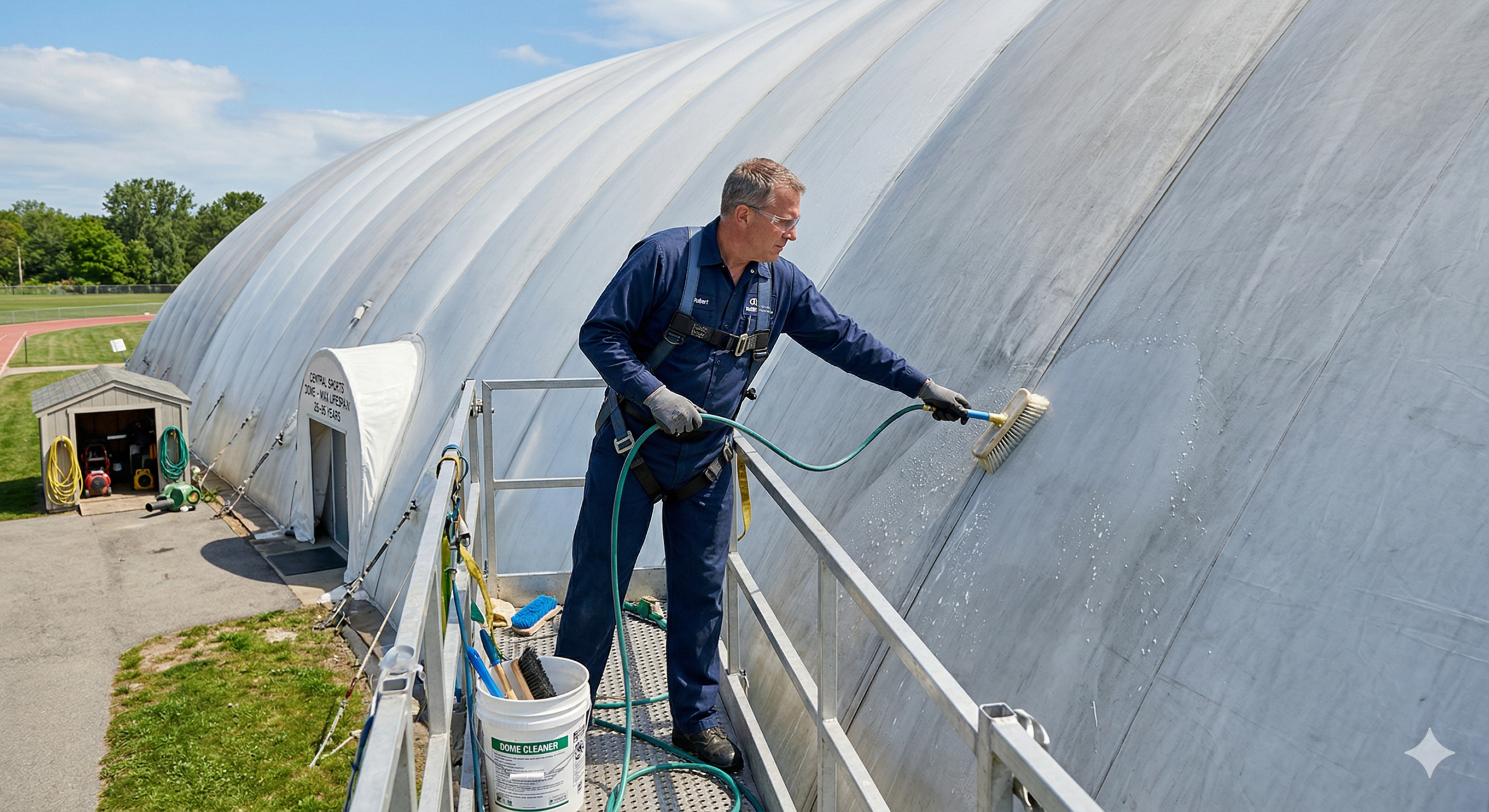
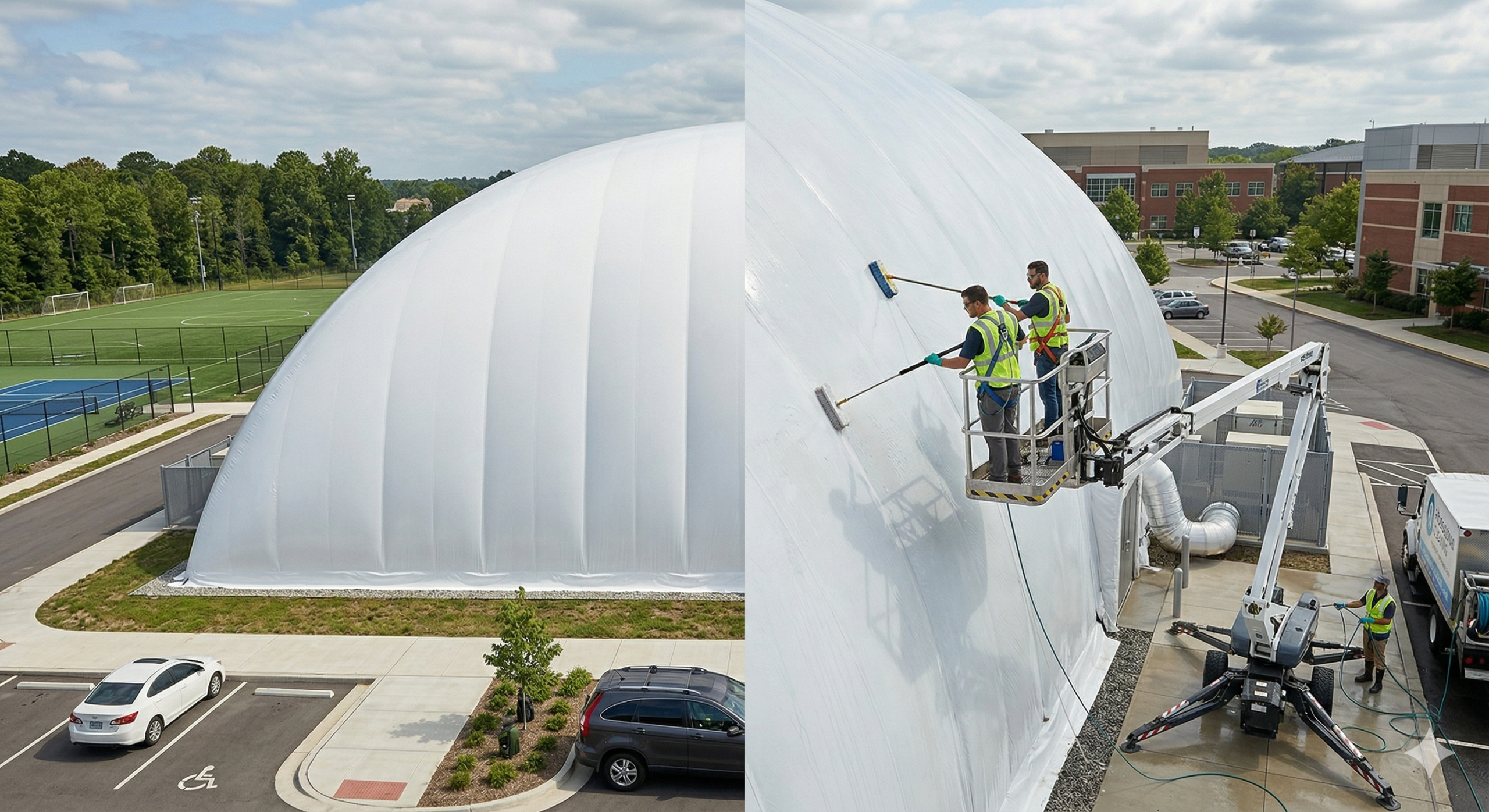
    Professional air dome cleaning services cost $2,000-$5,000 for a 20,000 square foot facility, but they bring specialized equipment and expertise that prevents costly damage. They understand proper pressure settings, pH-neutral soap requirements, and safe cleaning techniques that extend your dome’s life by 5-10 years.

    DIY cleaning appears cheaper initially, but you’ll need specific equipment and knowledge to avoid damaging the coating. High-pressure washers and harsh chemicals can cause irreparable harm.

    You’ll also need scaffolding or lifts for safe access. While you’ll save on labor costs, consider whether you have the time, equipment, and expertise to clean safely and effectively without compromising your dome’s integrity.

    Supplies and Equipment Needed for Air Dome Cleaning

    Whether you choose professional service or handle the cleaning yourself, understanding the right supplies and equipment makes the difference between success and disaster.

    For effective sports dome washing, you’ll need pH-neutral mild soap specifically designed for fabric structures. Never use harsh chemicals or acidic cleaners that’ll damage the dome’s protective coating.

    Essential equipment includes soft-bristled brushes, low-pressure hoses, and extension poles for reaching higher areas. Skip pressure washers entirely—they’re too aggressive and will compromise the material’s integrity.

    You’ll also need clean water for thorough rinsing and possibly scaffolding or lifts for larger domes.

    Stock microfiber cloths for spot cleaning and gentle squeegees for water removal. Having proper supplies guarantees you’ll extend your dome’s lifespan while maintaining its appearance and structural integrity.

    Step-by-Step Air Dome Cleaning Process for Large Facilities

    Seven critical steps guarantee your large air dome cleaning project runs smoothly and safely.

    First, you’ll inspect the entire structure for damage, noting tears or weak spots that need repair before cleaning.

    Second, gather your pH-neutral soap, soft brushes, and low-pressure equipment – never use harsh chemicals or pressure washers that’ll damage the coating.

    Third, start cleaning from the top down, working in manageable sections.

    Fourth, apply mild soap solution with gentle circular motions using soft brushes.

    Fifth, rinse thoroughly with low-pressure water to remove all soap residue.

    Sixth, allow complete air drying before moving to the next section.

    Finally, document the process and schedule your next maintenance.

    Professional tennis bubble cleaning service typically costs $2,000-$5,000 but extends your dome’s lifespan considerably.

    Air Dome Cleaning Schedules That Maximize Lifespan

    Strategic timing transforms routine maintenance into a powerful investment that doubles your air dome’s operational lifespan.

    You’ll maximize your dome’s longevity by establishing a bi-annual cleaning schedule, ideally during spring and fall when weather conditions are ideal.

    For facilities with heavy usage or harsh environmental conditions, quarterly inspections with annual deep cleaning provide superior protection.

    Schedule major cleaning during off-seasons to avoid disrupting operations while ensuring thorough dome fabric care.

    Professional services cost $2,000-$5,000 but extend operational life by 5-10 years, delivering exceptional return on investment.

    Document each cleaning session to track fabric condition and adjust frequency as needed.

    Consistent maintenance prevents minor issues from becoming costly replacements, keeping your facility operational and profitable for decades.

  • Air Dome Emergency Procedures

    Air Dome Emergency Procedures

    You’ve invested in an air dome for good reasons—protection from weather, year-round facility use, and cost savings. But when severe weather strikes or systems fail, you’ll need more than hope to keep everyone safe. Vital decisions about evacuation, backup power, and emergency repairs can’t wait for manuals or phone calls. The difference between a manageable incident and a disaster often comes down to knowing exactly what to do in those first vital minutes.

    When Air Dome Emergencies Require Immediate Evacuation

    Although air domes are designed to withstand significant weather conditions, you’ll need to evacuate immediately when wind speeds exceed the structure’s design limits of 100 mph (160 km/h).

    Don’t wait for official warnings—monitor weather conditions continuously and act decisively when severe storms approach.

    You must also evacuate when the backup blower system fails during power outages, creating rapid deflation scenarios.

    If you notice major fabric tears that can’t be controlled with emergency patches, initiate evacuation protocols immediately.

    Fire emergencies require instant evacuation due to the fabric’s vulnerability to heat damage.

    These air dome emergency procedures aren’t optional—your safety depends on recognizing critical situations quickly.

    Always prioritize human life over equipment or activities when facing structural compromise or extreme weather conditions.

    Power Outage Response: Backup Systems and Safe Deflation

    When power outages strike your air dome facility, you’ll rely on backup blower systems that automatically engage within 30 seconds to maintain structural integrity. Your power outage response plan should include regular testing of these emergency systems to verify they’re operational when needed.

    If backup systems fail, don’t panic—safe deflation takes 45-90 minutes for a 20,000 sq ft facility, giving you ample time to evacuate occupants safely.

    Time Frame Action Required System Status
    0-30 seconds Monitor backup activation Auto-start engaging
    30-45 minutes Begin controlled evacuation Backup operational
    45-90 minutes Complete facility clearance Safe deflation period

    Always maintain emergency lighting and clear exit pathways during your power outage response procedures.

    Managing Air Dome Pressure During Severe Weather

    Beyond power-related challenges, severe weather presents unique pressure management demands that require immediate attention and strategic adjustments.

    You’ll need to continuously monitor internal pressure readings during storms, as external wind forces can create dangerous fluctuations. When snow accumulates on your dome’s surface, increase heating systems immediately to prevent excessive weight buildup that could compromise structural integrity.

    Your sports dome safety protocols must include real-time weather tracking and predetermined evacuation triggers. If wind speeds approach your facility’s design limits of 100 mph, initiate immediate evacuation procedures.

    Don’t wait for conditions to worsen. During severe weather events, maintain constant communication with local emergency services and have your emergency patch kit readily accessible. Quick response to pressure changes can mean the difference between minor repairs and catastrophic failure.

    Emergency Fabric Repair: Quick Fixes vs. Full Evacuation

    While fabric damage presents one of the most critical decisions you’ll face as an air dome operator, understanding the difference between manageable tears and evacuation-worthy breaches can save both time and lives.

    Your tennis bubble emergency response depends on quickly evaluating the damage severity and acting appropriately.

    For minor damage, you can implement temporary fixes:

    1. Small punctures (under 6 inches) – Apply emergency patch kit immediately while maintaining normal operations.
    2. Seam separations – Use temporary tape reinforcement and monitor pressure levels closely.
    3. Weather-related tears – Evaluate structural integrity before deciding between repair or evacuation.

    However, large rips exceeding 12 inches, multiple breach points, or any damage compromising structural zones require immediate evacuation.

    Don’t risk lives attempting repairs on major damage – evacuate first, then evaluate repair options once the structure is safely deflated.

  • Extending Air Dome Lifespan Tips

    Extending Air Dome Lifespan Tips

    Your air dome represents a significant investment—potentially lasting 25 years or more with proper care. Yet most owners don’t realize they’re unknowingly cutting their structure’s lifespan in half through common maintenance oversights. The difference between a dome that fails in 12 years versus one that thrives for decades often comes down to a few critical practices that take minutes to implement but save thousands in premature replacement costs.

    Why Air Dome Maintenance Matters (Your 25-Year Investment Protection Plan)

    A 20,000 square foot air dome represents a substantial investment—one that can serve you reliably for 25 to 35 years with proper care. Without maintenance, you’re looking at costly repairs, premature replacement, and potential safety hazards that’ll drain your budget.

    Think of maintenance as insurance for your investment. Regular cleaning prevents UV degradation that weakens fabric integrity. Proper snow removal protects against catastrophic collapse from excessive weight loads.

    Maintaining correct air pressure guarantees structural stability while preventing unnecessary stress on seams and anchoring systems.

    When you extend air dome life through proactive maintenance, you’re protecting decades of reliable service. A well-maintained dome delivers consistent performance, reduces emergency repair costs, and maximizes your return on investment.

    Neglect these basics, and you’ll face expensive consequences that could’ve been easily prevented.

    Clean Your Air Dome Like A Pro (UV Protection And Debris Removal)

    Cleaning your air dome regularly forms the foundation of that maintenance strategy we just discussed.

    You’ll maximize dome lifespan by removing dirt, leaves, and debris that trap moisture and accelerate material breakdown. Clean your dome every 3-4 months using mild soap and water – harsh chemicals damage the fabric.

    Start at the top and work downward with a soft brush or cloth. Pay special attention to seams where debris accumulates.

    Remove organic matter like leaves immediately, as they retain moisture and promote UV damage when left sitting.

    Winter cleaning’s essential too. Clear snow buildup exceeding 35 PSF to prevent structural stress.

    Don’t use sharp tools that could puncture the membrane. After cleaning, inspect for small tears or wear spots that need immediate attention.

    Master Air Dome Pressure And Snow Load Management

    Monitor your air dome’s pressure religiously – it’s the critical factor that prevents costly structural damage and extends your dome’s operational life. Maintain pressure between 2-5 PSF (0.1-0.24 kPa) consistently. Install backup blowers to prevent deflation during power outages or equipment failures.

    Snow management requires vigilance. Never exceed 35 PSF (1.67 kPa) load capacity. Remove snow when accumulation threatens structural integrity.

    Pressure Range Snow Load Limit Action Required
    2-3 PSF Light snow acceptable Monitor only
    3-4 PSF Moderate snow tolerance Clear if >12″
    4-5 PSF Maximum safe pressure Immediate removal
    Below 2 PSF Structural risk Emergency inflation

    These air dome longevity tips prevent membrane stress, reduce wear patterns, and maintain proper aerodynamics. Document pressure readings daily and establish snow removal protocols before winter arrives.

    Handle Air Dome Repairs And Off-Season Storage

    Two critical maintenance practices will determine whether your air dome reaches its maximum 25-35 year lifespan: immediate repair response and proper off-season storage protocols.

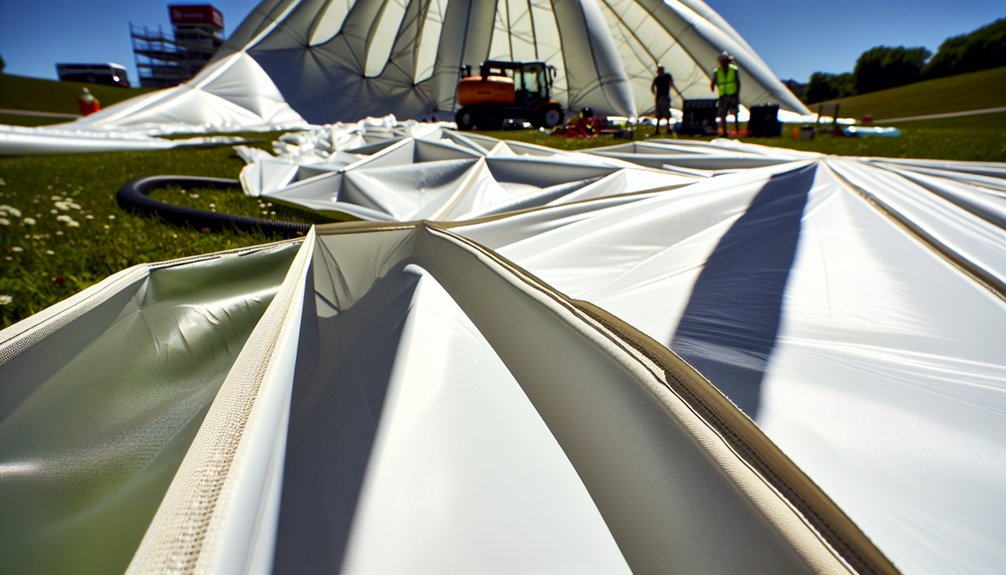
    When you spot tears, punctures, or wear patterns, address them within 24-48 hours. Small issues become major problems fast, potentially compromising your dome’s structural integrity.

    Use manufacturer-approved patch kits and techniques to maintain fabric strength.

    For seasonal storage, follow these dome care best practices:

    • Clean thoroughly and dry completely before folding to prevent mold and mildew
    • Store in rodent-free, temperature-controlled environment away from sharp objects
    • Fold loosely following manufacturer guidelines to avoid permanent creases

    Proper storage prevents fabric degradation during off-months.

    You’ll protect your investment while ensuring reliable performance when reinstalling your dome for the next season.

  • Air Dome Blower Maintenance Guide

    Air Dome Blower Maintenance Guide

    You’ve invested thousands in your air dome, but you’re probably overlooking the one component that keeps it standing—your blower system. When that motor fails at 2 AM during winter operations, you’ll quickly realize that a few minutes of weekly maintenance could’ve saved you from emergency repair costs and potential dome collapse. The difference between a blower that lasts two years versus ten years isn’t luck—it’s following a proven maintenance protocol that most operators never discover.

    Complete Air Dome Blower Maintenance Schedule and Timeline

    Since your air dome’s structural integrity depends entirely on consistent blower operation, you’ll need to follow a systematic maintenance schedule that prevents costly downtime and extends equipment life.

    Your air dome blower maintenance should follow three distinct intervals.

    Weekly inspections require checking overall operation and listening for unusual sounds or vibrations.

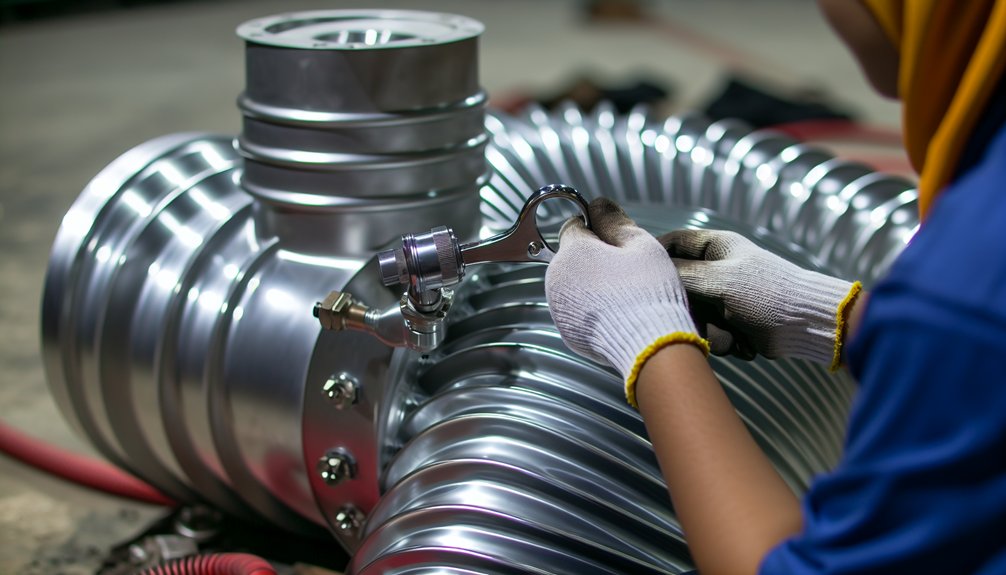
    Monthly tasks include lubricating bearings, verifying proper belt tension, and cleaning intake filters to maintain peak airflow.

    Annual maintenance demands more intensive work: replace bearings after 8,000-10,000 operating hours, install new belts, and conduct thorough motor inspections.

    For a 20,000 square foot facility, budget $100-$200 for replacement bearings as essential spare parts.

    This structured approach guarantees your blower system operates reliably year-round, maintaining proper dome pressurization and avoiding unexpected failures that could compromise your facility’s structural integrity.

    Weekly and Monthly Blower Care Tasks That Prevent Breakdowns

    While thorough annual maintenance keeps your air dome blower running long-term, it’s the consistent weekly and monthly tasks that actually prevent most equipment failures. These routine checks catch problems before they escalate into costly dome blower repair situations.

    Your weekly inspection should focus on basic operation verification, while monthly tasks dive deeper into mechanical components that experience regular wear.

    Frequency Task Time Required Critical Focus
    Weekly Check operation 10 minutes Listen for unusual sounds
    Monthly Lubricate bearings 15 minutes Proper grease application
    Monthly Check belt tension 10 minutes Prevent slippage/wear
    Monthly Clean intake filters 20 minutes Maintain airflow efficiency

    Staying consistent with this schedule greatly reduces unexpected breakdowns and extends your blower’s operational life considerably.

    Annual Air Dome Blower Component Replacement Guide

    Beyond routine weekly and monthly care, your air dome blower requires strategic annual component replacements to maintain peak performance.

    Replace bearings after 8,000-10,000 operating hours to prevent catastrophic failure. Keep spare bearings on hand, as they cost $100-$200 and guarantee minimal downtime during replacement.

    Belt replacement is equally critical during your annual maintenance cycle. Worn belts reduce efficiency and can snap unexpectedly, compromising your facility’s air pressure.

    Schedule motor inspections alongside component replacements to identify potential issues before they become costly problems.

    Proper tennis bubble blower care depends on this annual replacement schedule. For a 20,000 square foot facility, these proactive measures protect your investment and maintain consistent operation.

    Document replacement dates and operating hours to optimize future maintenance timing and avoid emergency repairs.

    Common Blower Problems and Maintenance-Based Solutions

    Although preventive maintenance reduces most issues, air dome blowers can still develop problems that require targeted solutions. When you encounter blower malfunctions, systematic troubleshooting helps identify root causes quickly. Most problems stem from neglected maintenance schedules or component wear.

    Problem Solution
    Excessive vibration Check belt tension, replace worn bearings
    Reduced airflow Clean intake filters, inspect for blockages
    Unusual noise Lubricate bearings, examine motor alignment
    Overheating motor Clear ventilation areas, check electrical connections
    Belt slipping Adjust tension, replace stretched belts

    Professional sports dome fan service becomes necessary when problems persist despite proper maintenance. Keep detailed maintenance logs to track recurring issues and schedule professional inspections annually. Address minor problems immediately to prevent costly repairs and facility downtime.

  • Common Air Dome Problems and Solutions

    Common Air Dome Problems and Solutions

    You’ve invested in an air dome for your facility, but like any complex structure, problems will eventually surface. Whether it’s a sudden pressure drop during peak hours, a stubborn zipper door that won’t budge, or mysterious tears appearing in the fabric, these issues can shut down operations and cost you money. The good news? Most air dome problems have straightforward solutions if you know what to look for and how to respond quickly.

    Common Fabric Tears: Causes and Quick Fixes

    Although air domes are built to withstand various weather conditions, fabric tears remain one of the most frequent issues you’ll encounter with your 20,000 square foot facility. These common dome issues typically result from sharp objects, excessive wind stress, or UV degradation over time.

    When you notice small punctures or tears, don’t panic. Most tennis bubble repairs can be handled quickly with basic repair kits costing between $35-$100. You’ll find these kits contain fabric patches, adhesive, and detailed instructions for temporary fixes.

    For immediate solutions, clean the damaged area thoroughly, apply the patch following manufacturer guidelines, and guarantee proper adhesion.

    However, larger tears require professional assessment. Regular inspections help you catch air dome problems early, preventing minor damage from becoming costly structural issues.

    Blower Motor Failures: Symptoms and Solutions

    While fabric tears affect your air dome’s exterior, blower motor failures strike at the heart of your facility’s operation. When your blower system malfunctions, you’ll notice immediate pressure drops and potential structural collapse risks.

    Key symptoms include unusual grinding noises, excessive vibration, and inconsistent airflow. Bearing failures account for most issues, typically costing $500-$1,500 to repair. You’ll want to monitor motor temperature and listen for irregular sounds during routine inspections.

    For effective sports dome troubleshooting, check electrical connections first, then examine belt tension and alignment. Replace worn bearings immediately to prevent complete motor failure.

    Your air dome problem solving strategy should include backup blower systems for critical situations. Regular maintenance prevents most failures, but when problems arise, quick response protects your entire facility investment.

    When Zipper Doors Jam or Stick

    As blower motors keep your dome pressurized, zipper door mechanisms provide essential access control that can quickly become problematic.

    When your zipper doors jam or stick, you’re facing one of the most common maintenance issues in air dome facilities.

    Most zipper problems stem from dirt accumulation, fabric misalignment, or worn zipper teeth.

    Here’s your troubleshooting approach:

    1. Clean the zipper track thoroughly with a stiff brush to remove debris, ice, or fabric particles.
    2. Apply silicone-based lubricant to zipper teeth and slider mechanisms monthly.
    3. Check fabric tension around the door frame for proper alignment.
    4. Inspect zipper slider for damage or wear that prevents smooth operation.

    Regular maintenance prevents most jamming issues.

    You’ll save time and avoid emergency repairs by implementing a monthly zipper inspection routine.

    Pressure Loss: Finding and Sealing Leaks

    Beyond door mechanisms, your air dome’s structural integrity depends on maintaining proper internal pressure between 2-5 PSF (0.1-0.24 kPa).

    When you notice sagging or deflation, pressure loss is likely occurring through base seal leaks, fabric punctures, or connection points.

    Start your inspection at ground level where the dome meets its foundation. Check the entire perimeter for gaps, loose anchor points, or damaged sealing material.

    Listen for air escaping—it’ll create a distinct hissing sound. Use soapy water to identify small leaks; bubbles will form where air escapes.

    Examine fabric panels for tears, worn areas, or punctures from debris. Pay attention to seams and reinforced sections where stress concentrates.

    Check blower connections, electrical penetrations, and emergency exits. Temporary patches work for small holes, but schedule permanent repairs quickly to prevent larger problems.

    Snow Load Removal and Weight Limits

    When snow accumulates beyond 12 inches (30 cm) on your air dome, you’re approaching dangerous weight limits that can compromise structural integrity.

    Snow’s weight varies dramatically based on moisture content, with wet snow weighing up to three times more than dry powder. You’ll need immediate action to prevent costly damage or collapse.

    Snow Load Management Protocol:

    1. Monitor accumulation – Check snow depth every 4-6 hours during storms using marked reference points around your dome’s perimeter.
    2. Increase internal pressure – Boost air pressure by 0.5-1.0 PSF to help shed light snow naturally before it becomes problematic.
    3. Deploy removal equipment – Use foam brushes or specialized dome rakes to gently remove snow, working from bottom to top in sections.
    4. Document conditions – Record snow type, depth, and weather forecasts to anticipate future loading events.

    Repair Costs and Essential Emergency Tools

    You’ll need specific tools and spare parts on hand to address air dome emergencies quickly before they escalate into costly structural damage.

    Your emergency repair kit should include fabric patches, sealants, and basic tools, while understanding professional service costs helps you budget for major repairs like blower replacements.

    Preparing for both minor fixes you can handle yourself and larger issues requiring expert intervention guarantees you’re ready for any air dome problem.

    Emergency Repair Kit Essentials

    Three critical repair scenarios can threaten your air dome’s structural integrity without warning.

    You’ll need an extensive emergency repair kit to address fabric tears, pressure loss, and mechanical failures that could compromise your 20,000 sq ft facility’s operation.

    Your emergency repair kit must include these essential components:

    1. Fabric repair patches and adhesive – Waterproof patches in multiple sizes with industrial-grade adhesive for immediate tear repairs ($35-$100 investment)
    2. Pressure monitoring tools – Digital manometer to detect the 2-5 PSF pressure drops that signal base leaks or blower issues
    3. Basic blower maintenance supplies – Replacement bearings, belts, and lubricants for $500-$1,500 blower repairs
    4. Door hardware kit – Zipper lubricant, replacement pulls, and cleaning supplies to prevent costly lockouts

    Keep these supplies readily accessible for immediate deployment.

    Professional Service Cost Breakdown

    Professional air dome repair services typically charge $150-$300 per hour, making DIY maintenance knowledge essential for managing your facility’s operating costs.

    For a 20,000 sq ft facility, you’ll face predictable repair scenarios. Fabric tear repairs cost $35-$100 for materials when you handle them yourself, but professional patching runs $400-$800 including labor.

    Blower bearing replacements range from $500-$1,500 in parts, yet service calls add $300-$600 in labor charges.

    Zipper door maintenance requires only cleaning and lubrication—a $5 fix versus $200-$400 for professional service.

    Pressure loss diagnostics cost $150-$300 professionally, though you can check base seals yourself.

    Snow removal services charge $50-$150 per visit, making preventive monitoring vital for your budget.

    Preventing Major Air Dome Breakdowns

    While air dome issues can range from minor inconveniences to costly repairs, implementing a proactive maintenance strategy will help you avoid the most expensive breakdowns.

    Regular inspections catch problems before they escalate. You’ll save thousands by addressing fabric tears with $35-$100 repair kits rather than replacing entire sections. Similarly, monitoring blower performance prevents bearing failures that cost $500-$1,500.

    Here’s your essential prevention checklist:

    1. Monthly fabric inspections – Look for small tears, worn areas, and stress points around anchor systems.
    2. Quarterly blower maintenance – Check bearings, belts, and filters to prevent costly failures.
    3. Seasonal pressure monitoring – Test for base leaks when pressure drops below 2-5 PSF.
    4. Weather preparation – Remove snow accumulation exceeding 12 inches to prevent structural damage.

    Consistent maintenance protects your investment long-term.

  • Air Dome Maintenance Schedule Guide

    Air Dome Maintenance Schedule Guide

    You’ve invested considerably in your air dome facility, but without proper maintenance scheduling, you’re risking catastrophic failure and costly emergency repairs. Most facility managers don’t realize that a systematic approach to monthly, quarterly, and annual maintenance tasks can extend their dome’s lifespan by decades while preventing the kind of sudden deflation that shuts down operations for weeks. The difference between proactive maintenance and reactive crisis management comes down to following a proven schedule that addresses critical warning signs before they become disasters.

    Essential Air Dome Maintenance Tasks By Schedule

    Maintaining your 20,000 square foot air dome requires a systematic approach that breaks down essential tasks into manageable monthly, quarterly, and annual schedules.

    Your air dome maintenance schedule should include monthly blower inspections, pressure checks, and door operation testing to guarantee peak performance.

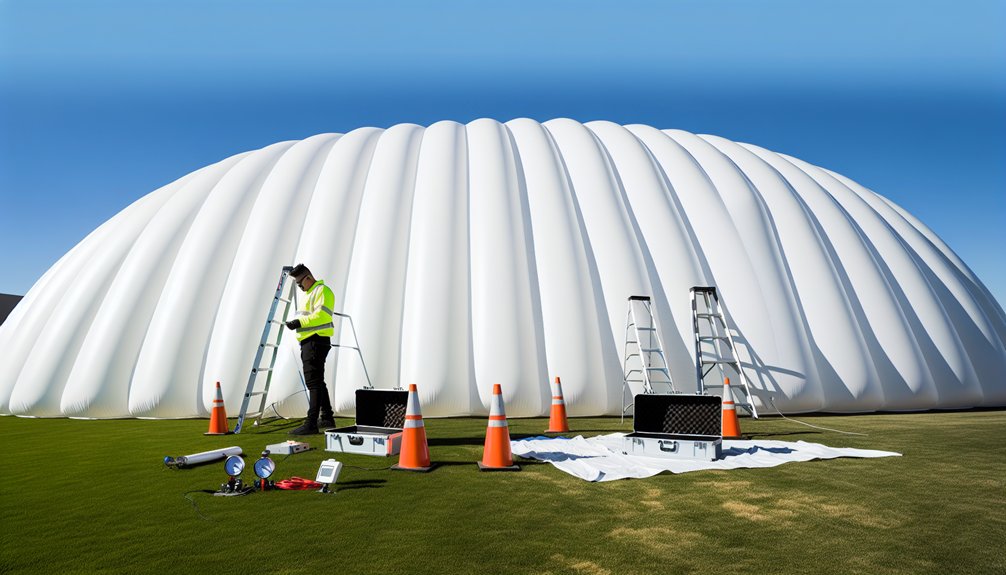
    Every quarter, you’ll need to conduct thorough fabric inspections for tears and UV damage, check rope tension, and perform deep cleaning procedures.

    Your dome inspection schedule must also incorporate annual tasks like professional fabric assessments and complete blower overhauls.

    This tennis bubble maintenance guide emphasizes that following these scheduled intervals prevents costly emergency repairs and extends your dome’s lifespan.

    Consistent adherence to these maintenance protocols keeps your facility safe, functional, and compliant with manufacturer warranties while maximizing your investment’s long-term value.

    Monthly Inspections That Keep Your Facility Running

    Your monthly inspections form the backbone of reliable air dome operation, focusing on three critical systems that can’t afford to fail.

    You’ll need to examine your blower system for wear, verify pressure levels stay within ideal ranges, and test all door mechanisms for smooth operation.

    These quick but essential checks catch problems early, preventing costly failures that could compromise your entire facility.

    Blower System Inspection

    Since your air dome’s blower system serves as the heart of your facility’s structural integrity, regular monthly inspections become critical for preventing costly downtime and emergency repairs.

    Your sports dome upkeep calendar should prioritize checking air filters for debris accumulation, as clogged filters reduce efficiency and strain the motor.

    Inspect belts for proper tension, cracking, or fraying that could lead to sudden failure. Listen for unusual noises, vibrations, or grinding sounds that indicate bearing problems or loose components.

    Check electrical connections for corrosion or looseness, and verify amperage readings match manufacturer specifications. Document motor temperature during operation to identify overheating issues early.

    Test emergency backup systems if equipped, ensuring seamless shift during primary blower maintenance. Clean intake vents and remove any obstructions that could restrict airflow and compromise your dome’s pressure stability.

    Pressure Level Monitoring

    When pressure levels drop below ideal thresholds, your air dome’s structural integrity becomes compromised, making consistent monitoring essential for safe operations.

    You’ll need to check pressure readings monthly using your system’s gauges or digital monitoring equipment.

    Monitor these critical pressure indicators during your monthly inspections:

    • Operating pressure range – Verify readings stay within manufacturer specifications (typically 0.3-0.5 PSI)
    • Pressure differential alerts – Watch for sudden drops that indicate leaks or blower issues
    • Emergency backup activation – Test automatic systems that engage when primary pressure falls

    Document all pressure readings in your maintenance log, noting any fluctuations or irregularities.

    If you discover pressure levels consistently falling outside normal parameters, investigate immediately for fabric damage, seal failures, or blower performance issues before structural problems develop.

    Door Operation Testing

    While monitoring pressure keeps your dome inflated properly, door systems require equally rigorous attention to maintain safe entry and exit operations.

    You’ll need to test each door’s opening and closing mechanism monthly, ensuring smooth operation without binding or hesitation. Check that emergency exits function correctly and can’t be accidentally locked from the inside.

    Inspect door seals for air leaks that compromise pressure stability. Look for worn weatherstripping, damaged gaskets, or loose connections.

    Test automatic door systems if equipped, verifying sensors work properly and doors respond to commands immediately.

    Examine hinges, handles, and locking mechanisms for wear or corrosion. Lubricate moving parts as needed and tighten loose hardware.

    Document any issues requiring repair, as malfunctioning doors pose serious safety risks during emergencies.

    Quarterly Air Dome Checks That Prevent Major Repairs

    Every three months, you’ll need to conduct thorough fabric inspections to catch tears and UV damage before they compromise your dome’s integrity.

    Check all rope tension points systematically, as loose or overly tight ropes can create stress concentrations that lead to fabric failure.

    These quarterly assessments are your best defense against costly emergency repairs that could shut down your facility unexpectedly.

    Fabric Inspection Protocol

    Since fabric represents your air dome’s most vulnerable component, establishing a rigorous quarterly inspection protocol will save you thousands in emergency repairs.

    You’ll need to systematically examine every section for tears, punctures, and UV damage that compromise structural integrity.

    Start by walking the dome’s perimeter during daylight hours, checking for discoloration or fabric thinning.

    Pay special attention to high-stress areas like anchor points and seams where failures typically originate.

    • Document damage locations with photos and measurements for tracking deterioration patterns over time
    • Test fabric flexibility by gently stretching suspected weak areas to identify brittleness before catastrophic failure
    • Inspect reinforcement patches from previous repairs to verify they’re holding securely without creating new stress points

    Address minor issues immediately—small tears become major ruptures when ignored.

    Rope Tension Assessment

    How often do you check the rope tensions that keep your air dome properly anchored? Quarterly rope tension assessments prevent catastrophic failures that’ll cost thousands in repairs.

    Walk the perimeter and examine each anchor point systematically. You’re looking for loose ropes, frayed sections, or hardware showing wear.

    Use a tension gauge to measure rope tightness at critical stress points. Proper tension maintains structural integrity during wind loads and pressure fluctuations.

    Don’t rely on visual inspection alone—ropes can lose tension gradually without obvious signs.

    Tighten loose connections immediately and replace damaged ropes before they fail. Document tension readings to track deterioration patterns.

    This quarterly check takes two hours but prevents emergency repairs that’ll shut down your facility for days.

    Annual Professional Air Dome Service Requirements

    While monthly and quarterly maintenance tasks keep your air dome operating smoothly, annual professional service guarantees long-term structural integrity and peak performance.

    Professional technicians conduct thorough assessments that exceed basic maintenance capabilities, identifying potential issues before they become costly problems.

    Annual service includes three critical components:

    • Complete fabric evaluation – Professionals assess structural integrity, UV degradation patterns, and stress point wear using specialized equipment.
    • Blower system overhaul – Extensive motor inspection, belt replacement, electrical testing, and efficiency calibration.
    • Full system integration testing – Emergency procedures verification, backup system functionality, and safety protocol validation.

    This professional oversight extends your dome’s lifespan greatly while maintaining manufacturer warranty compliance.

    You’ll receive detailed documentation of all findings and recommendations, creating a maintenance history that supports insurance claims and helps plan future capital investments.

    Air Dome Warning Signs Requiring Immediate Action

    What happens when your air dome shows critical warning signs that demand immediate attention? You’ll need to act swiftly to prevent catastrophic failure and protect occupants inside.

    Watch for sudden pressure drops that your blower can’t compensate for – this indicates major fabric tears or seal failures.

    If you notice visible fabric sagging, ballooning, or flapping sections, evacuate immediately and shut down operations.

    Strange noises from the blower system, including grinding, squealing, or irregular cycling, signal mechanical failure.

    Don’t ignore fabric discoloration, brittle areas, or visible stress points around anchor connections.

    Water pooling on the dome surface creates dangerous weight loads that can cause collapse.

    Emergency protocols should include immediate evacuation procedures and backup blower activation.

    Contact professional technicians immediately when these critical signs appear.

    Budgeting Air Dome Maintenance For 20,000 Sq Ft Facilities

    Since proper air dome maintenance prevents costly emergencies and extends facility lifespan, you’ll need to allocate $15,000-25,000 annually for a 20,000 sq ft installation.

    Your budget breakdown should include:

    • Routine maintenance (40-50%): Monthly blower inspections, pressure checks, quarterly fabric assessments, and cleaning supplies.
    • Emergency repairs (25-35%): Unexpected fabric patches, blower component replacements, and urgent door mechanism fixes.
    • Professional services (20-25%): Annual fabric evaluations, complete blower overhauls, and specialized system testing.

    Factor in seasonal variations—winter demands increase due to snow loads and heating costs.

    You’ll also want to establish a separate capital reserve fund for major replacements like fabric renewal every 15-20 years or complete blower system upgrades.

    Smart budgeting guarantees uninterrupted facility operations.

  • How to Heat an Air Dome Efficiently

    How to Heat an Air Dome Efficiently

    You’re probably spending more on heating your air dome than necessary. Most facility managers don’t realize that standard heating methods can waste up to 60% of energy due to the dome’s unique curved structure and constant air pressure requirements. The good news? There are proven strategies that can slash your heating costs while maintaining ideal temperatures year-round. Let’s examine which heating system will deliver the best return on your investment.

    Compare Air Dome Heating Systems: Heat Pumps vs. Radiant vs. Gas

    When choosing a heating system for your air dome, you’ll need to weigh three primary options: heat pumps, radiant heating, and gas systems.

    Heat pumps excel in moderate climates (41-59°F), delivering exceptional energy efficiency by extracting warmth from outside air. They’re perfect for efficient dome heating when temperatures don’t drop below freezing consistently.

    Radiant infrared systems target the floor and occupants directly, creating comfortable warmth without heating the entire air volume. This approach reduces energy waste in high-ceiling spaces.

    Gas systems provide reliable heat regardless of outdoor temperature, making them ideal for cold climates. However, they typically cost more to operate than heat pumps in suitable conditions.

    Your climate, budget, and usage patterns determine the best choice for maximum efficiency.

    Upgrade Your Air Dome Insulation to Cut Bills 40

    While your heating system choice matters greatly, upgrading to double-layer insulated fabric delivers the most dramatic impact on your energy bills. When you upgrade your air dome insulation to cut bills 40%, you’re making the smartest investment possible. Double-layer fabric creates superior thermal barriers that standard single-layer domes simply can’t match.

    Single-Layer Dome Double-Layer Insulated
    $800 monthly heating $480 monthly heating
    Constant heat loss Trapped warm air
    Cold interior surfaces Comfortable temperatures
    High energy waste 40% energy savings

    Learning how to heat air dome facilities efficiently starts with proper insulation. The upgrade pays for itself within two seasons through reduced heating costs. Your players and staff will notice improved comfort immediately, while you’ll appreciate dramatically lower utility bills throughout winter months.

    Install Radiant Infrared Heat for Maximum Air Dome Efficiency

    After upgrading your insulation, radiant infrared heating becomes your next game-changing investment for air dome efficiency.

    Unlike traditional forced-air systems that waste energy heating empty space, radiant infrared heaters target the floor and people directly. You’ll feel warmth immediately while avoiding the energy losses that occur when heating vast air volumes.

    These systems work by emitting infrared waves that heat solid surfaces rather than air. Your floor absorbs this energy and radiates it back, creating consistent temperatures throughout your dome.

    You’ll achieve significant air dome energy savings because radiant heat eliminates stratification—hot air won’t rise uselessly to your dome’s peak.

    Install ceiling-mounted units for ideal coverage across your 20,000 square feet.

    You’ll reduce heating costs by 25-35% while maintaining superior comfort levels.

    Stop Heat Loss With Vestibules and Smart Air Dome Thermostats

    Heat escapes from your air dome every time someone opens the door, but vestibules act as thermal airlocks that trap cold air before it reaches your main space.

    These entry chambers create a buffer zone that prevents direct heat loss and maintains consistent internal temperatures. You’ll reduce dome heating costs by 10-15% with proper vestibule installation.

    Smart thermostats take efficiency further by automatically adjusting temperatures based on occupancy and usage patterns.

    Program lower temperatures during off-hours and gradually warm the space before activities begin.

    • Install double-door vestibules at all main entrances to minimize cold air infiltration
    • Use programmable thermostats with zone controls for different dome areas
    • Set automatic temperature reductions during unoccupied periods to maximize energy savings

    Calculate Your Air Dome Heating Costs and ROI

    Before investing in air dome heating upgrades, you need concrete numbers to justify the expense and measure your return on investment. Start by calculating your current heating costs per square foot. For a 20,000 sq ft dome, multiply your monthly energy bills by 12 to get annual expenses.

    Next, estimate potential savings from efficiency improvements—double-layer insulation and radiant heating typically reduce costs by 40-60%.

    Calculate payback periods by dividing upgrade costs by annual savings. Heat pumps might cost $15,000-25,000 but save $3,000-5,000 yearly in moderate climates.

    Solar panels offer 6-10 year paybacks while improving sports dome heating efficiency long-term. Track metrics like BTUs per square foot and temperature consistency to measure performance improvements and validate your investment decisions.