Category: Sport Guides

  • Batting Cage Air Dome Setup

    Batting Cage Air Dome Setup

    You’re looking at a substantial investment when you consider installing a batting cage air dome, but the numbers might surprise you. While the upfront costs seem intimidating—ranging from $150,000 to $400,000 depending on your specifications—the real challenge isn’t just the initial price tag. It’s understanding all the hidden expenses that can derail your project before you even break ground, and knowing which corners you can cut without compromising your facility’s success.

    How Much Does A Batting Cage Air Dome Really Cost?

    When you’re planning a batting cage facility, the air dome structure represents your largest upfront investment. A batting cage air dome for 4-6 cages typically costs between $300,000-$600,000 installed.

    You’ll need a minimum facility size of 60′ x 100′ (6,000 square feet) with 25-foot height clearance to accommodate multiple cages safely.

    Individual cages measure 12′ wide x 14′ high x 70′ long, requiring precise planning for your hitting facility dome layout. The price variation depends on factors like dome materials, foundation requirements, ventilation systems, and local installation costs.

    While this represents significant capital, indoor batting cages generate year-round revenue unlike outdoor facilities.

    You’re investing in weather-independent operation, extended seasons, and consistent training conditions that attract serious players willing to pay premium rates.

    Space Requirements For Your Batting Cage Dome Facility

    Planning your batting cage dome facility starts with understanding the minimum space requirements that’ll determine your entire operation’s success. Each individual cage within your baseball cage dome measures 12 feet wide, 14 feet high, and 70 feet long. However, you’ll need considerably more space for a complete facility.

    For a 4-6 cage operation, you’re looking at these requirements:

    Specification Measurement (US) Measurement (Metric)
    Facility Width 60 feet 18.3 meters
    Facility Length 100 feet 30.5 meters
    Total Floor Space 6,000 sq ft 557 sq meters
    Structure Height 25 feet 7.6 meters

    These dimensions guarantee proper spacing between cages, walkways for customers, and adequate overhead clearance for high fly balls during practice sessions.

    Site Prep And Foundation Work You’ll Need

    You’ll need to prepare a level foundation that can support your batting cage dome’s anchor points and withstand constant ball impacts.

    Proper concrete anchoring requires precise measurements to match your dome’s specifications, while inadequate installation can lead to structural failure.

    Don’t overlook drainage planning – water pooling around your foundation will create long-term problems that are expensive to fix later.

    Ground Leveling Requirements

    Before you can install your batting cage air dome, you’ll need a properly prepared foundation that meets strict leveling requirements. Your site must be level within 1-2 inches across the entire footprint to guarantee proper dome anchoring and structural integrity.

    You’ll need to grade the 60′ x 100′ area, removing any slopes, bumps, or depressions. Use a laser level or transit to verify elevation consistency throughout the space.

    If your site has significant grade changes, you’ll require cut-and-fill work or retaining walls.

    The foundation should have proper drainage with a slight slope away from the structure’s perimeter. Install French drains if water pooling is a concern.

    Most air dome manufacturers require a concrete perimeter footing that’s perfectly level for anchor point installation.

    Concrete Anchor Installation

    The concrete anchor system forms the critical connection point between your air dome structure and the foundation, requiring precise installation to handle the constant air pressure loads.

    You’ll need to install heavy-duty concrete anchors every 4-6 feet around the dome’s perimeter, typically using wedge anchors or epoxy-set threaded rods rated for minimum 3,000-pound pull-out strength.

    Mark anchor locations precisely using the manufacturer’s template, then drill holes to exact specifications – usually 5/8″ diameter by 6″ deep.

    Clean debris from each hole thoroughly before inserting anchors. You’ll want to embed anchors flush with concrete surface, ensuring proper thread engagement for the dome’s base rail system.

    Test each anchor’s holding power before proceeding with dome installation to prevent structural failure.

    Drainage System Planning

    Proper drainage planning prevents water accumulation that can undermine your batting cage foundation and create structural instability for the air dome system.

    You’ll need to grade your 6,000 square foot site with a minimum 2% slope away from the structure’s perimeter. Install French drains around the foundation’s exterior, connecting to your local storm water system or designated drainage area.

    Position catch basins at low points to collect runoff from the 60′ x 100′ footprint.

    Your contractor should excavate drainage trenches 18-24 inches deep, filled with graded gravel and perforated pipe.

    Don’t forget interior floor drains for cleaning and maintenance water removal.

    Test your system thoroughly before dome installation, as retrofitting drainage under an inflated structure becomes extremely difficult and expensive.

    Air Dome Installation Timeline And What To Expect

    When planning your batting cage air dome project, you’ll typically face a 12-16 week installation timeline from contract signing to completion.

    The first 4-6 weeks involve permit acquisition, site surveys, and foundation preparation. Your contractor will excavate, pour concrete footings, and install anchor points during this phase.

    Weeks 7-10 focus on dome fabrication and delivery. The manufacturer custom-builds your structure while utility connections are finalized on-site.

    You’ll see electrical conduit installation, lighting preparation, and HVAC rough-in during this period.

    Final installation occurs in weeks 11-16. Crews will inflate the dome, secure anchoring systems, and complete interior buildout including batting cages, netting, and safety equipment.

    Weather delays can extend timelines by 2-4 weeks, so plan accordingly for seasonal conditions.

    Climate Control Systems That Keep Players Comfortable

    Once your batting cage air dome is installed and operational, maintaining ideal temperature and air quality becomes your next priority.

    You’ll need an HVAC system that handles the dome’s large volume efficiently while managing moisture from player activity.

    Install heating units rated for your dome’s square footage, typically requiring 40-60 BTU per square foot. For a 6,000 sq ft facility, you’ll need 240,000-360,000 BTU capacity. Gas-fired units offer the most cost-effective heating solution.

    Ventilation systems should provide 4-6 air changes per hour to prevent condensation and maintain air quality. Position intake and exhaust fans strategically to create proper airflow patterns throughout all batting cages.

    Consider zone controls for different areas, allowing you to adjust temperatures based on usage. This reduces energy costs while ensuring player comfort year-round.

    Financing Your Batting Cage Air Dome Investment

    Although batting cage air dome projects require substantial upfront investment, you’ll find several financing options that make the $300K-$600K expense manageable. Equipment financing typically offers 7-10 year terms with competitive rates, while SBA loans provide longer repayment periods for established businesses. Many manufacturers offer lease-to-own programs that reduce initial capital requirements.

    Financing Option Key Benefits
    Equipment Loans 10-15% down, 7-10 year terms
    SBA Financing Lower rates, longer terms
    Manufacturer Leasing Minimal upfront costs
    Revenue-Based Funding Payments tied to income

    Consider your facility’s projected revenue when choosing financing. Most successful batting cage operations generate $150K-$400K annually, making monthly payments of $3K-$7K feasible. You’ll want to secure pre-approval before finalizing your dome specifications and installation timeline.

    Annual Maintenance Costs And Upkeep Requirements

    While your batting cage air dome represents a considerable investment, maintaining it properly guarantees decades of reliable operation with relatively modest annual expenses.

    You’ll spend approximately $8,000-$15,000 yearly on essential maintenance tasks. Your primary costs include fabric repairs ($2,000-$4,000), blower system servicing ($1,500-$3,000), and electrical maintenance ($1,000-$2,000).

    Winter preparations require additional weatherproofing treatments costing $500-$1,500 annually.

    Regular cleaning extends your dome’s lifespan considerably. You’ll need professional cleaning twice yearly ($800-$1,200 each session) to remove dirt, mold, and debris.

    Inspect anchor points quarterly and tighten hardware as needed. Monitor fabric tension monthly to prevent stress tears. Replace worn zippers immediately to maintain proper air pressure.

    Keep detailed maintenance records for warranty purposes and schedule professional inspections annually to identify potential issues before they become expensive repairs.
  • Winter Sports Domes Cold Climate

    Winter Sports Domes Cold Climate

    You’re facing a critical decision that could determine whether your winter sports facility thrives or struggles through harsh cold seasons. While traditional buildings demand enormous heating budgets and lengthy construction timelines, modern air domes engineered for extreme climates are reshaping how communities approach winter athletics. The temperature differential between success and failure often comes down to understanding one essential factor that most facility planners completely overlook when evaluating their options.

    Why Cold Climate Air Domes Beat Traditional Winter Sports Buildings

    When winter temperatures plummet to -20°F, you’ll discover that cold climate air dome outperforms traditional winter sports buildings in nearly every metric that matters.

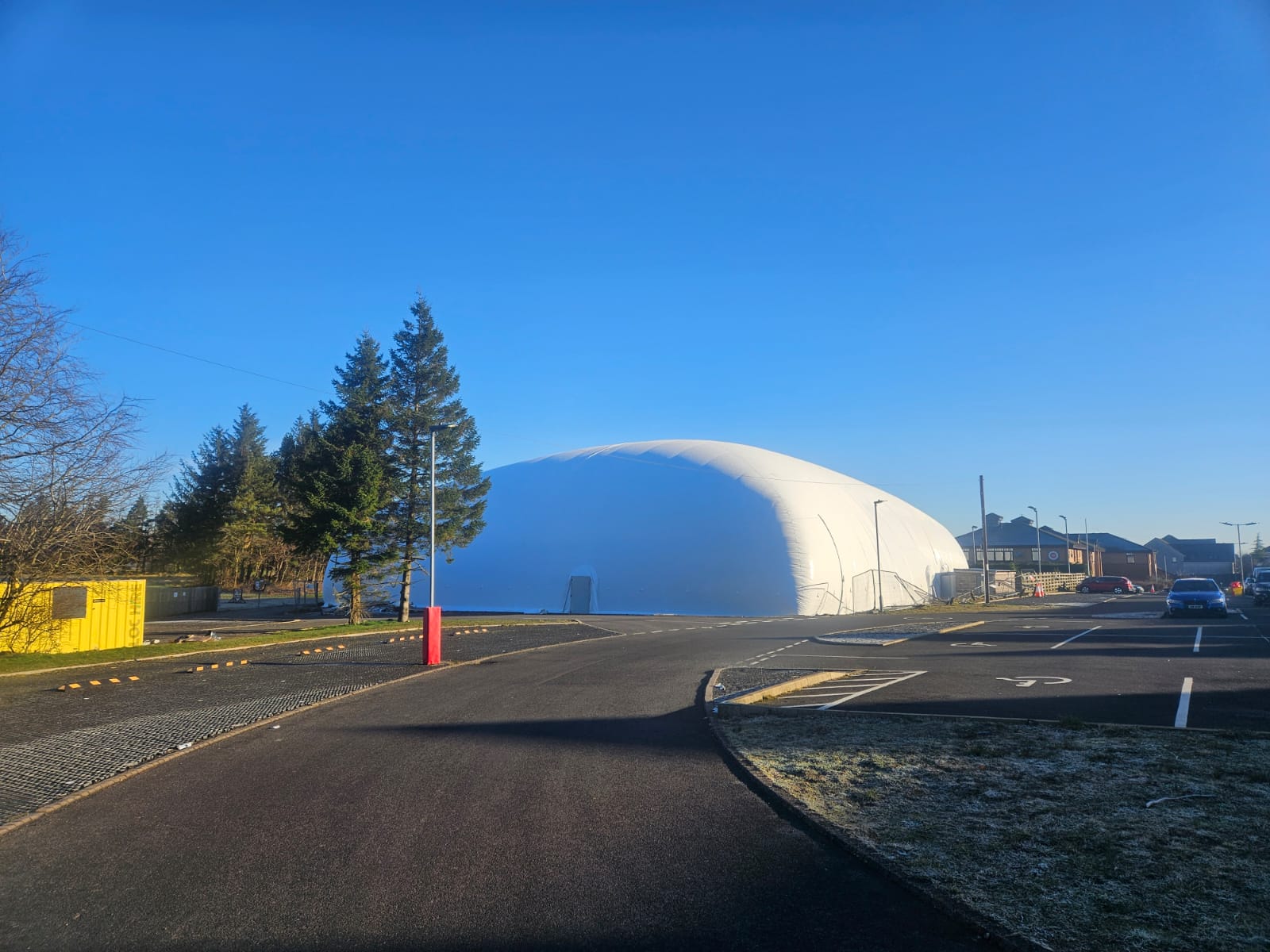
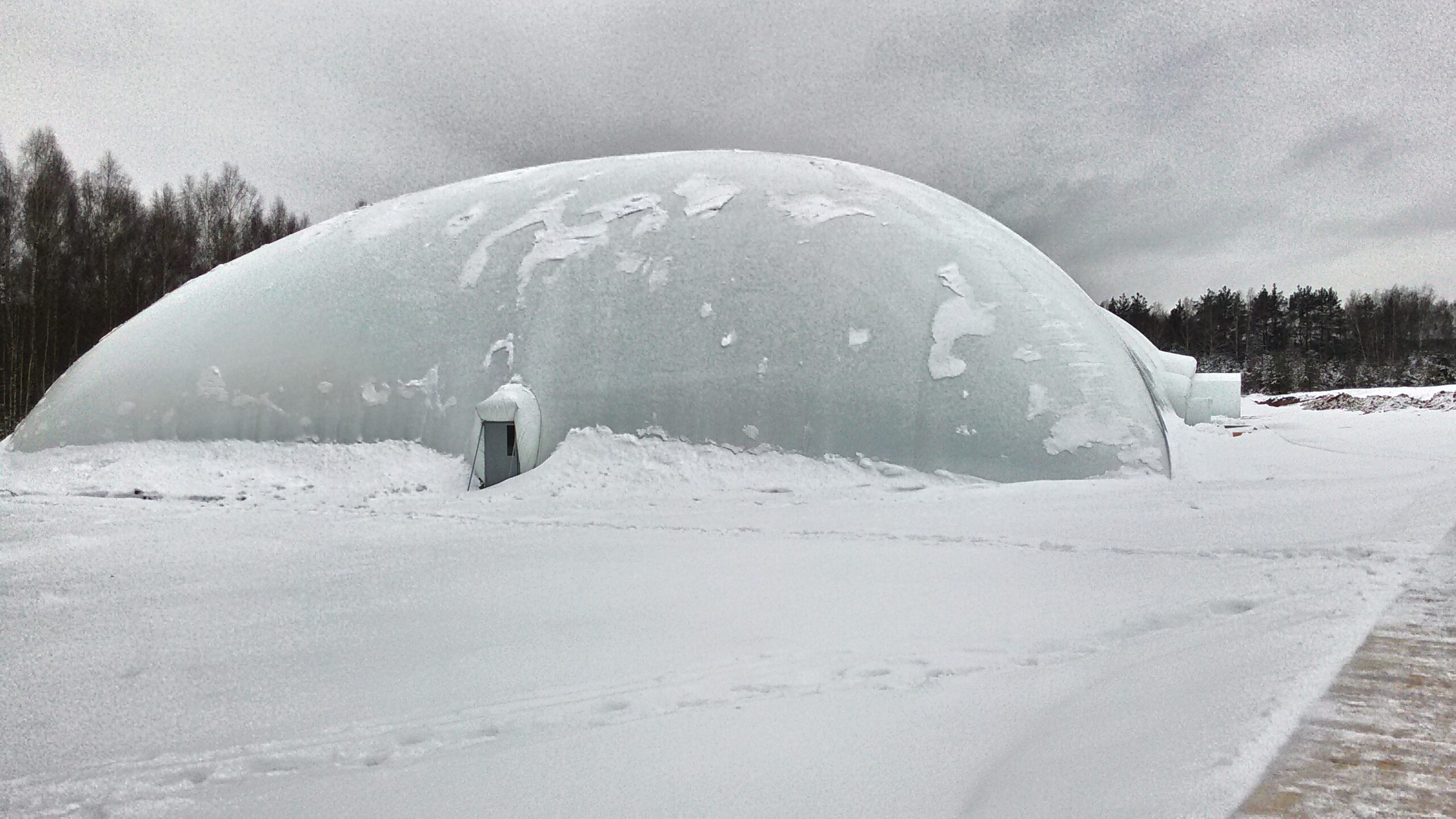
    Your insulated sports dome operates efficiently from -20 to 90°F with double-layer fabric construction that handles snow loads up to 50 PSF. You’ll save considerably on construction costs—no foundations, steel frames, or lengthy permits required. Installation takes weeks, not years.

    Your northern climate sports facility maintains consistent interior temperatures while traditional buildings struggle with heat loss through concrete and steel.

    Emergency backup systems guarantee you’re never caught off-guard during blizzards. The vestibule entry system retains heat effectively, reducing operating costs.

    In Minnesota, you’ll spend $2,500-$3,500 monthly heating 20,000 square feet—markedly less than comparable permanent structures.

    Heating Costs and Energy Efficiency in Extreme Cold Conditions

    You’ll face significant heating costs when operating air domes in extreme cold, with typical Minnesota facilities spending $2,500-$3,500 monthly for 20,000 square feet during winter months.

    Your energy expenses directly impact profitability, making it essential to understand both the operational cost breakdown and proven strategies for reducing consumption.

    Smart energy management can cut your heating bills by 20-30% while maintaining ideal playing conditions throughout the coldest months.

    Operating Cost Analysis

    Operating costs for winter sports domes in extreme cold conditions represent a significant portion of your total facility expenses, with heating dominating the budget during harsh winter months.

    Your winter sports dome in Minnesota will typically cost $2,500-$3,500 monthly for a 20,000 square foot facility during peak winter operations.

    Understanding these financial realities helps you prepare for three major cost drivers:

    1. Heating system operation – Running continuously at -20°F temperatures doubles your energy consumption.
    2. Emergency backup systems – Redundant blowers and heating units increase operational expenses by 15-25%.
    3. Insulation maintenance – Double-layer fabric requires regular inspection and replacement, adding $500-$800 annually.

    Your vestibule entry system reduces heat loss but adds structural complexity.

    Snow load management and consistent temperature control make cold-climate operations substantially more expensive than moderate climate facilities.

    Energy Saving Strategies

    Since energy costs can consume up to 70% of your winter sports dome’s operating budget, implementing strategic efficiency measures becomes critical for financial sustainability.

    You’ll maximize heat retention by maintaining proper fabric tension and sealing air leaks around entry points and equipment penetrations.

    Installing programmable thermostats with zone controls lets you reduce heating in unused areas during off-peak hours.

    Consider upgrading to high-efficiency heating units with variable-speed fans that adjust output based on actual demand rather than running at full capacity continuously.

    Adding thermal curtains or barriers around entrance vestibules prevents heat loss during frequent door openings.

    Regular maintenance of your heating system, including filter changes and ductwork cleaning, guarantees peak performance.

    These combined strategies can reduce winter operating costs by 25-40%.

    Snow Load Capacity and Winter Weather Performance Standards

    When winter storms dump heavy snow on your air dome, the structure’s ability to handle substantial loads becomes critical for safe operation.

    You’ll need a dome rated for 35-50 PSF snow loads to withstand Minnesota’s harshest conditions. The double-layer insulated fabric provides structural integrity while maintaining ideal pressure differentials.

    Your dome’s performance standards must include:

    1. Emergency backup blower systems – Because power failures during blizzards can’t shut down your facility
    2. Vestibule entry design – Protecting your investment from heat loss that costs thousands monthly
    3. Temperature resilience from -20 to 90°F – Ensuring year-round functionality regardless of weather extremes

    Proper engineering prevents catastrophic collapse, protects athletes, and maintains the $2,500-$3,500 monthly operating investment you’re making in Minnesota’s challenging winter climate.

    Emergency Systems and Temperature Range Capabilities

    During catastrophic weather events, your air dome’s emergency backup blower system becomes the difference between continued operations and potential structural failure. These redundant systems automatically activate when primary blowers fail, maintaining critical air pressure within seconds. You’ll need systems rated for your dome’s cubic footage with 24-hour fuel capacity minimum.

    Temperature capabilities determine your facility’s year-round viability. Quality cold climate domes operate from -20°F to 90°F (-29°C to 32°C), handling Minnesota’s extreme temperature swings effectively.

    System Component Specification
    Backup Blower Response 15-30 seconds
    Fuel Reserve Capacity 24-48 hours
    Operating Temperature Range -20°F to 90°F
    Emergency Generator Size 125% of total load
    Backup Communication Cellular/satellite monitoring

    Your emergency preparedness directly impacts insurance rates and operational continuity during severe weather events.

    Site Preparation and Installation in Sub-Zero Conditions

    Although winter installation presents unique challenges, proper site preparation guarantees your air dome’s structural integrity and longevity in harsh climates.

    You’ll need to excavate and level your foundation before ground freezing occurs, making certain proper drainage systems are installed below the frost line.

    Critical preparation steps include:

    1. Foundation heating cables – Install these beneath your perimeter to prevent frost heaving that could damage your dome’s anchoring system.
    2. Insulated utility trenches – Protect electrical and heating lines from freezing, preventing costly repairs and system failures.
    3. Emergency access routes – Clear multiple pathways for maintenance crews during blizzards when your dome needs immediate attention.

    Your installation crew must work in temperatures as low as -20°F, so schedule accordingly.

    Pre-warming materials and using cold-weather adhesives makes certain proper sealing of your double-layer insulated fabric system.

    Operating Cost Breakdown and Return on Investment Analysis

    After completing your winter sports dome installation, you’ll face ongoing operational expenses that directly impact your facility’s profitability.

    Heating costs dominate winter operations, ranging from $2,500-$3,500 monthly for a 20,000 square foot facility in Minnesota’s harsh climate. Your double-layer insulated fabric and high-efficiency heating systems help minimize these expenses, but you’ll still need budgeting for electricity, maintenance, and backup blower operations.

    Calculate your ROI by projecting revenue from membership fees, hourly rentals, and programs against these operational costs.

    Most facilities break even within 18-24 months when properly marketed. You’ll maximize profitability by maintaining consistent indoor temperatures, scheduling regular equipment maintenance, and utilizing your dome’s extended season capabilities to generate year-round income streams that traditional outdoor facilities can’t match.

  • Swimming Pool Air Dome Cover

    Swimming Pool Air Dome Cover

    You’ve probably wondered how some pool owners manage to swim comfortably even during harsh winters while keeping their energy bills surprisingly low. The secret lies in pool air dome covers—inflatable structures that create a controlled environment over your existing pool. These aren’t just oversized bubbles; they’re engineered systems that can transform your seasonal pool into a year-round aquatic retreat. But there’s more to contemplate than simply inflating a dome over your water.

    What Is A Pool Air Dome And How Does It Work?

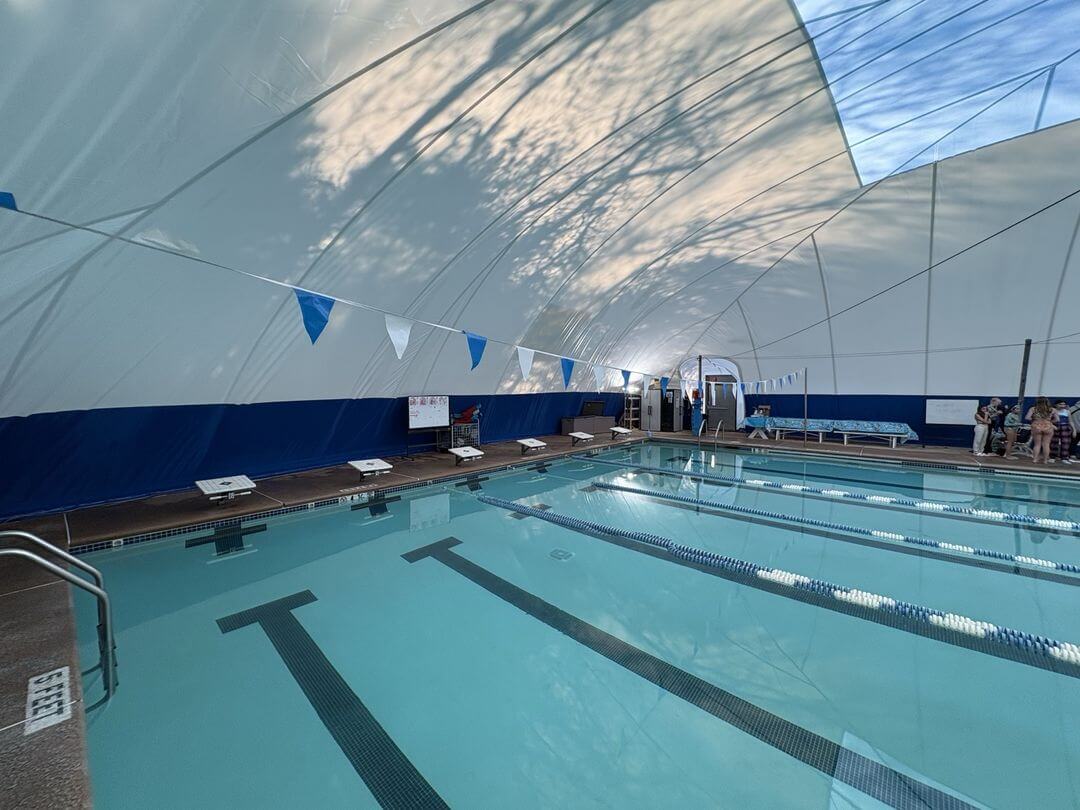
    A pool air dome is an inflatable fabric structure that completely encloses your swimming pool, creating a controlled indoor environment year-round.

    You’ll benefit from constant air pressure that maintains the dome’s shape while providing structural integrity without traditional support beams or frames.

    Your swimming pool air dome operates through continuous air circulation systems that maintain positive internal pressure.

    The specialized fabric withstands chlorine exposure and humidity while the pressurized air keeps the structure inflated.

    Temperature controls maintain ideal conditions between 75-85°F.

    This indoor pool enclosure transforms your outdoor pool into a protected swimming space.

    The natatorium air dome shields against weather elements while dehumidification systems prevent moisture buildup.

    You’ll enjoy extended swimming seasons with reduced maintenance costs and energy efficiency compared to traditional indoor pool construction methods.

    Pool Air Dome Benefits: Year-Round Swimming And Energy Savings

    You’ll transform your pool into a year-round aquatic haven with an air dome that extends your swimming season well beyond traditional outdoor limits.

    Your heating bills will drop considerably as the dome traps warm air and reduces heat loss, creating an insulated environment that maintains comfortable temperatures with less energy.

    You’re also protected from harsh weather conditions like rain, snow, and strong winds that would otherwise force you to close your pool for months at a time.

    Extended Swimming Season Benefits

    When winter temperatures drop and outdoor pools become unusable, an air dome cover transforms your swimming facility into a year-round aquatic haven.

    You’ll extend your swimming season from the typical 3-4 months to a full 12 months of operation, maximizing your pool investment regardless of weather conditions.

    Your pool cover dome creates a controlled environment that maintains ideal water temperatures between 75-85°F, eliminating seasonal shutdowns.

    You won’t need to winterize your pool or deal with expensive reopening procedures each spring.

    The extended season means increased revenue opportunities for commercial facilities and enhanced property value for residential pools.

    Additionally, you’ll protect swimmers from harsh weather elements like wind, rain, and UV exposure while maintaining consistent water quality year-round through the dome’s climate-controlled environment.

    Reduced Heating Costs

    Since air dome covers create an insulated barrier around your pool, you can slash heating costs by up to 70% compared to open-air swimming facilities.

    The dome’s specialized fabric traps warm air inside while blocking cold outdoor temperatures from affecting your pool water. You’ll maintain consistent water temperatures between 75-85°F without constantly running expensive heating systems.

    The enclosed environment eliminates heat loss from wind and evaporation, which typically accounts for most energy waste in outdoor pools. Your heating equipment won’t work overtime fighting against weather conditions, dramatically reducing monthly utility bills.

    During winter months, you’ll see the most significant savings when outdoor temperatures drop substantially. This energy efficiency means your air dome investment pays for itself through reduced operational costs over time.

    Weather Protection Advantages

    Beyond energy savings, air dome covers shield your pool from harsh weather conditions that would otherwise shut down swimming operations.

    You’ll maintain consistent swimming schedules regardless of external conditions, protecting your investment and users from nature’s unpredictability.

    Your air dome provides extensive weather protection through:

    • Wind resistance – Engineered fabric withstands strong gusts without compromising structural integrity
    • Rain and snow deflection – Waterproof membrane keeps precipitation from contaminating pool water
    • UV protection – Specialized materials filter harmful rays while maintaining natural lighting
    • Temperature stability – Insulated environment prevents extreme temperature fluctuations
    • Debris prevention – Sealed structure blocks leaves, dirt, and airborne contaminants

    This weather barrier extends your swimming season year-round, eliminating closures due to storms, cold snaps, or seasonal changes.

    You’ll maximize facility usage while minimizing weather-related maintenance costs.

    Must-Have Features: Dehumidification And Chlorine-Resistant Materials

    Although swimming pool air domes offer excellent year-round protection, they’ll fail without two critical components that address the unique challenges of indoor pool environments.

    First, you need continuous dehumidification systems. Pool water creates constant moisture that’ll cause condensation, mold growth, and structural damage without proper humidity control. Your dehumidification system must run 24/7 to maintain safe moisture levels and prevent your dome from becoming a breeding ground for harmful microorganisms.

    Second, you can’t compromise on chlorine-resistant materials. Standard dome fabrics won’t survive the harsh chemical environment. You need specialized materials engineered to withstand chlorine exposure, preventing deterioration and costly replacements.

    Your hardware must also feature corrosion-resistant coatings.

    These features aren’t optional upgrades—they’re essential investments that determine whether your dome lasts years or fails within months.

    Pool Air Dome Size Requirements For Different Pool Dimensions

    You’ll need to determine the right dome size based on your pool’s specific dimensions to guarantee complete coverage and structural integrity.

    A 25-meter pool typically requires an 82′ x 50′ dome covering 4,100 square feet, but your measurements will vary depending on your pool’s length, width, and surrounding deck space.

    Most manufacturers offer both standard sizing options for common pool dimensions and custom solutions for unique layouts or oversized installations.

    Standard Pool Dimensions

    Pool dimensions directly determine the size and cost of your air dome installation.

    You’ll need to account for adequate clearance beyond your pool’s perimeter to guarantee proper coverage and structural integrity.

    Common residential pool sizes require these air dome dimensions:

    • 25-foot pools: Need 50′ x 82′ coverage (4,100 sq ft)
    • 30-foot pools: Require 60′ x 90′ coverage (5,400 sq ft)
    • Olympic-sized pools: Demand 164′ x 82′ coverage (13,448 sq ft)
    • Lap pools: Typically need 75′ x 25′ coverage (1,875 sq ft)
    • Custom shapes: Require individual measurements plus 10-15′ clearance

    Your dome must extend beyond the pool deck to accommodate entry points, equipment access, and proper anchoring.

    Irregular pool shapes increase complexity and cost since you’ll need custom engineering.

    Always measure your entire pool area, including decking and surrounding features, before selecting dome specifications.

    Coverage Area Calculations

    Calculating your air dome’s coverage area requires precise measurements that extend well beyond your pool’s actual dimensions.

    You’ll need additional space around your pool’s perimeter for safety zones, equipment access, and structural anchoring points.

    For a standard 25-meter pool, you’ll require coverage of approximately 82′ x 50′ (25m x 15.2m), totaling 4,100 square feet.

    This accounts for the pool itself plus necessary clearance zones. The extra width accommodates pool decking, lane rope storage, and maintenance access.

    Don’t underestimate these buffer zones – they’re essential for proper dome installation and daily operations.

    Your coverage calculations should include walkways around the pool perimeter, space for diving boards or starting blocks, and room for poolside equipment.

    Measure twice, as undersized domes create operational headaches and safety concerns.

    Custom Size Solutions

    Since every pool presents unique dimensional challenges, standard air dome sizes rarely provide perfect fits for residential, commercial, or Olympic-scale installations. You’ll need customized solutions that account for your pool’s specific length, width, and surrounding deck space.

    Custom sizing considerations include:

    • Deck overhang requirements – Additional 3-6 feet beyond pool edges for proper anchoring and maintenance access
    • Height specifications – Minimum 8-foot clearance at shallow end, 12+ feet at diving areas
    • Shape accommodations – Kidney, L-shaped, or irregularly contoured pools need specialized pattern cutting
    • Utility integration – Custom placement of air intake, exhaust, and access door locations
    • Foundation modifications – Anchoring systems adapted to existing concrete, pavers, or landscaping

    Professional manufacturers create detailed site plans ensuring your dome maximizes coverage while maintaining structural integrity and operational efficiency.

    Pool Air Dome Installation: Process And Timeline Breakdown

    Three distinct phases define the air dome installation process, each requiring specialized expertise and precise coordination. You’ll work with certified installers who manage foundation preparation, fabric assembly, and system commissioning over several weeks.

    Phase Duration Key Activities
    Site Preparation 3-5 days Foundation anchoring, electrical connections, equipment positioning
    Fabric Installation 2-3 days Dome assembly, inflation testing, seal verification
    System Commissioning 1-2 days HVAC calibration, dehumidification setup, safety checks
    Final Testing 1 day Full system operation, emergency procedures, handover training

    Weather conditions considerably impact your timeline—you’ll need dry conditions during fabric installation. The entire process typically takes 7-11 days, though complex installations may require additional time for custom features or challenging site conditions.

    Pool Air Dome Costs: Equipment, Installation, And Operating Expenses

    Understanding the installation timeline sets the stage for planning your budget—pool air dome investments involve substantial upfront costs plus ongoing operational expenses.

    Equipment costs typically range from $250,000 to $500,000 for a standard 25-meter pool setup. You’ll need specialized chlorine-resistant fabric, continuous dehumidification systems, and corrosion-resistant hardware designed for harsh pool environments.

    Your total investment includes:

    • Initial equipment purchase ($250K-$500K depending on size and features)
    • Professional installation labor (20-30% of equipment cost)
    • Site preparation and foundation work ($15K-$25K)
    • Electrical connections for climate control systems ($8K-$12K)
    • Annual operating expenses including electricity, maintenance, and fabric replacement reserves ($25K-$40K)

    Factor in energy costs for maintaining ideal 75-85°F temperatures year-round when calculating your long-term financial commitment.

    Pool Air Dome Maintenance: Essential Tasks And Schedules

    While your air dome investment protects your pool year-round, it’ll only deliver reliable performance through consistent maintenance. You’ll need to establish regular schedules for critical tasks that keep your dome operating efficiently.

    Maintenance Task Frequency Key Focus Areas
    Fabric Inspection Monthly Tears, wear spots, anchor points
    Blower System Check Weekly Motor function, air pressure levels
    Dehumidification Service Quarterly Filter replacement, system calibration
    Hardware Assessment Bi-annually Corrosion, fasteners, seals

    Your fabric requires gentle cleaning with mild detergents to remove chlorine residue and environmental buildup. Monitor air pressure constantly—low pressure can cause structural stress, while excessive pressure wastes energy. Replace worn components immediately to prevent minor issues from becoming costly repairs that compromise your dome’s integrity.

    How To Choose The Best Pool Air Dome Manufacturer

    Selecting the right manufacturer determines whether your air dome investment delivers decades of reliable service or becomes a source of ongoing headaches.

    You’ll want to evaluate potential partners based on their track record and specialized expertise in pool environments.

    Research manufacturers who demonstrate proven experience with swimming pool domes specifically. Look for companies that understand the unique challenges of chlorinated, humid environments and offer appropriate material solutions.

    Key factors to evaluate include:

    • Experience and portfolio – Review completed pool dome projects and client testimonials
    • Material quality – Verify they use chlorine-resistant, specialized fabrics designed for aquatic facilities
    • Engineering capabilities – Guarantee proper structural calculations for your specific dimensions and climate
    • Support services – Confirm installation training, maintenance programs, and replacement part availability
    • Warranty coverage – Compare terms for fabric, hardware, and structural components
  • Gymnastics Air Dome Facilities

    Gymnastics Air Dome Facilities

    You’re probably tired of cramped gymnastics facilities with sky-high construction costs and limited training seasons. Gymnastics air domes change everything – they’ll give you 50-70% savings over traditional buildings while providing the clear-span space your athletes need year-round. Whether you’re running a competitive program or recreational classes, these inflatable structures solve the biggest challenges facing gym owners today. But there’s more to evaluate than just the initial investment when you’re making this decision.

    Why Gymnastics Air Domes Beat Traditional Buildings

    When you’re planning a gymnastics facility, air domes offer compelling advantages over traditional brick-and-mortar buildings. Your gymnastics air dome costs considerably less to construct—often 50-70% cheaper than conventional structures.

    You’ll also save on heating and cooling since the pressurized air system provides natural insulation. Unlike permanent buildings, you can relocate your gymnastics training dome if needed.

    The flexible membrane withstands weather extremes while providing consistent indoor conditions year-round. You’ll avoid lengthy construction permits and zoning battles that plague traditional builds.

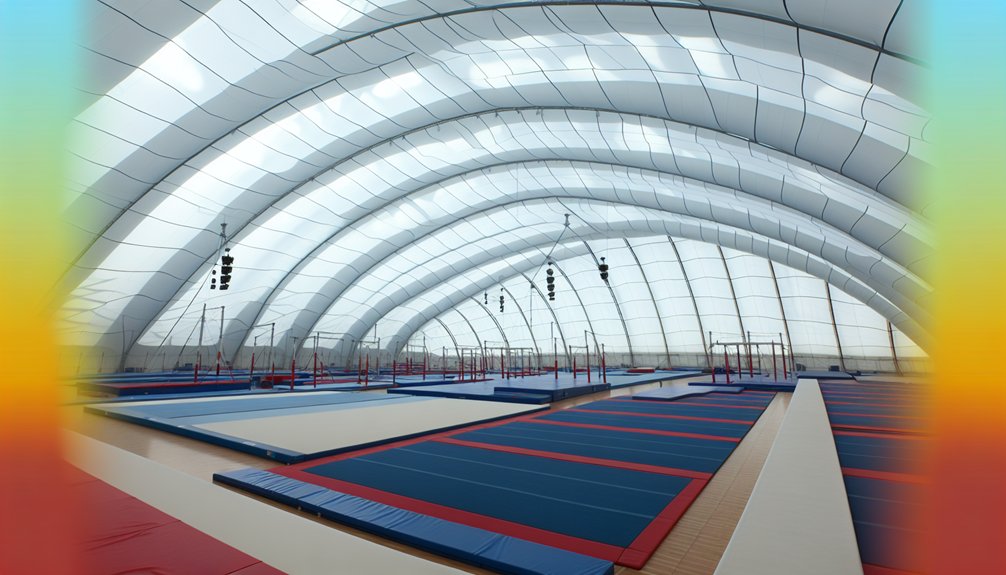
    Installation happens in weeks, not months. Your indoor gymnastics facility can accommodate full programs with proper ceiling heights for vault and uneven bars.

    The clear-span design eliminates support columns, maximizing usable space for equipment layout and athlete movement patterns.

    Gymnastics Air Dome Costs: Building vs Renting Options

    Since gymnastics air dome require significant upfront investment, you’ll need to weigh purchasing against rental options based on your facility’s long-term goals.

    Buying a gymnastics bubble typically costs $150,000-$400,000 for a complete 15,000 square foot facility, including installation, equipment, and safety features. This investment pays off if you’re planning five-plus years of operation.

    Rental options start around $8,000-$15,000 monthly for comparable space, making them ideal for seasonal programs or testing market demand. However, rental costs accumulate quickly—you’ll break even around the three-year mark compared to purchasing.

    Consider additional factors like maintenance responsibilities, insurance requirements, and equipment inclusion. Rentals often include maintenance and insurance, while purchased domes require ongoing upkeep budgets.

    Your membership projections and revenue forecasts should drive this critical financial decision.

    Space and Height Requirements for Gymnastics Air Domes

    When you’re planning your gymnastics air dome, you’ll need to meet specific height and space standards to guarantee safe training conditions.

    Your dome must reach a minimum height of 30 feet to accommodate vault runs and uneven bar routines without compromising athlete safety.

    You’ll also need to allocate sufficient floor space for spring flooring installation, equipment storage, and safety features like pit areas.

    Minimum Height Standards

    Although floor exercises and beam routines can function in relatively low spaces, vault runs and uneven bar dismounts demand considerably more vertical clearance in your gymnastics air dome.

    You’ll need to prioritize height requirements when planning your facility to guarantee athlete safety and proper skill execution.

    The minimum height standards for your gymnastics air dome include:

    1. 30-foot (9.1m) minimum ceiling height for vault and uneven bars apparatus
    2. Additional clearance zones around high-impact landing areas for safety compliance
    3. Consistent height maintenance throughout the dome structure to prevent low spots
    4. Professional installation verification to confirm height specifications meet gymnastics federation standards

    Don’t compromise on these height requirements.

    Insufficient vertical space restricts training progression and creates dangerous conditions for athletes performing advanced skills.

    Floor Space Requirements

    Beyond vertical clearance, your gymnastics air dome requires substantial floor space to accommodate multiple apparatus and safe training zones.

    You’ll need a minimum 4,000 square feet for spring floor installation alone, plus additional space for equipment placement and safety margins.

    A 100′ x 150′ dome provides 15,000 square feet, which accommodates a complete gymnastics program. This configuration allows you to install vault runways, uneven bars, balance beams, and floor exercise areas simultaneously.

    You’ll also need designated pit areas for skill development and landing practice.

    Don’t forget storage requirements for portable equipment like bars, beams, and vault components.

    Plan for safety matting zones around each apparatus, ensuring adequate spacing between stations. This prevents interference during training and maintains proper safety protocols throughout your facility.

    Planning Your Gymnastics Equipment Layout in Air Domes

    When planning your gymnastics equipment layout, you’ll need to allocate specific zones for each apparatus while maintaining required safety clearances between them.

    Your vault and uneven bars require the most vertical space at 30 feet minimum, so position these under the dome’s highest points.

    Create dedicated areas for your spring floor, balance beams, and training pits, ensuring each zone has adequate buffer space for athlete safety during routines and dismounts.

    Equipment Zone Allocation

    Four distinct zones form the backbone of any successful gymnastics air dome layout, each requiring specific spatial considerations and safety clearances.

    You’ll need to strategically position each area to maximize flow while maintaining athlete safety throughout your facility.

    Your equipment zones should include:

    1. Vault runway and landing area – Requires 100+ feet of clear runway space with adequate deceleration zones.
    2. Uneven bars section – Needs 30-foot minimum ceiling height with extensive matting around equipment.
    3. Balance beam training area – Positioned away from high-traffic zones with soft landing surfaces.
    4. Floor exercise space – Minimum 4,000 square feet of spring flooring for tumbling passes.

    You’ll want to separate high-energy activities from precision work, ensuring vault and floor exercise areas don’t interfere with beam concentration zones.

    Safety Space Requirements

    Because gymnastics equipment poses inherent collision risks, you’ll need to establish generous buffer zones around each apparatus to prevent athlete injuries and equipment damage.

    Plan minimum 8-foot clearances around vault runways and landing areas, while uneven bars require 10-foot perimeters due to dismount trajectories.

    Your floor exercise space needs 6-foot borders beyond the 40′ x 40′ competition area.

    Don’t overlook vertical safety requirements—vault and bar activities demand full dome height utilization, so you can’t store equipment overhead in these zones.

    Position safety matting strategically around high-impact areas like beam dismounts and bar release moves.

    Create clear sight lines between apparatus zones so coaches can monitor multiple athletes simultaneously.

    These buffer zones typically consume 40% of your total floor space but they’re non-negotiable for safe operations.

    Spring Floor and Safety Matting Installation Guide

    Installing a proper spring floor system forms the foundation of any safe gymnastics air dome facility. You’ll need at least 4,000 square feet of specialized spring flooring to accommodate tumbling passes and floor exercise routines effectively.

    Your installation process requires these critical steps:

    1. Foundation preparation – Confirm level concrete base with proper drainage systems.
    2. Spring system assembly – Install manufacturer-approved springs with consistent tension throughout.
    3. Carpet bonding – Secure competition-grade carpet using approved adhesives and seaming techniques.
    4. Safety perimeter setup – Place 8-inch minimum safety matting around all floor boundaries.

    You’ll also need strategic placement of landing mats near vault runways and dismount areas from uneven bars.

    Don’t forget portable safety mats for beam training areas, as these provide essential protection during skill development and routine practice sessions.

    Air Dome Climate Control for Year-Round Gymnastics Training

    While maintaining consistent temperature and humidity levels proves critical for gymnast performance and safety, your air dome’s climate control system must handle unique challenges that traditional buildings don’t face.

    You’ll need specialized HVAC units designed for pressurized environments that won’t compromise the dome’s structural integrity. Install redundant heating systems since equipment failure could deflate your dome and cancel training sessions.

    Target 68-72°F (20-22°C) with 40-60% humidity to prevent slippery equipment and maintain ideal grip conditions. Your system should include dehumidification capabilities, especially in humid climates where condensation can create dangerous surfaces on bars and beams.

    Position air circulation units strategically to eliminate dead zones while avoiding direct airflow that could affect gymnasts during routines, particularly on beam and vault approaches.

    Gymnastics Air Dome Safety Standards and Maintenance

    Beyond climate control considerations, your gymnastics air dome requires rigorous safety protocols and preventive maintenance to protect athletes and maintain structural integrity.

    Regular inspections guarantee your facility meets industry standards while preventing costly emergency repairs.

    Essential safety and maintenance protocols include:

    1. Daily pressure monitoring – Check blower systems and maintain ideal PSI levels to prevent dome collapse or structural stress.
    2. Weekly fabric inspection – Examine seams, anchor points, and surface wear for tears or deterioration that compromise safety.
    3. Monthly equipment audits – Verify safety matting placement, pit foam density, and apparatus anchoring meets gymnastics federation requirements.
    4. Quarterly professional assessments – Schedule certified technician evaluations of structural components, emergency exits, and ventilation systems.

    Proper maintenance extends your dome’s lifespan while guaranteeing athlete safety during high-impact training sessions.

  • Golf Driving Range Air Dome

    Golf Driving Range Air Dome

    You’ve probably watched golfers abandon their practice sessions when storms roll in, but air domes are changing that reality. These pressurized fabric structures create controlled environments where you can swing year-round, regardless of what’s happening outside. Whether you’re considering adding one to your facility or curious about the technology behind them, there’s more complexity to these installations than meets the eye—from space calculations to heating systems that’ll determine your project’s success.

    What Is a Golf Driving Range Air Dome?

    A golf driving range air dome transforms your practice sessions into year-round training opportunities by enclosing the entire range within a pressurized fabric structure. This innovative golf driving range dome creates a controlled environment where weather conditions won’t interrupt your training schedule.

    The indoor driving range operates through continuous air pressure that maintains the dome’s shape and structural integrity. You’ll find these golf practice dome facilities equipped with heated tee areas, ball tracking technology, and multiple teaching stations.

    The dome typically spans 100 feet wide by 300 feet deep with heights exceeding 45 feet, providing ample space for full swing practice.

    Modern installations often include impact screens to reduce required depth and protective netting systems. This enclosed environment eliminates seasonal limitations while offering consistent lighting and temperature control for ideal practice conditions.

    Golf Air Dome Costs and Installation Timeline

    Understanding the financial commitment behind these impressive structures helps you make informed decisions about your golf facility investment. Golf air dome costs typically range from $800,000 to $2 million, depending on size, features, and customization level.

    Several factors influence your final investment for a golf training facility dome:

    1. Size specifications – Minimum dimensions of 100′ width x 300′ depth x 45′ height affect base pricing.
    2. Technology integration – Ball tracking systems, heated tee lines, and teaching bay equipment add substantial costs.
    3. Installation complexity – Site preparation, utilities, and permit requirements vary by location.

    Installation timelines generally span 3-6 months from groundbreaking to operation. Weather conditions, permit approval processes, and custom feature installations can extend this timeframe.

    You’ll need to budget additional funds for ongoing maintenance, heating costs, and insurance coverage.

    Space Requirements and Layout Planning

    When designing your golf air dome facility, proper space allocation determines both operational efficiency and player experience.

    You’ll need minimum dimensions of 100 feet width by 300 feet depth, with heights exceeding 45 feet to accommodate full golf swings and ball trajectories.

    Plan for 10-20 teaching stations along your heated tee line, spacing them adequately for comfort and safety.

    Position instruction bays strategically to maximize sightlines and student-instructor interaction.

    Install protective netting at the rear boundary to contain balls safely.

    Consider reducing your facility’s depth by incorporating impact screens, which can cut space requirements considerably while maintaining functionality.

    Designate areas for ball tracking technology integration and guarantee your layout accommodates radiant heating systems for the tee line.

    Smart planning maximizes your available square footage.

    Heating, Lighting, and Weather Protection Systems

    Because golf training demands consistent conditions year-round, your air dome’s environmental systems become critical for maintaining player comfort and facility operations.

    You’ll need robust heating systems to maintain playable temperatures during winter months, with radiant heating particularly effective for the tee line area where golfers spend most of their time.

    Your lighting design should provide uniform illumination across the entire range, typically requiring 50-75 foot-candles for ideal ball visibility.

    LED systems offer energy efficiency and consistent color temperature.

    Weather protection involves three key components:

    1. Structural integrity – Wind load calculations and snow load capacity
    2. Climate control – HVAC systems maintaining 60-70°F operational temperatures
    3. Moisture management – Proper ventilation preventing condensation buildup

    These systems work together ensuring year-round functionality regardless of external conditions.

    Full-Depth Range vs Impact Screen Options

    While full-depth driving ranges offer the most authentic practice experience, impact screen configurations can markedly reduce your facility’s footprint and initial investment.

    You’ll need 300 feet of depth for a traditional full-range setup, allowing golfers to see their complete ball flight and develop proper shot visualization. However, impact screens let you cut that depth considerably—sometimes by 60-70%—while still providing valuable feedback through ball tracking technology.

    Impact screens work best when you’re dealing with limited land availability or tighter budgets. They’ll reduce your construction costs substantially since you need less dome material and structural support.

    You’ll sacrifice some realism, but modern simulators and launch monitors can compensate with detailed shot data.

    Consider your target market: beginners and casual players adapt well to screens, while serious golfers often prefer full-depth ranges.

  • Field Hockey Air Dome Guide

    Field Hockey Air Dome Guide

    You’re considering a significant investment that could transform your field hockey program’s capabilities, but the sheer number of decisions ahead might feel overwhelming. From determining the right dimensions and turf surface to understanding installation timelines and ongoing costs, there’s a complex web of factors that’ll directly impact your facility’s success. The choices you make now will influence everything from player performance to your bottom line for years to come.

    What Is A Field Hockey Air Dome?

    When you need year-round field hockey training regardless of weather conditions, a field hockey air dome provides the perfect solution. This inflatable structure creates a controlled indoor field hockey facility that maintains ideal playing conditions throughout all seasons.

    A hockey training dome typically spans 180′ x 300′ with a minimum 25-foot ceiling height, providing full regulation field dimensions. The pressurized air system keeps the dome inflated while maintaining consistent temperatures between 40-60°F for player comfort and performance.

    Inside, you’ll find specialized turf surfaces designed specifically for field hockey – either water-based or sand-dressed synthetic materials that replicate professional playing conditions.

    The controlled environment eliminates weather disruptions, allowing teams to maintain consistent training schedules. These versatile structures can also accommodate soccer when needed, maximizing facility usage and investment value.

    Field Hockey Air Dome Size Requirements And Specifications

    Understanding the exact dimensions and technical specifications guarantees your field hockey air dome meets regulation standards and provides excellent playing conditions.

    Your field hockey dome must measure 180′ x 300′ (54.9m x 91.4m), totaling 54,000 square feet of playing surface. You’ll need a minimum ceiling height of 25 feet to accommodate high ball trajectories and player movements.

    The dome requires either water-based or sand-dressed artificial turf that mimics professional field conditions. Climate control systems should maintain temperatures between 40-60°F for peak performance year-round.

    These specifications also allow your facility to double as a soccer field, maximizing usage potential.

    Installation costs typically range from $1.2-3 million depending on location, features, and site preparation requirements. Proper ventilation and lighting systems are essential components for regulation compliance.

    Field Hockey Air Dome Cost: Purchase And Installation

    You’ll face two major cost components when budgeting for your field hockey air dome: the initial purchase price and installation labor expenses.

    The dome structure itself typically ranges from $1.2M to $3M depending on size, materials, and features you select.

    Installation costs can add another 20-40% to your total investment, covering foundation work, mechanical systems, and specialized setup required for proper dome operation.

    Initial Purchase Pricing

    Budgeting for a field hockey air dome requires understanding the significant upfront investment involved in both the structure and installation process.

    You’ll face costs ranging from $1.2 million to $3 million for a regulation-sized field hockey dome measuring 180′ x 300′. This price variation depends on several key factors you need to take into account.

    The dome structure itself typically costs $800,000 to $1.8 million, while site preparation and installation add another $400,000 to $1.2 million.

    You’ll pay more for premium features like advanced climate control systems, higher-quality membrane materials, and sophisticated lighting packages.

    The turf surface choice also impacts pricing – water-based systems cost more than sand-dressed alternatives.

    Location affects pricing too, with remote sites requiring higher transportation and labor costs.

    Installation Labor Costs

    When planning your field hockey air dome project, installation labor represents 25-35% of your total budget, typically ranging from $300,000 to $600,000 for a full-sized facility.

    You’ll need specialized crews for foundation work, electrical systems, and dome assembly. Site preparation costs vary considerably based on soil conditions and drainage requirements, potentially adding $50,000-$150,000 to your labor expenses.

    Professional installers must handle the complex anchoring system that secures your 54,000 square foot structure. Climate control installation requires HVAC specialists familiar with pressurized environments.

    You’ll also need certified electricians for lighting systems that meet field hockey standards. Factor in additional costs for permits, inspections, and potential overtime charges.

    Remote locations increase labor costs due to travel time and accommodation expenses for installation teams.

    Turf Options: Water-Based Vs Sand-Dressed Surfaces

    You’ll need to choose between two primary turf surfaces for your field hockey air dome: water-based and sand-dressed systems.

    Water-based turf delivers superior ball speed and player performance, mimicking international competition standards.

    Sand-dressed surfaces require less complex maintenance but demand regular grooming and infill management to maintain ideal playing conditions.

    Water-Based Performance Benefits

    Professional field hockey players consistently choose water-based turf surfaces for their superior performance characteristics, and you’ll immediately notice the difference when playing on this premium surface type.

    Water-based turf creates ideal ball speed and predictable bounces that match international competition standards. You’ll experience enhanced stick-to-ball control during dribbling, passing, and shooting sequences.

    The surface maintains consistent moisture levels through integrated irrigation systems, eliminating unpredictable dry patches that can disrupt play.

    Your players will develop better technical skills on water-based surfaces since the ball moves similarly to outdoor championship fields. The turf reduces joint stress while providing reliable traction for quick directional changes.

    Most importantly, you’re investing in a surface that prepares athletes for elite-level competition where water-based fields are the global standard.

    Sand-Dressed Maintenance Requirements

    Sand-dressed field hockey surfaces demand a different maintenance approach that requires consistent attention to sand infill levels and distribution patterns.

    You’ll need to regularly redistribute sand using specialized drag brushes to maintain even coverage across the playing surface. Weekly grooming prevents sand migration and guarantees consistent ball roll characteristics.

    You must monitor sand depth carefully, as insufficient infill creates uneven bounces while excess sand slows ball speed dramatically.

    Plan for sand top-ups every 6-8 weeks, particularly in high-traffic areas like shooting circles and center field. Your maintenance schedule should include daily brushing, weekly deep grooming, and monthly sand level assessments.

    Unlike water-based surfaces, you won’t need irrigation systems, but you’ll invest more time in mechanical maintenance to preserve ideal playing conditions throughout your dome’s operating season.

    Climate Control For Year-Round Field Hockey Training

    When temperatures drop below freezing or soar above 80°F, maintaining ideal playing conditions becomes critical for serious field hockey training. Your air dome’s climate control system should target 40-60°F with 50-70% humidity for optimal ball speed and player comfort.

    Temperature Range Player Performance Ball Behavior
    Below 40°F Reduced mobility, stiff muscles Slower roll, unpredictable bounce
    40-60°F (Ideal) Peak performance, comfort Consistent speed and control
    60-75°F Good performance, slight fatigue Slightly faster roll
    75-80°F Increased fatigue, dehydration risk Fast ball speed
    Above 80°F Heat stress, poor performance Erratic behavior

    You’ll need HVAC systems with heating, cooling, and dehumidification capabilities. Install multiple temperature sensors throughout the dome to guarantee even climate distribution. Quality systems cost $150,000-$400,000 but dramatically extend your training season.

    Using Your Air Dome For Soccer And Multi-Sport Activities

    Beyond optimizing your dome for field hockey performance, you can maximize your investment by converting the space for soccer and other sports. Your 180′ x 300′ dome perfectly accommodates a regulation soccer field, making it an ideal dual-purpose facility.

    The shift between sports is straightforward since both use similar field dimensions and turf surfaces. You’ll simply need to swap out goal equipment and adjust line markings as needed.

    Consider these multi-sport possibilities for your air dome:

    • Soccer training sessions with professional-grade turf and consistent playing conditions
    • Lacrosse practices utilizing the spacious field dimensions and protective enclosed environment
    • Ultimate frisbee tournaments taking advantage of the wind-free indoor space
    • Corporate team-building events combining multiple field sports activities

    This versatility transforms your dome into a year-round revenue generator serving diverse athletic communities.

    Field Hockey Air Dome Installation: Timeline And Process

    Once you’ve decided on your field hockey air dome specifications, the installation process typically spans 8-12 weeks from groundbreaking to first play.

    You’ll start with site preparation and foundation work, which takes 2-3 weeks depending on soil conditions and drainage requirements.

    Next comes the turf installation phase, requiring another 2-3 weeks for proper base preparation and synthetic surface laying.

    The dome structure arrives pre-manufactured and takes just 1-2 days to install once the foundation’s ready.

    Inflation and pressurization systems are then connected and tested over several days.

    You’ll need final inspections for electrical, HVAC, and safety systems before receiving occupancy permits.

    Weather delays can extend timelines, so plan accordingly for your region’s seasonal conditions.

    Annual Operating Costs And Maintenance Requirements

    While your field hockey air dome represents a significant upfront investment, you’ll face ongoing annual operating costs ranging from $50,000 to $150,000 depending on your facility’s size and usage intensity.

    Your primary expenses include:

    • Energy costs – Blowers running 24/7 to maintain air pressure, plus HVAC systems for climate control
    • Turf maintenance – Regular watering, brushing, and sand/rubber infill replacement for ideal playing conditions
    • Membrane care – Annual inspections, patch repairs, and UV protection treatments to extend dome life
    • Insurance and permits – Specialized coverage for air-supported structures and municipal compliance requirements

    You’ll also budget for equipment replacement, emergency repair funds, and seasonal weatherproofing.

    Proper preventive maintenance reduces long-term costs while ensuring your facility remains safe and playable year-round.

  • Lacrosse Training Dome Guide

    Lacrosse Training Dome Guide

    You’re considering a lacrosse training dome, but the decisions ahead aren’t simple. From choosing between an 80′ x 90′ training space versus a full-field setup to steering through the $80,000-$180,000 cost range, each choice impacts your program’s success for years to come. The wrong dome size could limit your training potential, while overlooking key features might leave you frustrated when winter hits. Here’s what separates smart investments from costly mistakes.

    Which Lacrosse Dome Size Fits Your Program?

    When selecting a lacrosse dome, you’ll need to match the dimensions to your program’s specific requirements and available space.

    A full-field lacrosse air dome measures 60′ x 110′ for youth programs, expanding to 110′ x 60′ for men’s competition. These indoor lacrosse facility dimensions require a minimum 35-foot height clearance and accommodate portable goals on turf surfaces.

    If you’re operating a training-focused program, consider a 3/4 field lacrosse training dome at 80′ x 90′. This size works well for skill development and drills while reducing construction costs.

    Don’t forget essential features like a dedicated wall ball area measuring 20′ x 40′ for individual practice sessions.

    Your choice depends on your program’s level, budget constraints, and whether you prioritize full-game scrimmages or intensive skill training sessions.

    Full Field vs Training Dome: Making the Right Choice

    Your decision between a full field and training dome will shape your program’s capabilities for years to come.

    A full field lacrosse bubble accommodates complete game scenarios, scrimmages, and tournaments, making it ideal for established programs with diverse needs.

    Training domes excel at skill development, drills, and year-round practice sessions while requiring less space and investment.

    Consider these scenarios when choosing your lacrosse bubble:

    • Youth programs hosting weekend tournaments with multiple teams rotating through games
    • High school teams running full scrimmages against visiting opponents during winter months
    • Club organizations focusing on individual skill development and wall ball practice
    • Multi-sport facilities maximizing training efficiency with compact, versatile spaces

    Your program’s primary goals, available space, and budget constraints will ultimately determine which option delivers the best long-term value.

    Must-Have Lacrosse Dome Features for Year-Round Play

    Since lacrosse training demands consistent conditions regardless of weather, your dome’s features directly impact player development and safety throughout the year.

    You’ll need a minimum 35-foot height clearance to accommodate high passes and shots without interference. Quality turf surfacing provides consistent ball bounce and reduces injury risk compared to temporary solutions.

    Portable goals offer flexibility for various drills and field configurations, while a dedicated 20′ x 40′ wall ball area lets players practice individual skills simultaneously with team training.

    Proper ventilation systems maintain air quality during intense sessions, and adequate lighting guarantees visibility for evening practices.

    Temperature control keeps conditions comfortable year-round, preventing equipment issues and player fatigue.

    Energy-efficient insulation reduces operational costs while maintaining consistent internal climate for peak training environments.

    Lacrosse Dome Costs: What You’ll Actually Pay

    Three primary factors determine your lacrosse dome investment: size, features, and installation complexity.

    You’ll spend $150,000-$300,000 for a full-field dome, while training domes cost $80,000-$180,000. These prices include basic turf, lighting, and entry systems.

    Your biggest cost variables include:

    • Foundation requirements – Concrete pads, drainage systems, and soil preparation can add $30,000-$60,000.
    • Climate control systems – Heating and ventilation boost costs by $25,000-$50,000 depending on your region.
    • Premium turf upgrades – High-performance surfaces increase expenses by $15,000-$40,000 over standard options.
    • Electrical infrastructure – LED lighting systems and power distribution typically run $20,000-$35,000.

    Remember that installation, permits, and site preparation often add 25-40% to your base dome price.

    Budget accordingly for these essential but overlooked expenses.

    Installing Your Lacrosse Dome: Timeline and Process

    Installing a lacrosse dome typically takes 4-8 weeks from groundbreaking to first practice, but proper planning starts months earlier.

    You’ll need to secure permits, finalize site surveys, and coordinate utilities before construction begins.

    Week one involves site preparation and foundation work for your anchor points. The concrete must cure properly before proceeding.

    Week two covers installing the dome structure itself – this happens quickly once the foundation’s ready. You’ll see your 110′ x 60′ field take shape rapidly.

    Weeks three through four focus on interior work: turf installation, goal setup, and creating your 20′ x 40′ wall ball area.

    Electrical systems, lighting, and HVAC integration occur simultaneously.

    Final weeks include testing all systems, safety inspections, and addressing any punch-list items before you’re cleared for play.

  • Track and Field Indoor Air Dome

    Track and Field Indoor Air Dome

    You’re facing a familiar challenge if you manage athletic programs or coach track and field athletes. Weather disruptions, seasonal limitations, and expensive facility rentals constantly interfere with training schedules and competitive preparation. Traditional indoor tracks require massive investments and sprawling real estate, putting them out of reach for many organizations. There’s an innovative solution that’s changing how athletic facilities operate, offering year-round training capabilities at a fraction of the cost you’d expect.

    What Is a Track and Field Indoor Air Dome?

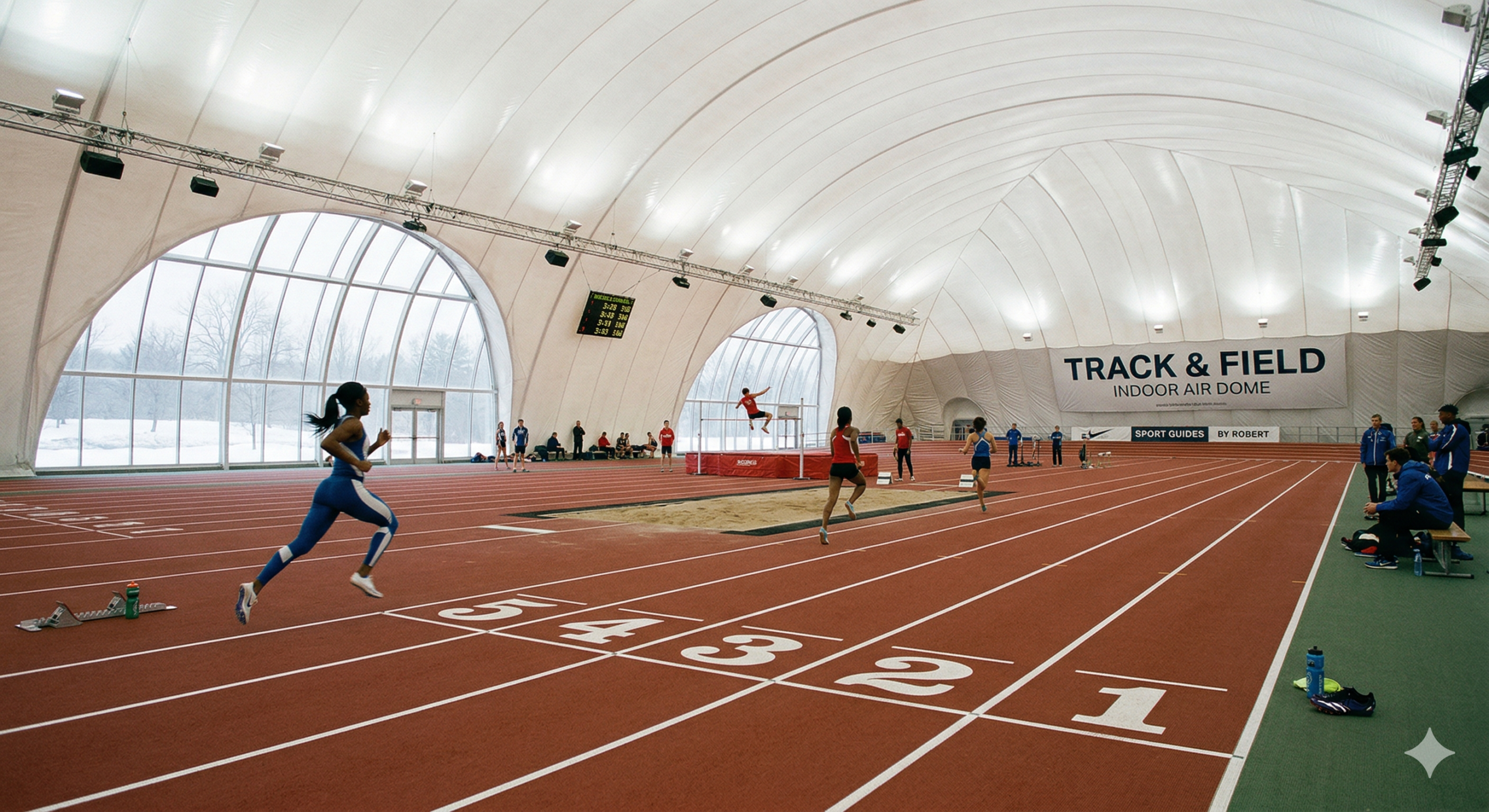
    A track and field indoor track air dome transforms year-round athletic training by housing a complete track facility within an inflatable structure.

    You’ll find these pressurized buildings contain regulation running surfaces, field event areas, and climate-controlled environments that eliminate weather dependencies.

    Your indoor track facility typically features a 200-meter hydraulic-banked track with rubberized surfacing, requiring minimum dimensions of 160′ x 260′.

    The running track dome maintains 40+ foot heights with professional lighting exceeding 50 foot candles.

    Central field areas accommodate long jump pits and shot put circles.

    These structures let you train consistently regardless of snow, rain, or extreme temperatures.

    The indoor track air dome’s pressurized design creates a stable environment while keeping operational costs lower than traditional brick-and-mortar facilities, making elite training accessible year-round.

    Indoor Air Dome Space Requirements and Track Dimensions

    Planning your indoor track air dome starts with understanding the specific spatial requirements that determine your facility’s functionality.

    Your track and field dome dimensions directly impact athlete performance and safety standards.

    For a standard 200-meter hydraulic-banked track, you’ll need minimum dimensions of 160′ x 260′ (48.8m x 79.2m).

    If you’re considering a 300-meter track, expand your requirements to 200′ x 350′ (61m x 106.7m).

    Essential specifications include:

    • Height clearance: 40+ feet (12.2m+) for proper ventilation and safety
    • Central field area: Dedicated space for long jump and shot put events
    • Surface material: Professional rubberized track surface for peak traction
    • Lighting standards: Minimum 50 foot candles for competition-grade visibility

    These measurements guarantee your facility meets regulatory standards while maximizing athletic potential.

    Track Banking, Surface Materials, and Field Configurations

    Precision engineering transforms your indoor track dome from basic infrastructure into a high-performance athletic facility.

    Your 200-meter track requires hydraulic banking systems that automatically adjust curve angles, enhancing runner safety and performance across different events. The rubberized surface material you’ll install must provide consistent traction while reducing impact stress on athletes’ joints.

    You’ll configure the central field area to accommodate multiple events simultaneously. Long jump runways typically extend from the track’s interior, while shot put circles position strategically to maximize safety clearances.

    Your dome’s 40-foot minimum height guarantees adequate space for pole vault and high jump events.

    Surface consistency becomes critical—temperature fluctuations can affect rubber track performance, so you’ll need climate control systems maintaining ideal conditions year-round for competitive standards.

    Indoor Air Dome Lighting and Environmental Control

    You’ll need proper lighting that delivers at least 50 foot candles of illumination to guarantee athletes can perform safely and effectively during training and competition.

    Your climate control system must maintain consistent temperature and humidity levels while managing air circulation throughout the dome structure.

    These environmental factors directly impact athletic performance and the longevity of your track surface materials.

    Optimal Lighting Standards

    When athletes train year-round in your indoor air dome, consistent lighting becomes essential for both performance and safety.

    You’ll need a minimum of 50 foot candles of illumination across your track surface to guarantee athletes can clearly see lane markings, obstacles, and their footing during high-intensity training sessions.

    Your lighting system should deliver:

    • Uniform distribution – No dark spots or glare zones that could cause missteps
    • High-quality LED fixtures – Energy-efficient with minimal heat generation
    • Consistent color temperature – 4000K-5000K range for natural daylight simulation
    • Emergency backup systems – Battery-powered lighting for safe evacuation

    You’ll want to position fixtures strategically around the dome’s perimeter and overhead to eliminate shadows.

    Proper lighting isn’t just about visibility—it affects athlete circadian rhythms and training quality throughout winter months.

    Climate Control Systems

    Beyond maintaining proper visibility, your indoor air dome requires sophisticated climate control to create excellent training conditions year-round. You’ll need systems that regulate temperature, humidity, and air circulation to enhance athletic performance and prevent condensation damage.

    System Component Recommended Range Key Benefits
    Temperature 60-68°F (15-20°C) Superior performance comfort
    Humidity 40-60% RH Prevents condensation/mold
    Air Changes 6-8 per hour Fresh air circulation
    Pressure +0.2-0.5″ WC Maintains dome structure
    Filtration MERV 8-13 Removes dust/allergens

    Your HVAC system must maintain positive air pressure to keep the dome inflated while providing adequate ventilation. Installing zone controls allows you to adjust conditions based on occupancy and activity levels, ensuring energy efficiency without compromising athlete comfort.

    Indoor Air Dome vs Traditional Indoor Track Facilities

    When you’re deciding between an air dome and traditional indoor track facility, you’ll need to weigh three critical factors that’ll impact your project’s success.

    Cost differences can be substantial, with air domes typically requiring lower upfront investment but ongoing operational expenses for inflation systems.

    You’ll also face different space requirements and construction timelines that could greatly affect your facility’s feasibility and opening date.

    Cost Comparison Analysis

    Five critical cost factors separate indoor air dome track facilities from traditional brick-and-mortar indoor tracks, with initial construction expenses showing the most striking difference.

    You’ll find air domes cost 60-80% less than traditional facilities. A 200m track air dome typically runs $300,000-$500,000, while conventional indoor tracks demand $2-5 million.

    Here’s what drives these savings:

    • Foundation requirements: Air domes need minimal concrete work versus extensive structural foundations.
    • Material costs: Fabric membrane systems cost considerably less than steel, brick, and extensive HVAC systems.
    • Construction timeline: 8-12 weeks for air domes compared to 12-24 months for traditional facilities.
    • Operating expenses: Lower heating/cooling costs due to efficient air circulation and insulation properties.

    You’ll also save on maintenance, as air dome systems require less structural upkeep than traditional buildings.

    Space Requirements Differences

    While traditional indoor track facilities demand massive footprints with extensive structural zones, air domes maximize usable space within surprisingly compact dimensions.

    You’ll find conventional facilities require additional square footage for structural supports, mechanical rooms, and perimeter walkways that don’t contribute to athletic performance. Air domes eliminate these space-wasting elements.

    For a 200-meter track, you need only 160′ x 260′ of actual ground space with an air dome, while traditional buildings require 30-40% more total area for the same usable track surface.

    The dome’s inflated structure creates clear spans without interior columns, giving you maximum field space for shot put and long jump activities.

    You’re fundamentally getting more athletic functionality per square foot of real estate investment.

    Construction Timeline Factors

    Traditional indoor track construction can stretch 18-24 months from groundbreaking to completion, but air dome installations typically finish in just 8-12 weeks.

    You’ll find this dramatic difference stems from the simplified construction process and reduced structural requirements.

    Your air dome project eliminates several time-consuming phases that traditional facilities require:

    • Foundation work – Simple concrete slab vs. complex structural foundations
    • Structural steel – No steel framework or roof trusses needed
    • Weather delays – Dome inflation protects work from elements
    • Interior finishing – Minimal electrical and mechanical systems

    You won’t face the lengthy permit approval processes that plague traditional construction either.

    The streamlined design means fewer trades, reduced coordination complexity, and faster material delivery.

    Most delays you’ll encounter involve site preparation and utility connections rather than structural complications.

    Indoor Air Dome Installation and Cost Factors

    Because track and field air domes require specialized engineering and materials, you’ll face several key cost factors that directly impact your total investment.

    Foundation work represents your largest expense, requiring specialized footings for hydraulic banking systems and proper drainage.

    The dome fabric itself costs considerably more than standard structures due to its size requirements—160′ x 260′ minimum for 200m tracks.

    Installation complexity increases costs through specialized labor requirements. You’ll need certified technicians for hydraulic banking systems, professional lighting installation achieving 50+ foot candles, and rubberized surface application.

    Air handling systems require industrial-grade blowers and backup power systems to maintain structural integrity.

    Geographic location affects transportation costs for oversized materials, while local building codes may require additional engineering certifications, further impacting your budget.

    Air-Supported Structure Maintenance and Upkeep

    Since your track and field air dome depends on continuous air pressure to maintain structural integrity, you’ll need to establish a thorough maintenance program that addresses both routine upkeep and emergency preparedness.

    Regular maintenance tasks include:

    • Fan system inspection – Check blowers monthly for proper operation, clean filters, and verify backup systems function correctly.
    • Membrane assessment – Examine fabric for tears, wear patterns, and proper tension while monitoring air pressure gauges daily.
    • Anchor point evaluation – Inspect foundation attachments, cable tensioning, and ground seal integrity quarterly.
    • Emergency protocol testing – Practice deflation procedures and staff evacuation plans while maintaining emergency repair kits on-site.

    You’ll also need to schedule professional inspections annually and budget for membrane cleaning every 2-3 years.

    Proper documentation of all maintenance activities helps identify potential issues before they become costly repairs.

    Selecting the Right Indoor Air Dome for Your Needs

    How do you determine which indoor air dome specifications will best serve your track and field program? Start by evaluating your space requirements and budget constraints.

    A standard 200-meter hydraulic-banked track requires a minimum 160′ x 260′ footprint, while a 300-meter track needs 200′ x 350′. Consider your primary activities—if you’ll host long jump and shot put events, guarantee adequate central field area dimensions.

    Height matters for safety and performance; you’ll need 40+ feet minimum clearance.

    Don’t overlook lighting requirements of 50+ foot candles for proper visibility during training and competitions. Your rubberized surface choice affects athlete performance and maintenance costs.

    Factor in local weather conditions, intended usage frequency, and whether you’ll need year-round or seasonal operation when making your final selection.

  • Volleyball Air Dome Planning

    Volleyball Air Dome Planning

    You’re considering a volleyball air dome, but you’ll quickly discover that proper planning separates successful facilities from costly mistakes. The difference between a $200,000 investment and an $800,000 project often comes down to decisions you’ll make in the early stages—decisions about court dimensions, site preparation, and structural requirements that most people don’t anticipate. Before you commit to any contractor or design, there’s critical information you need to understand about what actually drives these costs.

    Volleyball Air Dome Costs and Budget Planning

    Before you break ground on your volleyball air dome project, you’ll need to establish a thorough budget that accounts for both initial construction and ongoing operational expenses.

    Your volleyball air dome costs typically range from $200,000 to $800,000 depending on size, location, and features. A single-court indoor volleyball dome starts around $200,000, while a four-court facility can exceed $600,000.

    Key budget considerations include site preparation, foundation work, structural engineering, HVAC systems, and electrical installations.

    Don’t overlook ongoing expenses like utilities, insurance, and maintenance contracts. Your volleyball facility dome will require continuous air pressure systems, increasing monthly energy costs by $2,000-$5,000.

    Factor in permits, inspections, and professional consultations.

    Smart planning prevents costly overruns and guarantees your project stays financially viable long-term.

    Court Size Requirements and Facility Layout Options

    When planning your volleyball air dome, you’ll need to determine the exact court dimensions and layout configuration that best serves your facility’s purpose.

    Standard volleyball courts measure 30′ x 60′, but you should consider the recommended 40′ x 70′ footprint that includes essential buffer zones for player safety.

    Your layout options range from single-court facilities to multi-court configurations like the popular 4-court setup requiring a 100′ x 150′ building footprint.

    Standard Court Dimensions

    Two primary measurements define volleyball air dome planning: the official court size and the recommended facility dimensions with safety buffers. Your volleyball court cover needs specific dimensional requirements to guarantee proper gameplay and safety.

    The standard court measures 30′ x 60′, but you’ll want additional space around the perimeter. Here’s what you need to know:

    Specification Minimum Recommended
    Court Size 30′ x 60′ 30′ x 60′
    Facility Size 30′ x 60′ 40′ x 70′
    Clear Height 23′ (7m) 30′ (9.1m)
    Buffer Zone None 5′ all sides
    Flooring Type Sport court Wood/sport court

    The recommended 40′ x 70′ facility size provides essential buffer zones for player safety and improved gameplay. You’ll also need minimum 23-foot ceiling clearance, though 30 feet creates ideal playing conditions.

    Multi-Court Layout Planning

    Multi-court volleyball facilities require strategic space planning to maximize player capacity while maintaining safety standards.

    You’ll need to evaluate both individual court requirements and overall facility flow when designing your layout.

    For a standard 4-court configuration, you’re looking at a 100′ x 150′ (30.5m x 45.7m) facility footprint. This accommodates four regulation courts with proper buffer zones between each playing area.

    You can arrange courts in a 2×2 grid pattern or linear formation, depending on your dome’s shape and entry points.

    Remember to include adequate spacing for spectator areas, equipment storage, and player circulation paths.

    Consider installing removable net systems to convert the space for tournaments or alternative sports.

    Your layout should also account for emergency exits and HVAC equipment placement within the dome structure.

    Location Requirements for Volleyball Dome Installation

    You’ll need adequate space beyond the dome footprint itself, typically requiring 20-30% additional area for equipment access and emergency exits.

    Your site must provide level ground or budget for grading, proper drainage, and stable soil conditions that can support the dome’s anchor system.

    Before installation, you’re required to obtain building permits and verify your location complies with local zoning regulations for recreational structures.

    Site Size Considerations

    When selecting a site for your volleyball air dome, the foundation dimensions will dictate your minimum land requirements.

    You’ll need to account for the actual court space plus additional clearance for safety and maintenance access around the structure’s perimeter.

    For a single-court facility, plan for approximately 40′ x 70′ (12.2m x 21.3m) to accommodate the court and buffer zones.

    However, your total site requirements extend beyond just the dome footprint:

    • Parking and access roads – Allow space for player, spectator, and maintenance vehicle parking
    • Utility connections – Reserve areas for electrical service, water lines, and drainage systems
    • Emergency access – Maintain clear pathways for fire department vehicles and emergency evacuation

    A four-court layout requires roughly 100′ x 150′ (30.5m x 45.7m) for the structure alone.

    Ground Preparation Requirements

    Once you’ve determined your site dimensions, proper ground preparation becomes your next priority for successful dome installation. You’ll need a level surface with minimal slope – ideally less than 1% grade across the entire footprint.

    Remove all vegetation, rocks, and debris from the area, then compact the soil to prevent settling that could damage your dome’s foundation system.

    Consider drainage carefully since water pooling around your dome creates serious problems. Install proper drainage systems or select naturally well-draining locations. The ground surface should be smooth and free of sharp objects that might puncture the dome’s base fabric.

    For permanent installations, you’ll want a concrete perimeter foundation or ground anchoring system.

    Temporary setups can use specialized ground anchors, but soil conditions must support the required holding strength against wind loads and internal air pressure.

    Zoning and Permits

    Before breaking ground on your volleyball dome project, understanding local zoning laws and permit requirements will save you from costly delays and legal complications.

    Most municipalities classify air domes as temporary or permanent structures, which affects your permit pathway.

    You’ll need to research several key areas before moving forward:

    • Zoning compliance – Verify your property allows recreational structures and meets setback requirements from property lines.
    • Building permits – Submit structural plans showing your dome’s foundation, anchoring system, and compliance with local building codes.
    • Special use permits – Some areas require additional permits for commercial sports facilities or structures exceeding height restrictions.

    Contact your local building department early in the planning process. They’ll provide specific requirements for your area and help you navigate the approval timeline efficiently.

    Volleyball Air Dome Structure and Height Needs

    Since volleyball requires significant vertical clearance for serves and spikes, you’ll need to plan for substantial height requirements when designing your air dome. The minimum clear height is 23 feet, but you should target 30 feet for ideal play conditions. This extra height prevents interference with high serves and aggressive spikes while ensuring proper ball trajectory.

    Your court dimensions need careful consideration too. While official courts measure 30′ x 60′, you’ll want 40′ x 70′ including safety buffers around the perimeter. This prevents players from colliding with walls during aggressive plays.

    For flooring, choose wood or specialized sport court surfaces that provide proper traction and shock absorption.

    If you’re planning a multi-court facility, a 100′ x 150′ structure accommodates four courts with adequate spacing between them.

    Flooring and Climate Control System Essentials

    While structural elements form your dome’s foundation, the flooring and climate control systems directly impact player performance and comfort.

    You’ll need specialized flooring that provides proper shock absorption and traction for volleyball’s dynamic movements. Wood flooring offers excellent performance characteristics, while synthetic sport court surfaces provide durability and consistent ball bounce.

    Your climate control system must maintain ideal playing conditions year-round.

    Consider these essential features:

    • Temperature regulation – Maintain 65-75°F (18-24°C) for player comfort during intense matches
    • Humidity control – Keep levels between 40-60% to prevent condensation and guarantee proper ball handling
    • Air circulation – Provide adequate ventilation to prevent stagnant air pockets and maintain consistent airflow

    Proper integration of these systems guarantees your volleyball dome delivers professional-quality playing conditions that enhance performance while protecting your investment through reduced maintenance needs.

    Installation Timeline and Project Management Steps

    Once you’ve finalized your flooring and climate systems, you’ll need to establish a clear installation timeline that coordinates multiple trades and minimizes weather delays.

    Start by securing permits and scheduling site preparation 4-6 weeks before your target completion date. Foundation work typically requires 1-2 weeks, followed by electrical and mechanical rough-ins.

    Plan for dome installation during favorable weather conditions, as wind speeds above 15 mph can halt progress. The actual dome erection takes 2-3 days with proper crew coordination.

    Interior work follows a specific sequence: flooring installation, net systems, lighting, and final HVAC commissioning.

    Create buffer time for inspections and potential delays.

    Assign a dedicated project manager to coordinate between contractors, handle permit approvals, and maintain communication with all stakeholders throughout the process.

  • Multi-Sport Air Dome Design

    Multi-Sport Air Dome Design

    You’re considering a multi-sport air dome, but you’re probably wondering how to maximize every square foot while keeping costs reasonable. The challenge isn’t just fitting multiple sports into one space—it’s creating seamless shifts between activities without compromising play quality or safety. From net systems that disappear in minutes to line markings that won’t confuse your players, there’s a specific strategy that separates profitable facilities from costly mistakes.

    What Sports Can You Play In A 100′ X 200′ Multi-Sport Air Dome?

    When you’re investing in a 100′ x 200′ multi-sport air dome, you’ll have the flexibility to accommodate multiple court configurations within the 20,000 square feet of playing space.

    Your versatile sports dome can house two full-sized tennis courts or two basketball courts for larger sports requiring more room. If you’re focusing on volleyball, you can fit four courts comfortably, making it perfect for tournaments or league play.

    For pickleball enthusiasts, your combined sports dome maximizes capacity with eight courts, creating an excellent revenue opportunity.

    The removable net systems, ranging from $5,000 to $12,000, allow you to quickly switch between sports. Multi-purpose line markings eliminate confusion during changeovers, while integrated equipment storage keeps your facility organized and professional-looking year-round.

    Multi-Sport Air Dome Space Planning: Maximizing Your Court Options

    Since your 20,000-square-foot air dome offers multiple court configurations, strategic space planning becomes essential for maximizing both functionality and revenue potential.

    You’ll need to evaluate peak usage times for different sports when designing your multi-purpose indoor facility layout. Install removable net systems ranging from $5K-$12K to enable quick shifts between tennis, basketball, volleyball, and pickleball courts.

    Multi-purpose line markings painted on your flooring eliminate the need for constant remarking.

    Position equipment storage strategically around the perimeter to maintain clear sightlines and safety zones. Think about installing retractable divider curtains to create separate playing areas simultaneously.

    You can generate more revenue by accommodating different sports during busy periods, transforming your single dome into multiple revenue streams through intelligent space allocation.

    Removable Net Systems And Equipment Storage For Multi-Sport Air Domes

    Although your air dome’s versatility depends on quick sport changes, you’ll find that investing in quality removable net systems makes all the difference in operational efficiency.

    Professional-grade removable nets typically cost between $5,000-$12,000 but deliver rapid court conversions that maximize your facility’s revenue potential.

    You’ll want systems featuring wheeled bases, telescoping posts, and quick-release mechanisms that allow staff to reconfigure courts in minutes rather than hours. Tennis nets can transform into volleyball setups, while basketball hoops retract for floor sports.

    Strategic equipment storage becomes equally critical. Install wall-mounted racks, rolling carts, and designated zones for nets, posts, and sport-specific gear.

    Proper organization guarantees smooth shifts between tennis, basketball, volleyball, and pickleball configurations while keeping your dome clutter-free and professionally maintained.

    Multi-Purpose Line Marking: One Surface, Multiple Sports

    While removable nets handle the vertical elements of sport conversion, your flooring strategy determines how seamlessly athletes shift between different games on the same surface.

    Multi-purpose line markings transform your 20,000 square foot air dome into a versatile athletic facility that maximizes every inch of space.

    Your line marking system should accommodate multiple sports simultaneously:

    1. Color-coded lines – Tennis uses white, basketball employs contrasting colors, volleyball utilizes bright tape, and pickleball requires distinct boundary markers.
    2. Permanent court overlays – Heat-sealed thermoplastic lines withstand heavy traffic and weather changes.
    3. Removable tape systems – Temporary markings for seasonal sports or special events.
    4. Strategic layout planning – Position courts to minimize line confusion and optimize player safety during simultaneous games.

    This approach maximizes your dome’s revenue potential year-round.

    Air Dome Structure: What Your Multi-Sport Facility Really Needs

    Multi-purpose line markings work only when your air dome structure can handle the demands of different sports happening simultaneously.

    You’ll need a central space measuring 100′ x 200′ (30.5m x 61m) to accommodate multiple court configurations effectively. This 20,000 square foot area supports two tennis courts, two basketball courts, four volleyball courts, or eight pickleball courts within a single dome structure.

    Your facility requires adequate ceiling height for volleyball spikes and tennis serves, while maintaining structural integrity under varying air pressures.

    Consider reinforced anchor points for removable net systems, which cost $5K-$12K but provide essential flexibility.

    Don’t overlook equipment storage integration – built-in storage areas keep your facility organized when shifting between sports.

    The dome’s engineering must accommodate simultaneous activities without compromising safety or performance standards.

    Multi-Sport Air Dome Cost Breakdown: From $5K Nets To Total Investment

    Three major cost categories will determine your total multi-sport air dome investment: equipment systems, structural components, and ongoing operational expenses.

    Your removable net systems represent a significant portion of equipment costs, ranging from $5,000 to $12,000 depending on quality and versatility. These systems enable quick court conversions between tennis, basketball, volleyball, and pickleball configurations.

    Key cost components include:

    1. Net Systems & Court Equipment – $5K-$12K for removable systems plus storage solutions
    2. Multi-Purpose Line Markings – Custom court layouts for all sports applications
    3. Air Dome Structure – Foundation, membrane, and anchoring systems for your facility
    4. HVAC & Pressurization – Climate control and air pressure maintenance equipment

    You’ll also need to budget for permits, installation labor, and monthly utility costs.

    Equipment storage solutions add convenience but increase your initial investment.