Blog

  • Air Dome Emergency Procedures

    Air Dome Emergency Procedures

    You’ve invested in an air dome for good reasons—protection from weather, year-round facility use, and cost savings. But when severe weather strikes or systems fail, you’ll need more than hope to keep everyone safe. Vital decisions about evacuation, backup power, and emergency repairs can’t wait for manuals or phone calls. The difference between a manageable incident and a disaster often comes down to knowing exactly what to do in those first vital minutes.

    When Air Dome Emergencies Require Immediate Evacuation

    Although air domes are designed to withstand significant weather conditions, you’ll need to evacuate immediately when wind speeds exceed the structure’s design limits of 100 mph (160 km/h).

    Don’t wait for official warnings—monitor weather conditions continuously and act decisively when severe storms approach.

    You must also evacuate when the backup blower system fails during power outages, creating rapid deflation scenarios.

    If you notice major fabric tears that can’t be controlled with emergency patches, initiate evacuation protocols immediately.

    Fire emergencies require instant evacuation due to the fabric’s vulnerability to heat damage.

    These air dome emergency procedures aren’t optional—your safety depends on recognizing critical situations quickly.

    Always prioritize human life over equipment or activities when facing structural compromise or extreme weather conditions.

    Power Outage Response: Backup Systems and Safe Deflation

    When power outages strike your air dome facility, you’ll rely on backup blower systems that automatically engage within 30 seconds to maintain structural integrity. Your power outage response plan should include regular testing of these emergency systems to verify they’re operational when needed.

    If backup systems fail, don’t panic—safe deflation takes 45-90 minutes for a 20,000 sq ft facility, giving you ample time to evacuate occupants safely.

    Time Frame Action Required System Status
    0-30 seconds Monitor backup activation Auto-start engaging
    30-45 minutes Begin controlled evacuation Backup operational
    45-90 minutes Complete facility clearance Safe deflation period

    Always maintain emergency lighting and clear exit pathways during your power outage response procedures.

    Managing Air Dome Pressure During Severe Weather

    Beyond power-related challenges, severe weather presents unique pressure management demands that require immediate attention and strategic adjustments.

    You’ll need to continuously monitor internal pressure readings during storms, as external wind forces can create dangerous fluctuations. When snow accumulates on your dome’s surface, increase heating systems immediately to prevent excessive weight buildup that could compromise structural integrity.

    Your sports dome safety protocols must include real-time weather tracking and predetermined evacuation triggers. If wind speeds approach your facility’s design limits of 100 mph, initiate immediate evacuation procedures.

    Don’t wait for conditions to worsen. During severe weather events, maintain constant communication with local emergency services and have your emergency patch kit readily accessible. Quick response to pressure changes can mean the difference between minor repairs and catastrophic failure.

    Emergency Fabric Repair: Quick Fixes vs. Full Evacuation

    While fabric damage presents one of the most critical decisions you’ll face as an air dome operator, understanding the difference between manageable tears and evacuation-worthy breaches can save both time and lives.

    Your tennis bubble emergency response depends on quickly evaluating the damage severity and acting appropriately.

    For minor damage, you can implement temporary fixes:

    1. Small punctures (under 6 inches) – Apply emergency patch kit immediately while maintaining normal operations.
    2. Seam separations – Use temporary tape reinforcement and monitor pressure levels closely.
    3. Weather-related tears – Evaluate structural integrity before deciding between repair or evacuation.

    However, large rips exceeding 12 inches, multiple breach points, or any damage compromising structural zones require immediate evacuation.

    Don’t risk lives attempting repairs on major damage – evacuate first, then evaluate repair options once the structure is safely deflated.

  • Extending Air Dome Lifespan Tips

    Extending Air Dome Lifespan Tips

    Your air dome represents a significant investment—potentially lasting 25 years or more with proper care. Yet most owners don’t realize they’re unknowingly cutting their structure’s lifespan in half through common maintenance oversights. The difference between a dome that fails in 12 years versus one that thrives for decades often comes down to a few critical practices that take minutes to implement but save thousands in premature replacement costs.

    Why Air Dome Maintenance Matters (Your 25-Year Investment Protection Plan)

    A 20,000 square foot air dome represents a substantial investment—one that can serve you reliably for 25 to 35 years with proper care. Without maintenance, you’re looking at costly repairs, premature replacement, and potential safety hazards that’ll drain your budget.

    Think of maintenance as insurance for your investment. Regular cleaning prevents UV degradation that weakens fabric integrity. Proper snow removal protects against catastrophic collapse from excessive weight loads.

    Maintaining correct air pressure guarantees structural stability while preventing unnecessary stress on seams and anchoring systems.

    When you extend air dome life through proactive maintenance, you’re protecting decades of reliable service. A well-maintained dome delivers consistent performance, reduces emergency repair costs, and maximizes your return on investment.

    Neglect these basics, and you’ll face expensive consequences that could’ve been easily prevented.

    Clean Your Air Dome Like A Pro (UV Protection And Debris Removal)

    Cleaning your air dome regularly forms the foundation of that maintenance strategy we just discussed.

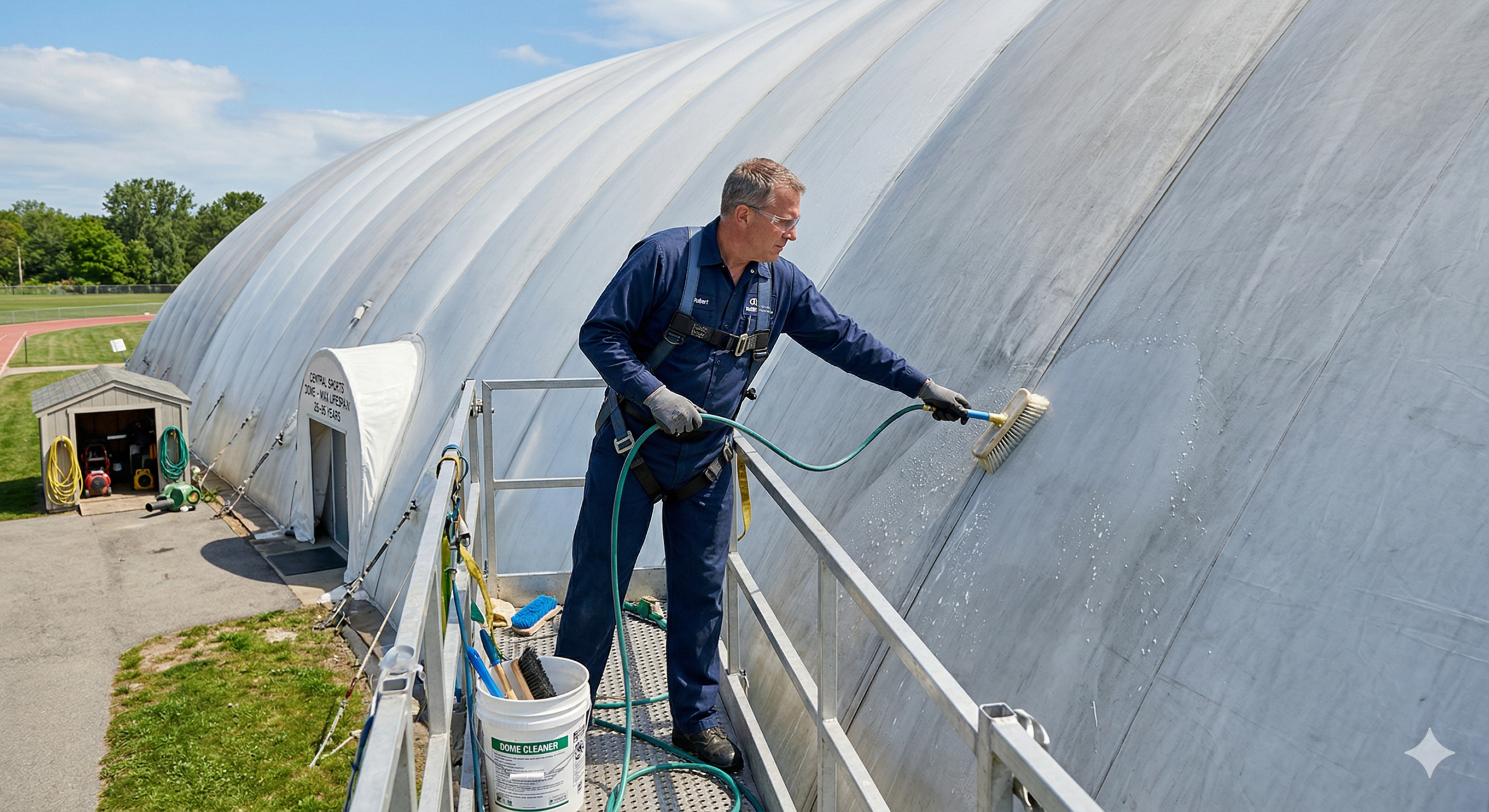
    You’ll maximize dome lifespan by removing dirt, leaves, and debris that trap moisture and accelerate material breakdown. Clean your dome every 3-4 months using mild soap and water – harsh chemicals damage the fabric.

    Start at the top and work downward with a soft brush or cloth. Pay special attention to seams where debris accumulates.

    Remove organic matter like leaves immediately, as they retain moisture and promote UV damage when left sitting.

    Winter cleaning’s essential too. Clear snow buildup exceeding 35 PSF to prevent structural stress.

    Don’t use sharp tools that could puncture the membrane. After cleaning, inspect for small tears or wear spots that need immediate attention.

    Master Air Dome Pressure And Snow Load Management

    Monitor your air dome’s pressure religiously – it’s the critical factor that prevents costly structural damage and extends your dome’s operational life. Maintain pressure between 2-5 PSF (0.1-0.24 kPa) consistently. Install backup blowers to prevent deflation during power outages or equipment failures.

    Snow management requires vigilance. Never exceed 35 PSF (1.67 kPa) load capacity. Remove snow when accumulation threatens structural integrity.

    Pressure Range Snow Load Limit Action Required
    2-3 PSF Light snow acceptable Monitor only
    3-4 PSF Moderate snow tolerance Clear if >12″
    4-5 PSF Maximum safe pressure Immediate removal
    Below 2 PSF Structural risk Emergency inflation

    These air dome longevity tips prevent membrane stress, reduce wear patterns, and maintain proper aerodynamics. Document pressure readings daily and establish snow removal protocols before winter arrives.

    Handle Air Dome Repairs And Off-Season Storage

    Two critical maintenance practices will determine whether your air dome reaches its maximum 25-35 year lifespan: immediate repair response and proper off-season storage protocols.

    When you spot tears, punctures, or wear patterns, address them within 24-48 hours. Small issues become major problems fast, potentially compromising your dome’s structural integrity.

    Use manufacturer-approved patch kits and techniques to maintain fabric strength.

    For seasonal storage, follow these dome care best practices:

    • Clean thoroughly and dry completely before folding to prevent mold and mildew
    • Store in rodent-free, temperature-controlled environment away from sharp objects
    • Fold loosely following manufacturer guidelines to avoid permanent creases

    Proper storage prevents fabric degradation during off-months.

    You’ll protect your investment while ensuring reliable performance when reinstalling your dome for the next season.

  • Air Dome Blower Maintenance Guide

    Air Dome Blower Maintenance Guide

    You’ve invested thousands in your air dome, but you’re probably overlooking the one component that keeps it standing—your blower system. When that motor fails at 2 AM during winter operations, you’ll quickly realize that a few minutes of weekly maintenance could’ve saved you from emergency repair costs and potential dome collapse. The difference between a blower that lasts two years versus ten years isn’t luck—it’s following a proven maintenance protocol that most operators never discover.

    Complete Air Dome Blower Maintenance Schedule and Timeline

    Since your air dome’s structural integrity depends entirely on consistent blower operation, you’ll need to follow a systematic maintenance schedule that prevents costly downtime and extends equipment life.

    Your air dome blower maintenance should follow three distinct intervals.

    Weekly inspections require checking overall operation and listening for unusual sounds or vibrations.

    Monthly tasks include lubricating bearings, verifying proper belt tension, and cleaning intake filters to maintain peak airflow.

    Annual maintenance demands more intensive work: replace bearings after 8,000-10,000 operating hours, install new belts, and conduct thorough motor inspections.

    For a 20,000 square foot facility, budget $100-$200 for replacement bearings as essential spare parts.

    This structured approach guarantees your blower system operates reliably year-round, maintaining proper dome pressurization and avoiding unexpected failures that could compromise your facility’s structural integrity.

    Weekly and Monthly Blower Care Tasks That Prevent Breakdowns

    While thorough annual maintenance keeps your air dome blower running long-term, it’s the consistent weekly and monthly tasks that actually prevent most equipment failures. These routine checks catch problems before they escalate into costly dome blower repair situations.

    Your weekly inspection should focus on basic operation verification, while monthly tasks dive deeper into mechanical components that experience regular wear.

    Frequency Task Time Required Critical Focus
    Weekly Check operation 10 minutes Listen for unusual sounds
    Monthly Lubricate bearings 15 minutes Proper grease application
    Monthly Check belt tension 10 minutes Prevent slippage/wear
    Monthly Clean intake filters 20 minutes Maintain airflow efficiency

    Staying consistent with this schedule greatly reduces unexpected breakdowns and extends your blower’s operational life considerably.

    Annual Air Dome Blower Component Replacement Guide

    Beyond routine weekly and monthly care, your air dome blower requires strategic annual component replacements to maintain peak performance.

    Replace bearings after 8,000-10,000 operating hours to prevent catastrophic failure. Keep spare bearings on hand, as they cost $100-$200 and guarantee minimal downtime during replacement.

    Belt replacement is equally critical during your annual maintenance cycle. Worn belts reduce efficiency and can snap unexpectedly, compromising your facility’s air pressure.

    Schedule motor inspections alongside component replacements to identify potential issues before they become costly problems.

    Proper tennis bubble blower care depends on this annual replacement schedule. For a 20,000 square foot facility, these proactive measures protect your investment and maintain consistent operation.

    Document replacement dates and operating hours to optimize future maintenance timing and avoid emergency repairs.

    Common Blower Problems and Maintenance-Based Solutions

    Although preventive maintenance reduces most issues, air dome blowers can still develop problems that require targeted solutions. When you encounter blower malfunctions, systematic troubleshooting helps identify root causes quickly. Most problems stem from neglected maintenance schedules or component wear.

    Problem Solution
    Excessive vibration Check belt tension, replace worn bearings
    Reduced airflow Clean intake filters, inspect for blockages
    Unusual noise Lubricate bearings, examine motor alignment
    Overheating motor Clear ventilation areas, check electrical connections
    Belt slipping Adjust tension, replace stretched belts

    Professional sports dome fan service becomes necessary when problems persist despite proper maintenance. Keep detailed maintenance logs to track recurring issues and schedule professional inspections annually. Address minor problems immediately to prevent costly repairs and facility downtime.

  • Common Air Dome Problems and Solutions

    Common Air Dome Problems and Solutions

    You’ve invested in an air dome for your facility, but like any complex structure, problems will eventually surface. Whether it’s a sudden pressure drop during peak hours, a stubborn zipper door that won’t budge, or mysterious tears appearing in the fabric, these issues can shut down operations and cost you money. The good news? Most air dome problems have straightforward solutions if you know what to look for and how to respond quickly.

    Common Fabric Tears: Causes and Quick Fixes

    Although air domes are built to withstand various weather conditions, fabric tears remain one of the most frequent issues you’ll encounter with your 20,000 square foot facility. These common dome issues typically result from sharp objects, excessive wind stress, or UV degradation over time.

    When you notice small punctures or tears, don’t panic. Most tennis bubble repairs can be handled quickly with basic repair kits costing between $35-$100. You’ll find these kits contain fabric patches, adhesive, and detailed instructions for temporary fixes.

    For immediate solutions, clean the damaged area thoroughly, apply the patch following manufacturer guidelines, and guarantee proper adhesion.

    However, larger tears require professional assessment. Regular inspections help you catch air dome problems early, preventing minor damage from becoming costly structural issues.

    Blower Motor Failures: Symptoms and Solutions

    While fabric tears affect your air dome’s exterior, blower motor failures strike at the heart of your facility’s operation. When your blower system malfunctions, you’ll notice immediate pressure drops and potential structural collapse risks.

    Key symptoms include unusual grinding noises, excessive vibration, and inconsistent airflow. Bearing failures account for most issues, typically costing $500-$1,500 to repair. You’ll want to monitor motor temperature and listen for irregular sounds during routine inspections.

    For effective sports dome troubleshooting, check electrical connections first, then examine belt tension and alignment. Replace worn bearings immediately to prevent complete motor failure.

    Your air dome problem solving strategy should include backup blower systems for critical situations. Regular maintenance prevents most failures, but when problems arise, quick response protects your entire facility investment.

    When Zipper Doors Jam or Stick

    As blower motors keep your dome pressurized, zipper door mechanisms provide essential access control that can quickly become problematic.

    When your zipper doors jam or stick, you’re facing one of the most common maintenance issues in air dome facilities.

    Most zipper problems stem from dirt accumulation, fabric misalignment, or worn zipper teeth.

    Here’s your troubleshooting approach:

    1. Clean the zipper track thoroughly with a stiff brush to remove debris, ice, or fabric particles.
    2. Apply silicone-based lubricant to zipper teeth and slider mechanisms monthly.
    3. Check fabric tension around the door frame for proper alignment.
    4. Inspect zipper slider for damage or wear that prevents smooth operation.

    Regular maintenance prevents most jamming issues.

    You’ll save time and avoid emergency repairs by implementing a monthly zipper inspection routine.

    Pressure Loss: Finding and Sealing Leaks

    Beyond door mechanisms, your air dome’s structural integrity depends on maintaining proper internal pressure between 2-5 PSF (0.1-0.24 kPa).

    When you notice sagging or deflation, pressure loss is likely occurring through base seal leaks, fabric punctures, or connection points.

    Start your inspection at ground level where the dome meets its foundation. Check the entire perimeter for gaps, loose anchor points, or damaged sealing material.

    Listen for air escaping—it’ll create a distinct hissing sound. Use soapy water to identify small leaks; bubbles will form where air escapes.

    Examine fabric panels for tears, worn areas, or punctures from debris. Pay attention to seams and reinforced sections where stress concentrates.

    Check blower connections, electrical penetrations, and emergency exits. Temporary patches work for small holes, but schedule permanent repairs quickly to prevent larger problems.

    Snow Load Removal and Weight Limits

    When snow accumulates beyond 12 inches (30 cm) on your air dome, you’re approaching dangerous weight limits that can compromise structural integrity.

    Snow’s weight varies dramatically based on moisture content, with wet snow weighing up to three times more than dry powder. You’ll need immediate action to prevent costly damage or collapse.

    Snow Load Management Protocol:

    1. Monitor accumulation – Check snow depth every 4-6 hours during storms using marked reference points around your dome’s perimeter.
    2. Increase internal pressure – Boost air pressure by 0.5-1.0 PSF to help shed light snow naturally before it becomes problematic.
    3. Deploy removal equipment – Use foam brushes or specialized dome rakes to gently remove snow, working from bottom to top in sections.
    4. Document conditions – Record snow type, depth, and weather forecasts to anticipate future loading events.

    Repair Costs and Essential Emergency Tools

    You’ll need specific tools and spare parts on hand to address air dome emergencies quickly before they escalate into costly structural damage.

    Your emergency repair kit should include fabric patches, sealants, and basic tools, while understanding professional service costs helps you budget for major repairs like blower replacements.

    Preparing for both minor fixes you can handle yourself and larger issues requiring expert intervention guarantees you’re ready for any air dome problem.

    Emergency Repair Kit Essentials

    Three critical repair scenarios can threaten your air dome’s structural integrity without warning.

    You’ll need an extensive emergency repair kit to address fabric tears, pressure loss, and mechanical failures that could compromise your 20,000 sq ft facility’s operation.

    Your emergency repair kit must include these essential components:

    1. Fabric repair patches and adhesive – Waterproof patches in multiple sizes with industrial-grade adhesive for immediate tear repairs ($35-$100 investment)
    2. Pressure monitoring tools – Digital manometer to detect the 2-5 PSF pressure drops that signal base leaks or blower issues
    3. Basic blower maintenance supplies – Replacement bearings, belts, and lubricants for $500-$1,500 blower repairs
    4. Door hardware kit – Zipper lubricant, replacement pulls, and cleaning supplies to prevent costly lockouts

    Keep these supplies readily accessible for immediate deployment.

    Professional Service Cost Breakdown

    Professional air dome repair services typically charge $150-$300 per hour, making DIY maintenance knowledge essential for managing your facility’s operating costs.

    For a 20,000 sq ft facility, you’ll face predictable repair scenarios. Fabric tear repairs cost $35-$100 for materials when you handle them yourself, but professional patching runs $400-$800 including labor.

    Blower bearing replacements range from $500-$1,500 in parts, yet service calls add $300-$600 in labor charges.

    Zipper door maintenance requires only cleaning and lubrication—a $5 fix versus $200-$400 for professional service.

    Pressure loss diagnostics cost $150-$300 professionally, though you can check base seals yourself.

    Snow removal services charge $50-$150 per visit, making preventive monitoring vital for your budget.

    Preventing Major Air Dome Breakdowns

    While air dome issues can range from minor inconveniences to costly repairs, implementing a proactive maintenance strategy will help you avoid the most expensive breakdowns.

    Regular inspections catch problems before they escalate. You’ll save thousands by addressing fabric tears with $35-$100 repair kits rather than replacing entire sections. Similarly, monitoring blower performance prevents bearing failures that cost $500-$1,500.

    Here’s your essential prevention checklist:

    1. Monthly fabric inspections – Look for small tears, worn areas, and stress points around anchor systems.
    2. Quarterly blower maintenance – Check bearings, belts, and filters to prevent costly failures.
    3. Seasonal pressure monitoring – Test for base leaks when pressure drops below 2-5 PSF.
    4. Weather preparation – Remove snow accumulation exceeding 12 inches to prevent structural damage.

    Consistent maintenance protects your investment long-term.

  • Air Dome Maintenance Schedule Guide

    Air Dome Maintenance Schedule Guide

    You’ve invested considerably in your air dome facility, but without proper maintenance scheduling, you’re risking catastrophic failure and costly emergency repairs. Most facility managers don’t realize that a systematic approach to monthly, quarterly, and annual maintenance tasks can extend their dome’s lifespan by decades while preventing the kind of sudden deflation that shuts down operations for weeks. The difference between proactive maintenance and reactive crisis management comes down to following a proven schedule that addresses critical warning signs before they become disasters.

    Essential Air Dome Maintenance Tasks By Schedule

    Maintaining your 20,000 square foot air dome requires a systematic approach that breaks down essential tasks into manageable monthly, quarterly, and annual schedules.

    Your air dome maintenance schedule should include monthly blower inspections, pressure checks, and door operation testing to guarantee peak performance.

    Every quarter, you’ll need to conduct thorough fabric inspections for tears and UV damage, check rope tension, and perform deep cleaning procedures.

    Your dome inspection schedule must also incorporate annual tasks like professional fabric assessments and complete blower overhauls.

    This tennis bubble maintenance guide emphasizes that following these scheduled intervals prevents costly emergency repairs and extends your dome’s lifespan.

    Consistent adherence to these maintenance protocols keeps your facility safe, functional, and compliant with manufacturer warranties while maximizing your investment’s long-term value.

    Monthly Inspections That Keep Your Facility Running

    Your monthly inspections form the backbone of reliable air dome operation, focusing on three critical systems that can’t afford to fail.

    You’ll need to examine your blower system for wear, verify pressure levels stay within ideal ranges, and test all door mechanisms for smooth operation.

    These quick but essential checks catch problems early, preventing costly failures that could compromise your entire facility.

    Blower System Inspection

    Since your air dome’s blower system serves as the heart of your facility’s structural integrity, regular monthly inspections become critical for preventing costly downtime and emergency repairs.

    Your sports dome upkeep calendar should prioritize checking air filters for debris accumulation, as clogged filters reduce efficiency and strain the motor.

    Inspect belts for proper tension, cracking, or fraying that could lead to sudden failure. Listen for unusual noises, vibrations, or grinding sounds that indicate bearing problems or loose components.

    Check electrical connections for corrosion or looseness, and verify amperage readings match manufacturer specifications. Document motor temperature during operation to identify overheating issues early.

    Test emergency backup systems if equipped, ensuring seamless shift during primary blower maintenance. Clean intake vents and remove any obstructions that could restrict airflow and compromise your dome’s pressure stability.

    Pressure Level Monitoring

    When pressure levels drop below ideal thresholds, your air dome’s structural integrity becomes compromised, making consistent monitoring essential for safe operations.

    You’ll need to check pressure readings monthly using your system’s gauges or digital monitoring equipment.

    Monitor these critical pressure indicators during your monthly inspections:

    • Operating pressure range – Verify readings stay within manufacturer specifications (typically 0.3-0.5 PSI)
    • Pressure differential alerts – Watch for sudden drops that indicate leaks or blower issues
    • Emergency backup activation – Test automatic systems that engage when primary pressure falls

    Document all pressure readings in your maintenance log, noting any fluctuations or irregularities.

    If you discover pressure levels consistently falling outside normal parameters, investigate immediately for fabric damage, seal failures, or blower performance issues before structural problems develop.

    Door Operation Testing

    While monitoring pressure keeps your dome inflated properly, door systems require equally rigorous attention to maintain safe entry and exit operations.

    You’ll need to test each door’s opening and closing mechanism monthly, ensuring smooth operation without binding or hesitation. Check that emergency exits function correctly and can’t be accidentally locked from the inside.

    Inspect door seals for air leaks that compromise pressure stability. Look for worn weatherstripping, damaged gaskets, or loose connections.

    Test automatic door systems if equipped, verifying sensors work properly and doors respond to commands immediately.

    Examine hinges, handles, and locking mechanisms for wear or corrosion. Lubricate moving parts as needed and tighten loose hardware.

    Document any issues requiring repair, as malfunctioning doors pose serious safety risks during emergencies.

    Quarterly Air Dome Checks That Prevent Major Repairs

    Every three months, you’ll need to conduct thorough fabric inspections to catch tears and UV damage before they compromise your dome’s integrity.

    Check all rope tension points systematically, as loose or overly tight ropes can create stress concentrations that lead to fabric failure.

    These quarterly assessments are your best defense against costly emergency repairs that could shut down your facility unexpectedly.

    Fabric Inspection Protocol

    Since fabric represents your air dome’s most vulnerable component, establishing a rigorous quarterly inspection protocol will save you thousands in emergency repairs.

    You’ll need to systematically examine every section for tears, punctures, and UV damage that compromise structural integrity.

    Start by walking the dome’s perimeter during daylight hours, checking for discoloration or fabric thinning.

    Pay special attention to high-stress areas like anchor points and seams where failures typically originate.

    • Document damage locations with photos and measurements for tracking deterioration patterns over time
    • Test fabric flexibility by gently stretching suspected weak areas to identify brittleness before catastrophic failure
    • Inspect reinforcement patches from previous repairs to verify they’re holding securely without creating new stress points

    Address minor issues immediately—small tears become major ruptures when ignored.

    Rope Tension Assessment

    How often do you check the rope tensions that keep your air dome properly anchored? Quarterly rope tension assessments prevent catastrophic failures that’ll cost thousands in repairs.

    Walk the perimeter and examine each anchor point systematically. You’re looking for loose ropes, frayed sections, or hardware showing wear.

    Use a tension gauge to measure rope tightness at critical stress points. Proper tension maintains structural integrity during wind loads and pressure fluctuations.

    Don’t rely on visual inspection alone—ropes can lose tension gradually without obvious signs.

    Tighten loose connections immediately and replace damaged ropes before they fail. Document tension readings to track deterioration patterns.

    This quarterly check takes two hours but prevents emergency repairs that’ll shut down your facility for days.

    Annual Professional Air Dome Service Requirements

    While monthly and quarterly maintenance tasks keep your air dome operating smoothly, annual professional service guarantees long-term structural integrity and peak performance.

    Professional technicians conduct thorough assessments that exceed basic maintenance capabilities, identifying potential issues before they become costly problems.

    Annual service includes three critical components:

    • Complete fabric evaluation – Professionals assess structural integrity, UV degradation patterns, and stress point wear using specialized equipment.
    • Blower system overhaul – Extensive motor inspection, belt replacement, electrical testing, and efficiency calibration.
    • Full system integration testing – Emergency procedures verification, backup system functionality, and safety protocol validation.

    This professional oversight extends your dome’s lifespan greatly while maintaining manufacturer warranty compliance.

    You’ll receive detailed documentation of all findings and recommendations, creating a maintenance history that supports insurance claims and helps plan future capital investments.

    Air Dome Warning Signs Requiring Immediate Action

    What happens when your air dome shows critical warning signs that demand immediate attention? You’ll need to act swiftly to prevent catastrophic failure and protect occupants inside.

    Watch for sudden pressure drops that your blower can’t compensate for – this indicates major fabric tears or seal failures.

    If you notice visible fabric sagging, ballooning, or flapping sections, evacuate immediately and shut down operations.

    Strange noises from the blower system, including grinding, squealing, or irregular cycling, signal mechanical failure.

    Don’t ignore fabric discoloration, brittle areas, or visible stress points around anchor connections.

    Water pooling on the dome surface creates dangerous weight loads that can cause collapse.

    Emergency protocols should include immediate evacuation procedures and backup blower activation.

    Contact professional technicians immediately when these critical signs appear.

    Budgeting Air Dome Maintenance For 20,000 Sq Ft Facilities

    Since proper air dome maintenance prevents costly emergencies and extends facility lifespan, you’ll need to allocate $15,000-25,000 annually for a 20,000 sq ft installation.

    Your budget breakdown should include:

    • Routine maintenance (40-50%): Monthly blower inspections, pressure checks, quarterly fabric assessments, and cleaning supplies.
    • Emergency repairs (25-35%): Unexpected fabric patches, blower component replacements, and urgent door mechanism fixes.
    • Professional services (20-25%): Annual fabric evaluations, complete blower overhauls, and specialized system testing.

    Factor in seasonal variations—winter demands increase due to snow loads and heating costs.

    You’ll also want to establish a separate capital reserve fund for major replacements like fabric renewal every 15-20 years or complete blower system upgrades.

    Smart budgeting guarantees uninterrupted facility operations.

  • How to Heat an Air Dome Efficiently

    How to Heat an Air Dome Efficiently

    You’re probably spending more on heating your air dome than necessary. Most facility managers don’t realize that standard heating methods can waste up to 60% of energy due to the dome’s unique curved structure and constant air pressure requirements. The good news? There are proven strategies that can slash your heating costs while maintaining ideal temperatures year-round. Let’s examine which heating system will deliver the best return on your investment.

    Compare Air Dome Heating Systems: Heat Pumps vs. Radiant vs. Gas

    When choosing a heating system for your air dome, you’ll need to weigh three primary options: heat pumps, radiant heating, and gas systems.

    Heat pumps excel in moderate climates (41-59°F), delivering exceptional energy efficiency by extracting warmth from outside air. They’re perfect for efficient dome heating when temperatures don’t drop below freezing consistently.

    Radiant infrared systems target the floor and occupants directly, creating comfortable warmth without heating the entire air volume. This approach reduces energy waste in high-ceiling spaces.

    Gas systems provide reliable heat regardless of outdoor temperature, making them ideal for cold climates. However, they typically cost more to operate than heat pumps in suitable conditions.

    Your climate, budget, and usage patterns determine the best choice for maximum efficiency.

    Upgrade Your Air Dome Insulation to Cut Bills 40

    While your heating system choice matters greatly, upgrading to double-layer insulated fabric delivers the most dramatic impact on your energy bills. When you upgrade your air dome insulation to cut bills 40%, you’re making the smartest investment possible. Double-layer fabric creates superior thermal barriers that standard single-layer domes simply can’t match.

    Single-Layer Dome Double-Layer Insulated
    $800 monthly heating $480 monthly heating
    Constant heat loss Trapped warm air
    Cold interior surfaces Comfortable temperatures
    High energy waste 40% energy savings

    Learning how to heat air dome facilities efficiently starts with proper insulation. The upgrade pays for itself within two seasons through reduced heating costs. Your players and staff will notice improved comfort immediately, while you’ll appreciate dramatically lower utility bills throughout winter months.

    Install Radiant Infrared Heat for Maximum Air Dome Efficiency

    After upgrading your insulation, radiant infrared heating becomes your next game-changing investment for air dome efficiency.

    Unlike traditional forced-air systems that waste energy heating empty space, radiant infrared heaters target the floor and people directly. You’ll feel warmth immediately while avoiding the energy losses that occur when heating vast air volumes.

    These systems work by emitting infrared waves that heat solid surfaces rather than air. Your floor absorbs this energy and radiates it back, creating consistent temperatures throughout your dome.

    You’ll achieve significant air dome energy savings because radiant heat eliminates stratification—hot air won’t rise uselessly to your dome’s peak.

    Install ceiling-mounted units for ideal coverage across your 20,000 square feet.

    You’ll reduce heating costs by 25-35% while maintaining superior comfort levels.

    Stop Heat Loss With Vestibules and Smart Air Dome Thermostats

    Heat escapes from your air dome every time someone opens the door, but vestibules act as thermal airlocks that trap cold air before it reaches your main space.

    These entry chambers create a buffer zone that prevents direct heat loss and maintains consistent internal temperatures. You’ll reduce dome heating costs by 10-15% with proper vestibule installation.

    Smart thermostats take efficiency further by automatically adjusting temperatures based on occupancy and usage patterns.

    Program lower temperatures during off-hours and gradually warm the space before activities begin.

    • Install double-door vestibules at all main entrances to minimize cold air infiltration
    • Use programmable thermostats with zone controls for different dome areas
    • Set automatic temperature reductions during unoccupied periods to maximize energy savings

    Calculate Your Air Dome Heating Costs and ROI

    Before investing in air dome heating upgrades, you need concrete numbers to justify the expense and measure your return on investment. Start by calculating your current heating costs per square foot. For a 20,000 sq ft dome, multiply your monthly energy bills by 12 to get annual expenses.

    Next, estimate potential savings from efficiency improvements—double-layer insulation and radiant heating typically reduce costs by 40-60%.

    Calculate payback periods by dividing upgrade costs by annual savings. Heat pumps might cost $15,000-25,000 but save $3,000-5,000 yearly in moderate climates.

    Solar panels offer 6-10 year paybacks while improving sports dome heating efficiency long-term. Track metrics like BTUs per square foot and temperature consistency to measure performance improvements and validate your investment decisions.

  • South Africa Sports Dome Market

    South Africa Sports Dome Market

    You’re witnessing a transformation in South Africa’s athletic infrastructure as sports domes reshape how athletes train year-round. These climate-controlled facilities aren’t just solving weather challenges—they’re addressing critical gaps in urban sports development with investments that’ll surprise you. Whether you’re considering tennis, soccer, or netball applications, the financial and regulatory landscape presents both opportunities and complexities that could determine your facility’s success. The numbers behind these structures reveal more than you’d expect.

    South African Sports Dome Benefits: Heat Protection and Year-Round Training

    These structures enable year-round athletic development across tennis, netball, and soccer facilities.

    You won’t need to cancel training sessions due to extreme heat, thunderstorms, or seasonal weather changes that typically disrupt outdoor activities.

    Your athletes can maintain consistent training schedules, improving performance outcomes and reducing weather-related injuries.

    The controlled environment eliminates UV exposure concerns while providing ideal ventilation systems.

    You’ll maximize facility utilization throughout South Africa’s diverse climate patterns, from Johannesburg’s highveld conditions to Cape Town’s Mediterranean weather and Durban’s humid subtropical climate.

    Sports Dome Costs and Sizing: ZAR 1.5M-5M Investment Guide

    Sports dome investments in South Africa typically range from ZAR 1.5 million to ZAR 5 million, depending on your facility’s size and specifications.

    You’ll find smaller domes covering 700 square meters (7,535 sq ft) at the lower end, while larger facilities reaching 2,000 square meters (21,528 sq ft) command premium pricing.

    Your investment covers the complete air-supported structure, ventilation systems, and installation.

    For South African indoor sports facilities, you’re looking at approximately ZAR 2,100-2,500 per square meter for standard specifications.

    Premium features like advanced climate control or specialized flooring increase costs considerably.

    Consider your target sports when sizing your dome.

    Tennis courts need 600-800 sq m minimum, while soccer facilities require 1,500+ sq m.

    Netball courts fit comfortably in 500-700 sq m spaces, making them cost-effective options for smaller budgets.

    Tennis, Soccer, and Netball Applications in South African Domes

    Tennis facilities dominate South Africa’s sports dome market, requiring precise court dimensions of 36.6m x 18.3m with additional safety margins that bring your total space needs to approximately 40m x 22m per court.

    You’ll find most South African sports facility owners prioritize tennis domes due to consistent year-round demand and premium pricing potential.

    Soccer applications need larger spaces, typically 50m x 30m for five-a-side or 70m x 40m for seven-a-side formats.

    You’re looking at considerably higher construction costs but can accommodate more players simultaneously.

    Netball courts require 30.5m x 15.25m playing areas with safety margins bringing total needs to 34m x 19m.

    These domes offer excellent ROI in South Africa’s competitive netball market, especially near schools and clubs in Johannesburg, Cape Town, and Durban.

    SANS Building Standards and Installation Requirements

    Before you can install any sports dome in South Africa, you’ll need to comply with SANS (South African National Standards) building codes that govern structural integrity, ventilation, and safety requirements.

    These standards guarantee your sports dome south africa installation meets wind load specifications, fire safety protocols, and emergency exit provisions.

    You must submit detailed engineering drawings showing foundation designs, anchoring systems, and membrane specifications.

    SANS 10160 covers structural loading requirements, while SANS 10400 addresses building regulations including accessibility compliance.

    Your installer should provide certified calculations for wind resistance up to 120 km/h.

    Municipal approval processes vary between Johannesburg, Cape Town, and Durban, typically requiring 6-12 weeks.

    You’ll also need environmental impact assessments for larger installations exceeding 1,500 square meters, ensuring proper drainage and utilities integration.

  • Eastern Europe Sports Facility Market

    Eastern Europe Sports Facility Market

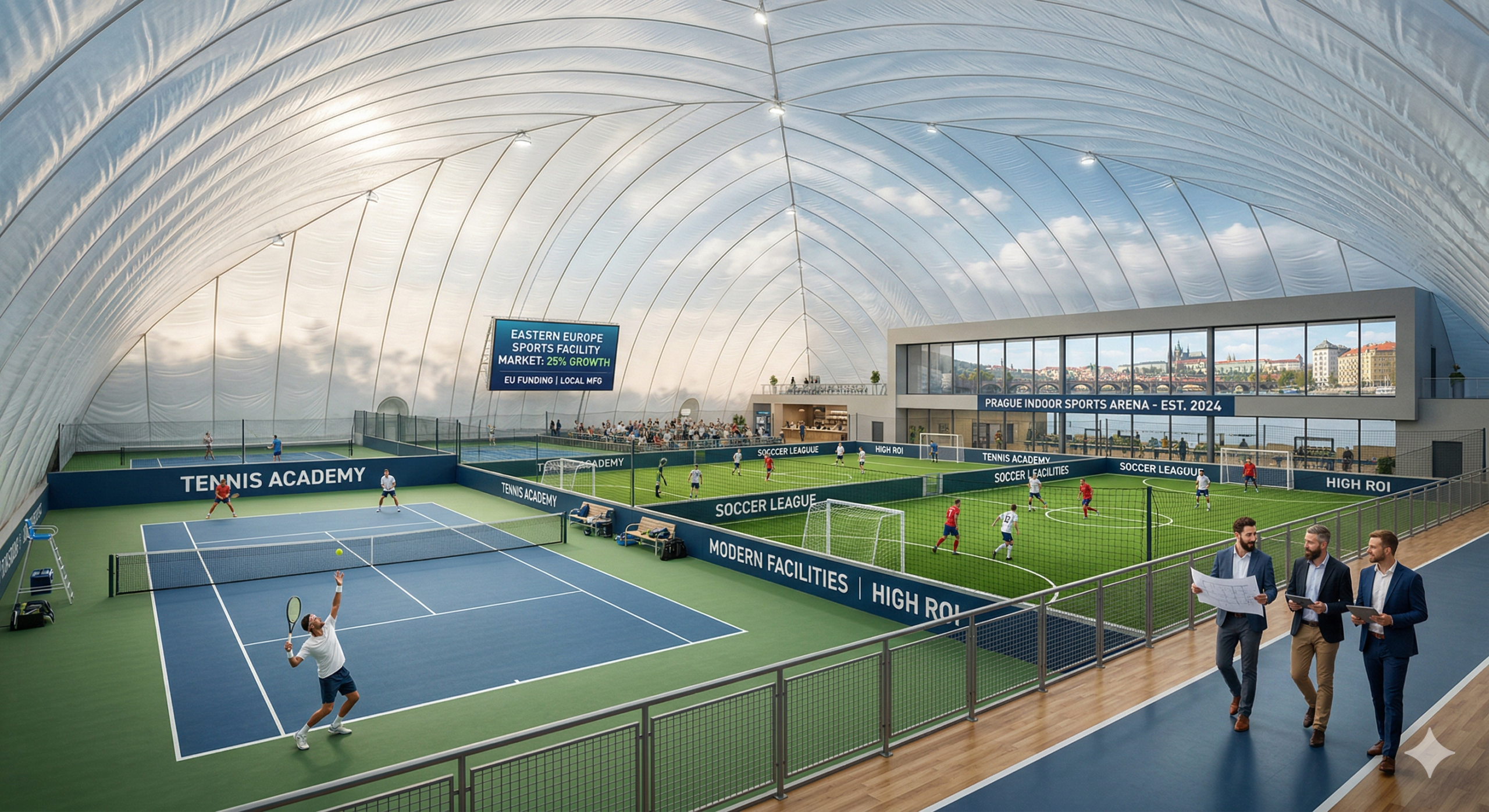
    You’re looking at a sports facility goldmine that most investors haven’t discovered yet. Eastern Europe’s 120+ untapped markets offer construction costs that’ll slash your budget by up to 40% compared to Western alternatives. Poland’s already proven the model works with 80+ profitable facilities, while the Czech Republic and Hungary sit virtually unexplored. Here’s what makes this opportunity different from every other sports investment you’ve considered.

    Eastern Europe Sports Facilities: 120+ Markets With 25% Growth Potential

    Across Eastern Europe’s expanding landscape, you’ll discover over 120 distinct sports facility markets experiencing unprecedented growth, with industry analysts projecting a robust 25% expansion potential over the next five years.

    Poland leads this transformation with 80+ facilities, while Czech Republic and Hungary rapidly develop their infrastructure. You’ll find costs running 20-40% lower than Western European alternatives, making eastern Europe air dome installations increasingly attractive.

    Soccer and tennis dominate facility construction, with typical structures spanning 1,500-2,500 square meters.

    EU funding streams support municipal projects, accelerating Poland sports facility development across the region. Czech sports dome projects benefit from emerging local manufacturing capabilities, reducing import dependencies.

    This combination of affordability, government support, and growing demand positions Eastern Europe as Europe’s most dynamic sports facility market.

    Poland’s 80+ Facilities Prove Market Viability And Profitability

    Poland’s impressive portfolio of 80+ operational sports facilities demonstrates clear market viability, with facility owners reporting consistent profitability across soccer domes, tennis centers, and multi-sport complexes. You’ll find these eastern european indoor sports facilities generating steady revenue streams year-round, capitalizing on weather-independent operations and diverse programming opportunities.

    Facility Type Average ROI Primary Revenue
    Soccer Domes 15-22% League rentals, camps
    Tennis Centers 12-18% Memberships, lessons
    Multi-Sport 18-25% Corporate events, parties

    Poland’s success stems from strategic location selection, community partnerships, and competitive pricing that’s 20-40% below Western European rates. You can replicate this model by focusing on high-demand sports, securing municipal support, and leveraging EU funding opportunities that many Polish operators have utilized effectively.

    Czech Republic And Hungary Offer 40+ Untapped Sports Facility Markets

    Beyond Poland’s established market, Czech Republic and Hungary present over 40 underserved cities where you’ll discover minimal competition for indoor sports facilities.

    These developing markets offer first-mover advantages with construction costs 20-40% below Western European standards.

    You’ll find strong government support through EU municipal funding programs specifically targeting sports infrastructure development.

    Both countries show rising demand for soccer and tennis facilities, with typical projects ranging 1,500-2,500 square meters.

    Key market opportunities include:

    • Prague and Budapest suburbs – Growing populations with limited indoor sports access
    • Secondary cities – Untapped markets of 50,000+ residents lacking modern facilities
    • University partnerships – Academic institutions seeking private facility management
    • Corporate wellness – Companies investing in employee recreation centers

    Local manufacturing capabilities are emerging, reducing equipment and maintenance costs considerably.

    Sports Facility Construction Costs 20-40% Lower Than Western Europe

    Construction costs in Eastern Europe deliver substantial savings that’ll directly impact your project’s bottom line.

    You’ll find construction expenses running 20-40% lower than comparable Western European projects, creating significant opportunities for budget optimization or enhanced facility features.

    These cost advantages stem from lower labor rates, reduced material costs, and competitive local contractor pricing.

    You can leverage these savings to either maximize your return on investment or reinvest the difference into premium equipment and amenities that’ll set your facility apart.

    The developing local manufacturing sector further supports cost efficiency, reducing import dependencies and transportation expenses.

    You’ll also benefit from streamlined permitting processes in many Eastern European markets, which can accelerate project timelines and reduce carrying costs during development phases.

    Why Soccer And Tennis Facilities Generate Highest ROI?

    What drives soccer and tennis facilities to deliver superior returns in Eastern European markets? You’ll find these sports dominate because they’re deeply embedded in local culture and require minimal specialized equipment compared to other sports.

    Soccer facilities generate consistent revenue through league rentals, youth programs, and tournament hosting, while tennis courts attract affluent demographics willing to pay premium rates.

    Your investment benefits from year-round usage potential, especially with covered facilities. These sports also require smaller footprints than multi-sport complexes, reducing initial capital requirements while maximizing revenue per square meter.

    • High utilization rates: Soccer and tennis maintain 60-80% booking rates during peak seasons
    • Premium pricing power: Tennis facilities command 30-50% higher hourly rates than general sports venues
    • Lower maintenance costs: Simple surfaces require less specialized upkeep than swimming pools or ice rinks
    • Flexible programming: Facilities easily accommodate leagues, lessons, camps, and private events

    EU Municipal Funding Covers Up To 60% Of Project Costs

    The financial advantage of soccer and tennis facilities becomes even more compelling when you factor in available EU municipal funding. You can access grants covering up to 60% of your project costs through various European Union programs designed to support municipal sports infrastructure development.

    These funding opportunities are specifically structured to help Eastern European municipalities bridge the gap between community needs and budget constraints. You’ll find that soccer and tennis facilities qualify for higher funding percentages because they serve broader demographic groups and promote public health initiatives.

    The application process requires detailed project proposals demonstrating community impact, but the potential savings are substantial.

    With construction costs already 20-40% lower than Western Europe, combined with EU funding, your actual investment becomes remarkably affordable while generating consistent returns.

    Most Profitable Facilities Range 1,500-2,500 Square Meters

    Ideal profitability emerges when you design facilities between 1,500-2,500 square meters (16,146-26,910 square feet), striking the perfect balance between operational efficiency and revenue generation capacity.

    This size range maximizes your return on investment across Eastern Europe’s developing markets.

    You’ll achieve maximum space utilization while keeping maintenance costs manageable. Facilities in this range support multiple revenue streams without overwhelming operational complexity.

    The sweet spot accommodates soccer and tennis programming – the region’s most popular sports – while maintaining efficient staffing levels.

    • Lower operational overhead – Fewer staff members needed compared to larger complexes
    • Multi-sport flexibility – Accommodates various sports programming throughout the day
    • Faster break-even timeline – Typically 3-4 years versus 5-7 years for larger facilities
    • Municipal partnership appeal – Perfect size for EU funding eligibility requirements

    Local Sports Equipment Manufacturing Reduces Operating Costs By 15%

    You’ll benefit from emerging local manufacturing that’s cutting equipment costs by 15% across the region.

    The developing supply chains in Poland, Czech Republic, and Hungary mean you’re getting faster deliveries and reduced shipping expenses compared to importing from Western suppliers.

    You can maintain quality standards while accessing competitive pricing through these regional manufacturers who understand the specific needs of Eastern European sports facilities.

    Regional Manufacturing Cost Benefits

    As Eastern Europe’s manufacturing sector continues to mature, you’ll find that locally-produced sports equipment can slash your facility’s operating costs by up to 15% compared to importing from traditional suppliers.

    This cost advantage stems from reduced transportation expenses, shorter delivery times, and competitive labor rates across Poland, Czech Republic, and Hungary.

    You’ll benefit from faster replacement cycles and reduced inventory holding costs when sourcing regionally.

    Local manufacturers understand specific climate requirements and usage patterns, creating products better suited for Eastern European conditions.

    • Eliminate lengthy shipping delays from distant suppliers
    • Access customized equipment designs for local sports preferences
    • Reduce currency exchange risks with local procurement
    • Leverage growing quality standards matching Western European specifications

    Regional sourcing transforms your facility’s cost structure while supporting local economic development.

    Local Supply Chain Advantages

    When establishing supply chains within Eastern Europe’s sports facility market, you can capitalize on shortened distribution networks that connect manufacturers directly to your facility’s doorstep. Poland’s 80+ facilities have sparked local manufacturing growth, creating robust partnerships between equipment producers and sports complexes.

    You’ll cut transportation costs dramatically when sourcing tennis nets, soccer goals, and maintenance equipment from nearby suppliers. Czech Republic and Hungary are developing their own manufacturing capabilities, expanding your options for competitive pricing.

    Supply Chain Element Cost Reduction
    Transportation 25-30%
    Equipment Procurement 15-20%
    Maintenance Parts 20-25%
    Installation Services 10-15%
    Emergency Repairs 30-35%

    This proximity translates into faster delivery times, reduced inventory costs, and stronger vendor relationships that’ll keep your facility running smoothly while maximizing profitability.

    Equipment Quality Standards

    Although cost savings drive initial equipment sourcing decisions, maintaining rigorous quality standards secures your Eastern European sports facility won’t compromise performance for affordability.

    Poland’s manufacturing sector leads the region with ISO-certified production facilities that meet international soccer and tennis equipment specifications. You’ll find Czech and Hungarian suppliers increasingly adopting EU quality frameworks, guaranteeing consistency across your facility operations.

    Local manufacturers now produce equipment matching Western European standards while delivering 15% lower operating costs through reduced shipping expenses and faster replacement cycles. This regional quality evolution means you can source reliably without importing from distant markets.

    • CE certification compliance guarantees all equipment meets European safety regulations
    • Local quality testing laboratories provide faster certification turnaround times
    • Regional suppliers offer specialized soccer goal and tennis court surface expertise
    • Municipal procurement contracts often include quality guarantee clauses
  • Global Sports Dome Market Trends 2026

    Global Sports Dome Market Trends 2026

    You’re witnessing a transformation in how communities approach year-round sports facilities, and the numbers tell a compelling story. The global sports dome market isn’t just growing—it’s accelerating toward a $2.8 billion valuation by 2026, driven by climate unpredictability and technological breakthroughs that weren’t viable just five years ago. What’s particularly striking is how certain regions are capitalizing on this trend while others lag behind, creating unexpected opportunities for savvy investors who understand the underlying forces at play.

    Sports Dome Market Size Hits $2.8 Billion By 2026

    The global sports dome market is accelerating toward a $2.8 billion valuation by 2026, driven by an impressive annual growth rate of 8-12%.

    You’ll find this sports facility market growth stems from increasing climate concerns forcing year-round indoor alternatives, rising sports participation rates, and expanding commercial opportunities within covered facilities.

    The international air dome market benefits from technological advances in energy-efficient materials and smart building integration systems.

    You’re seeing significant expansion in emerging markets, particularly Asia and the Middle East, where extreme weather conditions make climate-controlled sports environments essential.

    Multi-sport designs are becoming standard, allowing facilities to maximize revenue streams.

    Solar integration and IoT monitoring systems are reducing operational costs, making these investments more attractive to developers and municipalities seeking sustainable sports infrastructure solutions.

    Why Asia-Pacific Leads Global Sports Dome Growth?

    As urbanization accelerates across Asia-Pacific, you’re witnessing the region capture the largest share of global sports dome installations due to its unique combination of extreme weather patterns, rapid economic development, and massive population density.

    Countries like China, Japan, and South Korea are driving this expansion with government investments in sports infrastructure and hosting major international events.

    You’ll find that monsoons, typhoons, and air quality issues make indoor facilities essential year-round.

    The region’s tech-savvy approach embraces worldwide indoor facility trends like IoT monitoring and smart building integration.

    Rising disposable incomes fuel demand for premium sports experiences, while limited urban space makes multi-sport domes highly attractive.

    Asia-Pacific’s 8-12% annual growth rate notably outpaces other regions, positioning it as the market’s primary growth engine.

    Smart Sports Dome Technology Reduces Operating Costs 40

    You’ll cut your sports dome operating costs by up to 40% when you integrate smart technology systems.

    IoT monitoring sensors track everything from temperature and humidity to equipment performance, giving you real-time data to optimize facility operations.

    Energy management solutions automatically adjust lighting, heating, and ventilation based on occupancy and usage patterns, eliminating waste and maximizing efficiency.

    IoT Monitoring Systems

    While traditional sports domes rely on manual monitoring and reactive maintenance, IoT systems transform facility management through real-time data collection and automated responses.

    You’ll gain instant visibility into temperature, humidity, air quality, and energy consumption across your entire facility. Smart sensors continuously track HVAC performance, lighting usage, and structural integrity, alerting you to potential issues before they become costly problems.

    You can remotely adjust climate controls, optimize energy distribution, and schedule maintenance based on actual usage patterns rather than guesswork.

    IoT platforms integrate seamlessly with existing building management systems, providing dashboards that display key performance metrics in real-time. This data-driven approach enables predictive maintenance strategies, reducing unexpected equipment failures by up to 60% while extending asset lifecycles considerably.

    Energy Management Solutions

    Smart energy management systems can slash your sports dome’s operating costs by up to 40% through intelligent automation and real-time enhancement.

    These systems integrate with your existing HVAC, lighting, and equipment infrastructure to create dynamic energy profiles that adapt to usage patterns and environmental conditions.

    You’ll benefit from predictive algorithms that anticipate peak demand periods and automatically adjust power consumption during off-peak hours.

    Smart thermostats maintain ideal playing conditions while minimizing energy waste, and LED lighting systems respond to natural light levels and occupancy sensors.

    Advanced energy management platforms provide detailed analytics showing your facility’s consumption patterns, identifying inefficiencies, and recommending improvements.

    Many systems offer demand response capabilities, allowing you to participate in utility programs that provide financial incentives for reducing energy usage during grid stress periods.

    IoT And Solar Integration Transform Sports Dome Performance

    You’ll find that modern sports domes now combine IoT sensors with solar panels to create intelligent facilities that monitor everything from temperature to energy consumption in real-time.

    These smart energy management systems automatically adjust lighting, ventilation, and heating based on usage patterns and weather conditions, dramatically cutting operational expenses.

    You’re seeing facilities generate their own sustainable power while simultaneously tracking performance metrics that optimize both energy efficiency and user experience.

    Smart Energy Management Systems

    As energy costs continue climbing worldwide, sports dome operators are turning to intelligent management systems that merge IoT sensors with solar technology to slash operational expenses by up to 40%.

    You’ll find these systems automatically adjust lighting, heating, and ventilation based on real-time occupancy data and weather conditions.

    Smart controllers enhance solar panel output while managing battery storage to maximize self-consumption during peak usage hours.

    You’re seeing predictive analytics that anticipate maintenance needs before equipment failures occur, reducing downtime and repair costs.

    These integrated platforms provide mobile dashboards where you can monitor energy consumption, indoor air quality, and system performance remotely.

    Advanced algorithms learn usage patterns and automatically schedule energy-intensive operations during off-peak hours, delivering substantial savings while maintaining ideal playing conditions.

    Real-Time Performance Monitoring

    How effectively can you track your sports dome’s performance across dozens of interconnected systems simultaneously? Modern IoT sensors now deliver thorough real-time monitoring that transforms facility management.

    You’ll receive instant data on energy consumption, HVAC efficiency, lighting performance, and structural conditions through centralized dashboards.

    Smart monitoring systems detect equipment failures before they occur, reducing maintenance costs by 25-30%. You can optimize energy usage by tracking solar panel output against consumption patterns, automatically adjusting lighting and climate controls.

    Temperature sensors throughout your dome guarantee consistent playing conditions while minimizing energy waste.

    Advanced analytics help you identify peak usage periods, enabling dynamic pricing strategies and resource allocation.

    Integration with mobile apps allows remote monitoring, letting you manage multiple facilities efficiently.

    This data-driven approach maximizes operational efficiency while enhancing user experience across your sports dome network.

    Sustainable Power Generation

    While traditional sports facilities drain massive amounts of electricity from the grid, modern sports domes generate their own clean energy through integrated solar systems that can offset 60-80% of operational costs.

    You’ll find these installations feature flexible photovoltaic panels that conform to dome curvatures, maximizing energy capture throughout the day.

    Smart inverters automatically switch between solar power, battery storage, and grid electricity based on real-time demand. You can monitor energy production through IoT dashboards that track performance metrics and predict maintenance needs.

    Advanced systems include micro-inverters for individual panel optimization and battery banks for peak-hour energy storage.

    This integration transforms sports domes from energy consumers into near-neutral facilities, reducing operational expenses while supporting sustainability goals that attract environmentally conscious users and sponsors.

    Multi-Sport Design Features Maximize Revenue Streams

    Modern sports dome designs increasingly incorporate flexible layouts that accommodate multiple activities, enabling facility owners to maximize utilization rates and diversify revenue streams throughout the year.

    You’ll find removable court lines, adjustable netting systems, and modular flooring that transform basketball courts into soccer fields, tennis courts, or event spaces within hours.

    Smart scheduling systems help you optimize bookings across different sports and activities. You can host youth leagues in the morning, adult recreational games in the evening, and corporate events on weekends.

    Many facilities generate additional revenue through fitness classes, birthday parties, summer camps, and tournaments.

    Convertible spaces also attract long-term rental agreements with schools and sports organizations. This flexibility reduces seasonal revenue fluctuations while maximizing your facility’s earning potential year-round.

    Climate-Controlled Sports Domes Replace Outdoor Venues

    As extreme weather events become more frequent and unpredictable, you’re seeing sports facilities shift from traditional outdoor venues to climate-controlled domes that guarantee consistent playing conditions year-round. You’ll find these enclosed structures offering precise temperature control, humidity management, and protection from rain, snow, and extreme heat.

    Weather Challenge Outdoor Impact Dome Solution
    Rain/Snow Cancellations Uninterrupted play
    Extreme Heat Player safety risks Ideal 68-72°F
    High Winds Equipment disruption Stable environment
    UV Exposure Health concerns Filtered lighting
    Humidity Performance decline Controlled 40-60%

    You’re investing in facilities that eliminate weather-related cancellations while extending playing seasons. These domes maintain consistent air quality and lighting, creating professional-grade conditions that attract tournaments and boost revenue streams through reliable scheduling.

    Commercial Sports Dome Investment Returns In 2026

    Since sports dome facilities generate multiple revenue streams simultaneously, you’re looking at impressive investment returns averaging 12-18% annually by 2026.

    Your dome can host youth leagues, adult recreation, tournaments, corporate events, and birthday parties throughout the week. Smart operators you’ll compete with are maximizing off-peak hours through fitness classes, summer camps, and equipment rentals.

    You’ll see faster payback periods in high-density markets where outdoor field availability is limited.

    Energy-efficient designs with solar integration reduce your operational costs by 30-40%, boosting profitability. Multi-sport configurations let you capture diverse customer segments year-round.

    The strongest returns come from facilities offering premium amenities like climate control, LED lighting, and digital booking systems.

    You’re fundamentally creating a weather-proof sports entertainment hub that operates 365 days annually.

    While investment returns drive dome ownership decisions, construction innovations are revolutionizing how these facilities get built and perform. You’re seeing smart building integration become standard, with IoT sensors monitoring temperature, humidity, and energy consumption in real-time. Solar panel integration now reduces operating costs by 30-40% annually.

    Traditional Construction Modern Innovation
    Single-sport design Multi-sport adaptability
    Basic HVAC systems Smart climate control
    Standard materials Energy-efficient composites

    Multi-sport designs maximize your facility’s revenue potential, allowing basketball courts to convert into soccer fields within hours. Energy-efficient materials and automated systems reduce maintenance costs while improving user experience. These construction trends guarantee your dome remains competitive as the market grows 8-12% annually through 2026.

  • Latin America Indoor Sports Market

    Latin America Indoor Sports Market

    You’re looking at a $2.3 billion market that’s quietly reshaping how Latin America approaches indoor sports infrastructure. While Brazil and Mexico capture most headlines with their massive facility expansions, you’ll find the real story lies in the operational advantages that make this region 10-30% cheaper than US markets. But there’s a catch that could derail your investment plans—one that most analysts aren’t discussing yet.

    Brazil and Mexico Drive $2.3B Indoor Sports Market Growth

    Two powerhouse economies are reshaping Latin America’s indoor sports landscape, with Brazil and Mexico commanding the lion’s share of a $2.3 billion market that’s expanding rapidly across the region.

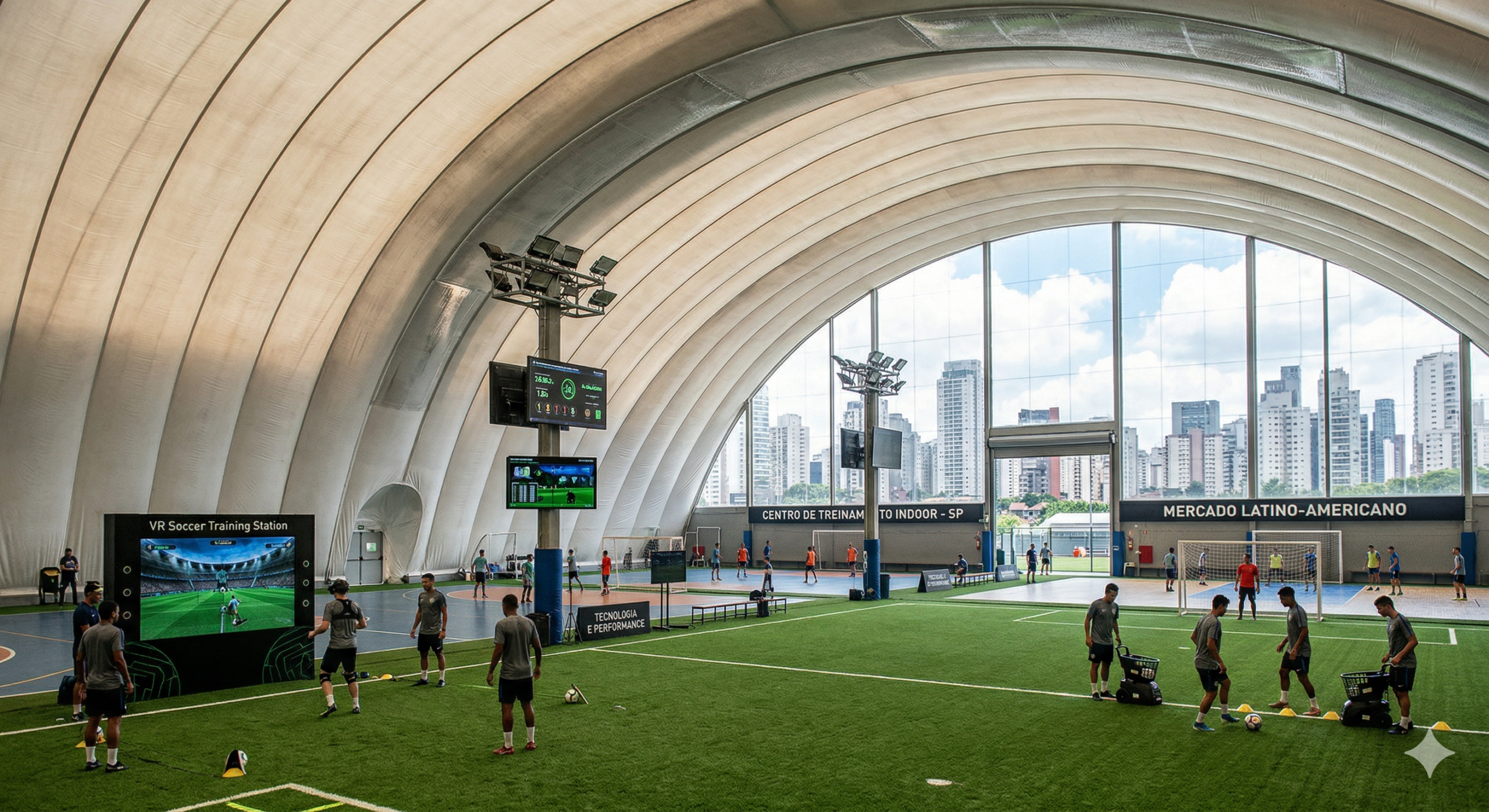
    You’ll find Brazil’s indoor facility infrastructure leading the charge, driven by the country’s massive population and established sports culture. Soccer training centers and multi-sport complexes are proliferating in major cities like São Paulo and Rio de Janeiro.

    Meanwhile, Mexico’s sports dome installations are experiencing unprecedented growth, particularly in northern states where cross-border business opportunities flourish.

    The south america air dome segment represents the fastest-growing category, offering cost-effective solutions for year-round training despite varied climates.

    You’re witnessing 10-30% lower operational costs compared to US markets, making indoor sports facilities increasingly attractive investments throughout the region.

    Climate Demands Create Year-Round Indoor Sports Facility Needs

    While temperatures across Latin America range dramatically from 15-35°C (59-95°F), you’re seeing indoor sports facilities become essential infrastructure rather than luxury amenities.

    In tropical regions, you’ll need robust cooling systems and humidity control to protect athletes from oppressive heat and sudden downpours. Southern countries require adaptable climate systems managing both seasonal temperature swings and unpredictable weather patterns.

    You’re witnessing increased demand for Latin America sports dome facilities that provide consistent training environments year-round. These controlled spaces eliminate weather-related cancellations and offer reliable conditions for professional development.

    Whether you’re dealing with Brazil’s humid summers or Argentina’s variable seasons, indoor facilities guarantee uninterrupted athletic programs. The climate variability isn’t just inconvenient—it’s driving fundamental infrastructure needs across the region’s expanding sports industry.

    Soccer Training Centers Lead Infrastructure Investment Wave

    You’ll find that soccer training centers across Latin America are driving the largest wave of indoor sports facility construction, with Brazil and Mexico leading massive infrastructure projects.

    Your facility design choices now focus on multi-purpose synthetic turf systems, advanced ventilation for tropical climates, and modular spaces that accommodate both youth academies and professional training.

    When you’re planning equipment investments, you’re prioritizing climate-controlled environments, high-quality artificial surfaces, and video analysis technology that can withstand the region’s humidity and temperature variations.

    Several cutting-edge soccer training centers across Latin America are setting new benchmarks for indoor sports facility design, with Brazil’s São Paulo and Mexico City leading a $2.3 billion infrastructure investment wave.

    You’ll find these modern facilities incorporating climate-adaptive features that address the region’s diverse weather conditions, from tropical humidity to temperate variations. Smart ventilation systems maintain ideal temperatures between 20-24°C while reducing energy costs by 25%.

    Key design trends transforming Latin American indoor sports facilities include:

    1. Multi-surface training areas with convertible artificial turf systems
    2. Advanced LED lighting refined for broadcast and player performance
    3. Integrated recovery zones featuring hydrotherapy and cryotherapy equipment
    4. Digital performance tracking with embedded sensor technology

    These innovations position Latin America’s facilities competitively against European standards while leveraging 15-20% lower construction costs.

    Equipment Investment Priorities

    Beyond architectural innovations, Latin American soccer training centers are channeling significant capital into specialized equipment that maximizes training efficiency and athlete development.

    You’ll find priority investments focusing on high-tech ball machines, precision passing systems, and goalkeeper training apparatus that simulate match conditions. Speed and agility equipment dominates purchasing decisions, with ladder systems, cone sets, and reaction training tools leading the way.

    Video analysis systems receive substantial budget allocations, enabling coaches to provide real-time feedback and tactical instruction.

    You’re seeing increased demand for portable goals, rebounders, and specialized turf surfaces that withstand intensive daily use. Weather-resistant equipment proves essential given the region’s varied climate conditions.

    Smart investment strategies emphasize durability and multi-functionality, helping facilities maximize their equipment ROI while delivering professional-grade training experiences.

    Equipment Costs Drop 30% Below US Market Rates

    While US indoor sports facilities grapple with rising equipment costs, Latin American markets offer compelling alternatives with prices running 10-30% below North American rates.

    You’ll discover significant savings across essential equipment categories, though you must factor in import duties and currency fluctuations that can impact your bottom line.

    Brazil’s manufacturing capabilities drive down costs for basic training equipment, while Mexico’s proximity to US suppliers creates competitive pricing structures.

    Consider these cost-saving opportunities:

    1. Basic training equipment – 25-30% savings on mats, weights, and fitness machines
    2. Soccer/football gear – 20-25% reductions due to local manufacturing
    3. Court surfaces – 15-20% lower installation costs
    4. Climate control systems – Regional suppliers offer 10-15% savings

    You’ll maximize returns by partnering with established local distributors who understand regulatory requirements.

    Currency Shifts and Import Taxes Squeeze Profit Margins

    Although equipment costs appear attractive in Latin American markets, currency volatility and import duties can quickly erode your expected savings.

    You’ll face unpredictable exchange rate fluctuations that can swing 10-20% within months, turning profitable deals into losses overnight. Import taxes compound these challenges, with some countries imposing duties ranging from 15-35% on sports equipment.

    Brazil’s complex tax structure includes federal, state, and municipal levies that stack up quickly.

    Mexico’s NAFTA benefits help reduce some import costs, but peso volatility remains a concern.

    Argentina’s currency controls and high inflation create additional complications for equipment procurement.

    You’ll need to factor hedging costs and longer payment terms into your pricing strategy.

    Consider partnering with local distributors who understand regulatory requirements and can navigate customs procedures more efficiently than direct imports.

    Virtual Reality and Biometrics Upgrade Training Programs

    You’ll find VR soccer training systems transforming how Latin American facilities develop player skills, offering immersive experiences that simulate real match conditions without requiring full-sized fields.

    Your training programs can now integrate biometric performance analytics to track heart rate, movement patterns, and decision-making speed in real-time.

    You’re able to implement these advanced technologies at a fraction of traditional costs, making cutting-edge training accessible to smaller facilities across the region.

    VR Soccer Training Systems

    Several Latin American countries are implementing VR soccer training systems that combine virtual reality environments with biometric monitoring to enhance player development.

    You’ll find these technologies particularly valuable in Brazil, Mexico, and Argentina where football culture drives innovation adoption.

    These systems offer significant advantages for your training programs:

    1. Real-time performance analytics – Track player movements, reaction times, and decision-making patterns.
    2. Climate-independent training – Practice effectively regardless of extreme heat or tropical weather conditions.
    3. Cost-effective scalability – Reduce facility overhead while training multiple players simultaneously.
    4. Injury prevention monitoring – Use biometric data to identify fatigue levels and prevent overexertion.

    You’ll benefit from lower implementation costs compared to US markets, though you should prepare for potential import duty challenges when sourcing VR equipment internationally.

    Biometric Performance Analytics

    While traditional coaching relies on observation and intuition, biometric performance analytics transform how you evaluate and develop athletes across Latin America’s diverse sporting landscape.

    You’ll capture real-time data on heart rate variability, movement patterns, and muscle activation through wearable sensors that cost 10-30% less than US equivalents in countries like Brazil and Mexico.

    These systems help you optimize training intensity for Latin America’s challenging climate conditions, monitoring hydration levels and core temperature in 15-35°C environments.

    You can identify injury risks before they occur and customize recovery protocols for individual athletes.

    However, you’ll face import duties on specialized equipment and currency fluctuations affecting technology costs.

    The growing soccer markets in Mexico and established programs in Argentina present significant opportunities for implementing thorough biometric monitoring systems.

    Cost-Effective Technology Integration

    Since budget constraints often limit Latin American sports facilities from adopting cutting-edge technology, integrating virtual reality with existing biometric systems creates a powerful yet affordable training enhancement.

    You’ll find that combining these technologies maximizes your investment while delivering professional-grade training experiences.

    Smart integration strategies help you overcome financial barriers:

    1. Phased Implementation – Start with basic VR headsets and gradually add biometric sensors as budgets allow.
    2. Shared Equipment Programs – Partner with neighboring facilities to split costs and maintenance expenses.
    3. Local Developer Partnerships – Collaborate with regional tech companies for customized, cost-effective solutions.
    4. Government Sports Grants – Access available funding programs specifically designed for athletic facility modernization.

    This approach lets you compete with world-class training standards without breaking your budget.