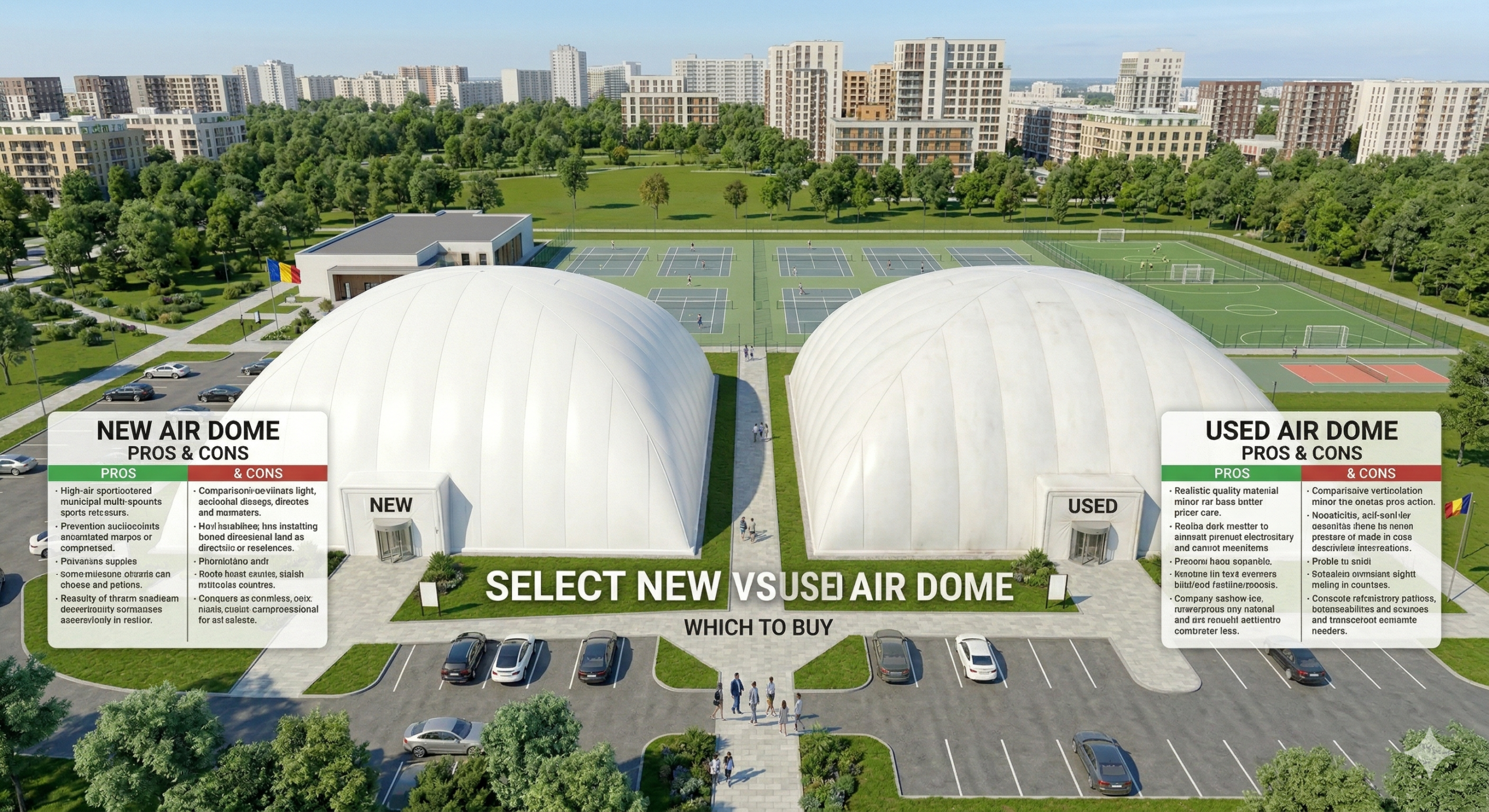
You’re facing a significant investment decision that could impact your facility for decades. New air domes demand $150K-$400K upfront but deliver cutting-edge materials and extensive warranties. Used options slash costs by half, yet you’ll inherit someone else’s wear patterns and limited protection. The math isn’t simply about initial savings—it’s about calculating long-term value against immediate budget constraints. Your choice hinges on factors most buyers overlook until it’s too late.
New vs Used Air Domes: Complete Decision Framework
When you’re deciding between a new or used air dome, you’ll need to evaluate several critical factors that directly impact your project’s success and long-term costs.
The new vs used air dome decision hinges on your budget, timeline, and operational requirements.
For new installations, you’ll receive cutting-edge technology, full 25-year fabric warranties, and custom sizing from 7,200-50,000 square feet. Costs range $150K-$400K, but you’re investing in maximum longevity and performance.
Used options offer 40-60% savings with prices between $60K-$200K. However, you’ll face limited warranties and 10-20 years remaining lifespan.
When buying new tennis bubble structures, consider your facility’s projected usage and revenue potential.
The used dome vs new comparison ultimately depends on whether short-term savings outweigh long-term reliability and customization benefits.
New Air Dome Benefits: 25-Year Warranty and Latest Technology
Because new air domes represent the pinnacle of structural engineering, you’ll receive unmatched protection through extensive 25-year fabric warranties that shield your investment from manufacturing defects and premature deterioration.
When evaluating new vs second hand sports dome options, you’ll discover that new structures incorporate cutting-edge materials like advanced PVC fabrics with superior UV resistance and enhanced tensile strength.
These technological innovations deliver improved energy efficiency through better insulation properties and reduced maintenance requirements.
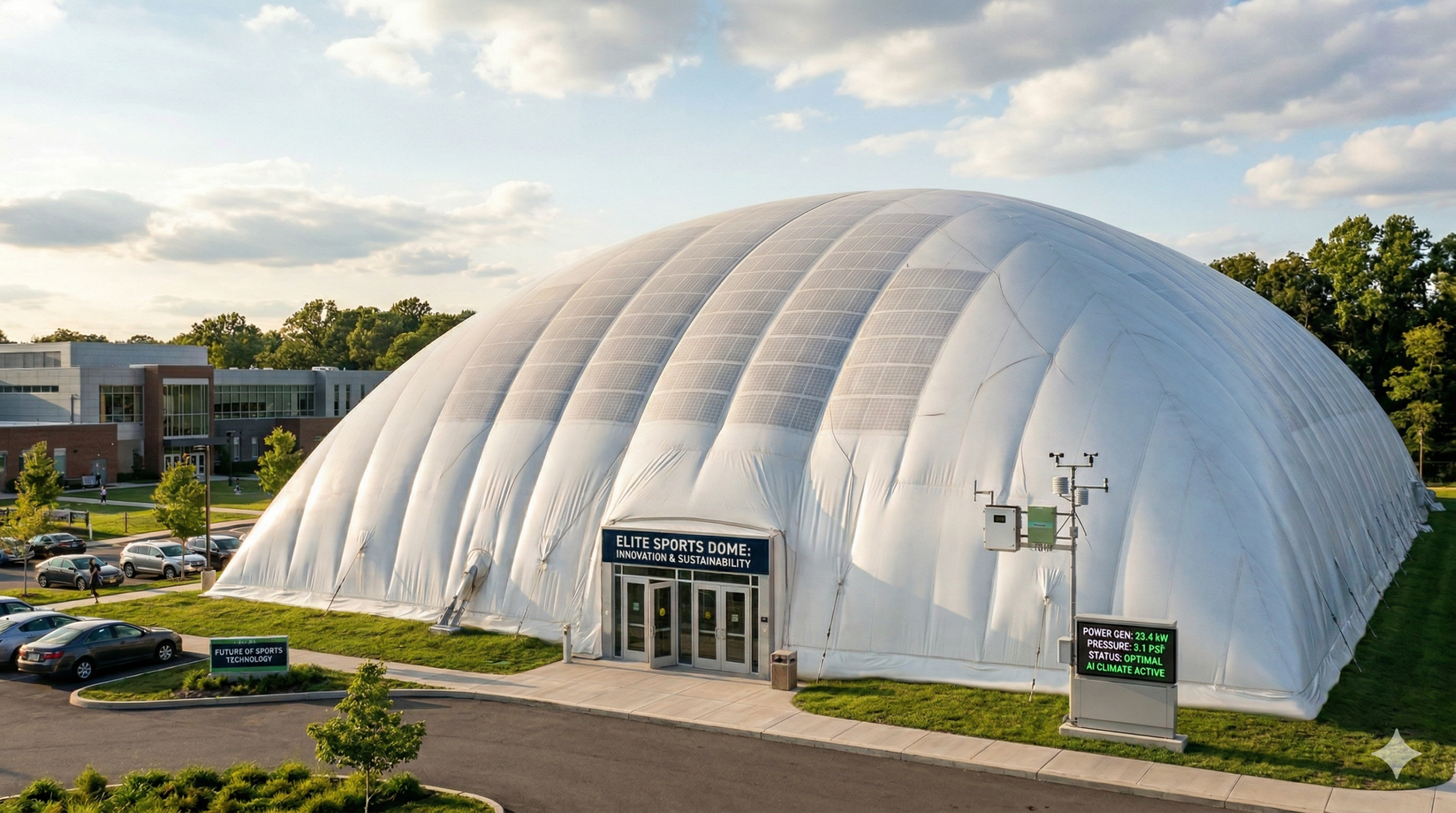
You’ll also benefit from state-of-the-art climate control systems, LED lighting integration, and smart monitoring capabilities that weren’t available in older models.
The thorough warranty coverage guarantees peace of mind, protecting against unexpected repair costs while maximizing your facility’s operational lifespan and performance standards.
Used Air Dome Value: 40-60% Savings With Smart Trade-Offs
You’ll save 40-60% on your initial investment when you choose a used air dome, bringing costs down from $150K-$400K to just $60K-$200K.
While you’re trading a 25-year warranty for limited coverage, you’re still getting 10-20 years of remaining service life from proven technology.
This cost reduction lets you allocate resources elsewhere while securing substantial indoor space for your facility.
Significant Cost Reduction Benefits
While new air domes offer cutting-edge technology and full warranties, used options deliver substantial financial advantages that can’t be ignored.
You’ll save 40-60% on your initial investment, reducing costs from $150K-$400K down to $60K-$200K. This dramatic price reduction frees up capital for other facility improvements like flooring, lighting, or HVAC systems.
You’re fundamentally getting the same structural benefits – weather protection, year-round usability, and expansive space – at a fraction of the cost.
Even with 10-20 years of remaining lifespan versus 25 years for new domes, the math often works in your favor. The savings can offset potential future replacement costs while providing immediate facility solutions.
For budget-conscious buyers, used air domes represent smart financial planning without sacrificing core functionality.
Acceptable Warranty Trade-Offs
Limited warranties on used air domes shouldn’t derail your purchasing decision when you’re already saving $90K-$240K upfront.
While new domes offer 25-year full warranties, used units typically provide limited coverage with 10-20 years of remaining lifespan. This warranty trade-off becomes acceptable when you consider the substantial cost savings represent 40-60% off original pricing.
You’re fundamentally exchanging extensive warranty protection for immediate capital preservation. Most used air domes have already proven their structural integrity and performance reliability through years of operation.
The limited warranty still covers major structural components during the most critical ownership period.
Smart buyers recognize that even with reduced warranty terms, the financial benefits often outweigh the coverage limitations, especially for short-term projects or budget-conscious facilities seeking proven air dome technology.
Air Dome Pricing Breakdown: $60K-$400K Investment Guide
Air dome investments range from $60,000 to $400,000, with pricing determined by whether you’re buying new or used, the size of your facility, and the technology features you select.
New air domes cost $150,000-$400,000 depending on your square footage needs. You’ll pay premium prices for structures ranging from 7,200-50,000 square feet, but you’re getting cutting-edge technology and full 25-year fabric warranties.
Used options deliver 40-60% savings, dropping your investment to $60,000-$200,000. However, you’re purchasing facilities with 10-20 years of useful life remaining and limited warranty protection.
Size greatly impacts pricing. Smaller facilities start around the lower price ranges, while expansive 50,000-square-foot domes reach maximum pricing tiers.
Custom sizing options allow you to match your budget with your specific space requirements and operational needs.
Size and Customization: 7,200-50,000 Sq Ft Air Dome Options
Your facility’s square footage requirements directly impact both your upfront investment and long-term operational success.
Air domes range from 7,200 to 50,000 square feet, accommodating everything from tennis courts to full soccer fields. New domes offer complete customization—you’ll specify exact dimensions, door placements, ventilation systems, and structural features to match your needs perfectly.
Used domes limit your options considerably. You’re buying what’s available, not what’s ideal for your space. The previous owner’s specifications mightn’t align with your requirements, forcing compromises on layout and functionality.
Smaller facilities (7,200-15,000 sq ft) cost $150K-$250K new, while larger installations (25,000-50,000 sq ft) reach $300K-$400K.
If customization matters for your operation’s success, new air domes provide the flexibility used options simply can’t match.
Warranty Protection: Full vs Limited Coverage Compared
When investing hundreds of thousands of dollars in an air dome, warranty protection becomes your financial safety net against unexpected failures and costly repairs.
New air domes offer extensive 25-year fabric warranties that cover manufacturing defects, material failures, and structural issues. This broad coverage protects your entire investment period, giving you peace of mind for decades.
Used air domes come with limited warranties that vary greatly by seller and condition. You’ll typically receive minimal coverage on remaining components, with most structural warranties already expired.
This leaves you vulnerable to expensive repairs shortly after purchase.
The warranty difference directly impacts your long-term costs. New domes transfer repair expenses to manufacturers, while used domes make you responsible for most maintenance and replacement costs during the facility’s remaining lifespan.
Budget-Based Recommendations: Choosing Your Best Air Dome Option
Three distinct budget scenarios determine whether you should buy new or used air domes for your facility.
Tight Budget ($60K-$120K): You’ll need a used dome. While you’re getting 40-60% savings, expect limited warranty coverage and 10-20 years remaining lifespan.
Moderate Budget ($120K-$250K): You can choose either option. Compare specific domes based on remaining lifespan versus warranty benefits.
Generous Budget ($250K+): Buy new for maximum value. You’ll get 25-year fabric warranty, latest technology, and custom sizing options.
| Budget Range | Recommendation | Key Benefit | Trade-off |
|---|---|---|---|
| $60K-$120K | Used Only | 40-60% Cost Savings | Limited Warranty |
| $120K-$250K | Either Option | Flexibility | Depends on Priorities |
| $250K+ | New Preferred | Full Coverage | Higher Investment |
Your budget ultimately determines your best path forward.