Blog

  • Air Dome Cost Per Square Foot 2026

    Air Dome Cost Per Square Foot 2026

    You’ll pay between $35 to $60 per square foot for a complete air dome installation in 2026, with costs varying considerably by region and project size. Northeast installations run $45-$60 per square foot, while Southern regions cost $35-$50. Large commercial domes over 10,000 square feet achieve the best per-square-foot value, offering 50-75% savings compared to permanent structures. Foundation work adds $4-$25 per square foot, plus $20,000 in engineering fees for code compliance and structural design requirements.

    Air Dome Costs: 2026 Price Ranges Per Square Foot

    Air dome costs in 2026 typically range from $35 to $60 per square foot when you factor in complete installation packages that include fabric materials, ventilation blowers, entry doors, and basic lighting systems.

    You’ll find significant regional variations affecting your air dome cost per square foot, with Northeast installations reaching $45-$60 per square foot, while Southern regions start at $35-$50 per square foot.

    When calculating sports dome price per sq ft, you’ll save 50-75% compared to permanent facilities.

    Your project size directly impacts pricing—larger domes cost less per square foot proportionally. Structural and mechanical engineering typically adds around $20,000 to your total project cost regardless of dome size.

    Premium materials like flame-retardant membranes add $10-$25 per square foot to baseline packages.

    Use an air dome pricing calculator to estimate your specific requirements, considering local building codes and soil conditions that influence foundation expenses.

    How Air Dome Size Impacts Your Total Budget

    When planning your air dome project, size becomes the most crucial factor determining your total investment, with costs dropping dramatically as square footage increases.

    Small domes ranging from 200-850 square feet cost $50,000-$200,000 total, while large commercial installations achieve economies of scale with per-square-foot costs as low as $10-12.

    Tennis bubble square foot cost benefits greatly from larger dimensions due to fixed overhead distribution.

    Here’s how size affects your budget:

    1. Small installations (under 1,000 sq ft): Higher per-square-foot costs due to fixed manufacturing expenses
    2. Medium projects (1,000-10,000 sq ft): Moderate cost reductions with improved efficiency
    3. Large commercial domes (10,000+ sq ft): Maximum savings achieving 50-75% less than permanent structures
    4. Foundation costs: Scale proportionally with site conditions rather than dome size alone. Foundation expenses can reach approximately $350,000 for large installations like 100,000 square foot facilities.

    Fabric, HVAC, and Design Features: Material Cost Breakdown

    Your fabric selection dramatically affects your air dome’s upfront investment, with premium materials like Ferrari or Sattler membranes pushing costs from $25 to $50 per square foot compared to standard options.

    You’ll face additional decisions between single and dual-membrane configurations, where dual-layer systems increase fabric expenses but deliver better insulation and longevity.

    Your HVAC system adds another $0.50 to $1.50 per square foot annually in operational costs, with pricing variables including your local climate conditions, utility rates, and the dome’s overall size. These systems work alongside high-performance air blowers that maintain optimal structural pressure and ventilation throughout the facility.

    Premium Fabric Cost Impact

    Premium fabric selection greatly impacts your air dome’s base pricing, with costs escalating from as low as $12 per square foot for standard materials to $50 per square foot for high-performance membranes.

    Your fabric choices directly influence both upfront costs and long-term performance. Leading manufacturers like Ferrari and Sattler offer premium options that command higher prices but deliver superior durability and safety compliance.

    Key premium fabric cost factors include:

    1. Flame-retardant treatments – Essential for safety compliance but increase material expenses considerably.
    2. High light-transmission fabrics – Premium pricing while maintaining 50-75% savings over permanent construction.
    3. Double-membrane systems – Range $25-$50 per square foot for specialized applications like tennis facilities.
    4. Custom color selection – Adds premium costs beyond standard fabric offerings.

    These upgrades guarantee your structure meets enhanced performance standards. The non-conductive materials used in premium fabric buildings help maintain consistent temperatures, reducing ongoing HVAC operational expenses.

    HVAC System Pricing Variables

    HVAC systems represent the most significant operational expense beyond your initial fabric investment, with pricing variables that dramatically affect both installation and long-term costs.

    You’ll face annual utility expenses ranging from $0.50–$1.50 per square foot for heating, cooling, and lighting combined. Your total costs depend heavily on climate conditions, usage patterns, and dome size efficiency factors.

    Regional energy rates and local weather patterns create substantial pricing variations across different markets.

    You’ll find that larger domes achieve better per-square-foot efficiency, while specialized fabric types can reduce overall HVAC demands. Advanced monitoring systems help identify potential issues before they trigger automated security responses that could disrupt system operations.

    Your lighting systems contribute variable costs within this utility spectrum, depending on your specific dome specifications and operational requirements.

    System efficiency directly correlates with your fabric selection and local energy pricing structures.

    Foundation and Installation: What to Budget Beyond the Dome

    While the dome itself represents the most visible cost in your air structure project, foundation and installation expenses often surprise first-time buyers with their substantial impact on the total budget.

    You’ll need to budget for several critical components beyond the dome structure:

    1. Foundation costs – Expect $4-$25 per square foot, with concrete slabs averaging $6-$14 per square foot.
    2. Professional installation – Small domes require 1-2 days, while larger projects span multiple weeks with specialized crews.
    3. Engineering fees – Structural and mechanical engineering typically costs around $20,000 for code compliance.
    4. Site preparation and permitting – Budget $30,000-$90,000 for mid-size domes, including ground leveling and permit drawings.

    Foundation design depends heavily on soil conditions, wind codes, and frost line depth in your area.

    Air Dome Pricing: US vs European Market Comparison

    You’ll find significant price differences when comparing US and European air dome markets, with American entry-level options starting around $10-12 per square foot versus Europe’s higher baseline of €50-250 per square meter ($46-232/sq ft).

    These variations stem largely from different regulatory requirements, particularly fire safety standards and HVAC specifications that can drive costs 30-50% higher in certain regions.

    Your final project cost will depend heavily on local building codes, energy requirements, and environmental conditions that vary dramatically between these markets.

    Regional Pricing Structure Differences

    Air dome pricing structures reveal stark differences between US and European markets, with American installations typically ranging from $35-$60 per square foot while European projects cost €50-€250 per square meter (roughly $54-$270 per square foot at current exchange rates).

    You’ll encounter distinct pricing drivers in each region that markedly impact your project costs.

    Key regional factors affecting your air dome investment:

    1. Fire safety standards – US and European regulations require different material specifications and compliance measures.
    2. Inflation systems – Regional standards mandate distinct blower technologies and backup systems.
    3. HVAC requirements – Energy efficiency standards and climate considerations vary dramatically between markets.
    4. Labor costs – Installation timeframes and skilled workforce availability differ markedly across regions.

    Understanding these regional variations helps you budget accurately for your specific location.

    Regulatory Impact On Costs

    Regulatory compliance costs form the backbone of pricing differences between US and European air dome markets, with fire safety standards alone adding $10-$25 per square foot to your project budget.

    You’ll face mandatory flame-retardant membrane requirements and premium fabric certifications from Ferrari or Sattler materials to meet code standards.

    Engineering documentation demands $20,000 baseline costs regardless of location, as licensed engineers must stamp every project element for IBC and ASCE 55-16 compliance.

    Your permit drawings require structural, mechanical, and often civil engineering involvement across all 50 US states and 42 international markets.

    European standards drive stricter energy efficiency mandates, while HVAC compliance adds $180,000-$420,000 to turnkey installations.

    Material certification requirements and fabric standards create the 50-250 euros per square meter pricing structure you’ll encounter overseas.

    Market-Specific Cost Factors

    While American air dome projects typically range from $10–$50 per square foot, European markets command €50–€250 per square meter due to fundamental differences in construction standards, labor costs, and regulatory frameworks.

    You’ll encounter distinct pricing structures across markets that reflect regional priorities:

    1. Material Standards – European projects require premium fabrics like Ferrari or Sattler membranes, while US installations include flame-retardant materials within standard $10–$25 pricing.
    2. Compliance Testing – Different fire safety regulations between markets create separate cost structures for material selection and certification processes.
    3. Foundation Requirements – Geological conditions vary greatly, with European projects potentially facing different site preparation challenges than North American grade beam systems.
    4. Labor Markets – Regional wage differences and specialized installation expertise affect total project expenses across continents.

    Annual Operating Costs: Utilities and Maintenance Per Square Foot

    Beyond the initial installation investment, you’ll face ongoing operational expenses that typically range from $3–$6 per square foot annually for your air dome facility.

    Your primary costs stem from utilities, averaging $0.50–$1.50 per square foot yearly for heating, cooling, and lighting systems. Climate notably impacts these expenses, with extreme weather conditions driving higher HVAC demands.

    Maintenance remains relatively minimal at $0.10–$0.20 per square foot annually. You’ll need standard HVAC servicing and occasional fabric inspections, but air domes require less upkeep than traditional buildings.

    Larger facilities typically achieve better per-square-foot efficiency rates.

    Your actual costs depend on usage frequency, local utility rates, fabric specifications, and geographic location.

    Preventive maintenance programs help reduce emergency repairs while predictable utility rate structures enhance cost planning accuracy.

    Frequently Asked Questions

    What Permits and Approvals Are Required Before Air Dome Construction Begins?

    You’ll need building permits from your local department, which requires structural and mechanical engineering stamps costing around $20,000.

    Contact your building department early to verify they’ll accept alternative materials with professional engineer approval.

    You’ll also need seismic zone verification using ASCE 7 tools, plus water and septic permits in most counties requiring soil tests and site plans.

    Zoning compliance verification’s mandatory before construction begins.

    How Long Does Typical Air Dome Construction Take From Start to Finish?

    You’ll complete your air dome project in just a few weeks from start to finish, which is dramatically faster than traditional construction that takes months or years.

    Your timeline includes concurrent site preparation and dome production phases, followed by installation that ranges from 2-4 days for small domes to several weeks for larger, complex installations.

    This multi-phase approach maximizes efficiency and gets you operating quickly.

    Are Air Domes Covered by Standard Commercial Property Insurance Policies?

    Yes, you can get standard commercial property insurance for your air dome.

    Most insurance providers will cover air-supported structures under standard policies, including protection against fire, wind, hail, vandalism, and water damage.

    However, you’ll likely need specialized underwriting since air domes require different risk assessment than conventional buildings.

    Insurance companies treat these structures as important business investments requiring thorough coverage comparable to traditional buildings.

    What Happens to Air Dome Costs During Winter Construction Seasons?

    You’ll face higher air dome costs during winter construction, typically seeing 10-20% price increases.

    Cold weather complicates installation, requiring specialized equipment and extended labor hours.

    You’re dealing with material handling challenges, potential weather delays, and contractor scheduling premiums.

    Northern regions like the Northeast already command $45-$60/sq ft, and winter conditions push these costs even higher.

    You’ll get better pricing if you schedule installation during spring or fall seasons instead.

    Can Existing Concrete Slabs Be Used as Air Dome Foundations?

    You can potentially use existing concrete slabs as air dome foundations, but they’ll need professional evaluation first.

    Your slab must meet specific thickness, reinforcement, and anchor point requirements to handle uplift pressures.

    Most air domes require a perimeter grade beam for proper anchoring, which you might need to add.

    While using existing concrete can reduce costs by $15-25/sq ft, you’ll still need structural modifications and compatibility assessments before installation.
  • Clear Span Fabric Building Cost Guide

    Clear Span Fabric Building Cost Guide

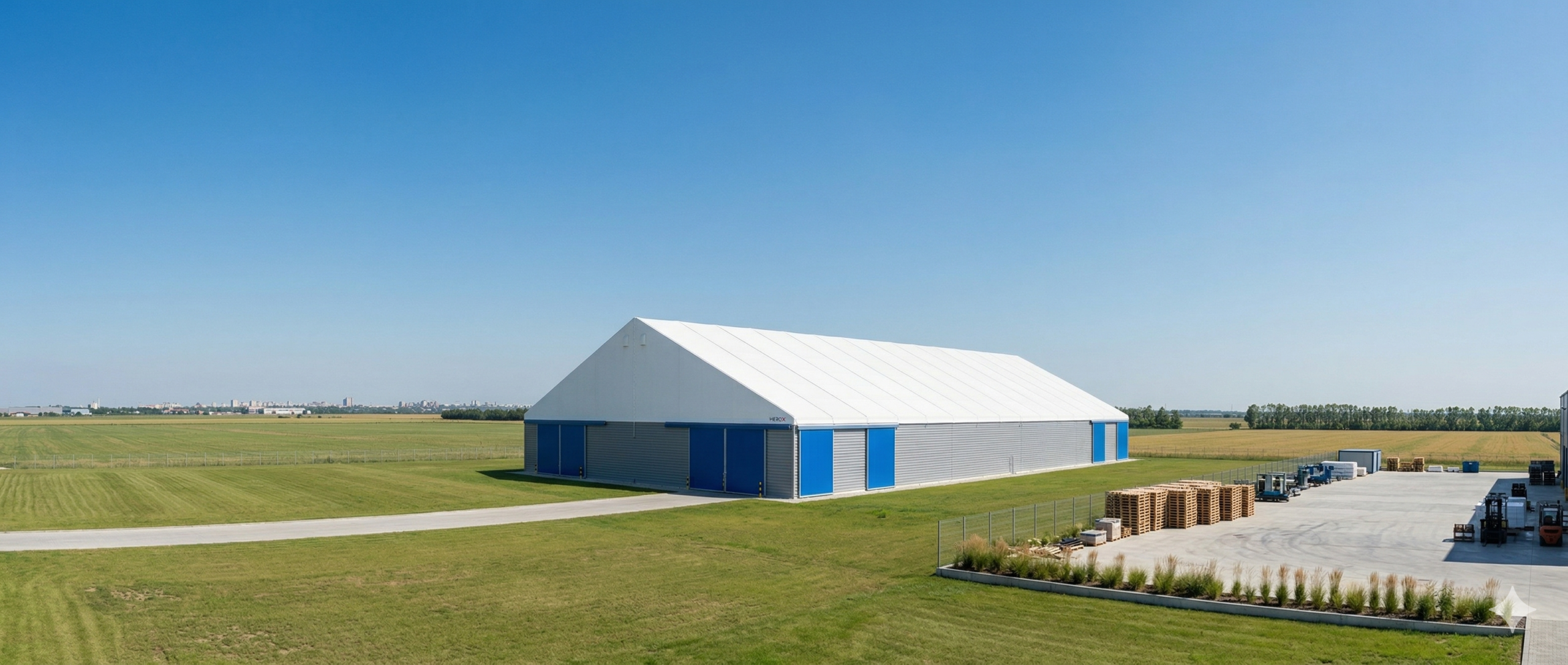
    You’ll pay between $2.99 and $30 per square foot for clear span fabric buildings, with small spans (20-40 ft) at the lower end and medium spans (40-70 ft) reaching $20-$30 per square foot. Kit-only pricing runs $15-$26 per square foot, while installation adds another $8-$12. Wider spans cost considerably more due to heavier materials, custom engineering, and complex foundations. The guide below breaks down these cost factors and compares fabric versus steel options.

    Clear Span Fabric Building Costs By Size And Width

    When planning your clear span fabric building project, understanding how size and width directly impact costs helps you make informed budget decisions.

    Clear span building cost varies greatly based on your structure’s dimensions, with smaller buildings typically costing more per square foot than larger ones.

    Small span buildings (20-40 feet wide) range from $2.99 to $30 per square foot, depending on features and complexity.

    Medium span structures (40-70 feet) offer the pricing sweet spot at $20-$30 per square foot for most commercial applications.

    Large span buildings (80+ feet) achieve the best economy of scale, with costs dropping to $8-$25 per square foot for structures over 10,000 square feet. These fabric structures can be erected at approximately 2,500 ft²/day, making them an efficient choice for projects requiring quick completion.

    Kit-only pricing runs $15-$26 per square foot, while installed costs add $8-$12 per square foot for labor and foundations.

    Why Wider Clear Spans Cost 40-70% More

    Although wider clear span buildings offer impressive column-free interiors, they’ll cost you 40-70% more than narrower alternatives due to exponentially increasing structural demands.

    The clearspan structure pricing escalates dramatically as you increase width beyond economical ranges of 40-100 feet. Here’s why your costs multiply:

    • Material requirements surge – You’ll need heavier gauge materials, with costs increasing 10-20% for every 33-foot width increase.
    • Custom engineering replaces standardized designs – Spans over 120 feet require specialized calculations and professional engineering fees.
    • Foundation systems become more complex – Wider spans concentrate greater loads, demanding deeper, more robust foundations.
    • Premium fabric materials are mandatory – Reinforced membranes cost $60-90/m² versus standard $40-60/m² options.

    These factors eliminate economies of scale, making wide-span buildings considerably more expensive per square foot. Building height also impacts structural requirements, with structural steel consumption rising by 5%-10% per meter of height increase.

    Fabric Vs Steel Buildings: Which Costs Less?

    Why do fabric buildings consistently undercut steel structures on initial costs? You’ll pay $20-$35 per square foot for fabric buildings versus $20-$45 per square foot for steel buildings including installation.

    The fabric covered building price advantage stems from lighter weight requirements and simplified foundations—often just concrete blocks instead of extensive concrete pours.

    However, steel buildings deliver superior long-term value. While fabric structures need periodic membrane replacement due to wear, steel buildings require minimal maintenance beyond occasional cleaning. Steel construction uses structural components like frames, beams, and columns that contribute to higher fabrication costs.

    Steel construction offers 50% savings compared to conventional methods over 20 years, with total costs ranging $670,000-$1.1 million.

    Choose fabric buildings for temporary setups prioritizing low upfront investment. Select steel buildings for permanent structures where you’ll maximize return on investment through durability and higher resale values.

    Installation Speed And Labor Cost Breakdown

    Beyond the upfront cost savings, clear span fabric buildings deliver remarkable speed advantages that directly impact your labor expenses.

    You’ll reduce construction timelines from 2-3 years for traditional factories to just 1 week to 1 month. This acceleration greatly lowers your wide span fabric structure cost through reduced labor overhead and faster ROI realization.

    Key labor cost benefits include:

    • Lightweight materials – Reduced erection time due to easier handling and transport
    • Fewer connection points – Simplified installation with minimal field adjustments required
    • Column-free design – Streamlined assembly without internal support complications
    • Precision manufacturing – CNC-fabricated components eliminate rework and delays

    You’ll achieve deployment in weeks versus months, with modular construction enabling staggered capacity additions. The fabric coverings also enhance insulation properties, reducing long-term operational energy costs that impact your total cost of ownership.

    Earlier facility activation means sooner revenue generation while minimizing carrying costs.

    Frequently Asked Questions

    How Long Do Clear Span Fabric Buildings Typically Last?

    Your clear span fabric building will typically last 15-30 years with proper maintenance.

    You’ll get 20-30+ years from well-engineered structures since steel frames outlast fabric covers considerably.

    The galvanized steel frame lasts 30-50 years, while fabric membranes need replacement every 15-25 years depending on quality.

    You can extend your building’s life by re-covering the original frame, potentially doubling its useful lifespan with minimal additional investment.

    What Permits and Foundation Costs Should I Budget For?

    You’ll need to budget $5-$10 per square foot for foundations, with costs varying based on soil conditions and site complexity.

    Level ground keeps you at the lower end, while sloping or soft soil can double expenses.

    Don’t forget building permits, which typically cost $500-$2,000 depending on your local jurisdiction.

    You’ll also need structural engineering plans and potentially environmental permits.

    Total permitting usually adds $2,000-$5,000 to your project budget.

    Do Clear Span Fabric Buildings Require Ongoing Maintenance Expenses?

    Yes, you’ll need to budget for ongoing maintenance expenses with clear span fabric buildings.

    You should expect approximately $0.25-$0.50 per square foot annually for maintenance costs. This includes periodic tension adjustments, structural inspections, and potential steel component care in harsh environments.

    However, fabric buildings require considerably less maintenance than traditional construction due to their resistance to rust, corrosion, and water leakage, making them cost-effective long-term.

    Can Clear Span Fabric Buildings Withstand Heavy Snow and Wind Loads?

    Yes, you can rely on clear span fabric buildings to handle severe weather conditions.

    They’ll withstand wind speeds up to 185 mph when custom-engineered and accommodate snow loads up to 100 psf.

    The galvanized steel framing flexes under pressure without failing, while the tension fabric creates a sturdy structure.

    You’ll need to work with engineers to meet your region’s specific load requirements and building codes for peak performance.

    What Financing Options Are Available for Large Clear Span Projects?

    ClearSpan offers extensive in-house financing that eliminates third-party lenders.

    You’ll get zero-interest financing for 12 months if paid in full, or rates as low as 5.99% with small down payments.

    They also provide zero-money-down options with seven-year terms and no first-year payments.

    Their internal teams coordinate financing with design and installation, streamlining your project while preserving capital for other business investments.

  • Sports Dome Maintenance Costs Annual Guide

    Sports Dome Maintenance Costs Annual Guide

    You’ll spend $15,000-$240,000 annually maintaining your sports dome, depending on its size and complexity. Small domes (5,000-10,000 sq ft) cost $15,000-$30,000 yearly, while large complexes exceed $120,000-$240,000. Electricity and utilities consume 50-70% of your operational budget, with energy costs varying considerably by region and dome size. You’ll also need dedicated reserve funds targeting 3-5% of your facility’s replacement value for major repairs and system replacements. Understanding these cost breakdowns helps you budget effectively for long-term ownership.

    What Determines Air Dome Operating Costs?

    When budgeting for an air dome facility, you’ll find that operating costs depend on five key factors that can considerably impact your annual expenses.

    Facility size serves as your primary cost driver, with larger domes requiring more materials, powerful blower systems, and increased labor for setup and takedown. You can expect $3-$6 annually per square foot for operational expenses.

    Material quality affects long-term air dome maintenance cost, as premium PVC-coated polyester reduces frequent repairs compared to lower-grade alternatives. Flame-retardant membranes and high-performance covers represent premium material investments that enhance safety and durability.

    Climate control systems create ongoing electricity expenses for blowers and HVAC equipment, varying considerably by geographic location and seasonal demands.

    Maintenance requirements include mandatory safety inspections, repairs, and preventive care programs.

    Operational infrastructure encompasses air pump monitoring, utility systems, and structural assessments that impact your baseline operational budget.

    Annual Operating Cost Ranges by Dome Size

    Understanding these cost factors helps you calculate realistic budgets, but actual expenses vary greatly based on your dome’s square footage.

    For small domes (5,000-10,000 sq ft), you’ll spend $15,000-$30,000 annually, with inflation unit maintenance costing $500-$2,000 and utilities running $2,500-$5,000 yearly.

    Medium-sized facilities (15,000-30,000 sq ft) require $45,000-$180,000 in sports dome annual expenses. Your inflation system maintenance increases to $1,500-$6,000, while utility costs jump to $7,500-$45,000 depending on seasonal HVAC demands. Establishing a monthly maintenance budget at $5,000 ensures consistent routine upkeep across all facility systems.

    Large complexes (40,000+ sq ft) exceed $120,000-$240,000 annually. You’ll face inflation unit costs of $4,000-$8,000 and utility expenses reaching $20,000-$60,000+.

    Maintenance reserves require $15,000-$30,000 yearly for continuous operations.

    Electricity and Utility Expenses (50-70% of Your Budget)

    Electricity and utility expenses will consume 50-70% of your sports dome’s operational budget, making energy management your most critical cost control priority.

    Your facility’s continuous blower systems and climate control requirements drive these substantial costs, with winter months demanding the highest expenditures.

    You’ll face monthly utility bills ranging from $2,600-$4,780 for four-court structures and $3,160-$7,410 for six-court facilities during peak winter season.

    A typical two-court dome consumes 83.2kWh daily, combining blower operation and LED lighting systems.

    Sports dome servicing costs multiply considerably based on regional electricity rates of 7.54-9.72 cents per kilowatt-hour.

    However, you’ll achieve remarkable energy efficiency compared to traditional facilities, consuming only 10-25% of conventional structures’ electricity while maintaining ideal playing conditions year-round. Professional sports facilities like Lincoln Financial Field demonstrate that solar panel installations can significantly reduce operational electricity costs, with some venues achieving energy independence on non-game days.

    Major Repair and Replacement Cost Planning

    Three critical categories define your sports dome’s major repair and replacement planning: fabric system renewals, structural component upgrades, and mechanical system overhauls. You’ll need thorough budget allocation strategies that account for cyclical replacement schedules and unexpected repairs.

    Tennis bubble upkeep costs exemplify the importance of proactive planning, as fabric deterioration can escalate rapidly without proper scheduling. Your facility requires systematic assessment protocols to identify potential issues before they become costly emergencies.

    Repair Category Replacement Cycle Budget Allocation
    Fabric System 15-20 years 25-30% of reserves
    Structural Components 20-25 years 35-40% of reserves
    HVAC Systems 12-15 years 20-25% of reserves
    Electrical Infrastructure 15-20 years 10-15% of reserves
    Emergency Contingency Ongoing 5-10% of reserves

    Establish dedicated reserve funds targeting 3-5% of your facility’s replacement value annually. Recent municipal projects demonstrate that major dome repairs can reach $75 million in total costs, emphasizing the critical importance of adequate financial planning.

    Frequently Asked Questions

    How Do Seasonal Weather Patterns Affect Annual Dome Maintenance Schedules?

    You’ll need to adjust your maintenance schedule based on your climate.

    In cold regions, you’ll focus on snow load management and heating system checks during winter months.

    Hot climates require more frequent UV coating reapplication and cooling system servicing.

    You’ll increase inspections during spring and fall shifts due to severe weather risks.

    Plan post-storm assessments after extreme events, and recalibrate air pressure systems when seasonal conditions change considerably.

    You’ll need thorough insurance coverage for your air dome facility.

    Get general liability insurance with at least $1 million per occurrence to cover visitor injuries and property damage.

    Add commercial property insurance protecting against fire, storms, and equipment damage.

    Include participant accident medical coverage since standard policies exclude athlete injuries.

    Don’t forget equipment breakdown insurance for specialized systems, and make sure your insurer maintains an A- rating or better for reliability.

    Can Dome Operating Costs Be Reduced Through Energy-Efficient Upgrades?

    Yes, you can considerably reduce your dome’s operating costs through energy-efficient upgrades.

    LED lighting systems cut electricity consumption while providing better illumination.

    Advanced HVAC systems with demand flow technology can reduce heating and cooling costs by 21%.

    Multi-layer insulation membranes minimize temperature control needs.

    Building automation systems enable precise monitoring and optimization.

    These upgrades often pay for themselves through long-term operational savings, with some facilities achieving millions in projected cost reductions.

    How Often Should Air Dome Fabric Be Professionally Inspected?

    You should have your air dome fabric professionally inspected annually or biannually by certified technicians or the manufacturer.

    While Ohio doesn’t mandate specific inspection requirements, this frequency helps detect hidden issues like micro-cracks, seam wear, and air leakage before they become costly problems.

    If you’re running year-round operations or facing harsh environmental conditions, you’ll want to increase inspection frequency to protect your investment and extend your dome’s lifespan.

    What Are Typical Staff Requirements for Dome Facility Operations?

    You’ll need 15-25 staff members depending on your dome’s size and programming.

    Core positions include a facility director, operations coordinator, and administrative assistant.

    You’ll require 2-3 facility supervisors, sports program coordinators, and customer service reps.

    Maintenance staff should include an HVAC specialist, equipment technicians, and general maintenance workers.

    Don’t forget security personnel, concessions staff, and parking attendants for events.

    Larger facilities may need additional supervisors and specialized technical staff.

  • Tension Fabric Structure vs Air Dome Cost

    Tension Fabric Structure vs Air Dome Cost

    You’ll pay 50-75% less upfront for an air dome ($80,000-$400,000) compared to a tension fabric structure ($150,000-$800,000), but the air dome’s annual operating costs of $300,000+ will quickly eliminate those initial savings. Air domes require constant blower operation costing $1,500-$3,500 monthly, while tension fabric structures need minimal maintenance with just standard inspections. Over ten years, you’re looking at potentially $2.85-$5.7 million in operational expenses for large air domes, making the total cost comparison more complex than initial pricing suggests.

    Initial Investment: Tension Fabric Vs Air Dome Construction Costs

    When comparing initial construction investments, tension fabric structures typically require $150,000-$800,000 upfront, while air domes cost considerably less at $80,000-$400,000.

    The tension fabric vs air dome cost difference stems from structural complexity and materials. Rigid frame vs inflatable cost variations reflect engineering requirements—tension systems need permanent steel frameworks, while air domes rely on continuous inflation systems.

    You’ll find tension fabric buildings range from $15-$35 per square foot installed, depending on features and complexity. Basic kits start around $10-$15 per square foot for materials only. These structures also save significantly on labor costs since fabric installation requires only 0.02-0.03 man-hours per square foot.

    Installation requires 8-20 weeks compared to air domes’ 2-6 weeks timeline.

    Permanent vs seasonal dome cost considerations affect your decision—tension structures offer long-term durability, while air domes provide cost-effective temporary solutions with lower upfront investment but higher operational dependencies.

    Why Air Domes Require $300K+ In Annual Operating Costs

    While the $300,000+ annual operating cost figure may seem intimidating, it’s important to understand this represents large-scale air dome facilities rather than a universal baseline. Your actual costs depend entirely on facility size, calculated at $3–$6 per square foot annually. A 100,000 square foot dome reaches this $300K+ threshold, but smaller facilities cost considerably less.

    In fabric structure vs bubble comparison, operating expenses differ dramatically. Air domes require continuous inflation ($0.10–$0.20 per square foot yearly) plus utilities ($0.50–$1.50 per square foot). Installation costs vary significantly, with small domes requiring as few as 4 days while larger structures may take several weeks.

    Meanwhile, tension fabric structures eliminate inflation costs entirely, reducing monthly operating expenses to $800–$2,000 versus air domes’ $1,500–$3,500.

    You’ll find smaller air dome projects, like three-court tennis facilities, typically incur $60,000–$80,000 annually when operating seasonally.

    Tension Fabric Maintenance Vs Air Dome Membrane Replacement

    Since tension fabric structures use permanent steel frameworks with replaceable membrane panels, you’ll face entirely different maintenance scenarios compared to air domes that rely on continuous pressurization and full membrane systems.

    Your tension fabric structure’s steel frame requires minimal maintenance beyond standard inspections and occasional hardware adjustments. When membrane panels need replacement, you can replace individual sections rather than entire coverings, keeping costs manageable.

    Air domes demand constant blower operation, creating $1,500-3,500 monthly operating costs versus tension fabric’s $800-2,000 range.

    You’ll face higher energy bills and mechanical system maintenance with air domes. Membrane replacement becomes more complex since the entire structure deflates during repairs. Fabric repair costs average $2 per square foot, making maintenance more predictable and affordable than traditional alternatives.

    Tension fabric structures offer superior long-term TCO through their permanent frameworks and selective panel replacement capabilities, eliminating continuous pressurization costs that plague air dome operations.

    When Air Domes Beat Tension Fabric (Size And Span Limits)

    Although tension fabric structures dominate most long-term comparisons, air domes excel in specific scenarios where maximum clear spans and rapid deployment matter more than permanent infrastructure.

    You’ll find air domes advantageous when you need immediate coverage for massive areas without structural constraints.

    Air-supported structures provide completely unobstructed interiors without internal columns or support beams, making them ideal for aircraft hangars, sports complexes, or temporary warehousing.

    You can scale height with minimal additional air supply, creating cost-effective volume expansion that’s harder to achieve with tension fabric.

    When you’re facing tight installation deadlines, air domes win with 2-6 week deployment versus 8-20 weeks for tension fabric.

    For projects requiring maximum open space with minimal structural interference, air domes deliver superior span capabilities despite higher operating costs. However, storm damage and maintenance expenses can significantly impact the total cost of ownership over time.

    Installation Speed: Why Tension Fabric Saves Months And Money

    You’ll cut your installation timeline dramatically when you choose tension fabric structures over air domes – we’re talking 8-20 weeks versus potentially longer timelines for more complex installations.

    The lightweight materials mean you won’t need heavy machinery or large crews, slashing your labor costs while crews can work efficiently in most weather conditions. Unlike air domes that require continuous inflation around the clock, tension fabric structures eliminate ongoing operational demands during construction.

    When you’re facing tight project deadlines, tension fabric’s pre-engineered components arrive ready for quick assembly, helping you open your facility months earlier than traditional construction methods.

    Lightweight Construction Advantages

    When comparing construction timelines, tension fabric structures deliver your facility in months rather than years, offering a compelling advantage over traditional building methods.

    You’ll benefit from dramatically reduced weight requirements that streamline every phase of construction.

    The lightweight design creates multiple cost-saving opportunities:

    1. Minimal foundation work – You’ll avoid extensive concrete pads and soil stabilization requirements.
    2. Reduced labor intensity – Installation requires only $0.02-$0.03 man-hours per square foot versus $0.04-$0.07 for steel sheeting.
    3. Simplified site preparation – Smaller construction footprints reduce overall site disruption and preparation costs.
    4. Faster equipment deployment – Pre-fabricated components arrive ready for assembly without heavy machinery needs.

    You’ll save thousands in equipment rental costs while meeting critical project deadlines through compressed schedules.

    Reduced Labor Requirements

    Since tension fabric structures require only $0.02 to $0.03 man-hours per square foot compared to steel sheeting’s $0.04 to $0.07 requirement, you’re looking at immediate labor cost reductions of 50-70%. This efficiency stems from prefabrication in controlled factory environments rather than extensive on-site assembly.

    Structure Type Installation Timeline Labor Requirements
    Tension Fabric 8-20 weeks Minimal on-site crew
    Air Domes 2-6 weeks 1-2 day installation
    Traditional Steel Months to years Extended skilled labor

    Air domes complete nearly all assembly off-site, requiring only days for final installation. You’ll eliminate extended construction crew management costs while generating revenue sooner. The Regis University Berce Athletic Center exemplifies this efficiency, completing construction in four months versus traditional facilities requiring years.

    Meeting Tight Deadlines

    Beyond labor savings, meeting aggressive project deadlines often determines whether your facility generates revenue this season or next year.

    While air domes appear faster with 2-6 week installation windows, you’re overlooking critical timeline factors that make tension fabric structures the smarter choice for deadline-driven projects.

    Here’s why fabric structures consistently deliver predictable completion dates:

    1. Weather resilience – No deflation cycles or storm-related reconstruction delays that plague air domes
    2. Permit efficiency – Streamlined approval process compared to air dome complications
    3. Year-round operation – Immediate revenue generation without seasonal weather closures
    4. Predictable scheduling – 6-8 month timeline includes design, manufacturing, and installation without weather interruptions

    You’ll generate revenue faster with a structure that operates continuously rather than one requiring expensive reconstruction after every major storm.

    Total 10-Year Ownership Costs For Both Structure Types

    When you’re evaluating fabric structures versus air domes, the initial price tag only tells part of the story.

    You’ll need to factor in a decade’s worth of operating expenses, maintenance costs, and potential storm damage repairs to understand the true financial impact.

    Your total cost of ownership analysis should compare upfront investments against long-term operational expenses to determine which structure delivers better value over ten years.

    Initial Investment Comparison

    While air domes present an attractive initial price point of $10-$25 per square foot compared to tension fabric structures at $25-$45 per square foot, this upfront advantage doesn’t tell the complete financial story.

    Your initial investment breakdown reveals significant differences:

    1. Air dome projects range from $100,000-$2,500,000, with basic facilities starting around $100,000-$200,000.
    2. Tension fabric structures span $250,000-$5,000,000+, with mid-range projects typically $250,000-$1,250,000.
    3. Air domes cost 50-75% less than permanent buildings initially, making them appear budget-friendly.
    4. Frame-supported fabric structures command premium pricing but offer superior long-term durability.

    You’ll find air domes cheaper upfront, but this initial savings creates a false economy when you factor in decade-long operational expenses and replacement cycles.

    Operational Cost Analysis

    The operational cost gap between these structures widens remarkably over time, turning air domes‘ initial savings into a financial liability. You’ll pay $3–$6 per square foot annually for air dome operations versus considerably lower expenses for tension fabric structures.

    Over ten years, this translates to $30–$60 per square foot in cumulative operational costs for air-supported buildings.

    Consider a 95,000-square-foot facility: you’re looking at $2.85–$5.7 million in total operational expenses over a decade for air domes. Continuous inflation requirements drive these costs through 24/7 blower electricity consumption and substantial energy losses during entry/exit cycles.

    Meanwhile, tension fabric structures offer superior thermal efficiency through custom insulation options and eliminate continuous pressurization costs, creating compound savings that increasingly favor frame-supported alternatives.

    Which Building Type Delivers Better Long-Term Value?

    Although air domes tempt buyers with their lower upfront costs of $100,000 to $2,500,000 compared to tension fabric structures at $250,000 to $5,000,000+, you’ll discover that initial savings quickly evaporate under the weight of relentless operational expenses.

    Over 10-20 year periods, tension fabric structures consistently deliver superior value through:

    1. Energy efficiency – Natural daylighting and superior insulation slash HVAC costs compared to single-skin air domes.
    2. Durability advantages – 25-year warranties versus frequent air dome replacements reduce lifecycle expenses.
    3. Operational stability – Fixed monthly costs of $800-$2,000 versus air domes’ escalating $1,500-$3,500 inflation expenses.
    4. Weather resistance – Hurricane-rated materials withstand extreme conditions without structural compromise.

    You’re investing in long-term financial performance when choosing tension fabric over short-term air dome savings.

    Frequently Asked Questions

    Can Tension Fabric Structures Withstand Extreme Weather Like Hurricanes and Heavy Snow?

    Yes, you can rely on tension fabric structures to withstand extreme weather when they’re properly engineered.

    You’ll find they handle Category III hurricane winds up to 150 mph with robust anchoring systems and tie-down cables.

    They’re designed to meet building codes for heavy snow loads through proper fabric tensioning and curvature distribution.

    You’ll need PTFE-coated materials and deep foundations, but they’ll provide reliable protection against hurricanes and snow when professionally installed.

    What Financing Options Are Available for Large-Scale Fabric Structure Projects?

    You’ll find several financing options for your large-scale fabric structure project.

    Traditional commercial real estate loans offer competitive rates with longer repayment terms.

    Lease-to-own programs provide tax-deductible payments with easier approval processes.

    You can access 100% financing coverage including installation costs with zero down payment options.

    SBA 7(a) loans deliver lower interest rates, while equipment financing uses your structure as collateral for faster approval and better terms.

    Do Building Codes Require Special Permits for Air Dome Installations?

    Yes, you’ll need special permits for air dome installations.

    Building codes classify air-supported structures under International Building Code Chapter 31 as Special Construction, requiring structural engineer approval and stamped drawings.

    You must demonstrate compliance with local wind, snow load, and seismic requirements.

    Additionally, you’ll need fire safety systems, emergency egress doors, mandatory airlocks with dual entry points, and smoke detection systems before permit approval.

    How Do Energy Costs Compare Between Fabric Structures and Air Domes?

    You’ll find fabric structures offer significant energy savings through natural daylighting that virtually eliminates artificial lighting during daytime hours.

    Air domes require continuous energy for maintaining inflation pressure, costing $3-6 per square foot annually.

    However, both structures provide superior insulation compared to metal buildings, reducing your HVAC costs year-round.

    Fabric structures don’t need ongoing structural energy expenses, while air domes require constant power for air supply systems throughout their operational lifespan.

    Can Existing Buildings Be Converted to Tension Fabric or Air Dome Systems?

    You can’t convert existing buildings to tension fabric systems since they require complete structural redesign from the ground up.

    However, you can retrofit air dome systems over existing structures like sports courts or pools, providing weather protection while preserving the original building.

    Air domes offer more conversion flexibility with their inflatable design, though you’ll still need structural assessments and proper anchoring systems to guarantee safety and code compliance.

  • Air Dome Financing Options USA

    Air Dome Financing Options USA

    You’ll find multiple financing pathways for air dome projects in the USA, ranging from traditional bank loans and SBA programs offering up to $5 million to specialized leasing arrangements with monthly payments between $3,000-$8,000. Businesses typically qualify for larger funding amounts compared to individuals who face $100,000 caps. You can also explore municipal grants, CDBG funding through HUD, and state cash grants around $200,000. The specifics of each option will help determine your best financial strategy.

    How to Choose the Right Air Dome Financing Option?

    When evaluating air dome financing options, you’ll need to assess several key factors that directly impact your project’s feasibility and long-term costs.

    First, determine whether you’re applying as a business or individual, since businesses qualify for specialized providers like GRENKE Leasing and can access higher loan amounts, while individuals face $100,000 caps through partners like Feeasy®.

    Consider your geographic location for provider coverage and verify availability in your area.

    Evaluate total project costs beyond the dome package, including engineering ($20,000), foundation work, and site preparation.

    Compare lease versus purchase models—leasing includes maintenance agreements and spreads costs over time, while purchase financing offers up to 12-year terms.

    Factor in your budget capacity and operational preferences when selecting air dome financing. Take advantage of free consultations to review your site requirements and receive detailed financing proposals tailored to your specific project needs.

    Bank Loans and SBA Programs for Air Dome Projects

    Traditional bank loans and SBA programs represent the most substantial financing avenues for air dome projects, offering structured pathways to secure the $300,000-$500,000 typically needed for facility development.

    Bank loans for air domes typically feature 5-7 year terms with interest rates ranging from 5-8%. You’ll need thorough business plans, financial projections, and collateral documentation to qualify. Most banks evaluate your creditworthiness, cash flow projections, and facility usage forecasts.

    SBA programs can provide up to $5 million in funding for qualifying air dome projects. These government-backed loans offer favorable terms and lower down payment requirements compared to conventional financing. SBA Economic Injury Disaster Loans may also be available for air dome facilities affected by severe weather events like storms, tornadoes, or flooding.

    You’ll benefit from longer repayment periods and competitive interest rates, making monthly payments more manageable for your air dome investment while building community recreational infrastructure.

    Air Dome Leasing vs. Purchase Financing Comparison

    Beyond securing initial funding, you’ll face a fundamental decision between leasing and purchasing your air dome facility.

    Air dome leasing offers monthly payments from $3K-$8K with included maintenance coverage, reducing your upfront costs and operational responsibilities. You’ll gain flexibility to upgrade equipment without long-term commitments while preserving working capital through deferred payment options.

    Purchase financing converts large equipment costs into fixed monthly payments across the asset’s lifespan. You’ll benefit from IRS Section 179 deductions up to $1,220,000, allowing complete write-offs in the purchase year. Many providers offer tailored plans that accommodate different budget requirements and financial situations.

    However, you’ll handle maintenance costs separately and commit to permanent ownership.

    Indoor facility funding through leasing suits organizations prioritizing flexibility, while purchase financing benefits those seeking tax advantages and full facility control.

    Municipal Grants and Bonds for Air Dome Funding

    Municipal grants and bonds offer substantial public funding pathways that can greatly reduce your air dome project costs through government-backed financing programs. You’ll find federal CDBG funding through HUD, state-level sports authority grants, and local municipal incentive packages that combine city and county contributions.

    Funding Source Amount Range Requirements
    State Cash Grants ~$200,000 Job creation commitments
    Municipal Packages $152,118 over 5 years Manufacturing headquarters
    CDBG Programs Varies by state Non-profits, schools, underserved communities

    Your sports dome loans become more attractive when municipalities see long-term benefits. Cities generate substantial tax revenue—$229,192 over 10 years—making public investment worthwhile. Air dome manufacturers serve high-profile clients including NFL and NCAA organizations, demonstrating the industry’s credibility to potential municipal partners. Contact your local parks department or economic development corporation to explore available grant opportunities and municipal bond financing options.

    Frequently Asked Questions

    What Credit Score Is Required for Air Dome Financing Approval?

    You’ll need a minimum credit score of 550-650 for air dome financing, depending on your lender type.

    If you’re using FHA loans through HomePromise, you’ll need at least 600, while VA loans require 560.

    Traditional lenders typically want 700+, but equipment financing uses the dome as collateral, which can help you qualify with lower scores.

    Your debt-to-income ratio and business equity stake also affect approval decisions.

    Can Existing Facilities Be Used as Collateral for Air Dome Loans?

    Yes, you can use existing facilities as collateral for air dome loans.

    Your business property and real estate typically qualify for asset-based loans, often providing higher loan amounts than equipment-only financing.

    You’ll need third-party appraisals before approaching lenders, and they’ll establish fixed-term structures based on your property’s current valuation.

    The lender will formally document their security interest and may require periodic facility assessments throughout the loan term.

    How Long Does the Air Dome Financing Application Process Typically Take?

    You’ll typically wait 30-60 days for air dome financing approval, though timelines vary by lender type.

    SBA loans take longest at 60-90 days due to government processing requirements.

    Equipment loans move faster at 2-4 weeks since they’re asset-backed.

    Municipal bond financing extends 90-180 days because of public approval processes.

    You can speed things up by preparing complete financial documentation, business plans, and project specifications before applying to any lender.

    Are There Tax Benefits for Financing Air Dome Construction Projects?

    Yes, you’ll enjoy significant tax benefits when financing air dome construction.

    You can claim Section 179 deductions up to $1.17 million in the first year, plus accelerated depreciation that’s nearly 10 times faster than conventional buildings.

    Air domes qualify as personal property, eliminating real estate taxes.

    You’ll also benefit from Section 179D energy efficiency deductions of $5+ per square foot for qualifying structures.

    What Happens if We Default on Our Air Dome Financing Agreement?

    If you default on your air dome financing agreement, you’ll face serious consequences. The lender can repossess your dome equipment, accelerate the full loan balance, and damage your credit score considerably.

    You’ll likely lose any down payment or equity you’ve built up. Legal action’s possible, potentially resulting in wage garnishment or asset seizure.

    Your facility operations will cease, affecting revenue streams and contractual obligations to users. Always communicate with lenders before missing payments to explore workout options.

  • Multi-Court Air Dome Cost Analysis

    Multi-Court Air Dome Cost Analysis

    You’ll pay between $250,000 and $4.6 million for a multi-court air dome, with tennis facilities on the lower end and football domes commanding premium prices. Foundation and site preparation alone consume 20-40% of your total budget, while operating costs run $3-6 per square foot annually. Material quality, size, and installation complexity drive pricing, but larger structures offer better per-square-foot value. Understanding these cost factors will help you make informed decisions about your facility investment.

    Total Air Dome Costs by Sport and Size

    When planning your air dome investment, understanding sport-specific costs helps you make informed decisions about facility size and configuration.

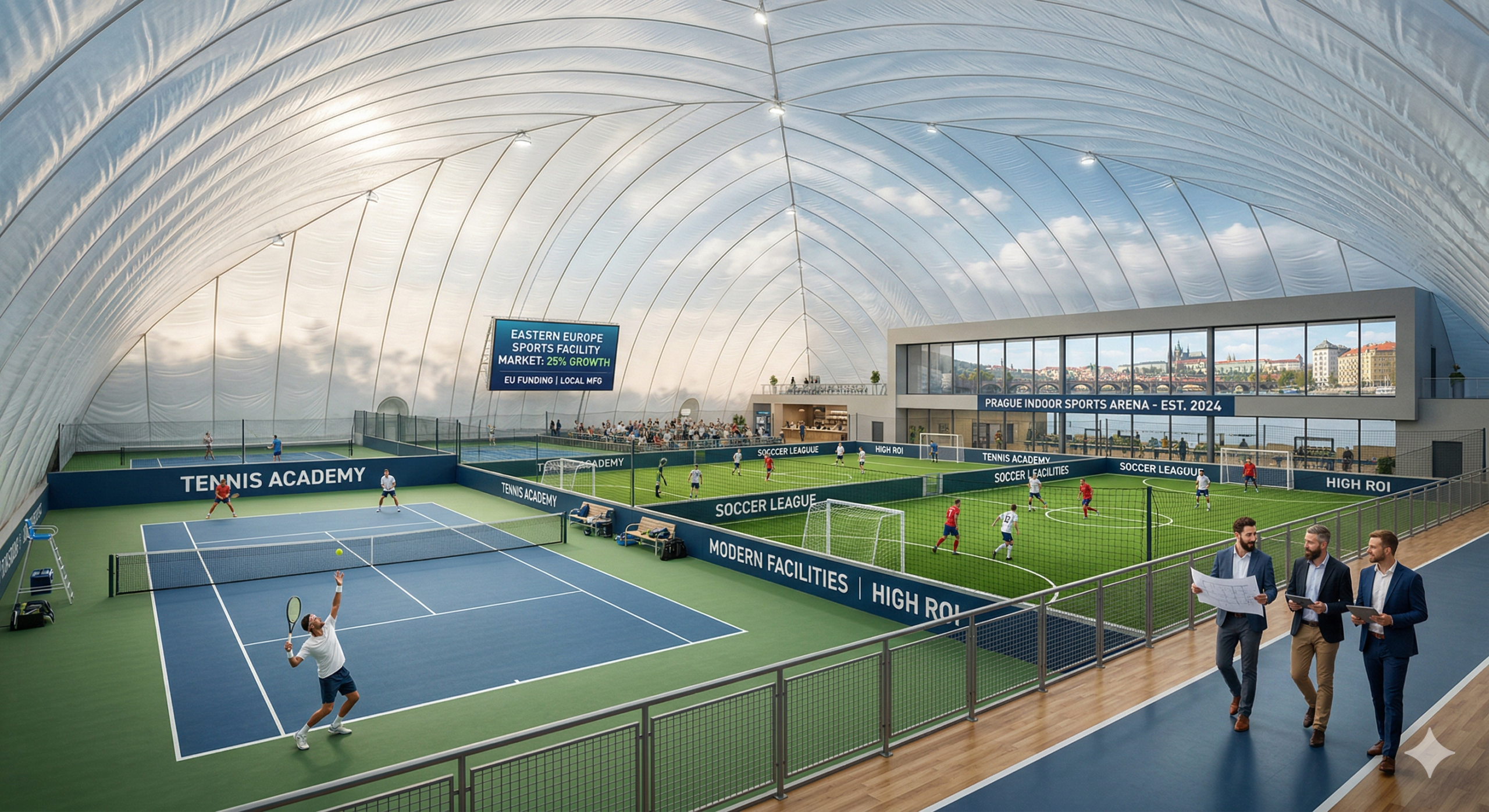
    Tennis facilities offer excellent multi court air dome cost efficiency, with four-court configurations ranging from $250K-$400K for basic structures, though premium installations reach $2.9 million. Your 4 court tennis bubble cost depends heavily on amenities and membrane quality.

    Large sports dome pricing varies considerably by sport. Baseball domes cost $1.6-$4.2 million, while football facilities range $2.2-$4.6 million. Soccer domes fall between $2.1-$4.2 million. Specialty sports like lacrosse command $2.3-$4.2 million, and golf driving ranges cost $2-$3.4 million.

    Per-square-foot costs range $10-$50 for membrane systems, plus $10 for site preparation. These durable materials result in fewer replacements and lower long-term operational costs.

    Multi-sport configurations covering 120,000 square feet maximize your investment by accommodating multiple playing surfaces under one structure.

    What Drives Air Dome Pricing (Materials, Labor, and Site Factors)?

    Understanding air dome pricing requires examining five critical cost drivers that determine your final investment.

    Material quality greatly impacts costs—durable vinyl and reinforced PVC command premium pricing but reduce long-term maintenance expenses compared to lower-quality alternatives.

    Size affects pricing exponentially, though larger structures like a multiple tennis court dome achieve better per-square-foot rates starting at $12.

    Installation complexity scales with dimensions, requiring specialized labor and extended timelines. Air domes offer faster installation compared to traditional permanent structures, reducing overall project costs.

    Site-specific conditions dramatically influence foundation costs, with hybrid grade beam systems representing major expenses.

    Additional features including LED lighting, HVAC systems, and specialized doors add substantial costs beyond base packages.

    For a 6 court indoor facility cost, these factors combine to create considerable pricing variations depending on your specific requirements and location.

    Foundation and Site Preparation Expenses

    Foundation and site preparation represent the largest variables in your multi-court air dome budget, often accounting for 20-40% of total project costs.

    Foundation expenses range dramatically from $3,795 for small projects to $350,000+ for large commercial installations. Your costs depend heavily on soil composition, frost line depth, and local wind codes—factors that can create $1,200-$3,200 variations between contractor quotes.

    You’ll need grade-beam concrete foundations with angle iron anchoring for standard installations, though earth anchors work for temporary setups.

    Geographic location greatly impacts pricing, as seen with Michigan’s 100,000 sq.ft. dome requiring a $350,000 hybrid foundation system. Professional installation teams will conduct an initial assessment of site conditions before beginning foundation work.

    Flat terrain with minimal frost requirements reduces excavation expenses, while poor soil conditions demand deeper footings and specialized anchoring solutions.

    Air Dome Engineering and Permit Costs

    Professional engineering and permit costs will add approximately $20,000 to your multi-court air dome project, representing a fixed expense that doesn’t scale proportionally with dome size.

    You’ll need licensed engineers to stamp structural and mechanical components, ensuring compliance with International Building Code (IBC) and ASCE 55-16 standards across all jurisdictions.

    Your engineering team must maintain proper licensing across multiple states and countries, with requirements varying by location.

    They’ll prepare essential permit drawings for local construction approval, with documentation standards determined by each permitting authority.

    Additional costs may arise from supplementary services like civil engineering for site conditions, electrical work for HVAC systems, or architectural services.

    These expenses depend on your specific site requirements and local code variations beyond standard structural and mechanical engineering work. The engineering process helps determine the complete dome package scope and final project cost through comprehensive analysis.

    Interior Equipment and Flooring Investment

    While engineering costs remain fixed regardless of dome size, your interior equipment and flooring investment scales directly with facility dimensions and intended sports applications.

    Hard court surfaces integrate into your overall square footage pricing, while specialized options like clay courts and artificial turf systems require additional base layers and material considerations.

    Your flooring selection greatly impacts total costs:

    1. Modular plastic tiles enable quick installation and replacement for tennis and pickleball facilities.
    2. Clay court installations vary in expense based on material quality and maintenance requirements.
    3. Artificial turf systems require base preparation, quality selection, and infill materials.
    4. Hard court surfaces offer durability for multi-sport use with integrated pricing.

    Standard equipment additions include net systems, scoreboards, bleachers, and sport-specific goals within your extensive dome investment. All facilities include energy-efficient LED lighting systems that contribute to reduced operational costs over time.

    HVAC, Lighting, and Climate Control Systems

    Beyond structural and flooring investments, your HVAC, lighting, and climate control systems represent critical operational components that directly impact both upfront costs and long-term facility performance.

    These systems are engineered based on your local weather conditions and designed to handle wind and snow loads specific to your region.

    Your facility includes high-performance air blowers integrated into the dome structure, plus water heaters and air conditioning units.

    Energy-efficient LED lighting systems are customizable for multi-court facilities, with ball-resistant options designed specifically for sports applications.

    You’ll need professional HVAC technician hookup and a licensed electrician for proper installation.

    Multiple HVAC configurations are available, including backup blower engines and gas heaters requiring natural gas hookup for supplemental heating operations.

    Air Dome vs Permanent Building Cost Comparison

    When evaluating facility options, you’ll find air domes offer substantial cost advantages over permanent structures.

    Air-supported dome facilities typically cost $1–$3 million including all systems, while permanent sports buildings range from $5–$10 million for standard metal structures. This represents savings of 50–75% compared to traditional construction.

    The cost differential becomes clear when examining key factors:

    1. Material costs – Air domes use $10–$25 per square foot versus expensive steel framing systems.
    2. Construction timeline – Installation takes days or weeks versus months or years for permanent buildings.
    3. Labor requirements – Minimal on-site assembly compared to complex traditional construction procedures.
    4. Foundation needs – Simplified anchoring systems versus extensive structural support requirements.

    You’ll achieve faster deployment while notably reducing your overall project investment.

    Operating Costs and Long-Term ROI Analysis

    Understanding upfront costs represents only part of your financial planning equation.

    You’ll face annual operating expenses of $3–$6 per square foot, with utilities consuming $0.50–$1.50 per square foot yearly.

    A three-court tennis dome costs $60,000–$80,000 for four-month seasonal operation, while year-round facilities require approximately $100,000 annually including mortgage and utilities.

    Your ROI improves considerably with continuous operation since year-round availability maximizes booking revenue and programming opportunities.

    However, you’ll need continuous air pressure maintenance, increasing energy consumption compared to seasonal structures.

    Factor in staffing expenses for coaching and facility management, plus mandatory insurance coverage.

    Large multi-sport domes can reach $500,000 in annual operating costs, but their revenue potential justifies the investment through diverse programming and extended operational capacity.

    Frequently Asked Questions

    Can Air Domes Withstand Extreme Weather Conditions Like Hurricanes and Heavy Snow?

    Yes, you’ll find air domes are engineered to handle extreme weather exceptionally well.

    They’ll withstand hurricanes up to 67m/s and heavy snow loads exceeding 250kg/sqm. You’ll experience minimal displacement during high winds – less than 10cm compared to competitors’ 2m deflection.

    The structures operate reliably from -55°C to +70°C, and you’re protected by triple redundancy inflation systems plus bias harness cable networks that distribute forces evenly.

    What Financing Options Are Available for Multi-Court Air Dome Construction Projects?

    You’ve got several financing options for multi-court air dome projects.

    Commercial leasing through companies like Grenke Leasing and LED.Finance offers flexible payment terms.

    Personal loans up to $100,000 are available through third-party lenders without collateral.

    You can also pursue public grants like UPARR and Land Water Conservation Fund, or explore private funding through USA Track & Field Foundation.

    Alternative strategies include sponsorship agreements, crowdfunding campaigns, and local fundraising efforts.

    How Long Does It Typically Take to Construct a Multi-Court Air Dome?

    You’ll typically complete a multi-court air dome construction in 12-16 weeks total.

    Once your foundation’s ready, the dome installation and inflation happens incredibly fast—just 2-5 days for most projects.

    However, you’ll need to account for the pre-construction phase including engineering, permits, and manufacturing, which takes 8-12 weeks.

    Larger multi-court facilities may extend the timeline slightly, but you’ll still be operational months faster than traditional construction methods.

    Are There Zoning Restrictions or Permits Needed Specifically for Air Dome Structures?

    You’ll need operational permits for air domes exceeding 400 square feet, plus compliance with Type II-B building code classification.

    Your application must include site plans, dimensions, fire safety assessments, and egress verification.

    You’re limited to one-story structures with specific height restrictions.

    Check local zoning since regulations vary by municipality – some areas have additional requirements if you’re within 540 feet of residential zones.

    What Happens if the Air Dome Membrane Gets Damaged or Punctured?

    You’ll face different repair options depending on damage size.

    Small tears under 50mm can be patched with reinforcement, while larger damage over 300mm requires factory repair or replacement.

    You can detect punctures using soapy water to spot bubbles or listening for escaping air.

    Most repairs need specialized techniques like heat welding for PVC membranes and require 24-hour curing before you can reinflate the dome safely.

  • Budget Air Dome Options Under $200K

    Budget Air Dome Options Under $200K

    You can find excellent air dome options well within your $200K budget, starting as low as $27,600 for DIY aircrete domes or $30,000 for small air structures from Broadwell Air Domes. Pre-owned units offer the best value, with discounts of 50-75% off retail prices – large structures that originally cost $418,500 can be found for around $200,000. These domes cost 50-75% less than traditional buildings and install in just 1-2 days. There’s much more to explore about maximizing your investment.

    Affordable Dome Options Under $50K

    While traditional sports facilities require substantial capital investment, several affordable dome options can fit within a $50,000 budget and provide year-round protection for your activities.

    You’ll find small air domes designed for personal use starting at $30,000 through companies like Broadwell Air Domes. These structures offer quality materials suitable for various applications at approximately $12 per square foot.

    For an even more budget-friendly approach, you can construct air-crete domes yourself. A complete 1,000-square-foot studio costs around $27,600 including plumbing, electrical, and fixtures.

    Basic materials alone run about $4,000 for the dome structure. This affordable sports dome solution uses lightweight air-crete that expands concrete five to seven times, dramatically reducing material costs while providing durable, insulated protection. These dome structures feature superior sound insulation that makes them ideal for containing noise from active sports and recreational activities.

    Small Air Domes: 100-Foot Structures

    Stepping up from personal-use domes brings you to 100-foot air dome structures that offer considerably more space for sports and recreational activities.

    These budget air dome options cost between $10,000–$30,000 for the dome structure alone, covering approximately 7,854 square feet. You’ll pay $10–$25 per square foot for the basic structure, with complete packages starting at $12 per square foot minimum.

    Installation takes just 1–2 days for small domes, making them highly cost-effective. Professional advice is recommended when determining the appropriate size and specifications for your specific project requirements.

    Your total project costs include structural engineering ($20,000 approximately) and foundation work that varies by soil conditions.

    Annual operating expenses remain reasonable at $0.50–$1.50 per square foot for utilities, plus basic maintenance costs of $0.10–$0.20 per square foot annually.

    DIY Dome Kits vs Ready-Made Units

    When choosing between DIY dome kits and professionally installed units, you’ll face a fundamental trade-off between cost savings and convenience.

    DIY options like aircrete domes cost around $27,600 complete, while geodesic kits offer even cheaper alternatives. You’ll handle most construction yourself, requiring minimal experience but accepting potential timeline delays spanning weeks or months.

    Ready-made units provide professional installation within one to two days, offering unlimited customization and reliable schedules. However, costs increase considerably with professional crews and equipment.

    If you’re seeking a cheap tennis bubble alternative, DIY prefabricated panels deliver the best compromise – you’ll get standardized components with manageable assembly requirements while maintaining budget control. These larger formed panels enable easy on-site assembly compared to complex geodesic frameworks.

    Professional services excel when you need complex designs or can’t afford construction delays.

    Pre-Owned Domes: Best Value Finds

    Beyond new installations, pre-owned air domes deliver exceptional value for budget-conscious buyers seeking proven structures at significant discounts.

    You’ll find used domes marketed at 50-75% off original retail prices, with large-scale structures like 42m x 42m domes dropping from $418,500 to $200,000.

    Pre-owned domes are graded on a 1-3 scale, with condition 1-2 indicating near-new status.

    “Like new” units often feature minimal use—sometimes just single 10-day deployments—with full functionality and waterproofing intact. Buyers report cost savings of 30-60% compared to purchasing new air domes from manufacturers.

    You can source these through Chinese manufacturers, certified resellers with warranty documentation, and marketplace aggregators listing 46,000+ products from 12,000+ suppliers.

    Setup remains efficient at 4 hours to one day, while emergency systems and wind ratings guarantee operational reliability.

    Air Dome Costs vs Traditional Buildings

    While pre-owned domes offer substantial savings, you’ll discover even greater value when comparing air dome costs against traditional building construction. A low cost air dome structure costs 50–75% less than conventional buildings, with prices ranging $10–$25 per square foot versus traditional facilities requiring $5–$10 million investments.

    Factor Air Dome Traditional Building
    Construction Cost $1–$3 million $5–$10 million
    Installation Time 1–2 days Months/years
    Annual Operations $3–$6/sq ft Considerably higher
    Energy Consumption 60% less Standard rates

    You’ll benefit from faster installation timelines and lower operational expenses. Air domes require minimal on-site construction since manufacturing occurs off-site, while traditional buildings demand extensive planning and labor-intensive procedures that dramatically increase your total investment. The inflatable structure can be easily relocated or resized to accommodate different seasonal needs or venue requirements.

    Frequently Asked Questions

    What Permits and Zoning Approvals Are Required for Air Dome Installation?

    You’ll need building permits in most U.S. jurisdictions before installing your air dome.

    Submit detailed plans and specifications to your local building department for approval. Licensed engineers must stamp all project elements, costing around $20,000.

    Check your local zoning laws since regulations vary considerably by municipality. Verify square footage thresholds and setback requirements with local authorities.

    Rural areas typically have more relaxed regulations than urban zones.

    How Long Does Typical Air Dome Installation Take From Start to Finish?

    You’ll need 1-3 days for a single-court air dome installation.

    Day one covers delivery, site prep, and positioning.

    Day two includes electrical work and ductwork installation.

    Day three involves testing and final inspection.

    Expert teams can complete smaller domes in just 1-2 days.

    However, if you’re adding custom features or dealing with complex site conditions, you might need additional time for proper setup and calibration.

    What Ongoing Maintenance Costs Should I Budget for Annually?

    You should budget 7-12% of your initial dome investment for annual maintenance costs. For a $130K installation, that’s roughly $9,000-$16,000 yearly. This covers routine inspections, repairs, and part replacements.

    Additionally, expect $0.10-0.20 per square foot for inflation unit operation and $0.50-1.50 per square foot for utilities like heating and lighting.

    Regular preventive maintenance will extend your dome’s lifespan and minimize costly emergency repairs.

    Can Air Domes Withstand Severe Weather Like Hurricanes or Heavy Snow?

    Yes, air domes can withstand severe weather. They’re engineered to handle hurricanes up to 67m/s (level 16 typhoons) and snow loads exceeding 250kg/sqm.

    The structures increase interior air pressure during storms, making walls more rigid. Steel cable harness systems provide reinforcement against high winds, while membrane tops actively shed snow to prevent dangerous accumulation.

    They’re designed to meet local building codes for your specific climate conditions.

    What Happens if the Power Goes Out During Operation?

    Your air dome’s equipped with emergency backup systems that automatically activate during power outages.

    Generator-driven systems maintain dome inflation when primary power fails, operating without manual intervention.

    However, you’ll need to evacuate everyone immediately upon power failure for safety.

    Your emergency plan should include designated evacuation routes, assembly areas, and trained personnel with flashlights to guide occupants safely out from under the dome edges.

  • Air Dome ROI Calculator for Sports Facilities

    Air Dome ROI Calculator for Sports Facilities

    You can expect a complete return on your air dome investment within 2-5 years, with proven facilities generating $560,000 in revenue during just eight months of operation. Construction costs range from $1-4.6 million depending on your sport, while annual operating expenses stay low at $3-6 per square foot. You’ll benefit from 30% membership growth through year-round programming, plus additional income of $150K-$300K annually. The specifics of financing options and break-even calculations will help you maximize your facility’s profit potential.

    Air Dome ROI Basics: Investment Returns for Sports Facilities

    When you’re evaluating air dome investments for your sports facility, the financial returns consistently demonstrate compelling value across multiple revenue streams.

    Your air dome ROI calculations should factor in the proven $560,000 revenue generation achieved by single facilities in just eight months, alongside 30% membership growth from shifting seasonal operations to year-round programming.

    You’ll find comparable facilities consistently double their total revenue through expanded programming capabilities.

    The investment threshold sits in the mid-six-figure range, but you’re looking at construction costs 50-75% lower than permanent structures. The quick installation process of 2-14 days means your facility can begin generating revenue almost immediately after project approval.

    With $93,600 annualized profit potential and payback periods of 2-3 years for clubs, your facility gains 1,800 additional operational hours annually while eliminating weather-related cancellations that previously impacted revenue.

    Construction Costs by Sport: Tennis, Baseball, Soccer, and More

    Construction costs vary dramatically across sports, with your investment ranging from $1,000,000 for basic pickleball facilities to $4,600,000 for premium football domes. Understanding these variations helps you calculate accurate sports dome return on investment projections for your specific facility needs.

    Sport Construction Cost Range
    Pickleball $1,000,000 – $2,600,000
    Tennis $1,400,000 – $2,900,000
    Soccer $2,100,000 – $4,200,000
    Baseball $1,600,000 – $4,200,000
    Football $2,200,000 – $4,600,000

    Tennis and pickleball represent the most cost-effective entry points, while football commands premium pricing due to field size requirements. All costs include foundations, flooring, air-supported structures, lighting, and amenities. You’ll save 50-75% compared to traditional permanent structures while achieving faster installation timelines. Short lead times allow for functional buildings to be completed within months, significantly accelerating your facility’s revenue generation timeline.

    Financing and Revenue Strategies for Year-Round Facilities

    Smart financing transforms your air dome project from concept to profitable reality. You’ll access indoor facility revenue potential through diverse funding approaches that match your specific situation and goals.

    Traditional financing options include:

    1. Bank loans and specialized lenders – Grenke Leasing and LED.Finance offer tailored solutions for business facility projects.
    2. Government grant programs – UPARR assessments, CDBG funding, and NRPA grants provide public funding opportunities.
    3. Revenue-sharing partnerships – Private investors fund construction in exchange for revenue splits during contract periods.
    4. Community-based funding – Professional fundraising campaigns, crowdfunding platforms, and donor networks with naming rights incentives.

    For individuals pursuing smaller-scale projects, personal financing options are available up to $100,000 through specialized providers.

    You can also generate immediate revenue through multi-year team agreements, corporate sponsorships, advertising sales, and general community rentals to accelerate your payback timeline.

    Operating Expenses: Electricity, Maintenance, and Hidden Costs

    Understanding your air dome’s true operating costs prevents budget surprises and guarantees long-term profitability.

    You’ll face annual operating expenses of $3-$6 per square foot, with electricity comprising the largest component. A two-court dome consumes 83.2kW daily, costing approximately £12.48 for blowers and lighting combined.

    Your three-court facility operating four months annually averages $60,000-$80,000 in expenses. Air dome structures deliver electricity consumption that is 10%-25% of traditional structures, creating substantial savings compared to conventional buildings.

    Beyond electricity, you’ll encounter maintenance costs for air blower systems, LED lighting assemblies, HVAC equipment, and sports flooring replacement.

    Regional electricity rates and seasonal usage patterns greatly impact your bottom line. Winter heating demands increase energy consumption, while summer cooling affects HVAC costs.

    Sports dome profitability improves through motion-sensing lighting systems and intelligent climate controls that adjust operations based on weather conditions.

    Break-Even Timeline: When Air Domes Start Paying Off

    With operating expenses mapped out, you’ll want to know exactly when your air dome investment starts generating profit. The tennis bubble payback period typically ranges from 2-3 years for private clubs and 3-5 years for schools, depending on your facility’s utilization rates and local market conditions.

    Your break-even timeline depends on four critical factors:

    1. Initial investment size – Mid-six-figure investments require higher annual revenues to achieve quicker payback.
    2. Seasonal revenue boost – Year-round programming generates $150K-$300K additional annual income.
    3. Hourly rental rates – Tennis courts earning $60-$120/hour notably impact recovery speed.
    4. Operational efficiency – Lower operating costs at $3-$6 per square foot accelerate profitability.

    Most facilities reach profitability faster than traditional permanent structures due to lower construction costs and immediate revenue generation capabilities. Air domes offer quick setup advantages that allow facilities to start earning revenue almost immediately after installation.

    Frequently Asked Questions

    What Insurance Coverage Is Required for Air-Supported Dome Facilities?

    You’ll need liability, property, and casualty insurance for your air dome facility.

    Specialized coverage should include damage assessment for structural and mechanical equipment failure, plus weather-related protection against wind, snow, and storms.

    Your facility must comply with IBC Type II-B construction standards and A-4 occupancy classification.

    You’re required to conduct annual NFPA 102 inspections and biennial professional assessments to maintain insurance eligibility and favorable premium rates.

    How Do Extreme Weather Conditions Affect Dome Structural Integrity and Operations?

    You’ll find extreme weather considerably impacts your dome’s operations.

    High winds up to 120 mph are manageable with proper engineering, but you’ll need emergency deflation protocols for severe conditions.

    Snow loads can cause catastrophic collapse if your cable systems aren’t adequate.

    Temperature extremes require robust climate control – you’ll spend more on heating/cooling during harsh weather.

    Regular maintenance becomes critical, and you’ll need backup pressure systems to prevent complete deflation from membrane tears.

    Can Existing Outdoor Courts Be Converted to Air Dome Facilities?

    Yes, you can convert your existing outdoor courts to air dome facilities within just 5 days from foundation completion.

    You’ll need proper anchoring systems based on soil conditions and local wind codes, plus professional engineering assessment.

    The installation’s labor-intensive, requiring 20-30 workers, but you’ll transform your outdoor space into a weatherproof, all-season venue without extended delays.

    Your courts become climate-controlled with unobstructed interior space through continuous overpressure.

    What Permits and Zoning Approvals Are Needed for Dome Installation?

    You’ll need building permits with structural engineer-stamped designs as the primary requirement.

    Contact your building department first to confirm their specific requirements beyond engineer approval.

    You’ll also need zoning compliance verification, plus water and septic permits in most counties.

    Soil testing and site plans are mandatory.

    Your structural design must address local seismic zones, wind resistance, and snow loads based on your region’s extreme weather factors.

    How Does Dome Collapse Risk Impact Liability and Safety Protocols?

    You’ll face significant liability exposure during deflation events, requiring thorough safety protocols.

    Power loss creates immediate collapse risk, so you must install backup systems and real-time pressure monitoring.

    You’ll need emergency evacuation procedures since deflation, while gradual, can injure occupants.

    Insurance costs increase due to weather vulnerability and equipment damage risks.

    You must establish weather monitoring protocols, staff training programs, and structured assembly/disassembly procedures to minimize liability exposure.

  • Sports Dome Cost vs Permanent Building

    Sports Dome Cost vs Permanent Building

    You’ll save 50-75% on upfront costs choosing a sports dome over a permanent building—a 20,000 sq ft air dome costs around $200,000 versus $800,000 for traditional construction. However, permanent buildings last 35+ years compared to domes’ 15-20 year lifespan. Annual operating costs are similar at $3-6 per square foot, though domes install in just 2-6 weeks versus 12-18 months for permanent structures. Understanding these trade-offs will help you make the smartest investment decision.

    Sports Dome vs Permanent Building: Upfront Investment Breakdown

    When you’re weighing the financial commitment between sports domes and permanent buildings, the upfront investment difference is striking.

    Air dome vs building cost analysis shows you’ll spend $10-$25 per square foot for dome structures, while permanent buildings require two to three times more capital expenditure. For a 20,000 square foot (1,858 square meter) facility, you’re looking at $200,000 for an air dome versus $800,000 for a traditional building—that’s 50-75% in savings.

    Temporary vs permanent facility cost comparisons reveal dome packages starting as low as $12 per square foot, with costs decreasing as size increases. Sports domes also offer faster installation times compared to permanent structures, reducing labor costs and allowing you to start generating revenue sooner.

    The inflatable vs traditional building price gap widens further when you factor in material requirements, as air domes use economical synthetic textiles while permanent structures demand substantial investments in concrete, steel, and glass.

    Operating Costs: What You’ll Pay Each Year

    Beyond the initial investment, your annual operating expenses will determine the true cost of facility ownership. For a 20,000 sq ft (1,858 sq m) facility, you’ll face several key expense categories that impact the sports dome vs permanent structure decision.

    Maintenance costs range from $3–$6 per square foot annually, with inflation systems adding $0.10–$0.20 per square foot yearly for air domes.

    Utility expenses typically run $0.50–$1.50 per square foot, though permanent buildings often achieve better energy efficiency long-term.

    Staffing represents your largest expense at approximately $500,000 annually for full operations.

    Insurance averages $36,000 yearly, while security costs around $30,000.

    Total operating budgets range from $336,000 for basic facilities to $1.6 million for extensive complexes. Rental hours constitute over 57% of most facilities’ total revenue, making scheduling optimization critical for covering these substantial operating expenses.

    How Long Does Each Structure Actually Last?

    While upfront costs grab immediate attention, the lifespan of your facility determines its true long-term value. You’ll typically get 15-20 years from a well-constructed air dome, though high-end models can reach 30 years under ideal conditions.

    PVC fabric offers superior durability with 25-year warranties, while lighter PE materials last 15-20 years.

    Permanent buildings greatly outlast air domes. You’re looking at 35+ years for standard stadiums, with historic concrete structures operating for over 100 years.

    The Cinerama Dome has functioned for 61+ years, while Wrigley Field hit its 100-year milestone.

    Your maintenance commitment directly impacts longevity. Proper installation, regular inspections, and following manufacturer guidelines can maximize your structure’s operational life, regardless of the type you choose. Modern air pressure technology continuously maintains inflation to minimize structural stress and preserve dome integrity.

    Construction Speed: Sports Domes vs Traditional Buildings

    Your facility’s construction timeline can make or break your project’s success, especially when you’re working with tight deadlines or seasonal demands. Sports domes offer dramatically faster installation compared to traditional buildings, allowing you to start operations in weeks rather than months.

    Aspect Sports Domes Traditional Buildings
    Installation Time 2-6 weeks 12-18 months
    Setup Process Inflation in days Multiple construction phases
    Labor Requirements 20-30 workers Extensive workforce teams

    You’ll find that dome construction eliminates complex foundation work and structural framing that permanent buildings require. While traditional facilities need site preparation, governmental permits, and extensive planning phases, air-supported structures use simplified air pressure systems for rapid assembly. This speed advantage means you can capture revenue opportunities immediately rather than waiting through lengthy construction delays.

    The flexible usage capabilities of sports domes also allow for quick adaptation to different sports and events without the extensive renovations that traditional structures would require.

    Which Option Delivers Better ROI?

    When comparing return on investment, the numbers tell a compelling story that favors air domes for most scenarios.

    You’ll save $600,000 upfront with a $200K air dome versus an $800K permanent building for the same 20,000 sq ft (1,858 sq m) space. That’s 50-75% less initial capital investment.

    Your operational costs remain competitive at $3-6 per square foot annually, while permanent buildings carry higher year-round expenses.

    If you’re operating seasonally for 5-6 months, you’ll reduce costs further compared to 12-month traditional facility operations. Air domes offer additional savings through direct-cooling ice systems that can reduce energy consumption by 60%.

    The faster 2-6 week installation versus 12-18 months means you’ll generate revenue sooner.

    With proper maintenance, your air dome can last 15-50 years, delivering strong returns on that lower initial investment.

    Frequently Asked Questions

    Can Air Domes Withstand Extreme Weather Like Hurricanes and Heavy Snow Loads?

    Yes, you’ll find air domes exceptionally resilient against extreme weather.

    They’ll withstand hurricane-force winds up to 252 km/h (157 mph) and even meet Nuclear Regulatory Commission standards for 482+ kph winds. You can rely on them supporting snow loads exceeding 250 kg/m² without failure.

    Their curved design actually reduces wind resistance compared to traditional buildings, while the reinforced membrane maintains structural integrity from -30°C to +70°C temperatures.

    What Permits and Zoning Approvals Are Needed for Sports Dome Installation?

    You’ll need local government permits before construction begins, with requirements varying by jurisdiction.

    Your site must comply with zoning classifications, building codes like IBC and ASCE 55-16, plus setback and height restrictions.

    Licensed engineers must create stamped permit drawings (costing around $20,000).

    Multiple city departments review applications including Planning, Building Code Enforcement, and Fire Department.

    Plan approval typically takes 2-6 weeks, followed by final inspections before receiving your Certificate of Occupancy.

    How Much Does It Cost to Relocate an Air Dome Facility?

    Relocation costs depend on your dome’s size.

    You’ll pay $10,000-$30,000 for small domes under 100 feet (30.5 meters) in diameter, $30,000-$100,000 for medium domes 100-300 feet (30.5-91.4 meters), and over $1 million for large domes exceeding 300 feet (91.4 meters).

    These costs include disassembly, transport, and reinstallation.

    You can reduce expenses by having your staff help with construction and maintenance during the relocation process.

    Are There Financing Options Available Specifically for Sports Dome Construction Projects?

    Yes, you’ll find several financing options specifically for sports dome construction.

    You can access public funding through UPARR programs, Land and Water Conservation Fund, and EPA Brown/Greenfield grants.

    You’ll also benefit from leasing agreements that spread costs over time with lower upfront requirements.

    Additionally, you can pursue bank loans, private investors, bonds financing, and community fundraising through sponsorships and donations to fund your project.

    What Happens if the Air Pressure System Fails During Events?

    If your air pressure system fails during events, you’ll need to evacuate everyone immediately as the dome deflates like a flag.

    The fabric develops wave-like movements and whip-like motions, but you won’t face structural collapse onto occupants – cables maintain 30+ feet (9+ meters) clearance above.

    However, you’ll lose complete facility protection and face significant re-inflation costs, making your 20,000 sq ft (1,858 sq m) space unusable until pressure’s restored.

  • Used Air Dome Prices USA 2026

    Used Air Dome Prices USA 2026

    You’ll find used air domes across the USA priced between $10-50 per square foot in 2026, offering substantial savings of 50-75% compared to new construction. A 16,000 sq ft dome recently sold for $200,000, while larger facilities range from $191,000-$1,277,740 depending on size and condition. You can purchase through manufacturer liquidations, wholesale platforms, and commercial resale brokers. However, you’ll need to budget for hidden costs like shipping, installation, and foundations that can greatly impact your total investment.

    Used Air Dome Savings: 50-75% Off New Construction Costs

    When you’re considering a used air dome purchase, you’ll discover savings that notably outpace even new construction’s cost advantages.

    Used air domes typically sell for 40-60% of their original prices, meaning you’re getting structures that already cost 50-75% less than traditional buildings at even steeper discounts.

    A 5-year-old dome retains 60% of its new value, while 10-year-old units range from 40-50%. For example, a single court dome covering 7,200 square feet costs $48,000-$108,000 used versus $80,000-$180,000 new.

    This used tennis bubble cost represents exceptional value when you consider the 20-30 year durability ratings these structures maintain. The prefabricated components also reduce labor costs during installation, making your total investment even more attractive.

    You’ll still benefit from energy savings exceeding 50% and minimal maintenance requirements while paying considerably less upfront.

    Real Used Dome Prices: 12,000 To 250,000 Square Foot Examples

    Real market data reveals significant variations in used air dome pricing across different facility sizes. You’ll find the used air dome price depends heavily on square footage and condition. A 16,000 sq ft Miami dome sold for $200,000 after only 10 days of use, representing a 52% discount from its $418,500 original cost.

    Size Range New Price Used Price Range
    12,000-25,000 sq ft $297,700-$418,500 $200,000-$297,700
    25,000-75,000 sq ft $297,700-$762,948 $191,000-$381,500
    75,000-250,000 sq ft $762,948-$2,555,480 $382,000-$1,277,740

    You’ll typically pay $10-50 per square foot in today’s market, with like-new condition domes commanding premium prices within the 50-75% savings range. Most domes can be erected in one day with a crew of 10 men, making them significantly faster to deploy than traditional construction methods.

    Best Places To Buy Used Air Domes And Bulk Discounts

    Finding the right marketplace can save you thousands on your used air dome purchase, especially when buying multiple units.

    You’ll find the best deals through manufacturer liquidation channels like Broadwell Air Domes, which offers demo units at 50% off retail prices. Their pink 42m × 42m dome dropped from $418,500 to $200,000.

    For bulk orders, consider these proven sources:

    • Wholesale platforms – Made-in-China.com and Alibaba offer $40-$115 per square meter for 500+ square meter orders.
    • Direct manufacturer sales – Broadwell’s corporate program serves Microsoft and Apple with $12/square foot pricing.
    • Commercial resale brokers – Repurposed Materials Inc. delivers 50-75% savings on second hand sports dome inventory.
    • Event facility liquidations – End-of-season opportunities from sports complexes and ski resorts. These facilities often sell domes engineered to withstand 150 mph winds, making them ideal for permanent installations.

    Hidden Costs Beyond Purchase Price: Shipping And Installation

    Beyond the sticker price of your used air dome, you’ll face substantial additional expenses that can double your total project cost.

    Shipping costs vary greatly by location and must be calculated individually, with you covering all freight expenses through common carrier companies. Your logistics associate will arrange worldwide shipping for international installations, though local government fees may apply for units shipped outside the USA.

    Installation represents your largest hidden expense. You’ll need 4 days to several weeks depending on size, requiring approximately 50 manual laborers for fabric deployment.

    A seven-day installation costs $74,000 for the complete team, including electricians and HVAC technicians. Equipment rental adds more expense, as you’ll need a minimum 10,000-pound forklift.

    Your pre-owned air dome also requires engineering documentation ($20,000), permits, and foundation work.

    Foundation costs alone can reach $350,000 for larger installations, depending on soil conditions and local requirements.

    Used Vs New Air Domes: When To Buy Secondary Market

    While new air domes offer warranties and customization options, you’ll save 50-75% by choosing the secondary market for your facility needs. A 16,000 sq ft used dome at $200,000 represents just 48% of its original retail price, making refurbished sports dome pricing extremely attractive for budget-conscious buyers.

    Consider secondary market purchases when:

    • Your budget demands maximum savings – Cut costs dramatically while achieving the same facility goals.
    • You need temporary or seasonal coverage – Why pay full price for uncertain long-term usage?
    • Quick deployment matters more than customization – Get operational faster with existing inventory.
    • You’re willing to accept limited warranty protection – Trade security for substantial financial savings.

    Additionally, factor in ongoing utility costs ranging from $0.50 to $1.50 per square foot annually when evaluating your total ownership expenses for used dome facilities.

    However, choose new domes when customization requirements are non-negotiable or warranty coverage remains essential for your project’s success.

    Frequently Asked Questions

    How Long Do Used Air Dome Fabric Membranes Typically Last Before Replacement?

    You can expect used air dome fabric membranes to last 10-15 years typically, though well-maintained domes often reach 15-20 years.

    Premium-grade membranes may perform for 15-25 years, with some exceptional cases lasting up to 30 years.

    Your membrane’s lifespan depends heavily on material quality, environmental conditions, and maintenance practices.

    Regular inspections, proper cleaning, and prompt repairs will greatly extend your dome’s operational life beyond standard expectations.

    What Financing Options Are Available for Purchasing Used Commercial Air Domes?

    You can finance used commercial air domes through equipment financing companies like Grenke Leasing or LED.Finance, offering 2-6 year terms with rates as low as 5.99% and potentially no down payment.

    Collateral-free personal loans up to $100,000 are available through Feeasy® and other lenders.

    You’ll also find lease-back arrangements with investor groups, community funding partnerships, and Buy Now Pay Later solutions that preserve your working capital while making dome ownership accessible.

    Can Used Air Domes Be Relocated to Different Sites After Purchase?

    Yes, you can relocate used air domes to different sites after purchase.

    They’re designed with fabric membranes and modular components for easy disassembly and reassembly without permanent foundations.

    You’ll need a supervisory team, laborers, heavy equipment, and professionals for the move.

    Small domes relocate in four days minimum, while larger ones take weeks.

    Expect around $20,000 in engineering costs plus permits and site preparation at your new location.

    What Warranty Coverage Exists When Buying Pre-Owned Inflatable Dome Structures?

    You’ll typically find no manufacturer warranty coverage when buying pre-owned inflatable dome structures.

    Original warranties rarely transfer to second owners, leaving you without factory protection.

    However, you can hire independent inspectors to evaluate the fabric membrane, blowers, and zippers before purchase.

    Some dealers offer limited short-term warranties on used domes they’ve refurbished.

    You’ll need to negotiate warranty terms directly with sellers or consider third-party inspection services for peace of mind.

    Are Building Permits Required Differently for Used Versus New Air Domes?

    Building permits aren’t typically required differently for used versus new air domes – you’ll need the same permits regardless of the dome’s age.

    What matters to building officials is the structure’s current condition, safety compliance, and installation specs, not whether it’s previously owned. You’ll still need to meet local building codes, zoning requirements, and structural standards.

    However, used domes may require additional inspections to verify they meet current safety regulations before approval.