You’ve invested considerably in your air dome facility, but without proper maintenance scheduling, you’re risking catastrophic failure and costly emergency repairs. Most facility managers don’t realize that a systematic approach to monthly, quarterly, and annual maintenance tasks can extend their dome’s lifespan by decades while preventing the kind of sudden deflation that shuts down operations for weeks. The difference between proactive maintenance and reactive crisis management comes down to following a proven schedule that addresses critical warning signs before they become disasters.
Essential Air Dome Maintenance Tasks By Schedule
Maintaining your 20,000 square foot air dome requires a systematic approach that breaks down essential tasks into manageable monthly, quarterly, and annual schedules.
Your air dome maintenance schedule should include monthly blower inspections, pressure checks, and door operation testing to guarantee peak performance.
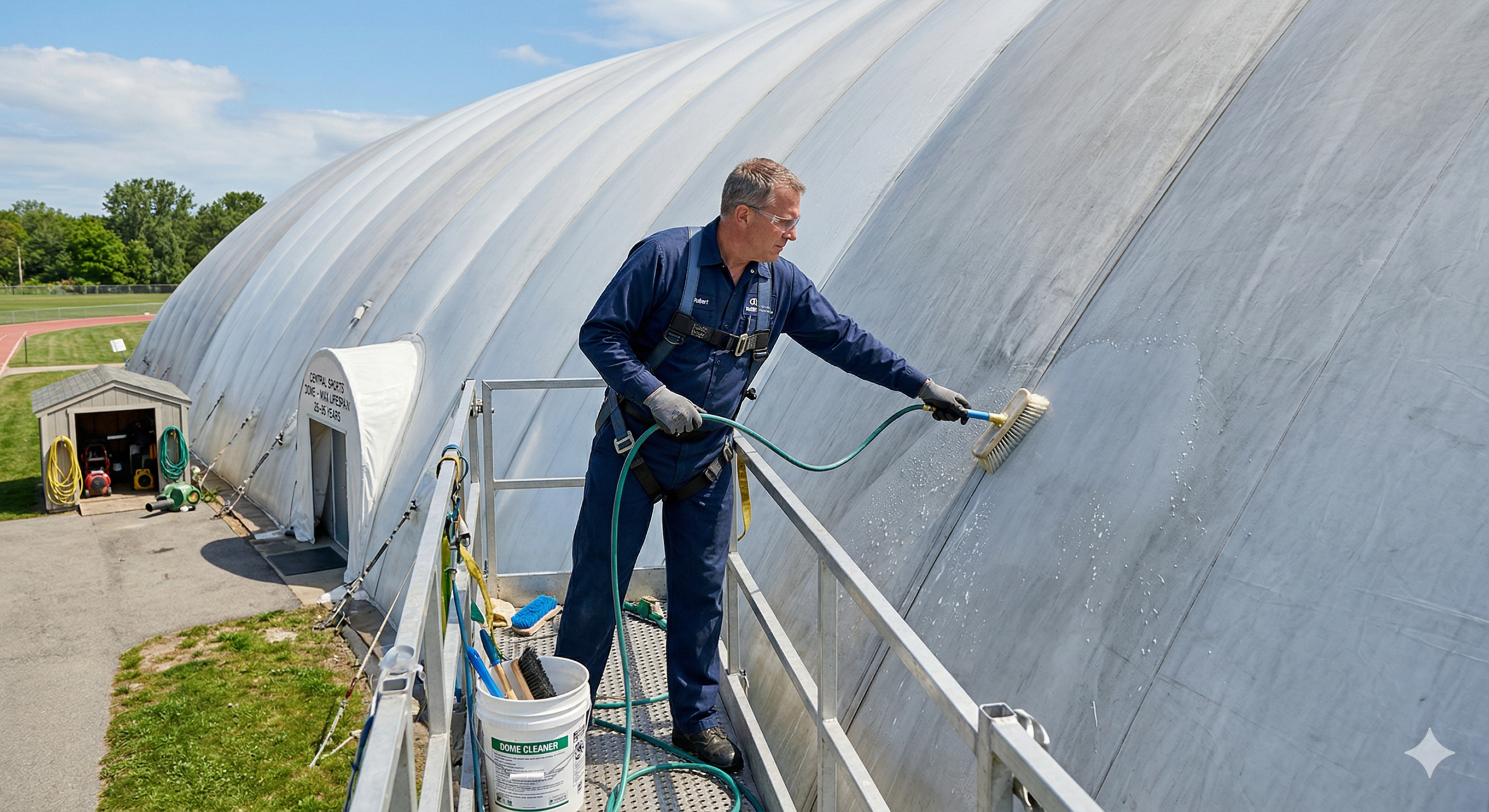
Every quarter, you’ll need to conduct thorough fabric inspections for tears and UV damage, check rope tension, and perform deep cleaning procedures.
Your dome inspection schedule must also incorporate annual tasks like professional fabric assessments and complete blower overhauls.
This tennis bubble maintenance guide emphasizes that following these scheduled intervals prevents costly emergency repairs and extends your dome’s lifespan.
Consistent adherence to these maintenance protocols keeps your facility safe, functional, and compliant with manufacturer warranties while maximizing your investment’s long-term value.
Monthly Inspections That Keep Your Facility Running
Your monthly inspections form the backbone of reliable air dome operation, focusing on three critical systems that can’t afford to fail.
You’ll need to examine your blower system for wear, verify pressure levels stay within ideal ranges, and test all door mechanisms for smooth operation.
These quick but essential checks catch problems early, preventing costly failures that could compromise your entire facility.
Blower System Inspection
Since your air dome’s blower system serves as the heart of your facility’s structural integrity, regular monthly inspections become critical for preventing costly downtime and emergency repairs.
Your sports dome upkeep calendar should prioritize checking air filters for debris accumulation, as clogged filters reduce efficiency and strain the motor.
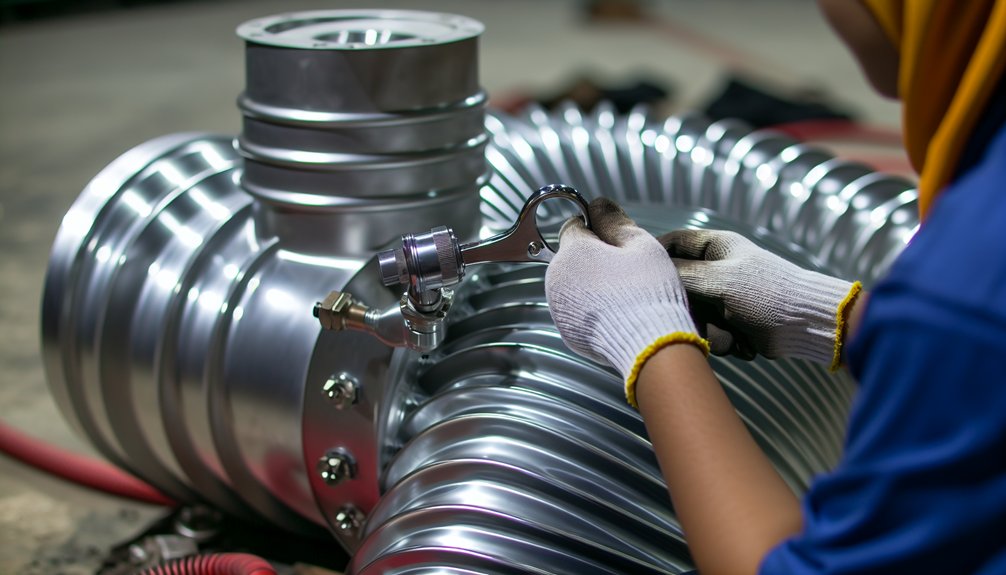
Inspect belts for proper tension, cracking, or fraying that could lead to sudden failure. Listen for unusual noises, vibrations, or grinding sounds that indicate bearing problems or loose components.
Check electrical connections for corrosion or looseness, and verify amperage readings match manufacturer specifications. Document motor temperature during operation to identify overheating issues early.
Test emergency backup systems if equipped, ensuring seamless shift during primary blower maintenance. Clean intake vents and remove any obstructions that could restrict airflow and compromise your dome’s pressure stability.
Pressure Level Monitoring
When pressure levels drop below ideal thresholds, your air dome’s structural integrity becomes compromised, making consistent monitoring essential for safe operations.
You’ll need to check pressure readings monthly using your system’s gauges or digital monitoring equipment.
Monitor these critical pressure indicators during your monthly inspections:
- Operating pressure range – Verify readings stay within manufacturer specifications (typically 0.3-0.5 PSI)
- Pressure differential alerts – Watch for sudden drops that indicate leaks or blower issues
- Emergency backup activation – Test automatic systems that engage when primary pressure falls
Document all pressure readings in your maintenance log, noting any fluctuations or irregularities.
If you discover pressure levels consistently falling outside normal parameters, investigate immediately for fabric damage, seal failures, or blower performance issues before structural problems develop.
Door Operation Testing
While monitoring pressure keeps your dome inflated properly, door systems require equally rigorous attention to maintain safe entry and exit operations.
You’ll need to test each door’s opening and closing mechanism monthly, ensuring smooth operation without binding or hesitation. Check that emergency exits function correctly and can’t be accidentally locked from the inside.
Inspect door seals for air leaks that compromise pressure stability. Look for worn weatherstripping, damaged gaskets, or loose connections.
Test automatic door systems if equipped, verifying sensors work properly and doors respond to commands immediately.
Examine hinges, handles, and locking mechanisms for wear or corrosion. Lubricate moving parts as needed and tighten loose hardware.
Document any issues requiring repair, as malfunctioning doors pose serious safety risks during emergencies.
Quarterly Air Dome Checks That Prevent Major Repairs
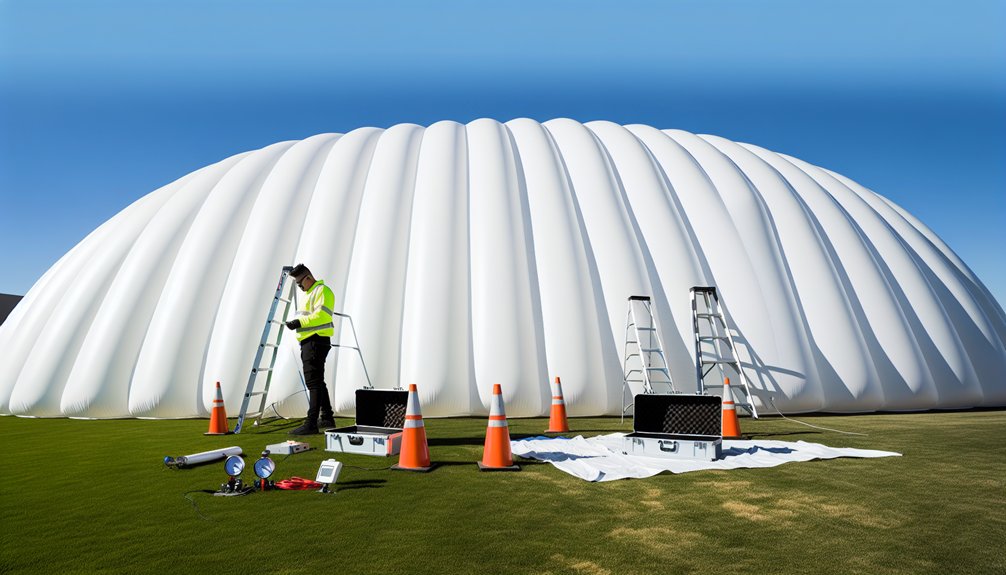
Every three months, you’ll need to conduct thorough fabric inspections to catch tears and UV damage before they compromise your dome’s integrity.
Check all rope tension points systematically, as loose or overly tight ropes can create stress concentrations that lead to fabric failure.
These quarterly assessments are your best defense against costly emergency repairs that could shut down your facility unexpectedly.
Fabric Inspection Protocol
Since fabric represents your air dome’s most vulnerable component, establishing a rigorous quarterly inspection protocol will save you thousands in emergency repairs.
You’ll need to systematically examine every section for tears, punctures, and UV damage that compromise structural integrity.
Start by walking the dome’s perimeter during daylight hours, checking for discoloration or fabric thinning.
Pay special attention to high-stress areas like anchor points and seams where failures typically originate.
- Document damage locations with photos and measurements for tracking deterioration patterns over time
- Test fabric flexibility by gently stretching suspected weak areas to identify brittleness before catastrophic failure
- Inspect reinforcement patches from previous repairs to verify they’re holding securely without creating new stress points
Address minor issues immediately—small tears become major ruptures when ignored.
Rope Tension Assessment
How often do you check the rope tensions that keep your air dome properly anchored? Quarterly rope tension assessments prevent catastrophic failures that’ll cost thousands in repairs.
Walk the perimeter and examine each anchor point systematically. You’re looking for loose ropes, frayed sections, or hardware showing wear.
Use a tension gauge to measure rope tightness at critical stress points. Proper tension maintains structural integrity during wind loads and pressure fluctuations.
Don’t rely on visual inspection alone—ropes can lose tension gradually without obvious signs.
Tighten loose connections immediately and replace damaged ropes before they fail. Document tension readings to track deterioration patterns.
This quarterly check takes two hours but prevents emergency repairs that’ll shut down your facility for days.
Annual Professional Air Dome Service Requirements
While monthly and quarterly maintenance tasks keep your air dome operating smoothly, annual professional service guarantees long-term structural integrity and peak performance.
Professional technicians conduct thorough assessments that exceed basic maintenance capabilities, identifying potential issues before they become costly problems.
Annual service includes three critical components:
- Complete fabric evaluation – Professionals assess structural integrity, UV degradation patterns, and stress point wear using specialized equipment.
- Blower system overhaul – Extensive motor inspection, belt replacement, electrical testing, and efficiency calibration.
- Full system integration testing – Emergency procedures verification, backup system functionality, and safety protocol validation.
This professional oversight extends your dome’s lifespan greatly while maintaining manufacturer warranty compliance.
You’ll receive detailed documentation of all findings and recommendations, creating a maintenance history that supports insurance claims and helps plan future capital investments.
What happens when your air dome shows critical warning signs that demand immediate attention? You’ll need to act swiftly to prevent catastrophic failure and protect occupants inside.
Watch for sudden pressure drops that your blower can’t compensate for – this indicates major fabric tears or seal failures.
If you notice visible fabric sagging, ballooning, or flapping sections, evacuate immediately and shut down operations.
Strange noises from the blower system, including grinding, squealing, or irregular cycling, signal mechanical failure.
Don’t ignore fabric discoloration, brittle areas, or visible stress points around anchor connections.
Water pooling on the dome surface creates dangerous weight loads that can cause collapse.
Emergency protocols should include immediate evacuation procedures and backup blower activation.
Contact professional technicians immediately when these critical signs appear.
Budgeting Air Dome Maintenance For 20,000 Sq Ft Facilities
Since proper air dome maintenance prevents costly emergencies and extends facility lifespan, you’ll need to allocate $15,000-25,000 annually for a 20,000 sq ft installation.
Your budget breakdown should include:
- Routine maintenance (40-50%): Monthly blower inspections, pressure checks, quarterly fabric assessments, and cleaning supplies.
- Emergency repairs (25-35%): Unexpected fabric patches, blower component replacements, and urgent door mechanism fixes.
- Professional services (20-25%): Annual fabric evaluations, complete blower overhauls, and specialized system testing.
Factor in seasonal variations—winter demands increase due to snow loads and heating costs.
You’ll also want to establish a separate capital reserve fund for major replacements like fabric renewal every 15-20 years or complete blower system upgrades.
Smart budgeting guarantees uninterrupted facility operations.