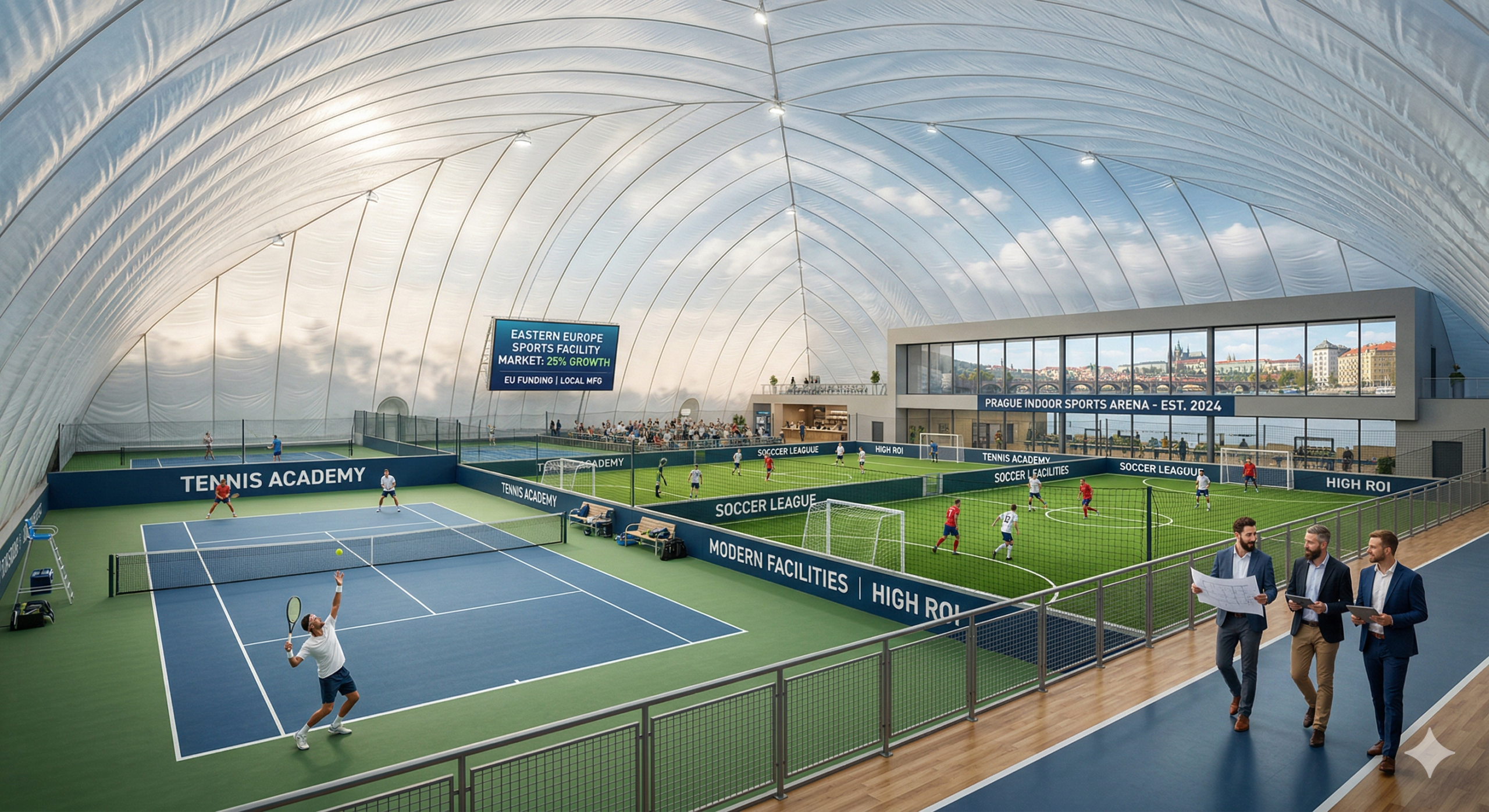
You’re facing a critical decision that’ll determine whether your air dome investment pays off or becomes a costly mistake. The key isn’t just selecting the right sports—it’s understanding how to configure your space so each activity flows seamlessly into the next. Most facility owners overlook three essential elements that separate profitable multi-sport domes from those struggling to break even, and the difference comes down to strategic planning decisions you’ll make in the next few weeks.
How Much Space Do You Need for Multi-Sport Air Dome Facilities?
When planning your multi-sport air dome, you’ll need to calculate space requirements based on the sports you want to accommodate. A standard tennis court measures 78′ x 36′ and can house four pickleball courts at 20′ x 44′ each with proper line markings.
Your versatile sports dome should consider basketball courts requiring 50′ x 84′, while volleyball needs 30′ x 60′ of playing space.
The key to maximizing your multi purpose indoor facility lies in strategic layout planning. You can overlay multiple sport lines on the same surface, using different colors to distinguish each game.
Include removable nets and portable dividers to quickly transform spaces. This flexible approach lets you host tennis in the morning, switch to pickleball for afternoon leagues, then accommodate basketball or volleyball during evening sessions.
Multi-Sport Court Layout Planning: Maximizing Your Available Space
Since your air dome’s footprint determines your facility’s earning potential, smart court layout planning becomes essential for maximizing both space utilization and revenue streams.
Effective multi court air dome planning requires strategic positioning of different sports within your available space. A standard tennis court (78′ x 36′) can accommodate four pickleball courts (20′ x 44′), instantly quadrupling your capacity for that sport.
Key layout considerations include:
- Removable net systems for quick sport changes
- Multi-purpose court lines painted for multiple sports
- Retractable dividers to create separate playing areas
- Adequate clearance zones between courts for safety
- Strategic placement of high-activity sports away from entrances
You’ll maximize revenue by designing flexible spaces that can adapt to demand fluctuations throughout different seasons and peak hours.
Tennis Courts That Convert to 4 Pickleball Courts
You’ll find that converting a standard 78′ x 36′ tennis court into four 20′ x 44′ pickleball courts requires careful layout planning to maximize your space efficiency.
Your net system installation becomes essential since you’ll need removable pickleball nets that can be quickly set up or stored when switching between sports.
The key lies in designing multi-purpose court lines that clearly define each pickleball court’s boundaries while maintaining the original tennis court markings.
Court Conversion Layout Design
Although tennis courts measure 78′ x 36′ (23.8m x 11m), their spacious dimensions make them perfect for accommodating four standard pickleball courts at 20′ x 44′ (6.1m x 13.4m) each.
You’ll need to strategically position these courts within the tennis boundaries while maintaining proper spacing.
Your conversion layout should include:
- Perpendicular orientation – Position pickleball courts across the tennis court’s width for ideal fit
- Center dividing net – Install removable barrier separating the two pairs of courts
- Color-coded line systems – Use different colors to distinguish tennis from pickleball boundaries
- Removable net posts – Deploy portable systems that don’t damage existing surfaces
- Safety clearance zones – Maintain 3-4 feet between adjacent courts for player movement
This configuration maximizes your facility’s revenue potential while serving multiple sports communities efficiently.
Net System Installation
When converting tennis courts to accommodate four pickleball courts, your net system becomes the backbone of functional gameplay.
You’ll need portable net posts that anchor securely without damaging the court surface. Install four regulation pickleball nets at 36″ height on ends and 34″ at center, positioned 22 feet apart within each court section.
Choose wheeled net systems with easy-lock mechanisms for quick setup and removal. Your posts should feature tension adjustments to maintain proper net tautness across the 20-foot width.
Consider posts with weighted bases or ground sleeves for stability during intense play.
Mark clear storage zones along court perimeters for net equipment when tennis mode is active. This system allows seamless shifts between sports while maintaining professional playing standards for both activities.
Basketball and Volleyball Multi-Sport Configurations
You’ll find basketball and volleyball courts share similar rectangular dimensions, making them ideal partners for multi-sport air dome configurations.
Your 50′ x 84′ basketball court can accommodate volleyball’s 30′ x 60′ playing area with strategic line placement and net positioning systems.
Smart equipment switching setups let you transform between sports quickly using retractable basketball hoops and adjustable volleyball net systems.
Court Layout Options
Since basketball and volleyball courts share similar rectangular dimensions, they create an ideal pairing for multi-sport air dome configurations.
You’ll find that basketball courts at 50′ x 84′ can easily accommodate volleyball’s 30′ x 60′ requirements with strategic line placement and removable nets.
Your layout options include:
- Side-by-side configuration – Two courts running parallel with shared buffer zones
- Overlapping design – Volleyball court positioned within basketball boundaries using colored lines
- Convertible single court – Quick transformation between sports using removable equipment
- Multi-zone layout – Dedicated areas for each sport with flexible dividers
- Shared centerline approach – Courts positioned back-to-back with common boundary
You’ll maximize space efficiency by incorporating multi-purpose line markings and installing ceiling-mounted net systems that retract when not needed.
Equipment Switching Systems
You’ll need quick-release net posts that lock securely into floor sockets. Store folding equipment carts along dome walls to transport gear efficiently between activities.
| System Type | Switch Time |
|---|---|
| Hydraulic Basketball Hoops | 30 seconds |
| Ceiling Volleyball Nets | 2 minutes |
| Floor Socket Net Posts | 45 seconds |
| Equipment Cart Storage | 1 minute |
Consider installing wall-mounted control panels near each court zone. These centralized switching stations let facility managers coordinate equipment changes without crossing active play areas, maintaining safety while maximizing operational efficiency.
Removable Net Systems for Quick Sport Transitions
Three key components make removable net systems essential for maximizing your air dome’s versatility: portable posts, adjustable height mechanisms, and secure anchoring systems.
You’ll need posts that accommodate different sports’ specific requirements. Tennis nets stand at 3 feet center height, while pickleball nets measure 34 inches at center and 36 inches at posts.
Volleyball nets require significant height adjustments between men’s (7’11⅝”) and women’s (7’4⅛”) play.
Essential features for efficient shifts include:
- Quick-release base systems that don’t damage flooring
- Telescoping posts with reliable locking mechanisms
- Wheeled storage carts for easy transport
- Color-coded height markers for rapid setup
- Standardized anchor points across court areas
Invest in professional-grade systems that withstand frequent adjustments while maintaining proper tension and regulation heights for competitive play.
Smart Line Marking for Multiple Sports on Shared Courts
When multiple sports share the same court space, strategic line marking becomes the foundation for seamless changes and clear gameplay boundaries. You’ll need different colored lines for each sport to eliminate confusion during play. Use white for tennis, blue for pickleball, yellow for basketball, and red for volleyball to create visual distinction.
Consider permanent court markings with durable paint that withstand heavy foot traffic and equipment movement. For temporary lines, removable tape works well but requires regular maintenance.
Position lines strategically so they don’t interfere with other sports’ play areas.
Design your layout with a master plan showing all sports’ boundaries simultaneously. This prevents overlapping conflicts and guarantees each sport has adequate buffer zones for safe, competitive play.
Air Dome Climate Control for Year-Round Multi-Sport Use
Since air domes create sealed environments, maintaining ideal climate conditions becomes critical for athlete performance and equipment longevity across different sports.
You’ll need sophisticated HVAC systems that accommodate varying activity levels and occupancy loads throughout your facility.
Temperature control requires balancing comfort for multiple sports simultaneously. Tennis players prefer 65-70°F, while basketball demands slightly cooler conditions at 60-68°F.
Humidity management prevents condensation on dome surfaces and maintains court traction.
Essential climate control features include:
- Zoned temperature control for independent court area management
- Variable speed fans for consistent air circulation without drafts
- Dehumidification systems maintaining 40-60% relative humidity
- Air filtration removing dust, pollen, and outdoor pollutants
- Backup heating/cooling ensuring uninterrupted operations during equipment maintenance
Proper ventilation prevents stagnant air pockets while maintaining structural pressure requirements for dome integrity.