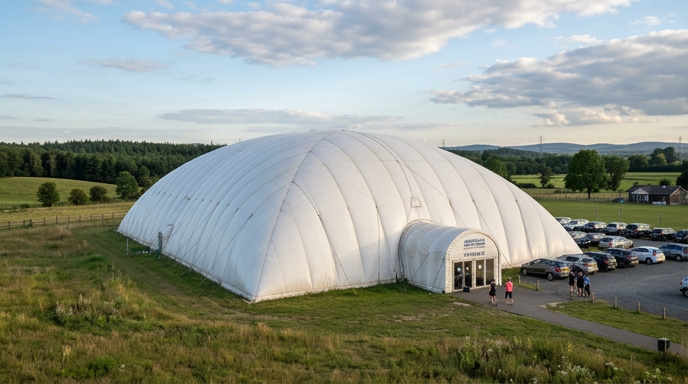
You’re witnessing Asia’s sports dome market transform into a $1.2 billion opportunity by 2028, but here’s what most investors don’t realize: China’s commanding 40% market share isn’t just about volume—it’s reshaping how the entire region approaches weather-independent sports infrastructure. While Japan’s premium positioning and Korea’s massive $2.3 billion investment grab headlines, the real story lies in the unexpected profit margins that tennis and badminton facilities are generating across tier-two cities.
Asia Sports Dome Market Reaches $1.2B by 2028
Three major economies are driving Asia’s sports dome market toward an unprecedented $1.2 billion valuation by 2028.
You’ll find China leading this explosive growth, with china sports dome installations rapidly expanding across tier-one and tier-two cities. The rising middle class is fueling demand for premium indoor tennis and badminton facilities.
Japan’s established market maintains steady growth, with japan indoor sports facilities adhering to strict JIS standards.
You’re seeing consistent investment in multi-sport complexes ranging from 1,000 to 3,000 square meters.
Korea’s emerging market presents significant opportunities as sports participation increases.
The asia air dome sector benefits from growing urbanization and weather-independent facility demand.
You’ll notice costs varying dramatically between countries, but the overall trajectory points toward sustained expansion across all three markets.
China’s 40% Market Share Drives Regional Growth
China’s dominance becomes even more pronounced when examining specific market share data, with the country capturing 40% of Asia’s entire sports dome sector. You’ll find this growth driven by massive infrastructure investments and rising middle-class participation in sports like tennis and badminton.
| Country | Market Share | Growth Rate |
|---|---|---|
| China | 40% | 12.5% |
| Japan | 25% | 3.2% |
| Korea | 15% | 8.7% |
| Others | 20% | 6.1% |
China’s asian sports facility expansion focuses on multi-sport complexes averaging 2,000-3,000 square meters. You’re seeing unprecedented demand from tier-two cities, where local governments prioritize sports infrastructure development. This market leadership positions China as the regional trendsetter, influencing design standards and facility management practices across neighboring markets.
Japan’s Premium Sports Dome Market Commands Higher Margins
While China dominates through volume, Japan’s sports dome market operates on an entirely different model that prioritizes quality over quantity.
You’ll find Japanese facilities adhering to strict JIS standards, creating premium environments that justify higher pricing structures. This established market focuses heavily on tennis and badminton facilities, where you can charge premium rates for superior construction quality and advanced climate control systems.
Your margins in Japan typically exceed other Asian markets by 15-25% due to customers’ willingness to pay for proven reliability and safety compliance.
The mature market means you’re dealing with sophisticated buyers who understand long-term value propositions. You’ll need to meet exacting specifications, but this translates into sustained profitability and repeat business opportunities that China’s price-competitive environment rarely offers.
Korea Invests $2.3B in Sports Infrastructure Development
Korea’s unprecedented $2.3 billion commitment to sports infrastructure development creates massive opportunities for dome manufacturers targeting the growing middle-class market.
You’ll find that Korea’s rising sports participation rates drive demand for tennis, badminton, and multi-sport facilities ranging from 1,000-3,000 square meters.
You can capitalize on this growth, but you’ll face local manufacturing competition and different technical standards than neighboring Japan’s JIS requirements.
Korea’s expanding middle class increasingly prioritizes recreational sports activities, creating sustained demand for quality indoor facilities.
You should prepare for cost variations across different Korean regions while adapting your products to local preferences.
The government’s infrastructure investment timeline spans five years, giving you multiple entry points to establish market presence and build relationships with Korean developers and sports facility operators.
Tennis and Badminton Domes Generate Highest ROI
You’ll find tennis and badminton domes consistently outperform multi-sport facilities in revenue generation per square meter across Asia’s major markets.
These specialized structures operate with 20-30% lower maintenance costs than larger venues while maintaining higher utilization rates throughout peak hours.
Your investment returns improve dramatically when you target the growing middle-class demand for premium racquet sports facilities in urban centers.
Revenue Per Square Meter
Tennis and badminton domes consistently deliver the strongest revenue per square meter across Asia’s sports facility market, with operators reporting returns 25-40% higher than multi-sport complexes. You’ll find these specialized facilities generate premium pricing due to consistent year-round demand and higher booking frequencies.
| Country | Tennis Revenue/sq m | Badminton Revenue/sq m | Multi-Sport Revenue/sq m |
|---|---|---|---|
| China | $85-120 | $75-105 | $55-75 |
| Japan | $110-165 | $95-140 | $70-95 |
| Korea | $90-135 | $80-115 | $60-85 |
Your revenue optimization depends on maximizing court utilization during peak hours. Japan’s established market commands highest rates, while China’s growing middle class creates volume opportunities. Korea offers balanced growth potential with moderate pricing expectations for specialized dome facilities.
Operational Cost Efficiency
While multi-sport complexes require diverse equipment maintenance and specialized staff across various disciplines, tennis and badminton domes achieve excellent operational cost efficiency through streamlined operations and standardized requirements.
You’ll find these single-sport facilities demand fewer specialized technicians, simplified inventory management, and consistent climate control parameters.
China’s tennis domes report 15-20% lower operational costs compared to multi-sport venues of similar size. You can maximize efficiency by implementing automated court booking systems and LED lighting retrofits, reducing energy consumption by 40%.
Japanese facilities excel at preventive maintenance schedules, extending equipment lifecycles considerably.
Your staffing requirements remain predictable—you’ll need fewer cross-trained personnel.
Korea’s badminton domes demonstrate ideal cost structures through standardized court dimensions and unified equipment specifications. This operational simplicity translates directly into higher profit margins and faster payback periods for investors.
Market Demand Drivers
Beyond operational advantages, specific market forces drive exceptional returns for tennis and badminton dome investments across Asia. You’ll find these sports dominate facility usage patterns, generating consistent revenue streams through court rentals, coaching programs, and tournament hosting.
Rising middle-class populations across China, Japan, and Korea create expanding customer bases willing to pay premium rates for climate-controlled playing conditions. You’re positioned to capitalize on year-round demand that traditional outdoor facilities can’t match.
| Market Driver | Impact on ROI |
|---|---|
| Premium court fees | 40-60% higher rates |
| Year-round usage | 300+ operating days |
| Corporate bookings | Stable revenue base |
Tennis and badminton facilities typically achieve 70-85% utilization rates in major Asian markets, remarkably outperforming multi-sport configurations that struggle with scheduling conflicts and equipment management complexities.
Local Manufacturers Undercut International Prices by 50
As international dome manufacturers enter Asian markets, they’re discovering that local competitors consistently offer prices 40-60% below international rates.
You’ll find this pricing gap stems from several key factors that make competing on cost alone nearly impossible. Local manufacturers benefit from considerably lower labor costs, reduced material transportation expenses, and streamlined supply chains.
They’ve also adapted their production processes to meet regional standards like Japan’s JIS requirements without the overhead of international compliance systems. Additionally, you’re facing competitors who understand local procurement practices, payment terms, and relationship-building expectations that international companies often overlook.
This pricing pressure forces you to differentiate through superior technology, faster installation times, extensive warranties, or specialized features that local manufacturers can’t easily replicate.
Rising Incomes Boost Sports Facility Demand Across Asia
You’ll find that Asia’s expanding middle class is driving unprecedented demand for premium sports facilities, with families now willing to invest in year-round indoor venues.
Sports participation rates are climbing sharply as disposable incomes rise, particularly in China and Korea where badminton and tennis memberships have doubled in major cities.
You’re witnessing a fundamental shift where sports domes aren’t luxury amenities anymore—they’re becoming essential infrastructure for communities that can finally afford quality recreational spaces.
Middle Class Growth Impact
Rising disposable incomes throughout Asia are fundamentally reshaping the sports facility landscape, with expanding middle-class populations demanding higher-quality recreational venues.
You’ll find that China’s massive economic growth has created unprecedented demand for premium sports domes, particularly for tennis and badminton facilities.
Japan’s established middle class continues driving steady demand for sophisticated multi-sport complexes that meet JIS standards.
Korea’s rapidly growing middle class is fueling expansion in the 1,000-3,000 square meter facility range.
You’re witnessing families prioritize sports participation as discretionary spending increases, creating opportunities for developers who understand local preferences.
However, you’ll need to navigate varying cost structures and manufacturing competition across different markets.
The key is recognizing that Asia’s middle-class expansion directly translates to sustained sports facility investment.
Sports Participation Trends
Multiple demographic shifts are converging to drive unprecedented sports participation across Asia, with tennis and badminton leading the surge in facility demand.
You’ll find China’s urbanization creating millions of new recreational athletes, while Japan’s aging population increasingly values low-impact sports for health maintenance.
Korea’s competitive culture fuels year-round training demand, particularly for badminton and multi-sport facilities.
You’re seeing participation rates climb 15-20% annually across major Asian markets as disposable incomes rise.
Traditional sports like badminton benefit from cultural familiarity, while tennis grows among younger demographics seeking Western-style recreation.
Climate-controlled domes become essential as players demand consistent, weather-independent access.
This participation boom directly translates to facility demand, with operators requiring 1,000-3,000 square meter spaces to accommodate peak usage periods and diverse programming needs.