You’re facing a familiar challenge if you manage athletic programs or coach track and field athletes. Weather disruptions, seasonal limitations, and expensive facility rentals constantly interfere with training schedules and competitive preparation. Traditional indoor tracks require massive investments and sprawling real estate, putting them out of reach for many organizations. There’s an innovative solution that’s changing how athletic facilities operate, offering year-round training capabilities at a fraction of the cost you’d expect.
What Is a Track and Field Indoor Air Dome?
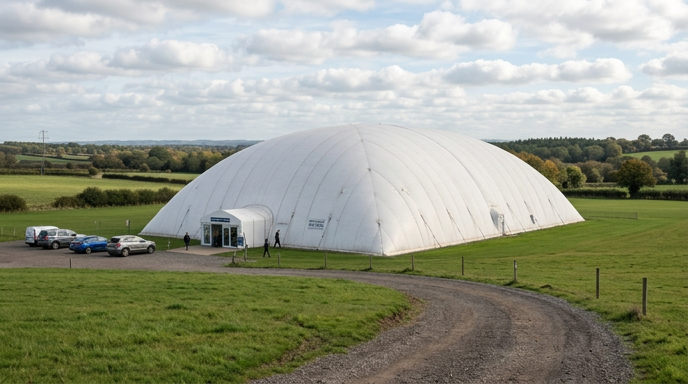
A track and field indoor track air dome transforms year-round athletic training by housing a complete track facility within an inflatable structure.
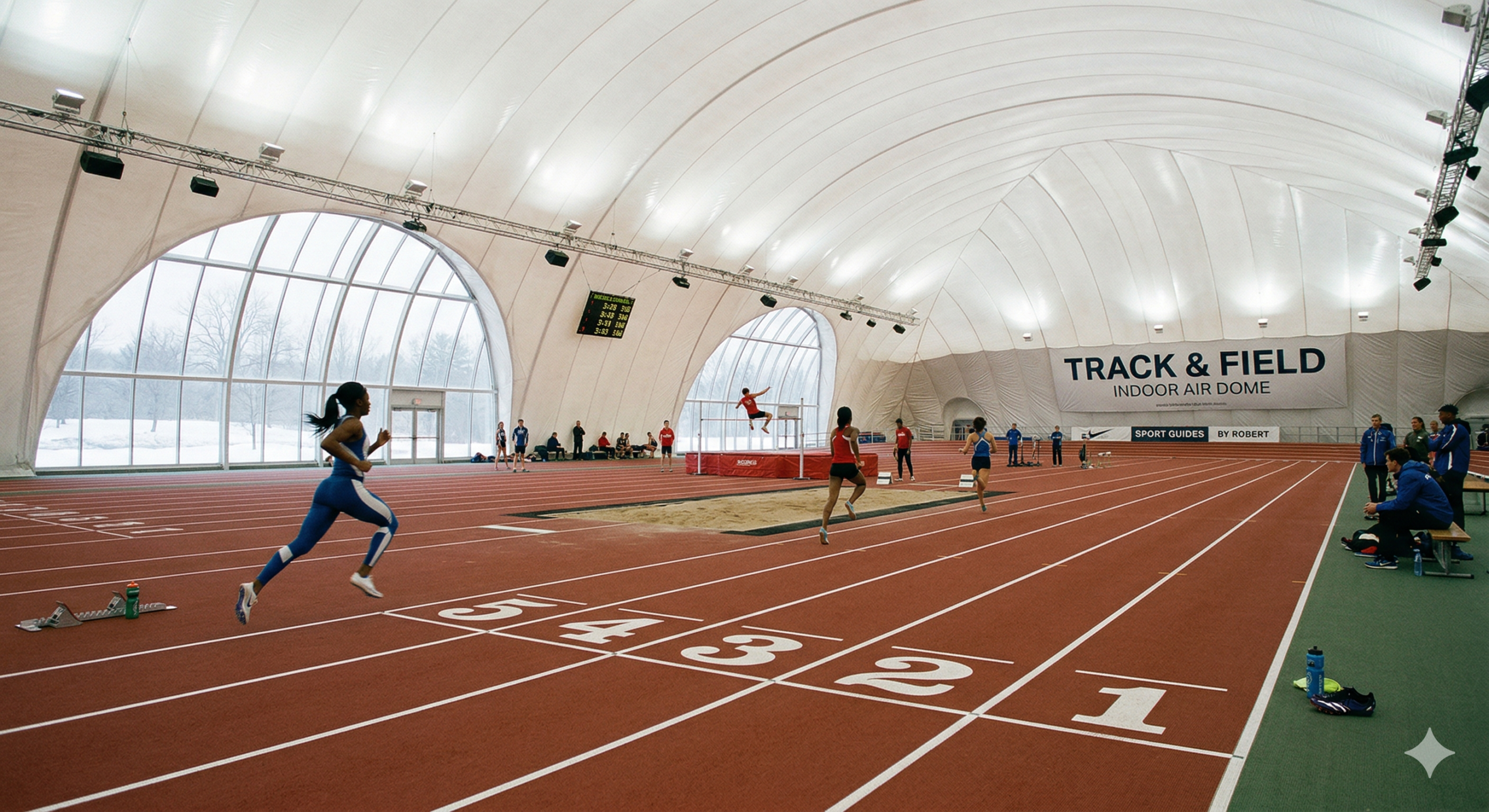
You’ll find these pressurized buildings contain regulation running surfaces, field event areas, and climate-controlled environments that eliminate weather dependencies.
Your indoor track facility typically features a 200-meter hydraulic-banked track with rubberized surfacing, requiring minimum dimensions of 160′ x 260′.
The running track dome maintains 40+ foot heights with professional lighting exceeding 50 foot candles.
Central field areas accommodate long jump pits and shot put circles.
These structures let you train consistently regardless of snow, rain, or extreme temperatures.
The indoor track air dome’s pressurized design creates a stable environment while keeping operational costs lower than traditional brick-and-mortar facilities, making elite training accessible year-round.
Indoor Air Dome Space Requirements and Track Dimensions
Planning your indoor track air dome starts with understanding the specific spatial requirements that determine your facility’s functionality.
Your track and field dome dimensions directly impact athlete performance and safety standards.
For a standard 200-meter hydraulic-banked track, you’ll need minimum dimensions of 160′ x 260′ (48.8m x 79.2m).
If you’re considering a 300-meter track, expand your requirements to 200′ x 350′ (61m x 106.7m).
Essential specifications include:
- Height clearance: 40+ feet (12.2m+) for proper ventilation and safety
- Central field area: Dedicated space for long jump and shot put events
- Surface material: Professional rubberized track surface for peak traction
- Lighting standards: Minimum 50 foot candles for competition-grade visibility
These measurements guarantee your facility meets regulatory standards while maximizing athletic potential.
Track Banking, Surface Materials, and Field Configurations
Precision engineering transforms your indoor track dome from basic infrastructure into a high-performance athletic facility.
Your 200-meter track requires hydraulic banking systems that automatically adjust curve angles, enhancing runner safety and performance across different events. The rubberized surface material you’ll install must provide consistent traction while reducing impact stress on athletes’ joints.
You’ll configure the central field area to accommodate multiple events simultaneously. Long jump runways typically extend from the track’s interior, while shot put circles position strategically to maximize safety clearances.
Your dome’s 40-foot minimum height guarantees adequate space for pole vault and high jump events.
Surface consistency becomes critical—temperature fluctuations can affect rubber track performance, so you’ll need climate control systems maintaining ideal conditions year-round for competitive standards.
Indoor Air Dome Lighting and Environmental Control
You’ll need proper lighting that delivers at least 50 foot candles of illumination to guarantee athletes can perform safely and effectively during training and competition.
Your climate control system must maintain consistent temperature and humidity levels while managing air circulation throughout the dome structure.
These environmental factors directly impact athletic performance and the longevity of your track surface materials.
Optimal Lighting Standards
When athletes train year-round in your indoor air dome, consistent lighting becomes essential for both performance and safety.
You’ll need a minimum of 50 foot candles of illumination across your track surface to guarantee athletes can clearly see lane markings, obstacles, and their footing during high-intensity training sessions.
Your lighting system should deliver:
- Uniform distribution – No dark spots or glare zones that could cause missteps
- High-quality LED fixtures – Energy-efficient with minimal heat generation
- Consistent color temperature – 4000K-5000K range for natural daylight simulation
- Emergency backup systems – Battery-powered lighting for safe evacuation
You’ll want to position fixtures strategically around the dome’s perimeter and overhead to eliminate shadows.
Proper lighting isn’t just about visibility—it affects athlete circadian rhythms and training quality throughout winter months.
Climate Control Systems
Beyond maintaining proper visibility, your indoor air dome requires sophisticated climate control to create excellent training conditions year-round. You’ll need systems that regulate temperature, humidity, and air circulation to enhance athletic performance and prevent condensation damage.
| System Component |
Recommended Range |
Key Benefits |
| Temperature |
60-68°F (15-20°C) |
Superior performance comfort |
| Humidity |
40-60% RH |
Prevents condensation/mold |
| Air Changes |
6-8 per hour |
Fresh air circulation |
| Pressure |
+0.2-0.5″ WC |
Maintains dome structure |
| Filtration |
MERV 8-13 |
Removes dust/allergens |
Your HVAC system must maintain positive air pressure to keep the dome inflated while providing adequate ventilation. Installing zone controls allows you to adjust conditions based on occupancy and activity levels, ensuring energy efficiency without compromising athlete comfort.
Indoor Air Dome vs Traditional Indoor Track Facilities
When you’re deciding between an air dome and traditional indoor track facility, you’ll need to weigh three critical factors that’ll impact your project’s success.
Cost differences can be substantial, with air domes typically requiring lower upfront investment but ongoing operational expenses for inflation systems.
You’ll also face different space requirements and construction timelines that could greatly affect your facility’s feasibility and opening date.
Cost Comparison Analysis
Five critical cost factors separate indoor air dome track facilities from traditional brick-and-mortar indoor tracks, with initial construction expenses showing the most striking difference.
You’ll find air domes cost 60-80% less than traditional facilities. A 200m track air dome typically runs $300,000-$500,000, while conventional indoor tracks demand $2-5 million.
Here’s what drives these savings:
- Foundation requirements: Air domes need minimal concrete work versus extensive structural foundations.
- Material costs: Fabric membrane systems cost considerably less than steel, brick, and extensive HVAC systems.
- Construction timeline: 8-12 weeks for air domes compared to 12-24 months for traditional facilities.
- Operating expenses: Lower heating/cooling costs due to efficient air circulation and insulation properties.
You’ll also save on maintenance, as air dome systems require less structural upkeep than traditional buildings.
Space Requirements Differences
While traditional indoor track facilities demand massive footprints with extensive structural zones, air domes maximize usable space within surprisingly compact dimensions.
You’ll find conventional facilities require additional square footage for structural supports, mechanical rooms, and perimeter walkways that don’t contribute to athletic performance. Air domes eliminate these space-wasting elements.
For a 200-meter track, you need only 160′ x 260′ of actual ground space with an air dome, while traditional buildings require 30-40% more total area for the same usable track surface.
The dome’s inflated structure creates clear spans without interior columns, giving you maximum field space for shot put and long jump activities.
You’re fundamentally getting more athletic functionality per square foot of real estate investment.
Construction Timeline Factors
Traditional indoor track construction can stretch 18-24 months from groundbreaking to completion, but air dome installations typically finish in just 8-12 weeks.
You’ll find this dramatic difference stems from the simplified construction process and reduced structural requirements.
Your air dome project eliminates several time-consuming phases that traditional facilities require:
- Foundation work – Simple concrete slab vs. complex structural foundations
- Structural steel – No steel framework or roof trusses needed
- Weather delays – Dome inflation protects work from elements
- Interior finishing – Minimal electrical and mechanical systems
You won’t face the lengthy permit approval processes that plague traditional construction either.
The streamlined design means fewer trades, reduced coordination complexity, and faster material delivery.
Most delays you’ll encounter involve site preparation and utility connections rather than structural complications.
Indoor Air Dome Installation and Cost Factors
Because track and field air domes require specialized engineering and materials, you’ll face several key cost factors that directly impact your total investment.
Foundation work represents your largest expense, requiring specialized footings for hydraulic banking systems and proper drainage.
The dome fabric itself costs considerably more than standard structures due to its size requirements—160′ x 260′ minimum for 200m tracks.
Installation complexity increases costs through specialized labor requirements. You’ll need certified technicians for hydraulic banking systems, professional lighting installation achieving 50+ foot candles, and rubberized surface application.
Air handling systems require industrial-grade blowers and backup power systems to maintain structural integrity.
Geographic location affects transportation costs for oversized materials, while local building codes may require additional engineering certifications, further impacting your budget.
Air-Supported Structure Maintenance and Upkeep
Since your track and field air dome depends on continuous air pressure to maintain structural integrity, you’ll need to establish a thorough maintenance program that addresses both routine upkeep and emergency preparedness.
Regular maintenance tasks include:
- Fan system inspection – Check blowers monthly for proper operation, clean filters, and verify backup systems function correctly.
- Membrane assessment – Examine fabric for tears, wear patterns, and proper tension while monitoring air pressure gauges daily.
- Anchor point evaluation – Inspect foundation attachments, cable tensioning, and ground seal integrity quarterly.
- Emergency protocol testing – Practice deflation procedures and staff evacuation plans while maintaining emergency repair kits on-site.
You’ll also need to schedule professional inspections annually and budget for membrane cleaning every 2-3 years.
Proper documentation of all maintenance activities helps identify potential issues before they become costly repairs.
Selecting the Right Indoor Air Dome for Your Needs
How do you determine which indoor air dome specifications will best serve your track and field program? Start by evaluating your space requirements and budget constraints.
A standard 200-meter hydraulic-banked track requires a minimum 160′ x 260′ footprint, while a 300-meter track needs 200′ x 350′. Consider your primary activities—if you’ll host long jump and shot put events, guarantee adequate central field area dimensions.
Height matters for safety and performance; you’ll need 40+ feet minimum clearance.
Don’t overlook lighting requirements of 50+ foot candles for proper visibility during training and competitions. Your rubberized surface choice affects athlete performance and maintenance costs.
Factor in local weather conditions, intended usage frequency, and whether you’ll need year-round or seasonal operation when making your final selection.