Tag: buying guide

  • Tension Fabric Structure Buying Guide

    Tension Fabric Structure Buying Guide

    You’re about to make a significant investment in a tension fabric structure, but the sheer number of variables can overwhelm even experienced buyers. From calculating your clear span requirements to maneuvering through local permitting hurdles, each decision impacts your project’s timeline, budget, and long-term performance. The wrong choice in framing or fabric material could cost you thousands in repairs or replacements down the road. Here’s what you need to know before you commit.

    Tension Fabric Building Basics: Spans, Applications, and Budget Planning

    Three fundamental factors shape every tension fabric building decision: the clear span width you need, your intended application, and your available budget. You can achieve clear spans up to 300 feet (91 meters) without interior columns, making these structures ideal for warehouses, aircraft hangars, sports facilities, and manufacturing plants.

    Your application determines critical specifications like wind loads, snow loads, and required door configurations. Athletic facilities need different engineering than storage buildings. Manufacturing operations require specific ventilation and lighting considerations.

    Budget planning involves upfront costs for frames, fabric, and installation, plus long-term expenses for maintenance and energy. This tension fabric structure buying guide helps you balance these three factors effectively.

    Consider operational costs early—insulation and HVAC requirements greatly impact your total investment over the building’s 25-year lifespan.

    Frame Options: I-Beam vs Truss Systems for Your Tension Fabric Structure

    When selecting your tension fabric structure’s foundation, you’ll choose between two primary frame systems: I-beam and truss configurations. Each system offers distinct advantages when buying fabric building solutions for your specific needs.

    Feature I-Beam System Truss System
    Clear Spans Up to 200 feet Up to 300 feet
    Construction Speed Faster installation Longer assembly time
    Cost Lower initial investment Higher upfront cost
    Structural Strength Suitable for most applications Maximum load capacity

    I-beam frames use solid steel beams that’re ideal for smaller to medium-sized structures, offering quick assembly and cost-effectiveness. Truss systems utilize triangulated steel frameworks that provide superior strength for larger spans and heavy snow loads, making them perfect for industrial applications requiring maximum structural integrity.

    Fabric Material Guide: PVC vs PTFE Performance and Costs

    After selecting your frame system, you’ll need to choose between two primary fabric materials that’ll determine your structure’s durability, performance, and long-term costs.

    PVC (Vinyl) Fabric offers excellent value for most applications. It’s UV-resistant, translucent, and costs considerably less than PTFE. You’ll get 15-20 years of reliable performance with proper maintenance.

    PTFE (Teflon-coated fiberglass) delivers premium longevity and fire resistance. While more expensive upfront, it lasts 25-30 years and handles extreme weather conditions better than PVC.

    Consider these performance scenarios when consulting your rigid frame purchase guide:

    1. Coastal environments: Salt air accelerates PVC degradation.
    2. High-temperature zones: PTFE withstands heat without compromising structural integrity.
    3. Heavy snow loads: PTFE’s superior tensile strength prevents fabric stretching.

    Your climate, budget, and intended lifespan should drive this critical material decision.

    Permits and Engineering: Local Code Requirements for Tension Fabric Buildings

    Before you finalize your fabric selection and frame specifications, you’ll need to navigate the engineering and permitting requirements that govern tension fabric structures in your area. Local building codes vary considerably, and your clear span building buying process must account for wind loads, snow loads, and seismic requirements specific to your location.

    Most jurisdictions require stamped engineering drawings from a licensed structural engineer. Your manufacturer should provide preliminary calculations, but you’ll need final approval from a local engineer familiar with regional codes.

    Common requirements include foundation design, anchor point specifications, and fire safety compliance.

    Start the permit application early, as approval can take 4-8 weeks. Some areas have streamlined processes for pre-engineered buildings, while others require extensive documentation for these specialized structures.

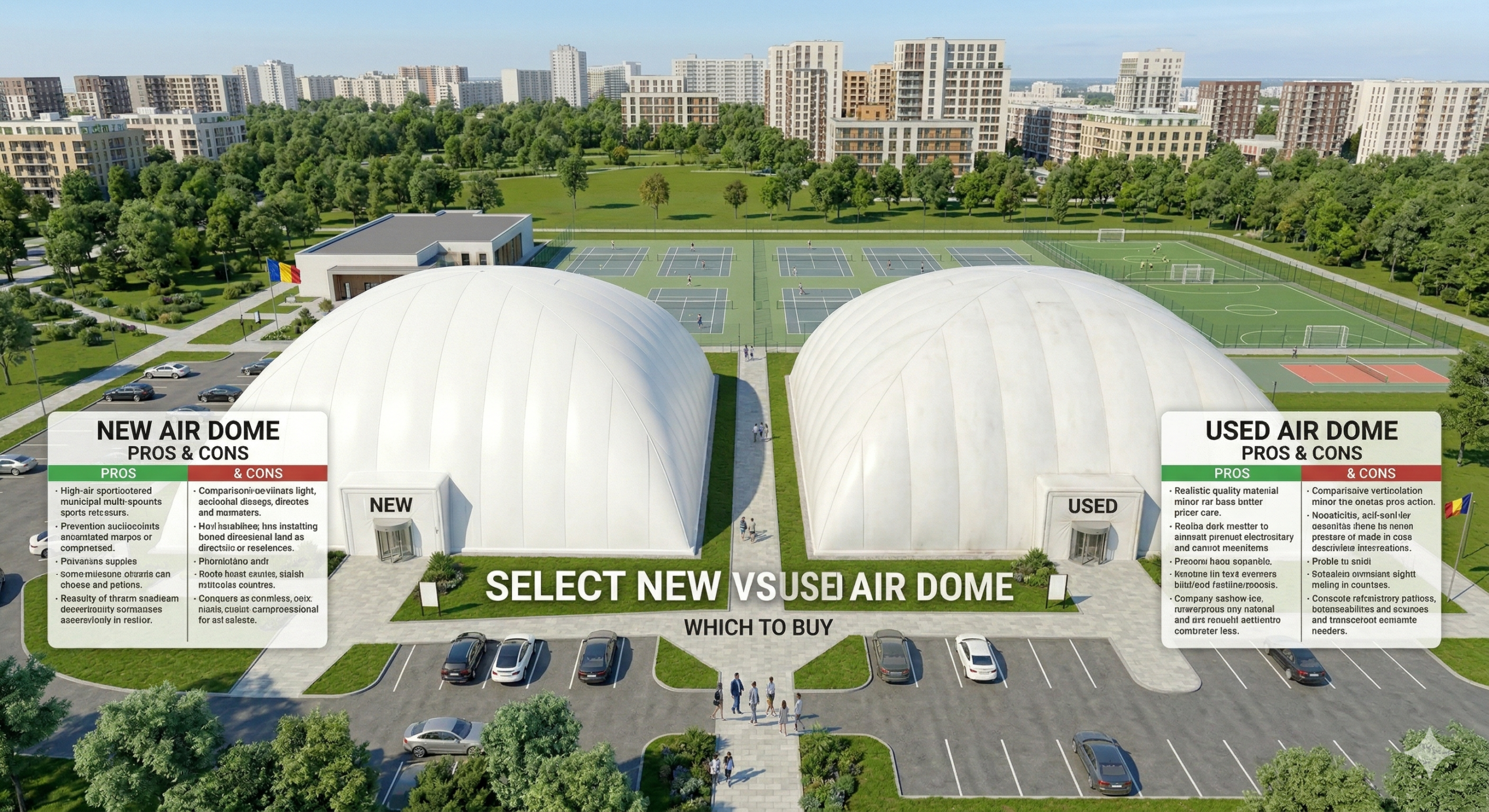
  • How to Buy a Tennis Air Dome in 2026

    How to Buy a Tennis Air Dome in 2026

    You’re considering a tennis air dome for 2026, but the process isn’t as straightforward as you might expect. While prices have stabilized compared to recent years, you’ll face new regulations, updated technology options, and shifting supplier landscapes that didn’t exist just two years ago. The key lies in understanding what’s changed in the industry and how these developments will impact your investment, timeline, and long-term operational costs.

    Tennis Air Dome Costs and Budget Planning for 2026

    Before diving into specific features and installation logistics, you’ll need to establish a realistic budget for your tennis air dome project in 2026.

    Tennis air dome costs and budget planning for 2026 requires understanding several pricing factors. Basic single-court domes start around $150,000-$200,000, while multi-court facilities can exceed $500,000.

    Your budget should include the dome structure, foundation work, electrical systems, HVAC equipment, and installation labor. Don’t forget ongoing operational costs like electricity, maintenance, and insurance.

    Seasonal domes cost less initially but require annual setup fees. This thorough air dome purchase guide emphasizes getting multiple quotes early, as material costs fluctuate.

    Consider financing options, including equipment loans and lease agreements, to manage cash flow effectively throughout your project timeline.

    Determine Your Court Size and Site Requirements

    The first critical step in your tennis air dome project involves calculating the exact dimensions and evaluating your site’s suitability.

    When learning how to buy tennis air dome structures, you’ll need minimum dimensions of 78′ x 120′ (23.8m x 36.6m) for a single court, totaling 9,360 square feet. This doesn’t include additional space for walkways and equipment.

    Your site must be level with proper drainage to prevent water accumulation. Check local zoning laws and obtain necessary permits before proceeding.

    Consider proximity to utilities like electricity and water connections, as these affect installation costs. Soil conditions matter too – soft ground may require additional foundation work.

    Measure twice and account for buffer zones around the court perimeter to guarantee players have adequate movement space during gameplay.

    Choose Your Tennis Air Dome Type and Key Features

    Once you’ve established your site requirements, you’ll face the critical decision between seasonal and permanent tennis air dome options. When buying tennis bubble structures, seasonal domes cost less upfront but require annual installation and removal. Permanent installations offer year-round play but demand higher initial investment.

    Feature Seasonal Permanent
    Cost $15,000-$40,000 $50,000-$150,000
    Installation Annual setup/takedown One-time installation
    Durability 5-7 years 15-25 years
    Insulation Basic single layer Double-wall options
    Lighting Portable systems Integrated LED

    Consider essential features like ventilation systems, emergency exits, insulation levels, and lighting quality. Double-wall construction provides superior insulation but increases costs. Evaluate your budget against long-term usage plans to determine which option delivers the best value for your specific needs.

    Compare Air Dome Suppliers and Get Smart Quotes

    After selecting your preferred dome type and features, you’ll need to identify reputable suppliers who can deliver quality structures within your budget.

    Research manufacturers with proven track records in tennis facility construction. Look for companies offering extensive warranties, installation services, and ongoing maintenance support.

    Request detailed quotes from 3-5 suppliers to compare pricing, specifications, and timelines. Your sports dome buying process should include evaluating each vendor’s experience with similar projects, checking customer references, and reviewing installation portfolios.

    Ask about financing options, permit assistance, and post-installation support.

    Don’t automatically choose the lowest bid—consider value, quality, and service reliability. Request itemized quotes showing materials, labor, permits, and additional features.

    Verify insurance coverage and licensing before making your final decision.

    Installation Timeline and Permitting Process

    Before construction begins, you’ll need to secure proper permits and understand the installation timeline for your tennis air dome. Most installations require building permits, electrical permits, and zoning approvals, which can take 4-12 weeks depending on your local municipality.

    The typical installation timeline follows these phases:

    1. Site preparation and foundation work – 2-4 weeks for concrete pad and utilities
    2. Dome delivery and setup – 1-2 weeks for fabric installation and inflation system
    3. Interior finishing – 1-3 weeks for lighting, HVAC, and court surfacing
    4. Final inspections and testing – 1 week for safety compliance and operational checks

    Your air dome selection guide should include permit requirements specific to your area. Weather conditions can extend timelines, so plan installations during favorable seasons.

    Most suppliers coordinate with local contractors to streamline the permitting and installation process.

  • Complete Guide to Buying Used Air Domes USA

    Complete Guide to Buying Used Air Domes USA

    You’re considering a used air dome, but you don’t want to make a costly mistake. The American market offers numerous opportunities, yet steering through pricing, inspections, and reliable sources can feel overwhelming without proper guidance. Whether you’re looking at a five-year-old facility or something older, knowing what constitutes a fair deal versus a potential disaster separates smart buyers from those who learn expensive lessons. The difference often comes down to understanding what others have discovered too late.

    How Much Should You Pay for a Used Air Dome?

    Several factors determine the fair market price for a used air dome, with age being the primary consideration.

    You’ll typically pay 60% of the original price for a 5-year-old structure. For example, a single court 7,200 square foot dome that originally cost $180K-$240K new will run $108K-$144K used.

    A 10-year-old dome drops to 40-50% of its original value, ranging from $72K-$108K for the same size structure.

    Your used tennis bubble buying guide should include professional inspections of three critical components: fabric integrity for tears or wear, blower system condition and efficiency, and door functionality.

    These elements greatly impact the dome’s remaining lifespan and operating costs, making them essential factors in determining fair market value.

    Inspect These 5 Critical Components Before Buying

    Five essential components require thorough inspection before you purchase any used air dome.

    The fabric membrane represents your largest concern—check for tears, excessive wear, UV damage, and proper tension.

    Inspect the blower system‘s motor condition, belt wear, and overall maintenance history since it’s costly to replace.

    Door seals and mechanisms must function properly to maintain air pressure; test all entry points for leaks and smooth operation.

    The inflation system requires evaluation of pressure sensors, backup systems, and control panels.

    Finally, examine the foundation anchoring system for rust, loose bolts, or structural damage.

    A detailed used sports dome inspection by a qualified technician costs $2,000-$5,000 but prevents expensive surprises.

    Document all findings and obtain repair estimates before finalizing your purchase decision.

    Best Places to Find Used Air Domes for Sale

    Multiple specialized marketplaces and industry channels offer access to used air domes, though you’ll find the best selection through sports facility dealers who handle trade-ins and upgrades.

    These dealers often maintain inventory from schools and clubs replacing older structures.

    Commercial auction sites like EquipNet and BidSpotter regularly feature decommissioned air domes from recreational facilities.

    You’ll also discover opportunities through direct contact with manufacturers like DBS Engineering and Air Structures American Technologies, who broker used units.

    Industry publications such as Athletic Business magazine’s classified sections connect buyers with sellers nationwide.

    LinkedIn groups focused on sports facility management provide networking opportunities where deals emerge organically.

    Don’t overlook local tennis clubs, schools, and recreational centers that might be upgrading their facilities—they’re among the best places to find used air domes for sale.

    What to Expect: Used Air Dome Condition by Age

    Once you’ve located potential air dome sellers, understanding how age affects structural condition helps you negotiate fair prices and avoid costly surprises.

    When buying used air dome structures, age directly correlates with wear patterns and maintenance needs.

    Here’s what you’ll typically encounter:

    1. 5-year-old domes (60% of new price): Expect minor fabric wear, functioning blower systems, and operational doors with minimal repairs needed.
    2. 10-year-old domes (40-50% of new price): Anticipate fabric patches, potential blower replacements, and door mechanism adjustments or upgrades.
    3. 15+ year domes: Require thorough fabric inspection, likely blower overhauls, and possible structural component replacements.

    Always prioritize professional inspections focusing on fabric integrity, blower motor condition, and door functionality.

    These three components determine your dome’s immediate usability and future maintenance costs.