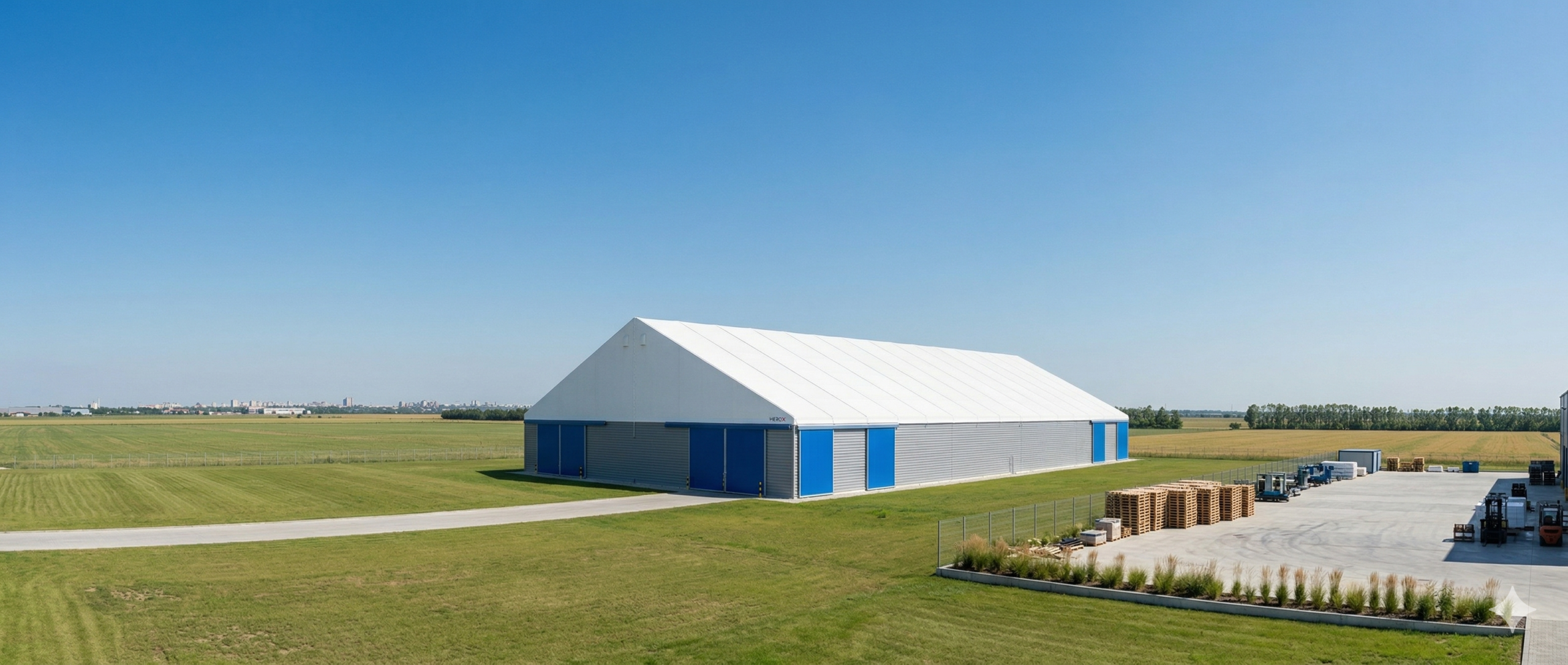
You’ll pay between $2.99 and $30 per square foot for clear span fabric buildings, with small spans (20-40 ft) at the lower end and medium spans (40-70 ft) reaching $20-$30 per square foot. Kit-only pricing runs $15-$26 per square foot, while installation adds another $8-$12. Wider spans cost considerably more due to heavier materials, custom engineering, and complex foundations. The guide below breaks down these cost factors and compares fabric versus steel options.
Clear Span Fabric Building Costs By Size And Width
When planning your clear span fabric building project, understanding how size and width directly impact costs helps you make informed budget decisions.
Clear span building cost varies greatly based on your structure’s dimensions, with smaller buildings typically costing more per square foot than larger ones.
Small span buildings (20-40 feet wide) range from $2.99 to $30 per square foot, depending on features and complexity.
Medium span structures (40-70 feet) offer the pricing sweet spot at $20-$30 per square foot for most commercial applications.
Large span buildings (80+ feet) achieve the best economy of scale, with costs dropping to $8-$25 per square foot for structures over 10,000 square feet. These fabric structures can be erected at approximately 2,500 ft²/day, making them an efficient choice for projects requiring quick completion.
Kit-only pricing runs $15-$26 per square foot, while installed costs add $8-$12 per square foot for labor and foundations.
Why Wider Clear Spans Cost 40-70% More
Although wider clear span buildings offer impressive column-free interiors, they’ll cost you 40-70% more than narrower alternatives due to exponentially increasing structural demands.
The clearspan structure pricing escalates dramatically as you increase width beyond economical ranges of 40-100 feet. Here’s why your costs multiply:
- Material requirements surge – You’ll need heavier gauge materials, with costs increasing 10-20% for every 33-foot width increase.
- Custom engineering replaces standardized designs – Spans over 120 feet require specialized calculations and professional engineering fees.
- Foundation systems become more complex – Wider spans concentrate greater loads, demanding deeper, more robust foundations.
- Premium fabric materials are mandatory – Reinforced membranes cost $60-90/m² versus standard $40-60/m² options.
These factors eliminate economies of scale, making wide-span buildings considerably more expensive per square foot. Building height also impacts structural requirements, with structural steel consumption rising by 5%-10% per meter of height increase.
Fabric Vs Steel Buildings: Which Costs Less?
Why do fabric buildings consistently undercut steel structures on initial costs? You’ll pay $20-$35 per square foot for fabric buildings versus $20-$45 per square foot for steel buildings including installation.
The fabric covered building price advantage stems from lighter weight requirements and simplified foundations—often just concrete blocks instead of extensive concrete pours.
However, steel buildings deliver superior long-term value. While fabric structures need periodic membrane replacement due to wear, steel buildings require minimal maintenance beyond occasional cleaning. Steel construction uses structural components like frames, beams, and columns that contribute to higher fabrication costs.
Steel construction offers 50% savings compared to conventional methods over 20 years, with total costs ranging $670,000-$1.1 million.
Choose fabric buildings for temporary setups prioritizing low upfront investment. Select steel buildings for permanent structures where you’ll maximize return on investment through durability and higher resale values.
Installation Speed And Labor Cost Breakdown
Beyond the upfront cost savings, clear span fabric buildings deliver remarkable speed advantages that directly impact your labor expenses.
You’ll reduce construction timelines from 2-3 years for traditional factories to just 1 week to 1 month. This acceleration greatly lowers your wide span fabric structure cost through reduced labor overhead and faster ROI realization.
Key labor cost benefits include:
- Lightweight materials – Reduced erection time due to easier handling and transport
- Fewer connection points – Simplified installation with minimal field adjustments required
- Column-free design – Streamlined assembly without internal support complications
- Precision manufacturing – CNC-fabricated components eliminate rework and delays
You’ll achieve deployment in weeks versus months, with modular construction enabling staggered capacity additions. The fabric coverings also enhance insulation properties, reducing long-term operational energy costs that impact your total cost of ownership.
Earlier facility activation means sooner revenue generation while minimizing carrying costs.
Frequently Asked Questions
How Long Do Clear Span Fabric Buildings Typically Last?
Your clear span fabric building will typically last 15-30 years with proper maintenance.
You’ll get 20-30+ years from well-engineered structures since steel frames outlast fabric covers considerably.
The galvanized steel frame lasts 30-50 years, while fabric membranes need replacement every 15-25 years depending on quality.
You can extend your building’s life by re-covering the original frame, potentially doubling its useful lifespan with minimal additional investment.
What Permits and Foundation Costs Should I Budget For?
You’ll need to budget $5-$10 per square foot for foundations, with costs varying based on soil conditions and site complexity.
Level ground keeps you at the lower end, while sloping or soft soil can double expenses.
Don’t forget building permits, which typically cost $500-$2,000 depending on your local jurisdiction.
You’ll also need structural engineering plans and potentially environmental permits.
Total permitting usually adds $2,000-$5,000 to your project budget.
Do Clear Span Fabric Buildings Require Ongoing Maintenance Expenses?
Yes, you’ll need to budget for ongoing maintenance expenses with clear span fabric buildings.
You should expect approximately $0.25-$0.50 per square foot annually for maintenance costs. This includes periodic tension adjustments, structural inspections, and potential steel component care in harsh environments.
However, fabric buildings require considerably less maintenance than traditional construction due to their resistance to rust, corrosion, and water leakage, making them cost-effective long-term.
Can Clear Span Fabric Buildings Withstand Heavy Snow and Wind Loads?
Yes, you can rely on clear span fabric buildings to handle severe weather conditions.
They’ll withstand wind speeds up to 185 mph when custom-engineered and accommodate snow loads up to 100 psf.
The galvanized steel framing flexes under pressure without failing, while the tension fabric creates a sturdy structure.
You’ll need to work with engineers to meet your region’s specific load requirements and building codes for peak performance.
What Financing Options Are Available for Large Clear Span Projects?
ClearSpan offers extensive in-house financing that eliminates third-party lenders.
You’ll get zero-interest financing for 12 months if paid in full, or rates as low as 5.99% with small down payments.
They also provide zero-money-down options with seven-year terms and no first-year payments.
Their internal teams coordinate financing with design and installation, streamlining your project while preserving capital for other business investments.