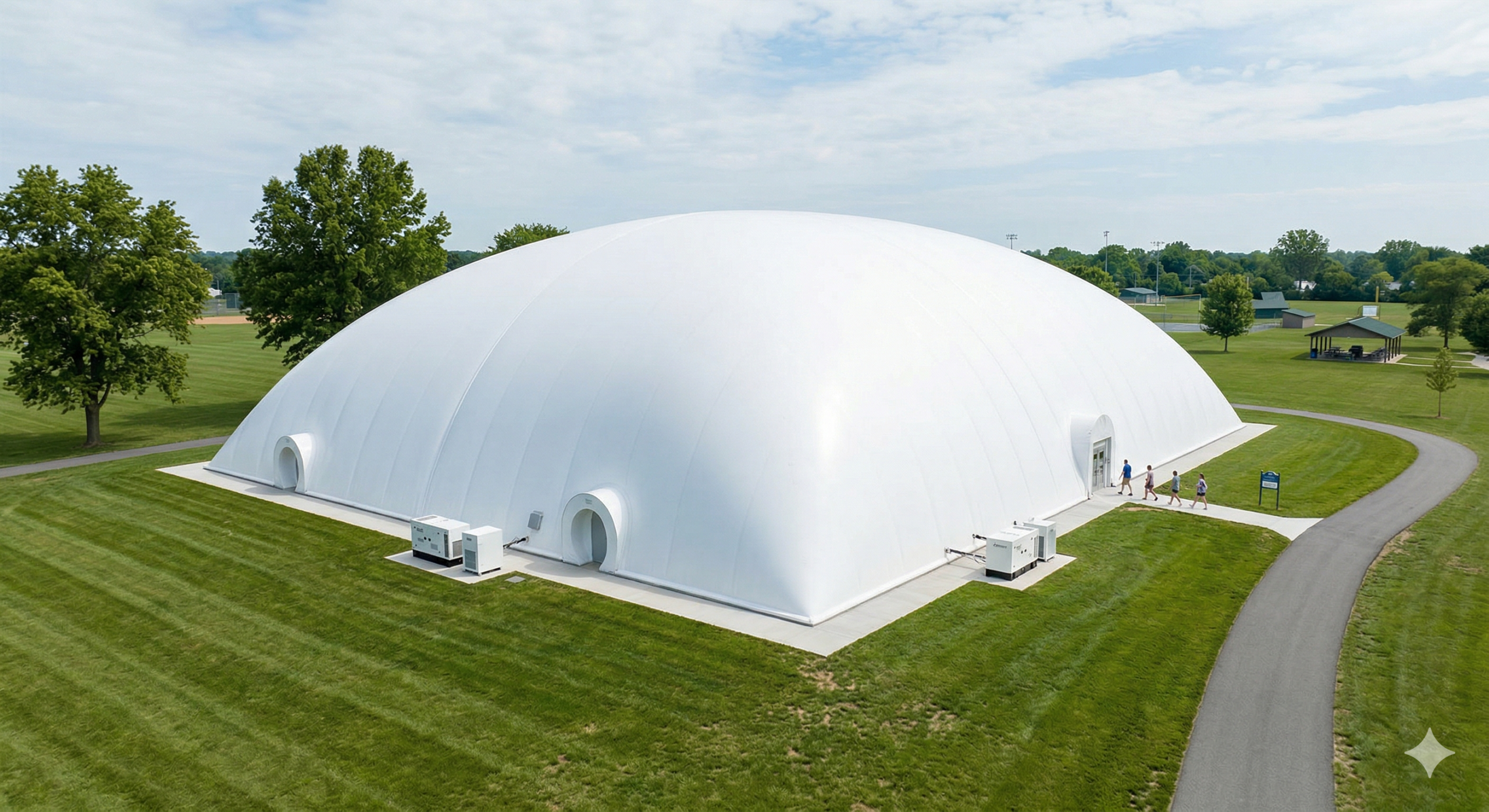
You’ve probably discovered that getting an air dome permit isn’t as straightforward as you’d hoped. What seems like a simple inflatable structure quickly becomes a maze of state regulations, engineering requirements, and safety codes that vary dramatically depending on where you’re building. The difference between a $200 temporary permit and a $15,000 permanent one often comes down to details that most people overlook until it’s too late.
Temporary vs Permanent Air Dome Permits: Which Do You Need?
When you’re planning an air dome installation, the duration of your project determines which permit pathway you’ll need to follow.
If you’re installing your dome for less than 180 days, you’ll qualify for temporary structure permits, which involve a notably simpler approval process with reduced documentation requirements.
However, if your installation exceeds 180 days, you’ll need permanent sports dome building permits that require thorough building permits with full engineering documentation. This includes detailed structural calculations, fire safety plans, and egress designs.
The temporary route saves time and paperwork, but you can’t extend beyond the 180-day limit without converting to permanent status.
Consider your project’s timeline carefully when determining which air dome permit requirements apply to your specific installation needs.
Air Dome Permit Costs And Processing Timelines By Type
You’ll face different costs and timelines depending on whether you’re seeking a temporary or permanent air dome permit.
Temporary permits typically cost $200-$800 and process within 2-4 weeks, while permanent permits can range from $2,000-$15,000 with 6-12 week processing times.
Several factors affect these timelines, including your project’s complexity, local jurisdiction workload, and whether you need additional engineering reviews for snow load calculations.
Temporary Permit Costs
Most temporary air dome permits cost between $200 and $1,500, depending on your facility’s size and local jurisdiction requirements.
You’ll find smaller recreational domes typically fall toward the lower end, while large sports complexes approach maximum fees.
Tennis bubble zoning classifications often determine your base permit cost, as recreational facilities face different fee structures than commercial operations.
Processing fees usually range from $150-$500, with additional charges for plan reviews and inspections.
Air dome regulations by state create significant cost variations.
California and New York charge premium rates, often exceeding $1,000 for temporary permits.
Meanwhile, states like Texas and Florida offer more affordable options, typically under $500.
You’ll also encounter supplementary costs including fire department reviews ($50-$200) and structural engineering approvals ($100-$300), bringing total temporary permit expenses to $500-$2,000.
Processing Timeline Factors
Since permit processing timelines depend heavily on your jurisdiction’s workload and staffing levels, expect significant variations even within the same state.
You’ll find temporary permits typically process faster, often within 2-4 weeks, since they require fewer reviews and documentation.
Permanent air dome permits take considerably longer—usually 6-12 weeks—due to thorough engineering reviews, particularly for snow load calculations and structural assessments.
Your timeline extends if you’re installing electrical, plumbing, or HVAC systems requiring separate permits.
Complex projects exceeding 20,000 square feet face additional delays for fire safety reviews and egress plan approvals.
You can expedite processing by submitting complete applications with professional engineering stamps upfront.
Peak construction seasons (spring/summer) create longer wait times, while winter applications often move faster through municipal review processes.
How To Apply For Air Dome Permits In Your State
You’ll need to research your state’s specific air dome permit requirements since regulations vary greatly across jurisdictions.
Start by contacting your local building department to determine whether you need a temporary or permanent permit based on your installation timeline.
Once you understand the requirements, gather all necessary application documents including engineering calculations for snow loads, fire safety plans, and egress designs before submitting your permit application.
Research State Requirements
Before diving into your air dome project, understanding your state’s specific permit requirements will save you time, money, and potential legal headaches down the road.
Start by contacting your state’s building department or construction regulatory agency to obtain current permit guidelines. You’ll discover that temporary installations under 180 days typically follow streamlined approval processes, while permanent structures require detailed building permits.
Focus your research on critical engineering specifications, particularly snow load requirements ranging from 35-50 PSF depending on your geographic location.
Don’t overlook fire safety codes and egress regulations, especially for larger facilities exceeding 20,000 square feet.
Many states maintain online databases with permit applications, fee schedules, and approval timelines. Document all requirements thoroughly before beginning your application process to guarantee compliance.
Submit Application Documents
Gathering your required documentation marks the essential shift from research to action in the permit application process.
You’ll need structural engineering plans showing snow load calculations for your region’s 35-50 PSF requirements, site surveys, and foundation details.
Fire safety documentation must include sprinkler system layouts, emergency lighting plans, and egress route maps for facilities exceeding 20,000 square feet.
Submit your complete application package through your state’s online portal or local building department.
Include all required fees, which typically range from $500-$2,500 depending on facility size and complexity.
Temporary installations under 180 days often require simplified documentation sets.
Double-check that you’ve included zoning compliance letters, utility connection approvals, and insurance certificates.
Missing documents will delay your approval timeline considerably, so review submission requirements thoroughly before filing.
Snow Load And Structural Requirements That Make Or Break Applications
When structural engineers evaluate air dome applications, snow load calculations often determine whether your project gets approved or rejected.
You’ll need to meet specific requirements ranging from 35-50 PSF (1.67-2.39 kPa) depending on your location’s climate zone.
Your engineer must account for the dome’s unique deflation risks during snow events. Unlike traditional buildings, air domes can’t shed snow loads through structural rigidity. They rely entirely on internal air pressure to maintain shape and support weight.
Critical structural elements include emergency deflation procedures, backup power systems for blowers, and snow removal protocols.
You’ll also need detailed calculations showing how your dome handles uneven snow distribution, ice dams, and rapid accumulation scenarios.
Missing any of these engineering requirements typically results in immediate application denial.
Fire Safety Rules For Air Domes Over 20,000 Square Feet
Fire departments apply stricter safety standards to air domes exceeding 20,000 square feet due to increased occupancy risks and evacuation challenges.
You’ll face extensive inspections and must demonstrate compliance with commercial fire codes rather than residential standards.
Your large air dome requires these critical fire safety elements:
- Multiple emergency exits positioned strategically around the perimeter, with illuminated exit signs visible through fabric walls.
- Automatic sprinkler systems with pressurized water lines running along the dome’s interior framework.
- Fire-rated emergency lighting that activates when power fails, casting bright beams across evacuation routes.
- Smoke detection networks with sensors mounted on support cables, triggering piercing alarms throughout the space.
You’ll also need fire department vehicle access roads and designated staging areas for emergency responders around your facility’s exterior.
Why Air Dome Permit Applications Get Rejected (And How To Avoid It)
Although building departments approve most straightforward construction permits, air dome applications face rejection rates exceeding 40% due to their unique structural and safety challenges.
You’ll avoid rejection by addressing these common issues upfront.
Inadequate snow load calculations cause most denials. You must provide engineering documentation proving your dome can handle 35-50 PSF loads based on local requirements.
Don’t submit generic calculations—specify your exact location’s requirements.
Fire safety violations trigger automatic rejections for facilities over 20,000 square feet. You’ll need proper egress plans, sprinkler systems, and emergency evacuation procedures clearly documented.
Missing foundation details also doom applications. You must show proper anchoring systems and soil analysis reports.
Submit complete structural drawings with professional engineer stamps, not basic sketches.
Engineering Documentation Required For Air Dome Permit Approval
Professional engineering documentation forms the backbone of successful air dome permit applications, requiring specific technical reports that building departments scrutinize closely.
You’ll need extensive structural calculations that demonstrate your dome can withstand local environmental loads, particularly snow loads ranging from 35-50 PSF depending on your region.
Your engineering package must include:
- Structural analysis reports showing load calculations for wind, snow, and seismic forces
- Foundation design drawings detailing anchoring systems and soil bearing capacity
- Mechanical system specifications for inflation equipment, backup systems, and emergency protocols
- Fire safety documentation including egress plans and emergency deflation procedures
You’ll also need sealed drawings from a licensed professional engineer in your state.
Without proper PE stamps and detailed calculations, building departments will reject your application immediately, regardless of your dome’s actual safety features.