Tag: construction costs

  • Fabric Sports Building Cost Per Court

    Fabric Sports Building Cost Per Court

    You’re probably wondering how much you’ll actually spend per court when choosing a fabric sports building over traditional construction. The cost differences are substantial, but the final price depends on several factors you might not have considered. Court type, facility size, and location all play significant roles in determining your investment. Before you make any decisions, you’ll need to understand what drives these costs and how to maximize your budget‘s potential.

    What Drives Fabric Building Costs Per Court

    Sport type heavily influences pricing too. Basketball courts require different dimensions and structural considerations than tennis courts, affecting your overall investment.

    Site preparation, foundation requirements, climate conditions, and local building codes also impact costs. Customization features like lighting systems, ventilation, and insulation add to your base price.

    Location matters since material transportation and labor costs vary regionally.

    Tennis Court Fabric Building Costs: $80K-$200K Per Court

    When you’re planning a tennis court fabric building, you’ll face costs ranging from $80K to $200K per court depending on whether you choose a single or multi-court facility.

    Single court structures typically cost $125K-$200K due to the complete infrastructure needed for one court, while multi-court facilities drop to $80K-$120K per court through shared structural elements.

    The 9,360 square feet required for each tennis court directly impacts your final price, as larger footprints demand more materials and engineering.

    Single Court Cost Breakdown

    Understanding the financial investment required for a single tennis court fabric building helps you plan your project effectively.

    Sports structure per court pricing for individual tennis courts ranges from $125,000 to $200,000, covering a standard 78′ x 120′ playing surface totaling 9,360 square feet.

    The higher cost compared to multi-court facilities reflects the complete infrastructure needed for one court, including:

    • Full structural framework supporting the entire fabric membrane system
    • Complete HVAC installation for climate control throughout the enclosed space
    • Electrical systems with LED lighting covering the entire court area
    • Foundation work and site preparation for the full building footprint

    You’ll find single court installations cost-intensive because fixed expenses like engineering, permits, and utilities can’t be distributed across multiple courts like larger facilities.

    Multi-Court Facility Savings

    Because economies of scale dramatically reduce individual court expenses, multi-court fabric facilities offer substantial savings with per-court costs dropping to $80,000-$120,000 for four-court installations.

    You’ll save $45,000-$80,000 per court compared to single-court construction, making larger facilities considerably more cost-effective.

    These savings come from shared infrastructure costs. You’re spreading expenses like foundations, lighting systems, HVAC equipment, and electrical work across multiple courts rather than duplicating them.

    The fabric structure itself becomes more efficient too—you’ll use less material per square foot when covering a larger area under one roof.

    Your operational costs decrease as well. Maintenance, utilities, and staffing expenses per court drop substantially.

    If you’re considering multiple courts, building them together rather than separately will maximize your investment and create better long-term value for your facility.

    Size Impact On Price

    Three key size factors directly influence your tennis court fabric building costs within the $80,000-$200,000 range.

    Building height affects structural requirements and material costs. You’ll pay more for taller structures that accommodate competitive play versus recreational heights.

    Width expansion beyond standard 78′ increases engineering complexity and foundation work.

    Length modifications impact your overall square footage calculations. Each additional foot translates to higher fabric costs, steel framework requirements, and installation labor.

    Multi-court configurations offer economies of scale, reducing per-court expenses from $200K to $120K maximum.

    Consider these size-related cost factors:

    • Foundation excavation costs increase exponentially with building footprint
    • Structural steel requirements multiply with wider clear spans
    • Fabric membrane pricing scales directly with total coverage area
    • HVAC system capacity needs grow with interior volume expansion

    Basketball Court Fabric Building Costs: $150K-$250K Per Court

    Basketball fabric buildings require a considerably higher investment than tennis facilities, with single-court structures ranging from $150,000 to $250,000. You’ll find that basketball courts demand more robust structural engineering due to higher ceilings and greater clear spans needed for proper gameplay.

    Court Size Dimensions Cost Range
    Single Court 50′ x 84′ (15.2m x 25.6m) $150,000 – $250,000
    Practice Court 45′ x 75′ $130,000 – $220,000
    Multi-Court 100′ x 150′ $280,000 – $450,000

    Your basketball facility’s price depends heavily on height requirements, typically needing 24-30 feet clearance compared to tennis’s 18-20 feet. The increased structural demands, specialized HVAC systems, and reinforced foundations contribute to basketball buildings costing 25-30% more than comparable tennis facilities.

    Why Multi-Court Facilities Save $20K-$80K Per Court

    When you build multiple courts under one fabric structure, you’ll dramatically reduce costs through shared infrastructure like foundations, utilities, and mechanical systems.

    You’ll also benefit from bulk construction pricing, as contractors can negotiate better rates for larger projects and spread fixed costs across more square footage.

    These economies of scale explain why tennis facilities drop from $125K-$200K per single court to just $80K-$120K per court in a 4-court building.

    Shared Infrastructure Reduces Costs

    Building multiple courts under one fabric structure dramatically cuts your per-court investment through shared infrastructure costs.

    When you consolidate courts into a single facility, you’ll eliminate duplicate expenses that plague separate buildings. The foundation, electrical systems, lighting networks, and HVAC equipment serve multiple courts simultaneously, spreading these major costs across each playing surface.

    Your savings multiply through shared components:

    • Single foundation system supporting multiple courts instead of individual concrete pads
    • Centralized electrical infrastructure powering all courts from one distribution panel
    • Unified lighting network illuminating the entire facility with fewer fixtures per court
    • Shared entrance and amenity spaces reducing construction and maintenance overhead

    This infrastructure sharing explains why four-court tennis facilities cost $80K-$120K per court versus $125K-$200K for single courts.

    Bulk Construction Pricing Benefits

    Beyond infrastructure savings, contractors offer considerable bulk pricing discounts when you commission larger facilities. You’ll find that material suppliers provide volume discounts on fabric panels, steel framing, and foundation components when ordering for multi-court projects. Labor costs also decrease notably since crews can complete multiple courts in sequence, eliminating mobilization fees between separate projects.

    Court Configuration Cost Per Court Total Savings
    Single Tennis Court $125K-$200K $0
    2-Court Facility $105K-$160K $20K-$40K
    4-Court Facility $80K-$120K $45K-$80K

    Contractors typically reduce per-court pricing by 15-20% for dual facilities and 25-40% for four-court complexes. You’re fundamentally buying construction efficiency, as teams can optimize workflows across connected courts rather than treating each as separate projects.

    Space Requirements For Tennis Vs Basketball Fabric Buildings

    Although both tennis and basketball fabric buildings serve athletic purposes, their space requirements differ markedly due to the distinct dimensions and clearance needs of each sport.

    You’ll need considerably more floor space for tennis courts at 78′ x 120′ (9,360 sq ft) compared to basketball’s 50′ x 84′ (4,200 sq ft).

    However, basketball requires higher ceiling clearance for jump shots and rebounds, typically needing 24-26 feet minimum height versus tennis’s 20-22 feet requirement.

    Consider these key space planning factors:

    • Tennis courts need substantial run-off areas beyond baselines for player safety during rallies.
    • Basketball facilities require overhead clearance for three-point shots from all angles.
    • Tennis buildings can accommodate multiple courts more efficiently due to rectangular layout optimization.
    • Basketball courts need additional space for bleachers and spectator viewing areas.

    Your choice affects both initial construction costs and ongoing operational efficiency.

    Fabric Building Costs Vs Traditional Construction

    Cost considerations become paramount when comparing fabric sports buildings to traditional construction methods.

    You’ll find fabric structures offer considerable savings, typically costing 30-50% less than conventional brick-and-mortar facilities. Traditional tennis courts with permanent buildings can exceed $400K-$600K per court, while fabric alternatives range from $80K-$200K per court.

    You’ll also benefit from faster construction timelines. Fabric buildings require 4-8 weeks for completion versus 6-12 months for traditional construction. This translates to earlier revenue generation and reduced financing costs.

    Maintenance expenses favor fabric structures too. You won’t face costly repairs like roof replacements, foundation issues, or structural deterioration that plague traditional buildings.

    Energy costs remain lower due to superior insulation properties and natural lighting capabilities, reducing your long-term operational expenses considerably.

    Getting Accurate Fabric Building Quotes For Your Budget

    How do you secure reliable quotes that align with your project budget and expectations? Start by providing detailed specifications including exact court dimensions, foundation requirements, and any special features you need.

    Request quotes from multiple fabric building manufacturers to compare pricing and services. Be upfront about your budget constraints – reputable contractors will work within your financial parameters and suggest cost-effective alternatives.

    Key elements for accurate quotes include:

    • Site preparation costs – grading, drainage, and utility connections
    • Foundation specifications – concrete slab thickness and reinforcement requirements
    • Building accessories – ventilation systems, lighting packages, and door configurations
    • Installation timeline – labor costs and project scheduling considerations

    Remember that the lowest bid isn’t always the best value. Focus on contractors offering extensive warranties and proven track records.
  • Commercial Sports Dome Cost Guide

    Commercial Sports Dome Cost Guide

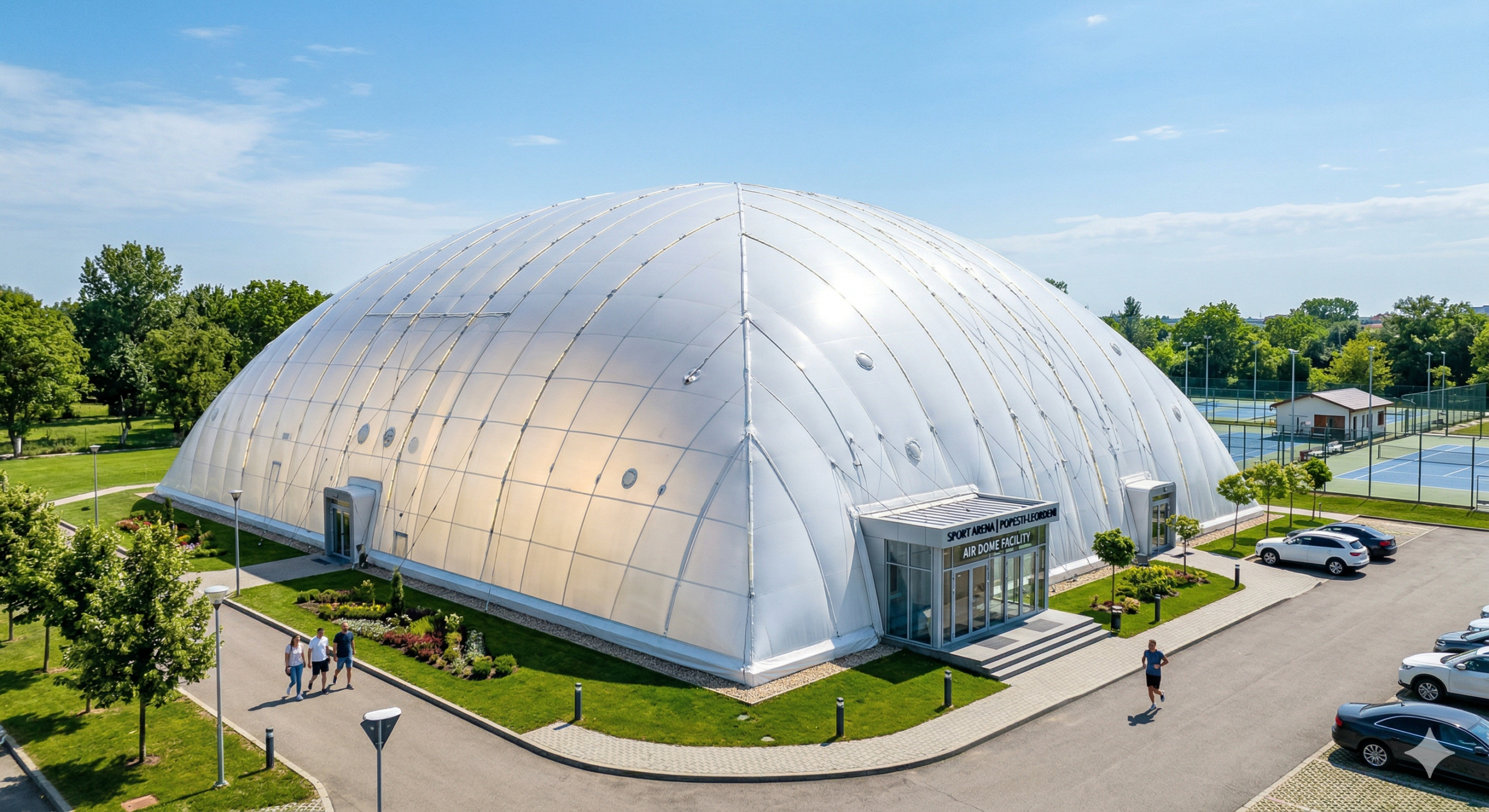
    You’re considering a commercial sports dome, but the financial landscape is more complex than you might expect. While construction costs can range from $1.5M to $4M depending on your vision, that’s just the beginning of your investment journey. The real challenge lies in understanding how site preparation, revenue potential, and ongoing operating expenses will impact your bottom line. What you don’t know about financing options and profit margins could make or break your entire project.

    Sports Dome Construction Costs By Size And Features

    Three primary factors determine your commercial sports dome’s total construction cost: facility size, structural complexity, and interior features. A standard 50,000-square-foot facility typically costs $1.5M-$2.5M, while larger 100,000-square-foot complexes reach $3M-$4M installed.

    Your commercial sports dome cost increases with premium features like specialized flooring systems, advanced HVAC, and LED lighting packages.

    Multi sport complex cost varies markedly based on court configurations. Basketball, volleyball, and tennis courts require different subflooring and net systems.

    You’ll pay more for facilities accommodating football, soccer, or baseball due to ceiling height requirements and specialized turf systems.

    Your commercial indoor facility cost also includes essential amenities like locker rooms, concession areas, and pro shops.

    These revenue-generating spaces add 15-25% to base construction costs but greatly boost your facility’s earning potential and customer satisfaction.

    Revenue Potential And Profit Margins For Indoor Sports Facilities

    While construction costs represent your largest upfront investment, commercial sports domes generate substantial revenue through diverse income streams. Your 50,000-100,000 sq ft facility can produce $400K-$800K annually through court rentals, league fees, tournaments, camps, and retail sales from your pro shop.

    Revenue sources include hourly court rentals ($50-150), seasonal league registrations ($100-300 per player), birthday parties ($200-500), corporate events, and equipment sales.

    Peak hours command premium pricing, while off-peak slots maintain steady cash flow.

    Profit margins typically range 15-25% after operating expenses including utilities, staff, insurance, and maintenance.

    Large sports facility pricing strategies should balance competitive rates with premium services. Your multi-sport capability maximizes utilization year-round, as different sports peak during various seasons, ensuring consistent revenue generation.

    Financing Options And Loan Terms For Sports Dome Projects

    You’ll find commercial lending programs specifically designed for sports facility projects that understand the unique revenue streams and operational requirements of indoor sports complexes.

    Most lenders offer 15-20 year loan terms for sports dome financing, allowing you to spread the $1.5M-$4M investment across manageable monthly payments.

    These specialized loan structures typically consider your projected annual revenue of $400K-$800K when determining qualification criteria and payment schedules.

    Commercial Lending Programs

    Since commercial sports dome projects require substantial upfront capital, specialized lending programs have emerged to serve this growing market segment. You’ll find traditional banks, SBA lenders, and equipment financing companies offering tailored solutions for dome construction.

    These programs typically recognize the unique revenue potential of multi-sport facilities and structure loans accordingly.

    Most commercial lending programs for sports domes offer:

    • 15-20 year terms with competitive interest rates based on your creditworthiness
    • 80-90% financing covering construction, equipment, and initial working capital needs
    • Revenue-based qualification considering projected annual income of $400K-$800K
    • Flexible structures including construction-to-permanent loans and equipment financing options

    You’ll need thorough business plans, market analysis, and financial projections to qualify.

    Many lenders require personal guarantees and down payments of 10-20% for projects in this $1.5M-$4M range.

    Loan Term Structures

    Traditional term loans provide predictable payments over 15-20 years, making budgeting straightforward.

    Construction-to-permanent loans reduce closing costs by combining two loans into one while allowing you to pay only interest during the construction phase.

    Equipment financing enables you to spread costs across different loan terms based on asset depreciation schedules, potentially lowering your overall borrowing costs.

    Site Preparation And Foundation Costs For Sports Domes

    You’ll need thorough soil testing before breaking ground to determine load-bearing capacity and drainage requirements for your sports dome foundation.

    Excavation and grading costs vary considerably based on your site’s topography, existing utilities, and soil conditions that may require special handling.

    Your foundation system choice—whether concrete slab, pier and beam, or specialized dome anchoring—directly impacts both upfront costs and long-term structural integrity.

    Soil Testing Requirements

    Before construction begins on your commercial sports dome, thorough soil testing determines the foundation requirements and potential site challenges that’ll impact your overall project budget.

    Professional geotechnical engineers conduct detailed soil analysis to evaluate bearing capacity, drainage characteristics, and potential settlement issues. This testing typically costs $3,000-$8,000 but prevents costly surprises during construction that could add tens of thousands to your project.

    Key soil testing components include:

    • Boring samples – Core samples taken at various depths to analyze soil composition and stability
    • Percolation tests – Measure drainage rates to determine if additional drainage systems are needed
    • Bearing capacity analysis – Calculates maximum load the soil can support for your dome’s foundation design
    • Contamination screening – Identifies any environmental hazards requiring remediation before construction

    Poor soil conditions may require specialized foundations, increasing your site preparation costs considerably.

    Excavation And Grading

    Once soil testing confirms your site conditions, excavation and grading work begins to prepare the foundation area for your commercial sports dome.

    You’ll need to excavate 2-4 feet deep for most dome foundations, with deeper excavation required for areas with poor soil conditions or frost lines.

    Excavation costs range from $3-8 per cubic yard, depending on soil type and accessibility. Rocky or clay soils increase costs considerably.

    You’ll also need proper grading to guarantee adequate drainage away from the structure.

    Expect to pay $15,000-$45,000 for excavation and grading on a 50,000-100,000 sq ft dome project.

    Additional costs include hauling away excess soil, importing fill material if needed, and creating access roads for construction equipment.

    Proper site preparation prevents costly foundation issues later.

    Foundation System Options

    After completing excavation and grading, you’ll need to choose the right foundation system for your commercial sports dome. The foundation type directly impacts your project’s structural integrity and long-term costs. Your choice depends on soil conditions, local climate, and dome specifications.

    Most commercial sports domes use these foundation options:

    • Concrete slab foundation – Most common for stable soil conditions, costs $8-12 per square foot
    • Stem wall foundation – Better for frost-prone areas, includes perimeter walls above grade level
    • Pile foundation – Required for poor soil conditions or high water tables, increases costs considerably
    • Heated slab system – Prevents frost heave in cold climates, adds radiant heating elements

    Your structural engineer will recommend the appropriate system based on geotechnical reports and local building codes.

    Indoor Court Layouts And Multi-Sport Configuration Options

    When planning your commercial sports dome, you’ll need to maximize every square foot through strategic court layouts that accommodate multiple sports simultaneously.

    Court Configuration Sports Accommodated
    4 Basketball Courts Basketball, volleyball, badminton, futsal
    2 Tennis + 2 Basketball Tennis, pickleball, basketball, volleyball
    Open Field Layout Soccer, lacrosse, field hockey, football

    You can optimize revenue by designing convertible spaces with removable nets and adjustable court markings. Basketball courts work perfectly for volleyball when you lower the nets. Tennis courts double as pickleball venues with temporary net adjustments.

    Consider installing retractable divider curtains to create separate rental zones during peak hours. This flexibility allows you to host tournaments while maintaining regular programming in adjacent areas, greatly boosting your facility’s earning potential.

    Annual Operating And Maintenance Costs For Sports Domes

    Three major expense categories will shape your sports dome’s annual operating budget: utilities, staffing, and facility maintenance.

    Your heating and cooling systems will consume the largest portion of utility costs, typically ranging from $40,000-$80,000 annually for facilities between 50,000-100,000 square feet.

    Staff wages for managers, maintenance personnel, and part-time court attendants will add another $120,000-$200,000 yearly.

    Key annual maintenance expenses include:

    • HVAC system servicing – $8,000-$15,000 for regular tune-ups and repairs
    • Dome membrane inspection – $5,000-$12,000 for structural assessments and minor repairs
    • Court surface maintenance – $10,000-$25,000 for resurfacing and line painting
    • Equipment replacement – $15,000-$30,000 for nets, goals, and recreational equipment

    Plan for total operating costs between $200,000-$350,000 annually.

    Building a commercial sports dome requires overcoming several regulatory hurdles before you can break ground on your project. You’ll need building permits, zoning approvals, and structural engineering certifications for your dome’s unique design. Environmental impact assessments may be required depending on your location and size.

    Permit Type Timeline
    Building Permit 4-8 weeks
    Zoning Approval 6-12 weeks
    Environmental Review 8-16 weeks

    Fire safety compliance is essential since domes house large crowds. You’ll need sprinkler systems, emergency exits, and accessibility features meeting ADA standards. Electrical permits cover lighting systems and HVAC installations. Some municipalities require special use permits for commercial recreation facilities. Budget $15,000-$50,000 for permit fees and consultant costs. Start the permitting process 6-12 months before construction.

  • Clear Span Fabric Building Cost Guide

    Clear Span Fabric Building Cost Guide

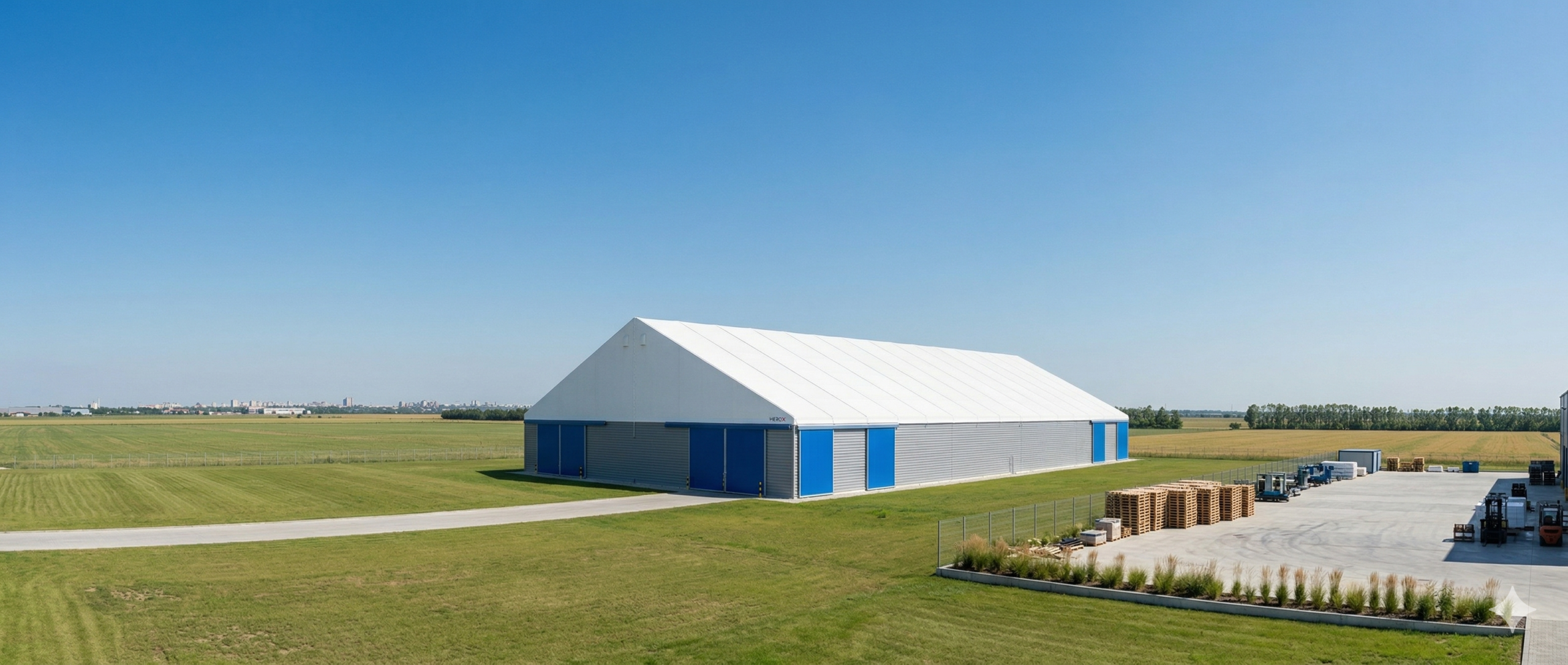
    You’ll pay between $2.99 and $30 per square foot for clear span fabric buildings, with small spans (20-40 ft) at the lower end and medium spans (40-70 ft) reaching $20-$30 per square foot. Kit-only pricing runs $15-$26 per square foot, while installation adds another $8-$12. Wider spans cost considerably more due to heavier materials, custom engineering, and complex foundations. The guide below breaks down these cost factors and compares fabric versus steel options.

    Clear Span Fabric Building Costs By Size And Width

    When planning your clear span fabric building project, understanding how size and width directly impact costs helps you make informed budget decisions.

    Clear span building cost varies greatly based on your structure’s dimensions, with smaller buildings typically costing more per square foot than larger ones.

    Small span buildings (20-40 feet wide) range from $2.99 to $30 per square foot, depending on features and complexity.

    Medium span structures (40-70 feet) offer the pricing sweet spot at $20-$30 per square foot for most commercial applications.

    Large span buildings (80+ feet) achieve the best economy of scale, with costs dropping to $8-$25 per square foot for structures over 10,000 square feet. These fabric structures can be erected at approximately 2,500 ft²/day, making them an efficient choice for projects requiring quick completion.

    Kit-only pricing runs $15-$26 per square foot, while installed costs add $8-$12 per square foot for labor and foundations.

    Why Wider Clear Spans Cost 40-70% More

    Although wider clear span buildings offer impressive column-free interiors, they’ll cost you 40-70% more than narrower alternatives due to exponentially increasing structural demands.

    The clearspan structure pricing escalates dramatically as you increase width beyond economical ranges of 40-100 feet. Here’s why your costs multiply:

    • Material requirements surge – You’ll need heavier gauge materials, with costs increasing 10-20% for every 33-foot width increase.
    • Custom engineering replaces standardized designs – Spans over 120 feet require specialized calculations and professional engineering fees.
    • Foundation systems become more complex – Wider spans concentrate greater loads, demanding deeper, more robust foundations.
    • Premium fabric materials are mandatory – Reinforced membranes cost $60-90/m² versus standard $40-60/m² options.

    These factors eliminate economies of scale, making wide-span buildings considerably more expensive per square foot. Building height also impacts structural requirements, with structural steel consumption rising by 5%-10% per meter of height increase.

    Fabric Vs Steel Buildings: Which Costs Less?

    Why do fabric buildings consistently undercut steel structures on initial costs? You’ll pay $20-$35 per square foot for fabric buildings versus $20-$45 per square foot for steel buildings including installation.

    The fabric covered building price advantage stems from lighter weight requirements and simplified foundations—often just concrete blocks instead of extensive concrete pours.

    However, steel buildings deliver superior long-term value. While fabric structures need periodic membrane replacement due to wear, steel buildings require minimal maintenance beyond occasional cleaning. Steel construction uses structural components like frames, beams, and columns that contribute to higher fabrication costs.

    Steel construction offers 50% savings compared to conventional methods over 20 years, with total costs ranging $670,000-$1.1 million.

    Choose fabric buildings for temporary setups prioritizing low upfront investment. Select steel buildings for permanent structures where you’ll maximize return on investment through durability and higher resale values.

    Installation Speed And Labor Cost Breakdown

    Beyond the upfront cost savings, clear span fabric buildings deliver remarkable speed advantages that directly impact your labor expenses.

    You’ll reduce construction timelines from 2-3 years for traditional factories to just 1 week to 1 month. This acceleration greatly lowers your wide span fabric structure cost through reduced labor overhead and faster ROI realization.

    Key labor cost benefits include:

    • Lightweight materials – Reduced erection time due to easier handling and transport
    • Fewer connection points – Simplified installation with minimal field adjustments required
    • Column-free design – Streamlined assembly without internal support complications
    • Precision manufacturing – CNC-fabricated components eliminate rework and delays

    You’ll achieve deployment in weeks versus months, with modular construction enabling staggered capacity additions. The fabric coverings also enhance insulation properties, reducing long-term operational energy costs that impact your total cost of ownership.

    Earlier facility activation means sooner revenue generation while minimizing carrying costs.

    Frequently Asked Questions

    How Long Do Clear Span Fabric Buildings Typically Last?

    Your clear span fabric building will typically last 15-30 years with proper maintenance.

    You’ll get 20-30+ years from well-engineered structures since steel frames outlast fabric covers considerably.

    The galvanized steel frame lasts 30-50 years, while fabric membranes need replacement every 15-25 years depending on quality.

    You can extend your building’s life by re-covering the original frame, potentially doubling its useful lifespan with minimal additional investment.

    What Permits and Foundation Costs Should I Budget For?

    You’ll need to budget $5-$10 per square foot for foundations, with costs varying based on soil conditions and site complexity.

    Level ground keeps you at the lower end, while sloping or soft soil can double expenses.

    Don’t forget building permits, which typically cost $500-$2,000 depending on your local jurisdiction.

    You’ll also need structural engineering plans and potentially environmental permits.

    Total permitting usually adds $2,000-$5,000 to your project budget.

    Do Clear Span Fabric Buildings Require Ongoing Maintenance Expenses?

    Yes, you’ll need to budget for ongoing maintenance expenses with clear span fabric buildings.

    You should expect approximately $0.25-$0.50 per square foot annually for maintenance costs. This includes periodic tension adjustments, structural inspections, and potential steel component care in harsh environments.

    However, fabric buildings require considerably less maintenance than traditional construction due to their resistance to rust, corrosion, and water leakage, making them cost-effective long-term.

    Can Clear Span Fabric Buildings Withstand Heavy Snow and Wind Loads?

    Yes, you can rely on clear span fabric buildings to handle severe weather conditions.

    They’ll withstand wind speeds up to 185 mph when custom-engineered and accommodate snow loads up to 100 psf.

    The galvanized steel framing flexes under pressure without failing, while the tension fabric creates a sturdy structure.

    You’ll need to work with engineers to meet your region’s specific load requirements and building codes for peak performance.

    What Financing Options Are Available for Large Clear Span Projects?

    ClearSpan offers extensive in-house financing that eliminates third-party lenders.

    You’ll get zero-interest financing for 12 months if paid in full, or rates as low as 5.99% with small down payments.

    They also provide zero-money-down options with seven-year terms and no first-year payments.

    Their internal teams coordinate financing with design and installation, streamlining your project while preserving capital for other business investments.

  • Sports Dome Cost vs Permanent Building

    Sports Dome Cost vs Permanent Building

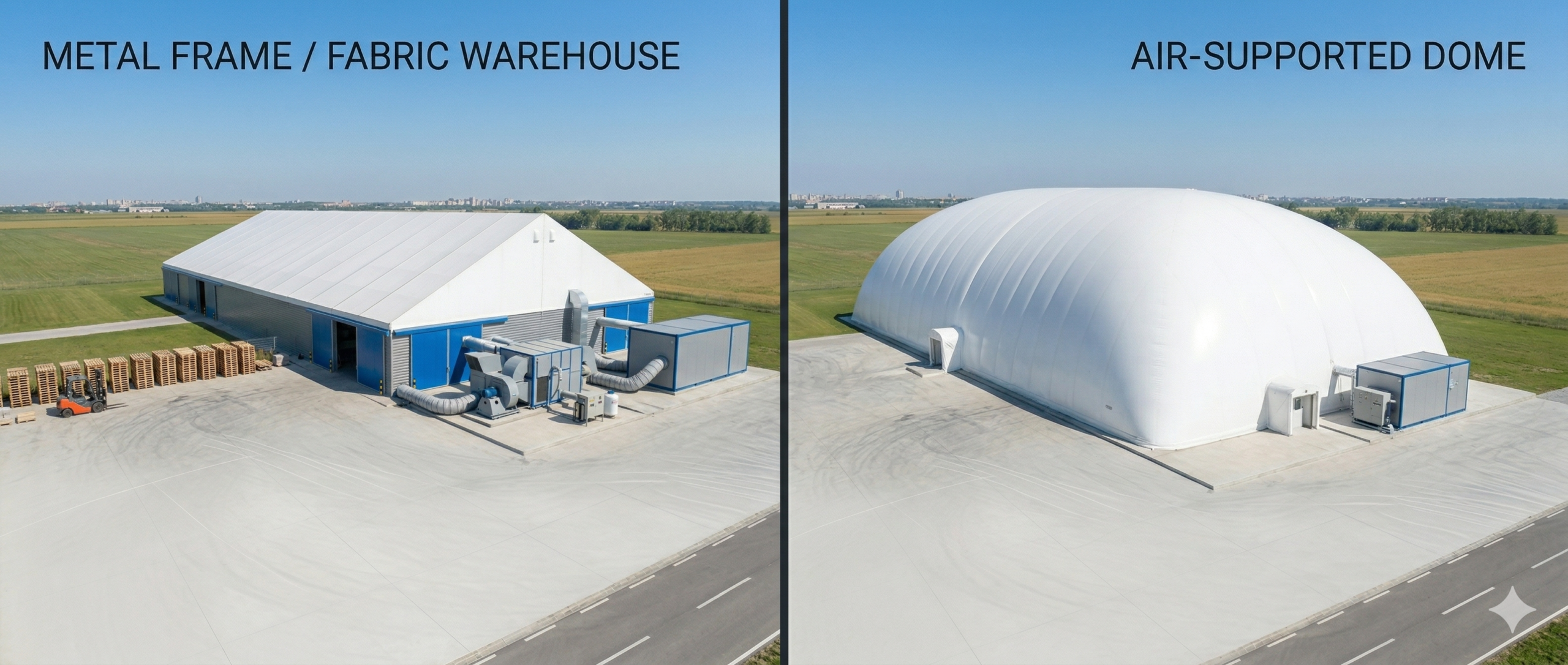
    You’ll save 50-75% on upfront costs choosing a sports dome over a permanent building—a 20,000 sq ft air dome costs around $200,000 versus $800,000 for traditional construction. However, permanent buildings last 35+ years compared to domes’ 15-20 year lifespan. Annual operating costs are similar at $3-6 per square foot, though domes install in just 2-6 weeks versus 12-18 months for permanent structures. Understanding these trade-offs will help you make the smartest investment decision.

    Sports Dome vs Permanent Building: Upfront Investment Breakdown

    When you’re weighing the financial commitment between sports domes and permanent buildings, the upfront investment difference is striking.

    Air dome vs building cost analysis shows you’ll spend $10-$25 per square foot for dome structures, while permanent buildings require two to three times more capital expenditure. For a 20,000 square foot (1,858 square meter) facility, you’re looking at $200,000 for an air dome versus $800,000 for a traditional building—that’s 50-75% in savings.

    Temporary vs permanent facility cost comparisons reveal dome packages starting as low as $12 per square foot, with costs decreasing as size increases. Sports domes also offer faster installation times compared to permanent structures, reducing labor costs and allowing you to start generating revenue sooner.

    The inflatable vs traditional building price gap widens further when you factor in material requirements, as air domes use economical synthetic textiles while permanent structures demand substantial investments in concrete, steel, and glass.

    Operating Costs: What You’ll Pay Each Year

    Beyond the initial investment, your annual operating expenses will determine the true cost of facility ownership. For a 20,000 sq ft (1,858 sq m) facility, you’ll face several key expense categories that impact the sports dome vs permanent structure decision.

    Maintenance costs range from $3–$6 per square foot annually, with inflation systems adding $0.10–$0.20 per square foot yearly for air domes.

    Utility expenses typically run $0.50–$1.50 per square foot, though permanent buildings often achieve better energy efficiency long-term.

    Staffing represents your largest expense at approximately $500,000 annually for full operations.

    Insurance averages $36,000 yearly, while security costs around $30,000.

    Total operating budgets range from $336,000 for basic facilities to $1.6 million for extensive complexes. Rental hours constitute over 57% of most facilities’ total revenue, making scheduling optimization critical for covering these substantial operating expenses.

    How Long Does Each Structure Actually Last?

    While upfront costs grab immediate attention, the lifespan of your facility determines its true long-term value. You’ll typically get 15-20 years from a well-constructed air dome, though high-end models can reach 30 years under ideal conditions.

    PVC fabric offers superior durability with 25-year warranties, while lighter PE materials last 15-20 years.

    Permanent buildings greatly outlast air domes. You’re looking at 35+ years for standard stadiums, with historic concrete structures operating for over 100 years.

    The Cinerama Dome has functioned for 61+ years, while Wrigley Field hit its 100-year milestone.

    Your maintenance commitment directly impacts longevity. Proper installation, regular inspections, and following manufacturer guidelines can maximize your structure’s operational life, regardless of the type you choose. Modern air pressure technology continuously maintains inflation to minimize structural stress and preserve dome integrity.

    Construction Speed: Sports Domes vs Traditional Buildings

    Your facility’s construction timeline can make or break your project’s success, especially when you’re working with tight deadlines or seasonal demands. Sports domes offer dramatically faster installation compared to traditional buildings, allowing you to start operations in weeks rather than months.

    Aspect Sports Domes Traditional Buildings
    Installation Time 2-6 weeks 12-18 months
    Setup Process Inflation in days Multiple construction phases
    Labor Requirements 20-30 workers Extensive workforce teams

    You’ll find that dome construction eliminates complex foundation work and structural framing that permanent buildings require. While traditional facilities need site preparation, governmental permits, and extensive planning phases, air-supported structures use simplified air pressure systems for rapid assembly. This speed advantage means you can capture revenue opportunities immediately rather than waiting through lengthy construction delays.

    The flexible usage capabilities of sports domes also allow for quick adaptation to different sports and events without the extensive renovations that traditional structures would require.

    Which Option Delivers Better ROI?

    When comparing return on investment, the numbers tell a compelling story that favors air domes for most scenarios.

    You’ll save $600,000 upfront with a $200K air dome versus an $800K permanent building for the same 20,000 sq ft (1,858 sq m) space. That’s 50-75% less initial capital investment.

    Your operational costs remain competitive at $3-6 per square foot annually, while permanent buildings carry higher year-round expenses.

    If you’re operating seasonally for 5-6 months, you’ll reduce costs further compared to 12-month traditional facility operations. Air domes offer additional savings through direct-cooling ice systems that can reduce energy consumption by 60%.

    The faster 2-6 week installation versus 12-18 months means you’ll generate revenue sooner.

    With proper maintenance, your air dome can last 15-50 years, delivering strong returns on that lower initial investment.

    Frequently Asked Questions

    Can Air Domes Withstand Extreme Weather Like Hurricanes and Heavy Snow Loads?

    Yes, you’ll find air domes exceptionally resilient against extreme weather.

    They’ll withstand hurricane-force winds up to 252 km/h (157 mph) and even meet Nuclear Regulatory Commission standards for 482+ kph winds. You can rely on them supporting snow loads exceeding 250 kg/m² without failure.

    Their curved design actually reduces wind resistance compared to traditional buildings, while the reinforced membrane maintains structural integrity from -30°C to +70°C temperatures.

    What Permits and Zoning Approvals Are Needed for Sports Dome Installation?

    You’ll need local government permits before construction begins, with requirements varying by jurisdiction.

    Your site must comply with zoning classifications, building codes like IBC and ASCE 55-16, plus setback and height restrictions.

    Licensed engineers must create stamped permit drawings (costing around $20,000).

    Multiple city departments review applications including Planning, Building Code Enforcement, and Fire Department.

    Plan approval typically takes 2-6 weeks, followed by final inspections before receiving your Certificate of Occupancy.

    How Much Does It Cost to Relocate an Air Dome Facility?

    Relocation costs depend on your dome’s size.

    You’ll pay $10,000-$30,000 for small domes under 100 feet (30.5 meters) in diameter, $30,000-$100,000 for medium domes 100-300 feet (30.5-91.4 meters), and over $1 million for large domes exceeding 300 feet (91.4 meters).

    These costs include disassembly, transport, and reinstallation.

    You can reduce expenses by having your staff help with construction and maintenance during the relocation process.

    Are There Financing Options Available Specifically for Sports Dome Construction Projects?

    Yes, you’ll find several financing options specifically for sports dome construction.

    You can access public funding through UPARR programs, Land and Water Conservation Fund, and EPA Brown/Greenfield grants.

    You’ll also benefit from leasing agreements that spread costs over time with lower upfront requirements.

    Additionally, you can pursue bank loans, private investors, bonds financing, and community fundraising through sponsorships and donations to fund your project.

    What Happens if the Air Pressure System Fails During Events?

    If your air pressure system fails during events, you’ll need to evacuate everyone immediately as the dome deflates like a flag.

    The fabric develops wave-like movements and whip-like motions, but you won’t face structural collapse onto occupants – cables maintain 30+ feet (9+ meters) clearance above.

    However, you’ll lose complete facility protection and face significant re-inflation costs, making your 20,000 sq ft (1,858 sq m) space unusable until pressure’s restored.