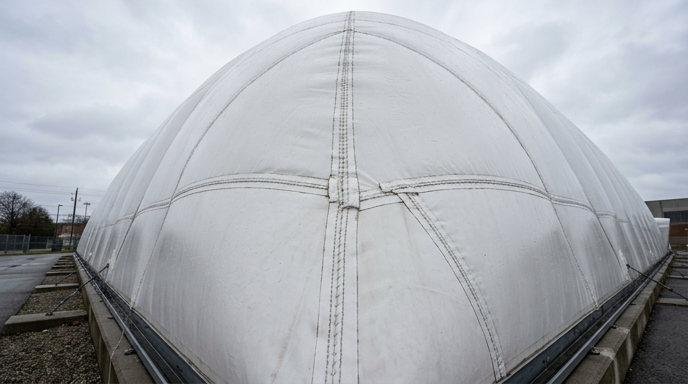
You’ll pay between $35 to $60 per square foot for a complete air dome installation in 2026, with costs varying considerably by region and project size. Northeast installations run $45-$60 per square foot, while Southern regions cost $35-$50. Large commercial domes over 10,000 square feet achieve the best per-square-foot value, offering 50-75% savings compared to permanent structures. Foundation work adds $4-$25 per square foot, plus $20,000 in engineering fees for code compliance and structural design requirements.
Air dome costs in 2026 typically range from $35 to $60 per square foot when you factor in complete installation packages that include fabric materials, ventilation blowers, entry doors, and basic lighting systems.
You’ll find significant regional variations affecting your air dome cost per square foot, with Northeast installations reaching $45-$60 per square foot, while Southern regions start at $35-$50 per square foot.
When calculating sports dome price per sq ft, you’ll save 50-75% compared to permanent facilities.
Your project size directly impacts pricing—larger domes cost less per square foot proportionally. Structural and mechanical engineering typically adds around $20,000 to your total project cost regardless of dome size.
Premium materials like flame-retardant membranes add $10-$25 per square foot to baseline packages.
Use an air dome pricing calculator to estimate your specific requirements, considering local building codes and soil conditions that influence foundation expenses.
How Air Dome Size Impacts Your Total Budget
When planning your air dome project, size becomes the most crucial factor determining your total investment, with costs dropping dramatically as square footage increases.
Small domes ranging from 200-850 square feet cost $50,000-$200,000 total, while large commercial installations achieve economies of scale with per-square-foot costs as low as $10-12.
Tennis bubble square foot cost benefits greatly from larger dimensions due to fixed overhead distribution.
Here’s how size affects your budget:
- Small installations (under 1,000 sq ft): Higher per-square-foot costs due to fixed manufacturing expenses
- Medium projects (1,000-10,000 sq ft): Moderate cost reductions with improved efficiency
- Large commercial domes (10,000+ sq ft): Maximum savings achieving 50-75% less than permanent structures
- Foundation costs: Scale proportionally with site conditions rather than dome size alone. Foundation expenses can reach approximately $350,000 for large installations like 100,000 square foot facilities.
Fabric, HVAC, and Design Features: Material Cost Breakdown
Your fabric selection dramatically affects your air dome’s upfront investment, with premium materials like Ferrari or Sattler membranes pushing costs from $25 to $50 per square foot compared to standard options.
You’ll face additional decisions between single and dual-membrane configurations, where dual-layer systems increase fabric expenses but deliver better insulation and longevity.
Your HVAC system adds another $0.50 to $1.50 per square foot annually in operational costs, with pricing variables including your local climate conditions, utility rates, and the dome’s overall size. These systems work alongside high-performance air blowers that maintain optimal structural pressure and ventilation throughout the facility.
Premium Fabric Cost Impact
Premium fabric selection greatly impacts your air dome’s base pricing, with costs escalating from as low as $12 per square foot for standard materials to $50 per square foot for high-performance membranes.
Your fabric choices directly influence both upfront costs and long-term performance. Leading manufacturers like Ferrari and Sattler offer premium options that command higher prices but deliver superior durability and safety compliance.
Key premium fabric cost factors include:
- Flame-retardant treatments – Essential for safety compliance but increase material expenses considerably.
- High light-transmission fabrics – Premium pricing while maintaining 50-75% savings over permanent construction.
- Double-membrane systems – Range $25-$50 per square foot for specialized applications like tennis facilities.
- Custom color selection – Adds premium costs beyond standard fabric offerings.
These upgrades guarantee your structure meets enhanced performance standards. The non-conductive materials used in premium fabric buildings help maintain consistent temperatures, reducing ongoing HVAC operational expenses.
HVAC System Pricing Variables
HVAC systems represent the most significant operational expense beyond your initial fabric investment, with pricing variables that dramatically affect both installation and long-term costs.
You’ll face annual utility expenses ranging from $0.50–$1.50 per square foot for heating, cooling, and lighting combined. Your total costs depend heavily on climate conditions, usage patterns, and dome size efficiency factors.
Regional energy rates and local weather patterns create substantial pricing variations across different markets.
You’ll find that larger domes achieve better per-square-foot efficiency, while specialized fabric types can reduce overall HVAC demands. Advanced monitoring systems help identify potential issues before they trigger automated security responses that could disrupt system operations.
Your lighting systems contribute variable costs within this utility spectrum, depending on your specific dome specifications and operational requirements.
System efficiency directly correlates with your fabric selection and local energy pricing structures.
Foundation and Installation: What to Budget Beyond the Dome
While the dome itself represents the most visible cost in your air structure project, foundation and installation expenses often surprise first-time buyers with their substantial impact on the total budget.
You’ll need to budget for several critical components beyond the dome structure:
- Foundation costs – Expect $4-$25 per square foot, with concrete slabs averaging $6-$14 per square foot.
- Professional installation – Small domes require 1-2 days, while larger projects span multiple weeks with specialized crews.
- Engineering fees – Structural and mechanical engineering typically costs around $20,000 for code compliance.
- Site preparation and permitting – Budget $30,000-$90,000 for mid-size domes, including ground leveling and permit drawings.
Foundation design depends heavily on soil conditions, wind codes, and frost line depth in your area.
Air Dome Pricing: US vs European Market Comparison
You’ll find significant price differences when comparing US and European air dome markets, with American entry-level options starting around $10-12 per square foot versus Europe’s higher baseline of €50-250 per square meter ($46-232/sq ft).
These variations stem largely from different regulatory requirements, particularly fire safety standards and HVAC specifications that can drive costs 30-50% higher in certain regions.
Your final project cost will depend heavily on local building codes, energy requirements, and environmental conditions that vary dramatically between these markets.
Regional Pricing Structure Differences
Air dome pricing structures reveal stark differences between US and European markets, with American installations typically ranging from $35-$60 per square foot while European projects cost €50-€250 per square meter (roughly $54-$270 per square foot at current exchange rates).
You’ll encounter distinct pricing drivers in each region that markedly impact your project costs.
Key regional factors affecting your air dome investment:
- Fire safety standards – US and European regulations require different material specifications and compliance measures.
- Inflation systems – Regional standards mandate distinct blower technologies and backup systems.
- HVAC requirements – Energy efficiency standards and climate considerations vary dramatically between markets.
- Labor costs – Installation timeframes and skilled workforce availability differ markedly across regions.
Understanding these regional variations helps you budget accurately for your specific location.
Regulatory Impact On Costs
Regulatory compliance costs form the backbone of pricing differences between US and European air dome markets, with fire safety standards alone adding $10-$25 per square foot to your project budget.
You’ll face mandatory flame-retardant membrane requirements and premium fabric certifications from Ferrari or Sattler materials to meet code standards.
Engineering documentation demands $20,000 baseline costs regardless of location, as licensed engineers must stamp every project element for IBC and ASCE 55-16 compliance.
Your permit drawings require structural, mechanical, and often civil engineering involvement across all 50 US states and 42 international markets.
European standards drive stricter energy efficiency mandates, while HVAC compliance adds $180,000-$420,000 to turnkey installations.
Material certification requirements and fabric standards create the 50-250 euros per square meter pricing structure you’ll encounter overseas.
Market-Specific Cost Factors
While American air dome projects typically range from $10–$50 per square foot, European markets command €50–€250 per square meter due to fundamental differences in construction standards, labor costs, and regulatory frameworks.
You’ll encounter distinct pricing structures across markets that reflect regional priorities:
- Material Standards – European projects require premium fabrics like Ferrari or Sattler membranes, while US installations include flame-retardant materials within standard $10–$25 pricing.
- Compliance Testing – Different fire safety regulations between markets create separate cost structures for material selection and certification processes.
- Foundation Requirements – Geological conditions vary greatly, with European projects potentially facing different site preparation challenges than North American grade beam systems.
- Labor Markets – Regional wage differences and specialized installation expertise affect total project expenses across continents.
Annual Operating Costs: Utilities and Maintenance Per Square Foot
Beyond the initial installation investment, you’ll face ongoing operational expenses that typically range from $3–$6 per square foot annually for your air dome facility.
Your primary costs stem from utilities, averaging $0.50–$1.50 per square foot yearly for heating, cooling, and lighting systems. Climate notably impacts these expenses, with extreme weather conditions driving higher HVAC demands.
Maintenance remains relatively minimal at $0.10–$0.20 per square foot annually. You’ll need standard HVAC servicing and occasional fabric inspections, but air domes require less upkeep than traditional buildings.
Larger facilities typically achieve better per-square-foot efficiency rates.
Your actual costs depend on usage frequency, local utility rates, fabric specifications, and geographic location.
Preventive maintenance programs help reduce emergency repairs while predictable utility rate structures enhance cost planning accuracy.
Frequently Asked Questions
What Permits and Approvals Are Required Before Air Dome Construction Begins?
You’ll need building permits from your local department, which requires structural and mechanical engineering stamps costing around $20,000.
Contact your building department early to verify they’ll accept alternative materials with professional engineer approval.
You’ll also need seismic zone verification using ASCE 7 tools, plus water and septic permits in most counties requiring soil tests and site plans.
Zoning compliance verification’s mandatory before construction begins.
How Long Does Typical Air Dome Construction Take From Start to Finish?
You’ll complete your air dome project in just a few weeks from start to finish, which is dramatically faster than traditional construction that takes months or years.
Your timeline includes concurrent site preparation and dome production phases, followed by installation that ranges from 2-4 days for small domes to several weeks for larger, complex installations.
This multi-phase approach maximizes efficiency and gets you operating quickly.
Are Air Domes Covered by Standard Commercial Property Insurance Policies?
Yes, you can get standard commercial property insurance for your air dome.
Most insurance providers will cover air-supported structures under standard policies, including protection against fire, wind, hail, vandalism, and water damage.
However, you’ll likely need specialized underwriting since air domes require different risk assessment than conventional buildings.
Insurance companies treat these structures as important business investments requiring thorough coverage comparable to traditional buildings.
What Happens to Air Dome Costs During Winter Construction Seasons?
You’ll face higher air dome costs during winter construction, typically seeing 10-20% price increases.
Cold weather complicates installation, requiring specialized equipment and extended labor hours.
You’re dealing with material handling challenges, potential weather delays, and contractor scheduling premiums.
Northern regions like the Northeast already command $45-$60/sq ft, and winter conditions push these costs even higher.
You’ll get better pricing if you schedule installation during spring or fall seasons instead.
Can Existing Concrete Slabs Be Used as Air Dome Foundations?
You can potentially use existing concrete slabs as air dome foundations, but they’ll need professional evaluation first.
Your slab must meet specific thickness, reinforcement, and anchor point requirements to handle uplift pressures.
Most air domes require a perimeter grade beam for proper anchoring, which you might need to add.
While using existing concrete can reduce costs by $15-25/sq ft, you’ll still need structural modifications and compatibility assessments before installation.