Tag: cost savings

  • Air Dome Ventilation Systems Guide

    Air Dome Ventilation Systems Guide

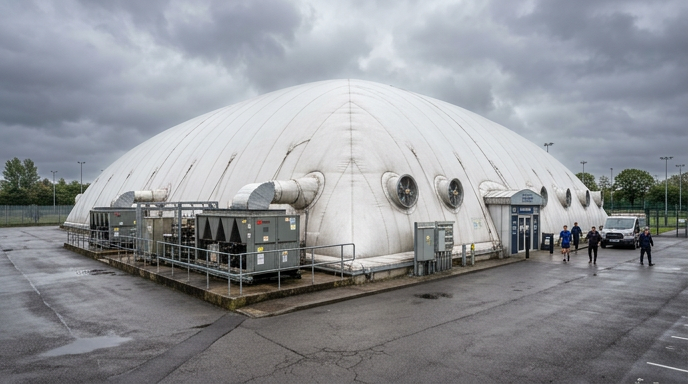
    When you’re managing an air dome facility, you’ll quickly discover that proper ventilation isn’t just about comfort—it’s about preventing structural damage, controlling humidity, and maintaining safe air quality. You’ve got three main ventilation approaches to contemplate, each with distinct advantages and price points. The system you choose will determine whether you’re constantly battling condensation issues or enjoying effortless climate management. But here’s what most facility managers don’t realize about making this critical decision.

    How to Choose the Right Air Dome Ventilation System?

    When selecting an air dome ventilation system for your 20,000 square foot facility, you’ll need to evaluate three key factors: your budget constraints, climate control requirements, and operational complexity preferences.

    If you’re working with limited funds, sidewall vent panels offer passive air dome ventilation starting at $2,000-$5,000. They’re simple but provide basic airflow without temperature control.

    For moderate budgets requiring active airflow, powered exhaust fans deliver 5,000-10,000 CFM capacity at $3,000-$8,000. They’ll maintain air circulation while keeping costs reasonable.

    When precise climate control matters most, invest in full HVAC integration costing $15,000-$40,000. This premium air dome ventilation option maintains your facility’s temperature between 55-85°F year-round, ensuring ideal comfort and air quality for all activities.

    Sidewall Vent Panels: Budget-Friendly Passive Airflow

    Feature Standard Panels Insulated Panels Weather-Resistant
    Cost Range $2,000-$3,500 $3,000-$4,500 $4,000-$5,000
    Airflow Rate 2,000-4,000 CFM 1,800-3,500 CFM 2,500-4,500 CFM
    Weather Protection Basic Enhanced Superior
    Installation Time 4-6 hours 6-8 hours 8-10 hours
    Maintenance Minimal Low Very Low

    Powered Exhaust Fans: Active Air Dome Climate Control

    While sidewall vent panels offer passive airflow, powered exhaust fans deliver active climate control that transforms your air dome’s environmental management.

    These mechanical systems actively pull stale air out while drawing fresh air in, maintaining ideal temperature ranges between 55-85°F regardless of external conditions.

    You’ll find powered exhaust fans particularly effective for larger 20,000 sq ft facilities where passive ventilation can’t adequately circulate air.

    With capacities ranging from 5,000-10,000 CFM, these systems guarantee consistent air quality throughout your dome.

    • Consistent Performance: Unlike passive systems, powered exhaust fans work independently of wind conditions
    • Temperature Control: Active air circulation prevents hot spots and maintains even climate distribution
    • Scalable Options: Choose from various fan sizes and configurations to match your dome’s specific requirements

    Investment ranges from $3K-$8K depending on system complexity.

    HVAC Systems: Complete Air Dome Environmental Management

    Though powered exhaust fans provide excellent active ventilation, HVAC systems represent the pinnacle of air dome climate control, delivering thorough environmental management that goes far beyond basic air circulation.

    HVAC integration transforms your air dome into a precisely controlled environment. You’ll maintain consistent temperatures year-round while managing humidity levels and air quality. These systems offer heating, cooling, filtration, and circulation through a unified network.

    Feature Capability Investment Range
    Temperature Control Precise heating/cooling $15K-$25K
    Air Quality Management Advanced filtration $8K-$15K
    Humidity Regulation Dehumidification systems $12K-$20K

    Professional HVAC integration requires substantial investment ($15K-$40K total) but delivers unmatched performance. You’ll achieve ideal conditions for any activity while reducing energy costs through efficient operation. This all-encompassing approach guarantees your 20,000 sq ft space maintains perfect environmental conditions regardless of external weather.

  • Gymnastics Air Dome Facilities

    Gymnastics Air Dome Facilities

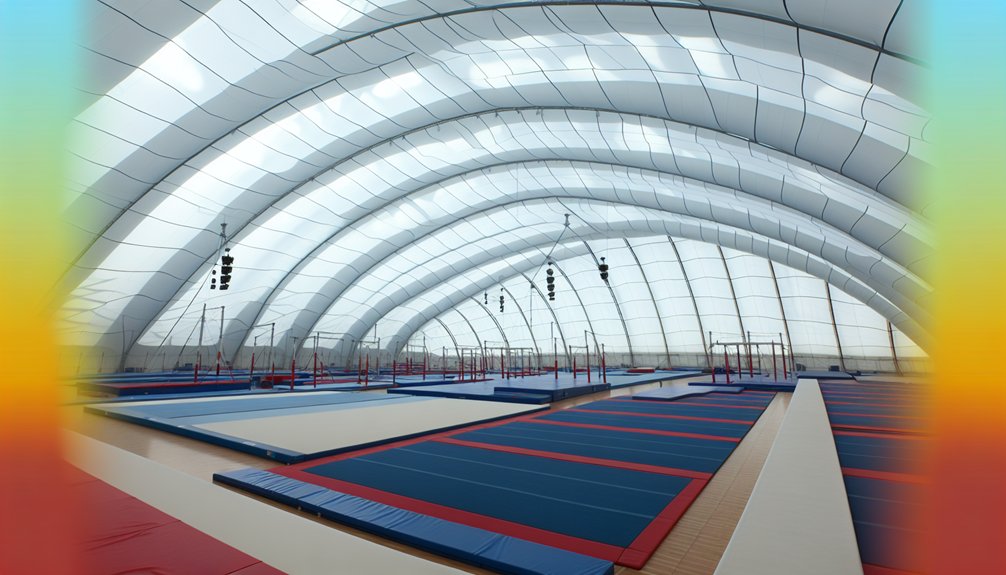
    You’re probably tired of cramped gymnastics facilities with sky-high construction costs and limited training seasons. Gymnastics air domes change everything – they’ll give you 50-70% savings over traditional buildings while providing the clear-span space your athletes need year-round. Whether you’re running a competitive program or recreational classes, these inflatable structures solve the biggest challenges facing gym owners today. But there’s more to evaluate than just the initial investment when you’re making this decision.

    Why Gymnastics Air Domes Beat Traditional Buildings

    When you’re planning a gymnastics facility, air domes offer compelling advantages over traditional brick-and-mortar buildings. Your gymnastics air dome costs considerably less to construct—often 50-70% cheaper than conventional structures.

    You’ll also save on heating and cooling since the pressurized air system provides natural insulation. Unlike permanent buildings, you can relocate your gymnastics training dome if needed.

    The flexible membrane withstands weather extremes while providing consistent indoor conditions year-round. You’ll avoid lengthy construction permits and zoning battles that plague traditional builds.

    Installation happens in weeks, not months. Your indoor gymnastics facility can accommodate full programs with proper ceiling heights for vault and uneven bars.

    The clear-span design eliminates support columns, maximizing usable space for equipment layout and athlete movement patterns.

    Gymnastics Air Dome Costs: Building vs Renting Options

    Since gymnastics air dome require significant upfront investment, you’ll need to weigh purchasing against rental options based on your facility’s long-term goals.

    Buying a gymnastics bubble typically costs $150,000-$400,000 for a complete 15,000 square foot facility, including installation, equipment, and safety features. This investment pays off if you’re planning five-plus years of operation.

    Rental options start around $8,000-$15,000 monthly for comparable space, making them ideal for seasonal programs or testing market demand. However, rental costs accumulate quickly—you’ll break even around the three-year mark compared to purchasing.

    Consider additional factors like maintenance responsibilities, insurance requirements, and equipment inclusion. Rentals often include maintenance and insurance, while purchased domes require ongoing upkeep budgets.

    Your membership projections and revenue forecasts should drive this critical financial decision.

    Space and Height Requirements for Gymnastics Air Domes

    When you’re planning your gymnastics air dome, you’ll need to meet specific height and space standards to guarantee safe training conditions.

    Your dome must reach a minimum height of 30 feet to accommodate vault runs and uneven bar routines without compromising athlete safety.

    You’ll also need to allocate sufficient floor space for spring flooring installation, equipment storage, and safety features like pit areas.

    Minimum Height Standards

    Although floor exercises and beam routines can function in relatively low spaces, vault runs and uneven bar dismounts demand considerably more vertical clearance in your gymnastics air dome.

    You’ll need to prioritize height requirements when planning your facility to guarantee athlete safety and proper skill execution.

    The minimum height standards for your gymnastics air dome include:

    1. 30-foot (9.1m) minimum ceiling height for vault and uneven bars apparatus
    2. Additional clearance zones around high-impact landing areas for safety compliance
    3. Consistent height maintenance throughout the dome structure to prevent low spots
    4. Professional installation verification to confirm height specifications meet gymnastics federation standards

    Don’t compromise on these height requirements.

    Insufficient vertical space restricts training progression and creates dangerous conditions for athletes performing advanced skills.

    Floor Space Requirements

    Beyond vertical clearance, your gymnastics air dome requires substantial floor space to accommodate multiple apparatus and safe training zones.

    You’ll need a minimum 4,000 square feet for spring floor installation alone, plus additional space for equipment placement and safety margins.

    A 100′ x 150′ dome provides 15,000 square feet, which accommodates a complete gymnastics program. This configuration allows you to install vault runways, uneven bars, balance beams, and floor exercise areas simultaneously.

    You’ll also need designated pit areas for skill development and landing practice.

    Don’t forget storage requirements for portable equipment like bars, beams, and vault components.

    Plan for safety matting zones around each apparatus, ensuring adequate spacing between stations. This prevents interference during training and maintains proper safety protocols throughout your facility.

    Planning Your Gymnastics Equipment Layout in Air Domes

    When planning your gymnastics equipment layout, you’ll need to allocate specific zones for each apparatus while maintaining required safety clearances between them.

    Your vault and uneven bars require the most vertical space at 30 feet minimum, so position these under the dome’s highest points.

    Create dedicated areas for your spring floor, balance beams, and training pits, ensuring each zone has adequate buffer space for athlete safety during routines and dismounts.

    Equipment Zone Allocation

    Four distinct zones form the backbone of any successful gymnastics air dome layout, each requiring specific spatial considerations and safety clearances.

    You’ll need to strategically position each area to maximize flow while maintaining athlete safety throughout your facility.

    Your equipment zones should include:

    1. Vault runway and landing area – Requires 100+ feet of clear runway space with adequate deceleration zones.
    2. Uneven bars section – Needs 30-foot minimum ceiling height with extensive matting around equipment.
    3. Balance beam training area – Positioned away from high-traffic zones with soft landing surfaces.
    4. Floor exercise space – Minimum 4,000 square feet of spring flooring for tumbling passes.

    You’ll want to separate high-energy activities from precision work, ensuring vault and floor exercise areas don’t interfere with beam concentration zones.

    Safety Space Requirements

    Because gymnastics equipment poses inherent collision risks, you’ll need to establish generous buffer zones around each apparatus to prevent athlete injuries and equipment damage.

    Plan minimum 8-foot clearances around vault runways and landing areas, while uneven bars require 10-foot perimeters due to dismount trajectories.

    Your floor exercise space needs 6-foot borders beyond the 40′ x 40′ competition area.

    Don’t overlook vertical safety requirements—vault and bar activities demand full dome height utilization, so you can’t store equipment overhead in these zones.

    Position safety matting strategically around high-impact areas like beam dismounts and bar release moves.

    Create clear sight lines between apparatus zones so coaches can monitor multiple athletes simultaneously.

    These buffer zones typically consume 40% of your total floor space but they’re non-negotiable for safe operations.

    Spring Floor and Safety Matting Installation Guide

    Installing a proper spring floor system forms the foundation of any safe gymnastics air dome facility. You’ll need at least 4,000 square feet of specialized spring flooring to accommodate tumbling passes and floor exercise routines effectively.

    Your installation process requires these critical steps:

    1. Foundation preparation – Confirm level concrete base with proper drainage systems.
    2. Spring system assembly – Install manufacturer-approved springs with consistent tension throughout.
    3. Carpet bonding – Secure competition-grade carpet using approved adhesives and seaming techniques.
    4. Safety perimeter setup – Place 8-inch minimum safety matting around all floor boundaries.

    You’ll also need strategic placement of landing mats near vault runways and dismount areas from uneven bars.

    Don’t forget portable safety mats for beam training areas, as these provide essential protection during skill development and routine practice sessions.

    Air Dome Climate Control for Year-Round Gymnastics Training

    While maintaining consistent temperature and humidity levels proves critical for gymnast performance and safety, your air dome’s climate control system must handle unique challenges that traditional buildings don’t face.

    You’ll need specialized HVAC units designed for pressurized environments that won’t compromise the dome’s structural integrity. Install redundant heating systems since equipment failure could deflate your dome and cancel training sessions.

    Target 68-72°F (20-22°C) with 40-60% humidity to prevent slippery equipment and maintain ideal grip conditions. Your system should include dehumidification capabilities, especially in humid climates where condensation can create dangerous surfaces on bars and beams.

    Position air circulation units strategically to eliminate dead zones while avoiding direct airflow that could affect gymnasts during routines, particularly on beam and vault approaches.

    Gymnastics Air Dome Safety Standards and Maintenance

    Beyond climate control considerations, your gymnastics air dome requires rigorous safety protocols and preventive maintenance to protect athletes and maintain structural integrity.

    Regular inspections guarantee your facility meets industry standards while preventing costly emergency repairs.

    Essential safety and maintenance protocols include:

    1. Daily pressure monitoring – Check blower systems and maintain ideal PSI levels to prevent dome collapse or structural stress.
    2. Weekly fabric inspection – Examine seams, anchor points, and surface wear for tears or deterioration that compromise safety.
    3. Monthly equipment audits – Verify safety matting placement, pit foam density, and apparatus anchoring meets gymnastics federation requirements.
    4. Quarterly professional assessments – Schedule certified technician evaluations of structural components, emergency exits, and ventilation systems.

    Proper maintenance extends your dome’s lifespan while guaranteeing athlete safety during high-impact training sessions.

  • Refurbished Air Domes Are They Worth It

    Refurbished Air Domes Are They Worth It

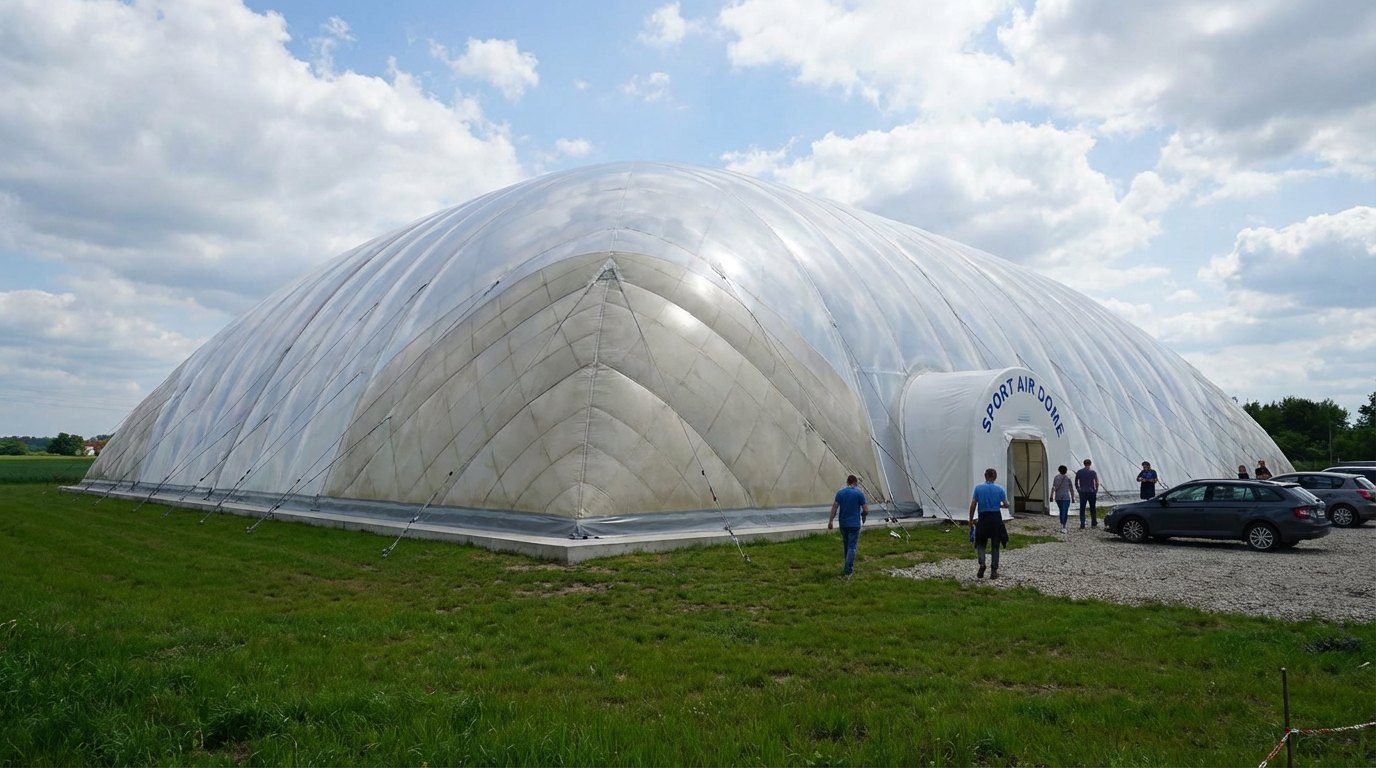
    You’re facing budget constraints but need substantial indoor space coverage, and refurbished air domes might seem like the perfect solution. While these structures can slash your initial investment by 25-35% compared to new installations, the real question isn’t about the upfront savings. It’s whether you’ll encounter unexpected costs, structural issues, or warranty complications down the road. Before you commit to what appears to be a smart financial decision, there are several critical factors that could make or break your investment.

    Why Choose Refurbished Air Domes: 25-35% Cost Savings Breakdown

    When you’re evaluating facility expansion options, refurbished air domes offer substantial financial advantages that can free up 25-35% of your budget for other priorities.

    This significant cost reduction stems from the professional refurbishment process, where existing structures receive new blowers, fabric repairs, and re-tensioning rather than complete replacement.

    You’ll find that a refurbished air dome covering 7,200-24,000 square feet costs thousands less than new construction while delivering comparable performance.

    Whether you’re considering a reconditioned sports dome for athletics or a certified pre-owned tennis bubble for year-round play, the savings remain consistent across applications.

    The refurbishment process includes professional cleaning, tear repairs, and equipment upgrades, ensuring you receive a facility that meets current safety standards without the premium price tag of brand-new installations.

    Fabric, Blowers, and Frames: What Gets Refurbished vs. Replaced

    When you’re evaluating a refurbished air dome, you’ll need to understand which components get repaired versus completely replaced.

    The fabric typically undergoes professional cleaning and tear repairs, while blower systems often receive full upgrades to newer, more efficient models.

    Frame structures get thorough assessments to determine whether reinforcement will suffice or if sections require replacement.

    Fabric Repair vs Replacement

    Understanding which components get repaired versus replaced determines the quality and longevity of your refurbished air dome. When evaluating a factory refurbished dome, you’ll find that fabric typically undergoes extensive repair rather than complete replacement. Professional refurbishers patch tears, re-tension sagging areas, and reinforce stress points to extend the fabric’s lifespan.

    Component Repair Process Replacement Criteria
    Fabric tears Heat welding, patches Damage >30% surface area
    Blower systems Motor rebuilds, cleaning Age >15 years
    Anchor points Re-tensioning, reinforcement Structural failure
    Zippers/doors Track realignment Complete mechanism failure
    Inflation controls Calibration, sensor cleaning Electronic system failure

    This approach maintains structural integrity while keeping costs 25-35% below new dome prices, making refurbished options financially attractive.

    Blower System Upgrades

    Although fabric repairs dominate most refurbishment projects, blower systems present different upgrade opportunities that can significantly improve your dome’s performance and energy efficiency.

    You’ll typically find that refurbishment specialists replace older blowers with modern, energy-efficient models rather than attempting repairs on worn units.

    New blower installations during refurbishment often include variable-speed controls, allowing you to adjust air pressure based on weather conditions and usage patterns.

    This upgrade can reduce your energy costs by 20-30% compared to single-speed systems.

    You should expect upgraded control panels with digital monitoring capabilities, giving you real-time data on pressure levels and system performance.

    Some refurbishers also install backup blower systems during upgrades, ensuring your dome stays inflated even if the primary unit fails unexpectedly.

    Frame Structure Assessment

    Before upgrading blowers or repairing fabric, you’ll need a detailed structural assessment to determine which frame components can be refurbished versus those requiring complete replacement.

    Professional evaluators examine anchor points, cable systems, and structural integrity to identify wear patterns and stress damage.

    Frame components typically last longer than fabric, making them prime candidates for refurbishment.

    Steel cables, tensioning hardware, and foundation anchors often retain structural integrity even when fabric needs replacement.

    However, corroded cables or damaged anchor points require immediate replacement for safety reasons.

    You’ll find that most reputable refurbishment companies replace high-wear components like door seals, ventilation systems, and emergency deflation equipment regardless of condition.

    This all-encompassing approach guarantees your refurbished dome meets current safety standards while maximizing the value of salvageable structural elements.

    Warranty Protection: 10-15 Year Coverage for Refurbished Air Domes

    When you invest in a refurbished air dome, you’re protected by extensive warranty coverage that spans 10-15 years for fabric components and three years for equipment.

    This thorough protection gives you confidence that your facility investment is secure, matching nearly the same coverage you’d receive with a new installation.

    The warranty demonstrates the refurbisher’s commitment to quality workmanship and materials.

    You’ll have peace of mind knowing that professionally repaired tears, re-tensioned fabric, and new blowers are backed by substantial guarantees.

    Key warranty benefits include:

    1. Fabric longevity assurance – Your dome’s structural integrity is protected for over a decade
    2. Equipment reliability guarantee – New blowers and mechanical systems are covered during critical early years
    3. Professional repair backing – All refurbishment work is warranted against defects

    Size and Capacity Options: 7,200-24,000 Sq Ft Facilities Available

    Beyond warranty protection, refurbished air domes offer remarkable flexibility in size options to match your specific facility needs.

    You’ll find refurbished units ranging from 7,200 to 24,000 square feet, covering 669 to 2,230 square meters respectively. This range accommodates various applications, from small training facilities to large multi-sport complexes.

    You can choose smaller 7,200-10,000 sq ft domes for single courts, batting cages, or specialized training areas.

    Mid-range options of 12,000-16,000 sq ft work perfectly for full basketball courts or soccer fields.

    Larger facilities up to 24,000 sq ft can house multiple courts, full-size indoor fields, or combined recreational spaces.

    This size flexibility means you won’t compromise on your vision while staying within budget.

    You’ll get professional-grade space that’s been properly refurbished to meet your capacity requirements.

    Hidden Costs and Potential Issues With Refurbished Domes

    While refurbished air domes offer significant savings, you’ll need to watch for unexpected installation expenses that weren’t included in the initial quote.

    The limited warranty coverage on refurbished units may leave you vulnerable if major issues arise after the 3-year equipment guarantee expires.

    You should also carefully assess potential structural integrity risks, as the dome’s previous use and wear patterns mightn’t be immediately apparent during your initial inspection.

    Unexpected Installation Expenses

    Although refurbished air domes offer significant upfront savings, you’ll likely encounter installation expenses that weren’t part of your initial budget calculations.

    These unexpected costs can quickly erode the 25-35% savings you’re expecting from choosing refurbished over new.

    Common installation surprises include:

    1. Site preparation modifications – Your existing foundation mightn’t align with the refurbished dome’s specifications, requiring costly concrete work or leveling adjustments that can reach $15,000-30,000.
    2. Updated electrical systems – Newer blower equipment often demands upgraded electrical panels, conduits, and safety switches that older facilities lack, adding $8,000-20,000 to your project.
    3. Permit and inspection fees – Local authorities may treat refurbished installations as new construction, triggering engineering reviews, structural assessments, and extended approval processes costing $5,000-12,000.

    Limited Warranty Coverage

    Despite manufacturers advertising 10-15 year fabric warranties and 3-year equipment coverage, refurbished air dome warranties contain significant gaps that’ll leave you financially exposed when problems arise.

    You’ll discover most warranties exclude pre-existing damage that wasn’t identified during initial inspection. Installation defects, foundation issues, and weather-related problems often aren’t covered.

    The refurbisher’s warranty typically covers only their specific work—not the original dome components they didn’t touch.

    Equipment warranties usually apply solely to replaced blowers, not refurbished mechanical systems. You’re responsible for parts that fail due to age-related wear, even if they weren’t addressed during refurbishment.

    Many warranties require you to use specific maintenance companies or void coverage.

    Labor costs for warranty repairs frequently aren’t included, leaving you paying technician fees for covered parts.

    Structural Integrity Risks

    Beyond warranty limitations, refurbished air domes carry structural risks that can trigger expensive emergency repairs or complete facility shutdowns.

    When you’re evaluating a refurbished dome, you’re fundamentally betting on the integrity of aged infrastructure that’s already weathered years of stress cycles, temperature fluctuations, and environmental exposure.

    Consider these critical structural vulnerabilities:

    1. Fabric stress points – Previous anchor failures or micro-tears can propagate under pressure, causing catastrophic deflation during peak usage periods.
    2. Foundation settlement issues – Existing concrete anchors may have shifted over time, creating uneven tension that compromises the entire structure’s stability.
    3. Blower system integration problems – Mismatched replacement equipment can create pressure inconsistencies, leading to fabric fatigue and premature failure.

    You’re inheriting unknown maintenance histories that could surface as costly surprises.

    Quality Verification: How to Assess Refurbishment Standards

    How can you determine whether a refurbished air dome meets professional standards before making your investment? Start by requesting detailed documentation of the refurbishment process, including professional cleaning records, blower replacement specifications, and fabric repair history.

    You’ll want to verify that tears have been properly patched using manufacturer-approved materials and techniques.

    Inspect the re-tensioning work personally or hire an independent engineer to assess fabric tautness and anchor point integrity.

    Don’t accept vague promises—demand specific warranty terms covering both fabric (10-15 years) and equipment (3 years).

    Request references from previous refurbishment customers and visit their facilities if possible.

    Finally, confirm the refurbisher is certified by the original manufacturer or holds relevant industry credentials. This verification protects your investment and confirms you’re getting genuine professional-grade restoration work.

    Best Candidates for Refurbished Air Dome Investment

    Several specific buyer profiles consistently achieve the best returns when investing in refurbished air domes. You’ll maximize your investment if you fall into one of these categories.

    1. Budget-conscious facility operators who need immediate coverage for sports programs, events, or storage but can’t justify new dome costs.

    You’re getting 65-75% of original value while saving thousands upfront.

    2. Seasonal business owners running tennis clubs, golf facilities, or event venues who require temporary or semi-permanent structures.

    Your shorter payback period makes refurbished units ideal.

    3. Municipal recreation departments with limited capital budgets but community pressure for year-round facilities.

    You can serve more residents while maintaining fiscal responsibility.

    These buyers typically see ROI within 3-5 years versus 7-10 years for new installations.