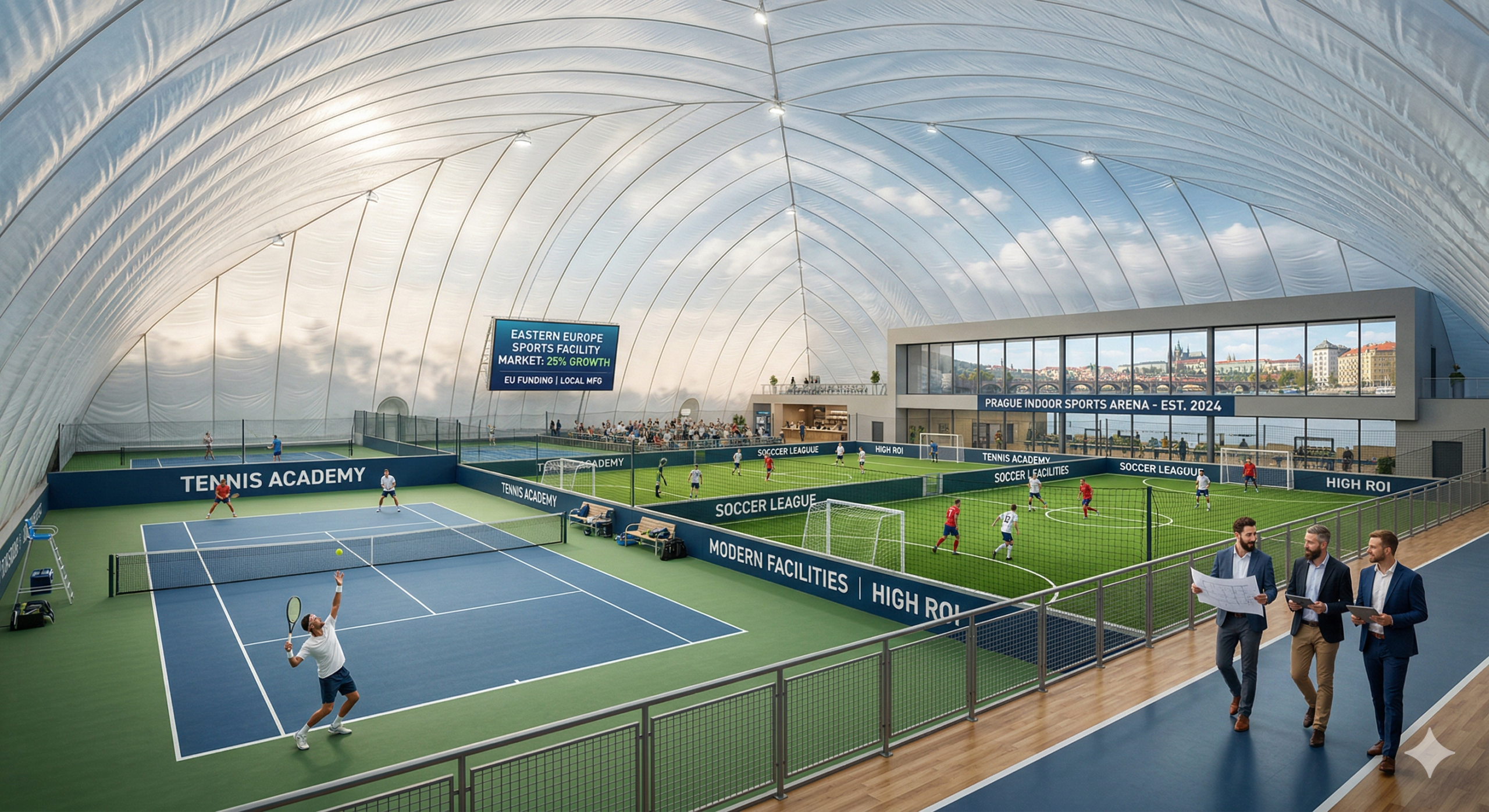
You’re looking at a sports facility goldmine that most investors haven’t discovered yet. Eastern Europe’s 120+ untapped markets offer construction costs that’ll slash your budget by up to 40% compared to Western alternatives. Poland’s already proven the model works with 80+ profitable facilities, while the Czech Republic and Hungary sit virtually unexplored. Here’s what makes this opportunity different from every other sports investment you’ve considered.
Eastern Europe Sports Facilities: 120+ Markets With 25% Growth Potential
Across Eastern Europe’s expanding landscape, you’ll discover over 120 distinct sports facility markets experiencing unprecedented growth, with industry analysts projecting a robust 25% expansion potential over the next five years.
Poland leads this transformation with 80+ facilities, while Czech Republic and Hungary rapidly develop their infrastructure. You’ll find costs running 20-40% lower than Western European alternatives, making eastern Europe air dome installations increasingly attractive.
Soccer and tennis dominate facility construction, with typical structures spanning 1,500-2,500 square meters.
EU funding streams support municipal projects, accelerating Poland sports facility development across the region. Czech sports dome projects benefit from emerging local manufacturing capabilities, reducing import dependencies.
This combination of affordability, government support, and growing demand positions Eastern Europe as Europe’s most dynamic sports facility market.
Poland’s 80+ Facilities Prove Market Viability And Profitability
Poland’s impressive portfolio of 80+ operational sports facilities demonstrates clear market viability, with facility owners reporting consistent profitability across soccer domes, tennis centers, and multi-sport complexes. You’ll find these eastern european indoor sports facilities generating steady revenue streams year-round, capitalizing on weather-independent operations and diverse programming opportunities.
| Facility Type | Average ROI | Primary Revenue |
|---|---|---|
| Soccer Domes | 15-22% | League rentals, camps |
| Tennis Centers | 12-18% | Memberships, lessons |
| Multi-Sport | 18-25% | Corporate events, parties |
Poland’s success stems from strategic location selection, community partnerships, and competitive pricing that’s 20-40% below Western European rates. You can replicate this model by focusing on high-demand sports, securing municipal support, and leveraging EU funding opportunities that many Polish operators have utilized effectively.
Czech Republic And Hungary Offer 40+ Untapped Sports Facility Markets
Beyond Poland’s established market, Czech Republic and Hungary present over 40 underserved cities where you’ll discover minimal competition for indoor sports facilities.
These developing markets offer first-mover advantages with construction costs 20-40% below Western European standards.
You’ll find strong government support through EU municipal funding programs specifically targeting sports infrastructure development.
Both countries show rising demand for soccer and tennis facilities, with typical projects ranging 1,500-2,500 square meters.
Key market opportunities include:
- Prague and Budapest suburbs – Growing populations with limited indoor sports access
- Secondary cities – Untapped markets of 50,000+ residents lacking modern facilities
- University partnerships – Academic institutions seeking private facility management
- Corporate wellness – Companies investing in employee recreation centers
Local manufacturing capabilities are emerging, reducing equipment and maintenance costs considerably.
Sports Facility Construction Costs 20-40% Lower Than Western Europe
Construction costs in Eastern Europe deliver substantial savings that’ll directly impact your project’s bottom line.
You’ll find construction expenses running 20-40% lower than comparable Western European projects, creating significant opportunities for budget optimization or enhanced facility features.
These cost advantages stem from lower labor rates, reduced material costs, and competitive local contractor pricing.
You can leverage these savings to either maximize your return on investment or reinvest the difference into premium equipment and amenities that’ll set your facility apart.
The developing local manufacturing sector further supports cost efficiency, reducing import dependencies and transportation expenses.
You’ll also benefit from streamlined permitting processes in many Eastern European markets, which can accelerate project timelines and reduce carrying costs during development phases.
Why Soccer And Tennis Facilities Generate Highest ROI?
What drives soccer and tennis facilities to deliver superior returns in Eastern European markets? You’ll find these sports dominate because they’re deeply embedded in local culture and require minimal specialized equipment compared to other sports.
Soccer facilities generate consistent revenue through league rentals, youth programs, and tournament hosting, while tennis courts attract affluent demographics willing to pay premium rates.
Your investment benefits from year-round usage potential, especially with covered facilities. These sports also require smaller footprints than multi-sport complexes, reducing initial capital requirements while maximizing revenue per square meter.
- High utilization rates: Soccer and tennis maintain 60-80% booking rates during peak seasons
- Premium pricing power: Tennis facilities command 30-50% higher hourly rates than general sports venues
- Lower maintenance costs: Simple surfaces require less specialized upkeep than swimming pools or ice rinks
- Flexible programming: Facilities easily accommodate leagues, lessons, camps, and private events
EU Municipal Funding Covers Up To 60% Of Project Costs
The financial advantage of soccer and tennis facilities becomes even more compelling when you factor in available EU municipal funding. You can access grants covering up to 60% of your project costs through various European Union programs designed to support municipal sports infrastructure development.
These funding opportunities are specifically structured to help Eastern European municipalities bridge the gap between community needs and budget constraints. You’ll find that soccer and tennis facilities qualify for higher funding percentages because they serve broader demographic groups and promote public health initiatives.
The application process requires detailed project proposals demonstrating community impact, but the potential savings are substantial.
With construction costs already 20-40% lower than Western Europe, combined with EU funding, your actual investment becomes remarkably affordable while generating consistent returns.
Most Profitable Facilities Range 1,500-2,500 Square Meters
Ideal profitability emerges when you design facilities between 1,500-2,500 square meters (16,146-26,910 square feet), striking the perfect balance between operational efficiency and revenue generation capacity.
This size range maximizes your return on investment across Eastern Europe’s developing markets.
You’ll achieve maximum space utilization while keeping maintenance costs manageable. Facilities in this range support multiple revenue streams without overwhelming operational complexity.
The sweet spot accommodates soccer and tennis programming – the region’s most popular sports – while maintaining efficient staffing levels.
- Lower operational overhead – Fewer staff members needed compared to larger complexes
- Multi-sport flexibility – Accommodates various sports programming throughout the day
- Faster break-even timeline – Typically 3-4 years versus 5-7 years for larger facilities
- Municipal partnership appeal – Perfect size for EU funding eligibility requirements
Local Sports Equipment Manufacturing Reduces Operating Costs By 15%
You’ll benefit from emerging local manufacturing that’s cutting equipment costs by 15% across the region.
The developing supply chains in Poland, Czech Republic, and Hungary mean you’re getting faster deliveries and reduced shipping expenses compared to importing from Western suppliers.
You can maintain quality standards while accessing competitive pricing through these regional manufacturers who understand the specific needs of Eastern European sports facilities.
Regional Manufacturing Cost Benefits
As Eastern Europe’s manufacturing sector continues to mature, you’ll find that locally-produced sports equipment can slash your facility’s operating costs by up to 15% compared to importing from traditional suppliers.
This cost advantage stems from reduced transportation expenses, shorter delivery times, and competitive labor rates across Poland, Czech Republic, and Hungary.
You’ll benefit from faster replacement cycles and reduced inventory holding costs when sourcing regionally.
Local manufacturers understand specific climate requirements and usage patterns, creating products better suited for Eastern European conditions.
- Eliminate lengthy shipping delays from distant suppliers
- Access customized equipment designs for local sports preferences
- Reduce currency exchange risks with local procurement
- Leverage growing quality standards matching Western European specifications
Regional sourcing transforms your facility’s cost structure while supporting local economic development.
Local Supply Chain Advantages
When establishing supply chains within Eastern Europe’s sports facility market, you can capitalize on shortened distribution networks that connect manufacturers directly to your facility’s doorstep. Poland’s 80+ facilities have sparked local manufacturing growth, creating robust partnerships between equipment producers and sports complexes.
You’ll cut transportation costs dramatically when sourcing tennis nets, soccer goals, and maintenance equipment from nearby suppliers. Czech Republic and Hungary are developing their own manufacturing capabilities, expanding your options for competitive pricing.
| Supply Chain Element | Cost Reduction |
|---|---|
| Transportation | 25-30% |
| Equipment Procurement | 15-20% |
| Maintenance Parts | 20-25% |
| Installation Services | 10-15% |
| Emergency Repairs | 30-35% |
This proximity translates into faster delivery times, reduced inventory costs, and stronger vendor relationships that’ll keep your facility running smoothly while maximizing profitability.
Equipment Quality Standards
Although cost savings drive initial equipment sourcing decisions, maintaining rigorous quality standards secures your Eastern European sports facility won’t compromise performance for affordability.
Poland’s manufacturing sector leads the region with ISO-certified production facilities that meet international soccer and tennis equipment specifications. You’ll find Czech and Hungarian suppliers increasingly adopting EU quality frameworks, guaranteeing consistency across your facility operations.
Local manufacturers now produce equipment matching Western European standards while delivering 15% lower operating costs through reduced shipping expenses and faster replacement cycles. This regional quality evolution means you can source reliably without importing from distant markets.
- CE certification compliance guarantees all equipment meets European safety regulations
- Local quality testing laboratories provide faster certification turnaround times
- Regional suppliers offer specialized soccer goal and tennis court surface expertise
- Municipal procurement contracts often include quality guarantee clauses