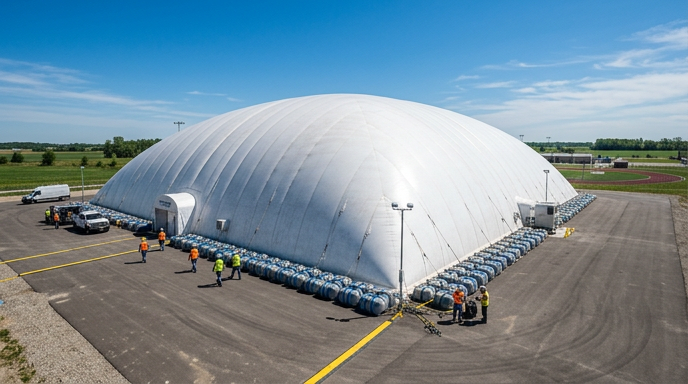
You’re considering building a sports dome, but the financing options can feel overwhelming. Whether you’re a school district, private facility owner, or community organization, understanding your funding choices will make or break your project. From equipment loans requiring 20% down to creative leasing arrangements and government funding opportunities, each path offers distinct advantages and challenges. The key is matching the right financing structure to your specific situation and long-term goals.
How Much Does Air Dome Financing Really Cost?
When you’re budgeting for an air dome facility, the financing costs extend far beyond the sticker price of the structure itself. Air dome loans typically require 10-20% down payments on facilities ranging from $200K to $500K, meaning you’ll need $20K to $100K upfront.
Equipment loans offer 5-7 year terms at 5-8% interest rates, while leasing options run $3K-$8K monthly for 20,000 square foot facilities. Your total financing costs include interest payments, insurance, permits, site preparation, and ongoing maintenance expenses.
SBA 7(a) loans provide attractive terms with just 10% down for projects up to $5M, making them ideal for larger facilities.
Municipal bonds offer another avenue for public projects, potentially reducing borrowing costs considerably compared to traditional commercial financing options.
Equipment Loans: The Most Common Air Dome Financing Path
Most air dome buyers choose equipment loans as their primary financing method because these specialized loans treat the dome structure as movable equipment rather than permanent real estate.
You’ll typically encounter loan terms spanning 5-7 years with interest rates ranging from 5-8%. Most lenders require a 20% down payment for facilities costing $200,000-$500,000.
Equipment loans offer several advantages for your air dome project. You won’t need complex real estate appraisals or lengthy property evaluations. The approval process moves faster since you’re financing equipment rather than property.
Your dome serves as collateral, which helps secure competitive rates. These loans work particularly well if you’re purchasing a complete air dome system from established manufacturers.
You’ll find that equipment financing companies understand the sports facility market and can structure payments around your seasonal revenue patterns.
Should You Lease Or Buy Your Air Dome Facility?
How do you decide between leasing and purchasing your air dome facility? Your choice depends on several critical factors that’ll impact your long-term financial strategy and operational flexibility.
Consider these key factors when evaluating sports dome financing options:
- Cash flow requirements – Leasing offers lower upfront costs ($3K-$8K monthly) versus 20% down payments on purchases.
- Tax implications – Lease payments are fully deductible operating expenses, while purchases offer depreciation benefits.
- Long-term commitment – Buying makes sense if you’ll operate for 10+ years; leasing provides flexibility for shorter commitments.
- Maintenance responsibilities – Lessors typically handle major repairs and upgrades, reducing your operational burden.
Purchasing builds equity but requires significant capital. Leasing preserves cash flow but costs more over time without ownership benefits.
SBA Loans For Large Air Dome Projects
For ambitious air dome projects exceeding $500,000, SBA 7(a) loans offer a powerful financing alternative that bridges the gap between conventional equipment loans and large-scale commercial lending.
These government-backed loans provide up to $5 million in funding with just 10% down payment requirements, making them ideal for extensive sports facilities.
SBA loans for large air dome projects typically feature competitive interest rates and extended repayment terms up to 25 years.
You’ll benefit from lower down payments compared to traditional commercial loans, preserving working capital for operations and marketing.
The SBA guarantee reduces lender risk, improving your approval odds even with limited collateral.
However, expect a longer approval process requiring detailed business plans, financial projections, and documentation.
You’ll also pay guarantee fees, but the favorable terms often offset these costs for substantial air dome investments.
Government Funding Options For Public Air Domes
- General obligation bonds – backed by the municipality’s full faith and credit, offering lowest interest rates.
- Revenue bonds – secured by facility income streams like user fees and memberships.
- Special assessment bonds – funded through property taxes within designated districts.
- Certificate of participation – lease-purchase agreements that don’t require voter approval.
You’ll typically secure 20-30 year terms with rates 2-3% below commercial alternatives, making municipal financing ideal for community air dome projects.