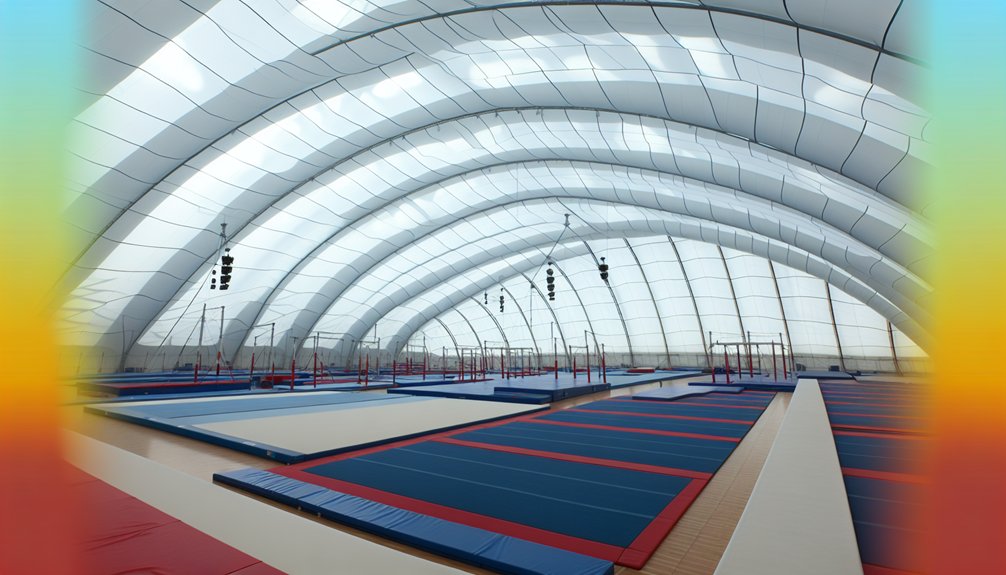
You’re probably tired of cramped gymnastics facilities with sky-high construction costs and limited training seasons. Gymnastics air domes change everything – they’ll give you 50-70% savings over traditional buildings while providing the clear-span space your athletes need year-round. Whether you’re running a competitive program or recreational classes, these inflatable structures solve the biggest challenges facing gym owners today. But there’s more to evaluate than just the initial investment when you’re making this decision.
Why Gymnastics Air Domes Beat Traditional Buildings
When you’re planning a gymnastics facility, air domes offer compelling advantages over traditional brick-and-mortar buildings. Your gymnastics air dome costs considerably less to construct—often 50-70% cheaper than conventional structures.
You’ll also save on heating and cooling since the pressurized air system provides natural insulation. Unlike permanent buildings, you can relocate your gymnastics training dome if needed.
The flexible membrane withstands weather extremes while providing consistent indoor conditions year-round. You’ll avoid lengthy construction permits and zoning battles that plague traditional builds.
Installation happens in weeks, not months. Your indoor gymnastics facility can accommodate full programs with proper ceiling heights for vault and uneven bars.
The clear-span design eliminates support columns, maximizing usable space for equipment layout and athlete movement patterns.
Gymnastics Air Dome Costs: Building vs Renting Options
Since gymnastics air dome require significant upfront investment, you’ll need to weigh purchasing against rental options based on your facility’s long-term goals.
Buying a gymnastics bubble typically costs $150,000-$400,000 for a complete 15,000 square foot facility, including installation, equipment, and safety features. This investment pays off if you’re planning five-plus years of operation.
Rental options start around $8,000-$15,000 monthly for comparable space, making them ideal for seasonal programs or testing market demand. However, rental costs accumulate quickly—you’ll break even around the three-year mark compared to purchasing.
Consider additional factors like maintenance responsibilities, insurance requirements, and equipment inclusion. Rentals often include maintenance and insurance, while purchased domes require ongoing upkeep budgets.
Your membership projections and revenue forecasts should drive this critical financial decision.
Space and Height Requirements for Gymnastics Air Domes
When you’re planning your gymnastics air dome, you’ll need to meet specific height and space standards to guarantee safe training conditions.
Your dome must reach a minimum height of 30 feet to accommodate vault runs and uneven bar routines without compromising athlete safety.
You’ll also need to allocate sufficient floor space for spring flooring installation, equipment storage, and safety features like pit areas.
Minimum Height Standards
Although floor exercises and beam routines can function in relatively low spaces, vault runs and uneven bar dismounts demand considerably more vertical clearance in your gymnastics air dome.
You’ll need to prioritize height requirements when planning your facility to guarantee athlete safety and proper skill execution.
The minimum height standards for your gymnastics air dome include:
- 30-foot (9.1m) minimum ceiling height for vault and uneven bars apparatus
- Additional clearance zones around high-impact landing areas for safety compliance
- Consistent height maintenance throughout the dome structure to prevent low spots
- Professional installation verification to confirm height specifications meet gymnastics federation standards
Don’t compromise on these height requirements.
Insufficient vertical space restricts training progression and creates dangerous conditions for athletes performing advanced skills.
Floor Space Requirements
Beyond vertical clearance, your gymnastics air dome requires substantial floor space to accommodate multiple apparatus and safe training zones.
You’ll need a minimum 4,000 square feet for spring floor installation alone, plus additional space for equipment placement and safety margins.
A 100′ x 150′ dome provides 15,000 square feet, which accommodates a complete gymnastics program. This configuration allows you to install vault runways, uneven bars, balance beams, and floor exercise areas simultaneously.
You’ll also need designated pit areas for skill development and landing practice.
Don’t forget storage requirements for portable equipment like bars, beams, and vault components.
Plan for safety matting zones around each apparatus, ensuring adequate spacing between stations. This prevents interference during training and maintains proper safety protocols throughout your facility.
Planning Your Gymnastics Equipment Layout in Air Domes
When planning your gymnastics equipment layout, you’ll need to allocate specific zones for each apparatus while maintaining required safety clearances between them.
Your vault and uneven bars require the most vertical space at 30 feet minimum, so position these under the dome’s highest points.
Create dedicated areas for your spring floor, balance beams, and training pits, ensuring each zone has adequate buffer space for athlete safety during routines and dismounts.
Equipment Zone Allocation
Four distinct zones form the backbone of any successful gymnastics air dome layout, each requiring specific spatial considerations and safety clearances.
You’ll need to strategically position each area to maximize flow while maintaining athlete safety throughout your facility.
Your equipment zones should include:
- Vault runway and landing area – Requires 100+ feet of clear runway space with adequate deceleration zones.
- Uneven bars section – Needs 30-foot minimum ceiling height with extensive matting around equipment.
- Balance beam training area – Positioned away from high-traffic zones with soft landing surfaces.
- Floor exercise space – Minimum 4,000 square feet of spring flooring for tumbling passes.
You’ll want to separate high-energy activities from precision work, ensuring vault and floor exercise areas don’t interfere with beam concentration zones.
Safety Space Requirements
Because gymnastics equipment poses inherent collision risks, you’ll need to establish generous buffer zones around each apparatus to prevent athlete injuries and equipment damage.
Plan minimum 8-foot clearances around vault runways and landing areas, while uneven bars require 10-foot perimeters due to dismount trajectories.
Your floor exercise space needs 6-foot borders beyond the 40′ x 40′ competition area.
Don’t overlook vertical safety requirements—vault and bar activities demand full dome height utilization, so you can’t store equipment overhead in these zones.
Position safety matting strategically around high-impact areas like beam dismounts and bar release moves.
Create clear sight lines between apparatus zones so coaches can monitor multiple athletes simultaneously.
These buffer zones typically consume 40% of your total floor space but they’re non-negotiable for safe operations.
Spring Floor and Safety Matting Installation Guide
Installing a proper spring floor system forms the foundation of any safe gymnastics air dome facility. You’ll need at least 4,000 square feet of specialized spring flooring to accommodate tumbling passes and floor exercise routines effectively.
Your installation process requires these critical steps:
- Foundation preparation – Confirm level concrete base with proper drainage systems.
- Spring system assembly – Install manufacturer-approved springs with consistent tension throughout.
- Carpet bonding – Secure competition-grade carpet using approved adhesives and seaming techniques.
- Safety perimeter setup – Place 8-inch minimum safety matting around all floor boundaries.
You’ll also need strategic placement of landing mats near vault runways and dismount areas from uneven bars.
Don’t forget portable safety mats for beam training areas, as these provide essential protection during skill development and routine practice sessions.
Air Dome Climate Control for Year-Round Gymnastics Training
While maintaining consistent temperature and humidity levels proves critical for gymnast performance and safety, your air dome’s climate control system must handle unique challenges that traditional buildings don’t face.
You’ll need specialized HVAC units designed for pressurized environments that won’t compromise the dome’s structural integrity. Install redundant heating systems since equipment failure could deflate your dome and cancel training sessions.
Target 68-72°F (20-22°C) with 40-60% humidity to prevent slippery equipment and maintain ideal grip conditions. Your system should include dehumidification capabilities, especially in humid climates where condensation can create dangerous surfaces on bars and beams.
Position air circulation units strategically to eliminate dead zones while avoiding direct airflow that could affect gymnasts during routines, particularly on beam and vault approaches.
Gymnastics Air Dome Safety Standards and Maintenance
Beyond climate control considerations, your gymnastics air dome requires rigorous safety protocols and preventive maintenance to protect athletes and maintain structural integrity.
Regular inspections guarantee your facility meets industry standards while preventing costly emergency repairs.
Essential safety and maintenance protocols include:
- Daily pressure monitoring – Check blower systems and maintain ideal PSI levels to prevent dome collapse or structural stress.
- Weekly fabric inspection – Examine seams, anchor points, and surface wear for tears or deterioration that compromise safety.
- Monthly equipment audits – Verify safety matting placement, pit foam density, and apparatus anchoring meets gymnastics federation requirements.
- Quarterly professional assessments – Schedule certified technician evaluations of structural components, emergency exits, and ventilation systems.
Proper maintenance extends your dome’s lifespan while guaranteeing athlete safety during high-impact training sessions.