Tag: Indoor Sports

  • Latin America Indoor Sports Market

    Latin America Indoor Sports Market

    You’re looking at a $2.3 billion market that’s quietly reshaping how Latin America approaches indoor sports infrastructure. While Brazil and Mexico capture most headlines with their massive facility expansions, you’ll find the real story lies in the operational advantages that make this region 10-30% cheaper than US markets. But there’s a catch that could derail your investment plans—one that most analysts aren’t discussing yet.

    Brazil and Mexico Drive $2.3B Indoor Sports Market Growth

    Two powerhouse economies are reshaping Latin America’s indoor sports landscape, with Brazil and Mexico commanding the lion’s share of a $2.3 billion market that’s expanding rapidly across the region.

    You’ll find Brazil’s indoor facility infrastructure leading the charge, driven by the country’s massive population and established sports culture. Soccer training centers and multi-sport complexes are proliferating in major cities like São Paulo and Rio de Janeiro.

    Meanwhile, Mexico’s sports dome installations are experiencing unprecedented growth, particularly in northern states where cross-border business opportunities flourish.

    The south america air dome segment represents the fastest-growing category, offering cost-effective solutions for year-round training despite varied climates.

    You’re witnessing 10-30% lower operational costs compared to US markets, making indoor sports facilities increasingly attractive investments throughout the region.

    Climate Demands Create Year-Round Indoor Sports Facility Needs

    While temperatures across Latin America range dramatically from 15-35°C (59-95°F), you’re seeing indoor sports facilities become essential infrastructure rather than luxury amenities.

    In tropical regions, you’ll need robust cooling systems and humidity control to protect athletes from oppressive heat and sudden downpours. Southern countries require adaptable climate systems managing both seasonal temperature swings and unpredictable weather patterns.

    You’re witnessing increased demand for Latin America sports dome facilities that provide consistent training environments year-round. These controlled spaces eliminate weather-related cancellations and offer reliable conditions for professional development.

    Whether you’re dealing with Brazil’s humid summers or Argentina’s variable seasons, indoor facilities guarantee uninterrupted athletic programs. The climate variability isn’t just inconvenient—it’s driving fundamental infrastructure needs across the region’s expanding sports industry.

    Soccer Training Centers Lead Infrastructure Investment Wave

    You’ll find that soccer training centers across Latin America are driving the largest wave of indoor sports facility construction, with Brazil and Mexico leading massive infrastructure projects.

    Your facility design choices now focus on multi-purpose synthetic turf systems, advanced ventilation for tropical climates, and modular spaces that accommodate both youth academies and professional training.

    When you’re planning equipment investments, you’re prioritizing climate-controlled environments, high-quality artificial surfaces, and video analysis technology that can withstand the region’s humidity and temperature variations.

    Several cutting-edge soccer training centers across Latin America are setting new benchmarks for indoor sports facility design, with Brazil’s São Paulo and Mexico City leading a $2.3 billion infrastructure investment wave.

    You’ll find these modern facilities incorporating climate-adaptive features that address the region’s diverse weather conditions, from tropical humidity to temperate variations. Smart ventilation systems maintain ideal temperatures between 20-24°C while reducing energy costs by 25%.

    Key design trends transforming Latin American indoor sports facilities include:

    1. Multi-surface training areas with convertible artificial turf systems
    2. Advanced LED lighting refined for broadcast and player performance
    3. Integrated recovery zones featuring hydrotherapy and cryotherapy equipment
    4. Digital performance tracking with embedded sensor technology

    These innovations position Latin America’s facilities competitively against European standards while leveraging 15-20% lower construction costs.

    Equipment Investment Priorities

    Beyond architectural innovations, Latin American soccer training centers are channeling significant capital into specialized equipment that maximizes training efficiency and athlete development.

    You’ll find priority investments focusing on high-tech ball machines, precision passing systems, and goalkeeper training apparatus that simulate match conditions. Speed and agility equipment dominates purchasing decisions, with ladder systems, cone sets, and reaction training tools leading the way.

    Video analysis systems receive substantial budget allocations, enabling coaches to provide real-time feedback and tactical instruction.

    You’re seeing increased demand for portable goals, rebounders, and specialized turf surfaces that withstand intensive daily use. Weather-resistant equipment proves essential given the region’s varied climate conditions.

    Smart investment strategies emphasize durability and multi-functionality, helping facilities maximize their equipment ROI while delivering professional-grade training experiences.

    Equipment Costs Drop 30% Below US Market Rates

    While US indoor sports facilities grapple with rising equipment costs, Latin American markets offer compelling alternatives with prices running 10-30% below North American rates.

    You’ll discover significant savings across essential equipment categories, though you must factor in import duties and currency fluctuations that can impact your bottom line.

    Brazil’s manufacturing capabilities drive down costs for basic training equipment, while Mexico’s proximity to US suppliers creates competitive pricing structures.

    Consider these cost-saving opportunities:

    1. Basic training equipment – 25-30% savings on mats, weights, and fitness machines
    2. Soccer/football gear – 20-25% reductions due to local manufacturing
    3. Court surfaces – 15-20% lower installation costs
    4. Climate control systems – Regional suppliers offer 10-15% savings

    You’ll maximize returns by partnering with established local distributors who understand regulatory requirements.

    Currency Shifts and Import Taxes Squeeze Profit Margins

    Although equipment costs appear attractive in Latin American markets, currency volatility and import duties can quickly erode your expected savings.

    You’ll face unpredictable exchange rate fluctuations that can swing 10-20% within months, turning profitable deals into losses overnight. Import taxes compound these challenges, with some countries imposing duties ranging from 15-35% on sports equipment.

    Brazil’s complex tax structure includes federal, state, and municipal levies that stack up quickly.

    Mexico’s NAFTA benefits help reduce some import costs, but peso volatility remains a concern.

    Argentina’s currency controls and high inflation create additional complications for equipment procurement.

    You’ll need to factor hedging costs and longer payment terms into your pricing strategy.

    Consider partnering with local distributors who understand regulatory requirements and can navigate customs procedures more efficiently than direct imports.

    Virtual Reality and Biometrics Upgrade Training Programs

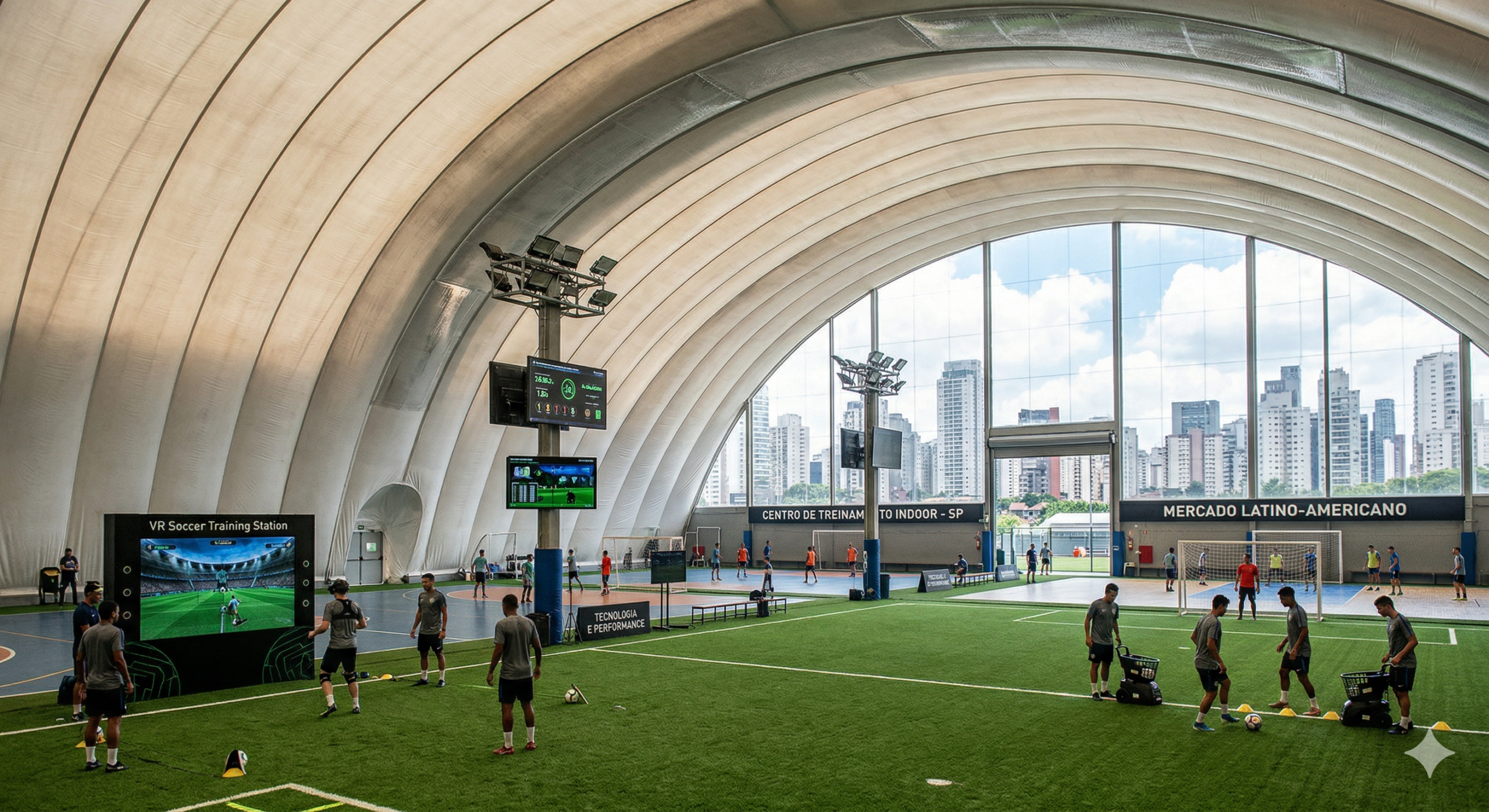
    You’ll find VR soccer training systems transforming how Latin American facilities develop player skills, offering immersive experiences that simulate real match conditions without requiring full-sized fields.

    Your training programs can now integrate biometric performance analytics to track heart rate, movement patterns, and decision-making speed in real-time.

    You’re able to implement these advanced technologies at a fraction of traditional costs, making cutting-edge training accessible to smaller facilities across the region.

    VR Soccer Training Systems

    Several Latin American countries are implementing VR soccer training systems that combine virtual reality environments with biometric monitoring to enhance player development.

    You’ll find these technologies particularly valuable in Brazil, Mexico, and Argentina where football culture drives innovation adoption.

    These systems offer significant advantages for your training programs:

    1. Real-time performance analytics – Track player movements, reaction times, and decision-making patterns.
    2. Climate-independent training – Practice effectively regardless of extreme heat or tropical weather conditions.
    3. Cost-effective scalability – Reduce facility overhead while training multiple players simultaneously.
    4. Injury prevention monitoring – Use biometric data to identify fatigue levels and prevent overexertion.

    You’ll benefit from lower implementation costs compared to US markets, though you should prepare for potential import duty challenges when sourcing VR equipment internationally.

    Biometric Performance Analytics

    While traditional coaching relies on observation and intuition, biometric performance analytics transform how you evaluate and develop athletes across Latin America’s diverse sporting landscape.

    You’ll capture real-time data on heart rate variability, movement patterns, and muscle activation through wearable sensors that cost 10-30% less than US equivalents in countries like Brazil and Mexico.

    These systems help you optimize training intensity for Latin America’s challenging climate conditions, monitoring hydration levels and core temperature in 15-35°C environments.

    You can identify injury risks before they occur and customize recovery protocols for individual athletes.

    However, you’ll face import duties on specialized equipment and currency fluctuations affecting technology costs.

    The growing soccer markets in Mexico and established programs in Argentina present significant opportunities for implementing thorough biometric monitoring systems.

    Cost-Effective Technology Integration

    Since budget constraints often limit Latin American sports facilities from adopting cutting-edge technology, integrating virtual reality with existing biometric systems creates a powerful yet affordable training enhancement.

    You’ll find that combining these technologies maximizes your investment while delivering professional-grade training experiences.

    Smart integration strategies help you overcome financial barriers:

    1. Phased Implementation – Start with basic VR headsets and gradually add biometric sensors as budgets allow.
    2. Shared Equipment Programs – Partner with neighboring facilities to split costs and maintenance expenses.
    3. Local Developer Partnerships – Collaborate with regional tech companies for customized, cost-effective solutions.
    4. Government Sports Grants – Access available funding programs specifically designed for athletic facility modernization.

    This approach lets you compete with world-class training standards without breaking your budget.
  • Australia Indoor Sports Market

    Australia Indoor Sports Market

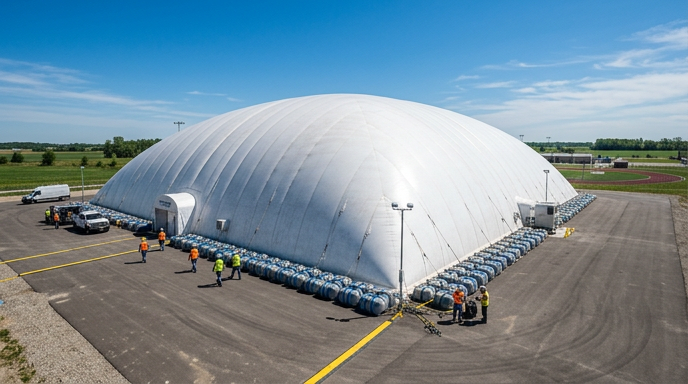
    You’re looking at a market that’s quietly transforming Australia’s sports landscape. While traditional indoor facilities demand million-dollar investments and lengthy construction timelines, air dome technology has slashed those barriers by up to 70%. This shift isn’t just about cost savings—it’s creating opportunities in suburbs and regional areas that couldn’t previously support indoor sports complexes. However, what most operators don’t realize is how Australia’s unique regulatory environment could make or break their investment decisions.

    Air Dome vs Traditional Indoor Sports Facility Costs in Australia

    When you’re evaluating indoor sports facility options in Australia, air domes offer substantial cost advantages over traditional brick-and-mortar structures.

    An air dome Australia installation typically costs AUD $120K-$350K for facilities ranging from 700-2,000 square meters. In contrast, traditional indoor sports buildings require considerably higher investments, often exceeding $1-2 million for comparable spaces when factoring in construction materials, labor, and extended building timelines.

    Air domes eliminate expensive foundation work, structural steel, and roofing systems that traditional facilities demand.

    You’ll also benefit from faster installation times, typically completing your project within weeks rather than months. Operating costs remain lower due to the dome’s insulation properties, which work effectively in Australia’s moderate climate.

    The inflatable structure’s efficiency makes it particularly attractive for sports entrepreneurs seeking quick market entry.

    Why Australia’s Climate Gives Indoor Sports Facilities a Cost Advantage

    Australia’s moderate climate greatly reduces your operational expenses compared to indoor sports facilities in extreme weather regions.

    You’ll spend considerably less on heating costs since temperatures typically range from 10-35°C (50-95°F), eliminating the need for expensive winter heating systems common in colder climates.

    Your primary climate control focus shifts to heat and UV protection rather than battling freezing temperatures or extreme heat waves. This translates to lower energy bills and reduced HVAC maintenance costs throughout the year.

    When you invest in an Australia air dome, you’re capitalizing on these natural advantages.

    The moderate conditions mean your facility operates more efficiently, with less strain on climate control systems.

    Your insurance costs may also decrease due to reduced weather-related risks, making Australia an ideal location for cost-effective indoor sports facility operations.

    State-by-State Regulations for Australian Indoor Sports Facilities

    While Australia’s favorable climate reduces your operational costs, you’ll need to navigate different regulatory requirements depending on which state you choose for your indoor sports facility.

    Each state maintains distinct building codes, zoning laws, and safety standards that’ll impact your Australian sports facility development timeline and budget.

    New South Wales requires thorough development applications for commercial sports facilities, while Queensland emphasizes cyclone-resistant construction in northern regions.

    Victoria focuses heavily on fire safety compliance and accessibility standards.

    Western Australia prioritizes energy efficiency requirements, and South Australia mandates specific ventilation standards for enclosed sports venues.

    You’ll encounter varying permit processing times, from 6-16 weeks depending on your location.

    Planning approval costs range from AUD $5,000-$25,000 across states.

    Consider engaging local consultants who understand regional nuances to streamline your approval process and guarantee full compliance.

    Australia’s Indoor Sports Facility Market Growth and Opportunities

    Despite traditional outdoor sports dominance, Australia’s indoor sports facility market is experiencing unprecedented growth, creating lucrative opportunities for savvy investors and operators.

    You’ll find the strongest expansion in Melbourne, Sydney, and Brisbane, where population density and year-round demand drive profitability.

    The Australia indoor sports sector benefits from moderate climate conditions, reducing operational heating costs compared to colder regions.

    You’re looking at investment ranges from AUD $120K-$350K for air dome facilities covering 700-2,000 square meters.

    Key opportunities include multi-sport complexes, specialized training centers, and youth development facilities.

    You can capitalize on growing participation rates in basketball, futsal, and racquet sports.

    Urban densification creates space constraints, making indoor facilities increasingly valuable.

    Smart operators focus on maximizing facility utilization through diverse programming and community partnerships.

  • Indoor Sports Facilities Europe Market

    Indoor Sports Facilities Europe Market

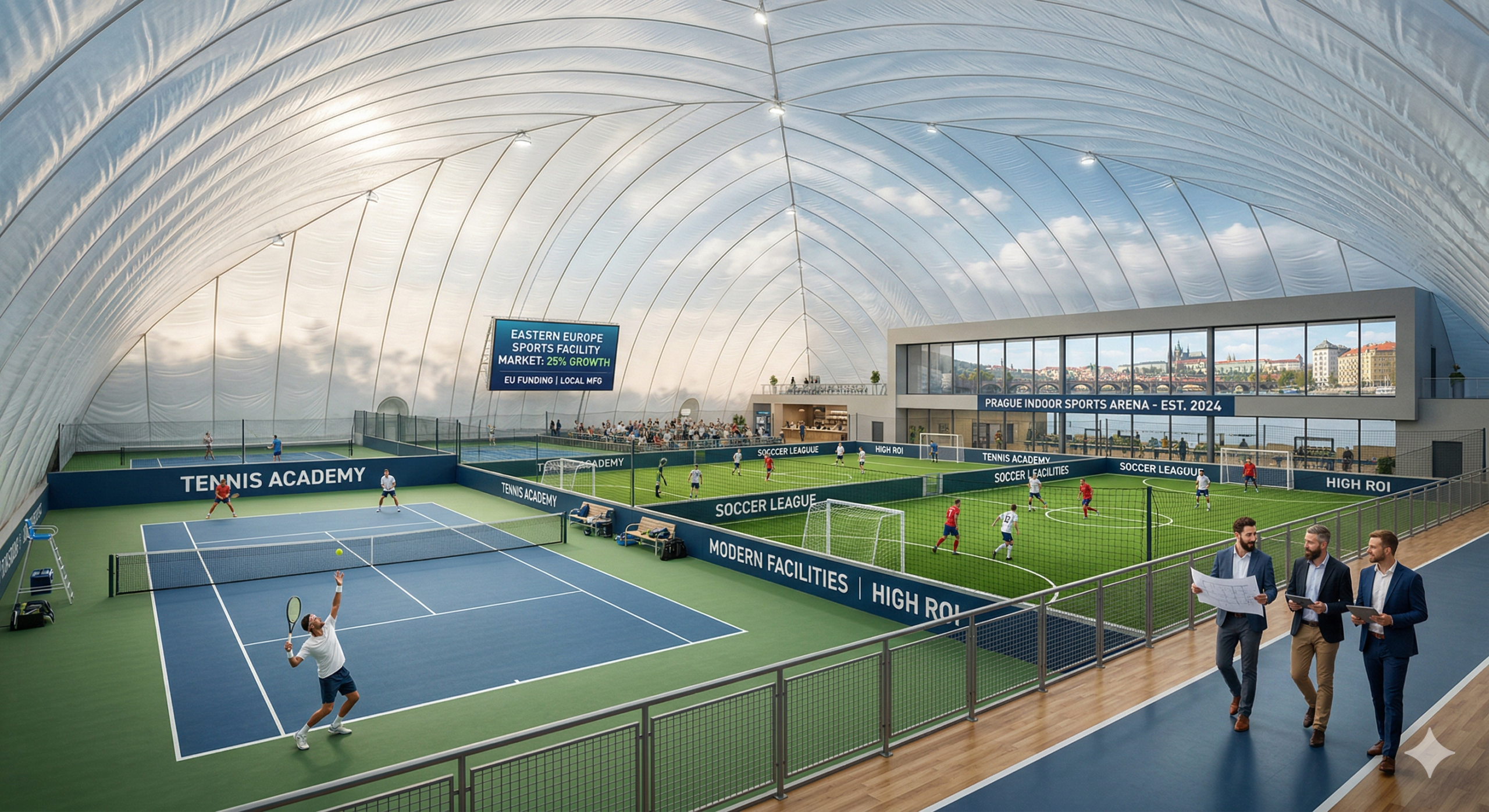
    You’re looking at a European indoor sports facility market that’s fundamentally different from what you’ll find across the Atlantic. While the UK, Germany, and Scandinavian countries control nearly three-quarters of the market activity, you’ll face stricter regulations, higher upfront costs, and completely different design priorities than American buyers expect. What’s driving these regional differences—and more importantly, how they’ll impact your facility investment—requires understanding Europe’s unique approach to indoor sports infrastructure.

    Top European Indoor Sports Facility Markets

    When you’re considering expansion into European indoor sports facilities, you’ll find that the UK leads the market with its robust demand for year-round sports infrastructure.

    Germany follows closely, driven by strong government support for community sports programs and athletic development initiatives.

    Scandinavian countries represent premium markets where you’ll encounter sophisticated buyers willing to invest in high-quality indoor facilities. Norway, Sweden, and Denmark prioritize energy-efficient designs that withstand harsh winter conditions.

    The Netherlands rounds out the top tier, offering consistent demand for versatile sports facilities solutions.

    You’ll discover that Dutch buyers often prefer sports dome structures for football training and multi-sport applications.

    These four regions account for approximately 70% of European market activity, presenting your best opportunities for sustainable growth and partnership development.

    Leading Indoor Sports Facility Suppliers in Europe

    Two major suppliers dominate Europe’s indoor sports facility landscape, each bringing distinct strengths to the market.

    DUOL, based in Slovenia, has established itself as a leading force in the European air dome market, specializing in innovative membrane structures that serve diverse sporting applications.

    Meanwhile, Broadwell from the UK offers extensive solutions with strong engineering expertise and local market knowledge.

    You’ll find these suppliers understand Europe’s stringent regulatory environment, ensuring all facilities meet CE marking requirements and comply with EN standards.

    Their experience maneuvering through these complex regulations gives them significant advantages over international competitors.

    Both companies have adapted their offerings to European preferences, providing energy-efficient solutions that address the region’s sustainability concerns while delivering the robust performance standards European clients demand.

    Indoor Sports Facility Costs and Budget Planning

    Planning your indoor sports facility budget requires understanding that European costs typically run 10-20% higher than comparable US projects.

    You’ll need to account for CE marking requirements and EN standards compliance, which add regulatory expenses but guarantee quality and safety.

    For a standard 2,000 square meter (21,528 square foot) facility, expect costs between €400,000-€800,000.

    This wide range depends on your chosen features, location, and complexity.

    Northern European markets like Germany, UK, and Scandinavia command premium pricing due to stricter regulations and higher labor costs.

    You should factor in additional expenses beyond basic construction: site preparation, utilities, permits, and ongoing maintenance.

    Consider partnering with established suppliers like DUOL or Broadwell who understand European compliance requirements and can streamline your approval process.

    European Indoor Sports Facility Standards and Regulations

    Before you can break ground on your European indoor sports facility, you’ll need to maneuver through the continent’s extensive regulatory framework. CE marking stands as your primary compliance requirement, ensuring your structure meets essential health and safety standards across all EU member states.

    You’ll must adhere to EN standards, which cover everything from structural integrity to fire safety protocols. These European Norms dictate specific requirements for load-bearing capacity, ventilation systems, and emergency egress routes.

    Building codes vary by country, but most follow similar foundational principles established by the European Committee for Standardization.

    Planning permission processes typically take 3-6 months longer than US equivalents. You’ll encounter stricter environmental impact assessments and noise regulations, particularly in densely populated areas.

    Working with local regulatory consultants becomes essential for maneuvering through country-specific requirements efficiently.

    Standard Indoor Sports Facility Sizes and Specifications

    You’ll find that European indoor sports facilities typically range from 1,500 to 3,000 square meters, with the standard 2,000 sq m facility being most common across the region.

    Your facility must meet specific technical requirements including minimum ceiling heights of 7-12 meters depending on the sport, proper ventilation systems, and adequate lighting levels measured in lux.

    When planning your space, you’ll need to account for playing areas, spectator zones, changing rooms, and equipment storage while ensuring compliance with EN standards for each component.

    Common Facility Dimensions

    Since European sports facilities must accommodate multiple activities within standardized dimensions, understanding common facility sizes becomes essential for project planning. You’ll find that most European indoor facilities follow standardized measurements that guarantee multi-sport functionality while meeting EN standards compliance requirements.

    Facility Type Dimensions (m) Square Meters
    Basketball/Volleyball Court 28 x 15 420
    Tennis Court 36 x 18 648
    Multi-Purpose Hall 40 x 20 800
    Football Training Facility 60 x 40 2,400
    Athletics Training Center 80 x 40 3,200

    You’ll notice that typical facilities range from 420 to 3,200 square meters, with the standard 2,000 square meter facility costing €400K-€800K. These dimensions accommodate CE marking requirements and allow for proper clearance zones essential in European markets.

    Technical Specification Requirements

    When designing indoor sports facilities across Europe, technical specifications must align with stringent EN standards that govern everything from structural integrity to environmental controls.

    You’ll need CE marking compliance for all structural components, ensuring your facility meets European Conformity requirements.

    Your building systems must incorporate proper ventilation rates, typically 6-8 air changes per hour for active sports areas, while maintaining temperature control between 16-20°C.

    You’ll require specific lighting standards, with minimum 300 lux for recreational activities and up to 750 lux for competitive sports.

    Acoustic performance standards demand noise reduction coefficients between 0.85-0.95 for ceiling materials.

    Safety specifications include emergency exits every 30 meters maximum, fire-resistant materials rated Class A1 or A2, and impact-resistant glazing.

    Floor specifications must meet EN 14904 standards for sports surfaces, ensuring proper shock absorption and ball rebound characteristics.

    Space Planning Standards

    Proper dimensioning forms the foundation of any successful indoor sports facility, with European standards dictating minimum court sizes that often exceed international norms.

    You’ll need to allocate 40m x 20m for basketball courts, while volleyball requires 18m x 9m playing areas plus 3m safety zones. Tennis courts demand 36.57m x 18.29m including run-off space.

    When planning multi-sport facilities, you should consider ceiling heights of 7-12 meters depending on activities.

    Football pitches need 40m x 20m minimum for 5-a-side games. Your typical 2,000 square meter facility accommodates two basketball courts or four badminton courts simultaneously.

    European facilities emphasize accessibility compliance, requiring wheelchair-accessible entrances, changing rooms, and spectator areas.

    You’ll also need designated spaces for equipment storage, first aid stations, and administrative offices to meet EN standards certification requirements.

    Key Indoor Sports Facility Cost Factors vs US Markets

    Although European indoor sports facilities offer comparable quality to their American counterparts, you’ll find construction costs running 10-20% higher across most markets. This premium stems from stricter regulatory requirements, including mandatory CE marking and EN standards compliance that don’t exist in US construction.

    Material costs contribute greatly to the price difference. European steel and specialized sports flooring typically cost more due to transportation expenses and local manufacturing limitations.

    You’ll also encounter higher labor rates, particularly in Germany, Scandinavia, and the Netherlands where skilled construction workers command premium wages.

    Regulatory complexity adds another cost layer. You must navigate country-specific building codes, environmental regulations, and safety standards that vary across EU markets.

    Despite these factors, a typical 2,000 square meter facility ranges from €400K-€800K, representing solid value given Europe’s quality standards.

  • Wisconsin Indoor Sports Facilities Guide

    Wisconsin Indoor Sports Facilities Guide

    You’re facing Wisconsin’s brutal winters where outdoor sports become impossible for months, and you need a solution that won’t break your budget or crumble under heavy snow loads. Air domes offer year-round functionality, but choosing the wrong specifications or ignoring local building codes could cost you thousands in repairs or legal headaches. Before you commit to any indoor sports facility, there’s critical information about snow load requirements and heating systems that could make or break your investment.

    Why Air Domes Work for Wisconsin’s Extreme Weather?

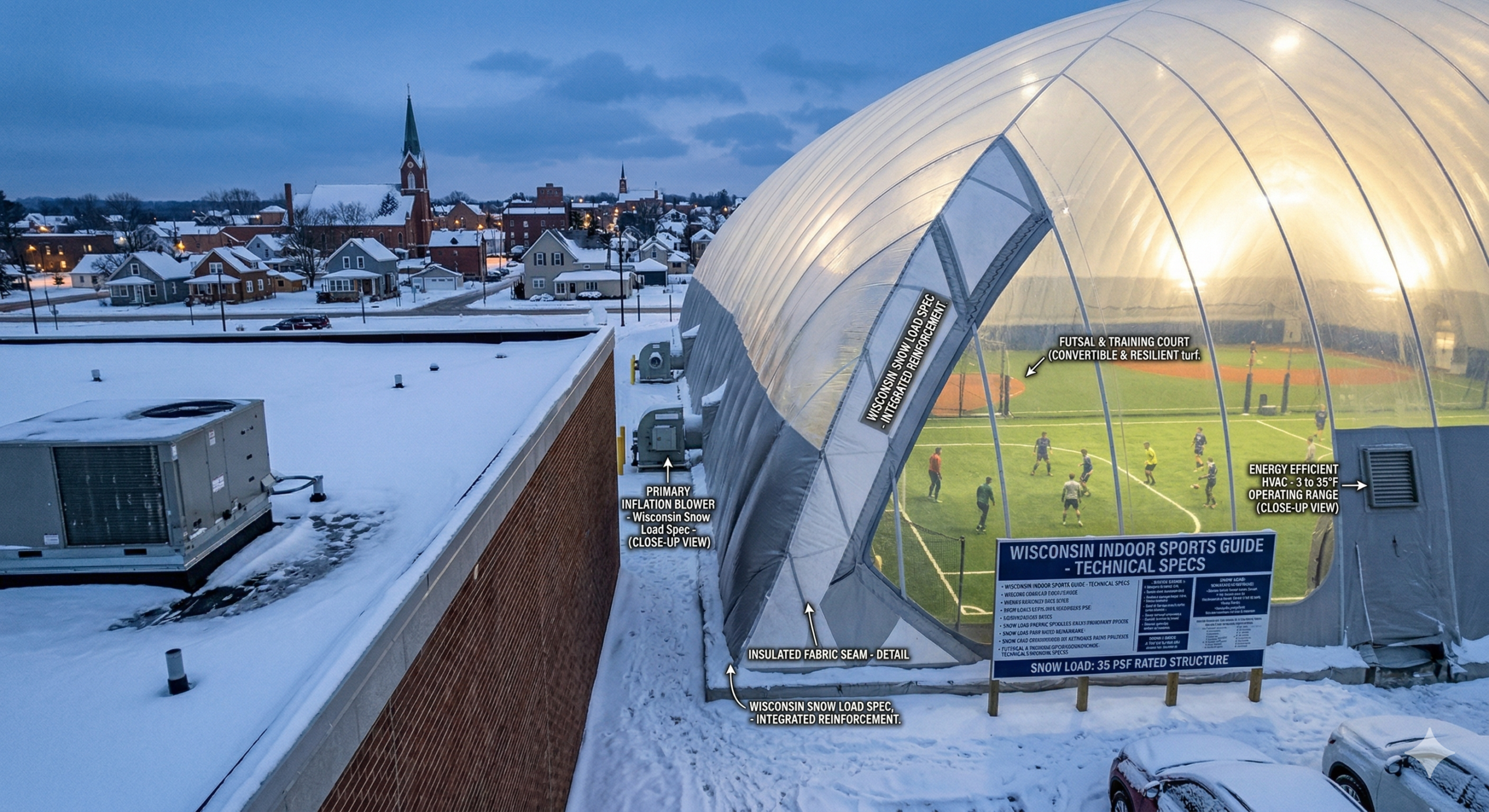
    Wisconsin’s brutal winters and sweltering summers create unique challenges for indoor sports facilities, but air domes excel in these extreme conditions. Your Wisconsin air dome maintains structural integrity through temperature swings from -10°F to 85°F because the pressurized air system adapts automatically to weather changes.

    The insulated membrane handles Wisconsin’s minimum 35 PSF snow loads while remaining flexible enough to prevent ice damage that destroys rigid structures. You’ll find Wisconsin indoor sports facilities using air domes stay operational year-round without expensive heating systems breaking down.

    Unlike traditional buildings, your Wisconsin tennis dome won’t suffer from foundation frost heaving or roof collapse from sudden snow accumulation. The dome’s air pressure distributes weight evenly, making it ideal for Wisconsin’s unpredictable weather patterns and freeze-thaw cycles.

    Tennis vs Soccer vs Baseball: Space and Design Requirements

    You’ll need to contemplate drastically different space requirements when choosing between tennis, soccer, and baseball air domes.

    Tennis courts require the least square footage but need specific dimensions of 78 by 36 feet, while soccer fields demand much larger areas up to 120 by 80 yards.

    Baseball facilities present unique challenges with asymmetrical layouts and varying height requirements from the infield to outfield areas.

    Court Dimensions and Layout

    Three distinct sports require dramatically different spatial considerations when planning your Wisconsin sports facility.

    Tennis courts demand precise 78-foot by 36-foot playing surfaces with additional 12-foot clearances on all sides, totaling approximately 7,200 square feet per court. You’ll need minimum 20-foot ceiling heights to accommodate high lobs and serves.

    Soccer facilities require massive open spaces – typically 200 by 85 feet for full-size fields, though you can accommodate smaller formats.

    Baseball presents the most complex layout challenges, needing 90-foot baselines and substantial foul territory. You’ll want at least 320 feet down the foul lines and 400 feet to center field for regulation play.

    Consider multi-use designs with removable nets or convertible spaces to maximize your investment and accommodate seasonal demand fluctuations across different sports.

    Facility Height Requirements

    While court dimensions establish your facility’s footprint, ceiling height requirements create equally critical design constraints that vary dramatically between sports.

    Tennis facilities need minimum 36-foot clearance above courts, with 40 feet preferred for competitive play. You’ll want additional height for lighting fixtures and structural elements.

    Soccer demands much greater vertical space – indoor fields require 50-65 feet minimum to accommodate high kicks and crosses. Professional facilities often exceed 70 feet for ideal play conditions.

    Baseball presents the most challenging height requirements, needing 85-120 feet depending on field size and intended use.

    Youth facilities can operate with lower clearances, but adult leagues require substantial vertical space for pop flies and batting practice.

    These height differences greatly impact your air dome selection, structural engineering requirements, and overall construction costs in Wisconsin’s demanding climate conditions.

    Understanding Wisconsin’s 35 PSF Snow Load Requirements

    Snow loads present a critical structural consideration when planning indoor sports facilities in Wisconsin. You’ll need to meet the state’s minimum requirement of 35 PSF (1.67 kPa) snow load capacity for your facility’s design.

    This requirement isn’t arbitrary—Wisconsin’s harsh winters can dump substantial snow accumulations that create dangerous structural stress. Your air dome or indoor facility must withstand this weight without compromising safety or performance.

    You’ll find that snow load requirements can vary by municipality, so check local building codes before finalizing plans. Some areas might require higher ratings based on historical weather patterns or elevation.

    Don’t underestimate this specification when budgeting. Meeting snow load requirements affects material costs, structural engineering fees, and installation complexity.

    Your facility’s long-term durability depends on proper snow load compliance from day one.

    Heating Systems That Handle -10°F Winter Temperatures

    You’ll need a robust heating system that can maintain comfortable temperatures when Wisconsin’s winter plunges to -10°F or below.

    Three proven options excel in indoor sports facilities: radiant floor heating systems that warm from the ground up, high-efficiency gas furnaces that deliver consistent heat throughout large spaces, and modern heat pump technology that’s increasingly effective in cold climates.

    Each system offers distinct advantages for different facility sizes and budgets.

    Radiant Floor Heating Systems

    Since Wisconsin’s brutal winters can plummet to -10°F, radiant floor heating systems offer an ideal solution for maintaining consistent temperatures in your indoor sports facility.

    You’ll benefit from even heat distribution across the entire floor surface, eliminating cold spots that can affect athletic performance.

    These systems work by circulating heated water through tubes embedded in concrete slabs or installing electric heating elements beneath flooring materials.

    You can expect 20-30% energy savings compared to forced-air systems because radiant heating warms objects directly rather than heating air that rises to the ceiling.

    Installation costs range from $6-20 per square foot depending on system type.

    Electric systems cost less upfront but have higher operating expenses, while hydronic systems require larger initial investments but deliver superior long-term efficiency for large facilities.

    High-Efficiency Gas Furnaces

    When temperatures drop to Wisconsin’s bone-chilling -10°F lows, high-efficiency gas furnaces provide the robust heating power your indoor sports facility demands.

    You’ll need units with 90% AFUE ratings or higher to manage extreme temperature swings from -10°F to 85°F effectively. These systems deliver consistent airflow throughout large spaces like tennis courts and soccer fields.

    Install multiple zones with programmable thermostats to control different areas independently. You’ll save considerably on operating costs compared to electric heating, especially during peak winter months.

    Choose furnaces with modulating burners that adjust output based on demand rather than cycling on-and-off continuously.

    Proper sizing matters – oversized units waste energy while undersized systems can’t maintain comfortable temperatures during Wisconsin’s harshest weather.

    Professional load calculations guarantee peak performance for your facility’s specific requirements.

    Heat Pump Technology

    Although traditional heat pumps struggled in Wisconsin’s frigid winters, modern cold-climate heat pumps now operate efficiently down to -13°F and continue providing heat even at -25°F.

    You’ll find these systems particularly effective for air domes since they provide both heating and cooling capabilities your facility needs year-round.

    Cold-climate heat pumps use variable-speed compressors and enhanced vapor injection technology to maintain performance in extreme temperatures.

    You’ll achieve 200-300% efficiency ratings even during Wisconsin’s harshest winter conditions, greatly reducing operating costs compared to traditional electric heating.

    Installation costs range from $15,000-$35,000 depending on your facility size, but you’ll recover this investment through lower utility bills.

    Many Wisconsin municipalities offer rebates for heat pump installations, and you’ll qualify for federal tax credits when upgrading your sports facility’s heating system.

    Air Dome Costs: From $120K Single Courts to Multi-Sport Complexes

    Air dome costs in Wisconsin start at $120,000 for a single tennis court facility covering 9,360 square feet, but you’ll find prices escalate quickly as you add courts or expand into multi-sport configurations.

    The $120K-$200K range for single courts reflects variations in insulation quality, structural specifications, and climate control systems needed for Wisconsin’s harsh winters.

    Multi-sport complexes commanding premium prices often feature multiple courts, advanced heating systems, and enhanced structural engineering to handle the state’s 35 PSF snow loads.

    You’re looking at considerably higher investments when designing facilities for soccer, baseball, or combined sports under one dome.

    Equipment quality, installation complexity, and local building codes across Wisconsin municipalities all impact your final costs, making detailed quotes essential for accurate budgeting.

    Before you break ground on your Wisconsin air dome project, you’ll need to navigate a complex web of building codes that vary considerably from one municipality to another.

    While state requirements mandate structures handle 35 PSF snow loads and extreme temperature swings from -10°F to 85°F, local jurisdictions add their own layers of regulations.

    Start by contacting your municipal building department early in the planning process. You’ll typically need permits for foundation work, electrical systems, and the air dome structure itself.

    Many Wisconsin municipalities require engineered drawings that account for wind loads, soil conditions, and emergency egress requirements.

    Don’t overlook zoning restrictions that might limit building height, setbacks, or usage types.

    Some communities classify air domes as temporary structures, while others treat them as permanent installations, dramatically affecting permit requirements and costs.

    Site Selection and Installation Timeline for Your Air Dome

    Once you’ve secured your permits, selecting the right site becomes your next critical decision. You’ll need level ground with proper drainage, utility access, and adequate space for your dome plus safety clearances. Consider wind exposure, as Wisconsin’s weather patterns affect structural loads.

    Installation Phase Duration Key Activities
    Site Preparation 2-3 weeks Excavation, foundation, utilities
    Dome Delivery 1-2 days Equipment transport, staging
    Inflation & Setup 3-5 days Membrane installation, pressurization

    Installation typically takes 4-6 weeks total. Summer installations work best, avoiding Wisconsin’s harsh winters. You’ll coordinate with contractors for electrical, heating systems, and final inspections. Plan your timeline around sports seasons—many facilities target spring installation for fall opening.

  • Indoor Sports Facility Cost Comparison 2026

    Indoor Sports Facility Cost Comparison 2026

    You’ll face construction costs ranging from $25-250 per square foot for metal buildings, $2-4 million for traditional structures, or $200,000-2 million for air dome systems when building indoor sports facilities in 2026. Extensive multi-court complexes can reach $27-33 million, while operational expenses average $133,000 monthly. Your location greatly impacts pricing—urban labor costs run $10-15 per square foot versus $5-8 in rural areas. Understanding these variables will help you make the most strategic investment decision.

    Indoor Sports Facility Construction Costs: What To Expect In 2026

    When evaluating sports building options cost, you’re looking at hard structure expenses around $170 per square foot for basic shells, while mezzanines and tracks cost $185 per square foot.

    Your indoor facility pricing guide should account for soft costs representing 22.4% of total expenses, including permits at $0.15–$0.50 per square foot.

    Equipment typically consumes 2.5%–10% of your budget, with regional variations greatly impacting final investment requirements. A comprehensive facility with 8 basketball and 16 volleyball courts requires construction costs ranging from $27 million to $33 million.

    Building Types And Budgets: Metal Vs Traditional Vs Air Dome Structures

    When planning your indoor sports facility, you’ll face three primary construction options that dramatically impact both your upfront investment and timeline.

    Metal buildings offer the sweet spot between affordability and durability, ranging from $25–$250 per square foot depending on your finish level. These structures typically include free delivery and installation within service areas, which can be completed in just one to three days.

    Traditional construction provides maximum customization at $500,000–$3,400,000+ for permanent structures, while air dome systems deliver quick installation starting around $200,000–$2,000,000 for climate-controlled environments.

    Metal Building Cost Analysis

    Metal buildings offer three distinct pricing tiers that’ll directly impact your 20,000 square foot (1,858 square meter) indoor sports facility budget.

    Basic shell construction starts at $25–$35 per square foot ($269–$377 per square meter), totaling $500,000–$700,000 for structural components only.

    Rigid frame systems cost $35–$55 per square foot ($377–$592 per square meter), providing enhanced load-bearing capacity essential for athletic spaces.

    Pre-engineered athletic facilities represent the premium tier at $75–$130 per square foot ($807–$1,399 per square meter), reaching $1.5M–$2.6M for your project.

    Sports complex construction cost increases considerably with customization—finished training centers demand $150–$250 per square foot ($1,615–$2,691 per square meter). Square or near-square dimensions maximize cost-effectiveness for your athletic facility design.

    Geographic factors like wind and snow loads, plus steel market fluctuations, directly influence your final investment.

    Traditional Construction Investment Ranges

    Traditional construction delivers the highest investment requirements among indoor sports facility options, with your 20,000 square foot (1,858 square meter) project demanding $2M–$4M+ and 12-18 months completion time.

    You’ll face $275–$336 per square foot for sports tourism-level facilities, while indoor baseball complexes cost $150–$250 per square foot.

    Hard construction costs represent 54.5%–77.3% of your total project expenses.

    You’re investing in concrete, brick, and steel-frame materials that provide maximum durability and 20+ year lifecycles. SBA loans commonly provide financing support for facility construction projects.

    This option offers highly customizable layouts, multi-level designs, and complex mechanical systems.

    You’ll benefit from long-term value through reduced per-year operational costs and consistent revenue generation.

    Traditional construction suits high-end arenas, multi-purpose recreational centers, and professional sports venues requiring permanent structures.

    Air Dome Structure Pricing

    Air dome structures deliver the most economical entry point into indoor sports facilities, with your 20,000 square foot (1,858 square meter) project requiring just $700K–$1.2M and 2-6 weeks completion time.

    You’ll pay approximately $12 per square foot for base dome packages, with lower rates available for larger structures. Your total investment includes double-layer fabric skin, cable harness, and complete inflation systems.

    Installation costs remain minimal—a seven-day assembly totaled just $74,000 including labor and equipment rental. Small domes can be installed in as few as 4 days, while larger structures may require several weeks depending on complexity.

    You’ll need engineering fees around $20,000 for structural stamps and permit drawings.

    Foundation requirements vary greatly based on soil conditions, with costs ranging from basic concrete grade-beams to specialized anchor systems.

    Long-term operational expenses run $0.60–$1.70 per square foot annually for maintenance and utilities combined.

    Baseball, Basketball, And Soccer Facilities: Cost Comparison

    You’ll find that baseball, basketball, and soccer facilities each carry distinct construction cost breakdowns based on their unique design requirements and space needs.

    Baseball facilities typically demand specialized features like batting cages and artificial turf systems, while basketball courts require precise flooring and multiple court configurations that can push costs to $27-33 million for tournament-level complexes.

    Soccer facilities focus heavily on turf installation and safety netting, where the playing surface alone represents 20-30% of your total construction budget, making operational expenses a critical factor in your long-term financial planning.

    Construction Cost Breakdown Analysis

    Understanding construction costs requires examining how different facility types impact your budget across various building structures and sports configurations. You’ll find significant variation in per-square-foot costs depending on your chosen sport and construction method.

    Facility Type Cost Per Sq Ft
    Baseball $150-$250
    Basketball $275-$336
    Soccer $100-$200
    General Indoor Sports $100-$300+
    Mid-Range Baseline $200

    Building structure choice dramatically affects your investment. Air domes for 20,000 sq ft (1,858 sq m) cost $700K-$1.2M with 2-6 week installation, while traditional construction ranges $2M-$4M+ requiring 12-18 months. You’ll allocate 30-40% of soccer budgets to playing surfaces, 15-25% to LED lighting, and 8-15% to drainage systems across all facility types.

    Sport-Specific Design Requirements

    Designing sport-specific facilities requires careful consideration of unique space requirements, surface materials, and specialized equipment that directly impact your construction budget.

    Baseball facilities demand the largest footprint, requiring 90 ft (27 m) basepaths and outfield distances up to 330 ft (101 m), plus specialized synthetic turf or clay infields.

    Basketball courts need precise 94 ft × 50 ft (29 m × 15 m) hardwood surfaces with specific shock absorption properties.

    Soccer facilities require 200-300 ft (61-91 m) length fields with artificial turf systems designed for cleat traction.

    Each sport’s unique demands affect your overall facility costs considerably.

    Baseball’s expansive space requirements typically result in higher construction costs per square foot, while basketball’s smaller footprint allows for more cost-effective building solutions within your available budget.

    Operational Expense Considerations

    Beyond initial construction costs, your facility’s ongoing operational expenses will greatly impact your long-term profitability and cash flow management. You’ll face substantial monthly fixed costs totaling approximately $133,000, with facility rent representing your largest expense at $40,000 monthly for large sports complexes.

    Expense Category Monthly Cost
    Facility Rent $40,000
    Staff Payroll $41,667
    Utilities (Base) $15,000
    Peak Season Utilities $20,000+
    Total Fixed Overhead $115,667

    Your staffing expenses will consume nearly $42,000 monthly for core operations, while utilities fluctuate seasonally between $15,000-$20,000. You’ll need $120,000 in working capital reserves to weather cash flow challenges, particularly during slower periods when fixed costs continue regardless of revenue generation.

    Location Impact: Urban Vs Rural Construction Pricing

    When choosing between urban and rural locations for your indoor sports facility, you’ll face dramatically different cost structures that can impact your total investment by hundreds of thousands of dollars.

    Rural locations consistently offer significant savings across multiple construction categories, while urban centers command premium pricing due to higher demand and regulatory complexity.

    Key cost differentials you’ll encounter include:

    • Labor rates: Urban areas charge $10-15 per sq ft (0.09-0.14 sq m) for court installation versus $5-8 per sq ft (0.05-0.07 sq m) in rural markets.
    • Land acquisition: Rural acreage costs $50,000-500,000 compared to urban premiums often exceeding these ranges by multiples.
    • Permitting fees: Urban jurisdictions charge $0.35-0.50 per sq ft (3.77-5.38 per sq m) versus rural rates of $0.15-0.25 per sq ft (1.61-2.69 per sq m).
    • Material transportation: Rural locations incur 15-25% higher delivery costs despite lower base material prices.

    Size, Permits, And Site Prep: The Full Cost Picture

    Understanding location-based pricing variations represents just one piece of your facility’s financial puzzle.

    Your project’s scale dramatically affects costs, with large multi-court complexes reaching $27-33 million, while single 10,000 sq ft (929 sq m) baseball facilities average $1.5-2.5 million.

    You’ll face permitting expenses of $0.15-0.50 per sq ft ($1.61-5.38 per sq m), meaning that a 10,000 sq ft facility incurs $1,500-5,000 in regulatory costs.

    Site preparation demands serious attention—earthworks and sub-base installation consume 20-30% of total construction costs.

    Inadequate preparation can triple your maintenance expenses later.

    Drainage systems require 5-15% of capital costs, while sub-base engineering typically accounts for 25-30% of your total expenditure breakdown.

    Don’t underestimate these foundational elements.

    Best ROI Sports Facilities For Your Investment

    Five strategic facility types consistently deliver superior returns on your indoor sports investment, with functional fitness zones leading the pack at 600 square feet (56 sq m) for ideal ROI potential in 2026.

    Revenue per square foot exceeds traditional cardio installations, while specialized fitness-focused spaces align with growing lifestyle trends driving industry expansion. You’ll maximize profitability through these proven approaches:

    • Multi-sport diversified facilities generate 10-20% profit margins with $25,000-$50,000 profits on $250,000 revenue.
    • Tier membership models provide financial predictability superior to single-transaction rentals.
    • Dynamic pricing optimization achieves $100,000 to $1M+ annual revenue through peak-hour strategies.
    • Long-term contracts with traveling teams offer the most lucrative revenue sources.

    Youth sports participation increased 55% over the last decade, supporting sustained demand across facility types.

    Frequently Asked Questions

    How Much Does HVAC System Installation Cost for Indoor Sports Facilities?

    You’ll pay $17 to $22 per square foot for HVAC installation in indoor sports facilities, considerably higher than standard commercial rates of $3 to $6 per square foot.

    For a typical 5,000 square foot facility, you’re looking at $85,000 to $110,000 total.

    Complete system installations range from $7,500 to $25,000 depending on your facility’s size and specifications, with sports buildings requiring more powerful cooling capacity than regular commercial spaces.

    What Insurance Requirements Affect Indoor Sports Facility Construction Budgets?

    You’ll need to budget 5-10% of your total operation costs for insurance requirements.

    General liability coverage ($5,000-$15,000 annually) with $1-3 million limits is mandatory, plus commercial property insurance ($2,000-$10,000).

    Workers’ compensation is required if you’re hiring staff.

    Your landlord will demand certificates of insurance with additional insured status before construction begins, and specialized participant accident coverage protects against sports-related injuries.

    Are There Tax Incentives Available for Building Community Sports Facilities?

    Yes, you’ll find several tax incentives for community sports facilities.

    New Jersey’s Sports and Entertainment Tax Credit Program offers up to 80% of project costs or $300 million maximum, requiring 150% economic benefit return.

    You can access Local Recreation Improvement Grants ($10 million available) for community centers and athletic fields.

    Opportunity Zone benefits provide capital gains deferral and enhanced rural incentives with reduced improvement requirements for sports facility development.

    How Do Earthquake and Wind Load Requirements Impact Construction Costs?

    You’ll face significant cost increases when earthquake and wind load requirements apply to your facility.

    Seismic design can add 10-25% to structural costs, while high wind zones require reinforced framing that increases expenses by 15-30%.

    These requirements heavily favor flexible structures like air domes ($700K-$1.2M for 20,000 sq ft/1,858 sq m) over rigid metal buildings ($1.5M-$2.5M) since they naturally accommodate movement without expensive engineering modifications.

    What Ongoing Maintenance Costs Should Owners Budget for Different Building Types?

    You’ll face different maintenance costs depending on your building type.

    Air domes require $2,000-4,000/month for membrane repairs and re-inflation systems.

    Tension fabric structures need $1,500-3,000/monthly for fabric maintenance and tensioning adjustments.

    Metal buildings cost $1,000-2,500/month for roof/siding upkeep and rust prevention.

    Traditional construction runs $800-2,000/monthly for standard building maintenance.

    All types share common costs: utilities ($2,000-5,000/month), turf maintenance ($500-1,500/month), and cleaning services ($1,000-3,000/month).