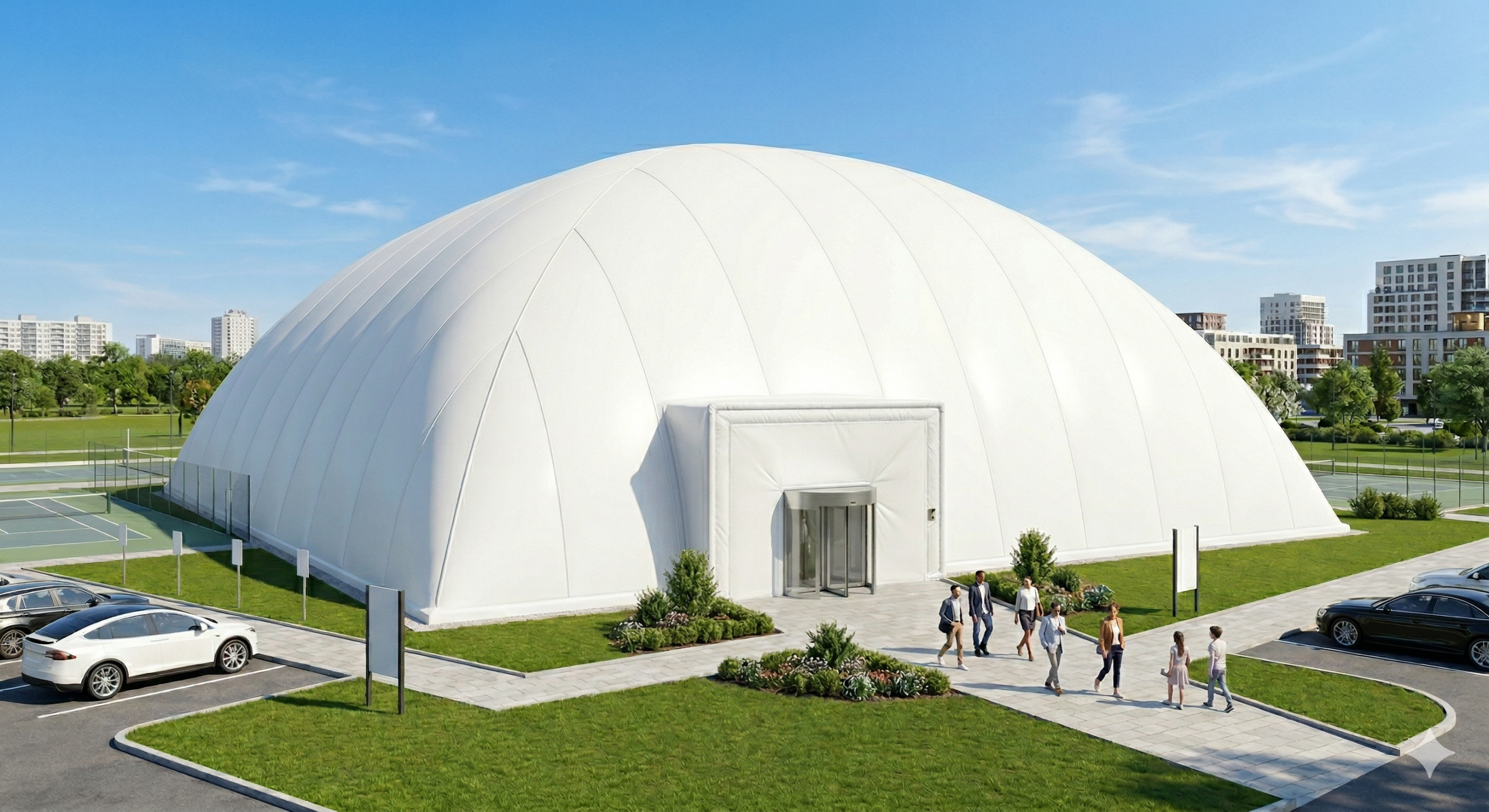
You’re looking at $3,000 to $8,000 annually for air dome insurance in the USA, but that’s just the starting point. Your actual costs depend on factors that can double or triple these baseline figures – and most facility owners don’t realize what drives these dramatic price differences until they’re already locked into expensive policies. The size of your structure, your location’s weather patterns, and the specific coverage types you select create a complex pricing puzzle that requires careful navigation.
Air Dome Insurance Costs: What You’ll Pay By Facility Size
When budgeting for air dome insurance, you’ll find that facility size directly impacts your annual premiums. Air dome insurance cost typically ranges from $3,000 to $8,000 annually, with larger facilities commanding higher rates due to increased liability exposure and property values.
A standard 20,000 square foot air dome averages $5,000 per year in premiums. Smaller facilities under 10,000 square feet often fall toward the lower end of the pricing spectrum, while expansive complexes exceeding 30,000 square feet push costs upward.
Indoor facility insurance costs escalate with size because insurers calculate risk based on potential claims volume and facility replacement costs.
Your sports dome liability coverage must include general liability protection of at least $2 million, property damage coverage, and business interruption insurance regardless of size.
Why Location Determines Your Air Dome Insurance Rates
Your air dome’s location greatly impacts your insurance premiums, with facilities in tornado and hurricane zones paying substantially more than those in low-risk areas.
Insurance companies analyze your region’s weather patterns, local building code requirements, and historical claim data to determine your rates.
You’ll find that coastal areas and the Midwest’s “Tornado Alley” command the highest premiums due to severe weather exposure.
Weather Risk Factors
Although air domes offer year-round sports and recreation opportunities, their lightweight fabric construction makes them particularly vulnerable to severe weather events that insurers carefully evaluate when setting premium rates.
High-wind zones considerably impact your sports dome insurance rates, with facilities in tornado corridors and hurricane-prone coastal areas facing premiums 30-50% higher than low-risk regions.
Hailstorms pose another major threat, as large hailstones can puncture fabric membranes and cause catastrophic deflation. Your tennis bubble insurance costs will reflect local weather patterns, including average wind speeds, hail frequency, and historical storm damage.
Insurers analyze decades of meteorological data for your specific ZIP code, considering factors like proximity to tornado alleys, hurricane evacuation zones, and areas with frequent severe thunderstorms when calculating your coverage rates.
Regional Building Codes
Beyond weather concerns, local building codes create considerable variations in air dome insurance premiums across different municipalities and states.
You’ll find that stricter jurisdictions require enhanced structural specifications, fire suppression systems, and emergency exits that directly impact your coverage costs. California’s seismic requirements, for example, demand additional anchoring systems that increase both construction expenses and insurance rates.
Your location’s enforcement history also matters—areas with rigorous inspection protocols typically see lower premiums because insurers view code compliance as risk reduction.
States like Florida and Texas have specialized provisions for temporary structures that can either increase requirements or streamline approvals. You’ll pay premium adjustments based on whether your municipality classifies air domes as permanent or temporary structures, affecting liability thresholds and required coverage limits considerably.
Local Claim History
When insurance companies evaluate your air dome application, they dig deep into your area’s claims database to assess historical patterns that directly influence your premium rates.
Your location’s claim history becomes a crystal ball for insurers, revealing what they might face covering your facility.
Insurance companies analyze several key factors in your area’s claim patterns:
- Weather-related damage frequency – tornados, hail, and high winds that’ve impacted similar structures
- Vandalism and theft incidents – crime statistics affecting sports facilities and temporary structures
- Equipment failure claims – blower malfunctions, fabric tears, and structural collapses in your region
- Liability lawsuits – personal injury claims filed against air dome operators nearby
Areas with clean claim histories often see premiums 15-30% lower than high-risk zones.
Essential Coverage Every Air Dome Facility Must Carry
You can’t operate an air dome facility without three critical insurance coverages that protect your business from financial ruin.
General liability protection shields you from costly lawsuits when visitors get injured, while property damage coverage replaces your expensive dome structure if it’s destroyed by weather or accidents.
Business interruption insurance becomes your financial lifeline when unexpected closures force you to stop operations and lose revenue.
General Liability Protection
Although your air dome may seem like a controlled environment, accidents can happen anywhere within your facility, making general liability protection the cornerstone of your insurance portfolio. This coverage protects you when visitors, athletes, or staff suffer injuries on your property, regardless of the activity taking place.
Your general liability policy should include:
- Bodily injury coverage for medical expenses, legal fees, and settlements when someone gets hurt
- Property damage protection if your operations damage someone else’s belongings
- Personal injury claims covering lawsuits for slander, libel, or false advertising
- Product liability if you sell equipment, food, or beverages that cause harm
Most insurers require $2 million minimum coverage for air dome facilities. This protection costs roughly $1,200-$2,500 annually for typical recreational facilities, depending on your location and activities offered.
Property Damage Coverage
Since your air dome represents a significant capital investment ranging from $200,000 to over $1 million, property damage coverage becomes absolutely critical for protecting your facility’s structural components and contents.
Your policy must cover the dome membrane, structural framework, HVAC systems, and interior equipment. Weather-related damage poses the greatest risk, particularly from hail, wind, and snow loads.
| Coverage Type | Typical Limit | Annual Premium |
|---|---|---|
| Structure/Membrane | $500K-$1.5M | $2,000-$4,500 |
| HVAC Equipment | $50K-$200K | $300-$800 |
| Interior Contents | $25K-$150K | $200-$500 |
| Foundation/Anchoring | $30K-$100K | $250-$600 |
You’ll need replacement cost coverage rather than actual cash value to avoid depreciation penalties. Most insurers require regular maintenance records and professional inspections to maintain coverage validity.
Business Interruption Insurance
When mechanical failure or severe weather forces your air dome to close unexpectedly, business interruption insurance becomes the financial lifeline that keeps your operation viable during extended downtime periods.
This coverage compensates for lost revenue while you’re unable to operate, covering ongoing expenses like staff salaries, loan payments, and utilities. For air dome facilities generating $50,000+ monthly revenue, losing even two weeks of operation creates devastating financial impact.
Business interruption insurance typically covers:
- Lost revenue from canceled memberships, events, and programs
- Fixed operating expenses that continue during closure
- Additional costs for temporary alternative facilities
- Employee wages during mandatory shutdown periods
Most policies require 24-48 hours of continuous closure before benefits activate. Coverage limits should reflect your facility’s monthly gross revenue multiplied by your estimated maximum closure period, typically 6-12 months.
General Liability Minimums: $2M Standard For Air Dome Insurance
Because air domes present unique liability risks with their inflatable structures and public access, insurance carriers typically require $2 million in general liability coverage as the industry minimum. You’ll find this requirement isn’t arbitrary – it reflects the potential for significant claims from accidents involving falling, equipment malfunctions, or structural issues.
| Coverage Type | Minimum Amount | Typical Premium |
|---|---|---|
| General Liability | $2,000,000 | $2,000-$3,500 |
| Product Liability | $1,000,000 | $800-$1,200 |
| Professional Liability | $1,000,000 | $500-$800 |
| Premises Liability | $2,000,000 | $1,000-$1,800 |
| Equipment Coverage | $500,000 | $400-$700 |
Most insurers won’t negotiate below the $2M threshold, especially for facilities hosting youth sports or large events. You can purchase higher limits, but the standard minimum provides essential protection for most air dome operations.
Property Protection For Inflatable Structures And Equipment
Property damage claims rank among the most expensive risks air dome owners face, with replacement costs for a complete inflatable structure ranging from $200,000 to $800,000 depending on size and specifications.
Your property coverage must protect both the dome itself and interior equipment that keeps operations running.
Essential items requiring extensive protection include:
- HVAC blower systems – Critical for maintaining air pressure and climate control
- Electrical infrastructure – Lighting, sound systems, and power distribution equipment
- Flooring and surfaces – Specialized sports flooring, artificial turf, or court systems
- Ancillary structures – Storage buildings, entry vestibules, and foundation systems
You’ll need coverage that accounts for inflation and equipment upgrades.
Most insurers require annual property valuations to guarantee adequate limits, preventing costly gaps when replacement costs exceed your policy maximums.
Business Interruption: Covering Revenue Loss From Weather Events
Beyond protecting your physical assets, you’ll need business interruption coverage to safeguard against income loss when weather forces your air dome to close.
This coverage compensates for lost revenue during mandatory closures due to severe weather, structural damage, or utility outages that make your facility unusable.
Weather-related shutdowns can devastate your cash flow. If a storm damages your air dome’s membrane or electrical systems, you’ll lose daily revenue from memberships, rentals, and programs while repairs are completed.
Business interruption insurance covers these lost earnings plus ongoing expenses like staff salaries and loan payments.
Coverage typically kicks in after a waiting period of 24-72 hours and continues until you’re operational again.
Choose coverage limits that reflect your peak seasonal revenue, as winter months often generate the highest income for indoor facilities.
High-Risk Zones: When Air Dome Insurance Doubles Your Costs
When your air dome sits in tornado alley or hurricane-prone coastal areas, you’ll face insurance premiums that can double or even triple standard rates.
Instead of paying $5,000 annually for a 20,000 sq ft facility, you’re looking at $10,000-$15,000 in high-risk zones.
Insurance companies classify these areas based on historical weather data and catastrophic loss potential. Your premiums reflect the increased likelihood of severe damage requiring complete dome replacement.
High-risk factors that spike your costs include:
- Tornado corridors – Oklahoma, Kansas, Texas panhandle regions
- Hurricane coastlines – Florida, Gulf Coast, Eastern seaboard
- Hail belts – Colorado, Nebraska storm paths
- Wind zones – Areas with sustained 70+ mph wind history
You’ll need specialized coverage riders and higher deductibles in these zones.
Getting Air Dome Insurance Quotes: Information Insurers Require
Before insurers calculate your air dome premium, they’ll require extensive documentation about your facility’s specifications, location details, and operational parameters. You’ll need to provide the dome’s square footage, construction materials, and installation date.
They’ll want detailed information about your location’s weather history, particularly wind speeds and severe storm frequency.
Your operational details matter too – they’ll ask about occupancy limits, activities conducted inside, and safety protocols. You must disclose any previous insurance claims or structural repairs.
Financial documentation includes your facility’s replacement cost and annual revenue projections.
Insurers also require engineering reports, emergency evacuation plans, and maintenance records. Having thorough documentation ready speeds up the quote process and guarantees accurate premium calculations for your specific risk profile.