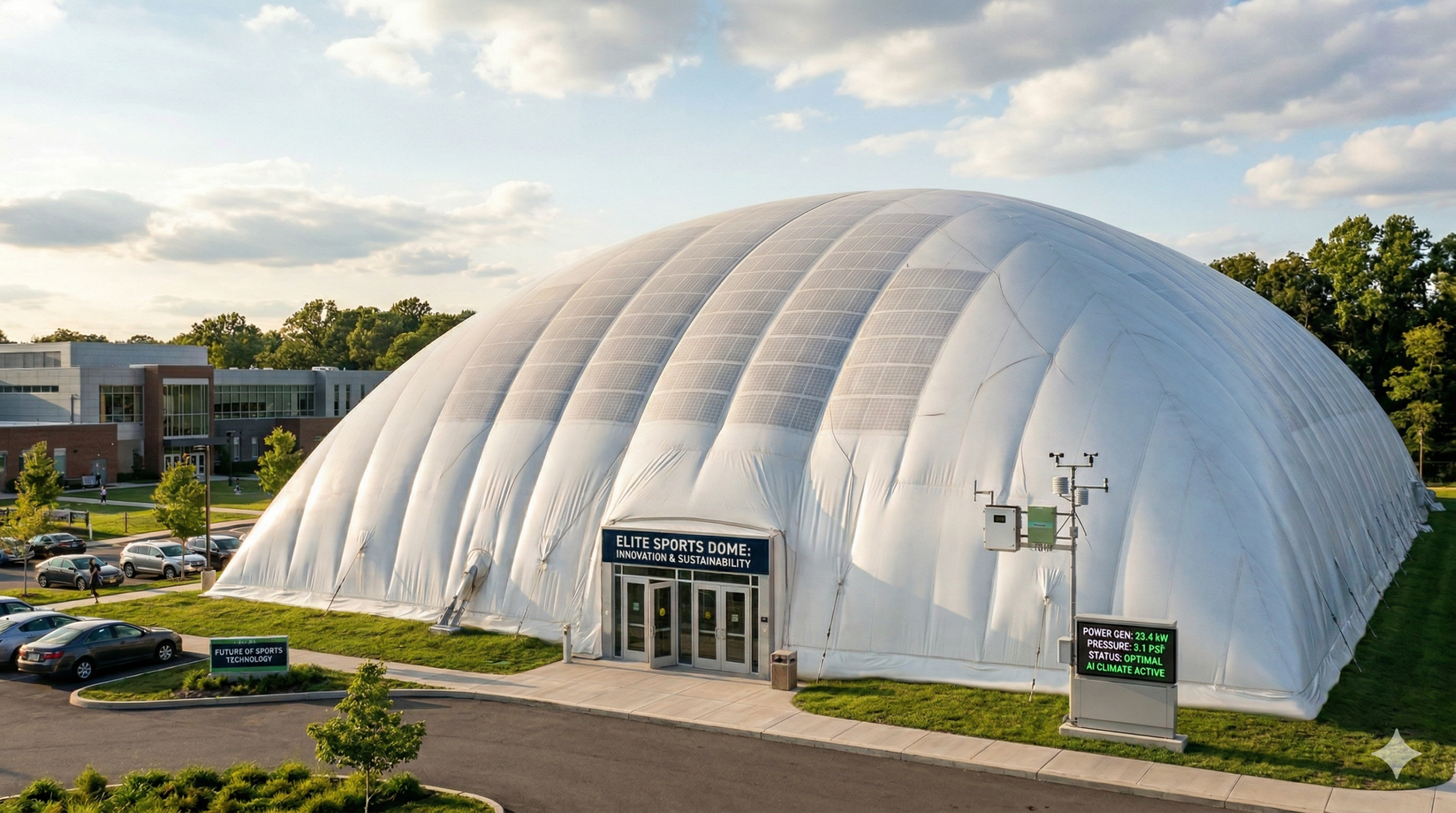
You’re looking at a sports facility investment in Germany, but the cost differences between air domes and traditional structures might surprise you. While rigid buildings demand €300K+ upfront, air domes start around €150K—yet there’s more to this equation than initial pricing. TÜV certifications, DIN compliance, and energy efficiency mandates create a complex approval landscape that’ll directly impact your timeline and budget. Before you commit to either option, you’ll need to understand what these regulations actually mean for your project’s success.
German Sports Facility Costs: €150K Air Domes vs €300K+ Rigid Structures
When you’re evaluating sports facility options in Germany, you’ll find a stark cost difference between air dome and rigid structure solutions. A Germany air dome typically costs €150K-€400K for 2,000 square meters, while rigid fabric structures range from €300K-€800K for the same coverage area.
You’ll notice that air domes offer significant upfront savings, costing roughly half of what you’d pay for permanent structures. However, Germans typically favor rigid constructions despite higher costs. This preference stems from their emphasis on long-term durability and energy efficiency standards.
Your decision should factor in Germany’s strict technical requirements, including TÜV certification and DIN standards compliance.
While air domes provide budget-friendly entry points, rigid structures align better with German market expectations for permanence and technical excellence.
TÜV Certification Requirements: Meeting DIN Standards For Sports Buildings
Beyond cost considerations, you’ll need to navigate Germany’s rigorous TÜV certification process for any sports facility project. TÜV inspectors evaluate your german sports facility against strict DIN standards covering structural integrity, safety systems, and environmental controls.
| DIN Standard Category | Key Requirements |
|---|---|
| Structural Safety (DIN 1055) | Load calculations, wind resistance |
| Fire Protection (DIN 4102) | Emergency exits, sprinkler systems |
| Ventilation (DIN 1946) | Air quality, humidity control |
| Electrical (DIN VDE 0100) | Circuit protection, grounding |
| Accessibility (DIN 18040) | Barrier-free access compliance |
You’ll face multiple inspection phases: planning approval, construction monitoring, and final certification. Documentation must be submitted in German, and any non-compliance triggers costly redesigns. Budget additional time and resources for this mandatory process—it’s non-negotiable for operating legally.
Energy Efficiency Standards That Impact Your Operating Costs
Since Germany prioritizes long-term sustainability over short-term savings, you’ll encounter stringent energy efficiency requirements that directly affect your facility’s operational expenses.
Germany indoor sports facilities must comply with the Building Energy Act (GEG), which mandates specific insulation values and heating system efficiency ratings.
Your air dome will need advanced HVAC systems with heat recovery capabilities, potentially increasing initial costs by 15-20%. However, these systems reduce energy consumption by up to 40% annually.
LED lighting systems are practically mandatory, while smart climate control systems help optimize temperature management.
Renewable energy integration often becomes cost-effective due to government incentives. Solar panels and geothermal systems can offset operational costs within 8-12 years.
Non-compliant facilities face hefty fines and increased insurance premiums, making efficiency investments financially prudent rather than optional.
Air Dome Approval Process: From Planning To Construction Permits
Germany’s complex approval process for air domes requires maneuvering through multiple regulatory layers before you can break ground.
You’ll need to secure building permits from local authorities, who’ll scrutinize your structural engineering plans against strict DIN standards. The process typically takes 6-12 months, depending on your municipality’s efficiency and project complexity.
Your sports dome germany project must pass these critical checkpoints:
- Structural analysis review – Engineers evaluate wind loads, snow loads, and emergency deflation scenarios.
- Fire safety compliance – Exit routes, sprinkler systems, and flame-resistant materials must meet specifications.
- Environmental impact assessment – Noise levels, drainage systems, and energy consumption calculations.
You’ll work closely with TÜV-certified consultants throughout the approval phase.
Budget additional time for revisions, as German authorities rarely approve plans on the first submission.