Tag: maintenance costs

  • Fabric Structure Maintenance Cost Analysis

    Fabric Structure Maintenance Cost Analysis

    You’re probably spending twice as much on traditional building maintenance as you need to. While conventional structures drain budgets with hefty repair bills and constant upkeep, fabric buildings offer an invigorating alternative that’ll cut your annual maintenance costs by up to 60%. The catch? Most facility managers don’t understand the unique maintenance requirements that make these savings possible—or the hidden costs that can quickly turn your bargain into a financial nightmare.

    Why Fabric Structure Maintenance Costs Beat Traditional Building Upkeep

    While traditional buildings demand extensive maintenance ranging from roof repairs to HVAC system overhauls, fabric structures offer you a rejuvenatingly straightforward maintenance approach.

    Your fabric structure maintenance cost typically runs $1,500-$3,500 annually compared to traditional buildings requiring $3-$8 per square foot yearly. You’ll avoid costly roofing replacements, structural repairs, and complex mechanical system maintenance that plague conventional construction.

    Tension fabric building upkeep focuses on three simple elements: annual frame inspections, periodic fabric cleaning, and minor repairs.

    You won’t deal with leaking roofs, deteriorating foundations, or expensive HVAC maintenance. Clear span building maintenance costs remain predictable since there aren’t interior support structures requiring attention.

    This streamlined approach saves you thousands annually while eliminating unexpected repair emergencies that typically devastate traditional building budgets.

    Frame Inspection Essentials: $1,000-$2,000 Annual Requirements

    You’ll need to budget $1,000-$2,000 annually for professional frame inspections that meet safety requirements and building codes.

    These inspections focus on critical structural components like connections, welds, and load-bearing elements that support your fabric structure.

    Don’t skip this essential maintenance step—it’s your primary defense against costly structural failures and liability issues.

    Annual Safety Requirements

    When it comes to frame-supported fabric structures, annual safety inspections aren’t just recommended—they’re essential for maintaining structural integrity and protecting occupants.

    You’ll need to budget $1,000-$2,000 annually for thorough frame evaluations that examine welds, joints, and connection points for signs of fatigue or corrosion.

    These rigid frame maintenance expenses cover certified inspector fees, structural assessments, and documentation requirements.

    Your inspector will check foundation anchors, evaluate tensioning systems, and assess fabric attachment points for wear patterns. They’ll also verify that your structure meets current building codes and safety standards.

    Don’t view this as optional spending—it’s insurance against catastrophic failure.

    Regular inspections identify problems before they become expensive emergencies, potentially saving thousands in emergency repairs while ensuring occupant safety.

    Professional Inspection Costs

    Professional inspection costs for frame-supported fabric structures represent a considerable but necessary investment in your building’s longevity.

    You’ll typically spend $1,000-$2,000 annually for thorough frame assessments that identify potential issues before they become costly problems.

    These professional evaluations examine critical structural components that determine your facility’s safety and performance:

    1. Steel frame connections – Inspectors check bolt tension, weld integrity, and joint stability throughout the entire framework.
    2. Foundation anchor points – Teams assess concrete footings, ground anchors, and base plate connections for signs of shifting or deterioration.
    3. Fabric attachment systems – Professionals evaluate tensioning hardware, clamp assemblies, and membrane stress points for proper load distribution.

    This proactive approach prevents emergency repairs and extends your structure’s operational lifespan considerably.

    Structural Component Assessment

    Three critical areas form the foundation of every structural component assessment, determining whether your fabric building operates safely and efficiently.

    Your frame’s structural integrity demands thorough examination of all connection points, welds, and fasteners for signs of stress, corrosion, or fatigue. You’ll need professional engineers to evaluate load-bearing capacity and identify potential failure points before they become costly problems.

    Foundation anchoring systems require detailed inspection of concrete footings, anchor bolts, and ground attachments. Weather exposure creates expansion and contraction cycles that can loosen these critical connections over time.

    Cable tensioning systems need calibrated measurement to guarantee proper fabric support. Improper tension causes premature wear and structural instability.

    This extensive assessment typically costs $1,000-$2,000 annually but prevents expensive emergency repairs and extends your structure’s operational lifespan considerably.

    Fabric Cleaning Cycles: $2,000-$4,000 Every 2-3 Years

    Although fabric structures resist many environmental contaminants, you’ll need professional cleaning every two to three years to maintain their appearance and performance.

    This cleaning cycle costs between $2,000-$4,000 for a typical 20,000 square foot structure, representing a significant but necessary investment in your facility’s longevity.

    Professional cleaning removes accumulated dirt, mildew, and pollutants that can degrade fabric integrity over time.

    The process typically involves:

    1. High-pressure washing – Specialized equipment removes embedded debris from fabric pores
    2. Anti-microbial treatment – Prevents mold and mildew growth in humid conditions
    3. UV protection reapplication – Restores protective coatings that guard against sun damage

    You can extend cleaning intervals through regular maintenance like removing debris and addressing stains promptly, potentially saving thousands in premature cleaning costs.

    Small Repairs That Prevent Major Maintenance Expenses

    Beyond regular cleaning, minor repairs costing $500-$1,500 annually can save you thousands in major structural work down the road.

    You’ll want to address small fabric tears immediately before they expand into expensive panel replacements. Check and tighten loose fasteners quarterly—a $50 hardware fix today prevents $2,000+ structural repairs later.

    Watch for worn connection points where fabric meets the frame. These stress areas often show early warning signs through fraying or discoloration.

    Replace damaged grommets and reinforcement patches promptly to maintain structural integrity.

    Don’t ignore minor frame issues like loose bolts or surface rust. A $200 maintenance call beats a $5,000 frame section replacement.

    Keep spare fabric patches, fasteners, and sealants on-site for immediate fixes when weather damage occurs.

    Square Footage Impact: How Building Size Affects Your Budget

    Square footage dramatically influences your fabric structure’s maintenance budget, but not always in the way you’d expect.

    While larger buildings require more materials and labor, they often benefit from economies of scale that can reduce your per-square-foot costs.

    Here’s how size affects your maintenance expenses:

    1. Small structures (under 10,000 sq ft) – You’ll pay premium rates for specialized contractors who often have minimum service fees, making your cost per square foot higher despite the smaller overall building.
    2. Medium buildings (10,000-30,000 sq ft) – You’ll find the sweet spot where contractors can work efficiently without requiring extensive equipment mobilization.
    3. Large facilities (over 30,000 sq ft) – You’ll need specialized equipment and crews, but benefit from bulk pricing on materials and reduced per-unit labor costs.

    Weather Damage And UV Costs Most Managers Miss

    While most facility managers budget for obvious maintenance like cleaning and minor repairs, hidden weather-related costs can devastate your annual budget if you’re not prepared.

    UV degradation tops the list of overlooked expenses, requiring fabric replacement 2-3 years earlier than expected in high-sun climates. You’ll face $15,000-$30,000 for premature re-covering versus planned replacement.

    Wind damage creates another blindspot. Heavy gusts can stress connection points, requiring $2,000-$5,000 in structural repairs annually.

    Snow loading compounds this issue, potentially causing frame damage costing $8,000-$15,000.

    Hail presents the costliest surprise – even moderate storms can puncture fabric, demanding emergency repairs of $3,000-$8,000.

    Smart managers establish weather damage reserves of $5,000-$10,000 annually, protecting against these unpredictable but inevitable costs.
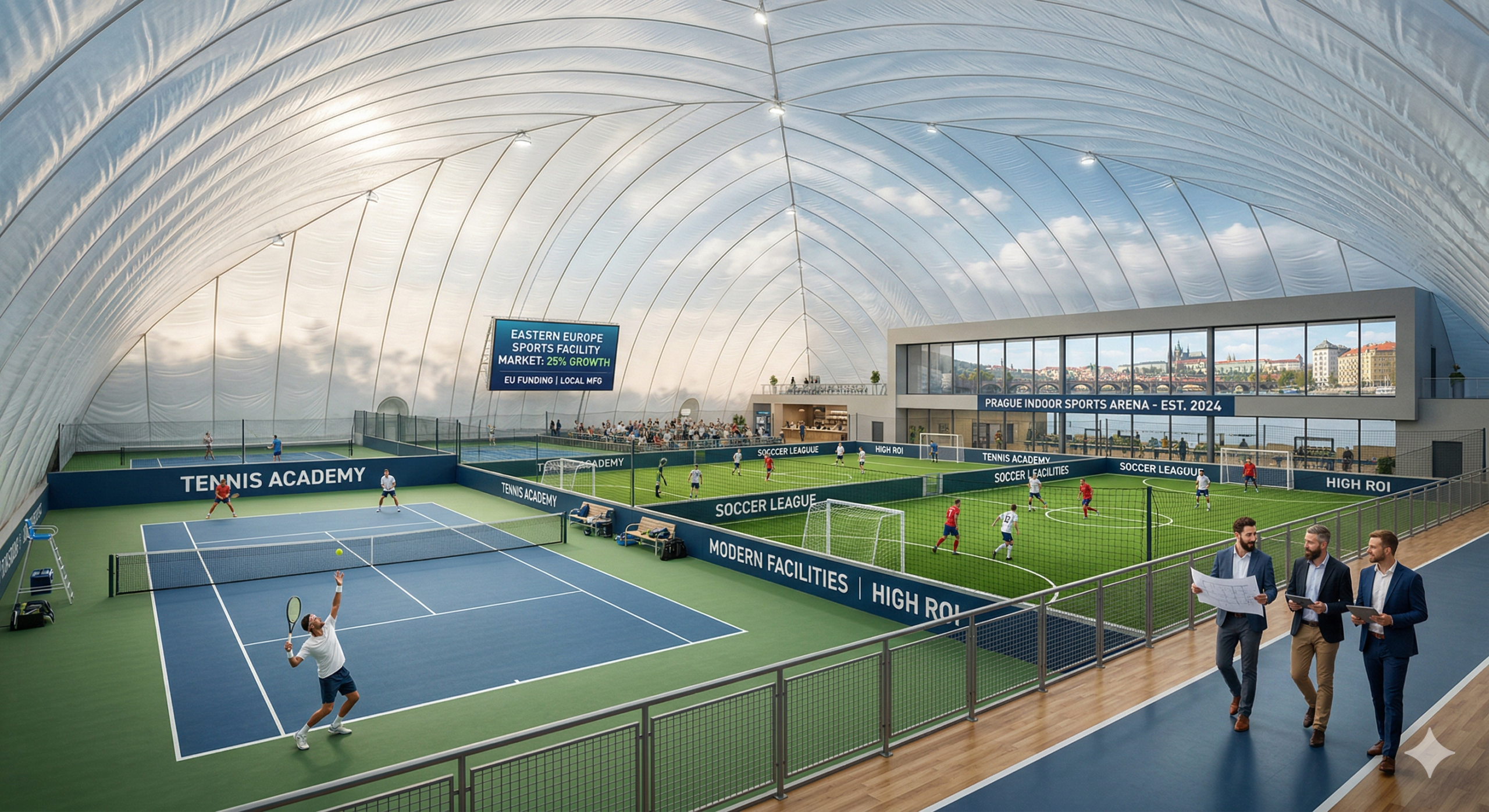
  • Sports Dome Maintenance Costs Annual Guide

    Sports Dome Maintenance Costs Annual Guide

    You’ll spend $15,000-$240,000 annually maintaining your sports dome, depending on its size and complexity. Small domes (5,000-10,000 sq ft) cost $15,000-$30,000 yearly, while large complexes exceed $120,000-$240,000. Electricity and utilities consume 50-70% of your operational budget, with energy costs varying considerably by region and dome size. You’ll also need dedicated reserve funds targeting 3-5% of your facility’s replacement value for major repairs and system replacements. Understanding these cost breakdowns helps you budget effectively for long-term ownership.

    What Determines Air Dome Operating Costs?

    When budgeting for an air dome facility, you’ll find that operating costs depend on five key factors that can considerably impact your annual expenses.

    Facility size serves as your primary cost driver, with larger domes requiring more materials, powerful blower systems, and increased labor for setup and takedown. You can expect $3-$6 annually per square foot for operational expenses.

    Material quality affects long-term air dome maintenance cost, as premium PVC-coated polyester reduces frequent repairs compared to lower-grade alternatives. Flame-retardant membranes and high-performance covers represent premium material investments that enhance safety and durability.

    Climate control systems create ongoing electricity expenses for blowers and HVAC equipment, varying considerably by geographic location and seasonal demands.

    Maintenance requirements include mandatory safety inspections, repairs, and preventive care programs.

    Operational infrastructure encompasses air pump monitoring, utility systems, and structural assessments that impact your baseline operational budget.

    Annual Operating Cost Ranges by Dome Size

    Understanding these cost factors helps you calculate realistic budgets, but actual expenses vary greatly based on your dome’s square footage.

    For small domes (5,000-10,000 sq ft), you’ll spend $15,000-$30,000 annually, with inflation unit maintenance costing $500-$2,000 and utilities running $2,500-$5,000 yearly.

    Medium-sized facilities (15,000-30,000 sq ft) require $45,000-$180,000 in sports dome annual expenses. Your inflation system maintenance increases to $1,500-$6,000, while utility costs jump to $7,500-$45,000 depending on seasonal HVAC demands. Establishing a monthly maintenance budget at $5,000 ensures consistent routine upkeep across all facility systems.

    Large complexes (40,000+ sq ft) exceed $120,000-$240,000 annually. You’ll face inflation unit costs of $4,000-$8,000 and utility expenses reaching $20,000-$60,000+.

    Maintenance reserves require $15,000-$30,000 yearly for continuous operations.

    Electricity and Utility Expenses (50-70% of Your Budget)

    Electricity and utility expenses will consume 50-70% of your sports dome’s operational budget, making energy management your most critical cost control priority.

    Your facility’s continuous blower systems and climate control requirements drive these substantial costs, with winter months demanding the highest expenditures.

    You’ll face monthly utility bills ranging from $2,600-$4,780 for four-court structures and $3,160-$7,410 for six-court facilities during peak winter season.

    A typical two-court dome consumes 83.2kWh daily, combining blower operation and LED lighting systems.

    Sports dome servicing costs multiply considerably based on regional electricity rates of 7.54-9.72 cents per kilowatt-hour.

    However, you’ll achieve remarkable energy efficiency compared to traditional facilities, consuming only 10-25% of conventional structures’ electricity while maintaining ideal playing conditions year-round. Professional sports facilities like Lincoln Financial Field demonstrate that solar panel installations can significantly reduce operational electricity costs, with some venues achieving energy independence on non-game days.

    Major Repair and Replacement Cost Planning

    Three critical categories define your sports dome’s major repair and replacement planning: fabric system renewals, structural component upgrades, and mechanical system overhauls. You’ll need thorough budget allocation strategies that account for cyclical replacement schedules and unexpected repairs.

    Tennis bubble upkeep costs exemplify the importance of proactive planning, as fabric deterioration can escalate rapidly without proper scheduling. Your facility requires systematic assessment protocols to identify potential issues before they become costly emergencies.

    Repair Category Replacement Cycle Budget Allocation
    Fabric System 15-20 years 25-30% of reserves
    Structural Components 20-25 years 35-40% of reserves
    HVAC Systems 12-15 years 20-25% of reserves
    Electrical Infrastructure 15-20 years 10-15% of reserves
    Emergency Contingency Ongoing 5-10% of reserves

    Establish dedicated reserve funds targeting 3-5% of your facility’s replacement value annually. Recent municipal projects demonstrate that major dome repairs can reach $75 million in total costs, emphasizing the critical importance of adequate financial planning.

    Frequently Asked Questions

    How Do Seasonal Weather Patterns Affect Annual Dome Maintenance Schedules?

    You’ll need to adjust your maintenance schedule based on your climate.

    In cold regions, you’ll focus on snow load management and heating system checks during winter months.

    Hot climates require more frequent UV coating reapplication and cooling system servicing.

    You’ll increase inspections during spring and fall shifts due to severe weather risks.

    Plan post-storm assessments after extreme events, and recalibrate air pressure systems when seasonal conditions change considerably.

    You’ll need thorough insurance coverage for your air dome facility.

    Get general liability insurance with at least $1 million per occurrence to cover visitor injuries and property damage.

    Add commercial property insurance protecting against fire, storms, and equipment damage.

    Include participant accident medical coverage since standard policies exclude athlete injuries.

    Don’t forget equipment breakdown insurance for specialized systems, and make sure your insurer maintains an A- rating or better for reliability.

    Can Dome Operating Costs Be Reduced Through Energy-Efficient Upgrades?

    Yes, you can considerably reduce your dome’s operating costs through energy-efficient upgrades.

    LED lighting systems cut electricity consumption while providing better illumination.

    Advanced HVAC systems with demand flow technology can reduce heating and cooling costs by 21%.

    Multi-layer insulation membranes minimize temperature control needs.

    Building automation systems enable precise monitoring and optimization.

    These upgrades often pay for themselves through long-term operational savings, with some facilities achieving millions in projected cost reductions.

    How Often Should Air Dome Fabric Be Professionally Inspected?

    You should have your air dome fabric professionally inspected annually or biannually by certified technicians or the manufacturer.

    While Ohio doesn’t mandate specific inspection requirements, this frequency helps detect hidden issues like micro-cracks, seam wear, and air leakage before they become costly problems.

    If you’re running year-round operations or facing harsh environmental conditions, you’ll want to increase inspection frequency to protect your investment and extend your dome’s lifespan.

    What Are Typical Staff Requirements for Dome Facility Operations?

    You’ll need 15-25 staff members depending on your dome’s size and programming.

    Core positions include a facility director, operations coordinator, and administrative assistant.

    You’ll require 2-3 facility supervisors, sports program coordinators, and customer service reps.

    Maintenance staff should include an HVAC specialist, equipment technicians, and general maintenance workers.

    Don’t forget security personnel, concessions staff, and parking attendants for events.

    Larger facilities may need additional supervisors and specialized technical staff.