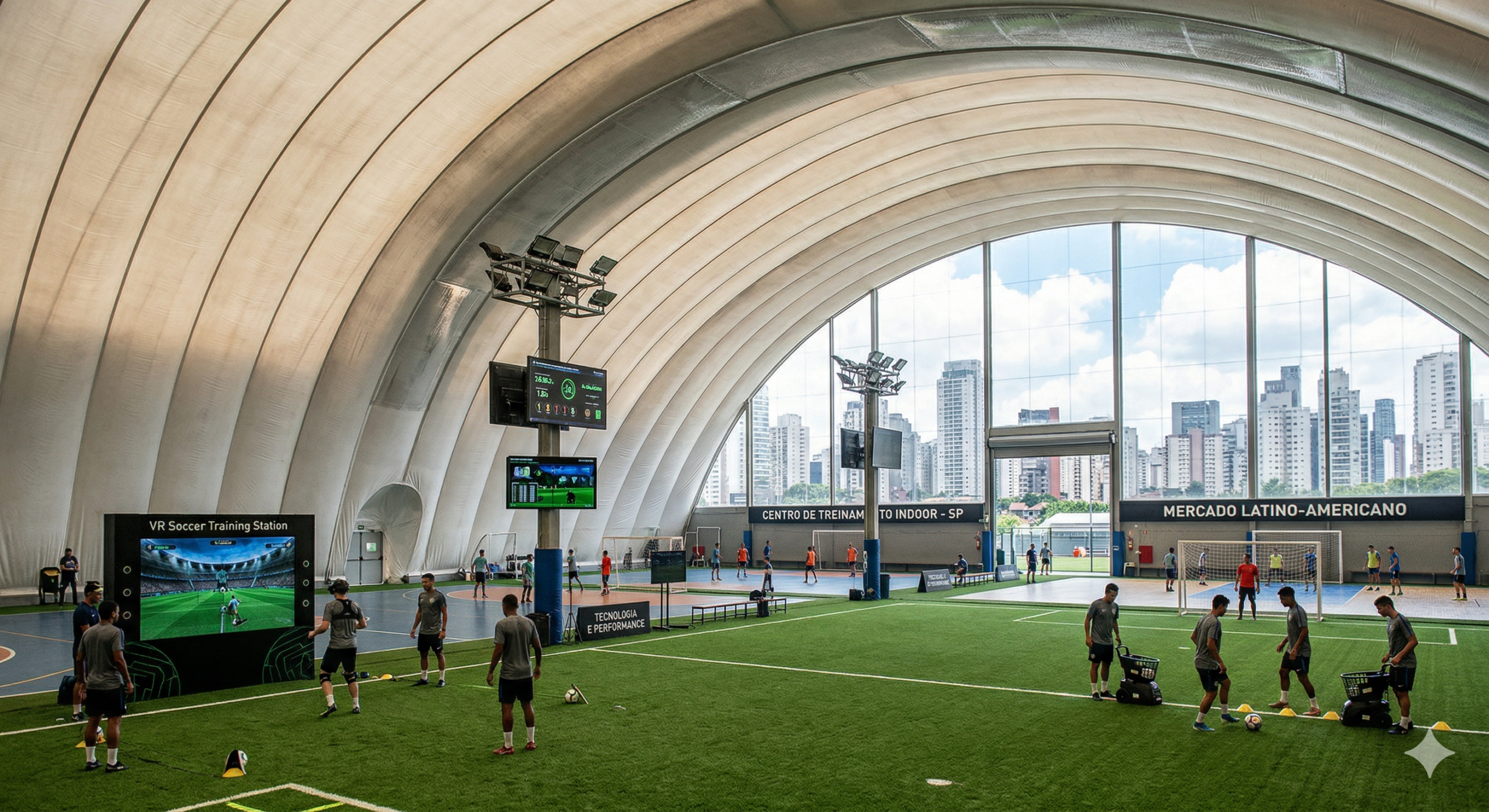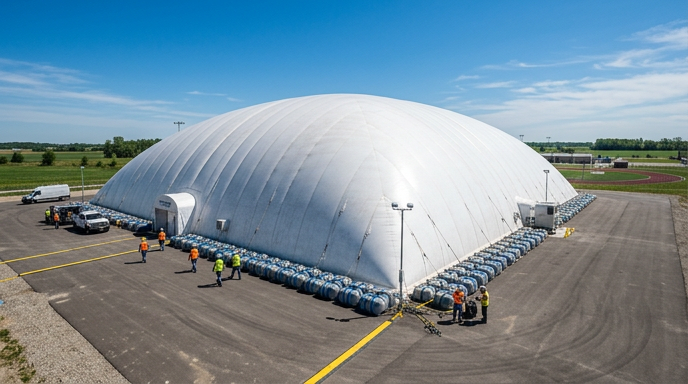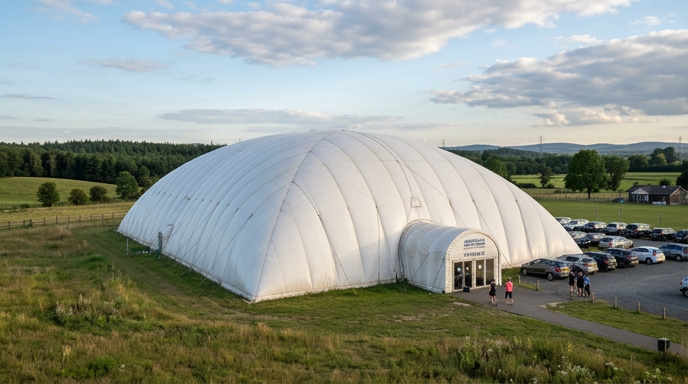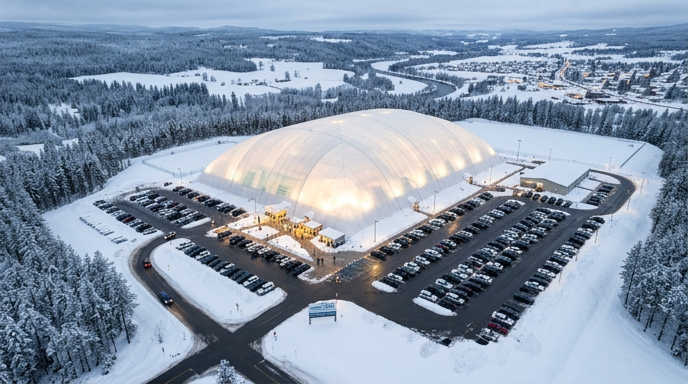
You’re witnessing a transformation in how communities approach year-round sports facilities, and the numbers tell a compelling story. The global sports dome market isn’t just growing—it’s accelerating toward a $2.8 billion valuation by 2026, driven by climate unpredictability and technological breakthroughs that weren’t viable just five years ago. What’s particularly striking is how certain regions are capitalizing on this trend while others lag behind, creating unexpected opportunities for savvy investors who understand the underlying forces at play.
Sports Dome Market Size Hits $2.8 Billion By 2026
The global sports dome market is accelerating toward a $2.8 billion valuation by 2026, driven by an impressive annual growth rate of 8-12%.
You’ll find this sports facility market growth stems from increasing climate concerns forcing year-round indoor alternatives, rising sports participation rates, and expanding commercial opportunities within covered facilities.
The international air dome market benefits from technological advances in energy-efficient materials and smart building integration systems.
You’re seeing significant expansion in emerging markets, particularly Asia and the Middle East, where extreme weather conditions make climate-controlled sports environments essential.
Multi-sport designs are becoming standard, allowing facilities to maximize revenue streams.
Solar integration and IoT monitoring systems are reducing operational costs, making these investments more attractive to developers and municipalities seeking sustainable sports infrastructure solutions.
Why Asia-Pacific Leads Global Sports Dome Growth?
As urbanization accelerates across Asia-Pacific, you’re witnessing the region capture the largest share of global sports dome installations due to its unique combination of extreme weather patterns, rapid economic development, and massive population density.
Countries like China, Japan, and South Korea are driving this expansion with government investments in sports infrastructure and hosting major international events.
You’ll find that monsoons, typhoons, and air quality issues make indoor facilities essential year-round.
The region’s tech-savvy approach embraces worldwide indoor facility trends like IoT monitoring and smart building integration.
Rising disposable incomes fuel demand for premium sports experiences, while limited urban space makes multi-sport domes highly attractive.
Asia-Pacific’s 8-12% annual growth rate notably outpaces other regions, positioning it as the market’s primary growth engine.
Smart Sports Dome Technology Reduces Operating Costs 40
You’ll cut your sports dome operating costs by up to 40% when you integrate smart technology systems.
IoT monitoring sensors track everything from temperature and humidity to equipment performance, giving you real-time data to optimize facility operations.
Energy management solutions automatically adjust lighting, heating, and ventilation based on occupancy and usage patterns, eliminating waste and maximizing efficiency.
IoT Monitoring Systems
While traditional sports domes rely on manual monitoring and reactive maintenance, IoT systems transform facility management through real-time data collection and automated responses.
You’ll gain instant visibility into temperature, humidity, air quality, and energy consumption across your entire facility. Smart sensors continuously track HVAC performance, lighting usage, and structural integrity, alerting you to potential issues before they become costly problems.
You can remotely adjust climate controls, optimize energy distribution, and schedule maintenance based on actual usage patterns rather than guesswork.
IoT platforms integrate seamlessly with existing building management systems, providing dashboards that display key performance metrics in real-time. This data-driven approach enables predictive maintenance strategies, reducing unexpected equipment failures by up to 60% while extending asset lifecycles considerably.
Energy Management Solutions
Smart energy management systems can slash your sports dome’s operating costs by up to 40% through intelligent automation and real-time enhancement.
These systems integrate with your existing HVAC, lighting, and equipment infrastructure to create dynamic energy profiles that adapt to usage patterns and environmental conditions.
You’ll benefit from predictive algorithms that anticipate peak demand periods and automatically adjust power consumption during off-peak hours.
Smart thermostats maintain ideal playing conditions while minimizing energy waste, and LED lighting systems respond to natural light levels and occupancy sensors.
Advanced energy management platforms provide detailed analytics showing your facility’s consumption patterns, identifying inefficiencies, and recommending improvements.
Many systems offer demand response capabilities, allowing you to participate in utility programs that provide financial incentives for reducing energy usage during grid stress periods.
IoT And Solar Integration Transform Sports Dome Performance
You’ll find that modern sports domes now combine IoT sensors with solar panels to create intelligent facilities that monitor everything from temperature to energy consumption in real-time.
These smart energy management systems automatically adjust lighting, ventilation, and heating based on usage patterns and weather conditions, dramatically cutting operational expenses.
You’re seeing facilities generate their own sustainable power while simultaneously tracking performance metrics that optimize both energy efficiency and user experience.
Smart Energy Management Systems
As energy costs continue climbing worldwide, sports dome operators are turning to intelligent management systems that merge IoT sensors with solar technology to slash operational expenses by up to 40%.
You’ll find these systems automatically adjust lighting, heating, and ventilation based on real-time occupancy data and weather conditions.
Smart controllers enhance solar panel output while managing battery storage to maximize self-consumption during peak usage hours.
You’re seeing predictive analytics that anticipate maintenance needs before equipment failures occur, reducing downtime and repair costs.
These integrated platforms provide mobile dashboards where you can monitor energy consumption, indoor air quality, and system performance remotely.
Advanced algorithms learn usage patterns and automatically schedule energy-intensive operations during off-peak hours, delivering substantial savings while maintaining ideal playing conditions.
Real-Time Performance Monitoring
How effectively can you track your sports dome’s performance across dozens of interconnected systems simultaneously? Modern IoT sensors now deliver thorough real-time monitoring that transforms facility management.
You’ll receive instant data on energy consumption, HVAC efficiency, lighting performance, and structural conditions through centralized dashboards.
Smart monitoring systems detect equipment failures before they occur, reducing maintenance costs by 25-30%. You can optimize energy usage by tracking solar panel output against consumption patterns, automatically adjusting lighting and climate controls.
Temperature sensors throughout your dome guarantee consistent playing conditions while minimizing energy waste.
Advanced analytics help you identify peak usage periods, enabling dynamic pricing strategies and resource allocation.
Integration with mobile apps allows remote monitoring, letting you manage multiple facilities efficiently.
This data-driven approach maximizes operational efficiency while enhancing user experience across your sports dome network.
Sustainable Power Generation
While traditional sports facilities drain massive amounts of electricity from the grid, modern sports domes generate their own clean energy through integrated solar systems that can offset 60-80% of operational costs.
You’ll find these installations feature flexible photovoltaic panels that conform to dome curvatures, maximizing energy capture throughout the day.
Smart inverters automatically switch between solar power, battery storage, and grid electricity based on real-time demand. You can monitor energy production through IoT dashboards that track performance metrics and predict maintenance needs.
Advanced systems include micro-inverters for individual panel optimization and battery banks for peak-hour energy storage.
This integration transforms sports domes from energy consumers into near-neutral facilities, reducing operational expenses while supporting sustainability goals that attract environmentally conscious users and sponsors.
Multi-Sport Design Features Maximize Revenue Streams
Modern sports dome designs increasingly incorporate flexible layouts that accommodate multiple activities, enabling facility owners to maximize utilization rates and diversify revenue streams throughout the year.
You’ll find removable court lines, adjustable netting systems, and modular flooring that transform basketball courts into soccer fields, tennis courts, or event spaces within hours.
Smart scheduling systems help you optimize bookings across different sports and activities. You can host youth leagues in the morning, adult recreational games in the evening, and corporate events on weekends.
Many facilities generate additional revenue through fitness classes, birthday parties, summer camps, and tournaments.
Convertible spaces also attract long-term rental agreements with schools and sports organizations. This flexibility reduces seasonal revenue fluctuations while maximizing your facility’s earning potential year-round.
Climate-Controlled Sports Domes Replace Outdoor Venues
As extreme weather events become more frequent and unpredictable, you’re seeing sports facilities shift from traditional outdoor venues to climate-controlled domes that guarantee consistent playing conditions year-round. You’ll find these enclosed structures offering precise temperature control, humidity management, and protection from rain, snow, and extreme heat.
| Weather Challenge | Outdoor Impact | Dome Solution |
|---|---|---|
| Rain/Snow | Cancellations | Uninterrupted play |
| Extreme Heat | Player safety risks | Ideal 68-72°F |
| High Winds | Equipment disruption | Stable environment |
| UV Exposure | Health concerns | Filtered lighting |
| Humidity | Performance decline | Controlled 40-60% |
You’re investing in facilities that eliminate weather-related cancellations while extending playing seasons. These domes maintain consistent air quality and lighting, creating professional-grade conditions that attract tournaments and boost revenue streams through reliable scheduling.
Commercial Sports Dome Investment Returns In 2026
Since sports dome facilities generate multiple revenue streams simultaneously, you’re looking at impressive investment returns averaging 12-18% annually by 2026.
Your dome can host youth leagues, adult recreation, tournaments, corporate events, and birthday parties throughout the week. Smart operators you’ll compete with are maximizing off-peak hours through fitness classes, summer camps, and equipment rentals.
You’ll see faster payback periods in high-density markets where outdoor field availability is limited.
Energy-efficient designs with solar integration reduce your operational costs by 30-40%, boosting profitability. Multi-sport configurations let you capture diverse customer segments year-round.
The strongest returns come from facilities offering premium amenities like climate control, LED lighting, and digital booking systems.
You’re fundamentally creating a weather-proof sports entertainment hub that operates 365 days annually.
Sports Dome Construction Trends Shape Future Facilities
While investment returns drive dome ownership decisions, construction innovations are revolutionizing how these facilities get built and perform. You’re seeing smart building integration become standard, with IoT sensors monitoring temperature, humidity, and energy consumption in real-time. Solar panel integration now reduces operating costs by 30-40% annually.
| Traditional Construction | Modern Innovation |
|---|---|
| Single-sport design | Multi-sport adaptability |
| Basic HVAC systems | Smart climate control |
| Standard materials | Energy-efficient composites |
Multi-sport designs maximize your facility’s revenue potential, allowing basketball courts to convert into soccer fields within hours. Energy-efficient materials and automated systems reduce maintenance costs while improving user experience. These construction trends guarantee your dome remains competitive as the market grows 8-12% annually through 2026.