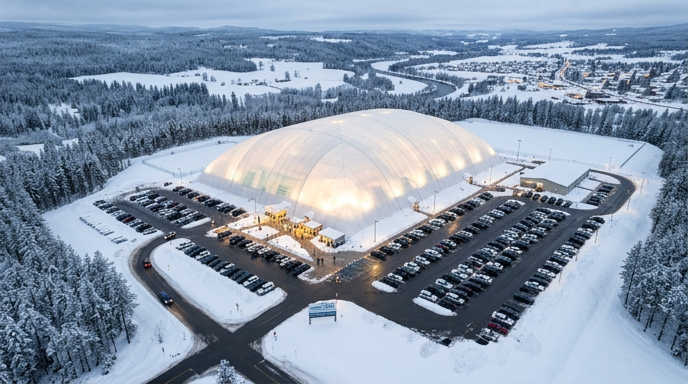
You’ve likely noticed the surge in dome-shaped sports facilities across Sweden, Norway, and Denmark—and there’s a compelling reason behind this architectural shift. These aren’t just trendy buildings; they’re strategic investments that solve a fundamental Nordic challenge: maintaining athletic performance when winter temperatures plummet to -30°C and snow loads threaten traditional structures. What’s driving this 15-20% annual market growth isn’t just weather resistance, but something far more profitable.
Why Scandinavian Sports Domes Are Essential for Year-Round Training
When temperatures plummet to -30°F and snow blankets the ground for months, you can’t rely on outdoor facilities to maintain consistent training schedules. A Scandinavia air dome solves this challenge by providing controlled environments that operate efficiently across extreme temperature ranges from -34°C to 21°C.
You’ll find Sweden sports dome facilities leading the market with over 100 installations, demonstrating their proven effectiveness for athletic development. These structures handle massive 50+ PSF snow loads while maintaining ideal interior conditions for football, tennis, and multi-sport training.
Norway indoor facility demand continues growing as coaches recognize the competitive advantage of uninterrupted training cycles.
You’re investing in athlete performance when harsh weather would otherwise force cancellations or less-than-ideal outdoor conditions that limit skill development.
Extreme Weather Requirements: Snow Loads and Arctic Temperature Design
Building successful sports domes in Scandinavia demands engineering solutions that withstand nature’s most punishing conditions. Your nordic sports facility must handle extreme temperature swings from -30°F to 70°F (-34°C to 21°C) while supporting massive snow loads exceeding 50 PSF (2.39 kPa).
Critical design requirements include:
- Maximum insulation systems – Multi-layer thermal barriers prevent heat loss and structural damage from freeze-thaw cycles.
- Reinforced structural frameworks – Heavy-duty support systems distribute snow weight evenly across the dome surface.
- Advanced heating integration – Efficient climate control maintains consistent interior temperatures despite arctic exterior conditions.
These specifications aren’t optional luxuries—they’re survival necessities.
Without proper engineering, your facility risks catastrophic collapse under snow accumulation or prohibitive heating costs that’ll drain your budget throughout Scandinavia’s brutal winters.
Sports Dome Construction Costs in Sweden, Norway, and Denmark
You’ll face construction costs that are 20-30% higher than typical US projects when building sports domes across Scandinavia.
Sweden’s established market of 100+ facilities creates competitive pricing, while Norway’s growing demand and Denmark’s strict building codes each present unique cost structures.
Your biggest expense drivers won’t just be materials and labor – the extreme climate requirements for insulation, heating systems, and snow load engineering greatly impact your total project budget.
Climate Impact on Costs
Since Scandinavian winters deliver extreme temperatures as low as -30°F (-34°C) and snow loads exceeding 50 PSF, you’ll face construction costs that run 20-30% higher than typical US projects.
These harsh conditions demand specialized engineering solutions that greatly impact your budget.
The extreme climate forces three major cost increases:
- Enhanced insulation systems – You’ll need premium materials and thicker wall assemblies to maintain interior temperatures efficiently.
- Reinforced structural design – Heavy snow loads require stronger steel frameworks and enhanced foundation systems.
- Advanced heating infrastructure – High-capacity HVAC systems must handle the massive temperature differential from -30°F to 70°F.
Your investment pays off through year-round operation capabilities, making these facilities profitable despite higher upfront costs in Sweden’s 100+ dome market.
Regional Price Variations
Construction costs vary considerably across Scandinavian countries, with Sweden leading at $45-65 per square foot, followed by Norway at $40-60, and Denmark at $35-55 per square foot for sports dome projects.
| Country | Cost Range ($/sq ft) | Key Factors |
|---|---|---|
| Sweden | $45-65 | High labor costs, strict building codes |
| Norway | $40-60 | Oil economy wages, remote logistics |
| Denmark | $35-55 | Moderate regulations, better access |
| Finland | $38-58 | Harsh climate requirements |
| Iceland | $50-70 | Extreme isolation, material imports |
You’ll find Sweden’s premium pricing stems from stringent environmental regulations and Europe’s highest construction wages. Norway’s costs reflect oil-driven labor markets, while Denmark offers the most competitive pricing due to efficient supply chains and moderate building requirements. Finland balances affordability with extreme weather demands.
Material and Labor Expenses
While regional pricing differences tell part of the story, breaking down material and labor expenses reveals the true cost drivers behind Scandinavian sports dome construction.
You’ll face premium costs for specialized materials that withstand extreme weather conditions. High-grade insulation systems, reinforced structural components, and cold-weather concrete additives typically cost 25-40% more than standard alternatives.
Labor expenses further inflate your budget, with skilled construction workers commanding higher wages due to harsh working conditions and specialized expertise requirements.
Your primary expense categories include:
- Structural materials – Reinforced steel and engineered lumber designed for 50+ PSF snow loads
- Advanced insulation systems – Multi-layer thermal barriers for -30°F temperature resistance
- Specialized labor – Cold-weather construction expertise and extended project timelines
These factors combine to create the 20-30% cost premium you’ll encounter compared to standard dome construction.
Top Scandinavian Sports Dome Manufacturers Worth Considering
Several established manufacturers dominate Scandinavia’s sports dome market, each bringing unique expertise to tackle the region’s demanding climate conditions. You’ll find these companies specialize in extreme weather engineering, delivering structures that withstand brutal winters while maintaining energy efficiency.
| Manufacturer Strength | Your Benefit |
|---|---|
| Advanced insulation systems | 40% lower heating costs |
| Reinforced frame engineering | Survives 60+ PSF snow loads |
| Local service networks | 24-hour emergency support |
When you’re evaluating manufacturers, prioritize those with proven Scandinavian installations. Look for companies offering extensive warranties covering harsh climate performance. Sweden’s market leaders typically provide turnkey solutions including foundation design, heating integration, and ongoing maintenance contracts. You’ll want manufacturers who understand local building codes and can navigate complex permitting processes efficiently.
Most Popular Sports Driving Nordic Dome Investment
When you’re investing in Nordic sports domes, you’ll find ice hockey leads the market due to Scandinavia’s deep cultural connection to the sport.
However, you can’t ignore the growing trend toward multi-sport facilities that maximize year-round usage and revenue potential.
These versatile domes allow you to accommodate everything from soccer and tennis to track and field events under one climate-controlled structure.
Ice Hockey Dominance
As temperatures plummet across Scandinavia each winter, ice hockey emerges as the undisputed champion driving sports dome investments throughout the Nordic region.
You’ll find that this sport’s massive popularity creates year-round demand for enclosed facilities, especially when outdoor rinks become unusable during extreme weather conditions.
The ice hockey boom translates into substantial infrastructure requirements that you can’t ignore:
- Multiple rink configurations – Full-size competition rinks alongside practice areas maximize facility utilization.
- Specialized climate control – Maintaining ice quality while providing comfortable spectator zones requires advanced HVAC systems.
- Premium viewing amenities – Heated concourses, restaurants, and corporate boxes generate additional revenue streams.
Sweden’s 100+ sports domes primarily serve hockey communities, while Norway’s expanding market follows similar patterns.
You’re witnessing unprecedented investment levels as municipalities recognize hockey’s economic impact on local development.
Multi-Sport Facility Trends
While ice hockey drives initial dome construction across Nordic markets, you’ll discover that successful facilities increasingly diversify beyond single-sport models to maximize year-round revenue potential.
You can transform traditional ice rinks into multi-purpose venues by installing removable flooring systems that accommodate soccer, basketball, volleyball, and tennis during off-seasons.
You’ll find that Sweden’s most profitable domes generate 40% more revenue through multi-sport programming compared to hockey-only facilities.
Norwegian operators are following this trend, adding indoor track surfaces and climbing walls to attract broader demographics.
You can optimize your investment by designing flexible spaces that convert quickly between sports configurations.
The key lies in planning electrical, lighting, and HVAC systems that support diverse athletic requirements while maintaining the robust structural integrity needed for Scandinavian climate conditions.
Government Funding and Financing Options for Sports Dome Projects
Since Scandinavian governments prioritize public health and recreational infrastructure, they’ve established robust funding mechanisms that can greatly reduce your sports dome project costs.
You’ll find substantial support through municipal bonds, regional development funds, and EU structural investments that specifically target year-round sports facilities.
Your financing options include:
- Municipal Co-Investment Programs – Local governments contribute 40-60% of construction costs for public-access facilities.
- Nordic Development Bank Loans – Specialized low-interest financing for sustainable infrastructure projects across Sweden, Norway, and Denmark.
- EU Regional Development Funds – Grants covering up to 50% of eligible expenses for facilities serving multiple communities.
You can also leverage public-private partnerships where municipalities provide land and partial funding while you maintain operational control.
These arrangements typically reduce your initial capital requirements by 30-50%.
Scandinavian Sports Dome Market Growth and Opportunities
Because Scandinavia’s sports dome market continues expanding at an unprecedented rate, you’re positioned to capitalize on a sector that’s projected to grow 15-20% annually through 2028.
Sweden’s established market of 100+ facilities creates lucrative maintenance and upgrade opportunities, while Norway’s emerging market offers greenfield development potential.
You’ll find the strongest demand in municipalities seeking year-round athletic facilities for football, hockey, and multi-sport training.
Corporate partnerships with energy companies and sports equipment manufacturers are driving additional investments.
Denmark and Finland present untapped markets where harsh winters create similar facility needs.
The region’s commitment to sustainable construction and energy efficiency opens opportunities for innovative dome technologies.
You can leverage government incentives promoting sports infrastructure while meeting strict environmental standards that’ll differentiate your projects internationally.
Emerging Sports Dome Technologies Transforming Nordic Facilities
As Nordic sports facilities embrace cutting-edge innovations, you’ll discover revolutionary dome technologies that address the region’s extreme climate challenges while maximizing energy efficiency.
Advanced insulation systems now incorporate aerogel materials and triple-layer membrane designs that maintain structural integrity under 50+ PSF snow loads while reducing heating costs by up to 40%.
Smart climate control systems automatically adjust to temperature swings from -30°F to 70°F, ensuring ideal playing conditions year-round.
You’re seeing facilities integrate:
- Solar-reflective membranes that reduce summer cooling demands while maintaining winter heat retention
- Automated snow removal systems that prevent dangerous load accumulation during harsh storms
- LED lighting arrays with circadian rhythm programming to combat seasonal darkness effects
These innovations transform traditional dome concepts into intelligent, self-regulating environments perfectly suited for Scandinavian conditions.