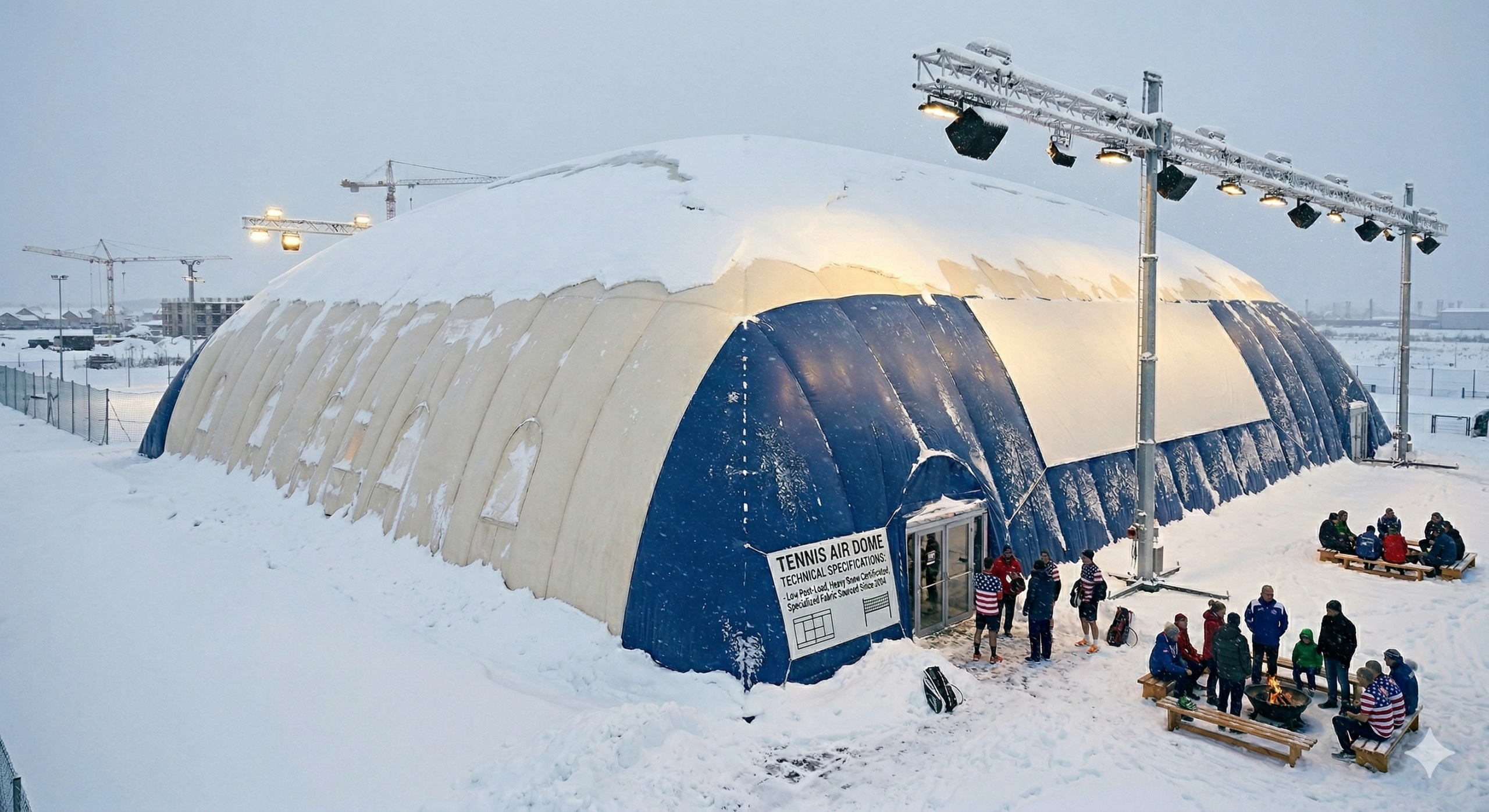
You’re facing a critical decision that’ll impact your facility’s budget for years to come. Choosing between a seasonal air dome ($700K-$1M) and a year-round installation ($800K-$1.2M) isn’t just about upfront costs—it’s about hidden expenses that can quietly drain your resources. While that $100K-$300K price difference might seem straightforward, the real financial picture becomes clear only when you factor in setup, removal, storage, and weather-related risks that most operators completely overlook.
Air Dome Costs: Seasonal ($700K-$1M) vs Year-Round ($800K-$1.2M)
Two distinct pricing tiers separate seasonal and year-round air domes, with seasonal options starting at $700,000 to $1 million while year-round installations range from $800,000 to $1.2 million.
When you’re evaluating seasonal vs year-round air dome options, you’ll notice the upfront difference isn’t dramatic—typically $100,000 to $200,000 more for permanent structures.
However, your temporary vs permanent dome decision involves hidden costs. Seasonal domes require annual setup and removal expenses ranging from $16,000 to $30,000, plus you’ll need dedicated storage space measuring 10′ x 20′.
Over five years, these recurring costs can offset initial savings.
Your seasonal dome vs fixed installation choice ultimately depends on usage patterns. If you’ll operate nine to twelve months annually, permanent installations deliver better value despite higher upfront investment.
Hidden Expenses: Setup, Removal, and Storage Requirements for Seasonal Domes
Beyond the sticker price, seasonal air domes carry recurring expenses that can greatly impact your total cost of ownership.
You’ll face annual setup and removal costs ranging from $16,000 to $30,000, which includes professional installation, equipment rental, and labor. These expenses occur every single year your dome operates.
Storage presents another ongoing challenge.
You’ll need a dedicated 10′ x 20′ space to house your deflated dome during off-seasons. This storage area must remain dry, secure, and climate-controlled to prevent damage from moisture, pests, or temperature fluctuations.
Factor in storage facility rental costs or the opportunity cost of using your own space.
Don’t overlook transportation expenses either.
Moving your dome between storage and installation sites requires specialized vehicles and handling equipment, adding hundreds to thousands annually.
Break-Even Point: When Permanent Air Domes Beat Seasonal Options
You’ll reach the break-even point between seasonal and permanent air domes faster than you might expect when you factor in annual setup costs.
Your 20,000 sq ft seasonal dome’s $16K-$30K yearly expenses mean you’ll spend an additional $80K-$150K over five years compared to a permanent structure.
Calculate your total cost of ownership over 7-10 years, and you’ll likely find the permanent dome’s higher upfront investment pays off through eliminated recurring costs.
Annual Cost Calculations
Understanding the break-even point between seasonal and year-round air domes requires examining both upfront investments and ongoing operational costs.
For a 20,000 sq ft dome, you’ll face $700K-$1M upfront for seasonal options versus $800K-$1.2M for permanent structures.
Your annual operational costs tell the real story. Seasonal domes require $16K-$30K yearly for setup and removal, plus storage expenses for a 10′ x 20′ space. Year-round domes eliminate these recurring costs entirely.
Calculate your break-even timeline by dividing the upfront cost difference by annual operational savings.
With $100K-$200K higher initial investment but $16K-$30K annual savings, you’ll typically break even within 3.3-12.5 years. If you’re planning 9-12 months of annual use, permanent domes become financially advantageous.
Multi-Year ROI Analysis
When your facility operates more than seven months annually, the financial mathematics shift dramatically in favor of permanent air domes. You’ll reach break-even between years three and four, depending on your annual setup costs and usage intensity.
Here’s your ROI timeline: Year one shows seasonal domes ahead by $100K-$200K due to lower upfront investment. By year two, you’re still saving $84K-$170K with seasonal options.
However, year three marks the turning point where cumulative costs converge. From year four onward, you’ll save $16K-$30K annually with permanent structures.
Over ten years, permanent domes deliver $112K-$210K in total savings. Factor in reduced labor disruption, eliminated weather delays during setup, and consistent facility availability—permanent air domes become the clear financial winner for extended seasonal operations.
Storage Solutions: Planning for 20,000 Sq Ft Seasonal Air Dome Systems
One critical aspect of owning a 20,000 sq ft seasonal air dome that’s often overlooked during the planning phase is the storage requirement during off-season months.
You’ll need approximately 200 square feet of storage space (10′ x 20′) to properly house your dome membrane, blower systems, and accessories.
Consider climate-controlled storage to protect your investment from moisture, temperature fluctuations, and UV exposure.
Many facilities opt for dedicated storage buildings or rent warehouse space specifically for dome components.
You’ll also need adequate ventilation to prevent mold and mildew formation on fabric materials.
Factor storage costs into your annual operating budget—typically $1,200-$3,600 yearly for commercial storage.
Some operators negotiate shared storage arrangements with other seasonal dome owners to reduce individual costs while maintaining proper storage conditions.
9+ Month Usage: Why Year-Round Air Domes Make Financial Sense
While seasonal air domes initially appear more cost-effective with their lower upfront investment of $700K-$1M compared to year-round systems at $800K-$1.2M, the financial mathematics shift dramatically when you’re operating nine months or more annually.
The recurring costs quickly erode seasonal systems’ initial savings:
| Cost Factor | Seasonal | Year-Round |
|---|---|---|
| Year 1 Total | $716K-$1.03M | $800K-$1.2M |
| Year 5 Total | $764K-$1.15M | $800K-$1.2M |
| Year 10 Total | $844K-$1.3M | $800K-$1.2M |
| Storage Space | Required | None |
| Setup Risk | Annual | Eliminated |
You’ll reach break-even around year three to five. Beyond this point, year-round domes deliver superior ROI while eliminating storage headaches and weather-dependent installation windows that can delay your season openings.
Real-World Air Dome ROI: Cost Analysis Over 5-10 Years
Three critical factors determine your air dome’s actual return on investment: operational intensity, local climate conditions, and facility utilization rates.
Over five years, a seasonal dome‘s total cost reaches $780K-$1.15M ($700K initial + $80K-$150K setup/removal).
Year-round domes cost $800K-$1.2M with no recurring expenses.
If you’re operating 9+ months annually, year-round domes break even by year two.
The math shifts dramatically with usage patterns—seasonal domes favor 6-month operations, while year-round models excel with consistent use.
Storage costs add $2K-$5K annually for seasonal units.
Labor disruptions during changes can impact revenue by 10-15%.
Climate Considerations: Weather Impact on Seasonal vs Permanent Domes
Your dome’s climate resilience directly impacts whether seasonal or permanent installation makes financial sense.
Seasonal domes face repeated stress from setup and teardown cycles, while permanent structures must withstand year-round weather extremes including snow loads, high winds, and temperature fluctuations.
You’ll need robust temperature control systems and storm-resistant designs, but the risk-reward equation changes dramatically based on your local weather patterns.
Winter Weather Resistance
When winter storms arrive with heavy snow loads and freezing temperatures, the structural differences between seasonal and year-round air domes become critical factors in your facility’s survival.
Year-round domes feature reinforced fabric systems and enhanced anchoring specifically engineered for harsh winter conditions. They’ll withstand snow accumulation up to 40 pounds per square foot and temperatures as low as -40°F without compromising structural integrity.
Seasonal domes weren’t designed for these extreme conditions. Their lighter materials and standard anchoring systems can fail under heavy snow loads, potentially causing:
- Complete structural collapse from excessive weight
- Fabric tears from ice formation and expansion
- Air leakage through temperature-stressed seams
- Foundation damage from freeze-thaw cycles
You’ll face considerably higher winter maintenance costs and safety risks with seasonal options during severe weather events.
Temperature Control Systems
Because temperature control systems directly impact both operational costs and athletic performance, the choice between seasonal and year-round air domes creates vastly different heating and cooling requirements throughout the year.
Seasonal domes let you optimize climate control for specific months when you’ll use the facility most. You can install heating systems during winter installations or cooling equipment for summer sports seasons, reducing energy costs by avoiding year-round climate management.
Year-round domes require extensive HVAC systems handling extreme temperature variations across all seasons. You’ll need robust heating for winter months and adequate cooling for summer heat.
While initial HVAC investments run higher, you’ll achieve better energy efficiency through consistent system operation rather than intermittent seasonal heating spikes that seasonal domes experience during setup periods.
Storm Damage Risks
Storm damage risks vary dramatically between seasonal and year-round air domes, with each design philosophy creating distinct vulnerabilities during severe weather events.
Your seasonal dome faces unique challenges since you’ll typically remove it before winter’s harshest conditions. However, unexpected storms during operating seasons can catch you off-guard with limited structural reinforcement options.
You’re also vulnerable during setup and takedown periods when the structure isn’t fully secured.
Year-round domes withstand more severe weather but face prolonged exposure to multiple storm seasons. Consider these key risk factors:
- Wind resistance: Permanent structures handle sustained winds better than temporary installations.
- Snow loading: Year-round domes require engineered snow load calculations.
- Hail damage: Both types need puncture-resistant materials in hail-prone regions.
- Emergency deflation: Seasonal domes offer quicker protective deflation options.