Tag: sports facilities

  • Eastern Europe Sports Facility Market

    Eastern Europe Sports Facility Market

    You’re looking at a sports facility goldmine that most investors haven’t discovered yet. Eastern Europe’s 120+ untapped markets offer construction costs that’ll slash your budget by up to 40% compared to Western alternatives. Poland’s already proven the model works with 80+ profitable facilities, while the Czech Republic and Hungary sit virtually unexplored. Here’s what makes this opportunity different from every other sports investment you’ve considered.

    Eastern Europe Sports Facilities: 120+ Markets With 25% Growth Potential

    Across Eastern Europe’s expanding landscape, you’ll discover over 120 distinct sports facility markets experiencing unprecedented growth, with industry analysts projecting a robust 25% expansion potential over the next five years.

    Poland leads this transformation with 80+ facilities, while Czech Republic and Hungary rapidly develop their infrastructure. You’ll find costs running 20-40% lower than Western European alternatives, making eastern Europe air dome installations increasingly attractive.

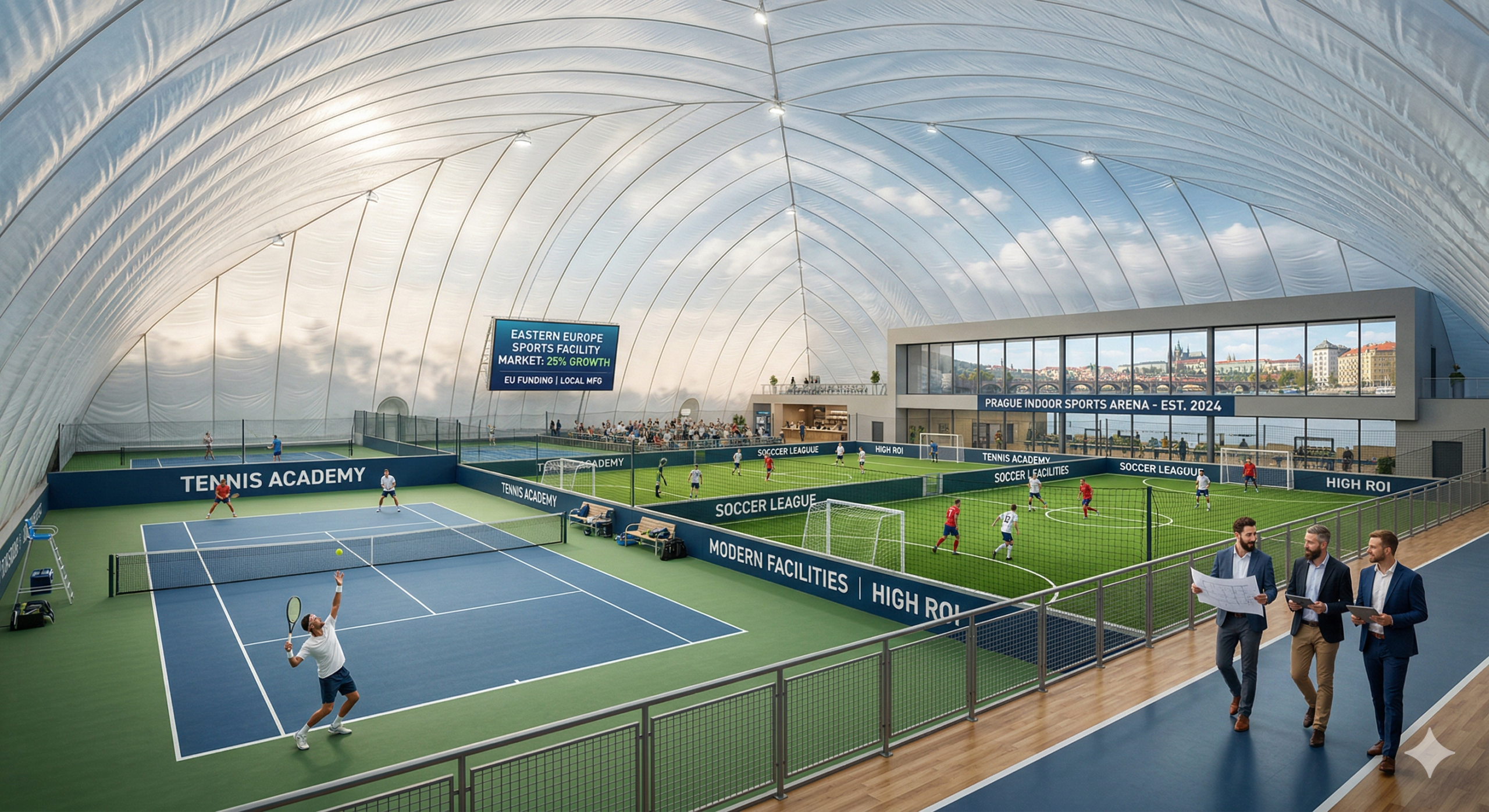
    Soccer and tennis dominate facility construction, with typical structures spanning 1,500-2,500 square meters.

    EU funding streams support municipal projects, accelerating Poland sports facility development across the region. Czech sports dome projects benefit from emerging local manufacturing capabilities, reducing import dependencies.

    This combination of affordability, government support, and growing demand positions Eastern Europe as Europe’s most dynamic sports facility market.

    Poland’s 80+ Facilities Prove Market Viability And Profitability

    Poland’s impressive portfolio of 80+ operational sports facilities demonstrates clear market viability, with facility owners reporting consistent profitability across soccer domes, tennis centers, and multi-sport complexes. You’ll find these eastern european indoor sports facilities generating steady revenue streams year-round, capitalizing on weather-independent operations and diverse programming opportunities.

    Facility Type Average ROI Primary Revenue
    Soccer Domes 15-22% League rentals, camps
    Tennis Centers 12-18% Memberships, lessons
    Multi-Sport 18-25% Corporate events, parties

    Poland’s success stems from strategic location selection, community partnerships, and competitive pricing that’s 20-40% below Western European rates. You can replicate this model by focusing on high-demand sports, securing municipal support, and leveraging EU funding opportunities that many Polish operators have utilized effectively.

    Czech Republic And Hungary Offer 40+ Untapped Sports Facility Markets

    Beyond Poland’s established market, Czech Republic and Hungary present over 40 underserved cities where you’ll discover minimal competition for indoor sports facilities.

    These developing markets offer first-mover advantages with construction costs 20-40% below Western European standards.

    You’ll find strong government support through EU municipal funding programs specifically targeting sports infrastructure development.

    Both countries show rising demand for soccer and tennis facilities, with typical projects ranging 1,500-2,500 square meters.

    Key market opportunities include:

    • Prague and Budapest suburbs – Growing populations with limited indoor sports access
    • Secondary cities – Untapped markets of 50,000+ residents lacking modern facilities
    • University partnerships – Academic institutions seeking private facility management
    • Corporate wellness – Companies investing in employee recreation centers

    Local manufacturing capabilities are emerging, reducing equipment and maintenance costs considerably.

    Sports Facility Construction Costs 20-40% Lower Than Western Europe

    Construction costs in Eastern Europe deliver substantial savings that’ll directly impact your project’s bottom line.

    You’ll find construction expenses running 20-40% lower than comparable Western European projects, creating significant opportunities for budget optimization or enhanced facility features.

    These cost advantages stem from lower labor rates, reduced material costs, and competitive local contractor pricing.

    You can leverage these savings to either maximize your return on investment or reinvest the difference into premium equipment and amenities that’ll set your facility apart.

    The developing local manufacturing sector further supports cost efficiency, reducing import dependencies and transportation expenses.

    You’ll also benefit from streamlined permitting processes in many Eastern European markets, which can accelerate project timelines and reduce carrying costs during development phases.

    Why Soccer And Tennis Facilities Generate Highest ROI?

    What drives soccer and tennis facilities to deliver superior returns in Eastern European markets? You’ll find these sports dominate because they’re deeply embedded in local culture and require minimal specialized equipment compared to other sports.

    Soccer facilities generate consistent revenue through league rentals, youth programs, and tournament hosting, while tennis courts attract affluent demographics willing to pay premium rates.

    Your investment benefits from year-round usage potential, especially with covered facilities. These sports also require smaller footprints than multi-sport complexes, reducing initial capital requirements while maximizing revenue per square meter.

    • High utilization rates: Soccer and tennis maintain 60-80% booking rates during peak seasons
    • Premium pricing power: Tennis facilities command 30-50% higher hourly rates than general sports venues
    • Lower maintenance costs: Simple surfaces require less specialized upkeep than swimming pools or ice rinks
    • Flexible programming: Facilities easily accommodate leagues, lessons, camps, and private events

    EU Municipal Funding Covers Up To 60% Of Project Costs

    The financial advantage of soccer and tennis facilities becomes even more compelling when you factor in available EU municipal funding. You can access grants covering up to 60% of your project costs through various European Union programs designed to support municipal sports infrastructure development.

    These funding opportunities are specifically structured to help Eastern European municipalities bridge the gap between community needs and budget constraints. You’ll find that soccer and tennis facilities qualify for higher funding percentages because they serve broader demographic groups and promote public health initiatives.

    The application process requires detailed project proposals demonstrating community impact, but the potential savings are substantial.

    With construction costs already 20-40% lower than Western Europe, combined with EU funding, your actual investment becomes remarkably affordable while generating consistent returns.

    Most Profitable Facilities Range 1,500-2,500 Square Meters

    Ideal profitability emerges when you design facilities between 1,500-2,500 square meters (16,146-26,910 square feet), striking the perfect balance between operational efficiency and revenue generation capacity.

    This size range maximizes your return on investment across Eastern Europe’s developing markets.

    You’ll achieve maximum space utilization while keeping maintenance costs manageable. Facilities in this range support multiple revenue streams without overwhelming operational complexity.

    The sweet spot accommodates soccer and tennis programming – the region’s most popular sports – while maintaining efficient staffing levels.

    • Lower operational overhead – Fewer staff members needed compared to larger complexes
    • Multi-sport flexibility – Accommodates various sports programming throughout the day
    • Faster break-even timeline – Typically 3-4 years versus 5-7 years for larger facilities
    • Municipal partnership appeal – Perfect size for EU funding eligibility requirements

    Local Sports Equipment Manufacturing Reduces Operating Costs By 15%

    You’ll benefit from emerging local manufacturing that’s cutting equipment costs by 15% across the region.

    The developing supply chains in Poland, Czech Republic, and Hungary mean you’re getting faster deliveries and reduced shipping expenses compared to importing from Western suppliers.

    You can maintain quality standards while accessing competitive pricing through these regional manufacturers who understand the specific needs of Eastern European sports facilities.

    Regional Manufacturing Cost Benefits

    As Eastern Europe’s manufacturing sector continues to mature, you’ll find that locally-produced sports equipment can slash your facility’s operating costs by up to 15% compared to importing from traditional suppliers.

    This cost advantage stems from reduced transportation expenses, shorter delivery times, and competitive labor rates across Poland, Czech Republic, and Hungary.

    You’ll benefit from faster replacement cycles and reduced inventory holding costs when sourcing regionally.

    Local manufacturers understand specific climate requirements and usage patterns, creating products better suited for Eastern European conditions.

    • Eliminate lengthy shipping delays from distant suppliers
    • Access customized equipment designs for local sports preferences
    • Reduce currency exchange risks with local procurement
    • Leverage growing quality standards matching Western European specifications

    Regional sourcing transforms your facility’s cost structure while supporting local economic development.

    Local Supply Chain Advantages

    When establishing supply chains within Eastern Europe’s sports facility market, you can capitalize on shortened distribution networks that connect manufacturers directly to your facility’s doorstep. Poland’s 80+ facilities have sparked local manufacturing growth, creating robust partnerships between equipment producers and sports complexes.

    You’ll cut transportation costs dramatically when sourcing tennis nets, soccer goals, and maintenance equipment from nearby suppliers. Czech Republic and Hungary are developing their own manufacturing capabilities, expanding your options for competitive pricing.

    Supply Chain Element Cost Reduction
    Transportation 25-30%
    Equipment Procurement 15-20%
    Maintenance Parts 20-25%
    Installation Services 10-15%
    Emergency Repairs 30-35%

    This proximity translates into faster delivery times, reduced inventory costs, and stronger vendor relationships that’ll keep your facility running smoothly while maximizing profitability.

    Equipment Quality Standards

    Although cost savings drive initial equipment sourcing decisions, maintaining rigorous quality standards secures your Eastern European sports facility won’t compromise performance for affordability.

    Poland’s manufacturing sector leads the region with ISO-certified production facilities that meet international soccer and tennis equipment specifications. You’ll find Czech and Hungarian suppliers increasingly adopting EU quality frameworks, guaranteeing consistency across your facility operations.

    Local manufacturers now produce equipment matching Western European standards while delivering 15% lower operating costs through reduced shipping expenses and faster replacement cycles. This regional quality evolution means you can source reliably without importing from distant markets.

    • CE certification compliance guarantees all equipment meets European safety regulations
    • Local quality testing laboratories provide faster certification turnaround times
    • Regional suppliers offer specialized soccer goal and tennis court surface expertise
    • Municipal procurement contracts often include quality guarantee clauses
  • Middle East Sports Facilities Guide

    Middle East Sports Facilities Guide

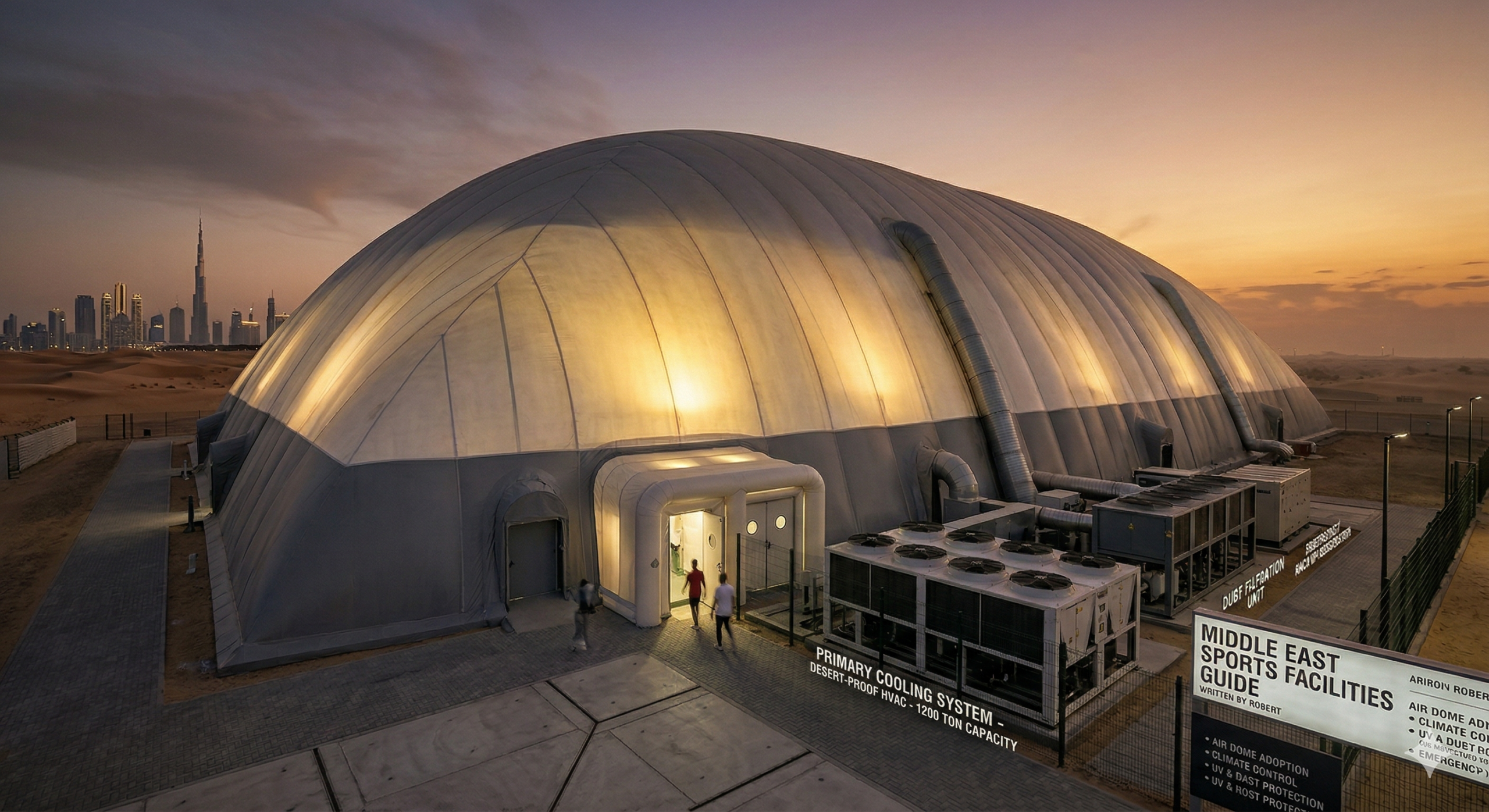
    You’re facing unique challenges when planning sports facilities in the Middle East that most architects never encounter elsewhere. Between 113°F summer temperatures, relentless UV exposure, and sand storms that can damage traditional structures, you’ll need specialized solutions that go far beyond standard construction approaches. Air domes have emerged as the preferred choice across Dubai, Abu Dhabi, and Doha, but the real question isn’t whether to use them—it’s how to maximize their potential while managing the substantial costs involved.

    Why Middle East Sports Facilities Choose Air Domes

    When temperatures soar beyond 45°C (113°F) and sandstorms sweep across the desert, you’ll find that traditional outdoor sports facilities become virtually unusable for months at a time.

    That’s why you’re seeing rapid adoption of middle east air dome solutions across the region.

    Your middle east sports dome provides extensive protection against UV radiation, dust infiltration, and extreme heat. You can maintain comfortable temperatures between 20-25°C (68-77°F) year-round, ensuring consistent playability regardless of external conditions.

    Unlike permanent structures, you’ll benefit from faster installation and lower initial investment costs.

    UAE indoor sports facilities in Dubai, Abu Dhabi, and Doha are leading this transformation.

    You’ll discover that air domes offer the perfect balance of luxury amenities and practical climate control that Middle Eastern sports facilities demand.

    Air Dome Costs: Import Fees and Installation Budgets

    You’ll face significant import tariffs when bringing air dome materials into Middle East markets, with fees varying by country and equipment type.

    Your installation costs will depend on several key factors including site preparation, specialized cooling systems, and local labor availability.

    These combined expenses typically make Middle East air dome projects 20-30% more expensive than similar installations in other regions.

    Import Tariff Breakdown

    Since air dome systems require specialized materials and technology rarely manufactured locally, import tariffs considerably impact your total project budget in Middle East markets.

    You’ll typically face 5-15% customs duties on structural components, with UAE and Qatar offering more favorable rates than other regional countries.

    For your Dubai sports facility project, expect additional 5% VAT plus clearance fees ranging $2,000-8,000 depending on shipment size.

    Steel framework components carry higher tariffs (10-15%) compared to membrane materials (5-8%).

    Cooling systems face the steepest import costs at 15-20% due to luxury goods classification.

    You can reduce expenses by sourcing through free trade zones in Dubai or Abu Dhabi, potentially saving 3-7% on total import costs while maintaining quality standards.

    Installation Cost Factors

    Beyond import duties, installation expenses represent your largest controllable cost variable when planning air dome construction in Middle Eastern markets.

    Your foundation work costs increase 30-40% due to extreme temperature requirements and specialized concrete mixes that withstand thermal expansion. You’ll need climate-controlled staging areas for equipment and materials, adding $15,000-25,000 to project budgets.

    Cooling system integration drives the highest installation premiums. Your HVAC infrastructure requires redundant systems, specialized ductwork, and emergency backup power – typically 60-80% more expensive than temperate climate installations.

    Local labor shortages in specialized trades like membrane welding and pneumatic systems push hourly rates 25-35% above regional averages.

    You’ll achieve cost control through pre-approved contractor networks, consolidated shipping schedules, and off-peak installation timing during cooler months when labor productivity peaks.

    Desert-Proof HVAC: Cooling Systems for 113°F Heat

    When temperatures soar past 113°F in desert climates, your sports facility’s HVAC system becomes the critical barrier between athletic performance and heat exhaustion. You’ll need specialized cooling solutions that go beyond standard air conditioning.

    System Type Cooling Capacity
    Evaporative Cooling Limited in high humidity
    Central Chiller Systems 500-2000 tons typical
    Hybrid Heat Pumps Energy-efficient option

    Your air dome facility requires redundant cooling systems to prevent catastrophic failure. Install backup chillers and emergency generators—you can’t afford downtime when athletes are inside. Consider thermal zoning to cool active areas more aggressively while maintaining comfortable temperatures in spectator zones. Smart controls automatically adjust based on occupancy and external temperatures, reducing energy costs while maintaining safety standards.

    UV and Dust Protection Technologies Explained

    While your cooling system battles extreme temperatures, your facility’s envelope must simultaneously defend against two other desert enemies: ultraviolet radiation and airborne dust.

    Air domes excel at both challenges, using specialized UV-resistant membranes that block harmful rays while maintaining interior lighting quality.

    You’ll need multi-layered filtration systems at entry points to prevent dust infiltration. HEPA filters capture particles as small as 0.3 microns, while pre-filters handle larger debris.

    Install positive air pressure systems to keep contaminants out during door openings.

    For UV protection, choose membrane materials with built-in UV stabilizers and reflective coatings. These reduce solar heat gain by up to 30% while preventing material degradation.

    Regular membrane inspections guarantee continued protection—desert conditions accelerate wear, making proactive maintenance essential for long-term facility performance.

    Dubai vs Abu Dhabi vs Doha Sports Markets

    You’ll find distinct approaches to sports facility development across these three major Gulf cities, each leveraging cutting-edge climate control technologies to combat extreme temperatures and environmental challenges.

    Dubai leads with extravagant luxury investments in enclosed sports complexes, while Abu Dhabi focuses on sustainable cooling solutions.

    Doha emphasizes tournament-ready venues with advanced air filtration systems.

    These markets are experiencing unprecedented growth as each city competes to become the region’s premier sports destination through massive infrastructure spending and technological innovation.

    Climate Control Technologies

    Although Dubai, Abu Dhabi, and Doha all face similar extreme heat challenges, each city’s sports facility market has developed distinct climate control approaches that reflect their unique economic priorities and infrastructure capabilities.

    You’ll find Dubai emphasizes luxury cooling systems with advanced air dome technology, targeting premium facilities that maintain 18-22°C year-round. Abu Dhabi focuses on energy-efficient solutions, leveraging renewable energy integration for sustainable temperature control. Doha prioritizes rapid deployment systems for major sporting events.

    Feature Dubai Abu Dhabi Doha
    Primary Focus Luxury cooling Energy efficiency Event-ready systems
    Temperature Range 18-22°C 20-25°C 22-26°C
    Cost Premium 40-60% above standard 25-35% above standard 30-50% above standard
    Technology Advanced air domes Solar-integrated HVAC Modular cooling units
    Market Position Premium facilities Sustainable venues Tournament-grade infrastructure

    Luxury Facility Investments

    Investment patterns across Dubai, Abu Dhabi, and Doha reveal dramatically different approaches to luxury sports facility development, with each emirate and city-state pursuing distinct strategies that reflect their broader economic visions.

    Dubai leads with tourism-focused venues, attracting international events through world-class tennis stadiums and golf courses. You’ll find premium amenities targeting wealthy visitors who expect exceptional experiences.

    Abu Dhabi emphasizes state-of-the-art Formula 1 circuits and cultural sports complexes, positioning itself as a sophisticated destination for elite competitions. Their investments prioritize long-term prestige over immediate returns.

    Doha’s approach centers on FIFA World Cup infrastructure, creating multipurpose facilities that’ll serve local communities post-tournament.

    You’re seeing smart investments in cooling technologies and adaptable spaces that maximize utility beyond major sporting events.

    These strategic investments have shaped three distinct market trajectories, each reflecting unique growth patterns and competitive advantages.

    Dubai’s established itself as the premium sports destination, leveraging its tourism infrastructure to attract international events and high-end facilities. You’ll find the most diverse range of air-domed complexes here, catering to both residents and visitors.

    Abu Dhabi’s taken a different approach, focusing on large-scale government-backed projects that emphasize cutting-edge technology and sustainability. Their facilities often feature the most advanced cooling systems and temperature control capabilities.

    Doha’s emerged as the ambitious newcomer, rapidly expanding its sports infrastructure through significant World Cup investments.

    You’ll notice their facilities prioritize dust control and UV protection more aggressively than their regional competitors, reflecting Qatar’s unique environmental challenges.

    Premium Air Dome Features for Luxury Facilities

    Luxury air dome facilities in the Middle East elevate the sports experience through cutting-edge climate control systems that maintain ideal temperatures even when outside conditions soar beyond 45°C (113°F). You’ll find these premium installations feature multi-zone cooling, advanced filtration systems, and smart humidity control that adapts to Dubai’s harsh desert environment.

    Premium Feature Luxury Benefit
    UV-blocking membrane 99% harmful ray protection
    HEPA air filtration Removes dust and allergens
    Zone-based cooling Customizable temperature control
    Smart automation Energy-efficient operation

    These high-end facilities incorporate LED lighting systems, premium flooring materials, and acoustic dampening for enhanced comfort. You’ll also discover integrated sound systems, VIP viewing areas, and automated entry systems that justify the significant investment costs typical in Abu Dhabi and Doha’s luxury sports markets.

    Year-Round Climate Control: Cooling and Heating Balance

    While premium features define luxury air dome experiences, maintaining ideal temperatures throughout the Middle East’s extreme seasonal variations requires sophisticated balancing systems that go beyond basic cooling.

    You’ll need dual-purpose HVAC systems that can efficiently handle temperatures ranging from 68°F to 113°F. During summer months, your primary focus shifts to aggressive cooling and dehumidification, while winter periods may require gentle heating in early morning sessions.

    Smart climate control features include:

    • Automated temperature zoning for different activity areas
    • Predictive cooling that adjusts before peak heat hours
    • Energy recovery ventilation to minimize cooling costs
    • Humidity control maintaining 40-60% relative humidity levels

    Your facility’s success depends on seamless shifts between heating and cooling modes, ensuring athletes perform comfortably regardless of external desert conditions while managing operational costs effectively.

  • Germany Sports Facility Market Guide

    Germany Sports Facility Market Guide

    You’re looking at a sports facility investment in Germany, but the cost differences between air domes and traditional structures might surprise you. While rigid buildings demand €300K+ upfront, air domes start around €150K—yet there’s more to this equation than initial pricing. TÜV certifications, DIN compliance, and energy efficiency mandates create a complex approval landscape that’ll directly impact your timeline and budget. Before you commit to either option, you’ll need to understand what these regulations actually mean for your project’s success.

    German Sports Facility Costs: €150K Air Domes vs €300K+ Rigid Structures

    When you’re evaluating sports facility options in Germany, you’ll find a stark cost difference between air dome and rigid structure solutions. A Germany air dome typically costs €150K-€400K for 2,000 square meters, while rigid fabric structures range from €300K-€800K for the same coverage area.

    You’ll notice that air domes offer significant upfront savings, costing roughly half of what you’d pay for permanent structures. However, Germans typically favor rigid constructions despite higher costs. This preference stems from their emphasis on long-term durability and energy efficiency standards.

    Your decision should factor in Germany’s strict technical requirements, including TÜV certification and DIN standards compliance.

    While air domes provide budget-friendly entry points, rigid structures align better with German market expectations for permanence and technical excellence.

    TÜV Certification Requirements: Meeting DIN Standards For Sports Buildings

    Beyond cost considerations, you’ll need to navigate Germany’s rigorous TÜV certification process for any sports facility project. TÜV inspectors evaluate your german sports facility against strict DIN standards covering structural integrity, safety systems, and environmental controls.

    DIN Standard Category Key Requirements
    Structural Safety (DIN 1055) Load calculations, wind resistance
    Fire Protection (DIN 4102) Emergency exits, sprinkler systems
    Ventilation (DIN 1946) Air quality, humidity control
    Electrical (DIN VDE 0100) Circuit protection, grounding
    Accessibility (DIN 18040) Barrier-free access compliance

    You’ll face multiple inspection phases: planning approval, construction monitoring, and final certification. Documentation must be submitted in German, and any non-compliance triggers costly redesigns. Budget additional time and resources for this mandatory process—it’s non-negotiable for operating legally.

    Energy Efficiency Standards That Impact Your Operating Costs

    Since Germany prioritizes long-term sustainability over short-term savings, you’ll encounter stringent energy efficiency requirements that directly affect your facility’s operational expenses.

    Germany indoor sports facilities must comply with the Building Energy Act (GEG), which mandates specific insulation values and heating system efficiency ratings.

    Your air dome will need advanced HVAC systems with heat recovery capabilities, potentially increasing initial costs by 15-20%. However, these systems reduce energy consumption by up to 40% annually.

    LED lighting systems are practically mandatory, while smart climate control systems help optimize temperature management.

    Renewable energy integration often becomes cost-effective due to government incentives. Solar panels and geothermal systems can offset operational costs within 8-12 years.

    Non-compliant facilities face hefty fines and increased insurance premiums, making efficiency investments financially prudent rather than optional.

    Air Dome Approval Process: From Planning To Construction Permits

    Germany’s complex approval process for air domes requires maneuvering through multiple regulatory layers before you can break ground.

    You’ll need to secure building permits from local authorities, who’ll scrutinize your structural engineering plans against strict DIN standards. The process typically takes 6-12 months, depending on your municipality’s efficiency and project complexity.

    Your sports dome germany project must pass these critical checkpoints:

    1. Structural analysis review – Engineers evaluate wind loads, snow loads, and emergency deflation scenarios.
    2. Fire safety compliance – Exit routes, sprinkler systems, and flame-resistant materials must meet specifications.
    3. Environmental impact assessment – Noise levels, drainage systems, and energy consumption calculations.

    You’ll work closely with TÜV-certified consultants throughout the approval phase.

    Budget additional time for revisions, as German authorities rarely approve plans on the first submission.

  • Canada Sports Dome Market Guide

    Canada Sports Dome Market Guide

    You’re considering an air dome for your Canadian facility, but you’ve likely heard the horror stories—collapsed structures after heavy snowfall, skyrocketing heating costs, and construction delays that stretch into winter. The reality is that most failures stem from choosing the wrong manufacturer or underestimating Canada’s unique requirements. Before you invest hundreds of thousands of dollars, there’s critical information about climate engineering, provincial regulations, and cost factors that could make or break your project.

    What Makes Air Domes Work In Canada’s Extreme Climate?

    When temperatures plummet to -30°F and snow loads reach 60 PSF across Canadian provinces, air domes must incorporate specialized engineering features that standard southern structures simply can’t handle.

    Your Canadian sports facility needs heavy-duty insulation systems that maintain consistent internal temperatures while fighting brutal external conditions. You’ll require dual-layer membrane systems with thermal barriers that prevent heat loss and condensation buildup.

    Snow load calculations become critical for your Canada air dome design, demanding reinforced fabric materials and enhanced air pressure systems.

    These structures integrate advanced heating systems with backup power sources to guarantee your Canadian indoor sports venue stays operational during power outages.

    Additionally, specialized anchoring systems resist freeze-thaw cycles that can compromise foundation integrity, while emergency deflation procedures protect against catastrophic weather events.

    Air Dome Costs And Financing Options By Province

    Air dome construction costs across Canadian provinces vary considerably, with your investment typically running 15-25% higher than comparable US facilities due to enhanced climate specifications and specialized materials.

    Ontario and Quebec dominate Canada indoor sports markets, where a standard tennis dome ranges $150,000-$400,000 depending on size and features. Alberta’s extreme weather conditions push costs higher, while Maritime provinces offer more moderate pricing.

    Your Canadian tennis dome requires reinforced membranes for 40-60 PSF snow loads and superior insulation systems.

    Provincial financing options include government sports infrastructure grants, municipal recreation funding, and specialized equipment leasing.

    Many operators secure 5-10 year financing terms through equipment lenders familiar with seasonal sports facilities. Tax incentives vary by province, with some offering accelerated depreciation for recreational infrastructure investments.

    Choosing The Right Canadian Air Dome Manufacturer

    Your manufacturer selection greatly impacts both upfront costs and long-term performance of your Canadian sports dome facility.

    Prioritize manufacturers with proven Canadian climate expertise, as they’ll understand local snow loads, insulation requirements, and extreme temperature challenges that range from -30 to 85°F.

    Farley Group leads the Canadian market from British Columbia, offering specialized knowledge of provincial building codes and weather conditions.

    When evaluating manufacturers, examine their portfolio of existing Canadian installations, warranty terms, and local service capabilities.

    Request references from facilities in similar climate zones to yours.

    Consider manufacturers who provide thorough packages including design, installation, and maintenance services.

    This guarantees accountability and streamlines project management.

    Verify they can handle your province’s specific snow load requirements of 40-60 PSF and understand local permitting processes for faster approvals.

    Before breaking ground on your Canadian sports dome project, you’ll need to secure proper building permits and guarantee full compliance with local codes. Each province maintains distinct requirements, with Ontario and Quebec enforcing the strictest standards due to their large dome markets.

    Your structure must meet National Building Code specifications for snow loads (40-60 PSF), wind resistance, and fire safety. Municipal zoning bylaws often dictate setbacks, height restrictions, and usage classifications.

    Permit Stage Timeline Impact
    Zoning approval 2-4 months delay
    Structural review 1-3 months delay
    Fire safety compliance 2-6 weeks delay
    Environmental assessment 3-8 months delay
    Final inspection 1-2 weeks delay

    Engage local engineers familiar with air-supported structures early. They’ll navigate provincial variations and expedite approvals, preventing costly construction delays.

    Installation Timeline And Winter Weather Considerations

    While securing permits sets your project timeline, Canada’s harsh winter climate greatly impacts when you can actually install your sports dome.

    You’ll want to schedule installation during warmer months, typically May through September, when temperatures stay above freezing and ground conditions allow proper foundation work.

    Winter installations aren’t impossible but they’re considerably more challenging and expensive.

    You’ll face frozen ground that requires special excavation equipment, limited daylight hours, and harsh weather that slows crew productivity.

    Snow loads during installation can stress partially completed structures.

    Plan your project 12-18 months ahead to secure ideal installation windows.

    If you’re forced into winter installation, budget an additional 20-30% for weather delays, specialized equipment, and extended heating costs during construction.

  • School Sports Dome Cost and Funding

    School Sports Dome Cost and Funding

    You’re looking at a $250,000 to $500,000 investment when you’re considering a sports dome for your school, but here’s what most administrators don’t realize upfront. The real challenge isn’t just the initial construction cost—it’s understanding which funding combinations actually work and how to position your project for maximum grant approval. Before you present anything to your school board, you’ll need to know exactly why some districts secure 70% state funding while others struggle with basic approval.

    How Much Does a School Sports Dome Cost?

    When you’re planning a school sports dome, expect to invest between $250,000 and $500,000 for a facility that accommodates 4-6 courts spanning 24,000 to 36,000 square feet.

    The school sports dome cost varies based on size, features, and site preparation requirements.

    You’ll find that school indoor facility cost depends on several factors including foundation work, electrical systems, and heating/cooling equipment.

    A standard basketball court measuring 50′ x 84′ fits comfortably within these dome structures, making them versatile for multiple sports.

    Understanding these price ranges helps you develop realistic budgets and explore school tennis dome funding options.

    The investment covers the dome structure itself, but remember to factor in additional expenses like permits, site work, and utility connections when calculating your total project costs.

    School Sports Dome Size and Court Configuration Guide

    Since most school sports domes accommodate 4-6 courts within 24,000 to 36,000 square feet, you’ll need to carefully plan your court configuration to maximize the facility’s potential.

    Standard basketball courts measuring 50′ x 84′ fit comfortably in most dome designs, allowing for proper spacing between playing areas and safety margins.

    When evaluating educational facility dome pricing, consider how court layout affects your total investment. A 4-court configuration typically requires 24,000 square feet and costs $250,000-$350,000, while 6-court setups need 36,000 square feet and range from $400,000-$500,000.

    You can configure courts for multiple sports including basketball, volleyball, and tennis. Smart planning allows you to stripe courts for different activities, maximizing versatility without increasing square footage costs.

    School Sports Dome Funding Options That Actually Work

    You’ll need a solid capital budget strategy that positions your dome project as essential infrastructure rather than a luxury addition.

    Grant applications become much more successful when you frame your dome as serving multiple community purposes beyond just athletics.

    Your funding approach should combine several sources – from municipal bonds to booster fundraising – rather than relying on a single revenue stream.

    Capital Budget Strategies

    Although securing funding for a school sports dome might seem challenging, successful districts rely on four proven capital budget strategies that consistently deliver results.

    You’ll need to start planning 3-5 years ahead since dome projects require extensive budgeting cycles. Most districts spread the $250K-$500K cost across multiple fiscal years, making the investment more manageable.

    Your strongest approach combines these three funding streams:

    1. Dedicated capital reserves – Set aside 15-20% annually from your capital improvement budget.
    2. Bond referendum timing – Align dome proposals with larger facility upgrades to maximize voter approval.
    3. Phased construction planning – Break the project into foundation, structure, and finishing phases.

    You’ll also want to leverage state infrastructure grants, which often favor multi-use facilities that serve both athletics and community needs year-round.

    Grant Application Success

    State infrastructure grants represent your most reliable funding source, but winning them requires a strategic approach that goes far beyond basic applications.

    You’ll need detailed architectural plans, community impact studies, and usage projections that demonstrate your dome’s necessity. Focus on multi-use benefits—show how your facility serves students, community recreation programs, and emergency shelter needs.

    Time your application strategically. Most states release funding announcements in January for fall decisions. Start preparing six months early with professional grant writers who understand education infrastructure requirements.

    Include letters of support from local officials, parent organizations, and community groups.

    Your strongest applications emphasize measurable outcomes: increased participation rates, improved academic performance through sports engagement, and quantifiable community health benefits.

    Don’t just request funding—prove why your school deserves priority consideration over hundreds of competing applications.

    How to Navigate Capital Improvement Budgets for Sports Domes

    You’ll need to start your capital improvement budget planning at least 18-24 months before construction, as school districts typically operate on multi-year budget cycles.

    The approval process requires presenting your $250K-$500K sports dome proposal to the school board with detailed cost breakdowns, space utilization plans, and community impact assessments.

    Smart cost allocation means spreading expenses across multiple budget categories like facilities maintenance, athletic programs, and educational infrastructure to maximize approval chances.

    Budget Planning Timeline

    Three to five years represents the typical timeline most school districts need for successfully planning and securing funding for a sports dome project.

    You’ll need patience and strategic planning to navigate this process effectively.

    Your budget planning should follow this structured approach:

    1. Year 1-2: Assessment and Initial Planning – Conduct feasibility studies, gather cost estimates ($250K-$500K for 4-6 court facilities), and begin community outreach to build support among stakeholders.
    2. Year 2-3: Funding Strategy Development – Identify funding sources including capital improvement budgets, state grants, municipal bonds, and coordinate with booster clubs for fundraising initiatives.
    3. Year 3-5: Implementation and Construction – Finalize architectural plans, secure permits, award contracts, and oversee construction of your 24,000-36,000 square foot facility.

    Approval Process Steps

    Once you’ve established your timeline and funding strategy, managing the formal approval process becomes your next priority.

    You’ll need to present your sports dome proposal to multiple stakeholders, starting with your school administration and moving through district-level committees.

    Prepare thorough documentation including cost breakdowns, architectural plans, and funding sources.

    School boards typically require detailed presentations showing how the $250K-$500K investment aligns with educational goals and budget constraints.

    If you’re pursuing municipal bonds or state grants, you’ll face additional regulatory requirements and public hearings.

    Create a stakeholder communication plan targeting parents, community members, and local officials.

    Address common concerns about maintenance costs and usage schedules upfront.

    Schedule facility tours of existing domes when possible, as visual demonstrations greatly improve approval rates and community support for capital improvement projects.

    Cost Allocation Strategies

    When school districts allocate $250K-$500K for sports dome construction, strategic budget navigation requires splitting costs across multiple funding categories.

    You’ll maximize your project’s financial viability by diversifying revenue streams rather than relying on single sources.

    Your cost allocation strategy should include:

    1. Capital improvement funds (40-60%) – Tap into existing district maintenance and infrastructure budgets for the largest portion.
    2. Community fundraising (20-30%) – Engage boosters, local businesses, and alumni for targeted donation campaigns.
    3. Grant opportunities (15-25%) – Pursue state education grants, municipal development funds, and federal community improvement programs.

    You can’t underestimate the importance of timing these funding mechanisms.

    Coordinate capital budget cycles with fundraising peaks and grant application deadlines.

    This synchronized approach guarantees you’ll secure necessary funding without creating budget shortfalls in other essential school programs.

    Booster Club Fundraising Strategies for School Sports Domes

    Since school sports domes require substantial capital investment of $250,000 to $500,000, booster clubs play an essential role in bridging funding gaps that traditional school budgets can’t cover. You’ll need strategic approaches to maximize your fundraising potential.

    Consider implementing naming rights programs, corporate sponsorships, and community events. Here’s a breakdown of effective strategies:

    Strategy Type Fundraising Potential Implementation Timeline
    Corporate Sponsorships $10,000-$75,000 6-12 months
    Naming Rights $25,000-$150,000 3-6 months
    Community Events $5,000-$25,000 2-4 months
    Brick/Tile Programs $15,000-$50,000 12-18 months
    Alumni Campaigns $20,000-$100,000 6-24 months

    You’ll maximize success by combining multiple strategies while maintaining transparent communication about project goals and timelines with your community stakeholders.

    State Grants and Municipal Bonds for School Sports Facilities

    While booster fundraising provides essential support, state grants and municipal bonds often serve as the primary funding mechanisms for school sports dome projects.

    You’ll find that state education departments frequently allocate millions through competitive grant programs specifically designed for athletic facility improvements. Municipal bonds represent another powerful financing tool, allowing your district to spread the $250K-$500K dome cost over 15-20 years with favorable interest rates.

    Key funding advantages you should consider:

    1. State grants typically cover 30-70% of total project costs without repayment requirements.
    2. Municipal bonds offer tax-exempt status, reducing overall borrowing costs considerably.
    3. Combined funding allows you to leverage multiple sources, minimizing local taxpayer burden.

    You’ll need to demonstrate community need, student enrollment projections, and long-term maintenance plans when applying for either option.

    Should Your School Build a Multi-Court Sports Dome?

    Understanding your funding options sets the foundation, but determining whether a multi-court sports dome makes sense for your school requires careful evaluation of several key factors.

    Factor Consideration
    Enrollment Size Schools with 800+ students typically need multiple courts
    Current Facilities Assess existing gym capacity and condition
    Program Demand Multiple sports teams requiring simultaneous practice space
    Climate Needs Year-round indoor access in harsh weather regions
    Budget Reality $250K-$500K investment plus ongoing maintenance

    You’ll need 24,000-36,000 square feet for a 4-6 court dome. Consider your athletic programs’ growth potential, community use opportunities, and whether you can sustain operational costs. If you’re currently turning away teams or canceling practices due to space constraints, a multi-court dome investment becomes more justifiable for your school’s long-term athletic development.

  • Air Dome ROI Calculator for Sports Facilities

    Air Dome ROI Calculator for Sports Facilities

    You can expect a complete return on your air dome investment within 2-5 years, with proven facilities generating $560,000 in revenue during just eight months of operation. Construction costs range from $1-4.6 million depending on your sport, while annual operating expenses stay low at $3-6 per square foot. You’ll benefit from 30% membership growth through year-round programming, plus additional income of $150K-$300K annually. The specifics of financing options and break-even calculations will help you maximize your facility’s profit potential.

    Air Dome ROI Basics: Investment Returns for Sports Facilities

    When you’re evaluating air dome investments for your sports facility, the financial returns consistently demonstrate compelling value across multiple revenue streams.

    Your air dome ROI calculations should factor in the proven $560,000 revenue generation achieved by single facilities in just eight months, alongside 30% membership growth from shifting seasonal operations to year-round programming.

    You’ll find comparable facilities consistently double their total revenue through expanded programming capabilities.

    The investment threshold sits in the mid-six-figure range, but you’re looking at construction costs 50-75% lower than permanent structures. The quick installation process of 2-14 days means your facility can begin generating revenue almost immediately after project approval.

    With $93,600 annualized profit potential and payback periods of 2-3 years for clubs, your facility gains 1,800 additional operational hours annually while eliminating weather-related cancellations that previously impacted revenue.

    Construction Costs by Sport: Tennis, Baseball, Soccer, and More

    Construction costs vary dramatically across sports, with your investment ranging from $1,000,000 for basic pickleball facilities to $4,600,000 for premium football domes. Understanding these variations helps you calculate accurate sports dome return on investment projections for your specific facility needs.

    Sport Construction Cost Range
    Pickleball $1,000,000 – $2,600,000
    Tennis $1,400,000 – $2,900,000
    Soccer $2,100,000 – $4,200,000
    Baseball $1,600,000 – $4,200,000
    Football $2,200,000 – $4,600,000

    Tennis and pickleball represent the most cost-effective entry points, while football commands premium pricing due to field size requirements. All costs include foundations, flooring, air-supported structures, lighting, and amenities. You’ll save 50-75% compared to traditional permanent structures while achieving faster installation timelines. Short lead times allow for functional buildings to be completed within months, significantly accelerating your facility’s revenue generation timeline.

    Financing and Revenue Strategies for Year-Round Facilities

    Smart financing transforms your air dome project from concept to profitable reality. You’ll access indoor facility revenue potential through diverse funding approaches that match your specific situation and goals.

    Traditional financing options include:

    1. Bank loans and specialized lenders – Grenke Leasing and LED.Finance offer tailored solutions for business facility projects.
    2. Government grant programs – UPARR assessments, CDBG funding, and NRPA grants provide public funding opportunities.
    3. Revenue-sharing partnerships – Private investors fund construction in exchange for revenue splits during contract periods.
    4. Community-based funding – Professional fundraising campaigns, crowdfunding platforms, and donor networks with naming rights incentives.

    For individuals pursuing smaller-scale projects, personal financing options are available up to $100,000 through specialized providers.

    You can also generate immediate revenue through multi-year team agreements, corporate sponsorships, advertising sales, and general community rentals to accelerate your payback timeline.

    Operating Expenses: Electricity, Maintenance, and Hidden Costs

    Understanding your air dome’s true operating costs prevents budget surprises and guarantees long-term profitability.

    You’ll face annual operating expenses of $3-$6 per square foot, with electricity comprising the largest component. A two-court dome consumes 83.2kW daily, costing approximately £12.48 for blowers and lighting combined.

    Your three-court facility operating four months annually averages $60,000-$80,000 in expenses. Air dome structures deliver electricity consumption that is 10%-25% of traditional structures, creating substantial savings compared to conventional buildings.

    Beyond electricity, you’ll encounter maintenance costs for air blower systems, LED lighting assemblies, HVAC equipment, and sports flooring replacement.

    Regional electricity rates and seasonal usage patterns greatly impact your bottom line. Winter heating demands increase energy consumption, while summer cooling affects HVAC costs.

    Sports dome profitability improves through motion-sensing lighting systems and intelligent climate controls that adjust operations based on weather conditions.

    Break-Even Timeline: When Air Domes Start Paying Off

    With operating expenses mapped out, you’ll want to know exactly when your air dome investment starts generating profit. The tennis bubble payback period typically ranges from 2-3 years for private clubs and 3-5 years for schools, depending on your facility’s utilization rates and local market conditions.

    Your break-even timeline depends on four critical factors:

    1. Initial investment size – Mid-six-figure investments require higher annual revenues to achieve quicker payback.
    2. Seasonal revenue boost – Year-round programming generates $150K-$300K additional annual income.
    3. Hourly rental rates – Tennis courts earning $60-$120/hour notably impact recovery speed.
    4. Operational efficiency – Lower operating costs at $3-$6 per square foot accelerate profitability.

    Most facilities reach profitability faster than traditional permanent structures due to lower construction costs and immediate revenue generation capabilities. Air domes offer quick setup advantages that allow facilities to start earning revenue almost immediately after installation.

    Frequently Asked Questions

    What Insurance Coverage Is Required for Air-Supported Dome Facilities?

    You’ll need liability, property, and casualty insurance for your air dome facility.

    Specialized coverage should include damage assessment for structural and mechanical equipment failure, plus weather-related protection against wind, snow, and storms.

    Your facility must comply with IBC Type II-B construction standards and A-4 occupancy classification.

    You’re required to conduct annual NFPA 102 inspections and biennial professional assessments to maintain insurance eligibility and favorable premium rates.

    How Do Extreme Weather Conditions Affect Dome Structural Integrity and Operations?

    You’ll find extreme weather considerably impacts your dome’s operations.

    High winds up to 120 mph are manageable with proper engineering, but you’ll need emergency deflation protocols for severe conditions.

    Snow loads can cause catastrophic collapse if your cable systems aren’t adequate.

    Temperature extremes require robust climate control – you’ll spend more on heating/cooling during harsh weather.

    Regular maintenance becomes critical, and you’ll need backup pressure systems to prevent complete deflation from membrane tears.

    Can Existing Outdoor Courts Be Converted to Air Dome Facilities?

    Yes, you can convert your existing outdoor courts to air dome facilities within just 5 days from foundation completion.

    You’ll need proper anchoring systems based on soil conditions and local wind codes, plus professional engineering assessment.

    The installation’s labor-intensive, requiring 20-30 workers, but you’ll transform your outdoor space into a weatherproof, all-season venue without extended delays.

    Your courts become climate-controlled with unobstructed interior space through continuous overpressure.

    What Permits and Zoning Approvals Are Needed for Dome Installation?

    You’ll need building permits with structural engineer-stamped designs as the primary requirement.

    Contact your building department first to confirm their specific requirements beyond engineer approval.

    You’ll also need zoning compliance verification, plus water and septic permits in most counties.

    Soil testing and site plans are mandatory.

    Your structural design must address local seismic zones, wind resistance, and snow loads based on your region’s extreme weather factors.

    How Does Dome Collapse Risk Impact Liability and Safety Protocols?

    You’ll face significant liability exposure during deflation events, requiring thorough safety protocols.

    Power loss creates immediate collapse risk, so you must install backup systems and real-time pressure monitoring.

    You’ll need emergency evacuation procedures since deflation, while gradual, can injure occupants.

    Insurance costs increase due to weather vulnerability and equipment damage risks.

    You must establish weather monitoring protocols, staff training programs, and structured assembly/disassembly procedures to minimize liability exposure.