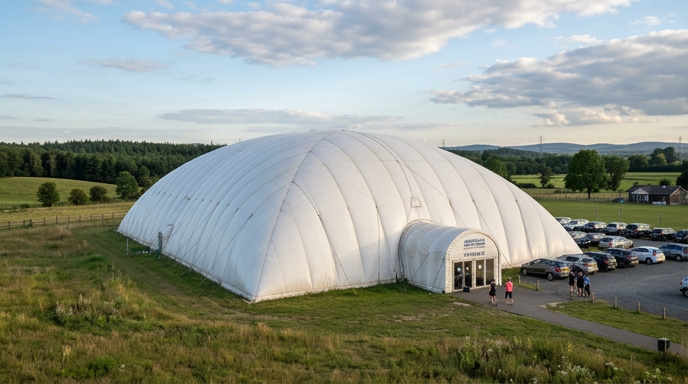
Tag: Sports infrastructure

  • South Africa Sports Dome Market

    South Africa Sports Dome Market

    You’re witnessing a transformation in South Africa’s athletic infrastructure as sports domes reshape how athletes train year-round. These climate-controlled facilities aren’t just solving weather challenges—they’re addressing critical gaps in urban sports development with investments that’ll surprise you. Whether you’re considering tennis, soccer, or netball applications, the financial and regulatory landscape presents both opportunities and complexities that could determine your facility’s success. The numbers behind these structures reveal more than you’d expect.

    South African Sports Dome Benefits: Heat Protection and Year-Round Training

    These structures enable year-round athletic development across tennis, netball, and soccer facilities.

    You won’t need to cancel training sessions due to extreme heat, thunderstorms, or seasonal weather changes that typically disrupt outdoor activities.

    Your athletes can maintain consistent training schedules, improving performance outcomes and reducing weather-related injuries.

    The controlled environment eliminates UV exposure concerns while providing ideal ventilation systems.

    You’ll maximize facility utilization throughout South Africa’s diverse climate patterns, from Johannesburg’s highveld conditions to Cape Town’s Mediterranean weather and Durban’s humid subtropical climate.

    Sports Dome Costs and Sizing: ZAR 1.5M-5M Investment Guide

    Sports dome investments in South Africa typically range from ZAR 1.5 million to ZAR 5 million, depending on your facility’s size and specifications.

    You’ll find smaller domes covering 700 square meters (7,535 sq ft) at the lower end, while larger facilities reaching 2,000 square meters (21,528 sq ft) command premium pricing.

    Your investment covers the complete air-supported structure, ventilation systems, and installation.

    For South African indoor sports facilities, you’re looking at approximately ZAR 2,100-2,500 per square meter for standard specifications.

    Premium features like advanced climate control or specialized flooring increase costs considerably.

    Consider your target sports when sizing your dome.

    Tennis courts need 600-800 sq m minimum, while soccer facilities require 1,500+ sq m.

    Netball courts fit comfortably in 500-700 sq m spaces, making them cost-effective options for smaller budgets.

    Tennis, Soccer, and Netball Applications in South African Domes

    Tennis facilities dominate South Africa’s sports dome market, requiring precise court dimensions of 36.6m x 18.3m with additional safety margins that bring your total space needs to approximately 40m x 22m per court.

    You’ll find most South African sports facility owners prioritize tennis domes due to consistent year-round demand and premium pricing potential.

    Soccer applications need larger spaces, typically 50m x 30m for five-a-side or 70m x 40m for seven-a-side formats.

    You’re looking at considerably higher construction costs but can accommodate more players simultaneously.

    Netball courts require 30.5m x 15.25m playing areas with safety margins bringing total needs to 34m x 19m.

    These domes offer excellent ROI in South Africa’s competitive netball market, especially near schools and clubs in Johannesburg, Cape Town, and Durban.

    SANS Building Standards and Installation Requirements

    Before you can install any sports dome in South Africa, you’ll need to comply with SANS (South African National Standards) building codes that govern structural integrity, ventilation, and safety requirements.

    These standards guarantee your sports dome south africa installation meets wind load specifications, fire safety protocols, and emergency exit provisions.

    You must submit detailed engineering drawings showing foundation designs, anchoring systems, and membrane specifications.

    SANS 10160 covers structural loading requirements, while SANS 10400 addresses building regulations including accessibility compliance.

    Your installer should provide certified calculations for wind resistance up to 120 km/h.

    Municipal approval processes vary between Johannesburg, Cape Town, and Durban, typically requiring 6-12 weeks.

    You’ll also need environmental impact assessments for larger installations exceeding 1,500 square meters, ensuring proper drainage and utilities integration.

  • Global Sports Dome Market Trends 2026

    Global Sports Dome Market Trends 2026

    You’re witnessing a transformation in how communities approach year-round sports facilities, and the numbers tell a compelling story. The global sports dome market isn’t just growing—it’s accelerating toward a $2.8 billion valuation by 2026, driven by climate unpredictability and technological breakthroughs that weren’t viable just five years ago. What’s particularly striking is how certain regions are capitalizing on this trend while others lag behind, creating unexpected opportunities for savvy investors who understand the underlying forces at play.

    Sports Dome Market Size Hits $2.8 Billion By 2026

    The global sports dome market is accelerating toward a $2.8 billion valuation by 2026, driven by an impressive annual growth rate of 8-12%.

    You’ll find this sports facility market growth stems from increasing climate concerns forcing year-round indoor alternatives, rising sports participation rates, and expanding commercial opportunities within covered facilities.

    The international air dome market benefits from technological advances in energy-efficient materials and smart building integration systems.

    You’re seeing significant expansion in emerging markets, particularly Asia and the Middle East, where extreme weather conditions make climate-controlled sports environments essential.

    Multi-sport designs are becoming standard, allowing facilities to maximize revenue streams.

    Solar integration and IoT monitoring systems are reducing operational costs, making these investments more attractive to developers and municipalities seeking sustainable sports infrastructure solutions.

    Why Asia-Pacific Leads Global Sports Dome Growth?

    As urbanization accelerates across Asia-Pacific, you’re witnessing the region capture the largest share of global sports dome installations due to its unique combination of extreme weather patterns, rapid economic development, and massive population density.

    Countries like China, Japan, and South Korea are driving this expansion with government investments in sports infrastructure and hosting major international events.

    You’ll find that monsoons, typhoons, and air quality issues make indoor facilities essential year-round.

    The region’s tech-savvy approach embraces worldwide indoor facility trends like IoT monitoring and smart building integration.

    Rising disposable incomes fuel demand for premium sports experiences, while limited urban space makes multi-sport domes highly attractive.

    Asia-Pacific’s 8-12% annual growth rate notably outpaces other regions, positioning it as the market’s primary growth engine.

    Smart Sports Dome Technology Reduces Operating Costs 40

    You’ll cut your sports dome operating costs by up to 40% when you integrate smart technology systems.

    IoT monitoring sensors track everything from temperature and humidity to equipment performance, giving you real-time data to optimize facility operations.

    Energy management solutions automatically adjust lighting, heating, and ventilation based on occupancy and usage patterns, eliminating waste and maximizing efficiency.

    IoT Monitoring Systems

    While traditional sports domes rely on manual monitoring and reactive maintenance, IoT systems transform facility management through real-time data collection and automated responses.

    You’ll gain instant visibility into temperature, humidity, air quality, and energy consumption across your entire facility. Smart sensors continuously track HVAC performance, lighting usage, and structural integrity, alerting you to potential issues before they become costly problems.

    You can remotely adjust climate controls, optimize energy distribution, and schedule maintenance based on actual usage patterns rather than guesswork.

    IoT platforms integrate seamlessly with existing building management systems, providing dashboards that display key performance metrics in real-time. This data-driven approach enables predictive maintenance strategies, reducing unexpected equipment failures by up to 60% while extending asset lifecycles considerably.

    Energy Management Solutions

    Smart energy management systems can slash your sports dome’s operating costs by up to 40% through intelligent automation and real-time enhancement.

    These systems integrate with your existing HVAC, lighting, and equipment infrastructure to create dynamic energy profiles that adapt to usage patterns and environmental conditions.

    You’ll benefit from predictive algorithms that anticipate peak demand periods and automatically adjust power consumption during off-peak hours.

    Smart thermostats maintain ideal playing conditions while minimizing energy waste, and LED lighting systems respond to natural light levels and occupancy sensors.

    Advanced energy management platforms provide detailed analytics showing your facility’s consumption patterns, identifying inefficiencies, and recommending improvements.

    Many systems offer demand response capabilities, allowing you to participate in utility programs that provide financial incentives for reducing energy usage during grid stress periods.

    IoT And Solar Integration Transform Sports Dome Performance

    You’ll find that modern sports domes now combine IoT sensors with solar panels to create intelligent facilities that monitor everything from temperature to energy consumption in real-time.

    These smart energy management systems automatically adjust lighting, ventilation, and heating based on usage patterns and weather conditions, dramatically cutting operational expenses.

    You’re seeing facilities generate their own sustainable power while simultaneously tracking performance metrics that optimize both energy efficiency and user experience.

    Smart Energy Management Systems

    As energy costs continue climbing worldwide, sports dome operators are turning to intelligent management systems that merge IoT sensors with solar technology to slash operational expenses by up to 40%.

    You’ll find these systems automatically adjust lighting, heating, and ventilation based on real-time occupancy data and weather conditions.

    Smart controllers enhance solar panel output while managing battery storage to maximize self-consumption during peak usage hours.

    You’re seeing predictive analytics that anticipate maintenance needs before equipment failures occur, reducing downtime and repair costs.

    These integrated platforms provide mobile dashboards where you can monitor energy consumption, indoor air quality, and system performance remotely.

    Advanced algorithms learn usage patterns and automatically schedule energy-intensive operations during off-peak hours, delivering substantial savings while maintaining ideal playing conditions.

    Real-Time Performance Monitoring

    How effectively can you track your sports dome’s performance across dozens of interconnected systems simultaneously? Modern IoT sensors now deliver thorough real-time monitoring that transforms facility management.

    You’ll receive instant data on energy consumption, HVAC efficiency, lighting performance, and structural conditions through centralized dashboards.

    Smart monitoring systems detect equipment failures before they occur, reducing maintenance costs by 25-30%. You can optimize energy usage by tracking solar panel output against consumption patterns, automatically adjusting lighting and climate controls.

    Temperature sensors throughout your dome guarantee consistent playing conditions while minimizing energy waste.

    Advanced analytics help you identify peak usage periods, enabling dynamic pricing strategies and resource allocation.

    Integration with mobile apps allows remote monitoring, letting you manage multiple facilities efficiently.

    This data-driven approach maximizes operational efficiency while enhancing user experience across your sports dome network.

    Sustainable Power Generation

    While traditional sports facilities drain massive amounts of electricity from the grid, modern sports domes generate their own clean energy through integrated solar systems that can offset 60-80% of operational costs.

    You’ll find these installations feature flexible photovoltaic panels that conform to dome curvatures, maximizing energy capture throughout the day.

    Smart inverters automatically switch between solar power, battery storage, and grid electricity based on real-time demand. You can monitor energy production through IoT dashboards that track performance metrics and predict maintenance needs.

    Advanced systems include micro-inverters for individual panel optimization and battery banks for peak-hour energy storage.

    This integration transforms sports domes from energy consumers into near-neutral facilities, reducing operational expenses while supporting sustainability goals that attract environmentally conscious users and sponsors.

    Multi-Sport Design Features Maximize Revenue Streams

    Modern sports dome designs increasingly incorporate flexible layouts that accommodate multiple activities, enabling facility owners to maximize utilization rates and diversify revenue streams throughout the year.

    You’ll find removable court lines, adjustable netting systems, and modular flooring that transform basketball courts into soccer fields, tennis courts, or event spaces within hours.

    Smart scheduling systems help you optimize bookings across different sports and activities. You can host youth leagues in the morning, adult recreational games in the evening, and corporate events on weekends.

    Many facilities generate additional revenue through fitness classes, birthday parties, summer camps, and tournaments.

    Convertible spaces also attract long-term rental agreements with schools and sports organizations. This flexibility reduces seasonal revenue fluctuations while maximizing your facility’s earning potential year-round.

    Climate-Controlled Sports Domes Replace Outdoor Venues

    As extreme weather events become more frequent and unpredictable, you’re seeing sports facilities shift from traditional outdoor venues to climate-controlled domes that guarantee consistent playing conditions year-round. You’ll find these enclosed structures offering precise temperature control, humidity management, and protection from rain, snow, and extreme heat.

    Weather Challenge Outdoor Impact Dome Solution
    Rain/Snow Cancellations Uninterrupted play
    Extreme Heat Player safety risks Ideal 68-72°F
    High Winds Equipment disruption Stable environment
    UV Exposure Health concerns Filtered lighting
    Humidity Performance decline Controlled 40-60%

    You’re investing in facilities that eliminate weather-related cancellations while extending playing seasons. These domes maintain consistent air quality and lighting, creating professional-grade conditions that attract tournaments and boost revenue streams through reliable scheduling.

    Commercial Sports Dome Investment Returns In 2026

    Since sports dome facilities generate multiple revenue streams simultaneously, you’re looking at impressive investment returns averaging 12-18% annually by 2026.

    Your dome can host youth leagues, adult recreation, tournaments, corporate events, and birthday parties throughout the week. Smart operators you’ll compete with are maximizing off-peak hours through fitness classes, summer camps, and equipment rentals.

    You’ll see faster payback periods in high-density markets where outdoor field availability is limited.

    Energy-efficient designs with solar integration reduce your operational costs by 30-40%, boosting profitability. Multi-sport configurations let you capture diverse customer segments year-round.

    The strongest returns come from facilities offering premium amenities like climate control, LED lighting, and digital booking systems.

    You’re fundamentally creating a weather-proof sports entertainment hub that operates 365 days annually.

    While investment returns drive dome ownership decisions, construction innovations are revolutionizing how these facilities get built and perform. You’re seeing smart building integration become standard, with IoT sensors monitoring temperature, humidity, and energy consumption in real-time. Solar panel integration now reduces operating costs by 30-40% annually.

    Traditional Construction Modern Innovation
    Single-sport design Multi-sport adaptability
    Basic HVAC systems Smart climate control
    Standard materials Energy-efficient composites

    Multi-sport designs maximize your facility’s revenue potential, allowing basketball courts to convert into soccer fields within hours. Energy-efficient materials and automated systems reduce maintenance costs while improving user experience. These construction trends guarantee your dome remains competitive as the market grows 8-12% annually through 2026.
  • Asia Sports Dome Market Analysis

    Asia Sports Dome Market Analysis

    You’re witnessing Asia’s sports dome market transform into a $1.2 billion opportunity by 2028, but here’s what most investors don’t realize: China’s commanding 40% market share isn’t just about volume—it’s reshaping how the entire region approaches weather-independent sports infrastructure. While Japan’s premium positioning and Korea’s massive $2.3 billion investment grab headlines, the real story lies in the unexpected profit margins that tennis and badminton facilities are generating across tier-two cities.

    Asia Sports Dome Market Reaches $1.2B by 2028

    Three major economies are driving Asia’s sports dome market toward an unprecedented $1.2 billion valuation by 2028.

    You’ll find China leading this explosive growth, with china sports dome installations rapidly expanding across tier-one and tier-two cities. The rising middle class is fueling demand for premium indoor tennis and badminton facilities.

    Japan’s established market maintains steady growth, with japan indoor sports facilities adhering to strict JIS standards.

    You’re seeing consistent investment in multi-sport complexes ranging from 1,000 to 3,000 square meters.

    Korea’s emerging market presents significant opportunities as sports participation increases.

    The asia air dome sector benefits from growing urbanization and weather-independent facility demand.

    You’ll notice costs varying dramatically between countries, but the overall trajectory points toward sustained expansion across all three markets.

    China’s 40% Market Share Drives Regional Growth

    China’s dominance becomes even more pronounced when examining specific market share data, with the country capturing 40% of Asia’s entire sports dome sector. You’ll find this growth driven by massive infrastructure investments and rising middle-class participation in sports like tennis and badminton.

    Country Market Share Growth Rate
    China 40% 12.5%
    Japan 25% 3.2%
    Korea 15% 8.7%
    Others 20% 6.1%

    China’s asian sports facility expansion focuses on multi-sport complexes averaging 2,000-3,000 square meters. You’re seeing unprecedented demand from tier-two cities, where local governments prioritize sports infrastructure development. This market leadership positions China as the regional trendsetter, influencing design standards and facility management practices across neighboring markets.

    Japan’s Premium Sports Dome Market Commands Higher Margins

    While China dominates through volume, Japan’s sports dome market operates on an entirely different model that prioritizes quality over quantity.

    You’ll find Japanese facilities adhering to strict JIS standards, creating premium environments that justify higher pricing structures. This established market focuses heavily on tennis and badminton facilities, where you can charge premium rates for superior construction quality and advanced climate control systems.

    Your margins in Japan typically exceed other Asian markets by 15-25% due to customers’ willingness to pay for proven reliability and safety compliance.

    The mature market means you’re dealing with sophisticated buyers who understand long-term value propositions. You’ll need to meet exacting specifications, but this translates into sustained profitability and repeat business opportunities that China’s price-competitive environment rarely offers.

    Korea Invests $2.3B in Sports Infrastructure Development

    Korea’s unprecedented $2.3 billion commitment to sports infrastructure development creates massive opportunities for dome manufacturers targeting the growing middle-class market.

    You’ll find that Korea’s rising sports participation rates drive demand for tennis, badminton, and multi-sport facilities ranging from 1,000-3,000 square meters.

    You can capitalize on this growth, but you’ll face local manufacturing competition and different technical standards than neighboring Japan’s JIS requirements.

    Korea’s expanding middle class increasingly prioritizes recreational sports activities, creating sustained demand for quality indoor facilities.

    You should prepare for cost variations across different Korean regions while adapting your products to local preferences.

    The government’s infrastructure investment timeline spans five years, giving you multiple entry points to establish market presence and build relationships with Korean developers and sports facility operators.

    Tennis and Badminton Domes Generate Highest ROI

    You’ll find tennis and badminton domes consistently outperform multi-sport facilities in revenue generation per square meter across Asia’s major markets.

    These specialized structures operate with 20-30% lower maintenance costs than larger venues while maintaining higher utilization rates throughout peak hours.

    Your investment returns improve dramatically when you target the growing middle-class demand for premium racquet sports facilities in urban centers.

    Revenue Per Square Meter

    Tennis and badminton domes consistently deliver the strongest revenue per square meter across Asia’s sports facility market, with operators reporting returns 25-40% higher than multi-sport complexes. You’ll find these specialized facilities generate premium pricing due to consistent year-round demand and higher booking frequencies.

    Country Tennis Revenue/sq m Badminton Revenue/sq m Multi-Sport Revenue/sq m
    China $85-120 $75-105 $55-75
    Japan $110-165 $95-140 $70-95
    Korea $90-135 $80-115 $60-85

    Your revenue optimization depends on maximizing court utilization during peak hours. Japan’s established market commands highest rates, while China’s growing middle class creates volume opportunities. Korea offers balanced growth potential with moderate pricing expectations for specialized dome facilities.

    Operational Cost Efficiency

    While multi-sport complexes require diverse equipment maintenance and specialized staff across various disciplines, tennis and badminton domes achieve excellent operational cost efficiency through streamlined operations and standardized requirements.

    You’ll find these single-sport facilities demand fewer specialized technicians, simplified inventory management, and consistent climate control parameters.

    China’s tennis domes report 15-20% lower operational costs compared to multi-sport venues of similar size. You can maximize efficiency by implementing automated court booking systems and LED lighting retrofits, reducing energy consumption by 40%.

    Japanese facilities excel at preventive maintenance schedules, extending equipment lifecycles considerably.

    Your staffing requirements remain predictable—you’ll need fewer cross-trained personnel.

    Korea’s badminton domes demonstrate ideal cost structures through standardized court dimensions and unified equipment specifications. This operational simplicity translates directly into higher profit margins and faster payback periods for investors.

    Market Demand Drivers

    Beyond operational advantages, specific market forces drive exceptional returns for tennis and badminton dome investments across Asia. You’ll find these sports dominate facility usage patterns, generating consistent revenue streams through court rentals, coaching programs, and tournament hosting.

    Rising middle-class populations across China, Japan, and Korea create expanding customer bases willing to pay premium rates for climate-controlled playing conditions. You’re positioned to capitalize on year-round demand that traditional outdoor facilities can’t match.

    Market Driver Impact on ROI
    Premium court fees 40-60% higher rates
    Year-round usage 300+ operating days
    Corporate bookings Stable revenue base

    Tennis and badminton facilities typically achieve 70-85% utilization rates in major Asian markets, remarkably outperforming multi-sport configurations that struggle with scheduling conflicts and equipment management complexities.

    Local Manufacturers Undercut International Prices by 50

    As international dome manufacturers enter Asian markets, they’re discovering that local competitors consistently offer prices 40-60% below international rates.

    You’ll find this pricing gap stems from several key factors that make competing on cost alone nearly impossible. Local manufacturers benefit from considerably lower labor costs, reduced material transportation expenses, and streamlined supply chains.

    They’ve also adapted their production processes to meet regional standards like Japan’s JIS requirements without the overhead of international compliance systems. Additionally, you’re facing competitors who understand local procurement practices, payment terms, and relationship-building expectations that international companies often overlook.

    This pricing pressure forces you to differentiate through superior technology, faster installation times, extensive warranties, or specialized features that local manufacturers can’t easily replicate.

    Rising Incomes Boost Sports Facility Demand Across Asia

    You’ll find that Asia’s expanding middle class is driving unprecedented demand for premium sports facilities, with families now willing to invest in year-round indoor venues.

    Sports participation rates are climbing sharply as disposable incomes rise, particularly in China and Korea where badminton and tennis memberships have doubled in major cities.

    You’re witnessing a fundamental shift where sports domes aren’t luxury amenities anymore—they’re becoming essential infrastructure for communities that can finally afford quality recreational spaces.

    Middle Class Growth Impact

    Rising disposable incomes throughout Asia are fundamentally reshaping the sports facility landscape, with expanding middle-class populations demanding higher-quality recreational venues.

    You’ll find that China’s massive economic growth has created unprecedented demand for premium sports domes, particularly for tennis and badminton facilities.

    Japan’s established middle class continues driving steady demand for sophisticated multi-sport complexes that meet JIS standards.

    Korea’s rapidly growing middle class is fueling expansion in the 1,000-3,000 square meter facility range.

    You’re witnessing families prioritize sports participation as discretionary spending increases, creating opportunities for developers who understand local preferences.

    However, you’ll need to navigate varying cost structures and manufacturing competition across different markets.

    The key is recognizing that Asia’s middle-class expansion directly translates to sustained sports facility investment.

    Multiple demographic shifts are converging to drive unprecedented sports participation across Asia, with tennis and badminton leading the surge in facility demand.

    You’ll find China’s urbanization creating millions of new recreational athletes, while Japan’s aging population increasingly values low-impact sports for health maintenance.

    Korea’s competitive culture fuels year-round training demand, particularly for badminton and multi-sport facilities.

    You’re seeing participation rates climb 15-20% annually across major Asian markets as disposable incomes rise.

    Traditional sports like badminton benefit from cultural familiarity, while tennis grows among younger demographics seeking Western-style recreation.

    Climate-controlled domes become essential as players demand consistent, weather-independent access.

    This participation boom directly translates to facility demand, with operators requiring 1,000-3,000 square meter spaces to accommodate peak usage periods and diverse programming needs.