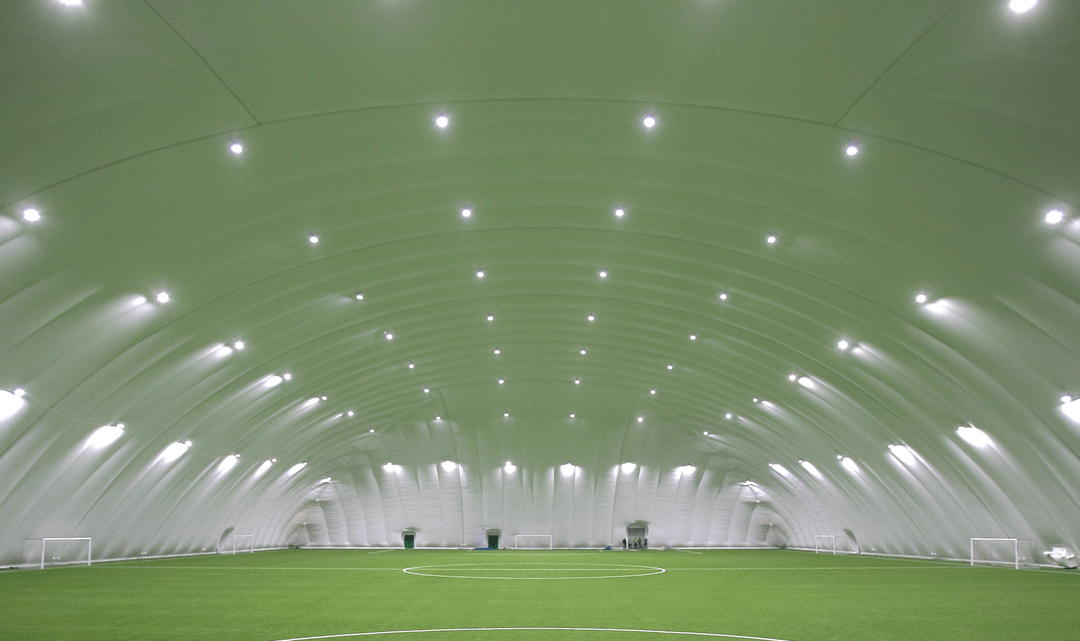
You’re looking at months of cancelled practices and frustrated players when harsh weather hits your football program. An air dome facility could transform your training schedule, but you’ll need to understand the significant differences between full and partial field options, height requirements that affect play quality, and installation costs that vary dramatically by location. The decision you make now will determine whether your team maintains competitive edge year-round or continues losing valuable practice time.
What Are Football Practice Air Domes And Their Key Benefits?
Football practice air domes are large, inflatable structures that provide teams with dedicated indoor training space regardless of weather conditions.
You’ll find these football practice domes offer year-round accessibility, protecting your team from rain, snow, wind, and extreme temperatures that typically disrupt outdoor sessions.
Your indoor football facility maintains consistent playing conditions, allowing uninterrupted skill development and strategic preparation.
The controlled environment eliminates weather-related cancellations, maximizing practice time during vital training periods.
You’ll benefit from extended seasons, particularly in regions with harsh winters or unpredictable weather patterns.
These football training domes accommodate full-field dimensions with sufficient height for punting and kicking drills.
You can customize the space with portable goal posts and essential turf surfaces, creating an authentic playing environment that enhances player performance and maintains competitive readiness throughout the season.
Football Air Dome Size Guide: Full Field Vs Partial Field Dimensions
When selecting your football air dome dimensions, you’ll choose between full field specifications at 160′ x 360′ (48.8m x 110m) or partial field options like the 120′ x 270′ (36.6m x 82.3m) configuration that works well for high schools.
Full field dimensions accommodate complete game simulations and allow teams to practice all formations without space constraints. You’ll need 60’+ (18.3m+) ceiling height for punts and kicks, with optional end zones depending on your budget and available land.
The 3/4 field football air dome offers significant cost savings while maintaining essential practice capabilities. This smaller configuration works perfectly for skill development, scrimmages, and conditioning.
High schools find this size ideal because it provides adequate space for most drills while reducing construction and operational expenses substantially.
Height And Surface Requirements For Football Air Dome Performance
Beyond selecting the right footprint for your air dome, you’ll need to focus on two performance factors that directly impact practice quality: ceiling height and surface materials.
Your dome’s height determines what football activities you can accommodate. You’ll need a minimum of 60 feet (18.3m) to handle punts and field goal practice effectively.
Anything lower restricts your training options and forces players to adjust their natural kicking trajectories.
The surface choice is equally critical. Turf isn’t optional—it’s essential for proper football practice.
Natural grass won’t survive the controlled indoor environment, while concrete or hard surfaces create injury risks.
Quality synthetic turf provides consistent footing, proper ball bounce, and the realistic playing conditions your team needs for effective skill development and conditioning.
Football Air Dome Costs: Price Factors And Budget Breakdown
Since your air dome’s functionality depends heavily on proper specifications, understanding the associated costs becomes your next priority. Several key factors directly impact your total investment, from size requirements to surface preparation needs.
Your dome’s dimensions represent the largest cost variable. Full-field installations require considerably more materials and engineering than three-quarter field options. Foundation preparation, electrical systems, and HVAC equipment add substantial expenses beyond the dome structure itself.
| Cost Component | Price Range |
|---|---|
| Full Field Dome (160′ x 360′) | $800K – $1.2M |
| 3/4 Field Dome (120′ x 270′) | $500K – $750K |
| Installation & Site Prep | $150K – $300K |
You’ll also need to budget for ongoing operational costs including utilities, maintenance, and insurance. These annual expenses typically range from $50,000 to $100,000 depending on your dome’s size and local utility rates.
Football Air Dome Installation: Process, Timeline, And Requirements
Installation complexity makes football air dome projects demanding undertakings that require careful coordination between multiple specialists.
You’ll need to navigate foundation preparation, utility connections, and structural assembly while managing weather dependencies and regulatory approvals.
The installation process typically follows these key phases:
- Site Preparation (2-4 weeks) – Foundation excavation, utility trenching, and concrete pad installation requiring proper drainage and electrical infrastructure.
- Dome Assembly (1-2 weeks) – Membrane attachment, blower system installation, and pressurization testing with specialized crews and equipment.
- Interior Finishing (1-3 weeks) – Turf installation, goal post setup, lighting connections, and HVAC system commissioning.
You should expect a 6-10 weeks total timeline, depending on your facility size and local permitting requirements.
Weather delays can extend schedules considerably during winter months.