Author: Robert

  • Alternative ieftine de construcție pentru facilități sportive: structuri textile și dome pneumatice

    Alternative ieftine de construcție pentru facilități sportive: structuri textile și dome pneumatice

    Construcția unei hale sportive tradiționale din beton și metal costă, în România, între 500 și 1.200 €/m². Există alternative structurale cu costuri de 3 până la 5 ori mai mici, cu timpi de execuție de câteva săptămâni în loc de ani.


    Ce este o structură pneumatică (dom de aer)?

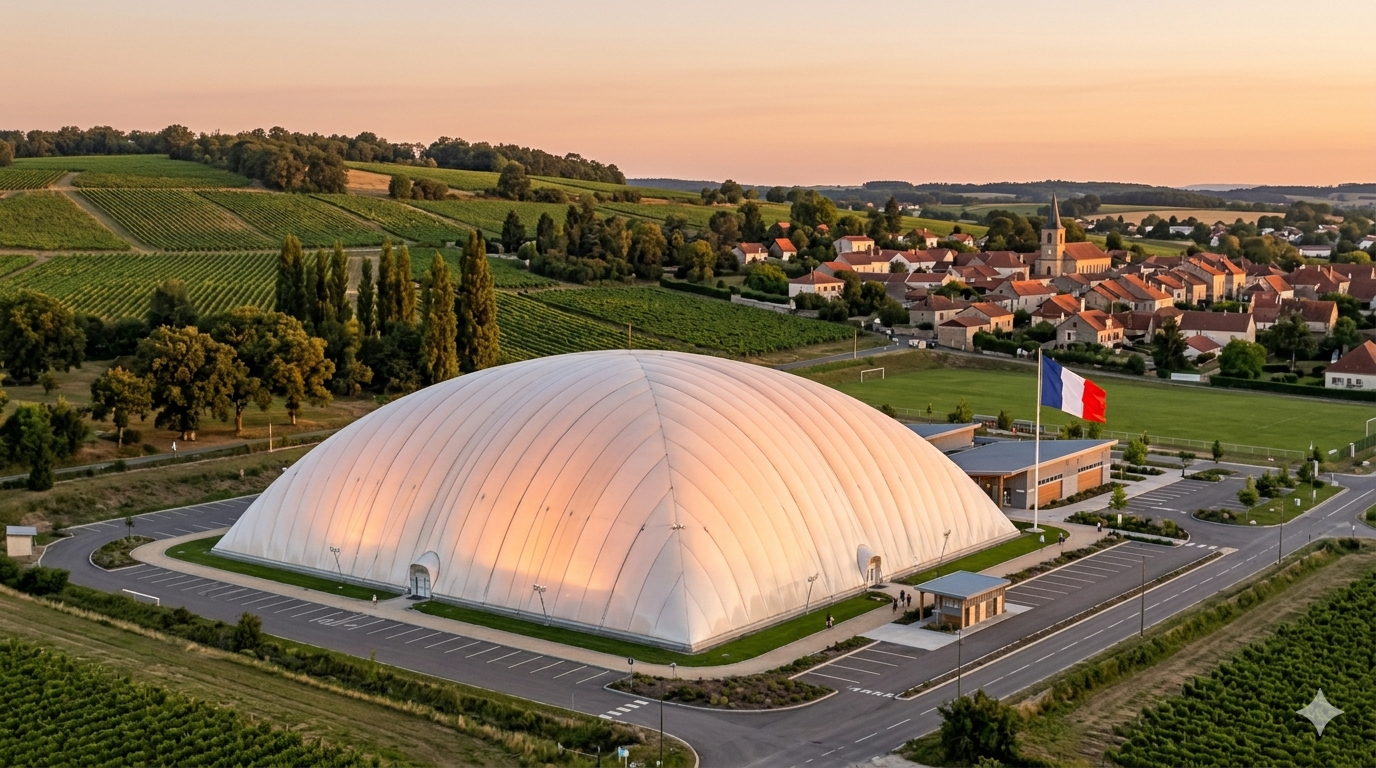
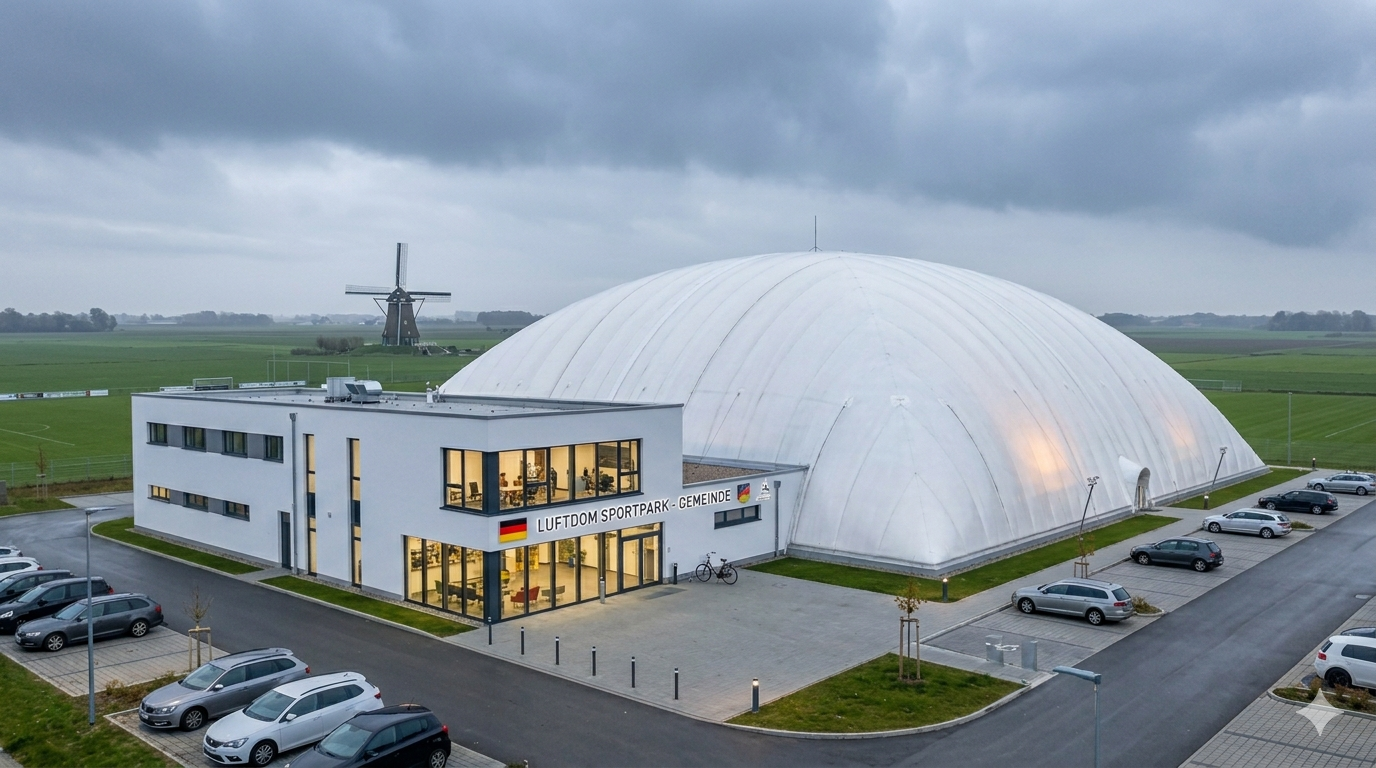
    Un dom pneumatic este o membrană din PVC-poliester, ancorată pe un radier sau pe tirfoane în sol, menținută în formă prin suprapresiune interioară ușoară (30–50 Pascal). Avantaje tehnice: – Spațiu interior complet liber de stâlpi – Instalare în 1–3 săptămâni – Reutilizabil și relocalizabil – Certificat pentru zăpadă ≥ 50 kg/m² și vânt ≥ 120 km/h – Membrană din PVC ignifugat (clasa B-s2, d0 conform EN 13501)


    Comparație: costuri de construcție (România, 2026)

    Tip de structurăCost/m²Cost proiect 2.000 m²
    Hală sportivă tradițională600–1.200 €/m²1.200.000–2.400.000 €
    Dom pneumatic simplu (sezonier)80–130 €/m²160.000–260.000 €
    Dom pneumatic dublu (permanent)140–240 €/m²280.000–480.000 €
    Structură tensilă pe cadru metalic180–320 €/m²360.000–640.000 €

    Un dom pneumatic costă 15–35% față de o hală sportivă convențională.


    Izolarea termică a structurilor textile

    Tip membranăValoarea URecomandare
    Membrană simplă~5,0 W/m²KDepozitare, utilizare sezonieră climă temperată
    Membrană dublă cu strat de aer1,5–2,5 W/m²KDomele sportive sezon rece România
    Membrană dublă cu izolație0,6–1,2 W/m²KDomele permanente, climă continentală

    Calcul de amortizare: izolație vs economii energie (dom 2.000 m², România)

    ParametruMembrană simplăMembrană dublă
    Cost suplimentar membrană0 € (baza)+60.000 €
    Consum anual gaz280.000 kWh120.000 kWh
    Cost anual gaz (0,06 €/kWh)16.800 €/an7.200 €/an
    Perioadă de amortizare~6,2 ani

    Aplicații în România

    Cluburi de tenis: bulă sezonieră (octombrie–aprilie) — cost 110.000–180.000 €, termen recuperare 2–4 ani.

    Padel: dom 4 terenuri (28 × 60 m) — investiție 200.000–380.000 €, venituri 80.000–160.000 €/sezon la 65% ocupare.

    Primării și infrastructură publică: eligibile prin CNI, Ministerul Sportului, PNRR (componenta tranziție verde).


    Autorizare în România

    TipClasificareNecesită
    Dom sezonierConstrucție temporarăAutorizație de construire temporară, CE structurală
    Dom permanentConstrucție permanentăAutorizație de construire, DTAC aprobat
    Structură tensilăConstrucție permanentăAutorizație de construire, calcul structural PE atestat

    HeroX AirDomes proiectează și instalează domuri pneumatice și structuri textile pentru sport în România, Europa, Regatul Unit, SUA și Emiratele Arabe Unite.
  • Rendement berekenen voor een sportfaciliteit met luchtdom: complete gids (2026)

    Rendement berekenen voor een sportfaciliteit met luchtdom: complete gids (2026)

    Een luchtdom is een van de meest kostenefficiënte manieren om binnenruimte voor sport te realiseren. Maar de juiste investeringsbeslissing vereist een helder beeld van zowel de opbrengsten als de kosten.


    Investering: wat kost een luchtdom in Nederland?

    Type accommodatieOppervlakSeizoensdomPermanent dom
    Tennisbubbel 2 banen~1.000 m²€100.000–€165.000€160.000–€275.000
    Tennisdom 4 banen~2.000 m²€185.000–€340.000€300.000–€550.000
    Padelhal 4 banen~1.700 m²€155.000–€280.000€250.000–€460.000
    Multisportdom~3.500 m²€310.000–€580.000€500.000–€950.000
    Voetbaldom (grote veld)~9.500 m²€850.000–€1.600.000€1.300.000–€2.600.000

    Rendement berekenen: de formule

    Netto jaarresultaat = Totale omzet − Exploitatiekosten Terugverdientijd = Investering ÷ Netto jaarresultaat


    Omzetbenchmarks per sport (Nederland)

    SportPiektarief (€/uur)Daluren (€/uur)
    Tennis€22–€50€12–€28
    Padel€25–€55€15–€32
    Voetbal (5-a-side)€60–€130€35–€70

    Rekenvoorbeeld: 4-baanstennisdom (permanent, Nederland)

    • Investeringskosten: €520.000 | Exploitatiekosten: €75.000/jaar
    • Totale jaaromzet: ~€395.000 | Netto jaarresultaat: ~€320.000
    • Terugverdientijd: ~1,6 jaar (optimistisch scenario)
    • Realistisch (55–65% bezetting): terugverdientijd 2,5–4 jaar

    Rekenvoorbeeld: 4-baanspadelhal (seizoensgebonden, 6 maanden)

    • Investeringskosten: €280.000 | Seizoensexploitatiekosten: €45.000
    • Netto seizoensresultaat: €115.000
    • Terugverdientijd: ~2,4 jaar

    Bezettingsgraad: de meest kritische variabele

    BezettingsgraadNetto jaarresultaat (4 tennisbanen)Terugverdientijd
    45%€80.000–€120.0004–6 jaar
    60%€130.000–€200.0002,5–4 jaar
    75%€200.000–€320.0001,5–2,5 jaar

    Subsidiemogelijkheden in Nederland

    NOC*NSF / Nationale Sportraad, gemeentelijke sportsubsidies, ISDE (investeringssubsidie duurzame energie), SDE++-regeling.


    Vergunningen

    • Seizoensgebonden: vergunningplicht afhankelijk van gemeente en duur.
    • Permanent: omgevingsvergunning vereist, constructieve berekening conform Eurocode, brandveiligheidstoets.

    HeroX AirDomes ontwerpt, fabriceert en installeert luchtgedragen membraanconstructies voor sport in Nederland, Europa, het Verenigd Koninkrijk, de VS en de VAE.

    Keywords: luchtdom Nederland, sportbubbel Nederland, luchtdom kosten Nederland, tennisdom Nederland, padelhal luchtdom, luchtdom rendement, luchtdom terugverdientijd, luchtdom investering, bezettingsgraad sporthal, luchtdom subsidie Nederland, luchtdom vergunning, omgevingsvergunning luchtdom, voetbaldom Nederland, multisportdom Nederland, luchtdom ROI, sportfaciliteit luchtdom, luchtdom exploitatiekosten, luchtdom seizoen, luchtdom permanent.

  • Sportdom als Geschäftsmodell: Hallenvermietung planen und rentabel betreiben

    Sportdom als Geschäftsmodell: Hallenvermietung planen und rentabel betreiben

    Ein Luftdom ist mehr als eine überdachte Sportstätte. Richtig betrieben, ist er ein Geschäftsmodell mit vergleichsweise geringem Kapitaleinsatz, kurzen Amortisationszeiten und hoher Flexibilität.


    Das Grundprinzip: Fläche in Buchungsstunden verwandeln

    Jahresumsatz = Buchbare Stunden × Auslastung × Stundensatz


    Welche Sportarten eignen sich für Hallenvermietung?

    SportartStoßzeitenStundensatz (Spitze, DE)
    TennisAbend, Wochenende25–70 €/Court
    Fußball (5-a-side)Abend60–140 €/Platz
    PadelAbend, Wochenende25–60 €/Court
    Volleyball / BasketballAbend50–120 €/Feld
    Leichtathletik-TrainingMorgen, Nachmittag80–200 €/Stunde

    Investitionskosten (schlüsselfertig, ohne Bodenbelag)

    AnlageFlächeSaisonalPermanent
    Tennisblase 2 Courts~1 000 m²100.000–165.000 €160.000–280.000 €
    Tennisdom 4 Courts~2 000 m²185.000–340.000 €300.000–550.000 €
    Mehrzweckdom (Fußball + Courts)~3 500 m²310.000–580.000 €500.000–950.000 €
    Fußballdom 11 gegen 11~9 500 m²850.000–1.600.000 €1.300.000–2.600.000 €

    Betriebskosten pro Jahr (2.000 m², Deutschland)

    KostenpositionJahreskosten
    Energie (Ventilatoren + Heizung + Beleuchtung)22.000–55.000 €
    Wartung und Inspektionen6.000–15.000 €
    Versicherung4.000–12.000 €
    Gesamt (ohne Personal)32.000–82.000 €/Jahr

    Geschäftsmodelle Hallenvermietung

    • Modell 1: Reine Flächenvermietung — Online-Buchungssystem, geringe Personalkosten.
    • Modell 2: Trainings- und Akademieangebote — planbare Wiederholungsumsätze.
    • Modell 3: Ligabetrieb und Turniere — 3- bis 5-fache Einnahmen vs. Standard-Platzvermietung.
    • Modell 4: Mitgliedschaften — wiederkehrender Monatsumsatz.

    Amortisation

    AnlageInvestitionJahresnettogewinnAmortisation
    Tennisblase 2 Courts (saisonal)130.000 €50.000–100.000 €1,5–3 Jahre
    Tennisdom 4 Courts (permanent)420.000 €100.000–250.000 €2–4 Jahre
    Padel 4 Courts (saisonal)260.000 €90.000–180.000 €1,5–3 Jahre
    Mehrzweckdom (permanent)700.000 €130.000–300.000 €3–5 Jahre

    Fördermöglichkeiten

    DOSB / Landessportbünde, KfW-Programme, Bundesförderprogramm Nationale Projekte des Städtebaus, EU-Strukturfonds (EFRE). Ein gut ausgearbeiteter Förderantrag kann 15–35% der Investitionssumme abdecken.


    HeroX AirDomes plant und installiert Luftdome für Sport und Gewerbe in Deutschland, Europa, dem Vereinigten Königreich, den USA und den VAE.

    Keywords: Luftdom Deutschland, Sportdom Geschäftsmodell, Hallenvermietung Luftdom, Tennisblase Deutschland, Padel Dom Deutschland, Fußballdom Deutschland, Luftdom Kosten Deutschland, Luftdom Amortisation, Luftdom Betriebskosten, Luftdom Förderung, Luftdom Baugenehmigung, fliegende Bauten Deutschland, Sporthallenmiete, Luftdom Investition, Luftdom ROI, Tennisdom kaufen, Sportanlage überdachen, Mehrzweckdom Deutschland.

  • Structures gonflables durables : guide complet pour les équipements sportifs

    Structures gonflables durables : guide complet pour les équipements sportifs

    Les structures gonflables — également appelées dômes pneumatiques, bulles de sport ou structures à membrane souple — représentent une solution de plus en plus plébiscitée pour créer des espaces sportifs couverts pérennes, à moindre coût et dans des délais réduits par rapport à la construction traditionnelle.

    Ce guide présente les caractéristiques, les coûts, la durabilité et les applications concrètes des structures gonflables durables pour le sport.


    Qu’est-ce qu’une structure gonflable durable ?

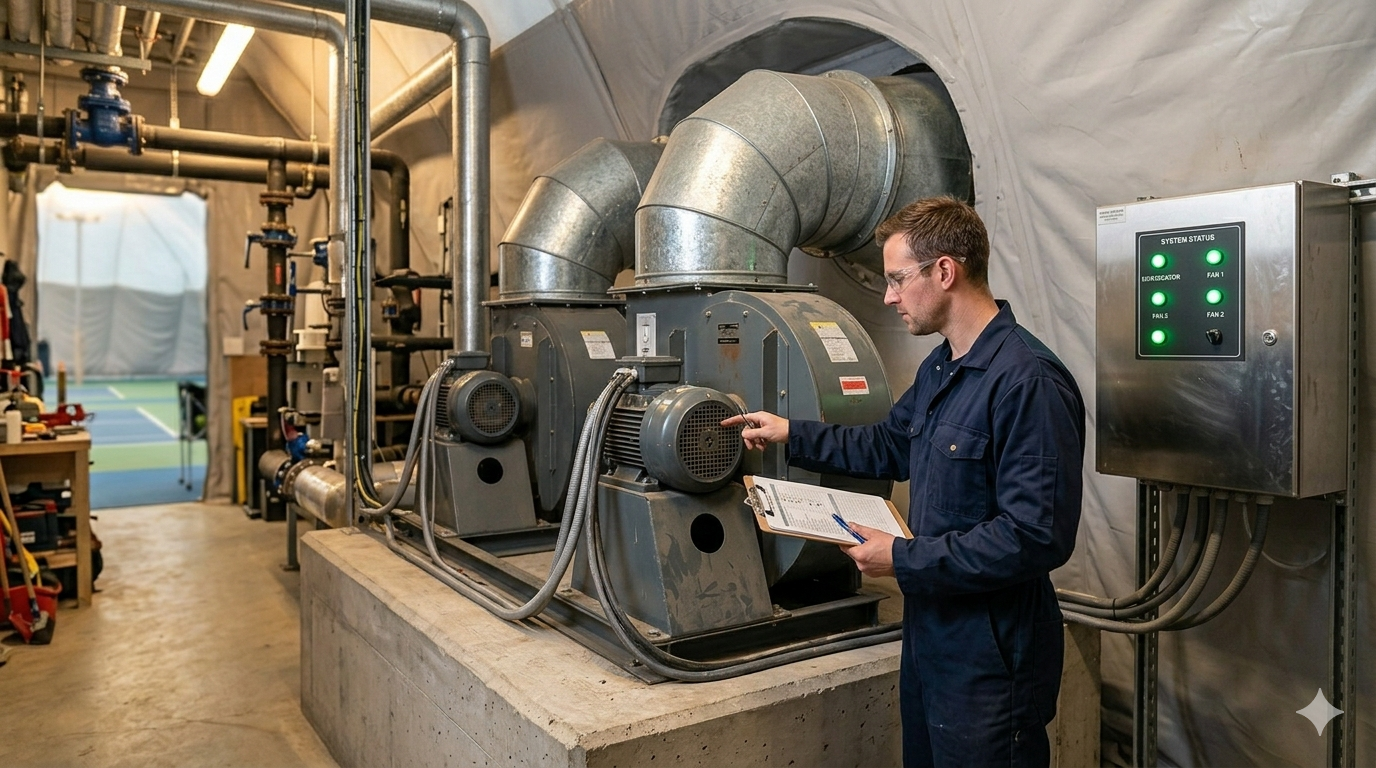
    Une structure gonflable sportive est une enveloppe en membrane PVC tendue, maintenue par une légère surpression intérieure d’environ 30 à 50 pascals au-dessus de la pression atmosphérique. Des ventilateurs industriels fonctionnent en continu pour maintenir cette pression. L’entrée se fait par un sas pressurisé.

    Contrairement aux structures gonflables événementielles temporaires, les dômes sportifs durables sont : – Conçus pour une utilisation permanente (20 à 30 ans) – Certifiés pour des charges de neige de 50 à 100 kg/m² et des vents supérieurs à 120 km/h – Équipés de systèmes CVC performants, d’éclairage LED sportif et d’accès sécurisés – Conformes aux réglementations de construction nationales (Eurocode en France)


    Durabilité : combien de temps durent ces structures ?

    Type de membraneDurée de vie estimée
    Polyéthylène (PE)10 à 15 ans
    PVC enduit polyester (standard)20 à 30 ans
    PVC architecture (PVDF)25 à 35 ans

    Coûts : ce que vous payez réellement

    Coût d’investissement (projet clé en main, hors revêtement de sol)

    Type d’équipementSurfaceDôme saisonnierDôme permanent
    Bulle de tennis 2 courts~1 000 m²100 000–160 000 €155 000–270 000 €
    Dôme tennis 4 courts~2 000 m²180 000–330 000 €290 000–530 000 €
    Dôme multi-sport~3 500 m²300 000–560 000 €480 000–900 000 €
    Grand dôme football 11~9 000 m²800 000–1 500 000 €1 250 000–2 500 000 €

    Coût au mètre carré

    Spécification€/m²
    Simple peau saisonnière80 à 130 €/m²
    Double peau isolée (standard)140 à 240 €/m²
    Triple peau haute performance220 à 380 €/m²

    À titre de comparaison, la construction d’un bâtiment sportif traditionnel en France coûte généralement 700 à 1 500 €/m². Un dôme pneumatique représente donc 15 à 25 % du coût d’un équipement permanent équivalent.


    Coûts de fonctionnement annuels

    PosteDôme 2 000 m², climat tempéré
    Énergie (ventilateurs + chauffage + éclairage)22 000–50 000 €/an
    Maintenance et inspections5 000–14 000 €/an
    Assurance4 000–12 000 €/an
    Main-d’œuvre saisonnière (dôme saisonnier)10 000–25 000 €/an
    Total (dôme permanent, hors personnel)31 000–76 000 €/an

    Points de vigilance avant l’achat

    • Certification des calculs de structure (bureau d’études OPQIBI ou équivalent)
    • Classement au feu minimum M2
    • Redondance des ventilateurs (minimum 2 avec basculement automatique)
    • Permis de construire : structures > 20 m² maintenues > 3 mois sont soumises à déclaration

    HeroX AirDomes conçoit, fabrique et installe des structures à membrane souple pour le sport en Europe, au Royaume-Uni, aux États-Unis et aux Émirats arabes unis.

    Keywords: structure gonflable sportive, dôme pneumatique, bulle de sport, dôme tennis France, coût dôme sportif, membrane PVC, dôme saisonnier, dôme permanent, structure gonflable durable, bulle tennis prix, dôme multi-sport, coût construction halle sportive, durée de vie membrane, permis de construire dôme, classement feu membrane, dôme padel France, dôme football France, Eurocode structure gonflable, CVC dôme sportif

  • Air Dome Annual Running Costs: What Operators Actually Spend

    Air Dome Annual Running Costs: What Operators Actually Spend

    Annual running costs vary significantly based on dome size, climate, energy specification, and whether the structure operates seasonally or year-round.


    The five categories of annual operating cost

    1. Energy (pressurisation, heating, cooling, lighting)
    2. Maintenance and inspections
    3. Insurance
    4. Seasonal labour (seasonal domes only)
    5. Staff and management

    1. Energy costs

    Energy is typically 50–70% of total annual operating costs.

    Pressurisation (blower energy)

    Dome sizeBlower draw (kW)Annual consumption (kWh)Annual cost (US)Annual cost (UK)
    1,000 m²5–8 kW44,000–70,000 kWh$5,000–$10,000£7,000–£14,000
    2,000 m²9–14 kW79,000–123,000 kWh$9,000–$18,000£13,000–£25,000
    5,000 m²18–28 kW158,000–245,000 kWh$19,000–$35,000£26,000–£49,000
    10,000 m²32–50 kW280,000–438,000 kWh$34,000–$63,000£46,000–£88,000

    Inverter-driven blowers reduce energy consumption by 20–35% versus fixed-speed units.

    Heating

    A 2,000 m² double-skin dome in the UK operating year-round: approximately £18,000–£38,000/year in heating. Upgrading from single-skin to double-skin typically pays back the upgrade cost within 3–6 years in a cold climate.

    Lighting (LED sports, 350–500 lux)

    Dome sizeAnnual cost (US)Annual cost (UK)
    1,000 m²$6,000–$12,000£6,000–£12,000
    2,000 m²$10,000–$22,000£10,000–£22,000
    5,000 m²$22,000–$45,000£22,000–£45,000

    Total energy cost benchmarks (all sources combined)

    ScenarioPer m² per year
    Moderate climate, double-skin£14–£28 / $18–$36
    Cold climate, double-skin£20–£40 / $26–$52
    Cold climate, single-skin£45–£70 / $58–$90

    2. Maintenance and inspections

    Annual maintenance budget benchmarks:

    Dome sizeAnnual maintenance budget
    Under 1,500 m²£3,000–£8,000 / $4,000–$10,000
    1,500–4,000 m²£6,000–£18,000 / $8,000–$22,000
    Over 4,000 m²£14,000–£40,000 / $18,000–$50,000

    Major maintenance events: – Blower replacement (every 15–20 years): £10,000–£40,000 / $12,000–$50,000 – Membrane replacement (year 10+): £40,000–£90,000 / $50,000–$110,000 for a 2,000 m² dome


    3. Insurance

    Annual insurance benchmarks:

    Dome size and typeUK annual premiumUS annual premium
    Small seasonal bubble (1,000 m²)£2,000–£5,000$2,500–$7,000
    Mid-size permanent dome (2,500 m²)£5,000–£14,000$6,500–$18,000
    Large sports complex (7,000 m²+)£12,000–£35,000$15,000–$45,000

    4. Seasonal labour (seasonal domes only)

    Dome sizeAnnual install + removal cycle
    2-court tennis bubble (~1,000 m²)£8,000–£18,000 / $10,000–$22,000
    4-court dome (~2,000 m²)£14,000–£30,000 / $18,000–$38,000
    Large seasonal dome (4,000+ m²)£25,000–£60,000 / $32,000–$75,000

    After 10 years, a seasonal dome will have spent £140,000–£300,000 on installation and removal cycles alone.


    5. Staff and management

    • Fully staffed facility: £40,000–£70,000 / $50,000–$90,000/year.
    • Self-service with online booking: £15,000–£30,000 / $18,000–$38,000/year.

    Total annual cost summary (permanent dome, moderate climate)

    Cost category1,000 m²2,000 m²5,000 m²
    Energy£20,000–£38,000£35,000–£65,000£75,000–£140,000
    Maintenance£4,000–£8,000£7,000–£15,000£16,000–£35,000
    Insurance£3,000–£7,000£5,500–£13,000£12,000–£30,000
    Total (excl. staff)£27,000–£53,000£47,500–£93,000£103,000–£205,000

    How to reduce running costs: five highest-impact actions

    1. Upgrade to double-skin insulation in cold climates.
    2. Install inverter-driven blowers (save 20–35% pressurisation energy).
    3. Fit LED lighting from day one.
    4. Install an energy management system (save 10–20% on energy bills).
    5. Negotiate a fixed-rate commercial energy contract.

    HeroX AirDomes provides detailed running cost modelling as part of the feasibility process for every project.

    Keywords: dome running costs, dome operating costs, dome energy costs, dome maintenance costs, dome insurance, dome blower energy, dome heating cost, dome lighting cost, dome seasonal labour, dome staff costs, dome annual cost, dome cost per square metre, dome pressurisation cost, dome inverter blower, dome insulation savings, dome energy management, dome membrane replacement, dome blower replacement, air dome expenses

  • How to Maximise Revenue at an Indoor Sports Dome: The Operator’s Playbook

    How to Maximise Revenue at an Indoor Sports Dome: The Operator’s Playbook

    The facilities that generate the best returns are rarely the ones with the biggest domes or the lowest construction costs. They are the ones with the most disciplined approach to programming, pricing, and revenue diversification.


    The fundamental economics

    An indoor sports dome has a fixed cost base regardless of usage. Every unsold peak hour is revenue that cannot be recovered.


    Revenue stream 1: Court and pitch hire

    Rate benchmarks:

    SportPeak rate (US)Off-peak rate (US)Peak rate (UK)Off-peak (UK)
    Tennis (per court/hr)$35–$120$20–$60£18–£100£10–£50
    Pickleball (per court/hr)$25–$90$15–$50£20–£50£12–£30
    Football 5-a-side (per pitch/hr)£55–£120£30–£70
    Padel (per court/hr)$30–$80$18–$45£30–£65£18–£40

    Key tactics: dynamic pricing (yield management), block bookings (offer 10–15% discounts for 10-week commitments), and booking software (CourtReserve, PlaySight, Club Automation).


    Revenue stream 2: Leagues and competitions

    Leagues are the highest ROI revenue stream for most operators.

    Tournament revenue (4-court tennis open, 64 players):

    Income itemAmount
    Entry fees$4,800
    Food and drink$500–$1,500
    Sponsor logos$500–$2,000
    Total$6,000–$9,100

    vs standard weekend hire: $1,440. Tournament revenue is 4–6× standard hire for the same hours.


    Revenue stream 3: Coaching and academy programmes

    Staff coaching model: charge market rates ($60–$150/hr tennis US; £40–£100/hr UK). Margin per session: 40–65%.

    Franchise / licence model: external coaches pay slightly below rack rate (80–90%). Zero management overhead.

    A 20-week junior tennis academy on 2 courts: – 24 students × $350 = $8,400 total – Net contribution after court costs: $5,400


    Revenue stream 4: Memberships

    Membership typeMonthly feeValue proposition
    Open access (off-peak only)$80–$150Unlimited weekday daytime play
    Priority booking$140–$2507-day advance peak access
    Family membership$200–$3502 adults + children
    Corporate membership$500–$1,5004 named users, invoiced monthly

    Revenue stream 5: Schools and education partnerships

    Block contract with 3 local schools (2 × 2-hour sessions/week): – £28,800 guaranteed income over a 32-week academic year – Uses off-peak slots that would otherwise be empty


    Revenue stream 6: Corporate and events

    A 2-hour corporate pickleball/tennis event for 12 people: – Court hire + equipment + food/drink = $680 total – vs $330 standard hire (50–100% premium for exclusive use)


    Revenue stream 7: Fitness and non-sport programming

    Bootcamp (6am–8am), yoga (mid-morning), HIIT, children’s multi-activity — block-hire to external fitness operators is the simplest model.


    Revenue stream 8: Sponsorship and naming rights

    Perimeter LED panels: £2,000–£10,000/year. Court naming: £5,000–£25,000/year. A mid-size dome can generate £15,000–£50,000/year in sponsorship at maturity.


    Programming sequence: how to build a full facility

    • Months 1–3: Court hire only. Fill peak slots.
    • Months 3–6: Launch leagues. Convert hirers to weekly returners.
    • Months 6–12: Introduce membership.
    • Year 2: Schools, corporate, academies.
    • Year 3+: Dynamic pricing, sponsorship, secondary revenue.

    HeroX AirDomes works with clients throughout the feasibility, design, and post-installation phases to model revenue potential.

    Keywords: dome revenue maximisation, indoor sports dome revenue, dome operator playbook, dome court hire, dome leagues, dome tournaments, dome academy programme, dome membership, dome school partnership, dome corporate bookings, dome sponsorship, dome dynamic pricing, dome yield management, dome programming strategy, dome off-peak revenue, dome fitness classes, dome naming rights, dome block bookings, dome revenue diversification

  • Sports Dome ROI Analysis: Break-Even, Payback, and Revenue Scenarios (2026)

    Sports Dome ROI Analysis: Break-Even, Payback, and Revenue Scenarios (2026)

    The most important question any prospective dome operator asks is whether the investment will actually pay back. The short answer: yes — for the right facility in the right market with the right programming.


    How to think about dome ROI

    Net annual profit = Total revenue − Operating costs Payback period = Capital cost ÷ Net annual profit


    Revenue benchmarks by sport

    Tennis (per court, per hour)

    MarketPeak rateOff-peak rate
    London / New York£60–£110 / $70–$130£30–£60 / $35–$75
    Regional UK cities£20–£40£12–£22
    US suburban markets$25–$60$15–$35

    Football / Soccer (per pitch, per hour)

    Pitch typePeak rate (UK)Peak rate (US)
    5-a-side£55–£120$60–$140
    11-a-side£120–£280$130–$300

    Pickleball (per court, per hour)

    MarketDrop-in rateCourt hire rate
    US suburban$8–$20 per player$25–$60 per court
    US urban$12–$30 per player$40–$90 per court

    Padel (per court, per hour)

    MarketPeak rateOff-peak rate
    UK£30–£65£18–£40
    Spain / France / Germany€20–€45€12–€28

    Revenue model: 4-court tennis dome (US suburban, year-round)

    • Capital cost: $520,000 | Operating costs: $70,000/year
    • Weekly total revenue: ~$9,870
    • Annual gross: ~$513,000
    • Net annual profit: ~$445,000
    • Payback period: ~14 months (high-utilisation scenario)
    • Conservative scenario (55–60% utilisation): net profit $200,000–$280,000, payback 2–3 years

    Revenue model: soccer dome, 11-a-side (UK, year-round)

    • Capital cost: £1,600,000 | Annual operating costs: £160,000
    • Annual gross: £365,000 | Net profit: £205,000
    • Payback: ~7.8 years (adding tournaments and academies reduces to 5–6 years)

    Revenue model: 4-court pickleball dome (US suburban, seasonal)

    • Capital cost: $380,000 | Annual operating costs: $55,000
    • Total seasonal revenue: ~$280,000 | Net profit: $225,000
    • Payback: ~1.7 years

    Realistic ROI ranges by dome type

    Dome typeCapital costNet annual profit rangePayback range
    2-court seasonal tennis bubble$160,000–$250,000$60,000–$130,0001.5–3.5 yrs
    4-court year-round tennis dome$500,000–$800,000$150,000–$400,0002–5 yrs
    4-court pickleball dome (seasonal)$300,000–$500,000$130,000–$280,0001.5–3 yrs
    Multi-sport dome (5-a-side + courts)$700,000–$1,400,000$150,000–$400,0003–6 yrs
    11-a-side soccer dome (year-round)$1,200,000–$2,500,000$100,000–$300,0005–10 yrs

    What drives the biggest variance in payback period

    1. Utilisation rate — every 10% additional utilisation changes annual net profit by $40,000–$150,000.
    2. Programming vs pure rental — leagues, academies, and tournaments consistently outperform court-hire-only models.
    3. Peak/off-peak ratio — monetising daytime weekday slots dramatically improves unit economics.
    4. Capital cost per m² — cheapest dome is not necessarily best ROI.
    5. Energy cost — specification decisions (skin count, heat pump, LED) have large financial impact.

    Payback period most operators achieve

    • Top quartile (high demand, strong programming, high utilisation): 1.5–3 years
    • Median (good market, moderate programming, 60–70% utilisation): 3–5 years
    • Bottom quartile (weaker market, rental-only): 6–10+ years

    HeroX AirDomes provides detailed ROI modelling as part of the feasibility process for all new projects.

    Keywords: sports dome ROI, dome return on investment, dome payback period, dome break-even, dome revenue model, dome net profit, tennis dome revenue, pickleball dome ROI, soccer dome ROI, padel dome revenue, dome utilisation rate, dome programming, dome court hire rates, dome financial model, dome investment analysis, dome revenue scenarios, dome feasibility, dome profit, indoor sports facility ROI

  • Air Dome vs Traditional Building: A Real Cost Comparison (2026)

    Air Dome vs Traditional Building: A Real Cost Comparison (2026)

    The most common question any sports facility developer faces is whether to build a permanent steel-and-concrete structure or go with an air-supported dome.


    The core trade-off

    An air dome costs 25–50% of a comparable permanent sports building to build, but has higher annual running costs and a shorter service life.


    Capital cost comparison (20,000 sq ft / 1,860 m² multi-sport facility)

    Cost elementAir domeTraditional steel building
    Structure / shell$180,000–$320,000$800,000–$1,400,000
    Foundation works$40,000–$120,000$150,000–$350,000
    HVAC / mechanical$45,000–$90,000$120,000–$280,000
    Lighting$20,000–$45,000$30,000–$70,000
    Sports flooring$100,000–$350,000$100,000–$350,000
    Total (excl. flooring)$325,000–$750,000$1,300,000–$2,650,000

    Build time comparison

    MilestoneAir domeTraditional building
    Contract to planning approval4–20 weeks13–52 weeks
    Total to first use4–10 months12–24 months

    Speed matters: an air dome generating revenue from month 6 vs a building generating revenue from month 18 represents 12 months of income difference — often $100,000–$400,000 in foregone revenue.


    Annual operating cost comparison (same 20,000 sq ft facility)

    Cost elementAir domeTraditional building
    Energy$28,000–$75,000/yr$18,000–$45,000/yr
    Routine maintenance$8,000–$18,000/yr$12,000–$30,000/yr
    Insurance$6,000–$18,000/yr$5,000–$14,000/yr
    Total annual operating$42,000–$130,000/yr$37,000–$95,000/yr

    20-year total cost of ownership

    Cost elementAir dome (20 yrs)Traditional building (20 yrs)
    Initial capital$700,000$2,200,000
    Annual energy (×20)$1,000,000$620,000
    Annual maintenance (×20)$260,000$420,000
    Membrane replacement (year 18)$200,000$0
    Total 20-year cost$2,160,000$3,240,000

    The dome costs $1,080,000 less over 20 years in this model.


    User experience: what the numbers don’t capture

    In favour of the air dome: natural diffuse daylight, completely column-free interior, better acoustics, faster temperature stabilisation.

    In favour of the permanent building: premium feel, easier ancillary spaces, no airlock, quieter, treated as real property by lenders.


    Which is right for your project?

    Choose an air dome if: capital is the binding constraint, you need the facility open within 12 months, you are on leased land, or planning permission for a permanent structure is uncertain.

    Choose a traditional building if: you have a 30-year+ time horizon and freehold land, energy costs are very high, or you want a premium user experience.

    Consider a hybrid: permanent building for changing rooms and reception; air dome for the main sports hall.


    HeroX AirDomes specialises in air-supported structures across the US, UK, Europe, and UAE.

    Keywords: air dome vs traditional building, dome vs sports hall, dome capital cost comparison, dome build time, dome operating costs, dome 20-year cost, dome total cost of ownership, sports hall construction cost, air dome lifespan, dome energy costs, dome vs steel building, indoor sports facility comparison, dome planning, dome hybrid facility, dome ROI vs building, dome vs permanent structure

  • The Air Dome Buying Process: From First Call to Installation Day

    The Air Dome Buying Process: From First Call to Installation Day

    Buying an air dome is not like ordering equipment from a catalogue. It is a bespoke construction project with engineering, permitting, manufacturing, and civil works components.


    Overview: the seven stages

    StageWhat happensTypical duration
    1. Initial enquiry and briefDefine your requirements1–2 weeks
    2. Feasibility and designSizing, specification, initial cost plan2–4 weeks
    3. Commercial and contractFormal quotation, supplier selection, contract2–6 weeks
    4. PermittingPlanning permission, structural approval4–20 weeks
    5. ManufacturingMembrane fabrication, mechanical components8–16 weeks
    6. Site preparationFoundation, utilities, access2–6 weeks
    7. Installation and commissioningInflation, testing, handover1–3 weeks
    Total from first call to first use5–10 months

    Stage 1: Initial enquiry and brief

    Your brief should include site information, operational requirements (sport, seasonal or permanent, user numbers), commercial context (budget, land tenure, target opening date), and planning context.

    Red flag: any supplier who sends a price within 48 hours without asking about your site, soil conditions, local wind/snow loads, or planning context.


    Stage 2: Feasibility and design

    At this stage the supplier develops structural design brief, mechanical design brief, and lighting design. This produces drawings, specification schedule, and an outline cost plan broken down by element.


    Stage 3: Commercial and contract

    Obtain a minimum of 2–3 quotes. Ensure quotes are comparable on membrane material, foundation type, HVAC specification, lighting, warranty terms, and engineering certification.

    Key contract terms: – Payment schedule: 30–40% deposit, 30–40% on manufacturing completion, balance on installation completion. – Delivery timeline with milestone dates. – Warranty: membrane (minimum 10 years), structure (minimum 5 years), mechanical (minimum 2 years).


    Stage 4: Permitting

    UK: seasonal domes on existing sports facilities may be permitted development. Permanent domes require full planning permission (typically 13–26 weeks).

    US: requirements vary by state and municipality. Many jurisdictions have a streamlined permit for temporary structures. Permanent structures require building permit, zoning approval, ADA compliance.


    Stage 5: Manufacturing (8–16 weeks)

    Process includes detailed structural calculations, CNC membrane fabrication, component manufacture, factory inspection, and shipping (1–2 weeks from Europe; 4–8 weeks from Asia by sea).


    Stage 6: Site preparation (2–6 weeks)

    • Ring beam (permanent dome): typically 2–4 weeks.
    • Ground anchor installation (seasonal dome): typically 3–5 days.
    • Three-phase power supply: allow 4–12 weeks to coordinate with network operator in UK.

    Stage 7: Installation and commissioning

    Typical sequence: delivery and check → airlock assembly and membrane layout → attachment to anchors → blower connection → inflation (4–24 hours) → internal rigging → commissioning checks.

    Handover documentation must include: structural engineer’s completion certificate, blower performance records, lighting commissioning report, HVAC records, emergency procedures, maintenance schedule, spare parts inventory.


    HeroX AirDomes manages the complete process — from initial feasibility through engineering, permitting, manufacturing, and installation.

    Keywords: air dome buying process, dome procurement, dome project stages, dome feasibility, dome contract, dome permitting, dome planning permission, dome manufacturing process, dome installation, dome commissioning, dome handover, dome supplier selection, dome quote comparison, dome site preparation, dome foundation works, dome ring beam, dome timeline, dome project management, air dome purchase, dome brief

  • Tennis Bubble Guide: Costs, Sizing, and What to Expect (2026)

    Tennis Bubble Guide: Costs, Sizing, and What to Expect (2026)

    A tennis bubble — also called a tennis dome, air dome for tennis, or tennis air structure — is an inflatable fabric enclosure that converts outdoor tennis courts into an all-weather, year-round indoor facility.


    What is a tennis bubble?

    A tennis bubble is an air-supported structure designed specifically to cover one or more full-size tennis courts. Modern tennis bubbles are: – Made from PVC-coated polyester membrane (typically 900–1,050 g/m²) – Available in single-skin, double-skin insulated, and triple-skin configurations – Equipped with LED sports lighting, HVAC systems, and pressurised airlocks – Designed for seasonal or permanent operation


    Sizing: how large does a tennis bubble need to be?

    CourtsMin. internal widthMin. internal lengthMin. ridge height
    1 court15 m (49 ft)32 m (105 ft)8 m (26 ft)
    2 courts27 m (89 ft)32 m (105 ft)8 m (26 ft)
    3 courts39 m (128 ft)32 m (105 ft)9 m (30 ft)
    4 courts51 m (167 ft)32 m (105 ft)10 m (33 ft)
    6 courts73 m (240 ft)38 m (125 ft)11 m (36 ft)

    Tennis bubble cost: what you’ll actually pay

    United States (USD)

    ConfigurationApprox. footprintSeasonal bubblePermanent dome
    1-court bubble~5,000 sq ft$70,000–$120,000$110,000–$200,000
    2-court bubble~10,000 sq ft$130,000–$230,000$210,000–$370,000
    3-court bubble~14,000 sq ft$180,000–$320,000$290,000–$520,000
    4-court dome~21,000 sq ft$260,000–$460,000$420,000–$720,000
    6-court dome~30,000 sq ft$380,000–$680,000$610,000–$1,050,000

    United Kingdom (GBP)

    ConfigurationApprox. footprintSeasonal bubblePermanent dome
    2-court bubble~900 m²£95,000–£165,000£155,000–£280,000
    4-court dome~1,950 m²£195,000–£350,000£315,000–£550,000
    6-court dome~2,800 m²£280,000–£500,000£460,000–£800,000

    Revenue potential: 4-court seasonal bubble (US suburban market)

    MetricValue
    Operating months6 months (October–March)
    Gross annual revenue$165,000–$230,000
    Annual operating costs$45,000–$80,000
    Net annual contribution$85,000–$185,000

    Payback on a $380,000 dome: approximately 2–4 years.


    Operating a tennis bubble: what to expect

    • Airlocks: slight pressure sensation on entry — most players adapt within one or two visits.
    • Sound: continuous blower hum, typically 55–65 dB at court level.
    • Lighting: LED perimeter masts; spec 350–500 lux at court level.
    • Temperature: well-specified bubbles maintain 16–20°C indoors in winter.
    • Ball flight: minor differences vs outdoors; players adapt quickly.

    Specification checklist

    • [ ] Internal clear height ≥ 8 m (1–2 courts), ≥ 9 m (3–4 courts), ≥ 11 m (6+ courts)
    • [ ] Wind load certification (typically 120–140 km/h for UK)
    • [ ] Snow load rating (minimum 50 kg/m² for UK)
    • [ ] Fire classification — minimum M2 (FR) in EU, NFPA 701 in US
    • [ ] Minimum 2 blower units with automatic failover
    • [ ] Lighting: ≥300 lux at court level (recreational), ≥500 lux (coaching/competition)
    • [ ] Membrane warranty: minimum 10 years

    HeroX AirDomes installs tennis bubbles and multi-court domes across the US, UK, Europe, and the UAE.

    Keywords: tennis bubble, tennis dome, tennis air structure, tennis bubble cost, tennis dome sizing, tennis dome dimensions, ITF court dimensions, tennis bubble UK, tennis bubble USA, tennis dome price, seasonal tennis bubble, permanent tennis dome, tennis dome revenue, tennis bubble ROI, tennis bubble specification, tennis dome lighting, tennis dome HVAC, indoor tennis facility, tennis dome planning, tennis bubble payback