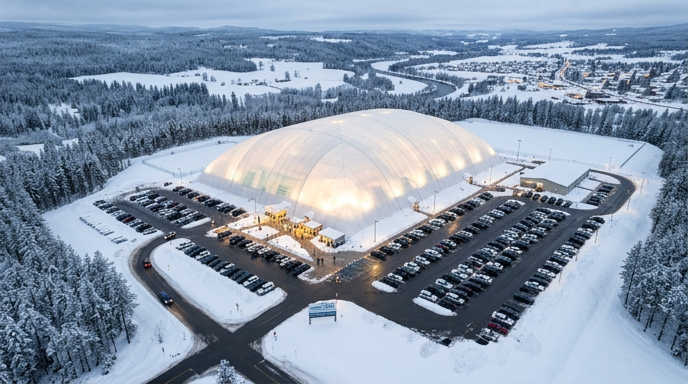
You’re considering an air dome for your Canadian facility, but you’ve likely heard the horror stories—collapsed structures after heavy snowfall, skyrocketing heating costs, and construction delays that stretch into winter. The reality is that most failures stem from choosing the wrong manufacturer or underestimating Canada’s unique requirements. Before you invest hundreds of thousands of dollars, there’s critical information about climate engineering, provincial regulations, and cost factors that could make or break your project.
What Makes Air Domes Work In Canada’s Extreme Climate?
When temperatures plummet to -30°F and snow loads reach 60 PSF across Canadian provinces, air domes must incorporate specialized engineering features that standard southern structures simply can’t handle.
Your Canadian sports facility needs heavy-duty insulation systems that maintain consistent internal temperatures while fighting brutal external conditions. You’ll require dual-layer membrane systems with thermal barriers that prevent heat loss and condensation buildup.
Snow load calculations become critical for your Canada air dome design, demanding reinforced fabric materials and enhanced air pressure systems.
These structures integrate advanced heating systems with backup power sources to guarantee your Canadian indoor sports venue stays operational during power outages.
Additionally, specialized anchoring systems resist freeze-thaw cycles that can compromise foundation integrity, while emergency deflation procedures protect against catastrophic weather events.
Air Dome Costs And Financing Options By Province
Air dome construction costs across Canadian provinces vary considerably, with your investment typically running 15-25% higher than comparable US facilities due to enhanced climate specifications and specialized materials.
Ontario and Quebec dominate Canada indoor sports markets, where a standard tennis dome ranges $150,000-$400,000 depending on size and features. Alberta’s extreme weather conditions push costs higher, while Maritime provinces offer more moderate pricing.
Your Canadian tennis dome requires reinforced membranes for 40-60 PSF snow loads and superior insulation systems.
Provincial financing options include government sports infrastructure grants, municipal recreation funding, and specialized equipment leasing.
Many operators secure 5-10 year financing terms through equipment lenders familiar with seasonal sports facilities. Tax incentives vary by province, with some offering accelerated depreciation for recreational infrastructure investments.
Choosing The Right Canadian Air Dome Manufacturer
Your manufacturer selection greatly impacts both upfront costs and long-term performance of your Canadian sports dome facility.
Prioritize manufacturers with proven Canadian climate expertise, as they’ll understand local snow loads, insulation requirements, and extreme temperature challenges that range from -30 to 85°F.
Farley Group leads the Canadian market from British Columbia, offering specialized knowledge of provincial building codes and weather conditions.
When evaluating manufacturers, examine their portfolio of existing Canadian installations, warranty terms, and local service capabilities.
Request references from facilities in similar climate zones to yours.
Consider manufacturers who provide thorough packages including design, installation, and maintenance services.
This guarantees accountability and streamlines project management.
Verify they can handle your province’s specific snow load requirements of 40-60 PSF and understand local permitting processes for faster approvals.
Navigating Building Permits And Code Compliance
Before breaking ground on your Canadian sports dome project, you’ll need to secure proper building permits and guarantee full compliance with local codes. Each province maintains distinct requirements, with Ontario and Quebec enforcing the strictest standards due to their large dome markets.
Your structure must meet National Building Code specifications for snow loads (40-60 PSF), wind resistance, and fire safety. Municipal zoning bylaws often dictate setbacks, height restrictions, and usage classifications.
| Permit Stage | Timeline Impact |
|---|---|
| Zoning approval | 2-4 months delay |
| Structural review | 1-3 months delay |
| Fire safety compliance | 2-6 weeks delay |
| Environmental assessment | 3-8 months delay |
| Final inspection | 1-2 weeks delay |
Engage local engineers familiar with air-supported structures early. They’ll navigate provincial variations and expedite approvals, preventing costly construction delays.
Installation Timeline And Winter Weather Considerations
While securing permits sets your project timeline, Canada’s harsh winter climate greatly impacts when you can actually install your sports dome.
You’ll want to schedule installation during warmer months, typically May through September, when temperatures stay above freezing and ground conditions allow proper foundation work.
Winter installations aren’t impossible but they’re considerably more challenging and expensive.
You’ll face frozen ground that requires special excavation equipment, limited daylight hours, and harsh weather that slows crew productivity.
Snow loads during installation can stress partially completed structures.
Plan your project 12-18 months ahead to secure ideal installation windows.
If you’re forced into winter installation, budget an additional 20-30% for weather delays, specialized equipment, and extended heating costs during construction.
Leave a Reply