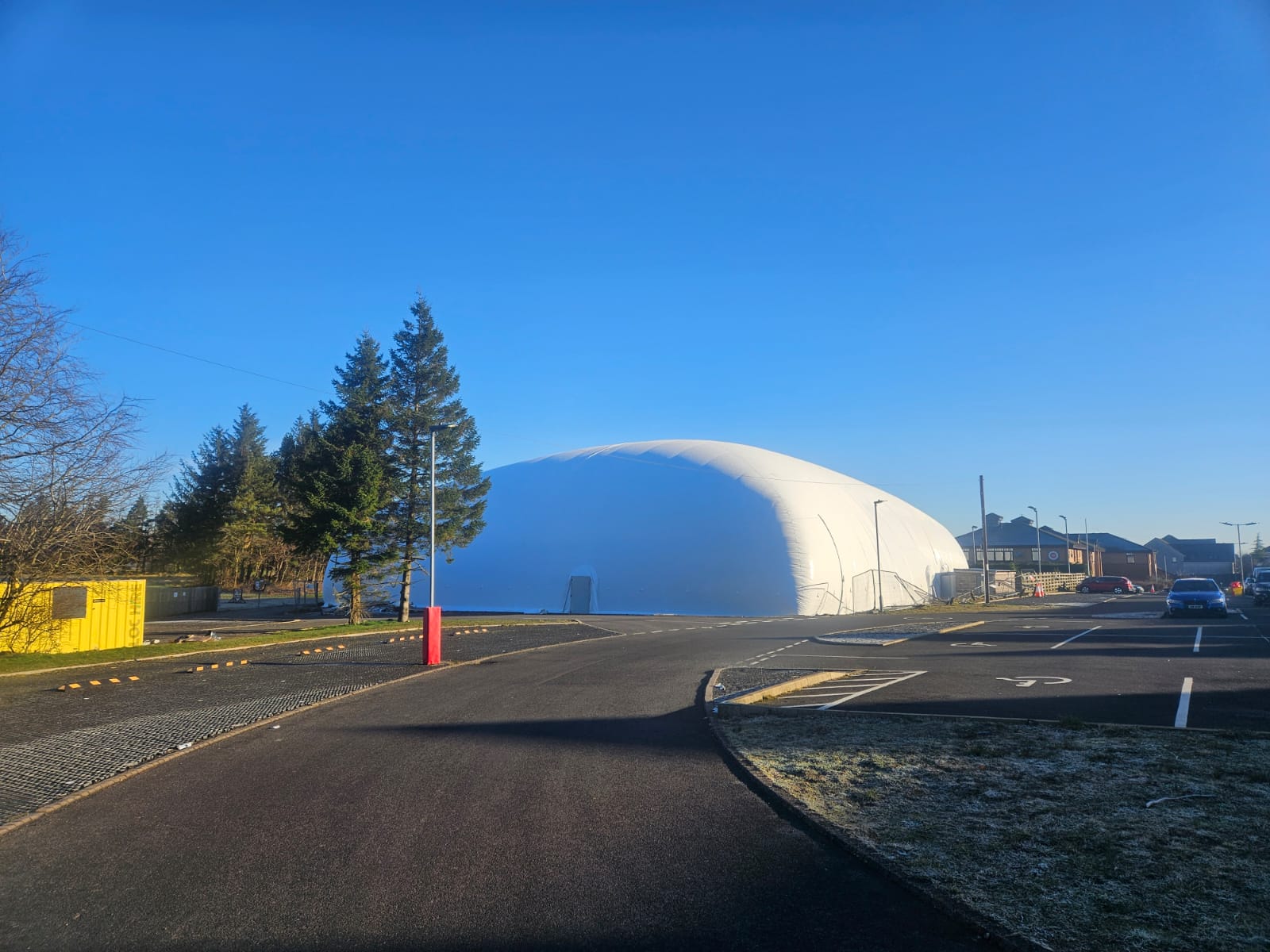
You’re considering a significant investment that could transform your field hockey program’s capabilities, but the sheer number of decisions ahead might feel overwhelming. From determining the right dimensions and turf surface to understanding installation timelines and ongoing costs, there’s a complex web of factors that’ll directly impact your facility’s success. The choices you make now will influence everything from player performance to your bottom line for years to come.
What Is A Field Hockey Air Dome?
When you need year-round field hockey training regardless of weather conditions, a field hockey air dome provides the perfect solution. This inflatable structure creates a controlled indoor field hockey facility that maintains ideal playing conditions throughout all seasons.
A hockey training dome typically spans 180′ x 300′ with a minimum 25-foot ceiling height, providing full regulation field dimensions. The pressurized air system keeps the dome inflated while maintaining consistent temperatures between 40-60°F for player comfort and performance.
Inside, you’ll find specialized turf surfaces designed specifically for field hockey – either water-based or sand-dressed synthetic materials that replicate professional playing conditions.
The controlled environment eliminates weather disruptions, allowing teams to maintain consistent training schedules. These versatile structures can also accommodate soccer when needed, maximizing facility usage and investment value.
Field Hockey Air Dome Size Requirements And Specifications
Understanding the exact dimensions and technical specifications guarantees your field hockey air dome meets regulation standards and provides excellent playing conditions.
Your field hockey dome must measure 180′ x 300′ (54.9m x 91.4m), totaling 54,000 square feet of playing surface. You’ll need a minimum ceiling height of 25 feet to accommodate high ball trajectories and player movements.
The dome requires either water-based or sand-dressed artificial turf that mimics professional field conditions. Climate control systems should maintain temperatures between 40-60°F for peak performance year-round.
These specifications also allow your facility to double as a soccer field, maximizing usage potential.
Installation costs typically range from $1.2-3 million depending on location, features, and site preparation requirements. Proper ventilation and lighting systems are essential components for regulation compliance.
Field Hockey Air Dome Cost: Purchase And Installation
You’ll face two major cost components when budgeting for your field hockey air dome: the initial purchase price and installation labor expenses.
The dome structure itself typically ranges from $1.2M to $3M depending on size, materials, and features you select.
Installation costs can add another 20-40% to your total investment, covering foundation work, mechanical systems, and specialized setup required for proper dome operation.
Initial Purchase Pricing
Budgeting for a field hockey air dome requires understanding the significant upfront investment involved in both the structure and installation process.
You’ll face costs ranging from $1.2 million to $3 million for a regulation-sized field hockey dome measuring 180′ x 300′. This price variation depends on several key factors you need to take into account.
The dome structure itself typically costs $800,000 to $1.8 million, while site preparation and installation add another $400,000 to $1.2 million.
You’ll pay more for premium features like advanced climate control systems, higher-quality membrane materials, and sophisticated lighting packages.
The turf surface choice also impacts pricing – water-based systems cost more than sand-dressed alternatives.
Location affects pricing too, with remote sites requiring higher transportation and labor costs.
Installation Labor Costs
When planning your field hockey air dome project, installation labor represents 25-35% of your total budget, typically ranging from $300,000 to $600,000 for a full-sized facility.
You’ll need specialized crews for foundation work, electrical systems, and dome assembly. Site preparation costs vary considerably based on soil conditions and drainage requirements, potentially adding $50,000-$150,000 to your labor expenses.
Professional installers must handle the complex anchoring system that secures your 54,000 square foot structure. Climate control installation requires HVAC specialists familiar with pressurized environments.
You’ll also need certified electricians for lighting systems that meet field hockey standards. Factor in additional costs for permits, inspections, and potential overtime charges.
Remote locations increase labor costs due to travel time and accommodation expenses for installation teams.
Turf Options: Water-Based Vs Sand-Dressed Surfaces
You’ll need to choose between two primary turf surfaces for your field hockey air dome: water-based and sand-dressed systems.
Water-based turf delivers superior ball speed and player performance, mimicking international competition standards.
Sand-dressed surfaces require less complex maintenance but demand regular grooming and infill management to maintain ideal playing conditions.
Water-Based Performance Benefits
Professional field hockey players consistently choose water-based turf surfaces for their superior performance characteristics, and you’ll immediately notice the difference when playing on this premium surface type.
Water-based turf creates ideal ball speed and predictable bounces that match international competition standards. You’ll experience enhanced stick-to-ball control during dribbling, passing, and shooting sequences.
The surface maintains consistent moisture levels through integrated irrigation systems, eliminating unpredictable dry patches that can disrupt play.
Your players will develop better technical skills on water-based surfaces since the ball moves similarly to outdoor championship fields. The turf reduces joint stress while providing reliable traction for quick directional changes.
Most importantly, you’re investing in a surface that prepares athletes for elite-level competition where water-based fields are the global standard.
Sand-Dressed Maintenance Requirements
Sand-dressed field hockey surfaces demand a different maintenance approach that requires consistent attention to sand infill levels and distribution patterns.
You’ll need to regularly redistribute sand using specialized drag brushes to maintain even coverage across the playing surface. Weekly grooming prevents sand migration and guarantees consistent ball roll characteristics.
You must monitor sand depth carefully, as insufficient infill creates uneven bounces while excess sand slows ball speed dramatically.
Plan for sand top-ups every 6-8 weeks, particularly in high-traffic areas like shooting circles and center field. Your maintenance schedule should include daily brushing, weekly deep grooming, and monthly sand level assessments.
Unlike water-based surfaces, you won’t need irrigation systems, but you’ll invest more time in mechanical maintenance to preserve ideal playing conditions throughout your dome’s operating season.
Climate Control For Year-Round Field Hockey Training
When temperatures drop below freezing or soar above 80°F, maintaining ideal playing conditions becomes critical for serious field hockey training. Your air dome’s climate control system should target 40-60°F with 50-70% humidity for optimal ball speed and player comfort.
| Temperature Range | Player Performance | Ball Behavior |
|---|---|---|
| Below 40°F | Reduced mobility, stiff muscles | Slower roll, unpredictable bounce |
| 40-60°F (Ideal) | Peak performance, comfort | Consistent speed and control |
| 60-75°F | Good performance, slight fatigue | Slightly faster roll |
| 75-80°F | Increased fatigue, dehydration risk | Fast ball speed |
| Above 80°F | Heat stress, poor performance | Erratic behavior |
You’ll need HVAC systems with heating, cooling, and dehumidification capabilities. Install multiple temperature sensors throughout the dome to guarantee even climate distribution. Quality systems cost $150,000-$400,000 but dramatically extend your training season.
Using Your Air Dome For Soccer And Multi-Sport Activities
Beyond optimizing your dome for field hockey performance, you can maximize your investment by converting the space for soccer and other sports. Your 180′ x 300′ dome perfectly accommodates a regulation soccer field, making it an ideal dual-purpose facility.
The shift between sports is straightforward since both use similar field dimensions and turf surfaces. You’ll simply need to swap out goal equipment and adjust line markings as needed.
Consider these multi-sport possibilities for your air dome:
- Soccer training sessions with professional-grade turf and consistent playing conditions
- Lacrosse practices utilizing the spacious field dimensions and protective enclosed environment
- Ultimate frisbee tournaments taking advantage of the wind-free indoor space
- Corporate team-building events combining multiple field sports activities
This versatility transforms your dome into a year-round revenue generator serving diverse athletic communities.
Field Hockey Air Dome Installation: Timeline And Process
Once you’ve decided on your field hockey air dome specifications, the installation process typically spans 8-12 weeks from groundbreaking to first play.
You’ll start with site preparation and foundation work, which takes 2-3 weeks depending on soil conditions and drainage requirements.
Next comes the turf installation phase, requiring another 2-3 weeks for proper base preparation and synthetic surface laying.
The dome structure arrives pre-manufactured and takes just 1-2 days to install once the foundation’s ready.
Inflation and pressurization systems are then connected and tested over several days.
You’ll need final inspections for electrical, HVAC, and safety systems before receiving occupancy permits.
Weather delays can extend timelines, so plan accordingly for your region’s seasonal conditions.
Annual Operating Costs And Maintenance Requirements
While your field hockey air dome represents a significant upfront investment, you’ll face ongoing annual operating costs ranging from $50,000 to $150,000 depending on your facility’s size and usage intensity.
Your primary expenses include:
- Energy costs – Blowers running 24/7 to maintain air pressure, plus HVAC systems for climate control
- Turf maintenance – Regular watering, brushing, and sand/rubber infill replacement for ideal playing conditions
- Membrane care – Annual inspections, patch repairs, and UV protection treatments to extend dome life
- Insurance and permits – Specialized coverage for air-supported structures and municipal compliance requirements
You’ll also budget for equipment replacement, emergency repair funds, and seasonal weatherproofing.
Proper preventive maintenance reduces long-term costs while ensuring your facility remains safe and playable year-round.
Leave a Reply