Blog

  • Middle East Sports Facilities Guide

    Middle East Sports Facilities Guide

    You’re facing unique challenges when planning sports facilities in the Middle East that most architects never encounter elsewhere. Between 113°F summer temperatures, relentless UV exposure, and sand storms that can damage traditional structures, you’ll need specialized solutions that go far beyond standard construction approaches. Air domes have emerged as the preferred choice across Dubai, Abu Dhabi, and Doha, but the real question isn’t whether to use them—it’s how to maximize their potential while managing the substantial costs involved.

    Why Middle East Sports Facilities Choose Air Domes

    When temperatures soar beyond 45°C (113°F) and sandstorms sweep across the desert, you’ll find that traditional outdoor sports facilities become virtually unusable for months at a time.

    That’s why you’re seeing rapid adoption of middle east air dome solutions across the region.

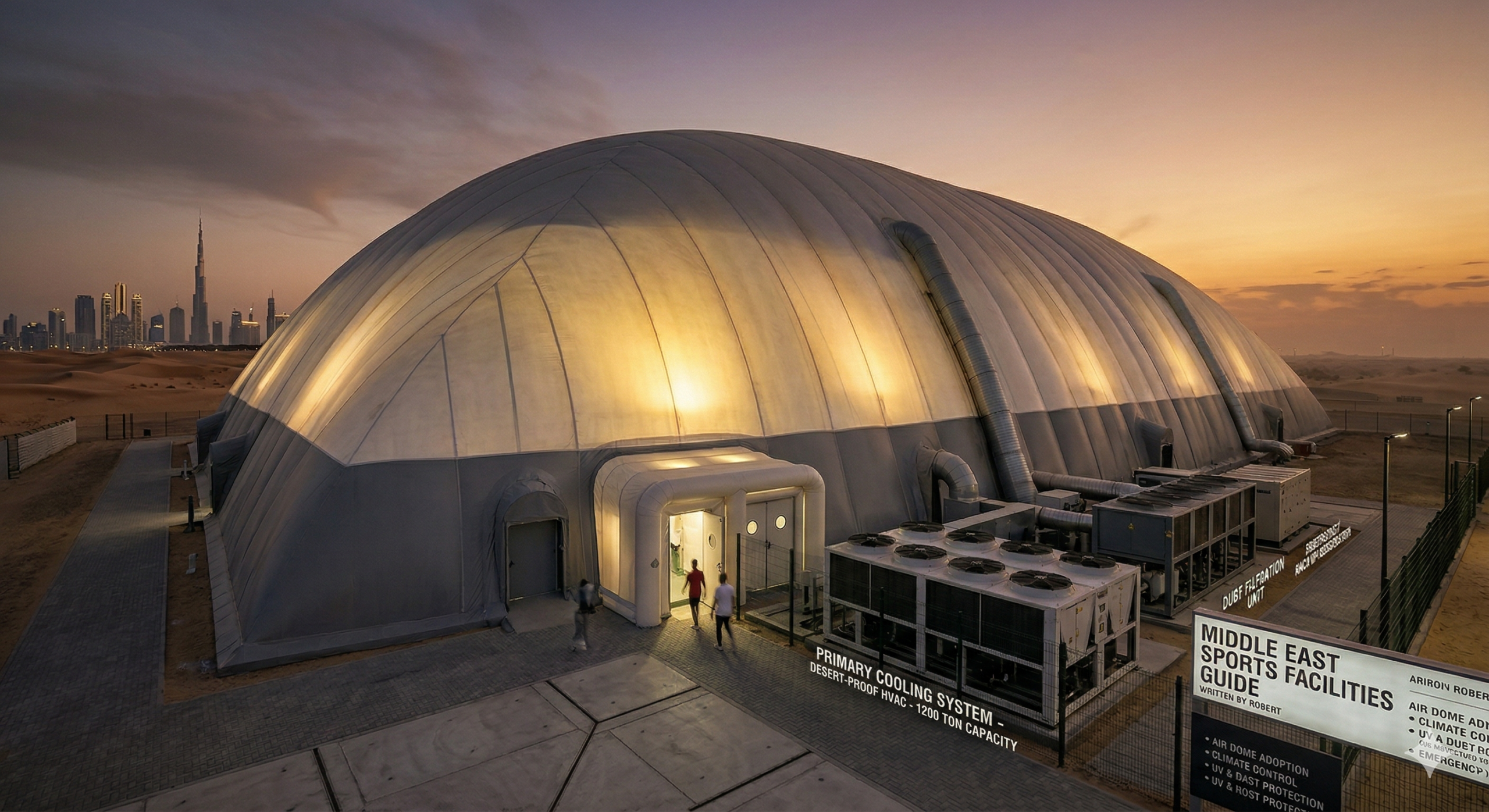
    Your middle east sports dome provides extensive protection against UV radiation, dust infiltration, and extreme heat. You can maintain comfortable temperatures between 20-25°C (68-77°F) year-round, ensuring consistent playability regardless of external conditions.

    Unlike permanent structures, you’ll benefit from faster installation and lower initial investment costs.

    UAE indoor sports facilities in Dubai, Abu Dhabi, and Doha are leading this transformation.

    You’ll discover that air domes offer the perfect balance of luxury amenities and practical climate control that Middle Eastern sports facilities demand.

    Air Dome Costs: Import Fees and Installation Budgets

    You’ll face significant import tariffs when bringing air dome materials into Middle East markets, with fees varying by country and equipment type.

    Your installation costs will depend on several key factors including site preparation, specialized cooling systems, and local labor availability.

    These combined expenses typically make Middle East air dome projects 20-30% more expensive than similar installations in other regions.

    Import Tariff Breakdown

    Since air dome systems require specialized materials and technology rarely manufactured locally, import tariffs considerably impact your total project budget in Middle East markets.

    You’ll typically face 5-15% customs duties on structural components, with UAE and Qatar offering more favorable rates than other regional countries.

    For your Dubai sports facility project, expect additional 5% VAT plus clearance fees ranging $2,000-8,000 depending on shipment size.

    Steel framework components carry higher tariffs (10-15%) compared to membrane materials (5-8%).

    Cooling systems face the steepest import costs at 15-20% due to luxury goods classification.

    You can reduce expenses by sourcing through free trade zones in Dubai or Abu Dhabi, potentially saving 3-7% on total import costs while maintaining quality standards.

    Installation Cost Factors

    Beyond import duties, installation expenses represent your largest controllable cost variable when planning air dome construction in Middle Eastern markets.

    Your foundation work costs increase 30-40% due to extreme temperature requirements and specialized concrete mixes that withstand thermal expansion. You’ll need climate-controlled staging areas for equipment and materials, adding $15,000-25,000 to project budgets.

    Cooling system integration drives the highest installation premiums. Your HVAC infrastructure requires redundant systems, specialized ductwork, and emergency backup power – typically 60-80% more expensive than temperate climate installations.

    Local labor shortages in specialized trades like membrane welding and pneumatic systems push hourly rates 25-35% above regional averages.

    You’ll achieve cost control through pre-approved contractor networks, consolidated shipping schedules, and off-peak installation timing during cooler months when labor productivity peaks.

    Desert-Proof HVAC: Cooling Systems for 113°F Heat

    When temperatures soar past 113°F in desert climates, your sports facility’s HVAC system becomes the critical barrier between athletic performance and heat exhaustion. You’ll need specialized cooling solutions that go beyond standard air conditioning.

    System Type Cooling Capacity
    Evaporative Cooling Limited in high humidity
    Central Chiller Systems 500-2000 tons typical
    Hybrid Heat Pumps Energy-efficient option

    Your air dome facility requires redundant cooling systems to prevent catastrophic failure. Install backup chillers and emergency generators—you can’t afford downtime when athletes are inside. Consider thermal zoning to cool active areas more aggressively while maintaining comfortable temperatures in spectator zones. Smart controls automatically adjust based on occupancy and external temperatures, reducing energy costs while maintaining safety standards.

    UV and Dust Protection Technologies Explained

    While your cooling system battles extreme temperatures, your facility’s envelope must simultaneously defend against two other desert enemies: ultraviolet radiation and airborne dust.

    Air domes excel at both challenges, using specialized UV-resistant membranes that block harmful rays while maintaining interior lighting quality.

    You’ll need multi-layered filtration systems at entry points to prevent dust infiltration. HEPA filters capture particles as small as 0.3 microns, while pre-filters handle larger debris.

    Install positive air pressure systems to keep contaminants out during door openings.

    For UV protection, choose membrane materials with built-in UV stabilizers and reflective coatings. These reduce solar heat gain by up to 30% while preventing material degradation.

    Regular membrane inspections guarantee continued protection—desert conditions accelerate wear, making proactive maintenance essential for long-term facility performance.

    Dubai vs Abu Dhabi vs Doha Sports Markets

    You’ll find distinct approaches to sports facility development across these three major Gulf cities, each leveraging cutting-edge climate control technologies to combat extreme temperatures and environmental challenges.

    Dubai leads with extravagant luxury investments in enclosed sports complexes, while Abu Dhabi focuses on sustainable cooling solutions.

    Doha emphasizes tournament-ready venues with advanced air filtration systems.

    These markets are experiencing unprecedented growth as each city competes to become the region’s premier sports destination through massive infrastructure spending and technological innovation.

    Climate Control Technologies

    Although Dubai, Abu Dhabi, and Doha all face similar extreme heat challenges, each city’s sports facility market has developed distinct climate control approaches that reflect their unique economic priorities and infrastructure capabilities.

    You’ll find Dubai emphasizes luxury cooling systems with advanced air dome technology, targeting premium facilities that maintain 18-22°C year-round. Abu Dhabi focuses on energy-efficient solutions, leveraging renewable energy integration for sustainable temperature control. Doha prioritizes rapid deployment systems for major sporting events.

    Feature Dubai Abu Dhabi Doha
    Primary Focus Luxury cooling Energy efficiency Event-ready systems
    Temperature Range 18-22°C 20-25°C 22-26°C
    Cost Premium 40-60% above standard 25-35% above standard 30-50% above standard
    Technology Advanced air domes Solar-integrated HVAC Modular cooling units
    Market Position Premium facilities Sustainable venues Tournament-grade infrastructure

    Luxury Facility Investments

    Investment patterns across Dubai, Abu Dhabi, and Doha reveal dramatically different approaches to luxury sports facility development, with each emirate and city-state pursuing distinct strategies that reflect their broader economic visions.

    Dubai leads with tourism-focused venues, attracting international events through world-class tennis stadiums and golf courses. You’ll find premium amenities targeting wealthy visitors who expect exceptional experiences.

    Abu Dhabi emphasizes state-of-the-art Formula 1 circuits and cultural sports complexes, positioning itself as a sophisticated destination for elite competitions. Their investments prioritize long-term prestige over immediate returns.

    Doha’s approach centers on FIFA World Cup infrastructure, creating multipurpose facilities that’ll serve local communities post-tournament.

    You’re seeing smart investments in cooling technologies and adaptable spaces that maximize utility beyond major sporting events.

    These strategic investments have shaped three distinct market trajectories, each reflecting unique growth patterns and competitive advantages.

    Dubai’s established itself as the premium sports destination, leveraging its tourism infrastructure to attract international events and high-end facilities. You’ll find the most diverse range of air-domed complexes here, catering to both residents and visitors.

    Abu Dhabi’s taken a different approach, focusing on large-scale government-backed projects that emphasize cutting-edge technology and sustainability. Their facilities often feature the most advanced cooling systems and temperature control capabilities.

    Doha’s emerged as the ambitious newcomer, rapidly expanding its sports infrastructure through significant World Cup investments.

    You’ll notice their facilities prioritize dust control and UV protection more aggressively than their regional competitors, reflecting Qatar’s unique environmental challenges.

    Premium Air Dome Features for Luxury Facilities

    Luxury air dome facilities in the Middle East elevate the sports experience through cutting-edge climate control systems that maintain ideal temperatures even when outside conditions soar beyond 45°C (113°F). You’ll find these premium installations feature multi-zone cooling, advanced filtration systems, and smart humidity control that adapts to Dubai’s harsh desert environment.

    Premium Feature Luxury Benefit
    UV-blocking membrane 99% harmful ray protection
    HEPA air filtration Removes dust and allergens
    Zone-based cooling Customizable temperature control
    Smart automation Energy-efficient operation

    These high-end facilities incorporate LED lighting systems, premium flooring materials, and acoustic dampening for enhanced comfort. You’ll also discover integrated sound systems, VIP viewing areas, and automated entry systems that justify the significant investment costs typical in Abu Dhabi and Doha’s luxury sports markets.

    Year-Round Climate Control: Cooling and Heating Balance

    While premium features define luxury air dome experiences, maintaining ideal temperatures throughout the Middle East’s extreme seasonal variations requires sophisticated balancing systems that go beyond basic cooling.

    You’ll need dual-purpose HVAC systems that can efficiently handle temperatures ranging from 68°F to 113°F. During summer months, your primary focus shifts to aggressive cooling and dehumidification, while winter periods may require gentle heating in early morning sessions.

    Smart climate control features include:

    • Automated temperature zoning for different activity areas
    • Predictive cooling that adjusts before peak heat hours
    • Energy recovery ventilation to minimize cooling costs
    • Humidity control maintaining 40-60% relative humidity levels

    Your facility’s success depends on seamless shifts between heating and cooling modes, ensuring athletes perform comfortably regardless of external desert conditions while managing operational costs effectively.
  • Asia Sports Dome Market Analysis

    Asia Sports Dome Market Analysis

    You’re witnessing Asia’s sports dome market transform into a $1.2 billion opportunity by 2028, but here’s what most investors don’t realize: China’s commanding 40% market share isn’t just about volume—it’s reshaping how the entire region approaches weather-independent sports infrastructure. While Japan’s premium positioning and Korea’s massive $2.3 billion investment grab headlines, the real story lies in the unexpected profit margins that tennis and badminton facilities are generating across tier-two cities.

    Asia Sports Dome Market Reaches $1.2B by 2028

    Three major economies are driving Asia’s sports dome market toward an unprecedented $1.2 billion valuation by 2028.

    You’ll find China leading this explosive growth, with china sports dome installations rapidly expanding across tier-one and tier-two cities. The rising middle class is fueling demand for premium indoor tennis and badminton facilities.

    Japan’s established market maintains steady growth, with japan indoor sports facilities adhering to strict JIS standards.

    You’re seeing consistent investment in multi-sport complexes ranging from 1,000 to 3,000 square meters.

    Korea’s emerging market presents significant opportunities as sports participation increases.

    The asia air dome sector benefits from growing urbanization and weather-independent facility demand.

    You’ll notice costs varying dramatically between countries, but the overall trajectory points toward sustained expansion across all three markets.

    China’s 40% Market Share Drives Regional Growth

    China’s dominance becomes even more pronounced when examining specific market share data, with the country capturing 40% of Asia’s entire sports dome sector. You’ll find this growth driven by massive infrastructure investments and rising middle-class participation in sports like tennis and badminton.

    Country Market Share Growth Rate
    China 40% 12.5%
    Japan 25% 3.2%
    Korea 15% 8.7%
    Others 20% 6.1%

    China’s asian sports facility expansion focuses on multi-sport complexes averaging 2,000-3,000 square meters. You’re seeing unprecedented demand from tier-two cities, where local governments prioritize sports infrastructure development. This market leadership positions China as the regional trendsetter, influencing design standards and facility management practices across neighboring markets.

    Japan’s Premium Sports Dome Market Commands Higher Margins

    While China dominates through volume, Japan’s sports dome market operates on an entirely different model that prioritizes quality over quantity.

    You’ll find Japanese facilities adhering to strict JIS standards, creating premium environments that justify higher pricing structures. This established market focuses heavily on tennis and badminton facilities, where you can charge premium rates for superior construction quality and advanced climate control systems.

    Your margins in Japan typically exceed other Asian markets by 15-25% due to customers’ willingness to pay for proven reliability and safety compliance.

    The mature market means you’re dealing with sophisticated buyers who understand long-term value propositions. You’ll need to meet exacting specifications, but this translates into sustained profitability and repeat business opportunities that China’s price-competitive environment rarely offers.

    Korea Invests $2.3B in Sports Infrastructure Development

    Korea’s unprecedented $2.3 billion commitment to sports infrastructure development creates massive opportunities for dome manufacturers targeting the growing middle-class market.

    You’ll find that Korea’s rising sports participation rates drive demand for tennis, badminton, and multi-sport facilities ranging from 1,000-3,000 square meters.

    You can capitalize on this growth, but you’ll face local manufacturing competition and different technical standards than neighboring Japan’s JIS requirements.

    Korea’s expanding middle class increasingly prioritizes recreational sports activities, creating sustained demand for quality indoor facilities.

    You should prepare for cost variations across different Korean regions while adapting your products to local preferences.

    The government’s infrastructure investment timeline spans five years, giving you multiple entry points to establish market presence and build relationships with Korean developers and sports facility operators.

    Tennis and Badminton Domes Generate Highest ROI

    You’ll find tennis and badminton domes consistently outperform multi-sport facilities in revenue generation per square meter across Asia’s major markets.

    These specialized structures operate with 20-30% lower maintenance costs than larger venues while maintaining higher utilization rates throughout peak hours.

    Your investment returns improve dramatically when you target the growing middle-class demand for premium racquet sports facilities in urban centers.

    Revenue Per Square Meter

    Tennis and badminton domes consistently deliver the strongest revenue per square meter across Asia’s sports facility market, with operators reporting returns 25-40% higher than multi-sport complexes. You’ll find these specialized facilities generate premium pricing due to consistent year-round demand and higher booking frequencies.

    Country Tennis Revenue/sq m Badminton Revenue/sq m Multi-Sport Revenue/sq m
    China $85-120 $75-105 $55-75
    Japan $110-165 $95-140 $70-95
    Korea $90-135 $80-115 $60-85

    Your revenue optimization depends on maximizing court utilization during peak hours. Japan’s established market commands highest rates, while China’s growing middle class creates volume opportunities. Korea offers balanced growth potential with moderate pricing expectations for specialized dome facilities.

    Operational Cost Efficiency

    While multi-sport complexes require diverse equipment maintenance and specialized staff across various disciplines, tennis and badminton domes achieve excellent operational cost efficiency through streamlined operations and standardized requirements.

    You’ll find these single-sport facilities demand fewer specialized technicians, simplified inventory management, and consistent climate control parameters.

    China’s tennis domes report 15-20% lower operational costs compared to multi-sport venues of similar size. You can maximize efficiency by implementing automated court booking systems and LED lighting retrofits, reducing energy consumption by 40%.

    Japanese facilities excel at preventive maintenance schedules, extending equipment lifecycles considerably.

    Your staffing requirements remain predictable—you’ll need fewer cross-trained personnel.

    Korea’s badminton domes demonstrate ideal cost structures through standardized court dimensions and unified equipment specifications. This operational simplicity translates directly into higher profit margins and faster payback periods for investors.

    Market Demand Drivers

    Beyond operational advantages, specific market forces drive exceptional returns for tennis and badminton dome investments across Asia. You’ll find these sports dominate facility usage patterns, generating consistent revenue streams through court rentals, coaching programs, and tournament hosting.

    Rising middle-class populations across China, Japan, and Korea create expanding customer bases willing to pay premium rates for climate-controlled playing conditions. You’re positioned to capitalize on year-round demand that traditional outdoor facilities can’t match.

    Market Driver Impact on ROI
    Premium court fees 40-60% higher rates
    Year-round usage 300+ operating days
    Corporate bookings Stable revenue base

    Tennis and badminton facilities typically achieve 70-85% utilization rates in major Asian markets, remarkably outperforming multi-sport configurations that struggle with scheduling conflicts and equipment management complexities.

    Local Manufacturers Undercut International Prices by 50

    As international dome manufacturers enter Asian markets, they’re discovering that local competitors consistently offer prices 40-60% below international rates.

    You’ll find this pricing gap stems from several key factors that make competing on cost alone nearly impossible. Local manufacturers benefit from considerably lower labor costs, reduced material transportation expenses, and streamlined supply chains.

    They’ve also adapted their production processes to meet regional standards like Japan’s JIS requirements without the overhead of international compliance systems. Additionally, you’re facing competitors who understand local procurement practices, payment terms, and relationship-building expectations that international companies often overlook.

    This pricing pressure forces you to differentiate through superior technology, faster installation times, extensive warranties, or specialized features that local manufacturers can’t easily replicate.

    Rising Incomes Boost Sports Facility Demand Across Asia

    You’ll find that Asia’s expanding middle class is driving unprecedented demand for premium sports facilities, with families now willing to invest in year-round indoor venues.

    Sports participation rates are climbing sharply as disposable incomes rise, particularly in China and Korea where badminton and tennis memberships have doubled in major cities.

    You’re witnessing a fundamental shift where sports domes aren’t luxury amenities anymore—they’re becoming essential infrastructure for communities that can finally afford quality recreational spaces.

    Middle Class Growth Impact

    Rising disposable incomes throughout Asia are fundamentally reshaping the sports facility landscape, with expanding middle-class populations demanding higher-quality recreational venues.

    You’ll find that China’s massive economic growth has created unprecedented demand for premium sports domes, particularly for tennis and badminton facilities.

    Japan’s established middle class continues driving steady demand for sophisticated multi-sport complexes that meet JIS standards.

    Korea’s rapidly growing middle class is fueling expansion in the 1,000-3,000 square meter facility range.

    You’re witnessing families prioritize sports participation as discretionary spending increases, creating opportunities for developers who understand local preferences.

    However, you’ll need to navigate varying cost structures and manufacturing competition across different markets.

    The key is recognizing that Asia’s middle-class expansion directly translates to sustained sports facility investment.

    Multiple demographic shifts are converging to drive unprecedented sports participation across Asia, with tennis and badminton leading the surge in facility demand.

    You’ll find China’s urbanization creating millions of new recreational athletes, while Japan’s aging population increasingly values low-impact sports for health maintenance.

    Korea’s competitive culture fuels year-round training demand, particularly for badminton and multi-sport facilities.

    You’re seeing participation rates climb 15-20% annually across major Asian markets as disposable incomes rise.

    Traditional sports like badminton benefit from cultural familiarity, while tennis grows among younger demographics seeking Western-style recreation.

    Climate-controlled domes become essential as players demand consistent, weather-independent access.

    This participation boom directly translates to facility demand, with operators requiring 1,000-3,000 square meter spaces to accommodate peak usage periods and diverse programming needs.

  • Australia Indoor Sports Market

    Australia Indoor Sports Market

    You’re looking at a market that’s quietly transforming Australia’s sports landscape. While traditional indoor facilities demand million-dollar investments and lengthy construction timelines, air dome technology has slashed those barriers by up to 70%. This shift isn’t just about cost savings—it’s creating opportunities in suburbs and regional areas that couldn’t previously support indoor sports complexes. However, what most operators don’t realize is how Australia’s unique regulatory environment could make or break their investment decisions.

    Air Dome vs Traditional Indoor Sports Facility Costs in Australia

    When you’re evaluating indoor sports facility options in Australia, air domes offer substantial cost advantages over traditional brick-and-mortar structures.

    An air dome Australia installation typically costs AUD $120K-$350K for facilities ranging from 700-2,000 square meters. In contrast, traditional indoor sports buildings require considerably higher investments, often exceeding $1-2 million for comparable spaces when factoring in construction materials, labor, and extended building timelines.

    Air domes eliminate expensive foundation work, structural steel, and roofing systems that traditional facilities demand.

    You’ll also benefit from faster installation times, typically completing your project within weeks rather than months. Operating costs remain lower due to the dome’s insulation properties, which work effectively in Australia’s moderate climate.

    The inflatable structure’s efficiency makes it particularly attractive for sports entrepreneurs seeking quick market entry.

    Why Australia’s Climate Gives Indoor Sports Facilities a Cost Advantage

    Australia’s moderate climate greatly reduces your operational expenses compared to indoor sports facilities in extreme weather regions.

    You’ll spend considerably less on heating costs since temperatures typically range from 10-35°C (50-95°F), eliminating the need for expensive winter heating systems common in colder climates.

    Your primary climate control focus shifts to heat and UV protection rather than battling freezing temperatures or extreme heat waves. This translates to lower energy bills and reduced HVAC maintenance costs throughout the year.

    When you invest in an Australia air dome, you’re capitalizing on these natural advantages.

    The moderate conditions mean your facility operates more efficiently, with less strain on climate control systems.

    Your insurance costs may also decrease due to reduced weather-related risks, making Australia an ideal location for cost-effective indoor sports facility operations.

    State-by-State Regulations for Australian Indoor Sports Facilities

    While Australia’s favorable climate reduces your operational costs, you’ll need to navigate different regulatory requirements depending on which state you choose for your indoor sports facility.

    Each state maintains distinct building codes, zoning laws, and safety standards that’ll impact your Australian sports facility development timeline and budget.

    New South Wales requires thorough development applications for commercial sports facilities, while Queensland emphasizes cyclone-resistant construction in northern regions.

    Victoria focuses heavily on fire safety compliance and accessibility standards.

    Western Australia prioritizes energy efficiency requirements, and South Australia mandates specific ventilation standards for enclosed sports venues.

    You’ll encounter varying permit processing times, from 6-16 weeks depending on your location.

    Planning approval costs range from AUD $5,000-$25,000 across states.

    Consider engaging local consultants who understand regional nuances to streamline your approval process and guarantee full compliance.

    Australia’s Indoor Sports Facility Market Growth and Opportunities

    Despite traditional outdoor sports dominance, Australia’s indoor sports facility market is experiencing unprecedented growth, creating lucrative opportunities for savvy investors and operators.

    You’ll find the strongest expansion in Melbourne, Sydney, and Brisbane, where population density and year-round demand drive profitability.

    The Australia indoor sports sector benefits from moderate climate conditions, reducing operational heating costs compared to colder regions.

    You’re looking at investment ranges from AUD $120K-$350K for air dome facilities covering 700-2,000 square meters.

    Key opportunities include multi-sport complexes, specialized training centers, and youth development facilities.

    You can capitalize on growing participation rates in basketball, futsal, and racquet sports.

    Urban densification creates space constraints, making indoor facilities increasingly valuable.

    Smart operators focus on maximizing facility utilization through diverse programming and community partnerships.

  • Germany Sports Facility Market Guide

    Germany Sports Facility Market Guide

    You’re looking at a sports facility investment in Germany, but the cost differences between air domes and traditional structures might surprise you. While rigid buildings demand €300K+ upfront, air domes start around €150K—yet there’s more to this equation than initial pricing. TÜV certifications, DIN compliance, and energy efficiency mandates create a complex approval landscape that’ll directly impact your timeline and budget. Before you commit to either option, you’ll need to understand what these regulations actually mean for your project’s success.

    German Sports Facility Costs: €150K Air Domes vs €300K+ Rigid Structures

    When you’re evaluating sports facility options in Germany, you’ll find a stark cost difference between air dome and rigid structure solutions. A Germany air dome typically costs €150K-€400K for 2,000 square meters, while rigid fabric structures range from €300K-€800K for the same coverage area.

    You’ll notice that air domes offer significant upfront savings, costing roughly half of what you’d pay for permanent structures. However, Germans typically favor rigid constructions despite higher costs. This preference stems from their emphasis on long-term durability and energy efficiency standards.

    Your decision should factor in Germany’s strict technical requirements, including TÜV certification and DIN standards compliance.

    While air domes provide budget-friendly entry points, rigid structures align better with German market expectations for permanence and technical excellence.

    TÜV Certification Requirements: Meeting DIN Standards For Sports Buildings

    Beyond cost considerations, you’ll need to navigate Germany’s rigorous TÜV certification process for any sports facility project. TÜV inspectors evaluate your german sports facility against strict DIN standards covering structural integrity, safety systems, and environmental controls.

    DIN Standard Category Key Requirements
    Structural Safety (DIN 1055) Load calculations, wind resistance
    Fire Protection (DIN 4102) Emergency exits, sprinkler systems
    Ventilation (DIN 1946) Air quality, humidity control
    Electrical (DIN VDE 0100) Circuit protection, grounding
    Accessibility (DIN 18040) Barrier-free access compliance

    You’ll face multiple inspection phases: planning approval, construction monitoring, and final certification. Documentation must be submitted in German, and any non-compliance triggers costly redesigns. Budget additional time and resources for this mandatory process—it’s non-negotiable for operating legally.

    Energy Efficiency Standards That Impact Your Operating Costs

    Since Germany prioritizes long-term sustainability over short-term savings, you’ll encounter stringent energy efficiency requirements that directly affect your facility’s operational expenses.

    Germany indoor sports facilities must comply with the Building Energy Act (GEG), which mandates specific insulation values and heating system efficiency ratings.

    Your air dome will need advanced HVAC systems with heat recovery capabilities, potentially increasing initial costs by 15-20%. However, these systems reduce energy consumption by up to 40% annually.

    LED lighting systems are practically mandatory, while smart climate control systems help optimize temperature management.

    Renewable energy integration often becomes cost-effective due to government incentives. Solar panels and geothermal systems can offset operational costs within 8-12 years.

    Non-compliant facilities face hefty fines and increased insurance premiums, making efficiency investments financially prudent rather than optional.

    Air Dome Approval Process: From Planning To Construction Permits

    Germany’s complex approval process for air domes requires maneuvering through multiple regulatory layers before you can break ground.

    You’ll need to secure building permits from local authorities, who’ll scrutinize your structural engineering plans against strict DIN standards. The process typically takes 6-12 months, depending on your municipality’s efficiency and project complexity.

    Your sports dome germany project must pass these critical checkpoints:

    1. Structural analysis review – Engineers evaluate wind loads, snow loads, and emergency deflation scenarios.
    2. Fire safety compliance – Exit routes, sprinkler systems, and flame-resistant materials must meet specifications.
    3. Environmental impact assessment – Noise levels, drainage systems, and energy consumption calculations.

    You’ll work closely with TÜV-certified consultants throughout the approval phase.

    Budget additional time for revisions, as German authorities rarely approve plans on the first submission.

  • Scandinavia Sports Dome Market

    Scandinavia Sports Dome Market

    You’ve likely noticed the surge in dome-shaped sports facilities across Sweden, Norway, and Denmark—and there’s a compelling reason behind this architectural shift. These aren’t just trendy buildings; they’re strategic investments that solve a fundamental Nordic challenge: maintaining athletic performance when winter temperatures plummet to -30°C and snow loads threaten traditional structures. What’s driving this 15-20% annual market growth isn’t just weather resistance, but something far more profitable.

    Why Scandinavian Sports Domes Are Essential for Year-Round Training

    When temperatures plummet to -30°F and snow blankets the ground for months, you can’t rely on outdoor facilities to maintain consistent training schedules. A Scandinavia air dome solves this challenge by providing controlled environments that operate efficiently across extreme temperature ranges from -34°C to 21°C.

    You’ll find Sweden sports dome facilities leading the market with over 100 installations, demonstrating their proven effectiveness for athletic development. These structures handle massive 50+ PSF snow loads while maintaining ideal interior conditions for football, tennis, and multi-sport training.

    Norway indoor facility demand continues growing as coaches recognize the competitive advantage of uninterrupted training cycles.

    You’re investing in athlete performance when harsh weather would otherwise force cancellations or less-than-ideal outdoor conditions that limit skill development.

    Extreme Weather Requirements: Snow Loads and Arctic Temperature Design

    Building successful sports domes in Scandinavia demands engineering solutions that withstand nature’s most punishing conditions. Your nordic sports facility must handle extreme temperature swings from -30°F to 70°F (-34°C to 21°C) while supporting massive snow loads exceeding 50 PSF (2.39 kPa).

    Critical design requirements include:

    1. Maximum insulation systems – Multi-layer thermal barriers prevent heat loss and structural damage from freeze-thaw cycles.
    2. Reinforced structural frameworks – Heavy-duty support systems distribute snow weight evenly across the dome surface.
    3. Advanced heating integration – Efficient climate control maintains consistent interior temperatures despite arctic exterior conditions.

    These specifications aren’t optional luxuries—they’re survival necessities.

    Without proper engineering, your facility risks catastrophic collapse under snow accumulation or prohibitive heating costs that’ll drain your budget throughout Scandinavia’s brutal winters.

    Sports Dome Construction Costs in Sweden, Norway, and Denmark

    You’ll face construction costs that are 20-30% higher than typical US projects when building sports domes across Scandinavia.

    Sweden’s established market of 100+ facilities creates competitive pricing, while Norway’s growing demand and Denmark’s strict building codes each present unique cost structures.

    Your biggest expense drivers won’t just be materials and labor – the extreme climate requirements for insulation, heating systems, and snow load engineering greatly impact your total project budget.

    Climate Impact on Costs

    Since Scandinavian winters deliver extreme temperatures as low as -30°F (-34°C) and snow loads exceeding 50 PSF, you’ll face construction costs that run 20-30% higher than typical US projects.

    These harsh conditions demand specialized engineering solutions that greatly impact your budget.

    The extreme climate forces three major cost increases:

    1. Enhanced insulation systems – You’ll need premium materials and thicker wall assemblies to maintain interior temperatures efficiently.
    2. Reinforced structural design – Heavy snow loads require stronger steel frameworks and enhanced foundation systems.
    3. Advanced heating infrastructure – High-capacity HVAC systems must handle the massive temperature differential from -30°F to 70°F.

    Your investment pays off through year-round operation capabilities, making these facilities profitable despite higher upfront costs in Sweden’s 100+ dome market.

    Regional Price Variations

    Construction costs vary considerably across Scandinavian countries, with Sweden leading at $45-65 per square foot, followed by Norway at $40-60, and Denmark at $35-55 per square foot for sports dome projects.

    Country Cost Range ($/sq ft) Key Factors
    Sweden $45-65 High labor costs, strict building codes
    Norway $40-60 Oil economy wages, remote logistics
    Denmark $35-55 Moderate regulations, better access
    Finland $38-58 Harsh climate requirements
    Iceland $50-70 Extreme isolation, material imports

    You’ll find Sweden’s premium pricing stems from stringent environmental regulations and Europe’s highest construction wages. Norway’s costs reflect oil-driven labor markets, while Denmark offers the most competitive pricing due to efficient supply chains and moderate building requirements. Finland balances affordability with extreme weather demands.

    Material and Labor Expenses

    While regional pricing differences tell part of the story, breaking down material and labor expenses reveals the true cost drivers behind Scandinavian sports dome construction.

    You’ll face premium costs for specialized materials that withstand extreme weather conditions. High-grade insulation systems, reinforced structural components, and cold-weather concrete additives typically cost 25-40% more than standard alternatives.

    Labor expenses further inflate your budget, with skilled construction workers commanding higher wages due to harsh working conditions and specialized expertise requirements.

    Your primary expense categories include:

    1. Structural materials – Reinforced steel and engineered lumber designed for 50+ PSF snow loads
    2. Advanced insulation systems – Multi-layer thermal barriers for -30°F temperature resistance
    3. Specialized labor – Cold-weather construction expertise and extended project timelines

    These factors combine to create the 20-30% cost premium you’ll encounter compared to standard dome construction.

    Top Scandinavian Sports Dome Manufacturers Worth Considering

    Several established manufacturers dominate Scandinavia’s sports dome market, each bringing unique expertise to tackle the region’s demanding climate conditions. You’ll find these companies specialize in extreme weather engineering, delivering structures that withstand brutal winters while maintaining energy efficiency.

    Manufacturer Strength Your Benefit
    Advanced insulation systems 40% lower heating costs
    Reinforced frame engineering Survives 60+ PSF snow loads
    Local service networks 24-hour emergency support

    When you’re evaluating manufacturers, prioritize those with proven Scandinavian installations. Look for companies offering extensive warranties covering harsh climate performance. Sweden’s market leaders typically provide turnkey solutions including foundation design, heating integration, and ongoing maintenance contracts. You’ll want manufacturers who understand local building codes and can navigate complex permitting processes efficiently.

    When you’re investing in Nordic sports domes, you’ll find ice hockey leads the market due to Scandinavia’s deep cultural connection to the sport.

    However, you can’t ignore the growing trend toward multi-sport facilities that maximize year-round usage and revenue potential.

    These versatile domes allow you to accommodate everything from soccer and tennis to track and field events under one climate-controlled structure.

    Ice Hockey Dominance

    As temperatures plummet across Scandinavia each winter, ice hockey emerges as the undisputed champion driving sports dome investments throughout the Nordic region.

    You’ll find that this sport’s massive popularity creates year-round demand for enclosed facilities, especially when outdoor rinks become unusable during extreme weather conditions.

    The ice hockey boom translates into substantial infrastructure requirements that you can’t ignore:

    1. Multiple rink configurations – Full-size competition rinks alongside practice areas maximize facility utilization.
    2. Specialized climate control – Maintaining ice quality while providing comfortable spectator zones requires advanced HVAC systems.
    3. Premium viewing amenities – Heated concourses, restaurants, and corporate boxes generate additional revenue streams.

    Sweden’s 100+ sports domes primarily serve hockey communities, while Norway’s expanding market follows similar patterns.

    You’re witnessing unprecedented investment levels as municipalities recognize hockey’s economic impact on local development.

    While ice hockey drives initial dome construction across Nordic markets, you’ll discover that successful facilities increasingly diversify beyond single-sport models to maximize year-round revenue potential.

    You can transform traditional ice rinks into multi-purpose venues by installing removable flooring systems that accommodate soccer, basketball, volleyball, and tennis during off-seasons.

    You’ll find that Sweden’s most profitable domes generate 40% more revenue through multi-sport programming compared to hockey-only facilities.

    Norwegian operators are following this trend, adding indoor track surfaces and climbing walls to attract broader demographics.

    You can optimize your investment by designing flexible spaces that convert quickly between sports configurations.

    The key lies in planning electrical, lighting, and HVAC systems that support diverse athletic requirements while maintaining the robust structural integrity needed for Scandinavian climate conditions.

    Government Funding and Financing Options for Sports Dome Projects

    Since Scandinavian governments prioritize public health and recreational infrastructure, they’ve established robust funding mechanisms that can greatly reduce your sports dome project costs.

    You’ll find substantial support through municipal bonds, regional development funds, and EU structural investments that specifically target year-round sports facilities.

    Your financing options include:

    1. Municipal Co-Investment Programs – Local governments contribute 40-60% of construction costs for public-access facilities.
    2. Nordic Development Bank Loans – Specialized low-interest financing for sustainable infrastructure projects across Sweden, Norway, and Denmark.
    3. EU Regional Development Funds – Grants covering up to 50% of eligible expenses for facilities serving multiple communities.

    You can also leverage public-private partnerships where municipalities provide land and partial funding while you maintain operational control.

    These arrangements typically reduce your initial capital requirements by 30-50%.

    Scandinavian Sports Dome Market Growth and Opportunities

    Because Scandinavia’s sports dome market continues expanding at an unprecedented rate, you’re positioned to capitalize on a sector that’s projected to grow 15-20% annually through 2028.

    Sweden’s established market of 100+ facilities creates lucrative maintenance and upgrade opportunities, while Norway’s emerging market offers greenfield development potential.

    You’ll find the strongest demand in municipalities seeking year-round athletic facilities for football, hockey, and multi-sport training.

    Corporate partnerships with energy companies and sports equipment manufacturers are driving additional investments.

    Denmark and Finland present untapped markets where harsh winters create similar facility needs.

    The region’s commitment to sustainable construction and energy efficiency opens opportunities for innovative dome technologies.

    You can leverage government incentives promoting sports infrastructure while meeting strict environmental standards that’ll differentiate your projects internationally.

    Emerging Sports Dome Technologies Transforming Nordic Facilities

    As Nordic sports facilities embrace cutting-edge innovations, you’ll discover revolutionary dome technologies that address the region’s extreme climate challenges while maximizing energy efficiency.

    Advanced insulation systems now incorporate aerogel materials and triple-layer membrane designs that maintain structural integrity under 50+ PSF snow loads while reducing heating costs by up to 40%.

    Smart climate control systems automatically adjust to temperature swings from -30°F to 70°F, ensuring ideal playing conditions year-round.

    You’re seeing facilities integrate:

    1. Solar-reflective membranes that reduce summer cooling demands while maintaining winter heat retention
    2. Automated snow removal systems that prevent dangerous load accumulation during harsh storms
    3. LED lighting arrays with circadian rhythm programming to combat seasonal darkness effects

    These innovations transform traditional dome concepts into intelligent, self-regulating environments perfectly suited for Scandinavian conditions.

  • UK Indoor Tennis Facilities Market

    UK Indoor Tennis Facilities Market

    You’re watching tennis clubs across the UK transform their revenue streams by adding indoor facilities, but the £80,000-£250,000 investment isn’t something you’d approach lightly. While some clubs report 40-60% revenue increases from year-round play, coaching programs, and corporate events, others struggle with planning permissions and supplier selection. The difference between success and costly mistakes often comes down to understanding which structure type suits your location and how to navigate the regulatory maze ahead.

    Why Indoor Tennis Courts Are Transforming UK Club Revenue

    Across the UK, tennis clubs are discovering that indoor courts aren’t just weather protection—they’re revenue multipliers.

    You’ll generate year-round income instead of seasonal peaks, with courts operating 12 months regardless of British weather conditions. Your UK air dome facility can host coaching programs, tournaments, and corporate events that outdoor venues can’t guarantee.

    When you invest in a UK sports facility with indoor capabilities, you’re expanding your membership base. Players who previously avoided winter tennis become year-round participants.

    You can charge premium rates for guaranteed playing conditions and extend daily operating hours under floodlights.

    Your UK indoor tennis investment transforms unpredictable revenue streams into consistent monthly income. Clubs report 40-60% revenue increases after installing covered courts, making indoor facilities essential for sustainable growth.

    Indoor Tennis Court Costs: £80K-£250K Investment Breakdown

    Building your indoor tennis court requires a substantial upfront investment, with costs ranging from £80,000 to £250,000 for a single regulation court measuring 23.8m x 36.6m (78′ x 120′). Your British tennis dome investment depends on structure type, ground preparation, and additional features.

    Cost Component Basic Range Premium Range
    Structure & Installation £60K-£120K £120K-£180K
    Ground Preparation £15K-£35K £35K-£50K
    Lighting & Ventilation £5K-£15K £15K-£20K

    Air domes typically cost less than permanent fabric structures, but you’ll need Building Regulations approval for most installations. If you’re operating fewer than 28 days yearly, temporary classification might reduce regulatory requirements. Leading suppliers like Broadwell Domes offer extensive packages including design, installation, and ongoing maintenance support for your facility investment.

    Air Domes vs Fabric Structures for UK Weather Conditions

    When choosing between air domes and fabric structures for your UK tennis facility, you’ll face distinct trade-offs in weather resilience and operational requirements.

    Air domes offer superior wind resistance and maintain consistent internal pressure against Britain’s unpredictable weather patterns. They’re particularly effective during winter storms and heavy rainfall that characterize UK conditions.

    Fabric structures provide better ventilation and natural lighting but require robust anchoring systems to withstand high winds. They’re more susceptible to snow loading, a critical consideration for northern regions.

    Air domes demand continuous power for blower systems, creating ongoing operational costs but ensuring structural integrity.

    Fabric structures offer lower running costs but need more substantial foundations. Your choice depends on local weather patterns, energy costs, and maintenance preferences specific to your UK location.

    Planning Permission and Building Regulations Made Simple

    Although indoor tennis facilities might seem like temporary sports structures, you’ll need proper planning permission and Building Regulations approval for most UK installations.

    The process varies considerably depending on your facility’s classification and usage patterns.

    Here’s what you need to take into account:

    • Temporary classification – Available if you use the facility less than 28 days per year
    • Permitted development rights – May apply for certain agricultural or recreational land uses
    • Change of use applications – Required when converting existing land or buildings
    • Structural calculations – Must demonstrate the dome can withstand UK wind loads and snow
    • Fire safety compliance – Emergency exits and access routes need approval for permanent installations

    Working with experienced suppliers like Broadwell Domes streamlines this process, as they understand UK regulatory requirements.

    Top UK Indoor Tennis Court Suppliers and Installers

    Once you’ve navigated the regulatory requirements, selecting the right supplier becomes your next priority. The UK market features several established companies specializing in indoor tennis structures, with Broadwell Domes leading the sector through extensive experience and proven track records.

    Supplier Type Key Advantages
    Specialized Tennis Dome Companies Expert knowledge of court dimensions, ventilation requirements, and sports-specific needs
    General Fabric Structure Providers Competitive pricing, broader construction experience, versatile design options
    Turnkey Installation Services Complete project management, single point of contact, warranty coverage

    You’ll want to evaluate suppliers based on their portfolio, installation timeframes, and post-installation support. Most reputable companies offer site surveys, detailed quotations, and maintenance packages. Consider requesting references from existing clients and visiting completed installations before making your final decision.

  • Canada Sports Dome Market Guide

    Canada Sports Dome Market Guide

    You’re considering an air dome for your Canadian facility, but you’ve likely heard the horror stories—collapsed structures after heavy snowfall, skyrocketing heating costs, and construction delays that stretch into winter. The reality is that most failures stem from choosing the wrong manufacturer or underestimating Canada’s unique requirements. Before you invest hundreds of thousands of dollars, there’s critical information about climate engineering, provincial regulations, and cost factors that could make or break your project.

    What Makes Air Domes Work In Canada’s Extreme Climate?

    When temperatures plummet to -30°F and snow loads reach 60 PSF across Canadian provinces, air domes must incorporate specialized engineering features that standard southern structures simply can’t handle.

    Your Canadian sports facility needs heavy-duty insulation systems that maintain consistent internal temperatures while fighting brutal external conditions. You’ll require dual-layer membrane systems with thermal barriers that prevent heat loss and condensation buildup.

    Snow load calculations become critical for your Canada air dome design, demanding reinforced fabric materials and enhanced air pressure systems.

    These structures integrate advanced heating systems with backup power sources to guarantee your Canadian indoor sports venue stays operational during power outages.

    Additionally, specialized anchoring systems resist freeze-thaw cycles that can compromise foundation integrity, while emergency deflation procedures protect against catastrophic weather events.

    Air Dome Costs And Financing Options By Province

    Air dome construction costs across Canadian provinces vary considerably, with your investment typically running 15-25% higher than comparable US facilities due to enhanced climate specifications and specialized materials.

    Ontario and Quebec dominate Canada indoor sports markets, where a standard tennis dome ranges $150,000-$400,000 depending on size and features. Alberta’s extreme weather conditions push costs higher, while Maritime provinces offer more moderate pricing.

    Your Canadian tennis dome requires reinforced membranes for 40-60 PSF snow loads and superior insulation systems.

    Provincial financing options include government sports infrastructure grants, municipal recreation funding, and specialized equipment leasing.

    Many operators secure 5-10 year financing terms through equipment lenders familiar with seasonal sports facilities. Tax incentives vary by province, with some offering accelerated depreciation for recreational infrastructure investments.

    Choosing The Right Canadian Air Dome Manufacturer

    Your manufacturer selection greatly impacts both upfront costs and long-term performance of your Canadian sports dome facility.

    Prioritize manufacturers with proven Canadian climate expertise, as they’ll understand local snow loads, insulation requirements, and extreme temperature challenges that range from -30 to 85°F.

    Farley Group leads the Canadian market from British Columbia, offering specialized knowledge of provincial building codes and weather conditions.

    When evaluating manufacturers, examine their portfolio of existing Canadian installations, warranty terms, and local service capabilities.

    Request references from facilities in similar climate zones to yours.

    Consider manufacturers who provide thorough packages including design, installation, and maintenance services.

    This guarantees accountability and streamlines project management.

    Verify they can handle your province’s specific snow load requirements of 40-60 PSF and understand local permitting processes for faster approvals.

    Before breaking ground on your Canadian sports dome project, you’ll need to secure proper building permits and guarantee full compliance with local codes. Each province maintains distinct requirements, with Ontario and Quebec enforcing the strictest standards due to their large dome markets.

    Your structure must meet National Building Code specifications for snow loads (40-60 PSF), wind resistance, and fire safety. Municipal zoning bylaws often dictate setbacks, height restrictions, and usage classifications.

    Permit Stage Timeline Impact
    Zoning approval 2-4 months delay
    Structural review 1-3 months delay
    Fire safety compliance 2-6 weeks delay
    Environmental assessment 3-8 months delay
    Final inspection 1-2 weeks delay

    Engage local engineers familiar with air-supported structures early. They’ll navigate provincial variations and expedite approvals, preventing costly construction delays.

    Installation Timeline And Winter Weather Considerations

    While securing permits sets your project timeline, Canada’s harsh winter climate greatly impacts when you can actually install your sports dome.

    You’ll want to schedule installation during warmer months, typically May through September, when temperatures stay above freezing and ground conditions allow proper foundation work.

    Winter installations aren’t impossible but they’re considerably more challenging and expensive.

    You’ll face frozen ground that requires special excavation equipment, limited daylight hours, and harsh weather that slows crew productivity.

    Snow loads during installation can stress partially completed structures.

    Plan your project 12-18 months ahead to secure ideal installation windows.

    If you’re forced into winter installation, budget an additional 20-30% for weather delays, specialized equipment, and extended heating costs during construction.

  • Indoor Sports Facilities Europe Market

    Indoor Sports Facilities Europe Market

    You’re looking at a European indoor sports facility market that’s fundamentally different from what you’ll find across the Atlantic. While the UK, Germany, and Scandinavian countries control nearly three-quarters of the market activity, you’ll face stricter regulations, higher upfront costs, and completely different design priorities than American buyers expect. What’s driving these regional differences—and more importantly, how they’ll impact your facility investment—requires understanding Europe’s unique approach to indoor sports infrastructure.

    Top European Indoor Sports Facility Markets

    When you’re considering expansion into European indoor sports facilities, you’ll find that the UK leads the market with its robust demand for year-round sports infrastructure.

    Germany follows closely, driven by strong government support for community sports programs and athletic development initiatives.

    Scandinavian countries represent premium markets where you’ll encounter sophisticated buyers willing to invest in high-quality indoor facilities. Norway, Sweden, and Denmark prioritize energy-efficient designs that withstand harsh winter conditions.

    The Netherlands rounds out the top tier, offering consistent demand for versatile sports facilities solutions.

    You’ll discover that Dutch buyers often prefer sports dome structures for football training and multi-sport applications.

    These four regions account for approximately 70% of European market activity, presenting your best opportunities for sustainable growth and partnership development.

    Leading Indoor Sports Facility Suppliers in Europe

    Two major suppliers dominate Europe’s indoor sports facility landscape, each bringing distinct strengths to the market.

    DUOL, based in Slovenia, has established itself as a leading force in the European air dome market, specializing in innovative membrane structures that serve diverse sporting applications.

    Meanwhile, Broadwell from the UK offers extensive solutions with strong engineering expertise and local market knowledge.

    You’ll find these suppliers understand Europe’s stringent regulatory environment, ensuring all facilities meet CE marking requirements and comply with EN standards.

    Their experience maneuvering through these complex regulations gives them significant advantages over international competitors.

    Both companies have adapted their offerings to European preferences, providing energy-efficient solutions that address the region’s sustainability concerns while delivering the robust performance standards European clients demand.

    Indoor Sports Facility Costs and Budget Planning

    Planning your indoor sports facility budget requires understanding that European costs typically run 10-20% higher than comparable US projects.

    You’ll need to account for CE marking requirements and EN standards compliance, which add regulatory expenses but guarantee quality and safety.

    For a standard 2,000 square meter (21,528 square foot) facility, expect costs between €400,000-€800,000.

    This wide range depends on your chosen features, location, and complexity.

    Northern European markets like Germany, UK, and Scandinavia command premium pricing due to stricter regulations and higher labor costs.

    You should factor in additional expenses beyond basic construction: site preparation, utilities, permits, and ongoing maintenance.

    Consider partnering with established suppliers like DUOL or Broadwell who understand European compliance requirements and can streamline your approval process.

    European Indoor Sports Facility Standards and Regulations

    Before you can break ground on your European indoor sports facility, you’ll need to maneuver through the continent’s extensive regulatory framework. CE marking stands as your primary compliance requirement, ensuring your structure meets essential health and safety standards across all EU member states.

    You’ll must adhere to EN standards, which cover everything from structural integrity to fire safety protocols. These European Norms dictate specific requirements for load-bearing capacity, ventilation systems, and emergency egress routes.

    Building codes vary by country, but most follow similar foundational principles established by the European Committee for Standardization.

    Planning permission processes typically take 3-6 months longer than US equivalents. You’ll encounter stricter environmental impact assessments and noise regulations, particularly in densely populated areas.

    Working with local regulatory consultants becomes essential for maneuvering through country-specific requirements efficiently.

    Standard Indoor Sports Facility Sizes and Specifications

    You’ll find that European indoor sports facilities typically range from 1,500 to 3,000 square meters, with the standard 2,000 sq m facility being most common across the region.

    Your facility must meet specific technical requirements including minimum ceiling heights of 7-12 meters depending on the sport, proper ventilation systems, and adequate lighting levels measured in lux.

    When planning your space, you’ll need to account for playing areas, spectator zones, changing rooms, and equipment storage while ensuring compliance with EN standards for each component.

    Common Facility Dimensions

    Since European sports facilities must accommodate multiple activities within standardized dimensions, understanding common facility sizes becomes essential for project planning. You’ll find that most European indoor facilities follow standardized measurements that guarantee multi-sport functionality while meeting EN standards compliance requirements.

    Facility Type Dimensions (m) Square Meters
    Basketball/Volleyball Court 28 x 15 420
    Tennis Court 36 x 18 648
    Multi-Purpose Hall 40 x 20 800
    Football Training Facility 60 x 40 2,400
    Athletics Training Center 80 x 40 3,200

    You’ll notice that typical facilities range from 420 to 3,200 square meters, with the standard 2,000 square meter facility costing €400K-€800K. These dimensions accommodate CE marking requirements and allow for proper clearance zones essential in European markets.

    Technical Specification Requirements

    When designing indoor sports facilities across Europe, technical specifications must align with stringent EN standards that govern everything from structural integrity to environmental controls.

    You’ll need CE marking compliance for all structural components, ensuring your facility meets European Conformity requirements.

    Your building systems must incorporate proper ventilation rates, typically 6-8 air changes per hour for active sports areas, while maintaining temperature control between 16-20°C.

    You’ll require specific lighting standards, with minimum 300 lux for recreational activities and up to 750 lux for competitive sports.

    Acoustic performance standards demand noise reduction coefficients between 0.85-0.95 for ceiling materials.

    Safety specifications include emergency exits every 30 meters maximum, fire-resistant materials rated Class A1 or A2, and impact-resistant glazing.

    Floor specifications must meet EN 14904 standards for sports surfaces, ensuring proper shock absorption and ball rebound characteristics.

    Space Planning Standards

    Proper dimensioning forms the foundation of any successful indoor sports facility, with European standards dictating minimum court sizes that often exceed international norms.

    You’ll need to allocate 40m x 20m for basketball courts, while volleyball requires 18m x 9m playing areas plus 3m safety zones. Tennis courts demand 36.57m x 18.29m including run-off space.

    When planning multi-sport facilities, you should consider ceiling heights of 7-12 meters depending on activities.

    Football pitches need 40m x 20m minimum for 5-a-side games. Your typical 2,000 square meter facility accommodates two basketball courts or four badminton courts simultaneously.

    European facilities emphasize accessibility compliance, requiring wheelchair-accessible entrances, changing rooms, and spectator areas.

    You’ll also need designated spaces for equipment storage, first aid stations, and administrative offices to meet EN standards certification requirements.

    Key Indoor Sports Facility Cost Factors vs US Markets

    Although European indoor sports facilities offer comparable quality to their American counterparts, you’ll find construction costs running 10-20% higher across most markets. This premium stems from stricter regulatory requirements, including mandatory CE marking and EN standards compliance that don’t exist in US construction.

    Material costs contribute greatly to the price difference. European steel and specialized sports flooring typically cost more due to transportation expenses and local manufacturing limitations.

    You’ll also encounter higher labor rates, particularly in Germany, Scandinavia, and the Netherlands where skilled construction workers command premium wages.

    Regulatory complexity adds another cost layer. You must navigate country-specific building codes, environmental regulations, and safety standards that vary across EU markets.

    Despite these factors, a typical 2,000 square meter facility ranges from €400K-€800K, representing solid value given Europe’s quality standards.

  • Michigan Sports Dome Market Analysis

    Michigan Sports Dome Market Analysis

    You’ll find Michigan’s sports dome market offers compelling investment potential that most entrepreneurs overlook. With over 200 profitable facilities already operating across the state, there’s proven demand driving consistent returns in urban markets like Detroit and Grand Rapids. The numbers tell a story of six-month operational seasons generating substantial revenue, but the real opportunity lies in understanding why these investments deliver 3-5 year payback periods while others struggle to break even.

    Michigan Sports Dome Market: 200+ Facilities Drive Strong ROI

    Michigan’s sports dome landscape showcases remarkable growth potential, with over 200 facilities already establishing profitable operations across the state.

    You’ll find these structures dominating markets in Detroit and Grand Rapids, where demand for year-round sports facilities drives consistent revenue streams.

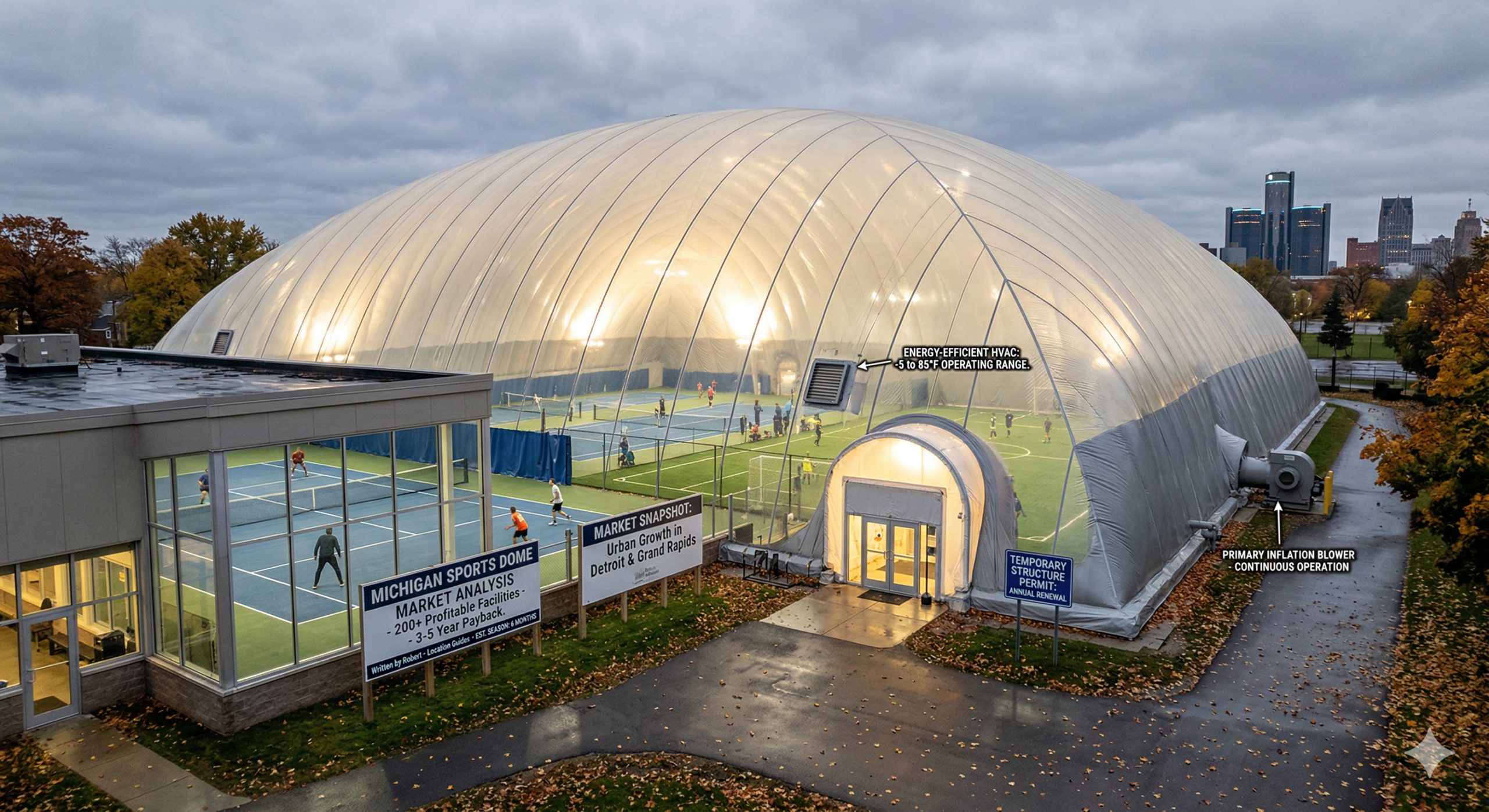
    When you’re considering a Michigan air dome investment, you’re looking at proven financial returns. A typical 20,000 square foot facility generates ROI within 3-5 years, supported by the state’s six-month dome season that extends from late fall through early spring.

    You’ll benefit from strong demand in tennis and soccer markets, where athletes need climate-controlled environments during Michigan’s harsh winters.

    Most municipalities classify these as temporary structures, streamlining your permitting process and reducing regulatory barriers for faster market entry.

    Why Michigan Dome Investments Return 3-5 Year Payback?

    Three key factors drive Michigan’s exceptional sports dome ROI performance, creating investment returns that consistently outpace national averages.

    First, you’ll benefit from Michigan’s extended six-month dome season, maximizing revenue potential when outdoor facilities can’t operate. Your Michigan sports facility will generate consistent income from November through April, capturing peak demand periods.

    Second, strong market fundamentals support profitability. With 200+ existing facilities and concentrated demand in Detroit and Grand Rapids, you’re entering a proven market where tennis and soccer programs drive year-round bookings.

    Third, favorable municipal regulations work in your favor. Most Michigan jurisdictions classify domes as temporary structures, reducing permitting costs and construction timelines.

    These combined advantages create the foundation for your 3-5 year payback period on 20,000 square foot facilities.

    Michigan’s 6-Month Dome Season Operating Requirements

    Operating successfully during Michigan’s extended dome season requires specific preparation for challenging temperature swings and energy management.

    You’ll need proper insulation designed for -5 to 85°F (-21 to 29°C) temperature variations throughout your six-month operational period. Your facility must maintain comfortable interior conditions while minimizing heating costs during harsh winter months.

    Energy-efficient HVAC systems become essential for profitability in Michigan indoor sports facilities.

    You’ll want to install programmable thermostats and consider radiant heating options that work effectively in large dome spaces. Proper ventilation prevents condensation issues that can damage equipment and create unsafe playing conditions.

    Schedule maintenance during off-season months to avoid disruptions.

    You’ll maximize revenue by planning tournaments and leagues during peak demand periods, typically October through March when outdoor alternatives aren’t available.

    Municipal Permits: Why Most Michigan Domes Qualify As Temporary?

    Because air-supported structures don’t require permanent foundations, most Michigan municipalities classify sports dome Michigan installations as temporary rather than permanent buildings. This classification notably simplifies your permitting process and reduces regulatory hurdles.

    You’ll typically need basic temporary structure permits instead of complex building permits required for permanent construction. Most Michigan cities allow temporary installations for extended periods, often renewable annually. This means you won’t face the extensive architectural reviews, structural engineering requirements, or zoning complications associated with permanent buildings.

    The temporary classification also offers flexibility for relocation if needed. You’ll save considerable time and money on permits, making your sports dome Michigan project more cost-effective.

    However, you should verify specific municipal requirements, as some larger cities may have stricter regulations for commercial temporary structures.

  • Wisconsin Indoor Sports Facilities Guide

    Wisconsin Indoor Sports Facilities Guide

    You’re facing Wisconsin’s brutal winters where outdoor sports become impossible for months, and you need a solution that won’t break your budget or crumble under heavy snow loads. Air domes offer year-round functionality, but choosing the wrong specifications or ignoring local building codes could cost you thousands in repairs or legal headaches. Before you commit to any indoor sports facility, there’s critical information about snow load requirements and heating systems that could make or break your investment.

    Why Air Domes Work for Wisconsin’s Extreme Weather?

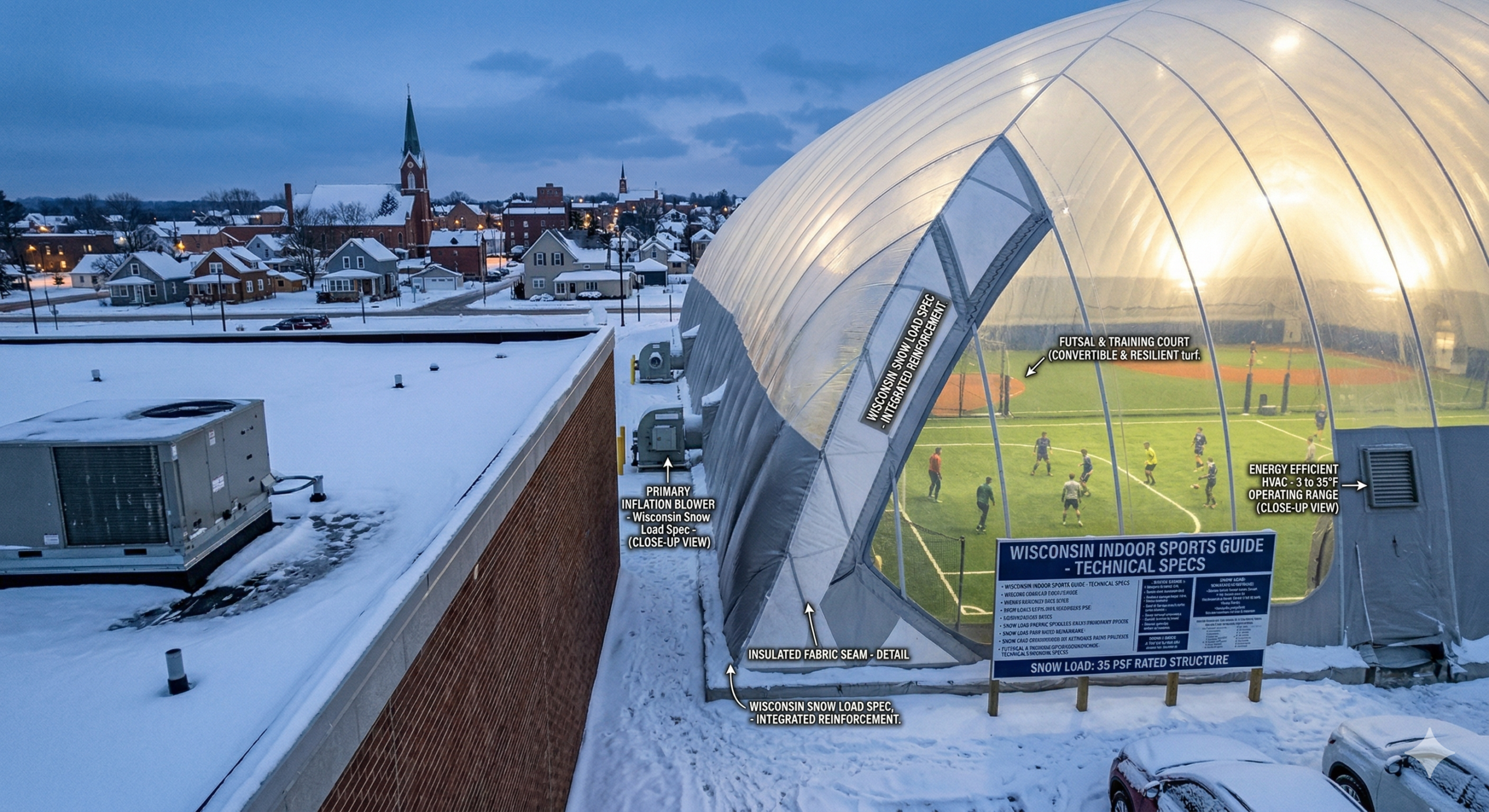
    Wisconsin’s brutal winters and sweltering summers create unique challenges for indoor sports facilities, but air domes excel in these extreme conditions. Your Wisconsin air dome maintains structural integrity through temperature swings from -10°F to 85°F because the pressurized air system adapts automatically to weather changes.

    The insulated membrane handles Wisconsin’s minimum 35 PSF snow loads while remaining flexible enough to prevent ice damage that destroys rigid structures. You’ll find Wisconsin indoor sports facilities using air domes stay operational year-round without expensive heating systems breaking down.

    Unlike traditional buildings, your Wisconsin tennis dome won’t suffer from foundation frost heaving or roof collapse from sudden snow accumulation. The dome’s air pressure distributes weight evenly, making it ideal for Wisconsin’s unpredictable weather patterns and freeze-thaw cycles.

    Tennis vs Soccer vs Baseball: Space and Design Requirements

    You’ll need to contemplate drastically different space requirements when choosing between tennis, soccer, and baseball air domes.

    Tennis courts require the least square footage but need specific dimensions of 78 by 36 feet, while soccer fields demand much larger areas up to 120 by 80 yards.

    Baseball facilities present unique challenges with asymmetrical layouts and varying height requirements from the infield to outfield areas.

    Court Dimensions and Layout

    Three distinct sports require dramatically different spatial considerations when planning your Wisconsin sports facility.

    Tennis courts demand precise 78-foot by 36-foot playing surfaces with additional 12-foot clearances on all sides, totaling approximately 7,200 square feet per court. You’ll need minimum 20-foot ceiling heights to accommodate high lobs and serves.

    Soccer facilities require massive open spaces – typically 200 by 85 feet for full-size fields, though you can accommodate smaller formats.

    Baseball presents the most complex layout challenges, needing 90-foot baselines and substantial foul territory. You’ll want at least 320 feet down the foul lines and 400 feet to center field for regulation play.

    Consider multi-use designs with removable nets or convertible spaces to maximize your investment and accommodate seasonal demand fluctuations across different sports.

    Facility Height Requirements

    While court dimensions establish your facility’s footprint, ceiling height requirements create equally critical design constraints that vary dramatically between sports.

    Tennis facilities need minimum 36-foot clearance above courts, with 40 feet preferred for competitive play. You’ll want additional height for lighting fixtures and structural elements.

    Soccer demands much greater vertical space – indoor fields require 50-65 feet minimum to accommodate high kicks and crosses. Professional facilities often exceed 70 feet for ideal play conditions.

    Baseball presents the most challenging height requirements, needing 85-120 feet depending on field size and intended use.

    Youth facilities can operate with lower clearances, but adult leagues require substantial vertical space for pop flies and batting practice.

    These height differences greatly impact your air dome selection, structural engineering requirements, and overall construction costs in Wisconsin’s demanding climate conditions.

    Understanding Wisconsin’s 35 PSF Snow Load Requirements

    Snow loads present a critical structural consideration when planning indoor sports facilities in Wisconsin. You’ll need to meet the state’s minimum requirement of 35 PSF (1.67 kPa) snow load capacity for your facility’s design.

    This requirement isn’t arbitrary—Wisconsin’s harsh winters can dump substantial snow accumulations that create dangerous structural stress. Your air dome or indoor facility must withstand this weight without compromising safety or performance.

    You’ll find that snow load requirements can vary by municipality, so check local building codes before finalizing plans. Some areas might require higher ratings based on historical weather patterns or elevation.

    Don’t underestimate this specification when budgeting. Meeting snow load requirements affects material costs, structural engineering fees, and installation complexity.

    Your facility’s long-term durability depends on proper snow load compliance from day one.

    Heating Systems That Handle -10°F Winter Temperatures

    You’ll need a robust heating system that can maintain comfortable temperatures when Wisconsin’s winter plunges to -10°F or below.

    Three proven options excel in indoor sports facilities: radiant floor heating systems that warm from the ground up, high-efficiency gas furnaces that deliver consistent heat throughout large spaces, and modern heat pump technology that’s increasingly effective in cold climates.

    Each system offers distinct advantages for different facility sizes and budgets.

    Radiant Floor Heating Systems

    Since Wisconsin’s brutal winters can plummet to -10°F, radiant floor heating systems offer an ideal solution for maintaining consistent temperatures in your indoor sports facility.

    You’ll benefit from even heat distribution across the entire floor surface, eliminating cold spots that can affect athletic performance.

    These systems work by circulating heated water through tubes embedded in concrete slabs or installing electric heating elements beneath flooring materials.

    You can expect 20-30% energy savings compared to forced-air systems because radiant heating warms objects directly rather than heating air that rises to the ceiling.

    Installation costs range from $6-20 per square foot depending on system type.

    Electric systems cost less upfront but have higher operating expenses, while hydronic systems require larger initial investments but deliver superior long-term efficiency for large facilities.

    High-Efficiency Gas Furnaces

    When temperatures drop to Wisconsin’s bone-chilling -10°F lows, high-efficiency gas furnaces provide the robust heating power your indoor sports facility demands.

    You’ll need units with 90% AFUE ratings or higher to manage extreme temperature swings from -10°F to 85°F effectively. These systems deliver consistent airflow throughout large spaces like tennis courts and soccer fields.

    Install multiple zones with programmable thermostats to control different areas independently. You’ll save considerably on operating costs compared to electric heating, especially during peak winter months.

    Choose furnaces with modulating burners that adjust output based on demand rather than cycling on-and-off continuously.

    Proper sizing matters – oversized units waste energy while undersized systems can’t maintain comfortable temperatures during Wisconsin’s harshest weather.

    Professional load calculations guarantee peak performance for your facility’s specific requirements.

    Heat Pump Technology

    Although traditional heat pumps struggled in Wisconsin’s frigid winters, modern cold-climate heat pumps now operate efficiently down to -13°F and continue providing heat even at -25°F.

    You’ll find these systems particularly effective for air domes since they provide both heating and cooling capabilities your facility needs year-round.

    Cold-climate heat pumps use variable-speed compressors and enhanced vapor injection technology to maintain performance in extreme temperatures.

    You’ll achieve 200-300% efficiency ratings even during Wisconsin’s harshest winter conditions, greatly reducing operating costs compared to traditional electric heating.

    Installation costs range from $15,000-$35,000 depending on your facility size, but you’ll recover this investment through lower utility bills.

    Many Wisconsin municipalities offer rebates for heat pump installations, and you’ll qualify for federal tax credits when upgrading your sports facility’s heating system.

    Air Dome Costs: From $120K Single Courts to Multi-Sport Complexes

    Air dome costs in Wisconsin start at $120,000 for a single tennis court facility covering 9,360 square feet, but you’ll find prices escalate quickly as you add courts or expand into multi-sport configurations.

    The $120K-$200K range for single courts reflects variations in insulation quality, structural specifications, and climate control systems needed for Wisconsin’s harsh winters.

    Multi-sport complexes commanding premium prices often feature multiple courts, advanced heating systems, and enhanced structural engineering to handle the state’s 35 PSF snow loads.

    You’re looking at considerably higher investments when designing facilities for soccer, baseball, or combined sports under one dome.

    Equipment quality, installation complexity, and local building codes across Wisconsin municipalities all impact your final costs, making detailed quotes essential for accurate budgeting.

    Before you break ground on your Wisconsin air dome project, you’ll need to navigate a complex web of building codes that vary considerably from one municipality to another.

    While state requirements mandate structures handle 35 PSF snow loads and extreme temperature swings from -10°F to 85°F, local jurisdictions add their own layers of regulations.

    Start by contacting your municipal building department early in the planning process. You’ll typically need permits for foundation work, electrical systems, and the air dome structure itself.

    Many Wisconsin municipalities require engineered drawings that account for wind loads, soil conditions, and emergency egress requirements.

    Don’t overlook zoning restrictions that might limit building height, setbacks, or usage types.

    Some communities classify air domes as temporary structures, while others treat them as permanent installations, dramatically affecting permit requirements and costs.

    Site Selection and Installation Timeline for Your Air Dome

    Once you’ve secured your permits, selecting the right site becomes your next critical decision. You’ll need level ground with proper drainage, utility access, and adequate space for your dome plus safety clearances. Consider wind exposure, as Wisconsin’s weather patterns affect structural loads.

    Installation Phase Duration Key Activities
    Site Preparation 2-3 weeks Excavation, foundation, utilities
    Dome Delivery 1-2 days Equipment transport, staging
    Inflation & Setup 3-5 days Membrane installation, pressurization

    Installation typically takes 4-6 weeks total. Summer installations work best, avoiding Wisconsin’s harsh winters. You’ll coordinate with contractors for electrical, heating systems, and final inspections. Plan your timeline around sports seasons—many facilities target spring installation for fall opening.