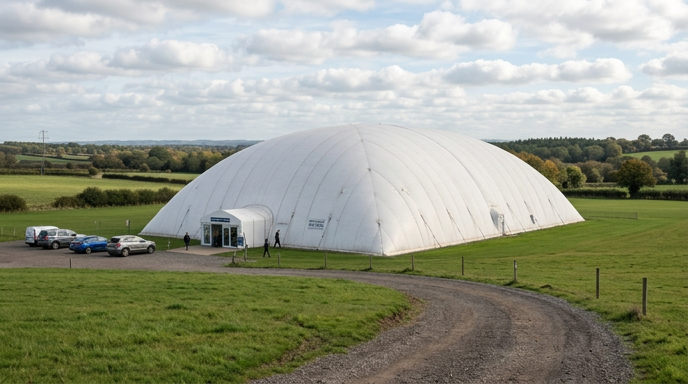
You’re probably underestimating just how dramatically your sports dome’s location affects your energy bills. A 20,000 square foot facility in Florida might cost you $1,000 monthly to operate, while that same dome in Minnesota could hit $3,000 during peak winter months. The difference isn’t just about temperature—it’s about understanding how climate zones, insulation strategies, and regional energy rates create a complex puzzle that determines whether your facility turns a profit or drains your budget.
Sports Dome Energy Costs: Florida Vs Minnesota Breakdown
When you’re planning a sports dome, location dramatically affects your energy budget. Florida’s Zone 1 climate keeps temperatures between 60-90°F, resulting in sports dome energy costs of $800-$1,200 monthly for a 20,000 square foot facility.
You’ll primarily spend on air conditioning during summer months, but mild winters reduce heating expenses considerably.
Minnesota’s Zone 5 climate presents a stark contrast. With temperatures ranging from -10 to 75°F, you’re looking at $2,500-$3,500 monthly for the same facility size.
Harsh winters demand intensive heating, while summers still require cooling systems.
Here’s where smart planning pays off: double-layer insulation reduces sports dome energy costs by 30-40% in both climates.
In Minnesota, this translates to potential savings of $750-$1,400 monthly, making insulation upgrades essential for cold-climate facilities.
Why Double-Layer Insulation Cuts Sports Dome Bills 30-40
Double-layer insulation creates a thermal barrier system that dramatically reduces heat transfer through your sports dome’s envelope. This advanced insulation method traps air between two layers, creating superior resistance to temperature fluctuations and cutting your energy bills by 30-40%.
Here’s why double-layer insulation delivers exceptional savings:
- Air gap barrier – Creates dead air space that prevents heat conduction
- Reduced thermal bridging – Eliminates weak points where heat escapes
- Enhanced R-value – Doubles thermal resistance compared to single-layer systems
- Moisture control – Prevents condensation that reduces insulation effectiveness
You’ll see immediate cost reductions in both heating and cooling expenses.
In Minnesota’s harsh climate, double-layer insulation can save you $750-$1,400 monthly, while Florida facilities typically save $240-$480 monthly through reduced air conditioning demands.
Real Monthly Energy Budgets For 20,000 Sq Ft Sports Domes
Understanding these savings potential helps you plan realistic energy budgets for your 20,000 square foot sports dome. Your air dome heating expenses vary dramatically based on location and insulation choices.
| Climate Zone | Standard Insulation | Double-Layer Insulation |
|---|---|---|
| Zone 1 (Florida) | $800-$1,200/month | $480-$720/month |
| Zone 5 (Minnesota) | $2,500-$3,500/month | $1,500-$2,100/month |
Minnesota facilities face the highest costs due to extreme temperature swings from -10°F to 75°F, requiring constant heating and cooling adjustments. Florida’s moderate 60-90°F range keeps expenses manageable year-round.
You’ll save $1,000+ monthly in harsh climates with proper insulation upgrades. These numbers help you calculate payback periods and justify initial investment costs for energy-efficient dome construction.
Cold Climate Sports Dome Heating: Managing Winter Cost Spikes
Although Minnesota’s annual averages show $2,500-$3,500 monthly costs, your actual winter heating bills can spike 40-60% higher during January and February cold snaps.
These extreme cold periods push winter sports dome heating systems to their limits, creating budget-breaking utility bills that can exceed $5,000 monthly.
Smart operators implement these cost-control strategies:
- Install programmable thermostats with zone controls to heat only active areas
- Schedule intensive activities during peak cold periods to maximize body heat contribution
- Implement double-layer insulation retrofits for 30-40% energy savings
- Consider backup heating sources like radiant floor systems for efficiency
Your winter sports dome heating strategy should include emergency fund reserves of 25-30% above projected costs.
This buffer prevents operational disruptions when Arctic blasts hit your facility unexpectedly.
5 Regional Cost-Cutting Strategies Sports Dome Operators Swear By
Three proven regional strategies can slash your sports dome energy costs by 25-50%, according to operators who’ve weathered decades of utility bill surprises.
Northern operators swear by programmable setbacks, dropping temperatures 10-15°F during off-peak hours. Southern facilities focus on peak-hour shifting, running major systems during cheaper overnight rates to reduce tennis bubble electricity costs.
Smart zoning delivers consistent savings across all climates. You’ll partition your dome into sections, heating or cooling only occupied areas.
| Strategy | Cold Zones | Warm Zones |
|---|---|---|
| Temperature Setbacks | 15°F drops save $400/month | 8°F drops save $150/month |
| Peak-Hour Shifting | 20% savings on heating | 35% savings on cooling |
| Smart Zoning | 30% reduction overall | 25% reduction overall |
| Double Insulation | Essential investment | Optional upgrade |
Leave a Reply