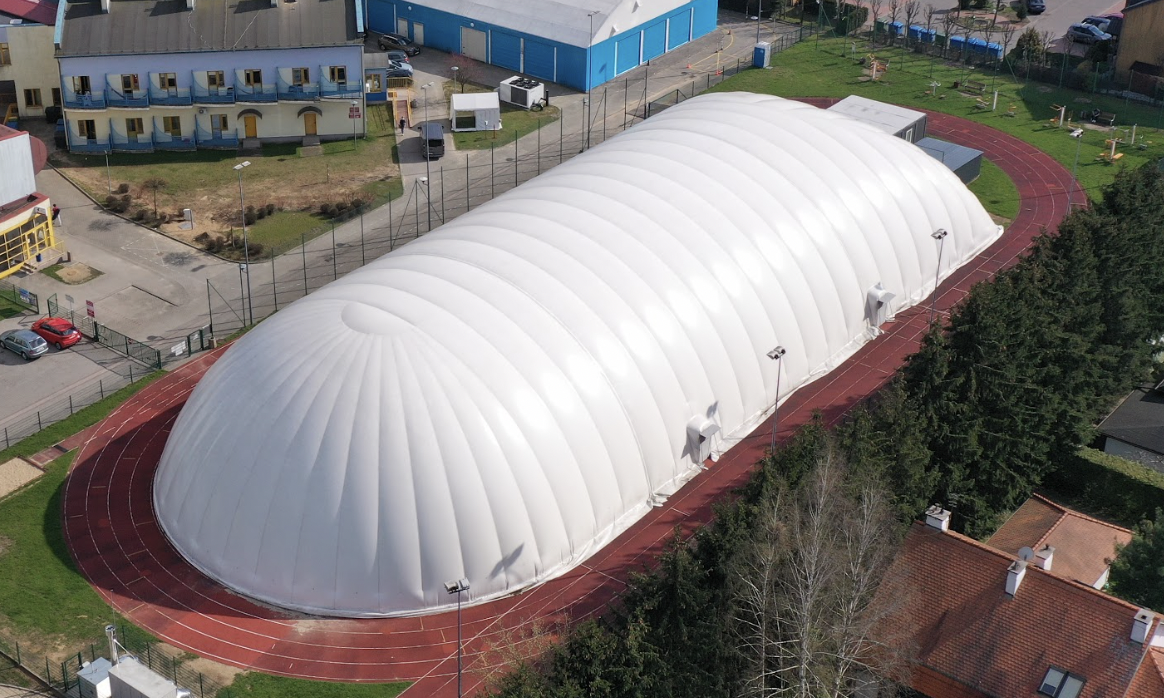
You’ll pay $30,000-$50,000 for basic personal domes under 100 feet, while single-court tennis facilities cost $80,000-$180,000 for 7,200 square feet. Mid-size multi-sport facilities range from $150,000-$400,000, with per-square-foot costs dropping to $10-$15 for larger installations. Large tournament complexes require $500,000 to several million dollars but offer the best value at $12-$50 per square foot. Foundation work, installation, and ongoing climate control add significant expenses that vary dramatically by location and soil conditions.
What Drives Sports Dome Costs: Materials, Installation, and Ongoing Expenses?
Understanding sports dome installation costs requires examining five key expense categories that determine your total investment.
Materials and fabric systems range from $12 to $50 per square foot, including membrane, blowers, and hardware. You’ll face installation expenses around $74,000 for complete setup with professional teams, electricians, and HVAC technicians over seven days.
Foundation and site preparation start at $10 per square foot, though costs vary dramatically based on soil conditions and terrain.
Climate control systems create considerable ongoing operational expenses through continuous heating, cooling, and air pressure maintenance. Regular maintenance prevents minor issues from becoming costly repairs.
Finally, you’ll need engineering services at approximately $20,000, plus permits and regulatory compliance costs.
Each category greatly impacts your sports dome installation cost, requiring careful budget planning for both initial investment and long-term operational sustainability.
Small Sports Dome Costs: Single Courts and Specialty Facilities
When you’re considering a small sports dome for single-court applications, you’ll find costs ranging from $30,000 to $200,000 depending on your specific requirements and facility size.
Small sports dome costs vary considerably based on diameter and features. Basic domes under 100 feet in diameter cost $30,000 to $50,000 for personal use, while more sophisticated installations reach $200,000.
Single-court tennis facilities require substantially more investment, ranging from $80,000 to $180,000 for a 7,200 sq ft / 669 sq m structure.
Specialty courts like pickleball installations cost between $1,000,000 and $2,600,000 when you include complete amenities and infrastructure. These facilities offer year-round operation that eliminates weather-related cancellations and scheduling disruptions.
Your per-square-foot pricing starts at $12 for basic packages, with membrane structures costing $25 to $50 per square foot depending on specifications.
Multi-Sport Dome Costs: Mid-Size Facilities for Schools and Clubs
Mid-size sports domes serving schools and clubs typically require investments between $150,000 and $400,000 for multi-court facilities spanning 24,000 sq ft / 2,230 sq m.
Your multi court dome cost benefits from economies of scale, with per-square-foot pricing dropping to $10–$15 for larger installations compared to smaller single-court facilities.
You’ll need to budget for foundation work, which can reach $350,000 for extensive ground preparation depending on your soil conditions.
Installation costs average $74,000 over seven days, including professional teams and equipment rental.
Annual operational expenses run $3–$6 per square foot, covering utilities and maintenance. These facilities offer proven ROI through extended seasons that allow year-round programming and additional revenue from facility rentals.
These mid-size facilities support year-round programming for multiple sports, making them ideal investments for educational institutions and athletic clubs seeking versatile, cost-effective indoor spaces.
Large Sports Dome Costs: Tournament and Community Complexes
Large tournament and community sports domes require substantial investments ranging from $500,000 to several million dollars, but they’ll deliver exceptional value compared to traditional permanent structures.
You’ll find sports facility dome cost by size becomes increasingly favorable as dimensions expand, with large installations achieving $12-$50 per square foot for the dome package itself.
A 100,000 square foot / 9,290 square meter facility typically costs around $15 per square foot for temperature-controlled systems, plus foundation expenses averaging $10 per square foot and site preparation costs.
You’ll save 50-75% compared to traditional sports complexes, which cost $275-$336 per square foot.
Tournament-level facilities with multiple courts that would cost $27-$33 million traditionally can be constructed as air domes for considerably less while maintaining professional standards. Installation timelines vary significantly, with larger domes potentially requiring several weeks to complete compared to smaller structures that can be assembled in just days.
Foundation and Site Preparation: Hidden Costs That Impact Your Budget
Although the dome structure itself represents the most visible expense, foundation and site preparation costs often surprise facility owners with their complexity and scale.
You’ll face initial site preparation costs starting at $10 per square foot, including clearing, leveling, and land preparation.
Foundation requirements depend heavily on soil analysis results—a 100,000 sq ft / 9,290 sq m dome in Michigan required $350,000 for hybrid Grade Beam-Earth Anchor foundation work alone.
Concrete slab foundations typically cost $4-$10 per square foot nationally, while excavation demands laser-level precision to prevent playing surface issues. Indoor soccer facilities require concrete foundation costs ranging from $3.85 to $7 per square foot, which can significantly impact your total project budget.
Air dome size pricing calculations must include these hidden foundation variables, as specialized systems for challenging soil conditions can dramatically escalate costs beyond standard estimates.
Frequently Asked Questions
Can Sports Domes Be Relocated to Different Sites After Installation?
You can’t easily relocate sports domes after installation. Most domes are permanently anchored to concrete foundations with extensive utility connections, making relocation impractical and cost-prohibitive.
The engineering complexity, disassembly challenges, and transportation costs typically exceed building a new dome. While theoretically possible for smaller air-supported structures, you’ll find that permanent installation is the industry standard.
If you’re planning a dome, choose your site carefully since it’s fundamentally a permanent investment.
What Permits and Zoning Approvals Are Required for Dome Construction?
You’ll need several permits for dome construction.
Start with land use and zoning approvals to verify your site allows the structure.
You’ll require building permits for structural, electrical, and plumbing work.
Environmental reviews like SEPA may be necessary depending on your location.
Licensed engineers must prepare and stamp all permit drawings.
Your installation company should handle the complete application process, including site surveys and coordination with local authorities for approval.
How Do Sports Domes Perform in Extreme Weather Conditions?
Sports domes excel in extreme weather conditions through engineered resilience systems.
You’ll benefit from heavy cable anchoring that withstands severe winds, while UV-resistant fabric layers handle snow loads and beating rain without compromise.
Advanced climate control maintains ideal temperature and humidity regardless of external conditions, so you can continue operations year-round.
The air-pressure support eliminates internal columns that could create structural vulnerabilities, giving you uninterrupted protection from storms, hail, and temperature extremes.
What Financing Options Are Available for Sports Dome Projects?
You’ll find several financing options for your sports dome project.
You can apply for public grants like CDBG or state sports association funding if you’re a non-profit.
Operating and finance leases offer flexible terms without deposits, spreading costs over 1-7 years.
Commercial bank loans take 45-90 days to process, while private investors and community fundraising often provide easier access to capital than traditional lending institutions.
Do Sports Domes Require Special Insurance Coverage Compared to Traditional Buildings?
You’ll need some specialized insurance coverage for sports domes beyond standard commercial policies.
While you can secure basic property and liability insurance similarly to traditional buildings, you’ll require additional coverage for equipment breakdown including blower systems, air pressure monitoring equipment, and specialized damage protection.
Your air dome’s unique vulnerabilities to punctures and weather-related pressure issues demand enhanced coverage that typical frame buildings don’t need.
Leave a Reply