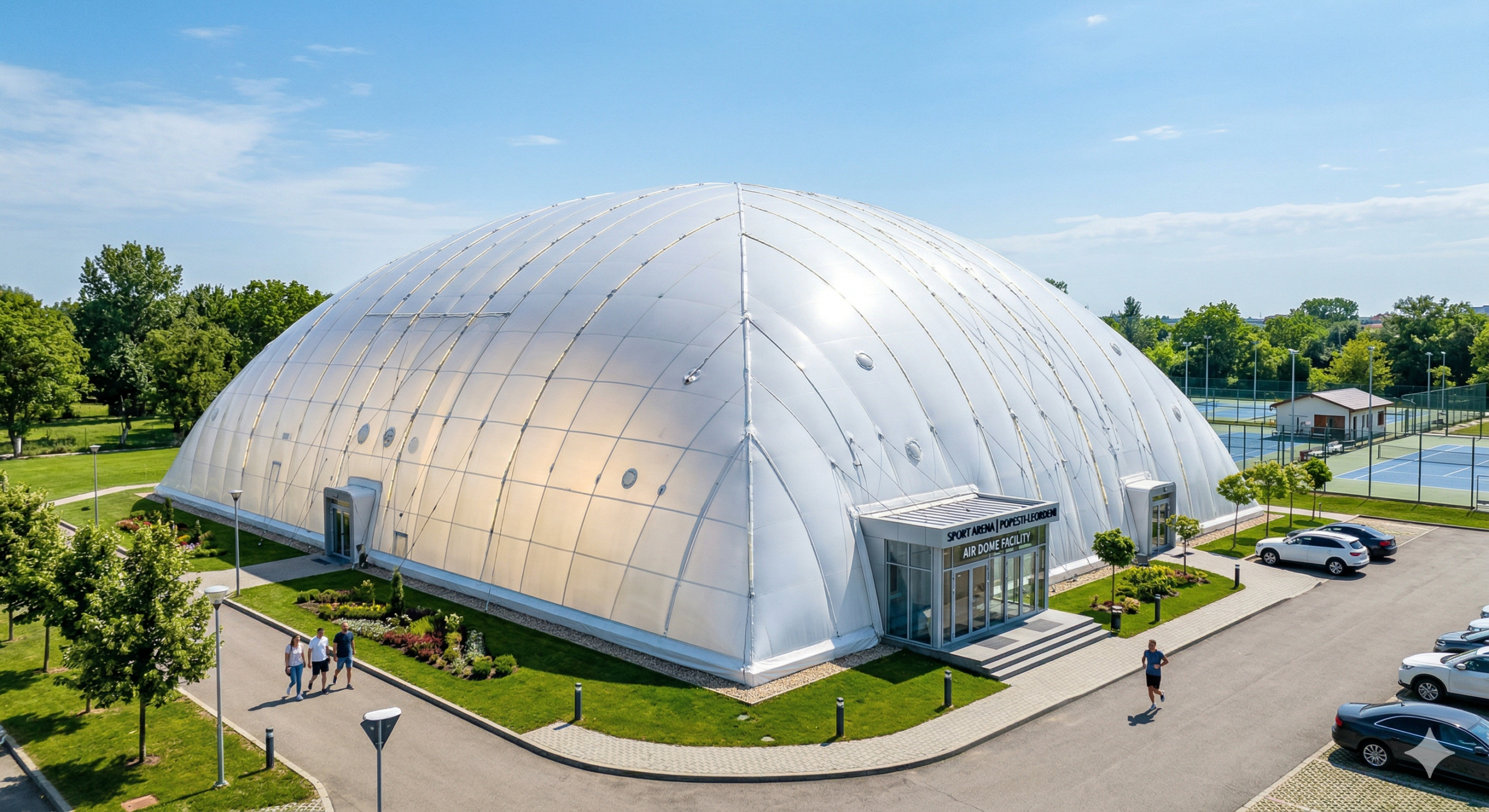
You’re facing a significant investment when choosing a sports dome manufacturer, and the wrong decision could cost you thousands in repairs or premature replacement. The American market offers everything from budget-friendly options that’ll barely last five years to premium manufacturers backing their products with 15-year warranties. But here’s what most buyers don’t realize: the cheapest upfront price often becomes the most expensive choice, while the priciest option isn’t always worth the premium.
What To Look For In A Sports Dome: Key Features That Matter Most
When investing in a sports dome, you’ll want to prioritize three essential elements that directly impact performance and longevity.
Fabric Quality stands as your most vital consideration. Premium sports dome manufacturers like Farley Group use reinforced PVC materials that resist tears, UV damage, and weather extremes.
Budget options from manufacturers like Broadwell may compromise on material thickness and coating quality.
Warranty Coverage reveals manufacturer confidence. Top tennis bubble manufacturers typically offer 10-15 year warranties on fabric and structural components, while budget suppliers often provide minimal coverage.
Installation Expertise determines your dome’s success. Established air dome suppliers comparison shows that companies like DUOL and Yeadon Domes provide extensive installation training and ongoing support, ensuring proper setup and maintenance protocols for peak performance.
Top 5 Sports Dome Manufacturers: Who Makes What In The US Market
Five major manufacturers dominate the US sports dome market, each serving distinct customer segments with varying approaches to quality, pricing, and specialization.
When researching air dome companies usa, you’ll encounter Farley Group leading the premium segment with Canadian-engineered solutions and superior fabric quality.
Yeadon Domes specializes in custom US installations, offering personalized design services.
DUOL brings European engineering expertise with highly engineered systems and extensive warranties.
Broadwell targets budget-conscious buyers from the UK market with cost-effective solutions.
Arizon focuses on commercial applications across the United States.
Among the best dome manufacturers, fabric durability, warranty coverage, and installation support vary greatly.
For typical single courts measuring 78′ x 120′, each manufacturer offers different value propositions worth comparing carefully.
Fabric Quality Showdown: Which Brands Build Domes That Last
Since dome fabric serves as your structure’s primary defense against weather extremes and daily wear, understanding material specifications separates smart buyers from those facing premature replacements.
Farley Group leads with premium PVC-coated polyester fabrics offering 20-year warranties and superior UV resistance. Their Canadian-engineered materials withstand harsh weather conditions that destroy lesser fabrics within five years.
DUOL’s European-sourced materials feature advanced polymer coatings with 15-year guarantees, excelling in snow load resistance and thermal efficiency. You’ll find their fabrics maintain flexibility in extreme cold where competitors crack.
Yeadon Domes uses commercial-grade vinyl with 10-year coverage, suitable for moderate climates.
Arizon offers standard PVC fabrics with basic 5-year warranties for budget-conscious buyers.
Broadwell’s entry-level materials carry limited 3-year warranties, adequate for temporary installations but questionable for permanent facilities requiring decade-plus performance.
Sports Dome Warranties And Installation: Comparing Service And Support
Beyond fabric durability, warranty terms and installation support determine whether you’ll enjoy years of trouble-free operation or face costly surprises down the road.
| Manufacturer | Warranty Coverage | Installation Support |
|---|---|---|
| Farley Group | 15-year extensive | Full turnkey service |
| Yeadon Domes | 10-year fabric/structure | Engineering + supervision |
| DUOL | 12-year materials | Technical guidance only |
You’ll find Farley Group offers the strongest protection with extensive coverage including fabric, structure, and air systems. Yeadon provides solid middle-ground protection with hands-on installation oversight. DUOL’s engineering focus means you’ll get technical expertise but less hands-on support.
Installation timelines vary notably. Farley’s turnkey approach takes 4-6 weeks but removes your headaches. Yeadon’s custom approach requires 6-8 weeks. DUOL’s technical-only support means faster delivery but you’ll coordinate local contractors yourself.
Tennis Court Dome Pricing: What You’ll Pay For 78′ X 120′ Coverage
Three primary factors drive tennis court dome pricing: manufacturer positioning, fabric specifications, and installation complexity.
You’ll find Broadwell offers the most budget-friendly option for a standard 78′ x 120′ tennis court, typically ranging $45,000-$65,000.
Arizon’s commercial-grade domes fall in the mid-range at $70,000-$95,000, focusing on durability for high-traffic facilities.
Yeadon Domes commands premium pricing of $85,000-$120,000 due to their custom engineering approach and superior fabric quality.
DUOL’s European-engineered systems range $90,000-$130,000, reflecting advanced materials and precise installation methods.
Farley Group sits at the top tier, with pricing from $110,000-$150,000 for their premium Canadian-manufactured domes.
Installation complexity, site preparation, and optional features like ventilation systems can add $15,000-$40,000 to base pricing across all manufacturers.
Budget Vs Premium Sports Domes: Matching Manufacturers To Your Priorities
When you’re choosing between budget and premium sports dome manufacturers, you’ll face critical decisions about fabric durability and construction materials that directly impact your dome’s lifespan.
Premium manufacturers like Farley Group and DUOL typically offer 15-20 year warranties with high-grade PVC fabrics, while budget options like Broadwell provide 5-10 year coverage using lighter-weight materials.
Your choice determines whether you’ll prioritize lower upfront costs or invest in superior materials that resist UV damage, tearing, and weather extremes over decades of use.
Quality Material Trade-Offs
While premium manufacturers like Farley Group and DUOL offer superior fabric durability and extensive warranties, you’ll face a significant cost jump that may not align with your facility’s actual needs.
Premium fabrics typically feature reinforced seams, UV-resistant coatings, and 15-20 year warranties, but budget options from Broadwell deliver adequate performance for recreational use at half the cost.
You’re trading longevity for affordability when choosing budget materials. Standard PVC fabrics from budget manufacturers last 8-12 years with proper maintenance, while premium PTFE-coated fabrics can exceed 20 years.
Consider your usage intensity—high-traffic commercial facilities justify premium investment, but seasonal recreational courts function well with mid-tier options from Yeadon Domes or Arizon that balance cost and durability effectively.
Warranty Coverage Differences
Five years separates entry-level warranties from premium coverage, creating a clear divide between manufacturer confidence levels.
Budget manufacturers like Broadwell typically offer 5-7 year fabric warranties with limited structural coverage, reflecting their cost-focused approach. You’ll find basic protection against material defects but fewer guarantees on installation workmanship.
Premium manufacturers like Farley Group and DUOL extend 10-15 year extensive warranties covering fabric, frame, and installation. They’ll replace materials showing premature wear and address structural issues at no cost.
Yeadon Domes offers custom warranty packages matching your specific requirements and climate conditions.
Mid-tier options like Arizon provide 8-10 year coverage, balancing cost and protection. You’re getting extended fabric warranties without premium pricing.
Consider your long-term investment timeline when comparing warranty terms—longer coverage often justifies higher upfront costs through reduced replacement risks.
Leave a Reply