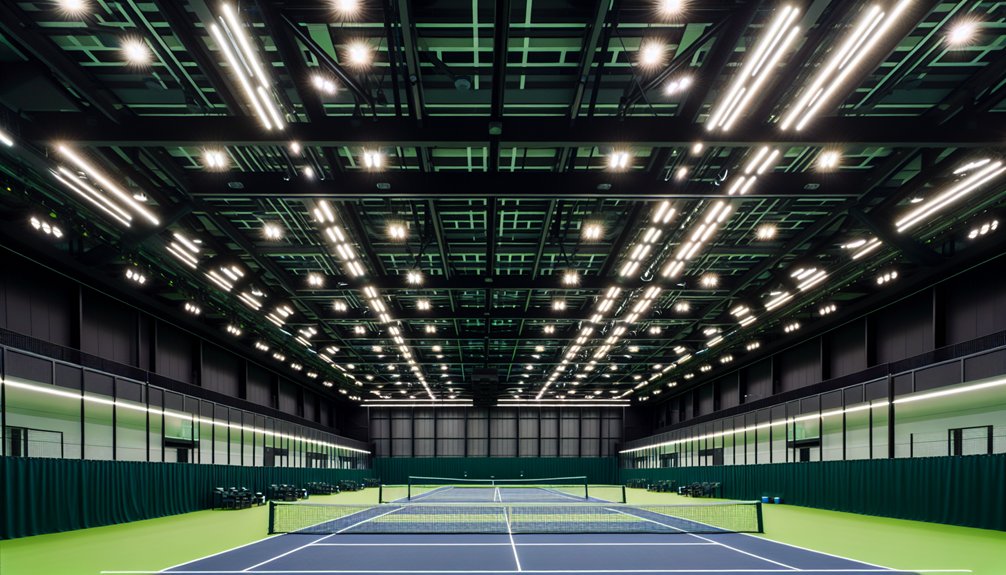
You’re watching tennis clubs across the UK transform their revenue streams by adding indoor facilities, but the £80,000-£250,000 investment isn’t something you’d approach lightly. While some clubs report 40-60% revenue increases from year-round play, coaching programs, and corporate events, others struggle with planning permissions and supplier selection. The difference between success and costly mistakes often comes down to understanding which structure type suits your location and how to navigate the regulatory maze ahead.
Why Indoor Tennis Courts Are Transforming UK Club Revenue
Across the UK, tennis clubs are discovering that indoor courts aren’t just weather protection—they’re revenue multipliers.
You’ll generate year-round income instead of seasonal peaks, with courts operating 12 months regardless of British weather conditions. Your UK air dome facility can host coaching programs, tournaments, and corporate events that outdoor venues can’t guarantee.
When you invest in a UK sports facility with indoor capabilities, you’re expanding your membership base. Players who previously avoided winter tennis become year-round participants.
You can charge premium rates for guaranteed playing conditions and extend daily operating hours under floodlights.
Your UK indoor tennis investment transforms unpredictable revenue streams into consistent monthly income. Clubs report 40-60% revenue increases after installing covered courts, making indoor facilities essential for sustainable growth.
Indoor Tennis Court Costs: £80K-£250K Investment Breakdown
Building your indoor tennis court requires a substantial upfront investment, with costs ranging from £80,000 to £250,000 for a single regulation court measuring 23.8m x 36.6m (78′ x 120′). Your British tennis dome investment depends on structure type, ground preparation, and additional features.
| Cost Component | Basic Range | Premium Range |
|---|---|---|
| Structure & Installation | £60K-£120K | £120K-£180K |
| Ground Preparation | £15K-£35K | £35K-£50K |
| Lighting & Ventilation | £5K-£15K | £15K-£20K |
Air domes typically cost less than permanent fabric structures, but you’ll need Building Regulations approval for most installations. If you’re operating fewer than 28 days yearly, temporary classification might reduce regulatory requirements. Leading suppliers like Broadwell Domes offer extensive packages including design, installation, and ongoing maintenance support for your facility investment.
Air Domes vs Fabric Structures for UK Weather Conditions
When choosing between air domes and fabric structures for your UK tennis facility, you’ll face distinct trade-offs in weather resilience and operational requirements.
Air domes offer superior wind resistance and maintain consistent internal pressure against Britain’s unpredictable weather patterns. They’re particularly effective during winter storms and heavy rainfall that characterize UK conditions.
Fabric structures provide better ventilation and natural lighting but require robust anchoring systems to withstand high winds. They’re more susceptible to snow loading, a critical consideration for northern regions.
Air domes demand continuous power for blower systems, creating ongoing operational costs but ensuring structural integrity.
Fabric structures offer lower running costs but need more substantial foundations. Your choice depends on local weather patterns, energy costs, and maintenance preferences specific to your UK location.
Planning Permission and Building Regulations Made Simple
Although indoor tennis facilities might seem like temporary sports structures, you’ll need proper planning permission and Building Regulations approval for most UK installations.
The process varies considerably depending on your facility’s classification and usage patterns.
Here’s what you need to take into account:
- Temporary classification – Available if you use the facility less than 28 days per year
- Permitted development rights – May apply for certain agricultural or recreational land uses
- Change of use applications – Required when converting existing land or buildings
- Structural calculations – Must demonstrate the dome can withstand UK wind loads and snow
- Fire safety compliance – Emergency exits and access routes need approval for permanent installations
Working with experienced suppliers like Broadwell Domes streamlines this process, as they understand UK regulatory requirements.
Top UK Indoor Tennis Court Suppliers and Installers
Once you’ve navigated the regulatory requirements, selecting the right supplier becomes your next priority. The UK market features several established companies specializing in indoor tennis structures, with Broadwell Domes leading the sector through extensive experience and proven track records.
| Supplier Type | Key Advantages |
|---|---|
| Specialized Tennis Dome Companies | Expert knowledge of court dimensions, ventilation requirements, and sports-specific needs |
| General Fabric Structure Providers | Competitive pricing, broader construction experience, versatile design options |
| Turnkey Installation Services | Complete project management, single point of contact, warranty coverage |
You’ll want to evaluate suppliers based on their portfolio, installation timeframes, and post-installation support. Most reputable companies offer site surveys, detailed quotations, and maintenance packages. Consider requesting references from existing clients and visiting completed installations before making your final decision.
Leave a Reply