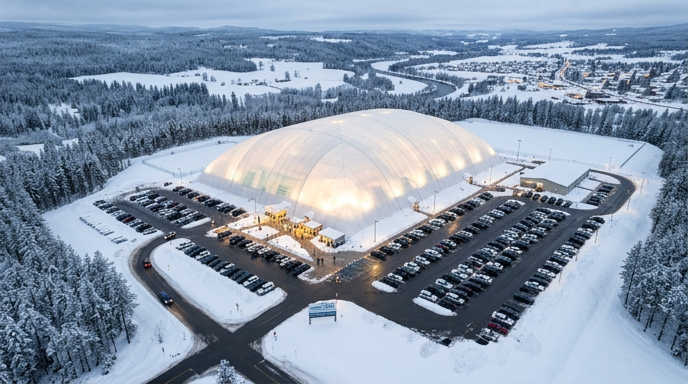
You’re facing a critical decision that could determine whether your winter sports facility thrives or struggles through harsh cold seasons. While traditional buildings demand enormous heating budgets and lengthy construction timelines, modern air domes engineered for extreme climates are reshaping how communities approach winter athletics. The temperature differential between success and failure often comes down to understanding one essential factor that most facility planners completely overlook when evaluating their options.
Why Cold Climate Air Domes Beat Traditional Winter Sports Buildings
When winter temperatures plummet to -20°F, you’ll discover that cold climate air dome outperforms traditional winter sports buildings in nearly every metric that matters.
Your insulated sports dome operates efficiently from -20 to 90°F with double-layer fabric construction that handles snow loads up to 50 PSF. You’ll save considerably on construction costs—no foundations, steel frames, or lengthy permits required. Installation takes weeks, not years.
Your northern climate sports facility maintains consistent interior temperatures while traditional buildings struggle with heat loss through concrete and steel.
Emergency backup systems guarantee you’re never caught off-guard during blizzards. The vestibule entry system retains heat effectively, reducing operating costs.
In Minnesota, you’ll spend $2,500-$3,500 monthly heating 20,000 square feet—markedly less than comparable permanent structures.
Heating Costs and Energy Efficiency in Extreme Cold Conditions
You’ll face significant heating costs when operating air domes in extreme cold, with typical Minnesota facilities spending $2,500-$3,500 monthly for 20,000 square feet during winter months.
Your energy expenses directly impact profitability, making it essential to understand both the operational cost breakdown and proven strategies for reducing consumption.
Smart energy management can cut your heating bills by 20-30% while maintaining ideal playing conditions throughout the coldest months.
Operating Cost Analysis
Operating costs for winter sports domes in extreme cold conditions represent a significant portion of your total facility expenses, with heating dominating the budget during harsh winter months.
Your winter sports dome in Minnesota will typically cost $2,500-$3,500 monthly for a 20,000 square foot facility during peak winter operations.
Understanding these financial realities helps you prepare for three major cost drivers:
- Heating system operation – Running continuously at -20°F temperatures doubles your energy consumption.
- Emergency backup systems – Redundant blowers and heating units increase operational expenses by 15-25%.
- Insulation maintenance – Double-layer fabric requires regular inspection and replacement, adding $500-$800 annually.
Your vestibule entry system reduces heat loss but adds structural complexity.
Snow load management and consistent temperature control make cold-climate operations substantially more expensive than moderate climate facilities.
Energy Saving Strategies
Since energy costs can consume up to 70% of your winter sports dome’s operating budget, implementing strategic efficiency measures becomes critical for financial sustainability.
You’ll maximize heat retention by maintaining proper fabric tension and sealing air leaks around entry points and equipment penetrations.
Installing programmable thermostats with zone controls lets you reduce heating in unused areas during off-peak hours.
Consider upgrading to high-efficiency heating units with variable-speed fans that adjust output based on actual demand rather than running at full capacity continuously.
Adding thermal curtains or barriers around entrance vestibules prevents heat loss during frequent door openings.
Regular maintenance of your heating system, including filter changes and ductwork cleaning, guarantees peak performance.
These combined strategies can reduce winter operating costs by 25-40%.
Snow Load Capacity and Winter Weather Performance Standards
When winter storms dump heavy snow on your air dome, the structure’s ability to handle substantial loads becomes critical for safe operation.
You’ll need a dome rated for 35-50 PSF snow loads to withstand Minnesota’s harshest conditions. The double-layer insulated fabric provides structural integrity while maintaining ideal pressure differentials.
Your dome’s performance standards must include:
- Emergency backup blower systems – Because power failures during blizzards can’t shut down your facility
- Vestibule entry design – Protecting your investment from heat loss that costs thousands monthly
- Temperature resilience from -20 to 90°F – Ensuring year-round functionality regardless of weather extremes
Proper engineering prevents catastrophic collapse, protects athletes, and maintains the $2,500-$3,500 monthly operating investment you’re making in Minnesota’s challenging winter climate.
Emergency Systems and Temperature Range Capabilities
During catastrophic weather events, your air dome’s emergency backup blower system becomes the difference between continued operations and potential structural failure. These redundant systems automatically activate when primary blowers fail, maintaining critical air pressure within seconds. You’ll need systems rated for your dome’s cubic footage with 24-hour fuel capacity minimum.
Temperature capabilities determine your facility’s year-round viability. Quality cold climate domes operate from -20°F to 90°F (-29°C to 32°C), handling Minnesota’s extreme temperature swings effectively.
| System Component | Specification |
|---|---|
| Backup Blower Response | 15-30 seconds |
| Fuel Reserve Capacity | 24-48 hours |
| Operating Temperature Range | -20°F to 90°F |
| Emergency Generator Size | 125% of total load |
| Backup Communication | Cellular/satellite monitoring |
Your emergency preparedness directly impacts insurance rates and operational continuity during severe weather events.
Site Preparation and Installation in Sub-Zero Conditions
Although winter installation presents unique challenges, proper site preparation guarantees your air dome’s structural integrity and longevity in harsh climates.
You’ll need to excavate and level your foundation before ground freezing occurs, making certain proper drainage systems are installed below the frost line.
Critical preparation steps include:
- Foundation heating cables – Install these beneath your perimeter to prevent frost heaving that could damage your dome’s anchoring system.
- Insulated utility trenches – Protect electrical and heating lines from freezing, preventing costly repairs and system failures.
- Emergency access routes – Clear multiple pathways for maintenance crews during blizzards when your dome needs immediate attention.
Your installation crew must work in temperatures as low as -20°F, so schedule accordingly.
Pre-warming materials and using cold-weather adhesives makes certain proper sealing of your double-layer insulated fabric system.
Operating Cost Breakdown and Return on Investment Analysis
After completing your winter sports dome installation, you’ll face ongoing operational expenses that directly impact your facility’s profitability.
Heating costs dominate winter operations, ranging from $2,500-$3,500 monthly for a 20,000 square foot facility in Minnesota’s harsh climate. Your double-layer insulated fabric and high-efficiency heating systems help minimize these expenses, but you’ll still need budgeting for electricity, maintenance, and backup blower operations.
Calculate your ROI by projecting revenue from membership fees, hourly rentals, and programs against these operational costs.
Most facilities break even within 18-24 months when properly marketed. You’ll maximize profitability by maintaining consistent indoor temperatures, scheduling regular equipment maintenance, and utilizing your dome’s extended season capabilities to generate year-round income streams that traditional outdoor facilities can’t match.
Leave a Reply